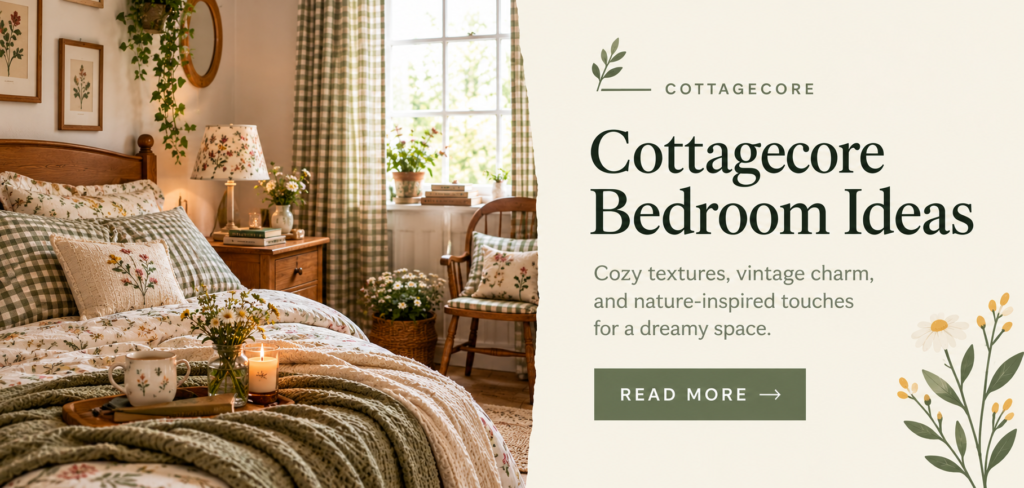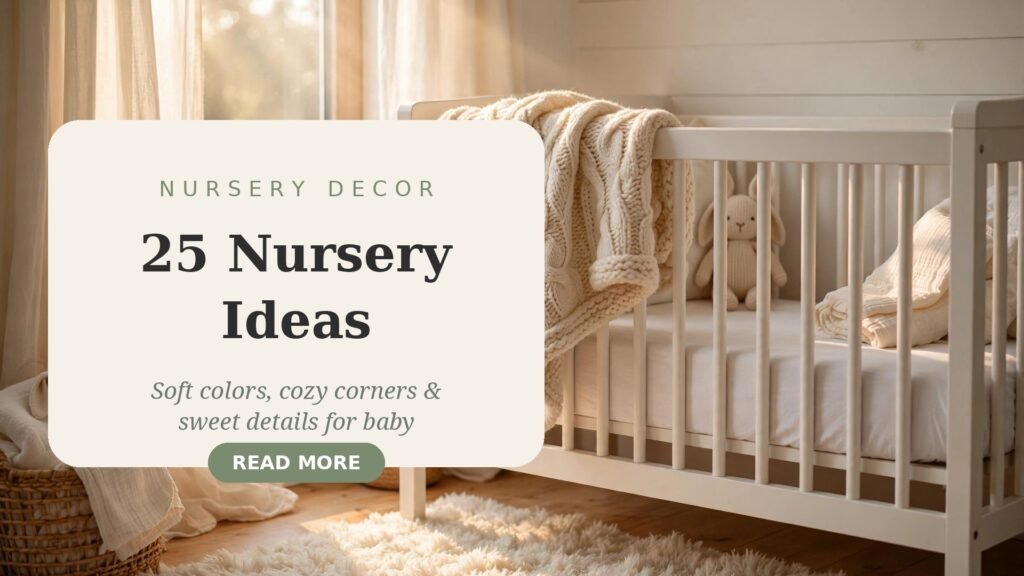
A kids bedroom has one of the hardest jobs in the house. It needs to be a place to sleep, a place to play, a place to read, and, before long, a place to do homework — all while surviving growth spurts, changing interests, and the occasional crayon incident. The good news is that you do not need a full remodel every time your child outgrows a phase. With a few smart, flexible choices, you can build a room that feels fun and cozy now and still works in a few years’ time. These 17 kids bedroom ideas focus on that balance: playful details your child will love, practical storage that actually gets used, and a calm base that keeps the room from feeling chaotic.
Start with the big, hard-to-change pieces in neutral, durable finishes, then let your child’s personality show through the easy-to-swap layers — bedding, art, bins, and a few favorite objects. That way, when dinosaurs give way to drawing, or pink gives way to purple, you are changing a duvet cover and a gallery wall, not repainting the whole room.
1. Choose a Bed That Grows With Them
The bed is the biggest piece in the room, so it pays to think past this school year. A sturdy full-size bed, or a convertible bed that starts low and can be raised later, can carry a child from early elementary school right through the teen years. Look for a solid wood or metal frame with a good weight rating, and check that replacement parts, like slats, are easy to find. If you are moving up from a crib, keep the transition gentle: let your child pick the new bedding, keep a familiar blanket or stuffed animal in the bed, and keep the bedtime routine exactly the same for the first week or two. Many parents find that a room planned around a nursery layout needs a rethink once a big-kid bed arrives, because the bed suddenly claims far more floor space — measure first, then place the bed against the longest wall so play space stays open. For safety, anchor tall headboards or any attached shelving to the wall, keep cords and blind pulls well away from the bed, and choose a mattress that sits low enough for your child to climb in and out on their own. A bed that fits the child, rather than the other way around, makes mornings easier and bedtime calmer.
2. Build a Cozy Reading Nook
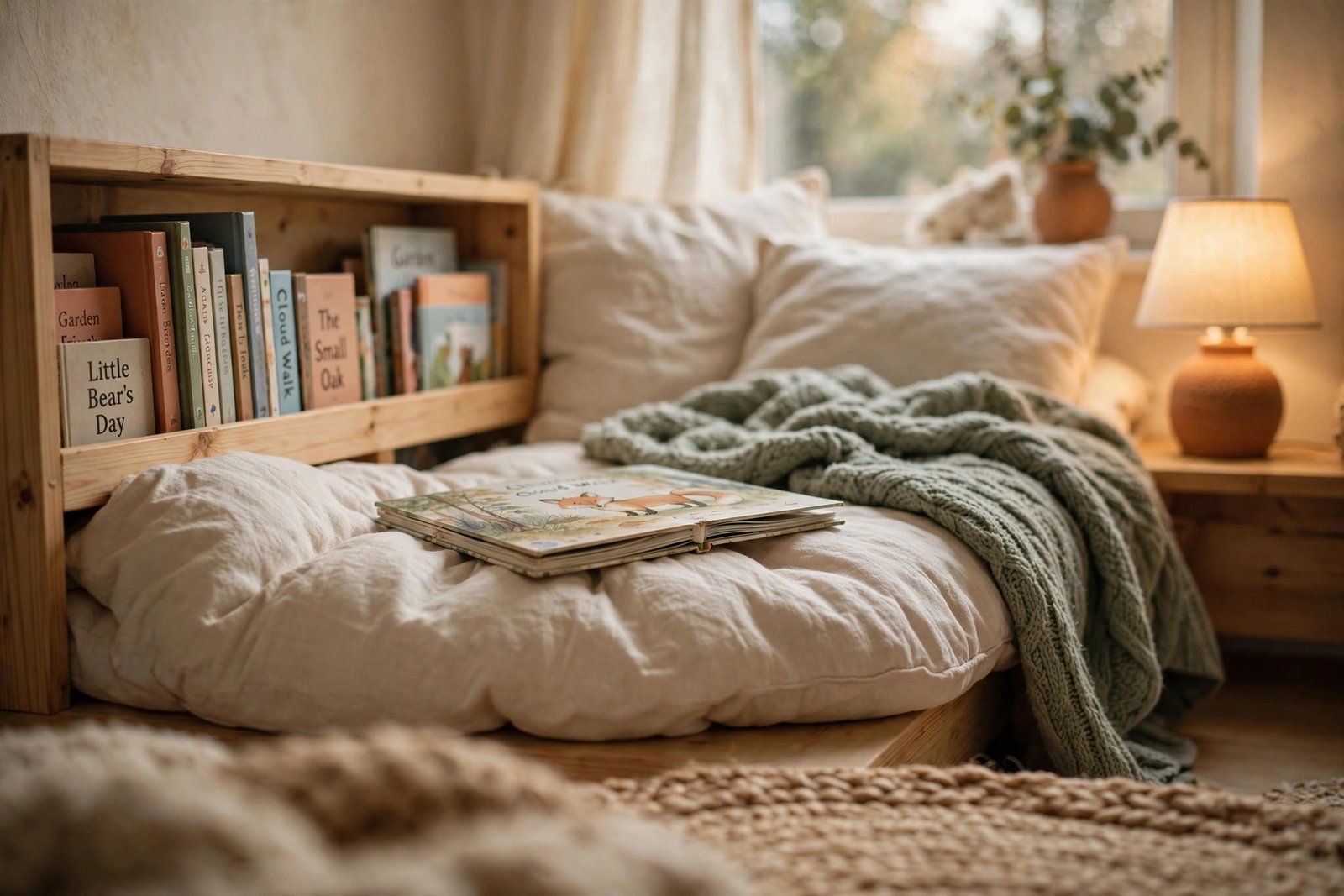
Every kids bedroom benefits from one spot that is just for reading. It does not need to be fancy: a window seat, a corner with a floor cushion and a small bookshelf, or even a bean bag tucked beside a bookcase will do. The trick is to make it inviting enough that your child chooses it without being told. Add a soft cushion or two, a throw they can pull over their knees, and good light — natural light by day and a warm lamp for evening reading. Keep books at child height, facing outward where possible, so younger readers can pick by the cover rather than the spine. Rotate the books every few weeks, swapping in a few from the library or a higher shelf, and the nook feels new again without spending anything. For older kids, the same nook becomes a homework-free reading retreat, which is a useful distinction when screen time and schoolwork start competing for attention. Put a small basket nearby for books that are mid-read, so they do not end up scattered across the floor, and keep the nook free of toys so it stays a calm, quiet corner.
3. Pick a Base Palette They Will Not Outgrow
Bright, themed paint can be fun for a year and a headache the next. A calmer approach is to paint the walls in a warm white, soft sage, pale blue, or warm gray, then bring in color through bedding, curtains, rugs, and art. The room still feels cheerful, but when your child’s favorite color changes — and it will — you are not repainting. Let your child choose the accent color, and even the bedding pattern, so the room still feels like theirs. Two or three accent colors, repeated in small doses, look more pulled together than a rainbow of unrelated brights. If you do want a bold wall, try it on one accent wall, or below a chair rail, where it is easier to change later. Washable, low-VOC paint finishes are a practical choice for kids rooms, since walls here get touched, leaned on, and occasionally drawn on. Keep the ceiling and trim a clean white to bounce light around the room, and test paint swatches on the wall for a few days before committing — colors shift a lot between morning light and lamplight.
4. Define a Play Zone With a Rug
Open-plan play in a bedroom quickly spreads to every corner. A rug solves that without building anything: it marks a clear play area, softens the floor for building blocks and board games, and gives toys a home base. Choose a low-pile rug that is easy to vacuum, with a non-slip pad underneath so it does not bunch up or slide when kids are running across it. In a smaller room, the rug can double as the boundary between sleep and play, which helps the room feel organized even when it is not spotless. If space is tight, the same trick works in a compact layout — see these small bedroom ideas for arranging a bed, storage, and play space without crowding the floor. Let your child help pick the rug pattern, but steer toward a design that hides a bit of everyday mess, like a subtle pattern or a mid-tone color. At cleanup time, the rule is simple and easy for kids to remember: toys live on the rug, and the rug edge is the boundary. A washable rug is worth considering for younger kids, since juice boxes and paint pots are not a matter of if, but when.
5. Use Low, Open Storage They Can Reach
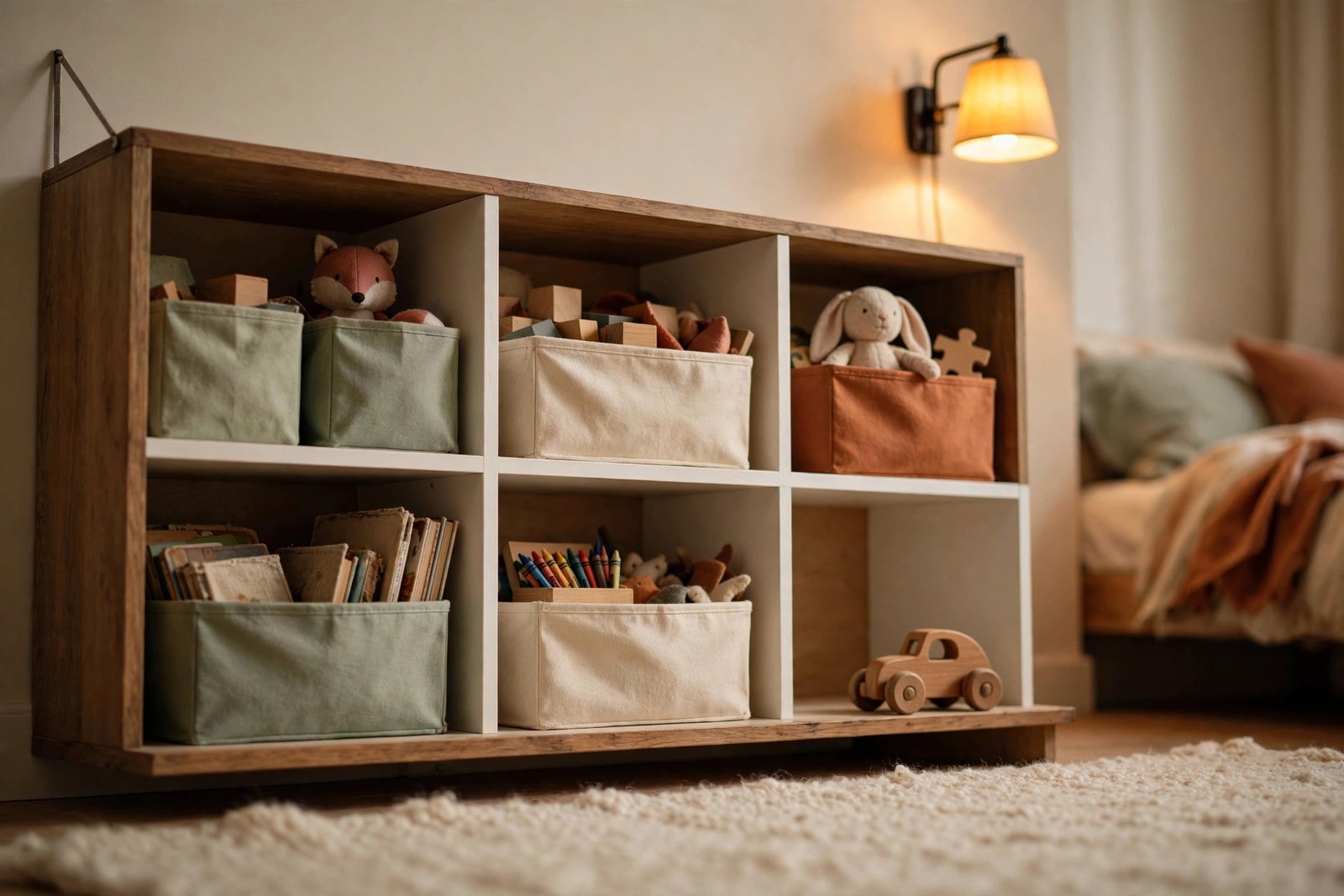
Storage only works in a kids room if the child can actually use it alone. Tall closets and high shelves look tidy, but they mean every cleanup needs an adult. Low, open cubbies with bins your child can pull out and push back in are far more practical. Label bins with pictures for younger kids and words for older ones, and keep the most-used toys at the lowest level. One bin per category — blocks, dolls, cars, art supplies — beats one giant toy box where everything gets buried and forgotten. Anchor every bookshelf and storage unit to the wall, even if it feels stable, since climbing is a normal part of childhood and furniture tip-overs are a real risk. Check the anchor every few months, especially after moving furniture for cleaning. Keep heavy items low and light items high, and leave a little empty space in each bin so putting things away is not a wrestling match. When a bin is consistently overflowing, that is your signal to rotate toys out rather than buy a bigger bin — a smaller, rotating collection gets played with more than a mountain of forgotten toys.
6. Try Removable Wall Decals and Wallpaper
Kids change their minds fast, which makes permanent wall treatments a risky bet. Removable wall decals and peel-and-stick wallpaper give you the fun of a themed wall without the commitment of paint or paste. Stars over the bed, a growth-chart tree in the corner, or a subtle pattern on one wall can transform the room in an afternoon, and peel off cleanly when tastes change. Apply them to a smooth, clean wall, and follow the maker’s instructions for removal — warming a stubborn corner with a hair dryer on low usually helps. For a more grown-up look, try a peel-and-stick pattern in a muted tone, like a soft stripe or a small-scale botanical print, rather than a loud character mural. If you want more inspiration for dressing the walls, these bedroom wall decor ideas cover everything from decals to framed prints. Keep decals out of reach of the crib or bed for very young children, and avoid placing small peel-off pieces where a toddler could pull them down. The best part of removable decor is the freedom it gives you: let your child pick the design, knowing you can change it next year without a repaint.
7. Swap the Bedding, Not the Whole Room
Bedding is the fastest, cheapest way to refresh a kids bedroom. A new duvet cover, a couple of fun pillowcases, and a throw in a new color can make the room feel completely different for the cost of one shopping trip. This is also the easiest place to let your child’s current obsession shine — dinosaurs this year, space next year — without committing the whole room to it. Keep two sets per bed so laundry day does not leave a bare mattress, and choose fabrics that wash well and dry quickly. Cotton and cotton blends tend to hold up better than delicate fabrics, and a duvet cover is easier to wash than a bulky comforter. For kids who run hot or cold, layer a light blanket over the duvet so they can adjust through the night. Involve your child in the choice, but set a simple boundary — for example, they pick the pattern, you pick the quality — and the room stays both personal and practical. When the old set is still in good shape, pass it on or keep it as the backup set rather than throwing it away.
8. Layer Soft, Warm Lighting
One bright ceiling light makes a kids room feel like a classroom, not a cozy retreat. Layered lighting fixes that: a ceiling light for homework and cleanup, a warm bedside lamp for reading, and a soft night light for kids who are not quite ready for a dark room. Warm-toned bulbs, around 2700K, feel calmer in the evening than harsh white light, and a dimmer on the main light is a small upgrade that makes a big difference at bedtime. Keep lamp cords tucked behind furniture and out of walkways, and choose sturdy lamps that will not topple easily if bumped. For older kids, a clip-on or desk lamp at the study spot gives focused light without lighting the whole room. String lights can look magical, but keep them out of reach of the bed and never run them under bedding or pillows. The goal is a room that can shift gears: bright enough for play and homework, soft enough for wind-down, and dark enough for sleep when the lamps go off.
9. Hang a Gallery Wall of Their Own Art
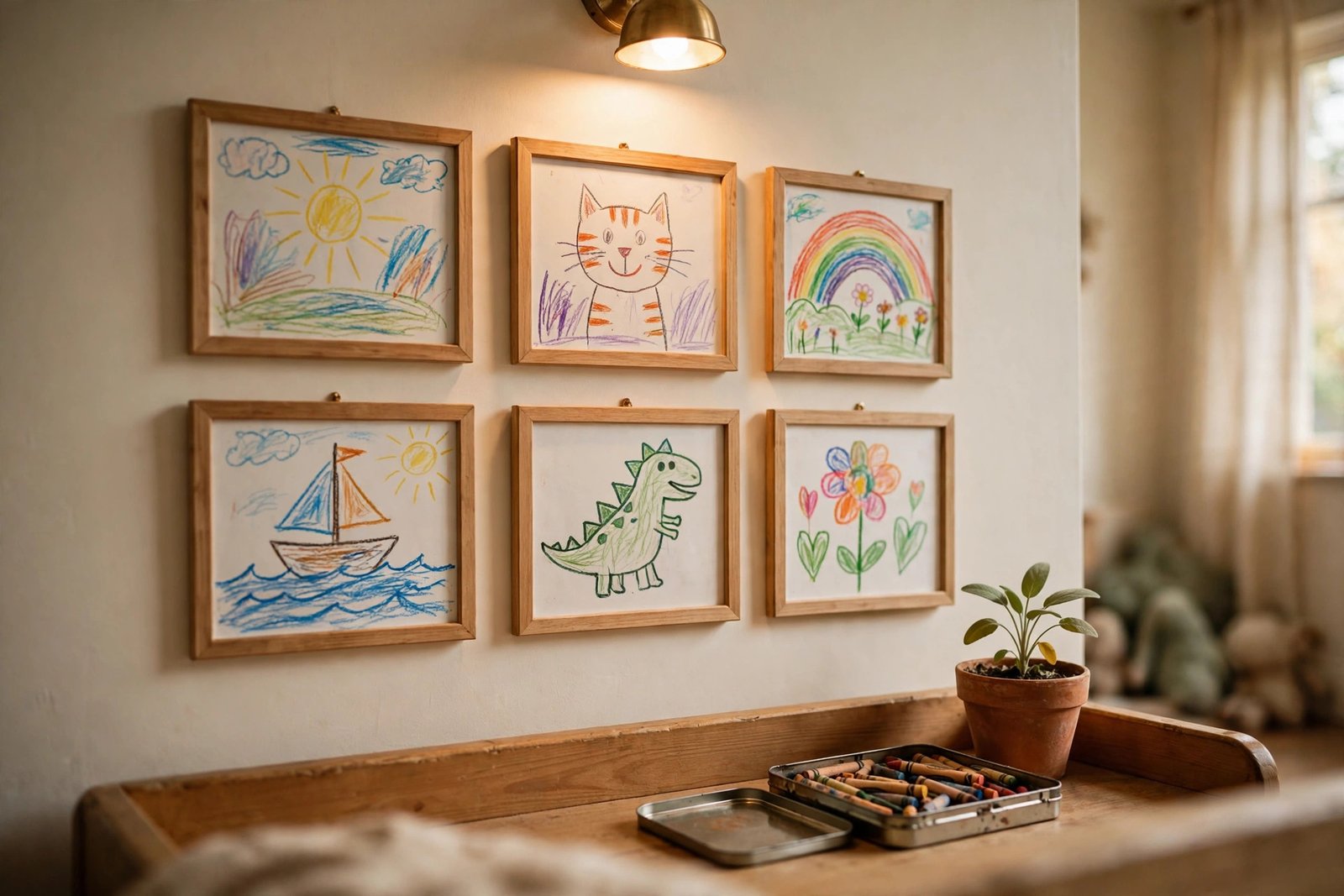
Few things make a child prouder than seeing their own artwork framed on the wall. A gallery wall of their drawings, paintings, and school projects turns decoration into a confidence boost, and it costs very little. Use matching frames in one finish — simple wood frames look calm even when the art inside is wildly colorful — and hang them in a neat grid at a height your child can actually see and enjoy. Swap pieces out as new favorites arrive, and keep the older ones in a portfolio or a keepsake box so nothing precious is lost. If you want the display to look polished rather than cluttered, stick to one frame style and leave even spacing between frames. For more ways to arrange a display like this, see these gallery wall ideas. Hang frames securely, with proper wall anchors for heavier frames, and keep glass-fronted frames out of reach of very young children, or use acrylic-fronted frames instead. A gallery wall also solves the “what do I do with all this art?” problem that every parent knows well — the best pieces get wall time, the rest get stored, and the fridge gets a break.
10. Make Windows Sleep-Friendly
Good sleep starts with good window coverings. Blackout curtains or a blackout liner behind regular curtains help younger kids nap during the day and sleep past sunrise in summer, and they also keep the room cooler on hot afternoons. Choose cordless blinds or curtains for safety — cordless options remove the strangulation risk that comes with looped cords — and keep any remaining cords, including curtain pulls, completely out of reach of the bed and crib. A light-filtering shade underneath the blackout layer gives you daytime privacy without total darkness, which is handy for playtime. If your child is a light sleeper, check for light leaks around the edges of the curtains and consider a wider curtain rod so the panels cover the whole window frame. For older kids, let them pick the curtain color or pattern, and teach them to open the curtains first thing in the morning — natural daylight is a surprisingly effective wake-up cue, and it makes the room feel fresh for the day ahead. Washable curtains are a practical pick here too, since bedroom windows collect dust and the occasional handprint.
11. Create a Calm-Down Corner
Big feelings need a safe place to land. A calm-down corner — a small, cozy spot with a cushion, a few soft toys, and quiet activities like books or a puzzle — gives your child somewhere to go when they are overwhelmed, instead of the corner being a punishment. Keep it simple and positive: this is a retreat, not a time-out chair. A small basket with a stress ball, a coloring book, or a favorite stuffed animal is enough; too many choices defeat the purpose. Place the corner away from the main play area, ideally in a quieter part of the room, and let your child help set it up so it feels like theirs. For younger kids, sit with them in the corner the first few times and practice slow breathing or quiet reading together. Older kids may use the same spot to decompress after school, which is a healthy habit worth encouraging. Keep the corner tidy and inviting — if it becomes a dumping ground for toys, it stops feeling calm — and never use it as a threat. The goal is a child who chooses to take a breather on their own, which is a skill that lasts well beyond childhood.
12. Give Hobbies a Display Spot
Whether it is soccer medals, a rock collection, a Lego build, or a shelf of chapter books, kids love seeing their achievements on display. A single floating shelf, a small display ledge, or a shadow box gives hobbies a proper home instead of letting them pile up on the dresser. Keep the display at a height your child can reach and rearrange, since a display they cannot touch quickly becomes background decoration. Rotate the display with the seasons or the school year — the current favorite build or latest trophy goes up front, older pieces move to a keepsake shelf. This also teaches a useful lesson in editing: not everything needs to be out at once, and the pieces on display feel more special because they were chosen. Anchor any shelf securely to the wall, keep heavier items low, and avoid displaying fragile or sharp objects where younger siblings can reach them. A hobby shelf doubles as a conversation starter when friends visit, and it reminds your child that their interests matter enough to earn wall space.
13. Do Bunks and Lofts the Safe Way
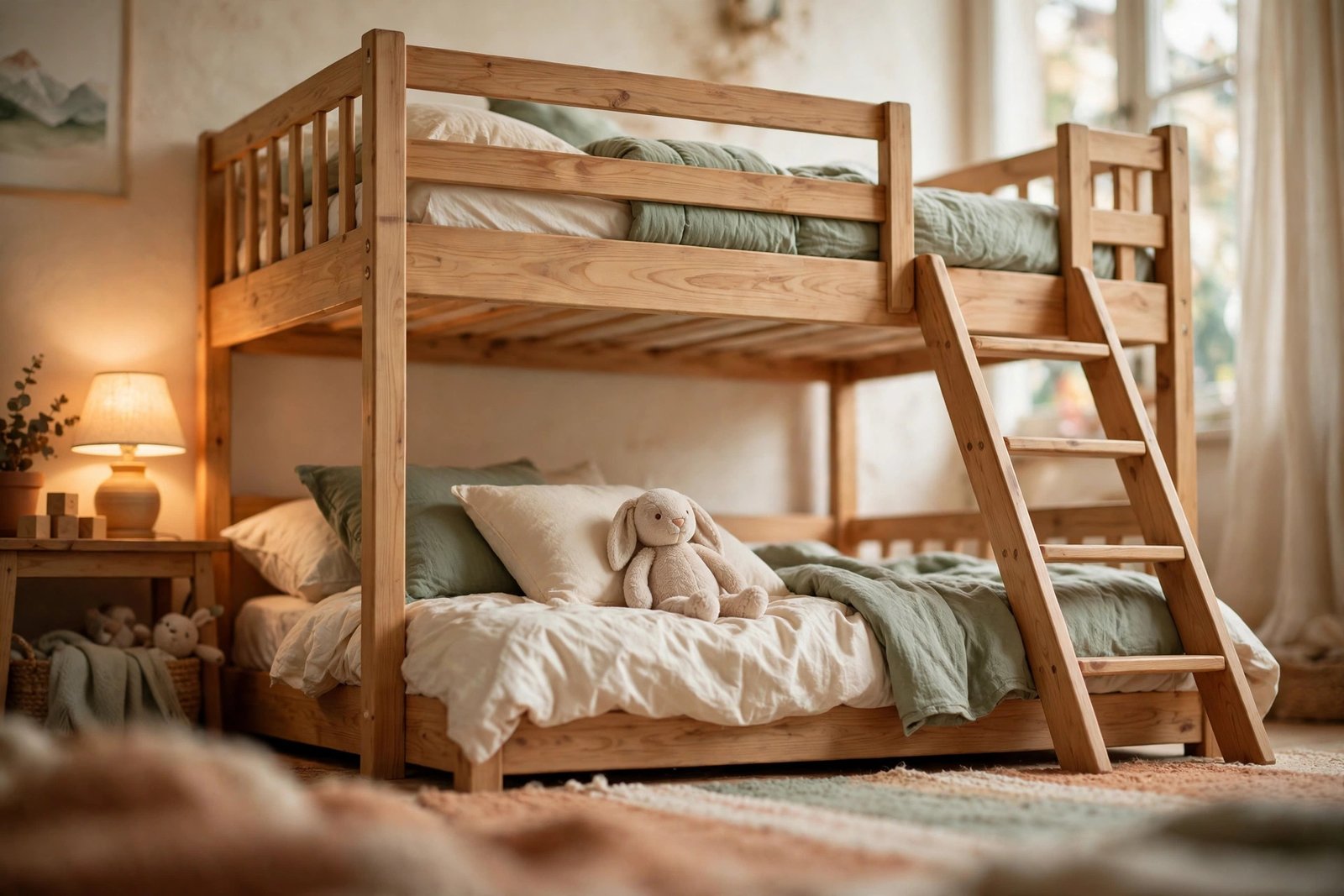
Bunk beds and loft beds are a dream for many kids — and a practical way to free up floor space in a shared room. They also need a few non-negotiable safety rules. The top bunk is for older children only; most manufacturers and safety guidance recommend age six and up, and the child should be able to climb the ladder confidently and understand the rules. Guard rails must run along both sides of the top bunk, with no gaps large enough for a child to slip through, and the mattress must sit low enough that the top of the mattress is well below the top of the guard rail. Choose a sturdy ladder that is fixed to the bed, not a wobbly add-on, and keep the area around the ladder clear of toys and clutter. Anchor the bed frame to the wall if the design allows it, and check bolts and joints every few months — kids’ furniture takes a lot of use. Set clear house rules from day one: no jumping on beds, no playing on the ladder, and the top bunk is for sleeping, not climbing games. With those rules in place, a bunk or loft bed can be a fun, space-saving centerpiece that siblings genuinely love.
14. Layer Soft Flooring for Play
Kids spend a surprising amount of time on the floor, so the floor deserves as much thought as the furniture. A soft rug over hard flooring cushions falls, warms up cold mornings, and defines play space, as in idea 4. For extra comfort, layer a smaller, washable play mat or a couple of floor cushions on top of the main rug in the play zone. Choose low-pile, easy-clean materials, and skip long shaggy rugs that trap crumbs and small toys. If your child has allergies, washable rugs and regular vacuuming make a real difference, and hard flooring underneath is easier to keep dust-free than wall-to-wall carpet. Keep the floor as clear as possible for safe movement — toys with small parts belong in bins, not scattered where bare feet find them at night. Rounded-corner furniture helps here too: a coffee-table-height play table or a storage bench with soft edges is kinder to shins and heads than sharp corners. A well-layered floor makes the room feel cozy underfoot and keeps play comfortable, whether your child is building a block tower or sprawling out with a puzzle.
15. Add Personal Touches With Their Name
A room feels personal when it carries your child’s mark on it. A wooden name sign above the bed, a monogrammed pillow, or a door hanger they decorated themselves are small touches that make a big difference to a child. Keep these touches changeable — a name sign can move to a new room, and a monogrammed pillowcase can be swapped — rather than painting a name directly on the wall in a style they may outgrow. Let your child make one piece themselves, even if it is just choosing the color of the sign or decorating a plain frame. Personal touches also help in shared rooms: each child gets their own shelf, their own pillow, or their own side of the gallery wall, which cuts down on “that’s mine” arguments. Avoid anything with small, detachable parts for younger kids, and hang name signs securely, out of reach of a crib. The sweet spot is a room that clearly belongs to your child, without turning every surface into a shrine to one phase — personal, but still flexible enough to grow.
16. Set Up a Study Station That Fits
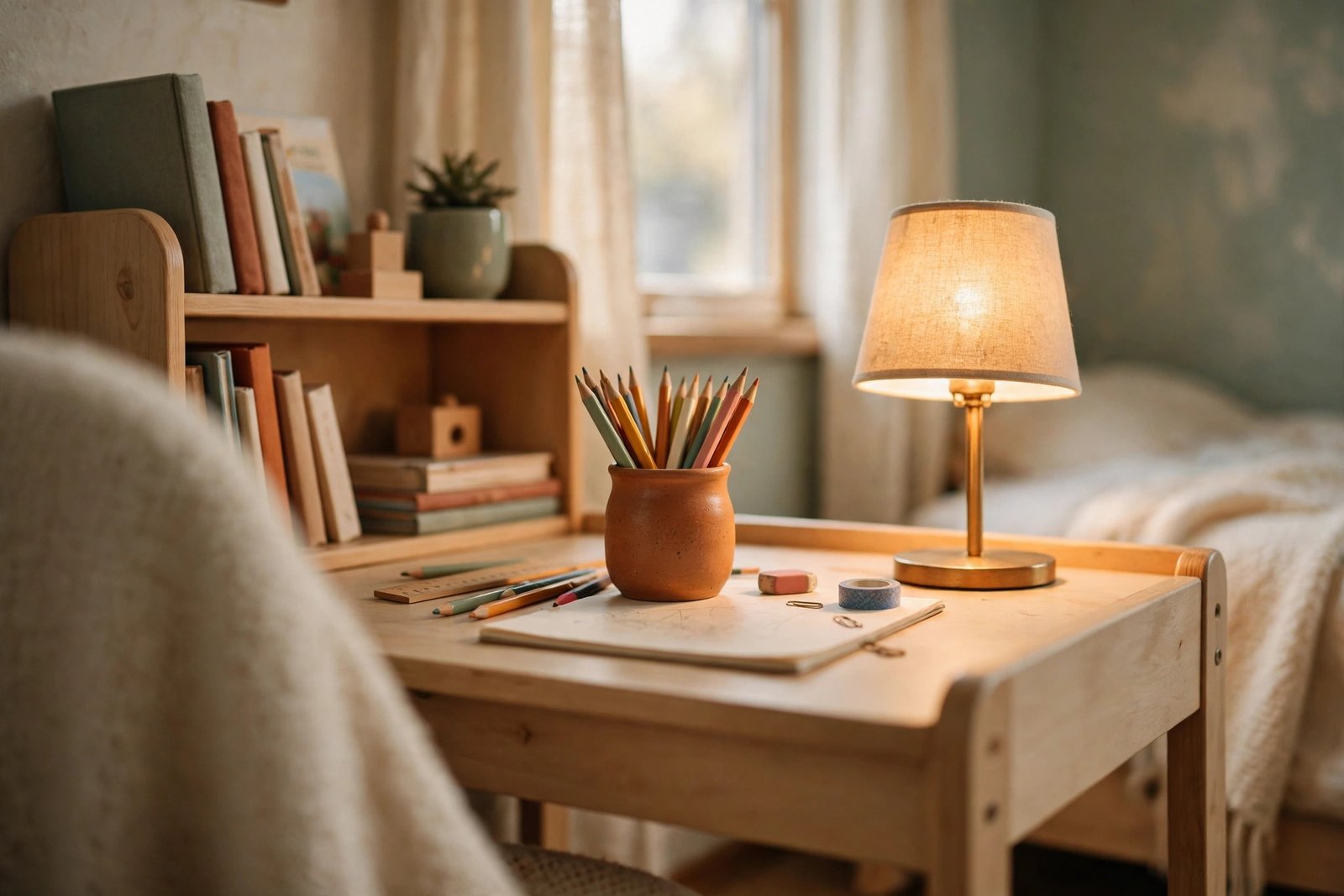
Homework does not need a separate room, but it does need a dedicated spot. A small desk and chair sized to your child, placed near natural light and away from the bed, helps them switch into work mode. An adjustable-height chair and a desk at elbow height prevent slouching, and a small shelf or desk organizer keeps supplies within reach so homework does not become a scavenger hunt. Keep the desk surface mostly clear — a pencil cup, a lamp, and the current assignment are enough — and store extra supplies in a nearby bin or drawer. A warm desk lamp, like the one in the photo below, gives focused light for reading and writing without lighting the whole room at bedtime. For younger kids, the same desk doubles as an art station; cover it with a wipeable mat for paint and glue days. As kids get older, the station can grow with them: add a desk organizer, a pinboard for schedules, or a charging spot for a school device, kept outside the bedroom at night if that is your family’s rule. A study station that fits the child, rather than a hand-me-down adult desk, makes homework feel less like a chore.
17. Rotate Toys and Books Every Season
The simplest kids bedroom idea is also one of the most effective: rotate, don’t accumulate. Every few months, or at the change of seasons, swap out a box of toys and books for a box stored elsewhere in the house. Old favorites feel new again, the room stays manageable, and you get a natural moment to pass on outgrown toys. Store the off-rotation box in a closet, garage, or top shelf, labeled by season or age, and involve your child in choosing what goes in and out — they will often surprise you by letting go of things you assumed were favorites. Rotation also makes birthdays and holidays easier: new toys have somewhere to go, because something else has just rotated out. Keep a small donation box in the closet, and when it fills up, let your child help choose where it goes. This habit keeps the room feeling fresh without constant shopping, teaches your child that less can actually mean more play, and makes the twice-yearly deep clean far less daunting. A room that breathes is a room a child actually enjoys spending time in.
Products to Consider
These are generic item types to look for when you shop for a kids bedroom refresh — choose sizes, materials, and finishes that suit your child’s age and your room:
- A solid wood or metal bed frame with a good weight rating
- A low, open cubby storage unit with fabric bins
- A washable, low-pile rug with a non-slip rug pad
- A warm-toned bedside lamp and a cordless blackout curtain set
- Simple wooden picture frames in one matching finish
- An adjustable-height desk chair and a small desk organizer
- A soft floor cushion or bean bag for a reading nook
- Peel-and-stick wall decals or removable wallpaper for one accent wall
Frequently Asked Questions
What colors work best for a kids bedroom?
Warm whites, soft sage, pale blue, and warm gray make the most flexible base, because they suit changing tastes and keep the room feeling calm. Bring in your child’s favorite colors through bedding, rugs, curtains, and art, which are easy and inexpensive to swap when interests change.
How do I make a small kids bedroom feel bigger?
Keep large furniture against the walls, use low storage your child can reach, choose a light wall color, and let one rug define the play area. A loft or bunk bed can free up floor space in a shared room, and rotating toys keeps a small room from feeling crowded.
What age is safe for the top bunk of a bunk bed?
Most manufacturers recommend age six and up for the top bunk, and the child should be able to climb the ladder safely and follow the rules. Always use full guard rails on both sides, keep the mattress below the top of the rails, and check bolts and joints regularly.
How can I keep a kids bedroom tidy without constant nagging?
Make cleanup easy: low, labeled bins, one category per bin, and a clear rule like “toys live on the rug.” Rotate toys seasonally so there is less to tidy, and build a short cleanup routine into the day, such as tidying before dinner or before bedtime stories.
Should a kids bedroom have a TV or a computer?
It depends on your family’s rules and your child’s age, but many families keep screens out of younger children’s bedrooms to protect sleep. If an older child needs a computer for schoolwork, a dedicated study station with a clear “screens off at bedtime” rule works better than a screen beside the bed.
Final Thoughts
A great kids bedroom is not about matching a showroom or chasing the latest theme. It is about a bed that fits, storage a child can actually use, light that shifts from playtime to bedtime, and a few personal touches that make the room unmistakably theirs. Start with the ideas that solve your biggest daily frustration — whether that is morning chaos, toy sprawl, or bedtime battles — and add the rest over time. Rooms that grow with their kids are built in small, thoughtful steps, and every one of these 17 ideas is a step you can take this weekend. Pick one, try it, and let your child help — after all, it is their room, and the best kids bedroom ideas are the ones they love living in.