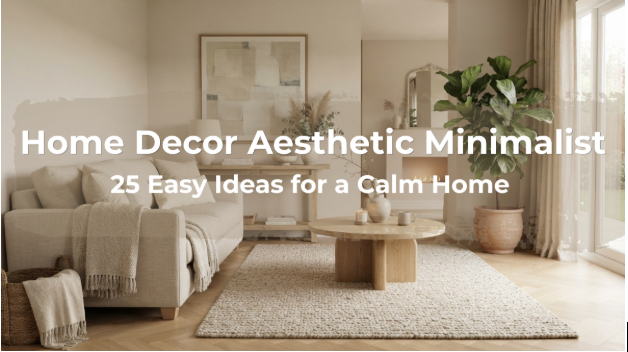
A minimalist home does not have to feel empty, cold, or boring. In fact, the right minimalist decor can make your home feel calmer, warmer, and much more put together—even if you are working with a small space or a limited budget.
The secret is not having fewer things just for the sake of it. It is about choosing the right pieces, leaving enough breathing room, and adding simple details that make the space feel like yours.
If you love clean rooms, soft colours, natural textures, and that effortless Pinterest-style look, these home decor aesthetic minimalist ideas will help you create the look without making your home feel like a showroom.
Aesthetic minimalist decor is a mix of simple design and personal style.
Traditional minimalism often focuses heavily on reducing clutter. Aesthetic minimalism takes that idea a little further by making the space visually pleasing, comfortable, and personal.
Think:
The goal is not to remove everything from your home. The goal is to make every item feel intentional.
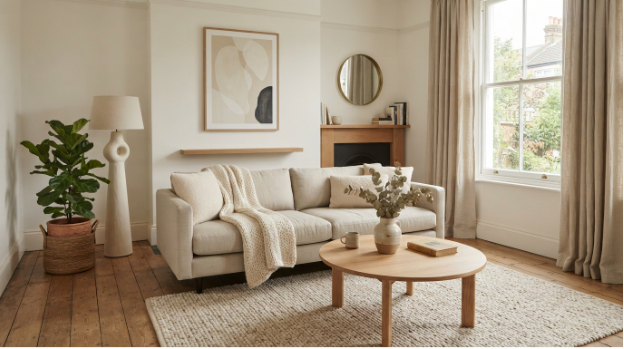
A simple colour palette is one of the easiest ways to create a minimalist home aesthetic.
You do not have to use plain white everywhere. Try shades such as:
For a more interesting look, choose one main colour, one supporting neutral, and a small accent colour.
For example, cream walls with light wood furniture and soft green accessories can create a calm and natural feel.
Minimalist furniture usually has clean shapes without too many decorative details.
Look for sofas, beds, tables, and cabinets with simple lines and practical designs.
You do not need to replace all your furniture to achieve a home decor aesthetic Minimalist, either. Sometimes changing just one large piece can make the room feel completely different.
If your sofa is bulky or visually heavy, balance it with lighter curtains, a simple coffee table, or open shelving.
One of the biggest secrets of minimalist decor is knowing when to stop.
You do not need to decorate every wall, shelf, or corner.
Empty space gives your favourite pieces room to stand out and makes the whole room feel more relaxed.
Before adding another decoration, look around the room and ask:
Does this space actually need something else?
Sometimes the answer is no.
Good lighting can completely change a minimalist room.
Instead of relying only on a bright ceiling light, layer different sources of light.
Try:
Warm lighting works especially well with beige, cream, wood, and soft brown tones.
It can make a simple room feel much more comfortable in the evening.
Natural wood is a great way to make minimalist decor feel warmer.
You can add wood through:
Light wood works beautifully with neutral colours, while darker wood can create a richer and more sophisticated look.
If your neutral room feels boring, do not immediately add lots of bright colours.
Try adding texture first.
A soft rug, knitted throw, linen-style curtains, woven basket, textured cushions, or ceramic vase can make a simple room feel much more interesting.
This is one of the easiest ways to create a cozy minimalist home.
Instead of filling a wall with lots of small frames, try one large piece of artwork.
A simple abstract print, black-and-white photograph, botanical artwork, or neutral landscape can become the focal point of the room.
Choose something you genuinely like rather than buying artwork simply because it looks “minimalist.”
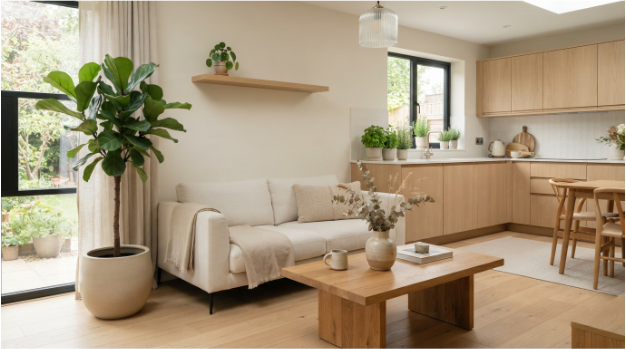
Plants add life to a minimalist space without making it feel cluttered.
You can use:
If you do not want the maintenance of real plants, a high-quality artificial plant can still create a similar visual effect.
Minimalist does not mean every item has to be tiny and plain.
One statement piece can actually make the room more interesting.
It could be:
The key is to let that item stand out instead of surrounding it with too many other decorations.
Even the prettiest minimalist room can quickly become messy when everyday items are left everywhere.
Baskets are an easy solution.
Use them for:
Choose baskets in natural materials or neutral colours so they blend into the room.
Your coffee table does not need to be covered with decorations.
A simple arrangement can be enough.
Try a small tray with a candle, a ceramic vase, and one or two books.
Leave plenty of the table surface clear. This creates that clean, effortless look without making the room feel unfinished.
A large mirror can be both decorative and practical.
Place it opposite or near a natural light source when possible. It can help reflect light and make a smaller room feel more open.
Choose a simple frame that works with the rest of your decor.
For a softer look, try a light wood or neutral frame instead of something heavily decorative.
Open shelves can easily become cluttered.
Instead of filling every space, leave some gaps between objects.
Try combining:
Use different heights and textures, but keep the colour palette connected.
Heavy or overly detailed curtains can make a minimalist room feel visually crowded.
Soft neutral curtains can create a lighter and calmer appearance.
Cream, off-white, beige, and light grey are easy choices that work with many minimalist colour schemes.
If you want a cozy feel, choose a fabric with a little texture rather than a completely flat material.
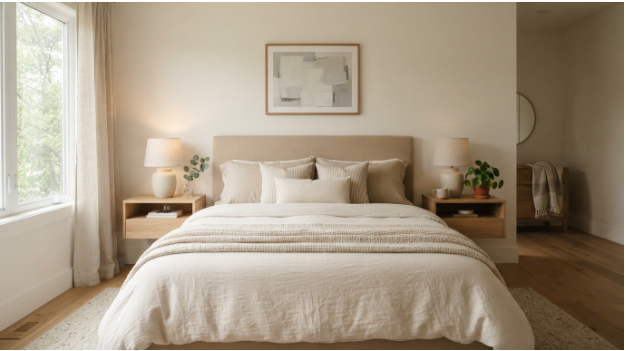
The bedroom is one of the best places to use minimalist decor because the goal is to create a relaxing atmosphere.
Start with simple bedding in neutral shades.
Then add:
Avoid covering every surface with decorations. Keep the bedside tables mostly clear for a more peaceful feel.
A small room does not need lots of furniture.
Choose pieces that fit the room properly and avoid blocking walkways.
A smaller sofa, compact coffee table, wall-mounted storage, and a large mirror can often work better than several bulky pieces.
You can also use furniture with hidden storage to keep everyday clutter out of sight.
If classic minimalist interiors feel too cold to you, try warm minimalism.
Use:
The result is clean but still comfortable.
Scandinavian-inspired minimalist decor is known for simple furniture, light colours, natural materials, and practical design.
A simple combination of light wood, cream textiles, greenery, and soft lighting can create this look without requiring a complete room makeover.
Japandi combines Japanese simplicity with Scandinavian warmth.
It often uses:
If you want a minimalist home that feels calm and sophisticated, this is a beautiful style to explore.
Your entryway sets the mood for the rest of your home.
Keep it simple with a small console table, mirror, basket, and one decorative object.
A tray can also give keys and other small everyday items a proper place.
This keeps the entrance looking organised instead of becoming a drop zone for everything.
A minimalist workspace can help you feel more organised.
Start with a clean desk and only keep the things you use regularly.
Add a small lamp, simple storage, a comfortable chair, and one piece of artwork or greenery.
Try to keep cables hidden where possible. Small details like this can make the entire space look cleaner.
Your minimalist home does not have to look brand new.
A vintage mirror, old wooden stool, second-hand vase, or antique-style frame can add character.
The trick is to use these pieces carefully.
One or two older pieces can make a minimalist room feel personal without making it look cluttered.
Keep the dining area simple and functional.
A clean dining table with comfortable chairs can be enough.
For everyday decor, try a simple vase, small plant, or bowl as a centrepiece.
You can always add more decoration when guests come over.
If an all-neutral room feels too plain, add one accent colour.
For example:
Repeat the accent colour two or three times around the room so it feels intentional.
This may be the most important idea of all.
Your home should not look exactly like a Pinterest photo.
Display a favourite book, a travel memory, a family photograph, handmade pottery, or something that has meaning to you.
Minimalism should make room for your personality—not remove it.
One common problem with minimalist interiors is that they can sometimes feel too cold.
If your room looks clean but does not feel comfortable, focus on layers.
Start with your furniture, then add soft textures such as a rug, curtains, cushions, and throws.
Next, add warm lighting and a few natural materials.
Finally, bring in one or two personal pieces.
You do not need dozens of decorations. A few thoughtful layers can make a huge difference.
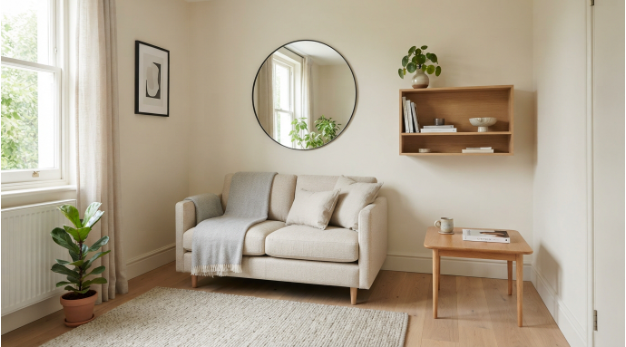
Small rooms can actually work very well with minimalist decor.
The key is to make every piece earn its space.
Try these simple changes:
Instead of asking, “What else can I add?” ask:
“What can make this room work better?”
That small change in thinking can make decorating much easier.
You do not need an expensive makeover to get the look.
Start with what you already have.
Remove items you no longer use, rearrange your furniture, clear unnecessary clutter, and group similar colours together.
Then spend your budget on a few pieces that will have the biggest impact.
Good places to start include:
You can also shop second-hand for furniture, mirrors, frames, and decorative pieces.
A minimalist home is often more about editing than buying.
This is where many people get minimalist decor wrong.
They remove so much that the room stops feeling personal.
Instead of displaying everything you own, choose a few things that actually matter to you.
For example, one favourite artwork can be more effective than six random prints.
A small collection of meaningful books can look better than a shelf filled with objects you do not really love.
Think less, but better.
White can look beautiful, but too much of it can make a room feel flat or cold.
Mix in cream, beige, wood, soft grey, or muted colours.
This sounds funny, but it happens all the time.
A person sees beautiful minimalist vases, candles, baskets, trays, and sculptures—and suddenly the minimalist room is full of stuff.
Choose only what you have space for.
Large furniture can quickly overwhelm a small room.
Always consider the size of your space before buying.
If everything has the same smooth texture, the room can feel boring.
Add rugs, cushions, throws, wood, ceramics, or woven materials.
Bright white lighting can ruin an otherwise cozy minimalist room.
Warm lighting is usually a better choice for living spaces and bedrooms.
Inspiration is useful, but your home does not need to look exactly like someone else's.
Take the ideas you love and adapt them to your space, lifestyle, and budget.
If you are shopping for your home, focus on pieces that are both attractive and useful.
Some items worth considering include:
Do not buy everything at once.
Choose the pieces that solve a real problem or improve the room in a noticeable way.
Creating a minimalist room is one thing. Keeping it that way is another.
Try a quick 10-minute reset at the end of the day.
Put away loose items, clear the main surfaces, fold blankets, return books to their place, and deal with anything that has been left out.
You can also use a simple rule:
When something new comes in, consider whether something else needs to go.
This prevents small amounts of clutter from building up over time.
Creating a beautiful home decor aesthetic minimalist look does not mean getting rid of everything you love.
It is about creating more breathing room, choosing pieces carefully, and making your home feel calm without making it feel empty.
Start small. Clear one surface, rearrange one room, add warmer lighting, bring in a little texture, and choose one decoration you genuinely love.
You do not need a huge budget or a perfect home to create a minimalist aesthetic. With a few thoughtful changes, even a small space can feel clean, cozy, and completely your own.

Decorating a living room can be difficult when you want to balance style, comfort, and everyday functionality. Choosing furniture that is too large, mixing too many colors, or adding unnecessary accessories can make the space feel crowded and unorganized.
A well-designed living room starts with a clear decorating approach that considers the room's size, layout, existing furniture, and personal style. For a stylish USA living room, focus on comfortable seating, coordinated colors, practical furniture arrangements, layered lighting, and carefully selected decorative accents.
Whether your home has a modern, traditional, minimalist, or casual interior, these home decor ideas can help you create a welcoming space. With thoughtful planning, you can make your living room attractive, comfortable, and functional for everyday living.
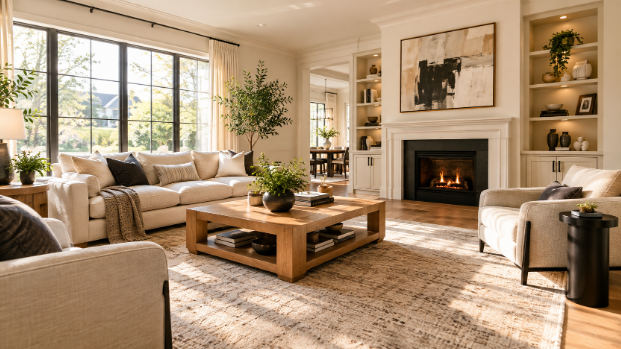
Choosing a living room style before buying furniture or accessories helps create a space that feels coordinated rather than random. Consider your home's architecture, room size, existing furniture, and how you use the space.
A clear style also makes it easier to choose colors, fabrics, lighting, and decorative accents.
A modern American living room usually combines clean lines, comfortable furniture, neutral colors, and practical decor. The goal is to create a space that looks polished without feeling too formal.
Choose a comfortable sofa in beige, gray, cream, or another neutral shade. Add a simple coffee table, an area rug, modern lighting, and a few decorative accessories.
For example, a cream sofa with a textured rug, black accent chairs, and simple wall art can create a balanced contemporary look.
Traditional living room decor focuses on classic furniture, warm colors, balanced arrangements, and details that do not quickly go out of style. This approach works well if you prefer a comfortable and established look.
Wooden furniture, patterned rugs, framed artwork, decorative lamps, and classic sofas can help create this style.
For example, pair a neutral sofa with a wooden coffee table, traditional area rug, and framed landscape artwork for a warm and timeless American living room.
A cozy and casual living room prioritizes comfort while keeping the decor relaxed and practical. This style works especially well for family homes where the living room is used for relaxing, watching television, reading, or spending time together.
Use soft seating, layered pillows, comfortable throws, warm lighting, and natural materials.
A large fabric sofa combined with a textured rug, woven baskets, wooden accents, and a few indoor plants can make the room feel inviting without looking overly decorated.
A minimalist living room focuses on simplicity, clean lines, and fewer decorative items. Instead of filling the room with accessories, choose a few pieces that are both useful and attractive.
Neutral colors, simple furniture, uncluttered surfaces, and hidden storage can help create this look.
The key is not to make the room feel empty. Instead, focus on quality, proportion, and carefully selected decorative elements.
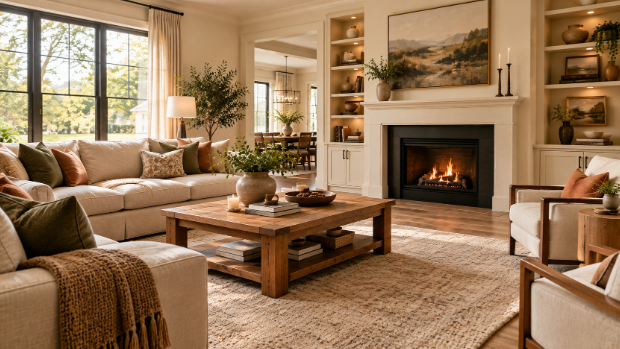
The right color scheme can make a living room feel more comfortable, spacious, and organized. Instead of choosing colors separately, select a main shade, a supporting color, and one or two accent tones.
Consider your flooring, furniture, natural light, and existing home decor before making your choices.
Neutral colors are a reliable choice for stylish living room decor because they create a calm background that works with different furniture and accessories.
Beige, cream, white, taupe, soft gray, and warm greige are popular options.
For example, a beige sofa can be paired with cream walls, a light brown rug, and wooden furniture. Add black or dark gray accents through lamps, picture frames, or cushions to create contrast without making the room feel too busy.
Warm and earthy colors can make a living room feel inviting and comfortable. Shades such as terracotta, olive green, warm brown, sand, rust, and muted mustard work especially well with natural materials.
For example, combine a warm beige sofa with a rust-colored throw, olive green cushions, and a wooden coffee table.
Plants, woven baskets, and natural wood accessories can reinforce the earthy feel.
Accent colors are useful for adding personality, but too many strong colors can make the room feel disconnected.
Choose one main accent color and repeat it in small amounts throughout the space.
For example, if you choose navy blue as your accent, use it in two or three areas such as throw pillows, artwork, and a decorative vase.
Keeping the larger furniture and walls neutral allows the accent color to stand out while maintaining a balanced living room design.
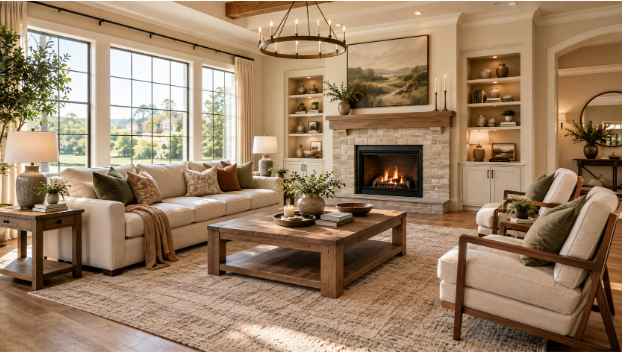
Furniture is one of the most important parts of a living room because it affects both comfort and the overall layout.
Choose pieces based on the room's size, daily use, and decorating style. The goal is to create a space that feels comfortable without becoming crowded.
The sofa is usually the main piece of living room furniture, so choose one that fits both the room and your lifestyle.
Consider the sofa's width, depth, fabric, color, and seating capacity before buying.
For a small living room, a compact sofa with a simple shape can leave more space for movement. In a larger room, a sectional or spacious sofa can provide comfortable seating for family and guests.
For example, a neutral beige or gray sofa can work well with modern living room decor because it provides a flexible base for colorful pillows, rugs, and other accessories.
Accent chairs can provide additional seating while adding shape and personality to the room. Choose chairs that complement the sofa without needing to match it exactly.
For example, pair a cream sofa with two light wood or textured fabric accent chairs.
If the room already has several patterns, choose simple chairs in a solid color to keep the design balanced.
In smaller spaces, consider lightweight chairs that can be moved easily when needed. This makes the living room more flexible for everyday activities and guests.
A coffee table should be large enough to be useful but small enough to allow comfortable movement around it.
Its shape should also work with the arrangement of your sofa and chairs.
A rectangular coffee table often works well with a standard sofa, while a round or oval table can be useful in smaller rooms or layouts with several seating pieces.
For example, a wooden coffee table can add warmth to a neutral living room, while a simple glass or metal design may suit a contemporary space.
Leave enough walking space between the table and seating so the room does not feel cramped.
Good furniture arrangement makes a living room easier to use and helps the space feel more organized.
Start by identifying the main focal point, such as a fireplace, television, large window, or artwork.
Place the sofa where it faces or connects naturally with that focal point. Then position accent chairs and other seating so people can comfortably talk without blocking walkways.
Avoid pushing every piece of furniture against the walls simply to create open space in the center. In many living room layout ideas, bringing furniture slightly inward creates a more connected and comfortable seating area.
For open-concept living rooms, use rugs, furniture placement, and lighting to visually define the living area without completely separating it from nearby spaces.
If you're furnishing the room, some practical products to consider include:
Choose products based on the room's measurements, existing colors, and everyday needs rather than buying items simply because they are popular.
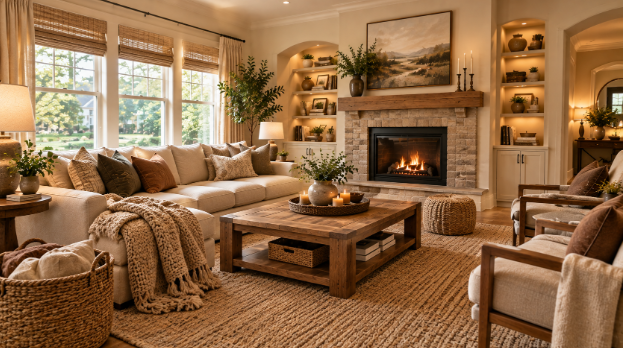
Textures can make a living room feel warmer, softer, and more comfortable.
Even a simple room can feel inviting when you combine different fabrics, natural materials, and layered decorative pieces. The key is to use several textures without making the space look cluttered.
Rugs, pillows, and throws are easy ways to add comfort and depth to your living room.
Instead of using everything in the same fabric, combine different textures while keeping the colors coordinated.
For example, place a soft area rug under the main seating area, add textured pillows to the sofa, and drape a knitted or woven throw over one side.
These small additions can create cozy living room decorating ideas without changing the main furniture.
In a neutral room, you can use cream, beige, and warm brown textiles to create a layered and comfortable look.
Mixing fabrics and materials helps prevent the living room from looking flat or overly uniform.
Combine materials such as cotton, linen, wool, velvet, leather, wood, and woven fibers.
For example, a linen sofa can be paired with velvet pillows, a wool rug, and a wooden coffee table.
Each material adds a different visual and physical texture while still working together as part of the overall design.
Try to balance smooth and rough surfaces. If your furniture is mostly smooth, add a textured rug or woven accessories to create more visual interest.
Natural elements can make a living room feel relaxed and connected to the outdoors.
Wood, plants, stone, rattan, jute, and woven baskets are useful choices for warm and inviting living room ideas.
For example, add a wooden side table, a few indoor plants, and a jute basket for blankets.
A small collection of natural accessories can add warmth without requiring major changes to the room.
Natural materials also work well with neutral living room color ideas and earthy color palettes, making them suitable for both modern American living room design and cozy casual interiors.
This section is also a natural place to recommend affordable accessories such as:
These smaller items can refresh a room without requiring expensive furniture changes.
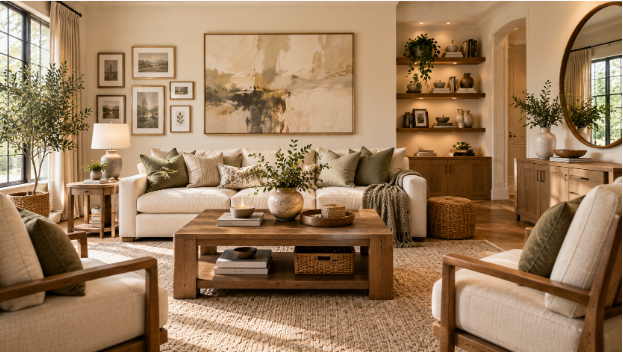
Living room walls provide an opportunity to add personality, color, and visual interest to the space.
Empty walls can make a room feel unfinished, while too many decorations can make it feel crowded.
Choose wall decor based on the room's size, furniture, color scheme, and overall style.
Artwork is one of the easiest ways to personalize a living room.
Choose pieces that complement your furniture and color palette rather than competing with them.
For a modern living room, simple abstract artwork, black-and-white prints, or large neutral pieces can work well.
Traditional living rooms may look better with landscapes, classic paintings, or framed botanical prints.
For example, if your sofa is beige and your room uses warm neutral home decor, choose artwork with soft brown, cream, green, or muted blue tones to create a coordinated look.
A gallery wall can turn a plain wall into an attractive focal point.
You can combine artwork, family photos, illustrations, and decorative prints to create a personal display.
Before hanging anything, arrange the frames on the floor to test different layouts. Keep similar spacing between the pieces so the display looks organized.
For example, a hallway-style arrangement with several matching frames can create a clean look, while different frame sizes can give the room a more relaxed and collected appearance.
Mirrors can make a living room feel brighter and more spacious by reflecting natural and artificial light.
They are especially useful for smaller living room decor ideas where you want the space to feel more open.
Place a large mirror opposite or near a window when possible so it can reflect daylight.
A decorative mirror above a console table or fireplace can also create a strong focal point.
Choose a frame that matches the room. A simple black frame can suit modern living room decor, while a wooden or decorative frame may work better with traditional or rustic styles.
Shelves can provide useful storage while also giving you space to display decorative objects.
Avoid filling every shelf completely. Leave some open space so the arrangement remains easy to look at.
For example, combine a few books with a small plant, framed photo, ceramic object, or woven basket.
Vary the height and size of the items to create visual balance.
For completely empty walls, consider floating shelves, a large piece of artwork, a decorative mirror, or a family photo wall.
The right choice depends on the size of the wall and how much visual interest the rest of the living room already has.
Wall decor can also create several useful affiliate opportunities, including:
Choose wall decor that fits the size of the wall rather than selecting pieces based only on appearance.
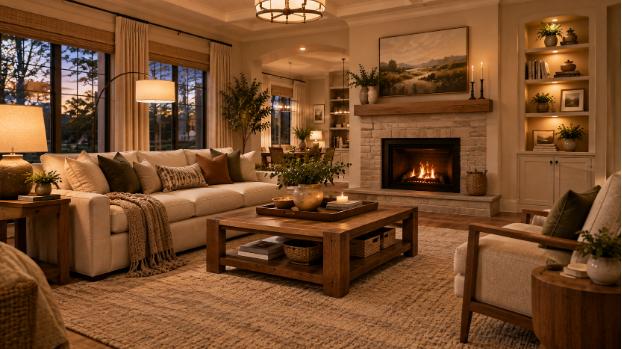
Good lighting can change how a living room looks and feels throughout the day.
Instead of relying on one light source, combine different types of lighting to create a comfortable and balanced atmosphere.
Consider both the room's natural light and how you use the space in the evening.
Ceiling lights provide general illumination, while floor lamps can add focused light to specific areas.
Using both helps prevent the room from feeling too dark or overly bright.
For example, use a simple ceiling fixture for overall lighting and place a floor lamp beside a sofa or accent chair.
This creates a useful reading or relaxing area while keeping the rest of the room comfortable.
For modern living room decor, choose simple fixtures with clean lines. Traditional spaces may work better with classic lamps or fixtures with warmer finishes.
Table lamps are an easy way to add soft light to side tables, consoles, or cabinets.
They can also make seating areas feel more comfortable in the evening.
Place a lamp beside the sofa or on a side table near an accent chair.
Choose a lampshade that spreads light gently instead of creating harsh brightness.
For example, a warm-toned lamp beside a beige sofa can complement cozy living room lighting ideas while adding another decorative element to the space.
Ambient lighting creates the overall mood of the living room.
Soft, warm light is usually more comfortable for relaxing than strong, cool lighting.
You can create this effect with dimmable fixtures, table lamps, floor lamps, wall sconces, or subtle LED lighting.
Use brighter lighting when reading or doing activities and softer lighting when watching television or relaxing.
For a warm and inviting living room, combine several low-intensity light sources instead of depending on one bright ceiling light.
This layered approach can make the room feel more comfortable and visually balanced.
Lighting products can be particularly useful affiliate additions because they combine function with style.
Consider:
Small surfaces such as coffee tables, side tables, and consoles are useful places to add decorative details to a living room.
A few carefully selected items can make the space feel finished without creating unnecessary clutter.
A coffee table display should be practical as well as decorative.
Start with one main item, such as a tray, stack of books, vase, or decorative bowl, and build around it with a few smaller pieces.
For example, place a wooden tray on the table with two coffee-table books, a small vase, and a candle.
This creates a simple arrangement while leaving enough open space for everyday use.
Choose items that complement your existing living room color scheme.
Neutral accessories work well in modern spaces, while natural wood, ceramics, or vintage objects can add character to traditional living room decor.
Side tables and consoles can add useful storage and provide additional areas for decorative objects.
Keep these surfaces connected to the overall style of the room instead of treating each one as a separate display.
For example, place a table lamp, small plant, and framed photo on a side table.
On a console, you could combine a mirror or artwork above it with a lamp, decorative bowl, and a few books.
These simple living room decorating ideas can add personality without requiring many accessories.
Too many objects can make surfaces look messy, while too few may make them feel empty.
Use a combination of different heights, shapes, and textures to create visual balance.
For example, place a tall vase beside shorter books and a small decorative object.
Leave some empty space around the arrangement so each piece remains easy to see.
When styling several surfaces, avoid placing similar objects everywhere.
Instead, repeat a few colors or materials throughout the room while varying the actual items.
This creates a coordinated look without making the living room feel overly decorated.
Coffee table styling can naturally include:
Accessories help make a living room feel personal rather than simply furnished.
Small details such as pillows, plants, blankets, photos, and decorative objects can reflect your taste while making the space more comfortable.
Throw pillows and blankets are simple ways to add color, texture, and comfort to a sofa.
Choose a few different sizes or fabrics while keeping their colors connected to the room's overall palette.
For example, a neutral sofa can be styled with cream, beige, and muted blue pillows along with a soft knitted blanket.
This creates cozy living room decor without adding too many strong colors.
Avoid placing too many pillows on the sofa. Leave enough seating space for people to sit comfortably and use the furniture every day.
Plants can bring natural color and texture into the living room.
They work well with both modern and traditional American living room decor and can make the space feel more relaxed.
Choose plants based on the amount of natural light available.
A larger plant can fill an empty corner, while smaller plants can be placed on shelves, side tables, or consoles.
For example, a tall indoor plant beside a sofa can add height to the room, while a small potted plant on a coffee table can provide a simple decorative touch.
Personal photos and meaningful objects can give the living room a more individual character.
Family photographs, travel memories, books, artwork, and handmade pieces can all be used as decorative accents.
Instead of displaying everything you own, choose a few items that have meaning or complement the room's style.
For example, place a framed family photo on a side table and combine it with a small vase or ceramic object.
Keep the arrangement simple and organized.
A thoughtful selection of personal accessories can make the living room feel welcoming while maintaining a clean and stylish appearance.
Some simple accessory categories that work well for affiliate content include:
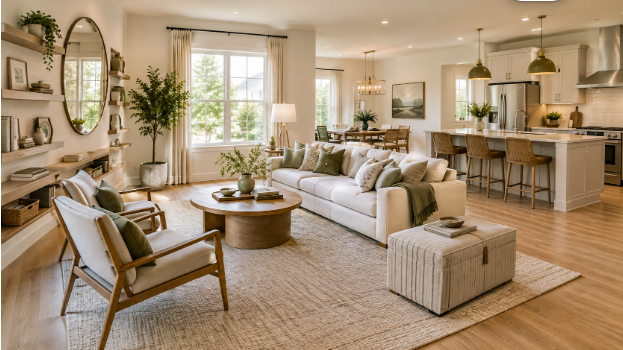
Every living room has different dimensions, layouts, and needs.
A decorating approach that works in a large family room may not work in a small apartment.
Choose furniture, colors, and accessories according to the amount of space available and how the room is used.
Small living rooms benefit from simple furniture arrangements and pieces that do not take up unnecessary floor space.
Choose a sofa that fits comfortably without blocking doors, windows, or walkways.
Use light colors, mirrors, and appropriately sized rugs to make the room feel more open.
Furniture with built-in storage can also help reduce clutter.
For example, a compact sofa, slim coffee table, wall-mounted shelves, and a large mirror can create a practical and comfortable small living room without overcrowding it.
Large living rooms provide more freedom, but too much empty space can make the room feel disconnected.
Use furniture to create defined areas instead of placing everything against the walls.
A large sectional can anchor the main seating area, while accent chairs, an area rug, and a coffee table can create a comfortable conversation space.
You can also add a reading corner or small desk if the room has enough space.
For example, divide a large room into a main seating area and a separate reading area using rugs and furniture placement while keeping the colors and materials coordinated.
Apartment living rooms often require furniture that is practical, flexible, and appropriately sized.
Avoid choosing large pieces simply because they look attractive in a larger space.
Use multifunctional furniture, vertical storage, and simple decorative accessories to make the most of limited space.
A storage ottoman can provide seating and hidden storage, while floating shelves can use wall space without taking up floor area.
For renters, removable wall decor, area rugs, lamps, and throw pillows are simple ways to personalize the room without making permanent changes.
Open-concept living rooms share space with areas such as the kitchen or dining room, so the decorating plan should create visual separation without making the space feel divided.
Use an area rug to define the living room, then arrange the sofa and chairs around a clear focal point.
Lighting and furniture placement can also help separate the living area from nearby spaces.
For example, a large rug can define the seating area while a sofa positioned with its back toward the dining space creates a natural boundary.
Keep colors, flooring, and materials visually connected so the entire open floor plan feels cohesive.
Decorating a living room does not always require replacing expensive furniture or buying many new accessories.
Small changes, creative reuse, and careful choices can make the space feel refreshed while keeping costs under control.
Before buying something new, look at what you already have.
Moving furniture, changing its position, or using an existing piece in a different way can give the room a new appearance.
For example, move a side table to another seating area, use an old basket for blanket storage, or place existing artwork on a different wall.
A simple furniture rearrangement can also improve the room's layout without spending anything.
If a wooden table or cabinet looks worn, cleaning it, changing the hardware, or giving it a suitable finish may help refresh its appearance.
Small decorative changes can have a noticeable effect on the overall look of a living room.
Focus on areas that are easy to update, such as pillows, throws, lighting, wall decor, and coffee table accessories.
For example, changing your throw pillows to a new color scheme and adding a soft blanket can create a fresh seasonal look.
Rearranging artwork or adding a mirror can also change the room without replacing major furniture.
These simple living room decorating ideas are especially useful when you want to refresh the space without replacing furniture.
When purchasing new items, focus on a few affordable accessories that serve a clear purpose.
Look for simple pieces that coordinate with your existing colors and materials.
For example, an inexpensive vase, framed print, woven basket, small plant, or decorative cushion can add personality without overwhelming the room.
Choose accessories that can also work with different seasonal living room decorations.
Avoid buying many small items simply to fill empty surfaces.
A few well-chosen pieces can create a more organized and stylish room while keeping your decorating budget under control.
For readers who want affordable ways to update their living room, useful product categories include:
A stylish living room should also be comfortable and easy to use every day.
Good decorating is not only about appearance; it is also about keeping enough space to move, choosing practical furniture, and creating a coordinated look.
Too much furniture or too many accessories can make a living room feel smaller and difficult to use.
Before adding anything new, consider whether the item provides a useful function or improves the overall design.
Keep clear paths between the sofa, chairs, doors, and other important areas.
Avoid placing large furniture where it blocks windows, walkways, or natural light.
For example, in a small living room, choose a compact sofa, a slim coffee table, and a few carefully selected accessories instead of filling the room with multiple large pieces.
This approach works well for small living room decor ideas and helps the space feel more open.
A living room should look attractive but still feel comfortable for everyday activities.
Choose furniture and accessories based on how your household actually uses the room.
If the living room is mainly used for relaxing and watching television, prioritize comfortable seating, soft lighting, practical side tables, and easy-to-clean fabrics.
If it is also used for reading or working, create a separate area with suitable lighting and seating.
For example, a comfortable sofa with supportive cushions, a soft area rug, and a floor lamp can create a stylish space that is also practical for everyday use.
A coordinated combination of colors and materials helps create a more organized and polished living room.
You do not need to use the same color or material everywhere, but the different elements should work well together.
Choose a main color for larger pieces such as walls, sofas, or rugs, then add one or two supporting colors through pillows, artwork, curtains, or decorative objects.
For example, a beige sofa, warm white walls, light wood furniture, and muted green accessories can create a calm and cohesive look.
Mixing materials such as wood, fabric, metal, and woven fibers can also add depth without making the room feel cluttered.
Keeping colors and materials connected is especially helpful when creating modern American living room design or warm neutral home decor.
Creating a stylish living room does not require following every decorating trend.
The best approach is to choose ideas that match your home's size, layout, lifestyle, and personal taste.
Focus on comfort, organization, and a consistent design rather than trying to add too many decorative elements.
Start with a clear color palette and build the room around it.
Neutral shades such as beige, cream, white, and warm gray can create a timeless foundation, while colors such as blue, green, or terracotta can add personality through smaller accents.
Choose furniture that fits the room properly.
A comfortable sofa, suitable coffee table, accent chairs, and an appropriately sized rug can create a balanced seating area.
Good living room furniture arrangement ideas should always leave enough space for people to move around comfortably.
Use lighting and texture to make the space feel warmer.
Combine ceiling lights with floor lamps, table lamps, rugs, pillows, and throws.
These simple additions can make modern American living room design feel more inviting without requiring major changes.
Finally, add personal details that make the room feel like your own.
Family photos, artwork, plants, books, and meaningful decorative objects can give your space character.
Whether you prefer traditional American living room ideas, contemporary decor, or cozy casual styling, the goal is to create a living room that looks beautiful while remaining comfortable and practical for everyday life.
Creating a stylish USA living room is about finding the right balance between comfort, function, and personal style.
Start with a decorating style that suits your home, then choose coordinated colors, comfortable furniture, suitable lighting, and a mix of textures.
Use wall decor, accessories, plants, and personal items to add character without overcrowding the space.
Whether you are decorating a small apartment, a large family room, or an open-concept space, thoughtful furniture placement and simple decorative choices can make a difference.
By keeping the room organized, comfortable, and visually coordinated, you can create a welcoming living room that works well for everyday life.
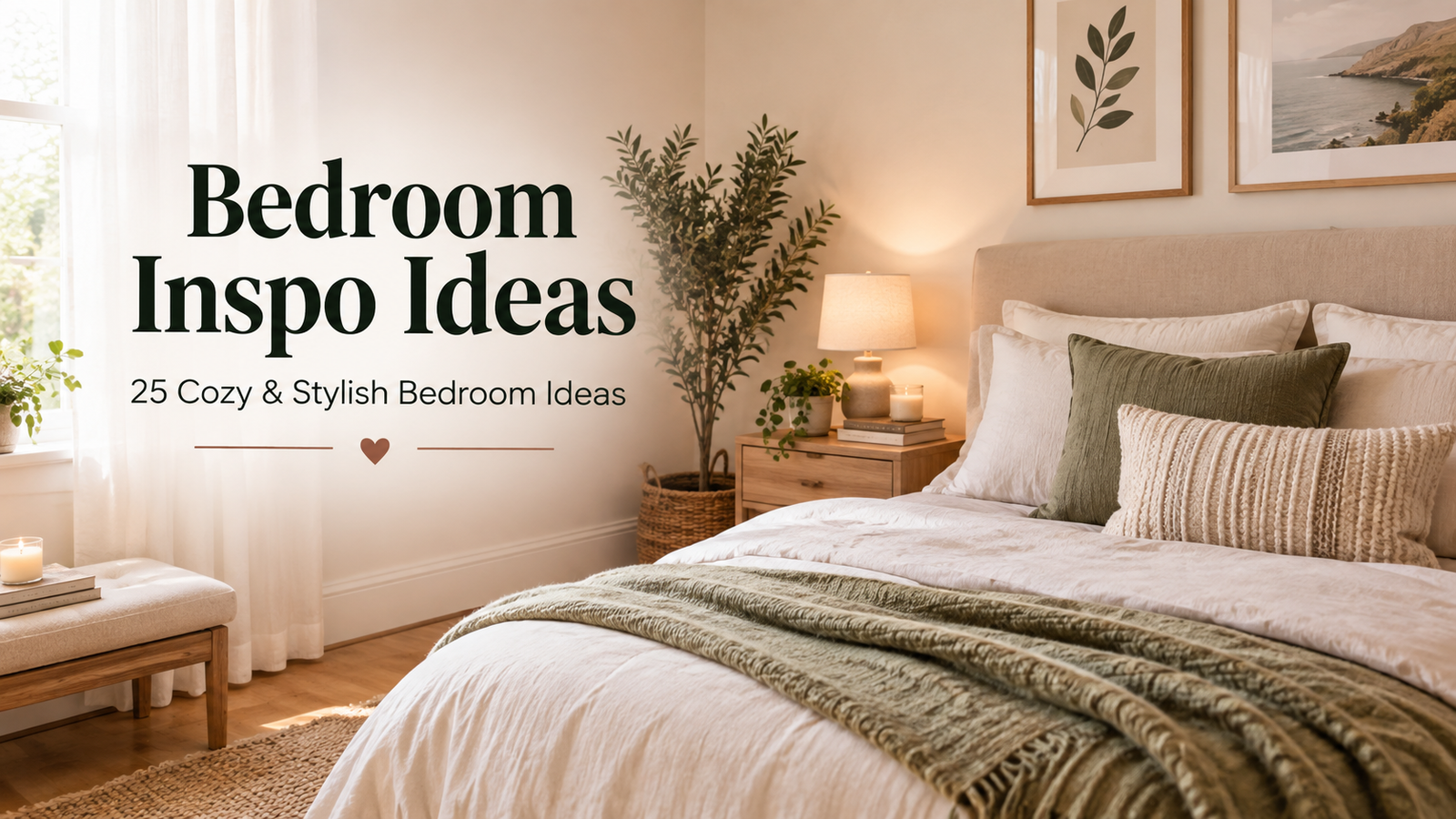
Your bedroom should feel like the easiest room in the house to relax in. But sometimes, even after buying new bedding or moving the furniture around, it still does not feel quite right. That is where the right bedroom inspo ideas can help.
You do not need a complete renovation or a huge budget to make your bedroom feel more beautiful. A better colour palette, softer lighting, a well-dressed bed, clever storage, and a few personal details can completely change the atmosphere.
Whether you have a spacious main bedroom, a small box room, a rented flat, or simply want a quick refresh, these bedroom inspo ideas are designed to be practical as well as pretty.
Colour sets the mood before you add anything else.
For a relaxing bedroom, try soft shades such as:
You do not have to keep everything neutral. A deeper green, navy, terracotta, or muted red can create a beautiful focal point when balanced with softer colours.
If you are unsure, choose one main wall colour and two or three supporting shades for bedding, curtains, artwork, and accessories.
The bed is naturally the largest feature in most bedrooms, so make it work for you.
Start with good-quality-looking bedding in a colour that works with your walls. Then add a few cushions and a soft throw.
You do not need ten cushions to create a styled bed.
Try:
The result feels inviting without looking overdone.
A room can have beautiful colours and still feel flat.
The easiest solution is texture.
Mix materials such as:
This is especially useful if you prefer neutral bedroom decor ideas because texture adds interest without requiring lots of colour.
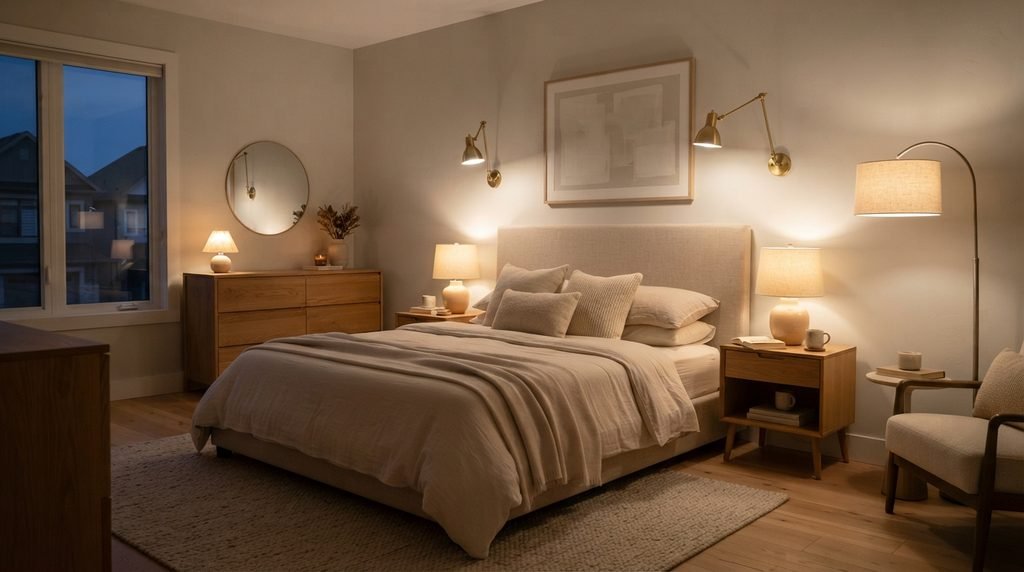
Lighting can completely change how a bedroom feels.
A bright ceiling light may be useful when cleaning or getting dressed, but it is not always the best choice when you want a calm evening atmosphere.
Layer your lighting with:
Place lighting at different heights so the room feels softer and more balanced.
If you have a little extra space, create a small reading corner.
You only need:
It does not have to be a large armchair. Even a compact chair can turn an unused corner into a useful part of the room.
A large mirror can make a bedroom feel brighter and more open.
Place it where it can reflect natural light if possible.
A simple full-length mirror can also be practical when getting dressed, while a decorative wall mirror can become part of your bedroom styling.
Choose a frame that works with the rest of your room rather than treating the mirror as a separate feature.
Instead of filling every wall, choose one artwork that you genuinely love.
It could be:
Place it above the bed, opposite the bed, or on another wall that needs a focal point.
One strong piece often looks more intentional than lots of small decorations.
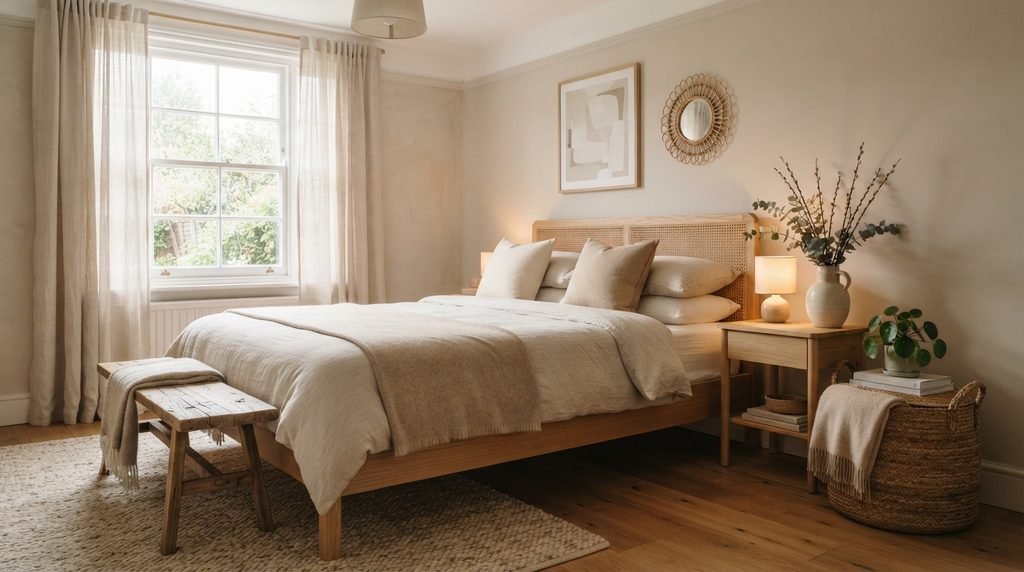
Wood, plants, woven materials, and natural fabrics can make a bedroom feel warmer.
Try a light-wood bedside table, a woven basket, a small plant, or a ceramic vase with branches.
These details work particularly well with neutral colour schemes and can stop a room from feeling too plain.
A small bedroom does not have to feel cramped.
Start by choosing furniture that fits the actual size of the room.
Useful tricks include:
For very compact bedrooms, an ottoman bed or built-in storage can be particularly useful because the same piece can provide both sleeping space and storage.
Current UK bedroom design coverage places significant attention on compact rooms and practical storage, which makes this especially relevant for smaller homes and flats.
Storage does not have to look boring.
Instead of leaving clothes, books, and everyday items on every surface, use attractive storage that works with your decor.
Consider:
The goal is not to hide everything. It is to give everything a place.
Soft blue is a classic bedroom colour because it can create a calm and airy feeling.
Pair it with:
If you want a more dramatic look, use a deeper blue on one wall and balance it with lighter furniture and bedding.
Sage green works beautifully when you want a bedroom that feels calm but not boring.
Try sage walls with cream bedding, light wood furniture, and small black or brass details.
You can also introduce sage through cushions, artwork, curtains, or a throw if you do not want to repaint.
Your bedroom does not have to follow one style from top to bottom.
A modern bed can look beautiful with a vintage bedside table. A contemporary lamp can work next to an antique-style mirror.
This mix can make the room feel more personal and less like a furniture showroom.
If you like clean spaces, keep your bedroom simple.
Choose a few useful pieces and avoid filling every surface.
A simple bed, two bedside tables, warm lamps, neutral bedding, one artwork, and a plant may be enough.
The trick is to create breathing room around your furniture.
You do not need to own your home to make the bedroom feel like yours.
If painting or drilling is not allowed, focus on removable changes:
These changes can make a surprisingly big difference without permanent alterations.
Your bedside table should be useful first and decorative second.
Keep the essentials close:
Then add one small decorative item such as a vase, candle, or framed photo.
Leaving some empty space makes the whole area look cleaner.
Window treatments can have a major effect on a bedroom.
For a soft, relaxed look, try light curtains in cream, beige, white, or muted colours.
If you need more privacy or darkness, combine curtains with blinds.
The right window treatment should work with your sleep needs as well as your decor.
Warm neutrals are a great choice if you want a timeless bedroom.
Combine:
Then add natural wood and different textures.
This creates a calm room without making it look completely plain.
A bedroom should reflect the person who uses it.
Display a few meaningful things rather than filling the room with random accessories.
A favourite photograph, travel find, old book, artwork, or handmade object can give the room character.
The best bedroom inspo ideas are not necessarily the ones that look perfect in a photograph. They are the ones that make you want to spend time in your own room.
Not every relaxing bedroom needs pale walls.
Deep green, navy, charcoal, brown, or muted burgundy can create a cosy, enveloping feeling.
If you have limited natural light, balance darker walls with warm lamps, lighter bedding, mirrors, and soft textures.
A darker bedroom can feel intimate rather than gloomy when the lighting and materials are balanced.
You do not need to replace everything for a bedroom makeover.
Try changing things in this order:
Declutter → Rearrange → Change bedding → Improve lighting → Add texture → Add artwork
This approach can give you a completely different feeling without the cost of a full renovation.
You do not need luxury furniture to create a polished bedroom.
Focus on details that have a visual impact:
A room often looks more expensive when the details feel intentional.
A headboard can become the main feature of the room.
Try:
If the headboard is bold, keep the rest of the room relatively simple so the space does not become visually busy.
Small box bedrooms can be challenging, particularly in older or compact UK homes.
The answer is not to squeeze in lots of tiny furniture.
Instead, choose fewer pieces that do more.
A bed with storage, slim bedside tables, wall-mounted lighting, built-in wardrobes, and light-coloured textiles can help the room feel more practical.
Use vertical space whenever floor space is limited.
You do not need to redecorate your bedroom every season.
Small changes can make it feel fresh.
For autumn and winter, add:
For spring and summer, switch to lighter bedding, softer colours, lighter curtains, and fresh greenery.
This is an easy way to keep your bedroom feeling current without constantly buying new furniture.
Sometimes the hardest part is deciding what style you actually like.
Here are a few directions to consider.
Think light wood, soft neutrals, simple furniture, natural textures, and plenty of light.
Combine Japanese simplicity with Scandinavian warmth. Use natural wood, calm colours, simple shapes, and minimal decoration.
Choose clean lines, simple furniture, restrained colours, and one or two strong design features.
Use soft patterns, painted furniture, layered bedding, vintage details, and warm colours.
Focus on a well-dressed bed, matching bedside lighting, coordinated colours, layered textures, and a clutter-free layout.
Even a beautiful bedroom can feel wrong when the basics are overlooked.
A bedroom needs enough furniture to function, but not so much that you cannot move comfortably.
One harsh ceiling light is rarely enough.
Lots of tiny accessories can quickly make a bedroom feel messy.
Clutter can undo all your decorating work.
Your bedroom should look beautiful, but it also needs to be comfortable.
Do not buy a beautiful chair that nobody can sit in or choose impractical bedding simply because it looks good.
You can refresh a bedroom without spending a fortune.
Start with free changes:
Then spend your money on one or two high-impact items.
A new duvet cover, lamp, rug, mirror, or pair of curtains can sometimes change the room more than a collection of small accessories.
The best bedroom inspo ideas are the ones that help you create a room that feels good to live in—not just one that looks good in a photo.
You do not need a huge bedroom, expensive furniture, or a complete renovation.
Start with the basics: choose a colour palette, make the bed inviting, improve the lighting, add texture, solve your storage problems, and finish with a few things that reflect your personality.
Whether you prefer a calm minimalist room, a cosy cottage look, a modern space, or something darker and more dramatic, the right small changes can make your bedroom feel completely different.