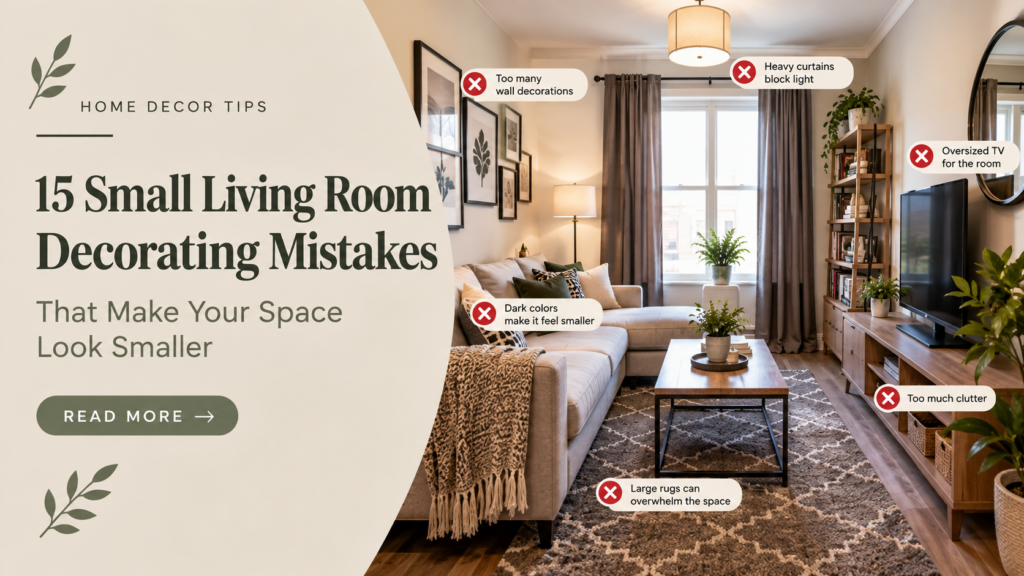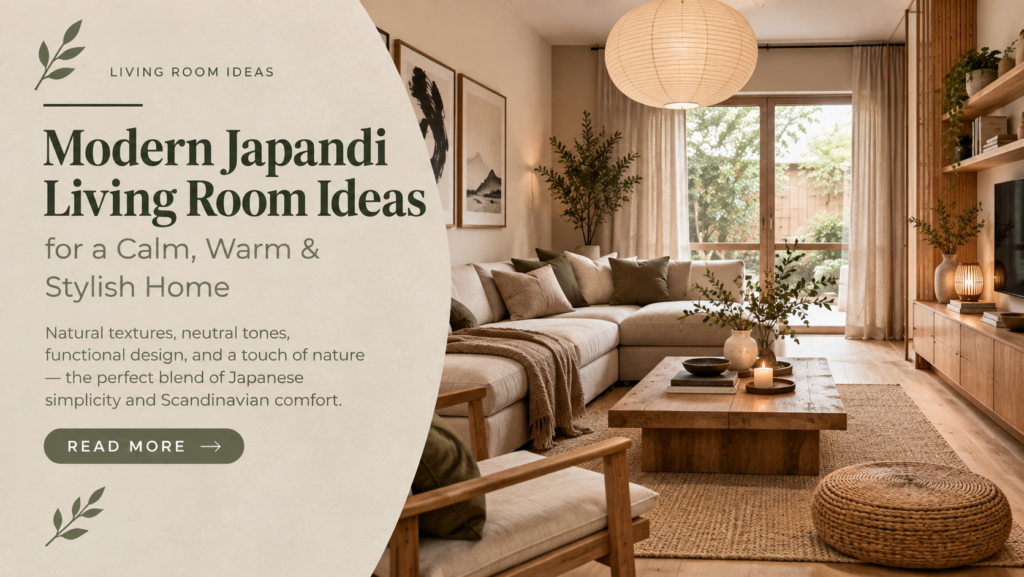
Every home has one overlooked spot that could become the best seat in the house: a sunny window ledge, an empty corner, the awkward space under the stairs. A reading nook does not need a spare room or a big budget. It needs a comfortable place to sit, light that flatters the page, and a few thoughtful details that make you want to stay for one more chapter. When those three things come together, even a few square feet can change how you spend your evenings.
This guide rounds up 21 reading nook ideas for every kind of home, from a window seat reading nook in a family house to a small reading nook carved out of a studio apartment. Each idea includes practical tips on seating, lighting, and storage, plus US-friendly guidance on sizing, safety, and where to find pieces without overspending. Pick the idea that fits your space, borrow the details you like from the rest, and build a cozy reading corner that actually gets used.
1. Window Seat Built Into the Wall
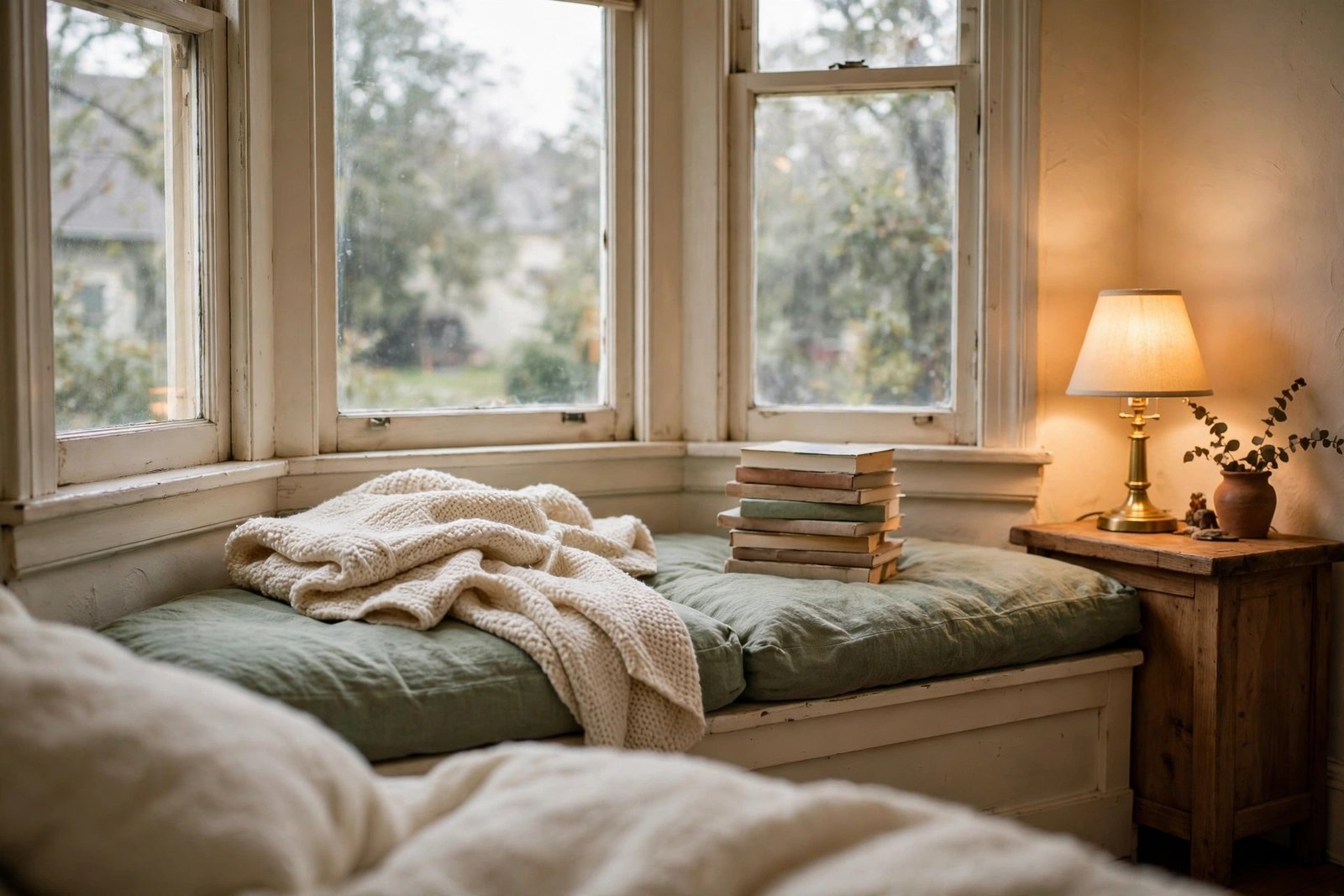
A built-in window seat turns dead space into the most fought-over spot in the house. If you have a window with at least 18 inches of depth below it, a simple plywood bench box with a hinged top gives you seating and hidden storage in one project. Top it with a custom-cut foam cushion in a washable fabric, and add two or three pillows in different sizes so readers of any height can lean back comfortably. For a renter-friendly version, a sturdy low bookcase laid on its side and topped with a cushion creates the same effect without a single screw in the wall.
Daylight does most of the work here, but plan for evenings too. A small plug-in wall sconce or a clip-on reading light keeps the seat usable after sunset without rewiring anything. Choose fade-resistant fabric if the window faces south or west, since strong afternoon sun can bleach dark colors in one summer. Finally, keep a small basket beside the seat for the book you are reading now and the one you plan to read next, so the seat never becomes a dumping ground for mail and chargers.
2. Bay Window Reading Perch
A bay window already gives you three things a reading nook needs: natural light from several angles, a view worth staring at between chapters, and a ledge deep enough to sit on. Measure the full width of the bay before ordering a cushion, and let the cushion overhang the front edge by an inch so your knees do not press against a hard corner. Layer a long bolster pillow along the back wall of the bay, then add square pillows at each end to create a nest that works for curling up sideways or sitting upright.
Privacy matters as much as comfort in a street-facing bay. Sheer linen panels soften the view from outside while keeping the light, and a Roman shade pulled halfway down cuts glare on bright mornings without darkening the seat. In colder US climates, check for drafts around older bay windows and add foam weatherstripping before winter, since a chilly perch will sit empty no matter how pretty it looks. A slim side table at one end holds tea and reading glasses within reach.
3. Bedroom Corner Retreat
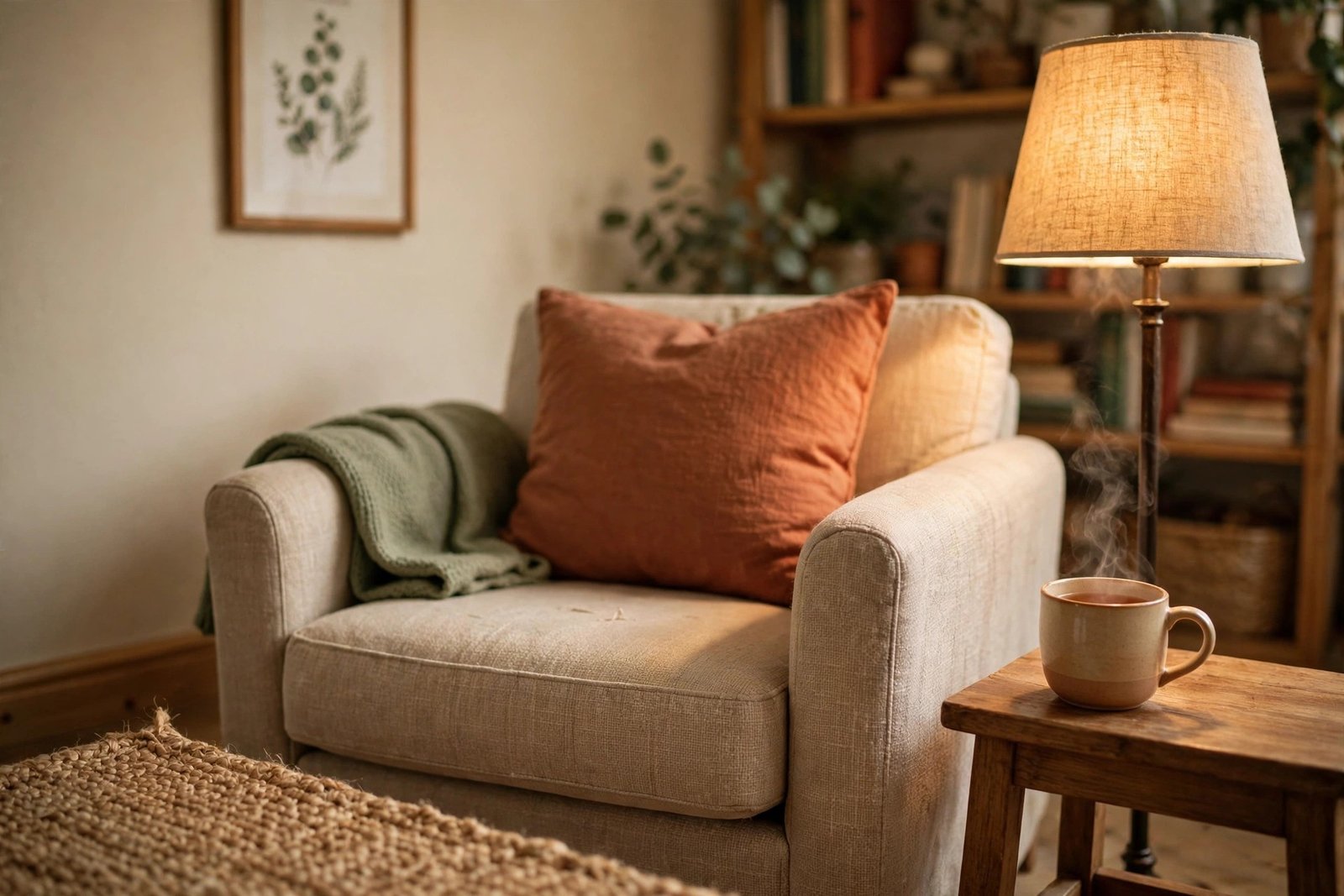
The corner of a bedroom is often wasted on a laundry chair, yet it is one of the easiest places to build a reading nook. Place a comfortable armchair at a slight angle to the wall, add a floor lamp behind one shoulder, and you have a retreat that stays separate from the bed, which matters if you share the room with an early sleeper. A small rug under the chair defines the zone and keeps cold hardwood floors from chilling your feet during long reads.
Keep the palette calm so the corner feels restful rather than busy. Soft cream bedding tones, sage cushions, and warm wood echo the rest of the bedroom instead of competing with it. If your bedroom runs cold in winter, a chunky throw and a pair of warm socks live permanently on the chair arm, ready for evening chapters. For more cold-weather bedroom inspiration, see these winter bedroom decor ideas that pair beautifully with a dedicated reading spot.
4. Under-Stairs Hideaway
The triangular space under a staircase is usually too low for standing but perfect for sitting, which makes it a natural reading hideaway. A low bench or a deep floor cushion fits under the slope, and the enclosed shape creates a cocoon feeling that open corners cannot match. Paint the walls a warm cream or soft sage so the small space feels inviting rather than cramped, and add a battery-operated puck light or a plug-in sconce since stairwells rarely have good wiring.
Storage is the secret weapon here. Shallow shelves along the lowest part of the slope hold paperbacks spine-out, while a lidded basket hides chargers and notebooks. Watch headroom carefully: you need enough clearance to sit up straight and stand without ducking, so test the spot with a cushion before committing to built-ins. In homes with kids, this hideaway doubles as a quiet homework corner, which makes the effort twice as worthwhile.
5. Attic Nook Under a Sloped Ceiling
A sloped attic ceiling, often seen as a problem, actually frames a reading nook beautifully. The low ceiling creates intimacy, and a dormer window, if you have one, supplies daylight and a view. Place the seat against the lowest wall with the reader facing out into the room, so the slope sits behind rather than above your head. A low platform bed frame or a pallet-style base raises the cushion just enough to keep it off cold attic floors.
Temperature control decides whether an attic nook gets used. Attics run hot in summer and cold in winter across much of the US, so add a small fan for July and a thick wool throw for January before styling anything else. Check that the floor can support a bookshelf, since attics sometimes have lighter joists than main living areas; keep heavy book storage on the floor below if you are unsure. A string of warm lights along the slope adds glow without heat and makes the space feel magical after dark.
6. Living-Room Corner That Stays Inviting
A living-room corner nook works best when it looks like part of the room, not a piece of furniture that wandered in from elsewhere. Match the chair style to your existing sofa, repeat one accent color from your rug or curtains in the cushion, and let the corner share the room’s lighting rather than demanding its own spotlight. Angling the chair about 45 degrees toward the room keeps the nook open to conversation while still feeling like a distinct seat.
The biggest mistake with living-room nooks is letting them become the chair where bags and jackets land. Give everything else a home first: a coat hook by the door, a basket for throws near the sofa, and a side table just big enough for a mug. When the chair is always clear, it is always inviting. A small stack of two or three books on the side table signals that this seat is for reading, and it gives guests permission to sit and browse too.
7. Small-Apartment Nook in a Few Square Feet
Apartment dwellers do not need a spare corner to have a reading nook; they need about four square feet and a plan. A single armless slipper chair or a wide dining chair with a thick seat pad fits beside a bookshelf, at the end of a hallway, or even at the foot of a bed. Wall-mounted shelves above the chair hold books without eating floor space, and a folding tray table tucks away when the nook is not in use. The trick is choosing one seat and committing to it, rather than scattering cushions around the apartment.
Noise and light are the real challenges in small spaces. Noise-cancelling headphones or a small white-noise machine help in a shared apartment, and a clip-on book light means you can read without lighting the whole room at midnight. If your bedroom is the only quiet spot, these small bedroom decor ideas show how to carve a reading corner out of even the tightest layout without crowding the bed.
8. Kids’ Reading Corner They Will Actually Use
A kids’ reading corner succeeds when children choose it themselves, which means low shelves, soft seating, and books they can reach without asking for help. Forward-facing book bins or a low picture ledge let young readers pick by the cover, while a beanbag, a floor cushion, or a small tent gives them a seat that feels like play rather than homework. Keep the corner near family activity, not isolated in a quiet room, since most kids read longest when they feel part of the household.
Safety shapes every choice here. Anchor any bookshelf to the wall with anti-tip hardware, choose washable cushion covers, and avoid heavy objects on high shelves. Rotate the books every few weeks, swapping in library finds or seasonal favorites, so the corner feels new without buying anything. A small reading chart or a jar of paper stars for finished books turns reading into a game, and the corner becomes a habit rather than a decoration.
9. Hallway Landing Nook
Wide hallway landings, especially at the top of the stairs, often sit empty because they feel too small for furniture and too big to ignore. A narrow bench, a single armchair, or even a deep windowsill cushion can turn a landing into a pause point where someone reads for ten minutes between tasks. Because landings are pass-through spaces, keep the footprint tight: a chair no wider than 30 inches and a wall-mounted light leave the walkway clear.
Landings usually lack outlets, so plan lighting early. A rechargeable wall sconce or a battery-operated picture light mounted above a small shelf solves the problem without an electrician. Add a slim bookcase or a wall-mounted magazine holder so the nook has reading material at hand, and choose a rug runner that ties the landing to the rooms on either side. The result is a home that feels intentional in every square foot, not just the main rooms.
10. Built-In Shelves All Around
Surrounding a reading chair with built-in shelves creates the classic library feeling, even in a modern home. Floor-to-ceiling shelves on one wall, or shelves wrapping two walls of a corner, put hundreds of books within arm’s reach and make the chair feel like the center of a private collection. If full built-ins are out of budget, two tall bookcases flanking a chair with a bridging shelf across the top achieve a similar look for far less money and effort.
Style the shelves so they invite browsing rather than overwhelm. Group books by size or color in loose sections, leave some breathing room on each shelf, and mix in a plant, a framed photo, or a ceramic piece every few feet. Keep the books you are currently reading on the shelf closest to the chair at seated eye level, so you never have to stand to choose your next chapter. Good shelf lighting, a slim LED strip or a pair of picture lights, makes the whole wall glow in the evening.
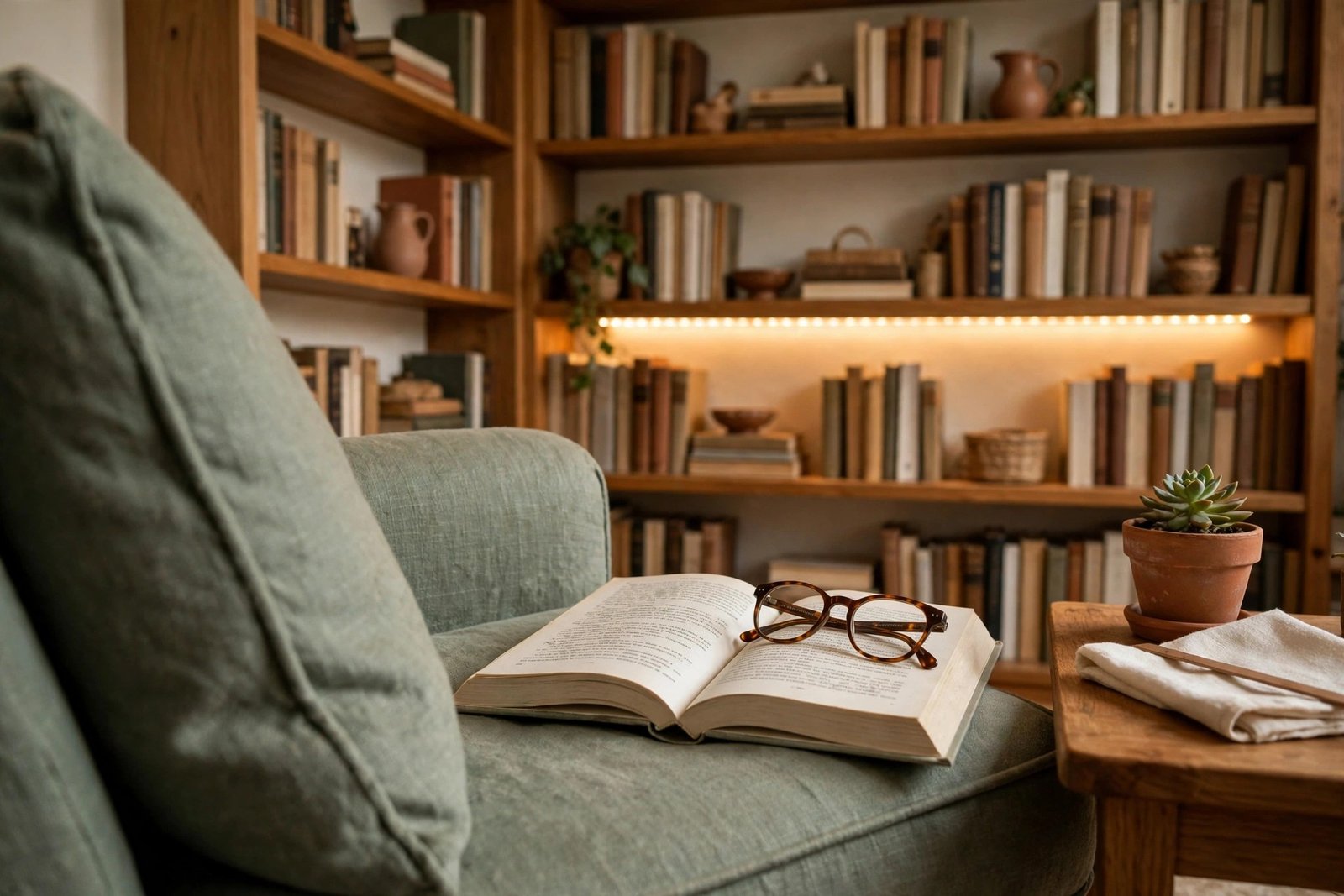
11. Armchair and Ottoman Pairing
Some readers swear by a recliner, but a well-chosen armchair plus ottoman gives you the same leg support with far more style flexibility. The ottoman lets you stretch out fully for long novels, then slide away when you want to sit upright with a notebook or a laptop. Choose an ottoman at the same seat height as the chair, roughly 17 to 19 inches, so your knees rest at a comfortable angle rather than propping your feet too high or dangling.
Test the pair together before buying, since a chair that feels perfect alone can feel cramped with an ottoman crowding it. Leave at least a few inches between the two pieces so you can shift position easily, and pick an ottoman with a flat, firm top that doubles as a side table for a tray. A storage ottoman adds a hidden spot for throws and magazines, which keeps the nook tidy without an extra piece of furniture.
12. Floor Cushions and a Low Lounge
Not every reader wants a chair. A low lounge built from large floor cushions, a thick futon pad, or a pallet platform suits people who like to sprawl, sit cross-legged, or stretch out on their stomach with a book. Layer a firm base cushion for support, a softer top cushion for comfort, and plenty of back pillows against the wall so the setup supports your spine instead of flattening it. This style works especially well in casual family rooms and teen bedrooms.
Comfort depends on the details. A washable cover matters when cushions live on the floor, and a low side table or a sturdy tray keeps drinks off the cushions and away from book pages. If your floors are hard, a thick rug underneath insulates against cold and defines the lounge zone. Store spare cushions in a nearby basket so the lounge can expand for friends or fold away when the room needs to serve another purpose.
13. Layered Lighting for Long Reads
One overhead light is the enemy of a good reading nook. Layered lighting starts with a task light aimed at the page, adds a soft ambient glow for the room, and finishes with a warm accent like a candle or string lights for atmosphere. A floor lamp with an adjustable arm or a table lamp with a linen shade positioned just behind and above your shoulder lights the page without shining in your eyes. Aim for warm bulbs around 2700K, which feel relaxing in the evening and match the rest of a cozy home.
Glare control is just as important as brightness. If daylight hits the page directly, sheer curtains or repositioning the chair a few inches can fix it without losing the view. For nighttime readers, a dimmer switch or a smart bulb lets you lower the light as you wind down, which also helps sleep. Keep a small clip-on book light in the nook for shared rooms, so one reader can keep going after everyone else has gone to bed.
14. Baskets, a Side Table, and Smart Storage
A reading nook stays usable when everything has a place, and the simplest storage system is a basket plus a side table. The basket holds the current book, a throw, and a notebook; the side table holds a drink, reading glasses, and a phone placed face-down. Choose a side table with a lower shelf or a drawer if you want chargers and pens out of sight, and size it so the top sits within easy reach of the seated reader, roughly level with the chair arm.
Weave storage into the nook rather than bolting it on. A seagrass basket slides under a bench, a hanging pocket organizer fits behind a door in a closet nook, and a slim rolling cart tucks beside a chair in a small apartment. Label nothing and buy nothing fancy at first; live with the nook for two weeks, notice what piles up, and then add exactly the storage that pile needs. That habit keeps the nook calm instead of cluttered.
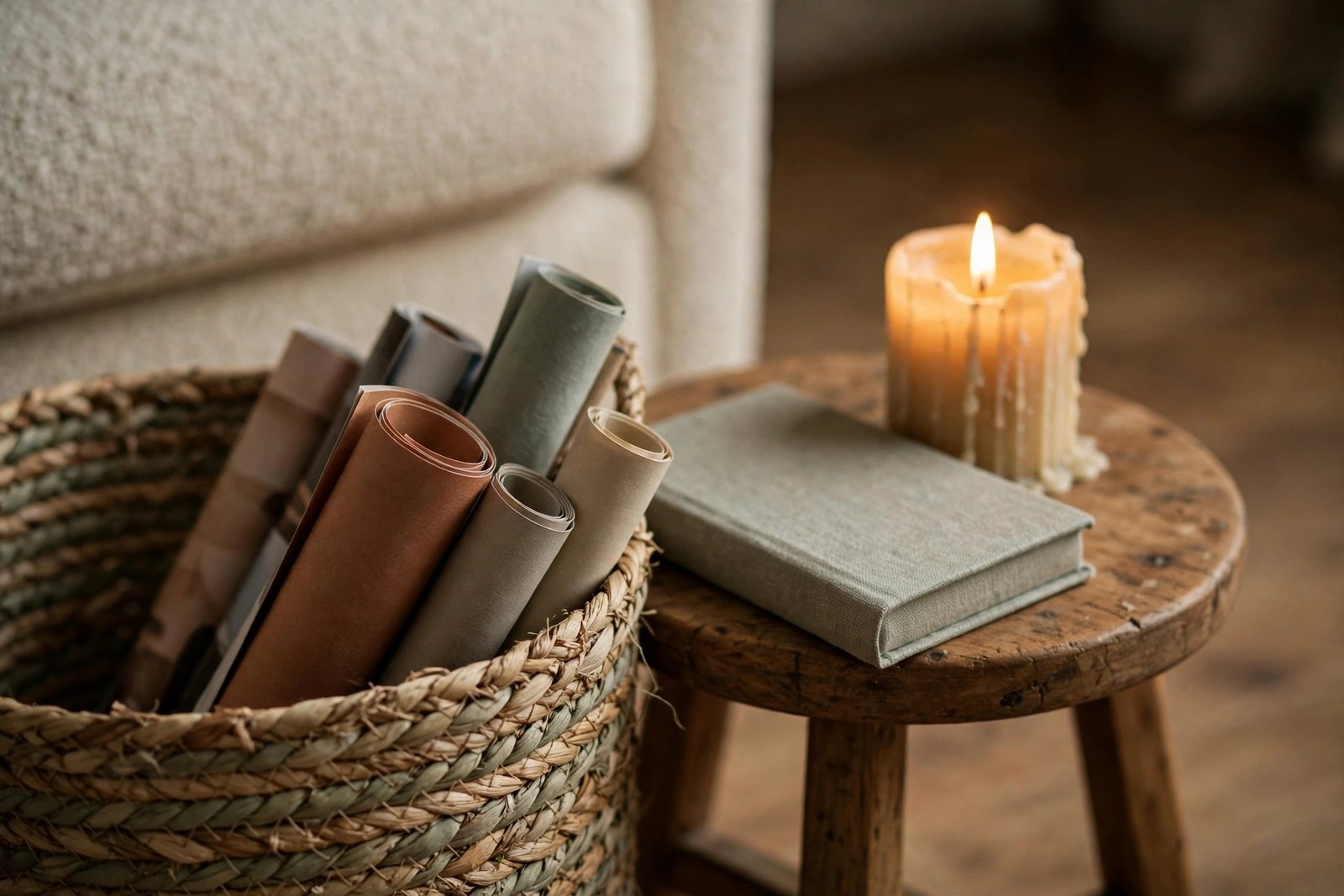
15. Seasonal Swaps That Keep It Fresh
A reading nook that never changes eventually blends into the background, and a nook that blends in does not get used. Seasonal swaps keep it inviting with almost no spending: a light linen throw and a vase of fresh greenery in spring, a breezy cotton cushion and a cool drink tray in summer, a plaid throw and a pumpkin-spice candle in fall, and a chunky knit blanket plus warm fairy lights in winter. Swapping just the throw and one small accessory is enough to make the seat feel new again.
Rotate the books too. Move a stack of seasonal reads to the side table, such as gardening books in spring or cozy mysteries in December, and return the rest to the main shelves. This small ritual also gives you a reason to tidy the nook four times a year, clearing dust and anything that migrated there. The nook stays fresh, the room stays seasonal, and you rediscover books you had forgotten you owned.
16. Budget-Friendly Nook Without the Price Tag
A great reading nook does not require new furniture. Thrift stores, garage sales, and online marketplaces in the US are full of solid wood chairs and small tables that need only a cushion and a coat of paint. A secondhand armchair re-covered with a washable slipcover looks intentional, and a coat of warm white paint unifies mismatched thrifted pieces into a set. Spend your limited budget where your body notices it: a good seat cushion and a decent reading lamp matter far more than a designer chair frame.
Free changes do the heaviest lifting. Moving an existing chair near a window, clearing a corner you already own, and borrowing a lamp from another room can create a nook in an afternoon. Libraries supply endless books at no cost, and a handmade bookmark or a plant cutting from a friend adds personality without a purchase. Judge the nook by how often you sit in it, not by what it cost, and upgrade one piece at a time as you learn what you actually need.
17. Rental-Friendly Nook With No Damage
Renters can build a beautiful reading nook without risking a security deposit. Freestanding bookcases, tension-rod curtains, peel-and-stick wall shelves rated for light loads, and adhesive hooks for string lights all come down cleanly at move-out. A leaning ladder shelf holds books and plants against the wall with no drilling, and a plug-in wall sconce with a cord cover gives you real reading light without touching the wiring.
Check your lease before using adhesive products on painted walls, since some landlords restrict them, and test any adhesive in a hidden spot first. Choose furniture you can carry to the next home: a good armchair, a folding side table, and a basket travel well, while built-in benches do not. Document the nook with photos when you move in, so you can prove the walls were already marked if a dispute ever arises. The nook should feel like yours, even if the walls are not.
18. Fireplace-Side Nook for Cold Evenings
Few settings beat a chair pulled up beside a fireplace on a cold evening. The fire supplies warmth, flickering light, and a natural focal point, which means the nook needs less decoration than any other spot in this guide. Place the chair at an angle to the hearth, close enough to feel the warmth but far enough that sparks and heat cannot reach fabric, usually at least three feet from an open fire. A fire screen adds safety and peace of mind in homes with pets or small children.
Keep flammable extras away from the hearth: throws live on the chair arm, not draped over the mantel, and books stay on a side table rather than stacked beside the firebox. A small basket for firewood or a set of fireplace tools can double as nook decor if kept tidy. If you are styling the mantel above, these fireplace decor ideas help the whole fireside corner feel finished without crowding the reading chair.
19. Closet Turned Into a Reading Nook
An underused closet, especially in a hallway or a spare bedroom, can become the coziest reading nook in the house. Remove the door, or take it off its hinges and store it, then build or place a bench across the opening with cushions on top. The closet walls create a natural alcove, and the depth of a standard closet, about two feet, is just right for sitting with your back against the wall and your legs stretched out. Paint the interior a warm shade so the small space glows instead of feeling like a cupboard.
Lighting makes or breaks a closet nook, since closets have no windows. Warm string lights along the top of the alcove, a battery-operated sconce, or a slim LED strip under a shelf all work without rewiring. Add a small shelf for a drink and a book, hooks on the side wall for a bag or headphones, and folded blankets stored on the bench base for cold evenings. Because the nook closes off visually from the room, it feels private even in a busy household.
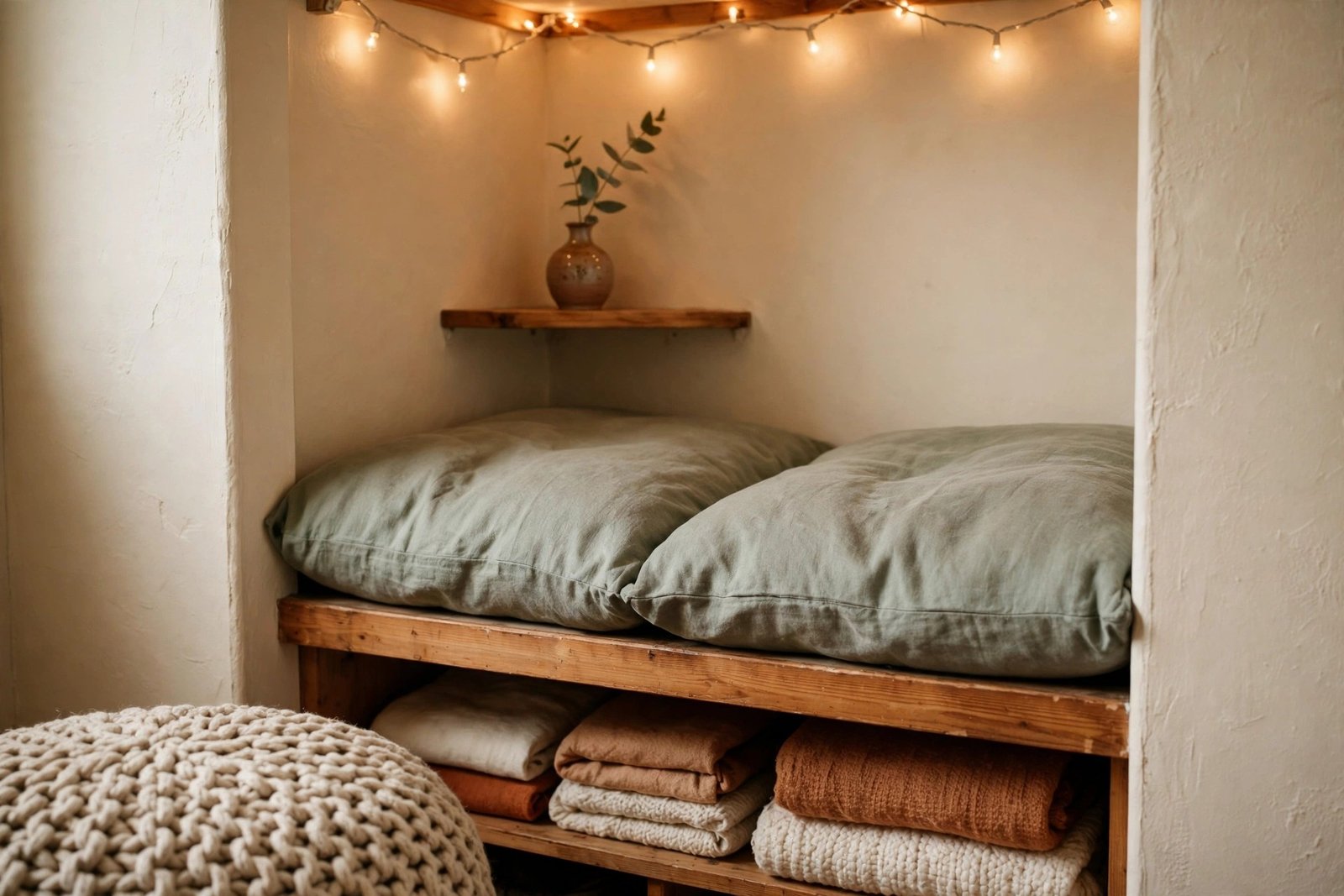
20. Guest-Room Reading Corner
A guest room with a reading corner tells visitors they are welcome to linger, not just sleep. A comfortable chair, a good lamp, and a small shelf of books you loved make the room feel hosted rather than staged. Choose books that suit a short stay: short story collections, travel essays, and light novels work better than dense multi-volume series. A carafe of water and a phone charger on the side table complete the welcome without any fuss.
The corner should not crowd the bed or block the closet door, so measure before adding furniture; a slipper chair often fits where a full armchair will not. If the guest room doubles as your home office or craft room, the reading chair can serve both purposes during the day. For the wider room, these guest bedroom ideas show how to balance a welcoming bed, practical storage, and a reading spot in one space.
21. Make It Yours: Rituals, Art, and Scent
The final ingredient of a reading nook is not furniture at all; it is the small ritual that makes you return to it. A particular mug for evening tea, a candle lit only when you open a book, a playlist of instrumental music, or ten quiet minutes before bed all turn a chair into a habit. Pick one ritual and repeat it for two weeks, and the nook will start to feel like a place you go, not just a corner you own.
Personal touches finish the space. Hang one piece of art that means something to you, frame a favorite book cover or a photo from a trip, and keep a notebook nearby for quotes and thoughts worth saving. Scent matters too: a candle, a sachet of dried lavender in the cushion, or fresh eucalyptus in a bud vase gives the nook its own atmosphere. When the seat, the light, and the ritual all belong to you, the nook stops being a decorating project and becomes part of your daily life.
Products to Consider
You do not need to buy everything at once. Start with seating and light, then add storage and comfort pieces as you learn what your nook is missing. Look for these generic types when shopping, and choose quality over quantity in the pieces your body touches every day:
- A comfortable armchair or slipper chair with supportive seat height and washable upholstery
- A floor lamp or table lamp with a warm-toned bulb and an adjustable shade or arm
- A small wooden side table sized to sit level with the chair arm
- A woven seagrass or cotton storage basket for books, throws, and magazines
- A thick seat cushion or floor cushion with a removable, washable cover
- A soft throw blanket in a warm, neutral tone for cooler evenings
- A clip-on book light for shared rooms and late-night reading
- A small bookshelf, picture ledge, or ladder shelf for books within arm’s reach
FAQ
How much space do I need for a reading nook?
Most reading nooks work in about four to nine square feet. A single chair with a side table fits in a corner of roughly three feet by three feet, while a window seat or a floor-cushion lounge needs a little more depth for stretching out. Measure your chair and your legroom before buying anything, and leave a clear path around the nook so it stays easy to sit down in.
What is the best lighting for a reading nook?
A warm task light aimed at the page from behind your shoulder is the most important piece, ideally a lamp with a bulb around 2700K that you can dim in the evening. Pair it with soft ambient light from the room so your eyes do not strain against a bright page in a dark space. Avoid overhead lights directly above the chair, which create glare and harsh shadows.
How can I make a reading nook comfortable for long reads?
Support matters more than softness. Choose a chair with good lumbar support, add a cushion behind your lower back, and keep your feet supported with an ottoman or a footstool so your legs do not dangle. Change position every hour, keep water nearby, and use a throw for warmth rather than piling on cushions that push you into a slump.
Can I build a reading nook in a rental home?
Yes. Freestanding chairs, ladder shelves, plug-in lamps, tension rods, and adhesive hooks all create a full nook without drilling or rewiring. Choose pieces you can take to your next home, test adhesives in a hidden spot first, and check your lease for any restrictions on wall-mounted items before you start.
What should I keep in my reading nook?
Keep only what you use every time you read: your current book, a spare book, reading glasses, a drink, a throw, and a small notebook or bookmark. Store everything else on nearby shelves or in a basket, and clear the side table once a week. A nook with a few well-chosen items feels calm and inviting, while a crowded one quietly stops being used.
Final Thoughts
A reading nook is one of the smallest projects in a home and one of the most rewarding. You do not need a spare room, a large budget, or perfect architecture. You need a seat that supports you, light that flatters the page, and a corner that feels like yours. Whether you choose a sunny bay window perch, a hidden under-stairs hideaway, or a simple chair and lamp in a bedroom corner, the best nook is the one you sit in every day.
Start this weekend with the spot you already have. Move a chair near a window, add a lamp and a throw, and read one chapter there tonight. Notice what is missing, adjust one thing at a time, and let the nook grow around your reading life. One more chapter has a way of turning into a lifelong habit.