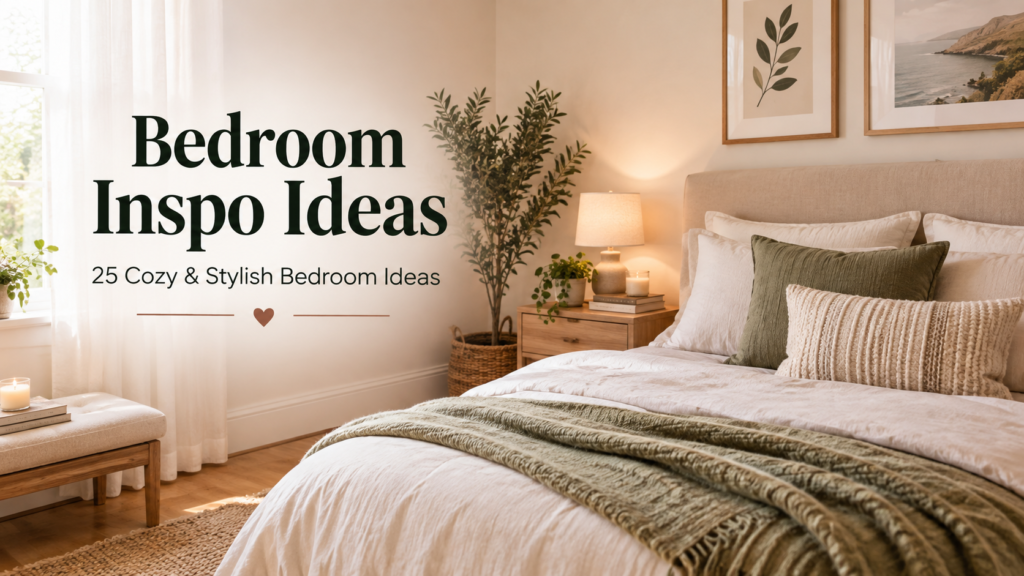
Have you ever looked at your bedroom walls and felt that something was missing, even after choosing beautiful furniture and bedding? The right wall design can make a surprising difference. These Wainscoting Ideas for Bedroom spaces will help you turn plain walls into stylish features without completely redesigning your room. From simple white frames to rich, moody colours, there is an option for almost every home, budget and interior style.
Wall panelling is popular in British bedroom design, and it can work just as beautifully in American homes. The secret is choosing a design that complements your room’s size, natural light and existing furniture. Whether you love a modern minimalist look or a cosy, traditional bedroom, these ideas will help you find a style that feels right for you.
1. Classic White Wainscoting
White wainscoting is a timeless choice for anyone who loves a clean, elegant bedroom. Simple rectangular panels add detail to plain walls without making the room feel too busy.
Pair white panels with cream bedding, soft beige curtains and natural wood furniture for a warm, welcoming finish. If your bedroom already has white walls, you can use a slightly warmer white for a subtle difference.
This design works particularly well in traditional British homes, modern American bedrooms and neutral interiors.
2. Modern Bedroom Wall Panelling Behind the Bed
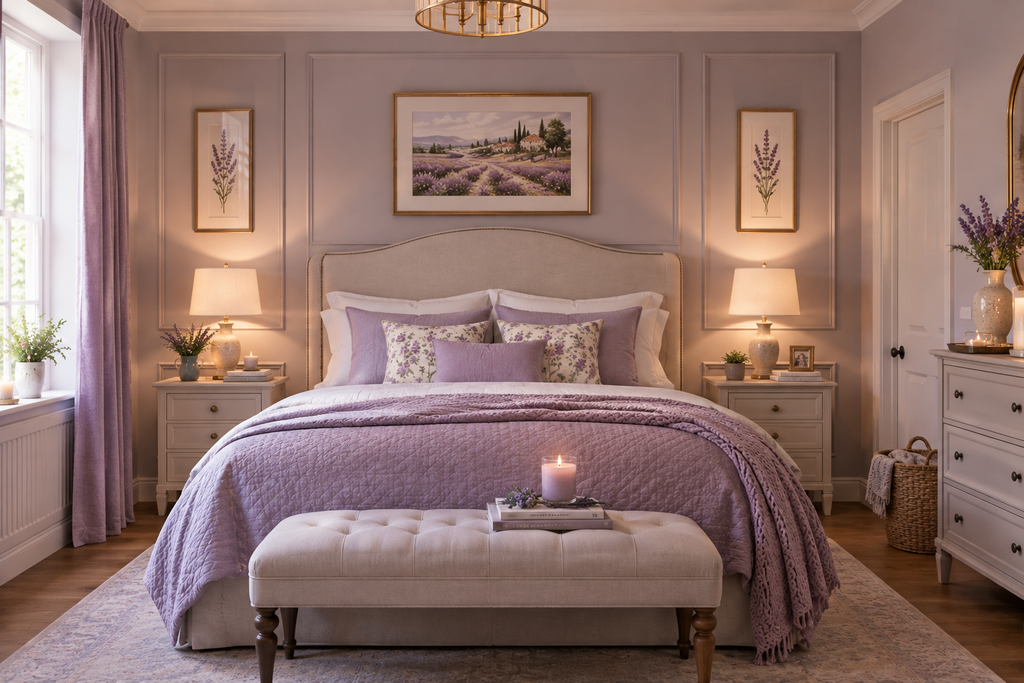
The wall behind your bed is often the best place to start. Adding decorative panels around the headboard creates a natural focal point and makes the entire room feel more thoughtfully designed.
Choose symmetrical rectangular frames for a classic appearance or wider panels for a more contemporary finish. Keep bedside tables and lighting balanced on either side to create a coordinated look.
Among the many Wainscoting Ideas for Bedroom designs, this is a practical option because you can transform one wall instead of decorating the entire room.
3. Half-Wall Wainscoting
Half-wall panelling adds character to the lower section of your walls while leaving the upper portion open for paint, wallpaper or artwork.
For a traditional look, finish the panels with a narrow dado rail. For a modern bedroom, choose clean lines and simple rectangular shapes.
Soft white, warm greige and pale sage green are lovely colour choices. This style is especially useful if you want decorative detail without covering every wall.
4. Sage Green Bedroom Panelling
Sage green is a beautiful option for creating a calm, nature-inspired bedroom. Its muted tone works well with cream bedding, light oak furniture and natural fabrics.
Paint the panels and the surrounding wall in the same sage green shade for a seamless finish. Alternatively, keep the upper wall creamy white to create gentle contrast.
Add a woven lampshade, linen curtains and a few leafy plants to complete the look without overcrowding the room.
5. Floor-to-Ceiling Wainscoting
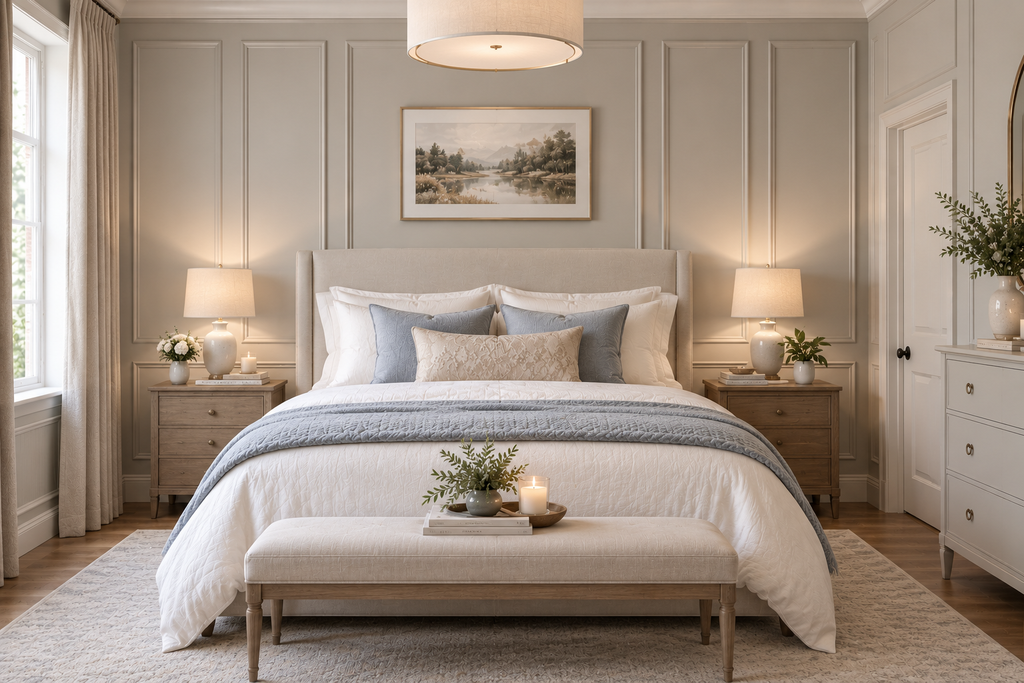
Full-height panelling creates a dramatic, architectural look that can make a bedroom feel more polished.
For a contemporary design, use evenly spaced rectangular frames and paint the entire wall in one colour. Warm white, soft taupe and muted blue are all worth considering.
This style can work particularly well behind a bed, but it may feel overwhelming if you use elaborate patterns throughout a small room. Keep the rest of the décor simple so the wall remains the main feature.
6. Minimalist Bedroom Wall Moulding
If you prefer understated interiors, minimalist wall moulding could be the perfect solution.
Use thin moulding strips to create large, simple rectangles. Avoid excessive decorative details and choose a paint colour that blends with the surrounding walls.
This approach adds depth without competing with your bedding, artwork or furniture. It is ideal for modern apartments, minimalist bedrooms and anyone who prefers a less-is-more aesthetic.
7. Beige and Cream Wainscoting
Beige and cream create a soft, inviting atmosphere that never feels too harsh.
Try warm beige panels with ivory bedding, textured cushions and pale wooden furniture. You can also paint the panels and upper walls in slightly different shades of the same colour for a layered effect.
This design is particularly lovely if you want your bedroom to feel cosy, bright and sophisticated rather than stark or overly formal.
8. Dark Blue Feature Wall Panelling
Deep navy or muted midnight blue can give your bedroom a rich, elegant appearance.
Use dark blue panelling behind the bed and balance it with crisp white bedding, warm metallic lamps and natural wood accents. If your room receives plenty of daylight, the darker colour can create a beautiful contrast.
In a smaller or darker bedroom, consider using navy on just one wall rather than throughout the space.
9. Simple Shaker-Style Panelling
Shaker-style panels feature straightforward rectangular frames with clean edges. Their simple design makes them suitable for both traditional and contemporary interiors.
For a modern finish, use wider frames and a restrained colour palette. In a more traditional bedroom, smaller frames and classic white paint can look equally attractive.
This style is also a good starting point for a DIY project because the layout is relatively straightforward to plan.
10. Wainscoting with Floral Wallpaper
Want your bedroom to feel a little more romantic? Combine lower wall panelling with floral wallpaper above.
Choose delicate botanical prints for a cottage-inspired bedroom or larger floral patterns for a bolder statement. Keep the panel colour connected to one of the shades in the wallpaper to make the design feel coordinated.
This combination works beautifully with upholstered headboards, soft curtains and vintage-style bedside tables.
11. Vertical Panel Designs for Small Bedrooms
Vertical panels draw the eye upwards, which can make a room feel taller. Choose narrow, evenly spaced designs if you want to create a sense of height without adding too much visual detail.
Paint the panels in a light neutral shade and keep furniture proportions appropriate for the room.
Remember, panelling will not physically enlarge your bedroom. Its benefit is visual: the vertical lines can help create a more open impression.
12. Two-Tone Bedroom Panelling
Two-tone panelling gives you an opportunity to introduce colour without making the entire room feel bold.
Try white panels with a muted blue wall above, or sage green lower panels with a warm cream upper wall. For a more coordinated look, repeat the panel colour in your cushions, throw or artwork.
The trick is to choose shades that complement one another rather than compete for attention.
13. Modern Black Wainscoting
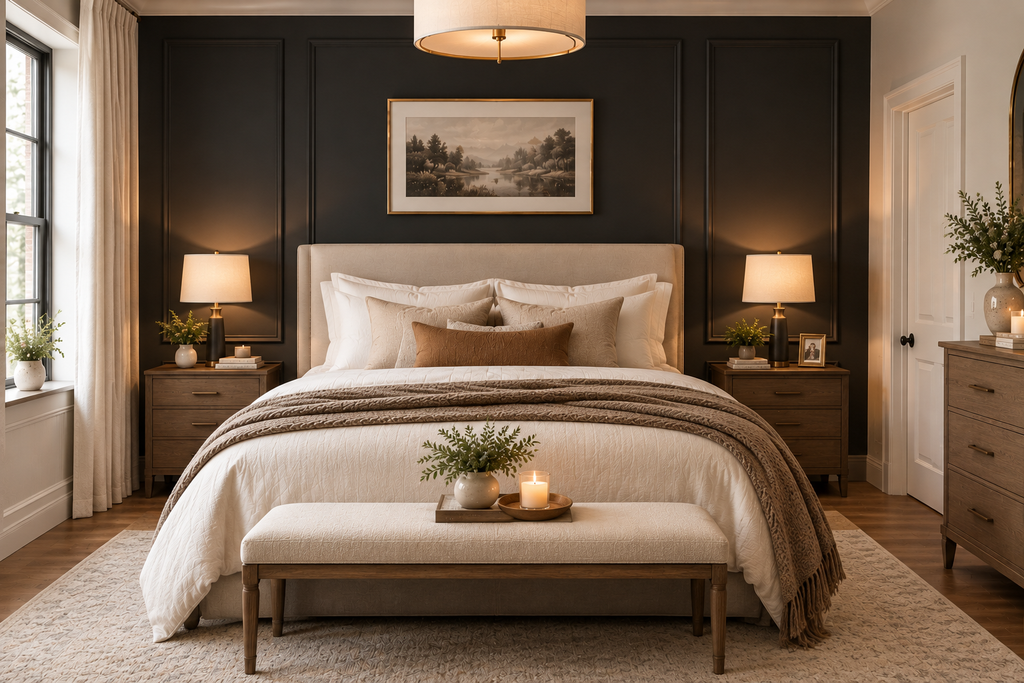
Black panelling creates a striking, contemporary appearance. It works particularly well with warm wood, ivory textiles and soft ambient lighting.
For a balanced design, use black on the wall behind the bed and keep the remaining walls lighter. You could also choose charcoal or deep graphite if pure black feels too strong.
This style is best for people who enjoy bold interiors and are happy to create contrast rather than a completely light and airy bedroom.
14. Picture-Frame Wall Moulding
Picture-frame moulding uses decorative strips to form rectangular shapes directly on the wall. It offers a refined appearance without requiring bulky wall panels.
Arrange the frames evenly and measure carefully before fixing anything in place. Symmetry is particularly important when the moulding sits behind a centrally positioned bed.
Paint the moulding the same colour as the wall for a subtle, modern finish.
15. Warm Wood Wainscoting
Natural wood panelling brings warmth and texture into a bedroom. Light oak creates a relaxed Scandinavian feel, while darker wood can give the room a more traditional, luxurious appearance.
Pair wood panels with linen bedding, cream walls and simple bedside lighting. If you want a modern result, choose a restrained grain pattern and avoid mixing too many wood finishes.
This design is ideal for anyone who prefers natural materials over decorative painted moulding.
16. Soft Pink Bedroom Panelling
Soft blush pink adds a gentle, romantic touch without necessarily making a room feel overly sweet.
Combine pale pink panels with cream bedding, brass-effect lighting and light neutral curtains. For a more grown-up look, choose dusty rose or muted pink rather than a very bright shade.
Keep the accessories simple so the colour remains elegant and easy to live with.
17. Wainscoting with a Floating Shelf
A slim shelf above half-height panelling combines decoration with a little practical storage.
Use it to display a small framed print, a lightweight decorative object or a few carefully chosen accessories. Avoid placing heavy items where they could fall onto the bed.
This is a useful design for bedrooms where you want extra character but do not have enough room for additional furniture.
18. Grey Bedroom Wainscoting
Grey panelling can look sophisticated, especially when you choose a warm or softly muted shade.
Pair light grey with white bedding and natural wood for a fresh, understated look. Alternatively, use charcoal grey with cream textiles for more contrast.
Pay attention to your room’s natural light before choosing a paint colour, as some greys can look cooler or darker than expected.
19. Geometric Wainscoting Designs
Geometric panels offer a contemporary alternative to traditional rectangular frames.
You could use larger square layouts, carefully arranged rectangles or a simple repeating pattern. The design should complement the proportions of your wall rather than compete with the bed and furniture.
If you choose an intricate pattern, keep your bedding and accessories relatively simple to maintain a calm atmosphere.
20. Budget-Friendly DIY Wainscoting
You do not necessarily need a large renovation budget to create a panelled feature wall.
Paintable MDF moulding or suitable decorative strips can be used to create simple frames on a prepared wall. Measure the space, plan the layout and check that the wall surface is suitable before buying materials.
For a cost-conscious makeover, panel just the wall behind your bed and paint it yourself. Remember to account for adhesive, tools, preparation and paint, not just the cost of the moulding.
If you rent, check your tenancy agreement before making permanent changes. Removable wallpaper with a panel-effect design may be a more suitable alternative.
21. Colour-Drenched Bedroom Panelling
Colour drenching means using the same or closely related paint colours across several surfaces, such as the panels, wall and sometimes the woodwork.
A soft olive green, warm beige or muted blue can create a unified, enveloping effect. The panel shapes remain visible through their shadows and texture, even when everything is painted in one colour.
This is a great option if you like a coordinated bedroom rather than a high-contrast feature wall.
How to Choose the Right Bedroom Wainscoting
Before deciding which design to use, think about how your bedroom looks and functions every day.
- Consider the room size: Simple frames and lighter colours are often easier to work with in compact bedrooms.
- Look at the ceiling height: Vertical designs can draw the eye upwards, while the proportions of half-wall panelling should suit the room.
- Choose a practical colour: Cream, warm white, sage green and muted blue can be easier to coordinate with changing bedding and accessories.
- Plan around furniture: Measure the bed, bedside tables, sockets and radiators before finalising the panel layout.
- Set a realistic budget: One feature wall may deliver the look you want without the extra materials and labour of panelling the entire room.
The best design is not necessarily the most expensive or elaborate. It is the one that works with your room and the way you want it to feel.
Final Thoughts
The right wall treatment can bring character, texture and a more finished look to your bedroom without requiring a complete makeover. Whether you prefer traditional white frames, modern geometric details or rich painted panels, start with a design that complements your space.
If you are unsure where to begin, choose the wall behind your bed, keep the layout simple and select a colour that works with your existing furniture. Small, thoughtful changes can make a bedroom feel much more personal and inviting.
Start with one wall, choose your favourite style, and build the rest of your bedroom décor around it.