When the holidays are over and the cold settles in for real, the living room becomes the hardest-working room in the house. It is where you shake off a cold commute, where weekend mornings stretch out, and where friends gather on dark January evenings. Yet so many living rooms lose their warmth the moment the festive decorations come down, leaving a space that feels bare just when you need it to feel most inviting.
Winter living room decor is not about keeping the holidays going. It is about layering warmth that lasts the whole season: soft textures you can sink into, light that flatters instead of glares, and natural touches that make the room feel alive even when the garden is asleep. The ideas below work whether you live in a snowy northern state or a milder southern one, and most of them cost little more than a thoughtful rearrangement of what you already own. Pick the five or six that fit your room, and your living room will carry you comfortably from the first frost right through to spring.
1. Layer Throws in Three Different Textures
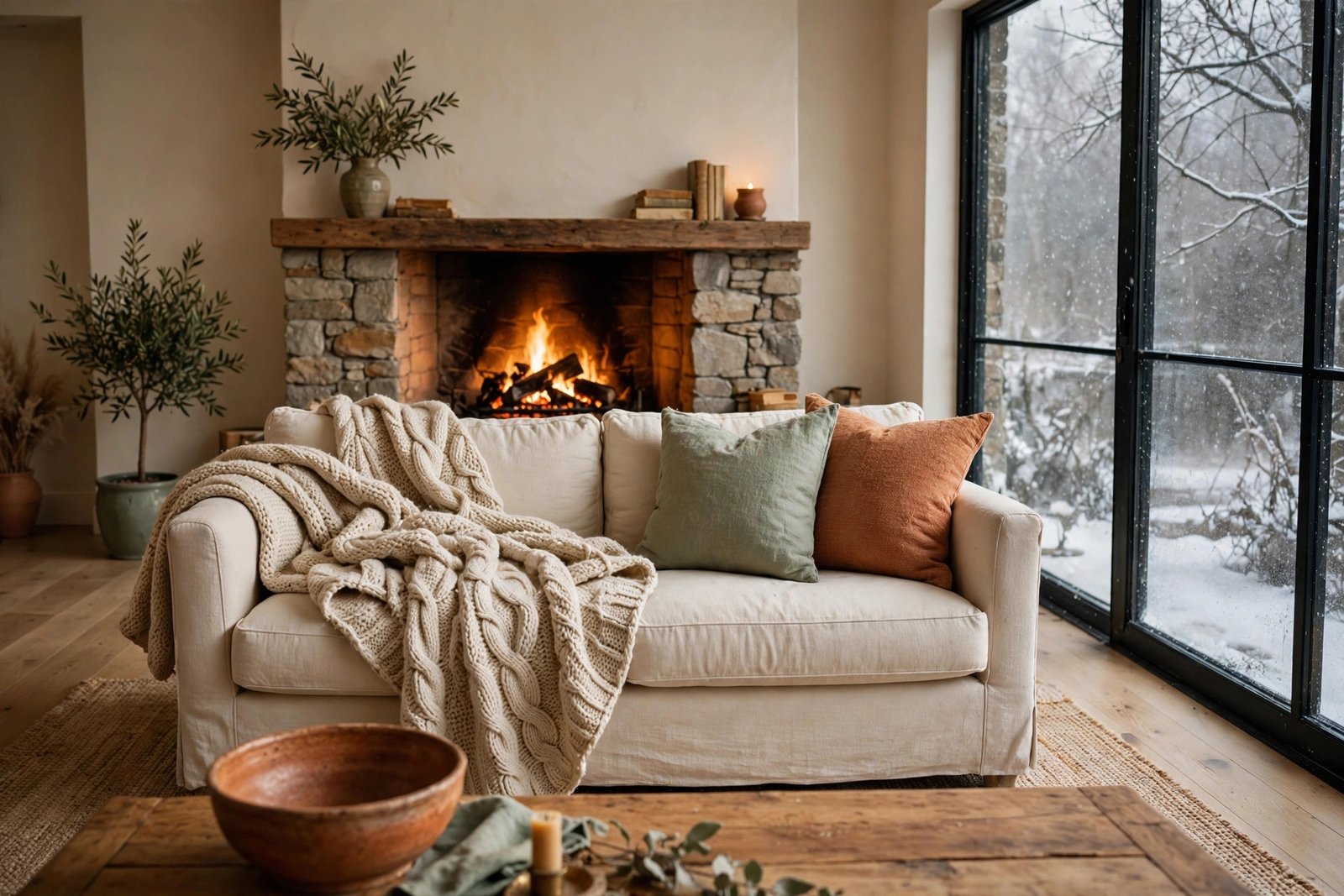
One throw draped over a sofa arm looks like an afterthought. Three throws in different textures look like a plan. Start with a chunky knit in cream or oatmeal as your anchor, add a smooth wool or fleece throw in a deeper tone like rust or sage, and finish with something with a little sheen, such as a velvet or woven cotton throw. Drape one over the arm, fold one across the back, and keep one in a basket by the sofa so it is genuinely within reach.
The trick is varying the texture, not just the color. When everything is the same weight and weave, the eye slides right past it. A nubby knit next to a smooth wool next to a soft velvet creates depth even in a neutral palette, and it gives everyone in the household a throw they actually want to use. In US homes where the thermostat often sits around 68 degrees in winter, having real, usable layers close at hand matters more than any decorative flourish. Wash the throws before the season starts so they smell fresh, and rotate them every few weeks so the same one does not end up permanently crumpled in one corner. A large woven basket by the sofa solves the storage question and adds to the look: rolled throws standing upright in a basket look intentional, stay dust-free, and are easy to grab when someone comes in from the cold. Choose a basket big enough for at least three throws so the collection does not spill over onto the floor.
2. Switch Every Bulb to a Warm Glow
Nothing kills winter coziness faster than harsh white overhead light. As daylight shrinks, your lamps do most of the work, so swap any cool daylight bulbs for warm white ones in the 2700K range and rely on lamps at different heights rather than a single ceiling fixture. A floor lamp beside the sofa, a table lamp on a side table, and a small accent light near a bookshelf create pools of warm light that make the whole room feel smaller and more intimate.
Put your most-used lamps on dimmers if you can, or use lower-wattage warm bulbs in the evening and save brighter light for daytime tasks. The goal is light that mimics candlelight and firelight, the two glows humans have always associated with shelter. If your living room has a window facing the winter street, the contrast does the rest: cold grey light outside makes the warm interior feel even more inviting. Keep lamp shades in cream or linen rather than dark colors, which absorb the light you are trying to spread around the room.
3. Dress the Sofa With Winter-Weight Cushions
Summer cushions in linen and light cotton look thin and out of place once winter arrives, so swap them for heavier covers in velvet, wool, bouclé, or chunky knit. You do not need to buy new inserts; cushion covers alone change the whole feel of the sofa for very little money, and they are easy to store flat when spring returns.
Work in odd numbers and mixed sizes: two large square cushions in a solid warm tone, one or two smaller ones in a pattern or contrasting texture, and a lumbar cushion for lower-back support during long evenings on the sofa. Keep the palette grounded in warm neutrals with one or two deeper accents, such as terracotta, olive, or mustard, rather than introducing a rainbow of colors that fights with the rest of the room. Fluff and karate-chop the cushions when you make the room up in the morning; it takes thirty seconds and keeps the sofa looking intentionally styled instead of slept-on all season. If you like pattern, let one cushion carry it, such as a plaid or a subtle geometric, and keep the rest solid. One patterned cushion against solid neighbors looks curated; five competing patterns look noisy, especially under warm lamplight, where busy prints can feel visually loud in a room that should feel calm.
4. Make the Fireplace the Room’s Gathering Point
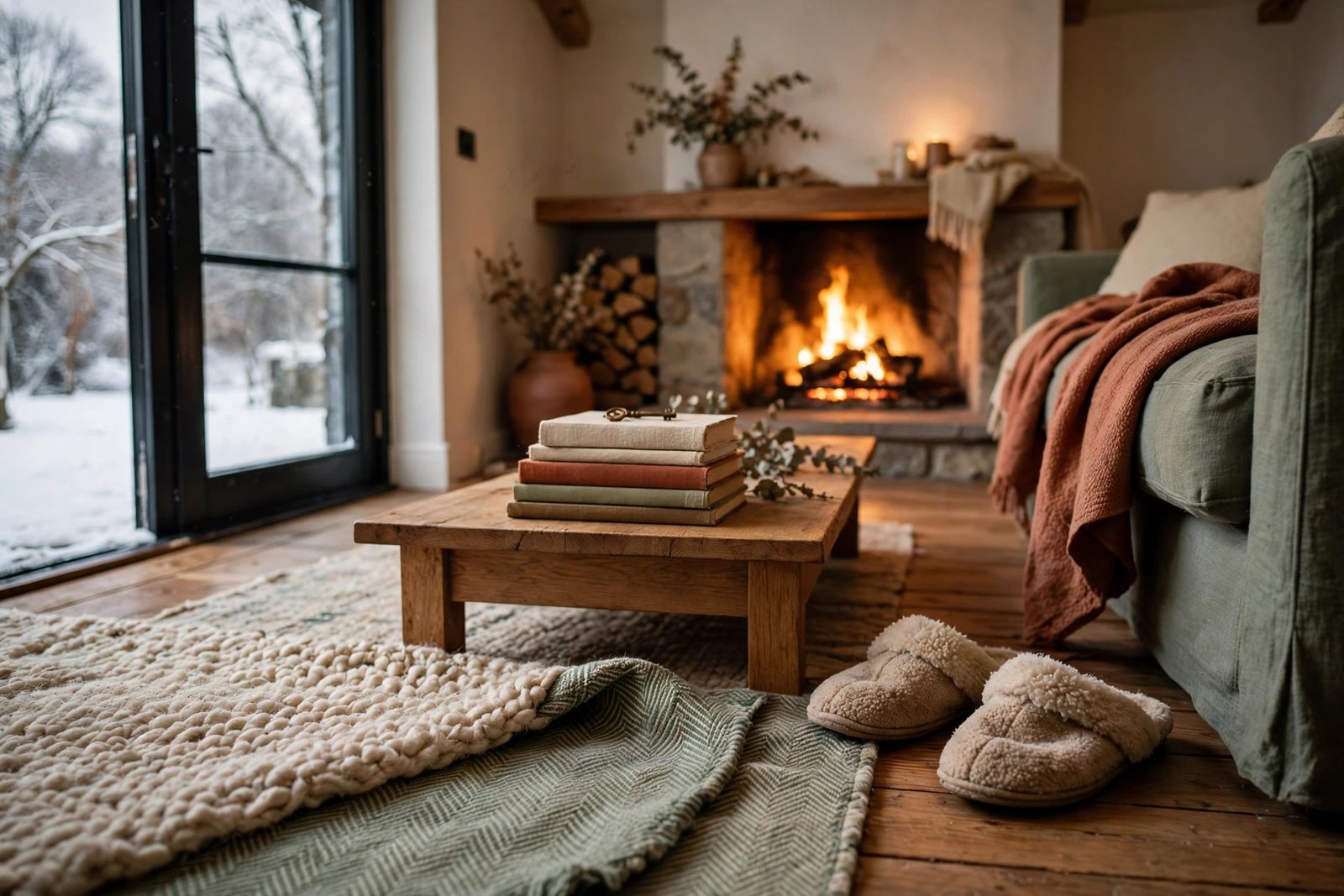
If you have a fireplace, winter is its season, so arrange the room around it rather than treating it as background. Angle the main seating toward the fire, pull chairs a little closer than you would in summer, and clear the mantel of everyday clutter so the fire itself becomes the focal point. A real wood fire is ideal, but a gas fire or even a good electric insert gives the same psychological warmth, and the flicker does more for the mood than any decoration.
For styling ideas that work through the coldest months, see our guide to fireplace decor ideas, which covers mantel styling, hearth dressing, and seating layouts. Keep a neat stack of logs or a basket of kindling nearby even if your fire is gas, since the natural materials add to the winter story. And if you do not have a fireplace at all, a cluster of large pillar candles on the hearth or in a lantern arrangement gives you a similar warm center, with far less work and no renovation needed.
5. Set Up a Cocoa and Tea Station
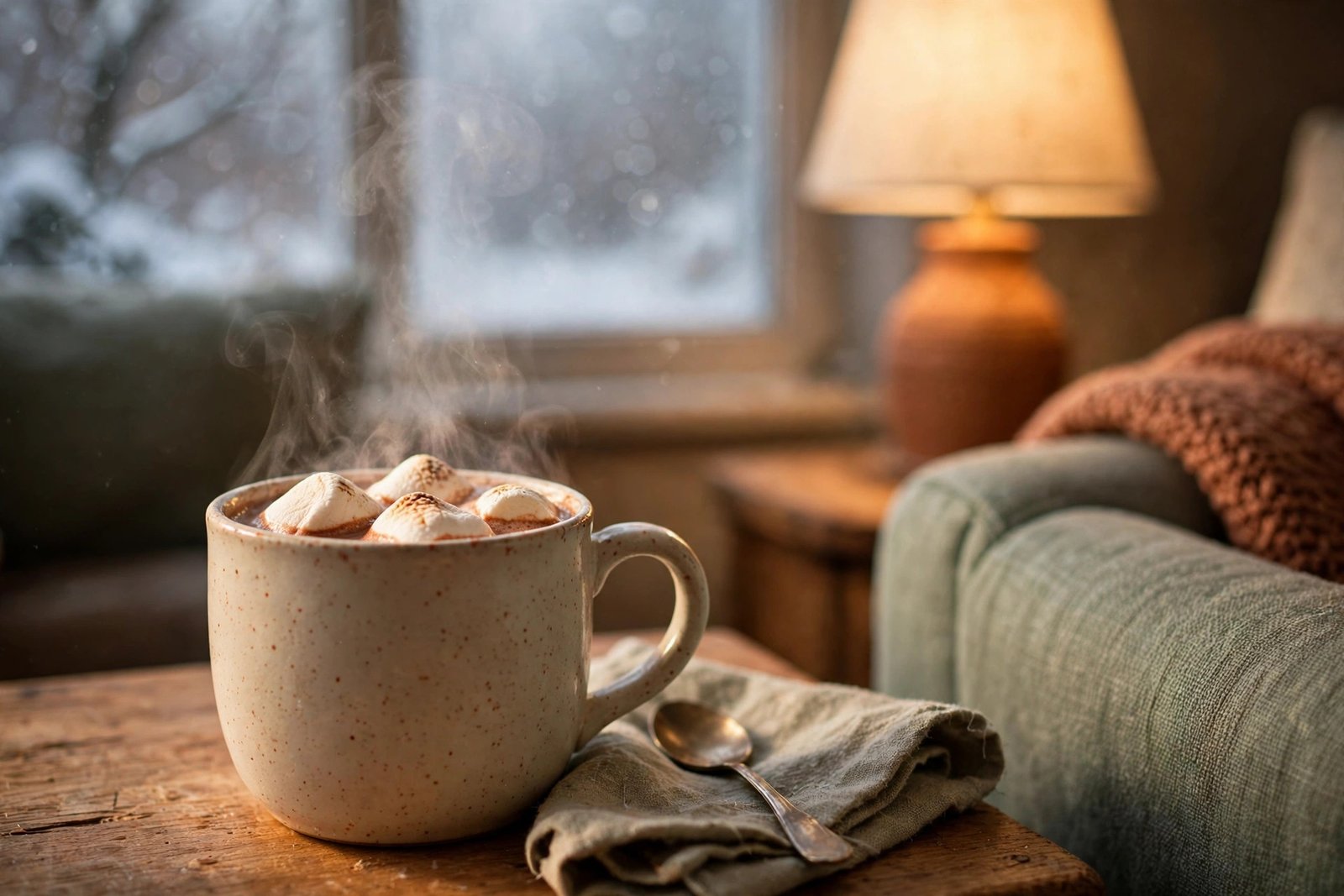
A small, dedicated hot-drink station turns an ordinary winter evening into a small ritual. Clear one corner of a sideboard, bar cart, or kitchen-adjacent shelf and gather what you need: mugs, a jar of cocoa, a tin of tea, a small pot of honey, and a few spoons. Add a tray to contain everything so the station reads as intentional rather than cluttered, and keep it stocked so guests can help themselves.
The details are what make it feel special rather than purely functional. A folded linen napkin, a small dish of marshmallows or cinnamon sticks, and one or two favorite mugs with a bit of character go further than a dozen matching accessories. In cold-weather states, this station earns its keep daily from December through February, and it gives the living room a lived-in purpose beyond sitting and watching television. If space is tight, a single lidded basket on the coffee table holding tea, cocoa packets, and a couple of mugs does the same job in miniature.
6. Layer Rugs for Warmth Underfoot
Cold floors are one of the first things you notice in winter, and they are also one of the easiest to fix. If you have hardwood or tile, layer a thick wool or high-pile rug over your existing flat-weave rug, or simply swap a thin summer rug for something with real pile. Your feet will notice the difference immediately, and so will your heating bill, since rugs add a surprising amount of insulation to a room.
Layering works best when the bottom rug is larger and flat, such as a jute or cotton dhurrie, and the top rug is smaller, softer, and more textured. Let the edges of the lower rug show all the way around so the pairing looks deliberate. Unlike the festive red-and-green palette of the holidays, winter rug colors should stay calm and earthy, which is why this kind of layering outlasts December. If you want to see how holiday styling differs from everyday winter warmth, compare this approach with our Christmas living room decor ideas, where the color story is deliberately bolder and shorter-lived. Use a non-slip rug pad under layered rugs, especially on hardwood, since two loose layers slide more easily than one. A good pad also adds a little extra cushioning underfoot and protects the floor from the grit that winter boots track in, which is worth the small extra cost over a season of daily use.
7. Bring In Evergreen Branches, Not Holiday Decor
Evergreen branches are not just for December. A few stems of pine, cedar, or eucalyptus in a tall vase bring life, scent, and color into a living room all winter long, without a single ornament. The key is to style them as nature, not as a holiday leftover: skip the baubles and ribbons, and let the branches be the decoration.
Cut branches last much longer indoors than most people expect if you keep them out of direct heat and change the water every few days. For a low-maintenance version, use dried eucalyptus or preserved pine stems, which hold their shape for months and need no water at all. A single tall arrangement on a side table or a low bundle laid along a coffee table is enough; too many green accents and the room starts to feel like a forest rather than a home. If you forage branches yourself, take only a few from each tree and check local rules, since some parks and neighborhoods restrict cutting.
8. Build a Reading Nook by the Window
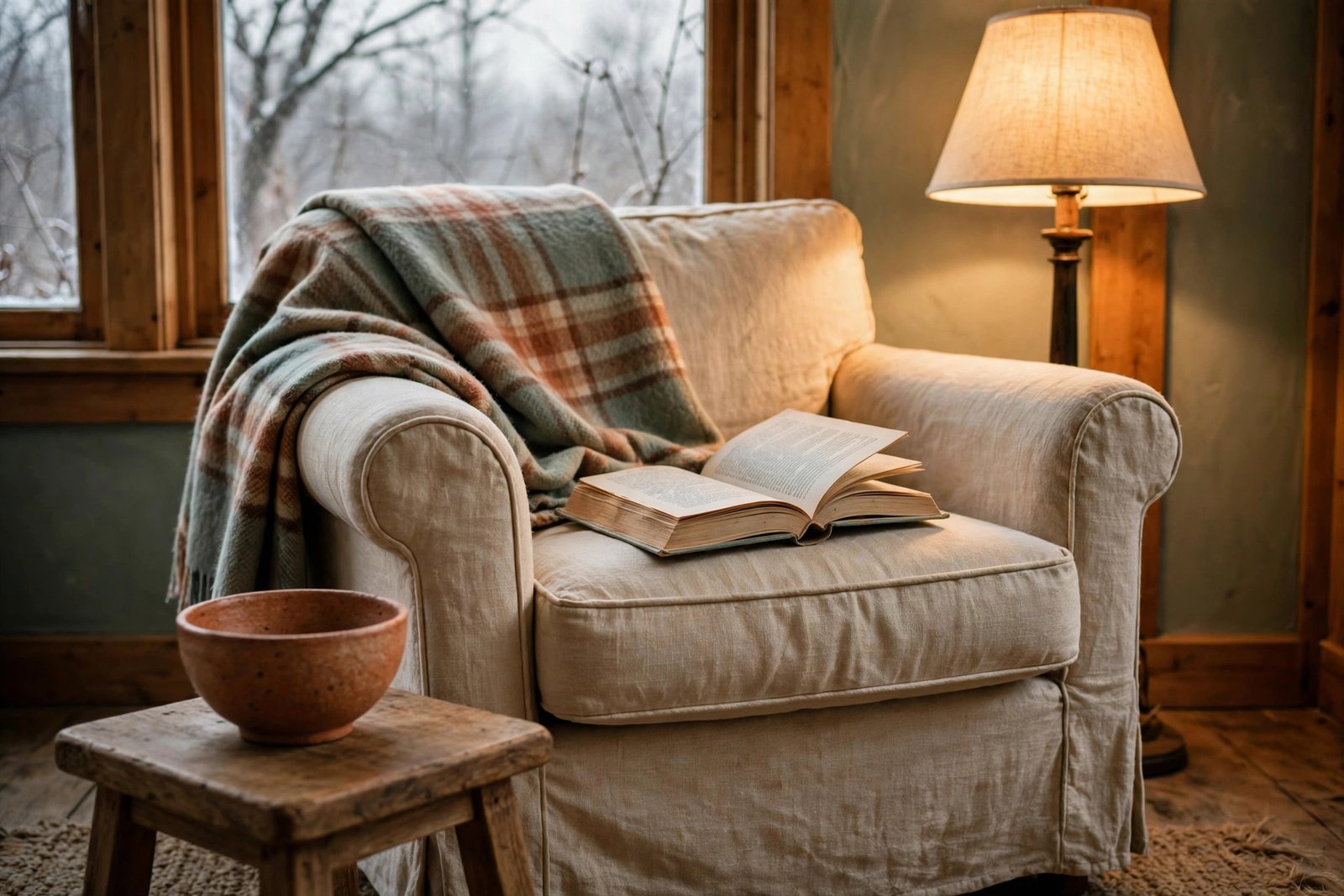
Winter light is low and soft, which makes a window seat or a chair pulled up to the glass the best reading spot in the house. Choose your most comfortable armchair, add a good reading lamp that shines over your shoulder, and keep a small table or stool within arm’s reach for a book and a warm drink. A basket or stack of books nearby means you will actually use the nook instead of walking past it.
The contrast is part of the pleasure: grey winter light and bare branches outside, warm lamplight and a soft blanket inside. If your window is drafty, a thick cushion on the seat and a draft stopper along the sill make the nook comfortable for long sits. This is also the spot where a plaid wool throw earns its keep, folded over the chair arm rather than stored in a closet. Even a small corner of a living room can hold a nook like this, and in the darkest weeks of the year it often becomes the most-used seat in the house.
9. Restyle the Mantel for the Whole Season
Once the holiday garlands and stockings come down, the mantel often ends up empty, which makes the whole fireplace wall feel unfinished. Restyle it for winter rather than for a holiday: a simple evergreen garland without ornaments, a pair of candlesticks, a framed print, and a small stack of books give the mantel presence that lasts until spring.
Keep the arrangement low in the middle so the mirror or artwork above it can breathe, and build height at the ends with candleholders or tall vases. If you dressed your mantel elaborately for the holidays, our Christmas mantel decor ideas show how much of that styling can be simplified rather than stripped away entirely. The rule of thumb for winter is fewer, larger pieces rather than many small ones, since dust and clutter show up quickly in low winter light, and a calm mantel lets the fire below it take center stage.
10. Warm Bare Walls With Textured Art
Walls that looked fine in bright summer light can feel cold and empty in winter, when shadows are longer and rooms are used more in the evening. Textured wall pieces solve this better than flat prints: woven wall hangings, macramé, framed fabric, or wooden art add tactile warmth that a poster cannot. Even a simple gallery wall of family photos in warm wood frames makes a wall feel more personal and less stark.
Hang art at eye level, roughly 57 inches to the center of the piece, and keep it in proportion to the furniture below it. A large piece over the sofa should span about two-thirds of the sofa’s width, while smaller pieces work better grouped in threes. If you are renting and cannot hang freely, lean large frames against the wall on a console or mantel for the same effect without holes. Warm-toned art, landscapes, botanical prints, and abstract pieces in cream, rust, and sage all suit a winter palette, and they stay relevant long after the season ends. A large mirror hung opposite a window is a useful winter trick too: it bounces the scarce daylight deeper into the room and doubles the glow of lamps in the evening. Choose a warm wood or brass frame so the mirror reads as decor rather than a bare reflective surface, and keep it clean, since streaks show up quickly in low winter light.
11. Keep a Basket of Natural Elements by the Fire
Few things signal winter as honestly as a basket of natural materials: firewood, pinecones, dried seed heads, or a bundle of birch logs. They add texture, scent, and a sense of the outdoors brought in, and they cost almost nothing if you gather them yourself. Place a sturdy basket beside the fireplace or the sofa and let it stay slightly imperfect, since a too-neat arrangement reads as a store display rather than a home.
If you do not have a fireplace, the same basket works beside an armchair or at the end of a console, filled with pinecones and a few dried branches instead of logs. Keep the basket itself natural, such as seagrass, wicker, or woven cotton, rather than plastic or metal, so it adds to the warm palette instead of breaking it. This is also a practical spot to store the extra throw blankets that do not fit on the sofa, which keeps them accessible without adding another piece of furniture to the room.
12. Hang Heavier Curtains and Seal the Drafts
Windows lose more heat than almost any other part of a living room, and heavy curtains are the simplest way to fight back. Swap sheer summer panels for lined drapes in velvet, heavy cotton, or wool blends, and hang them as high and wide as the wall allows so they frame the window generously when open and cover it fully when closed. Draw them at dusk and you will feel the room warm up within an hour.
Before you buy anything, check for drafts with the back of your hand on a windy day. Inexpensive draft stoppers along the sill, a strip of weatherproofing tape, or a rolled towel in a pinch can make a noticeable difference, and they cost far less than new windows. In older US homes, where single-pane windows are still common, this combination of heavy curtains and draft sealing is often the single most effective comfort upgrade you can make without a contractor. Choose curtain colors from your room’s warm palette so the windows read as part of the decor, not as an emergency repair. If you like sheers, keep them up behind the heavier drapes and use both layers together: sheers give privacy during the day while the drapes stay open, and the double layer traps a little more air, and therefore a little more warmth, between the glass and the room once evening comes.
13. Style a Winter Coffee Table Vignette
The coffee table is the center of winter evenings, so style it for use rather than for show. Start with a tray to anchor the arrangement, then add three things: something to read, something warm, and something natural. A stack of two or three books, a candle in a sturdy holder, and a small bowl of pinecones or a sprig of eucalyptus cover all three, and everything on the table is something someone might actually pick up.
Keep the center low enough that people can see each other across it, and leave at least a third of the surface empty for mugs and glasses. This is where winter styling differs from holiday styling: no glitter, no tinsel, just honest materials that look good in lamplight. Rotate the books and the natural element every few weeks so the table does not go stale by February, and wipe the tray down when you tidy the room so the vignette always looks intentional rather than accumulated.
14. Turn the Window Seat Into a Winter Perch
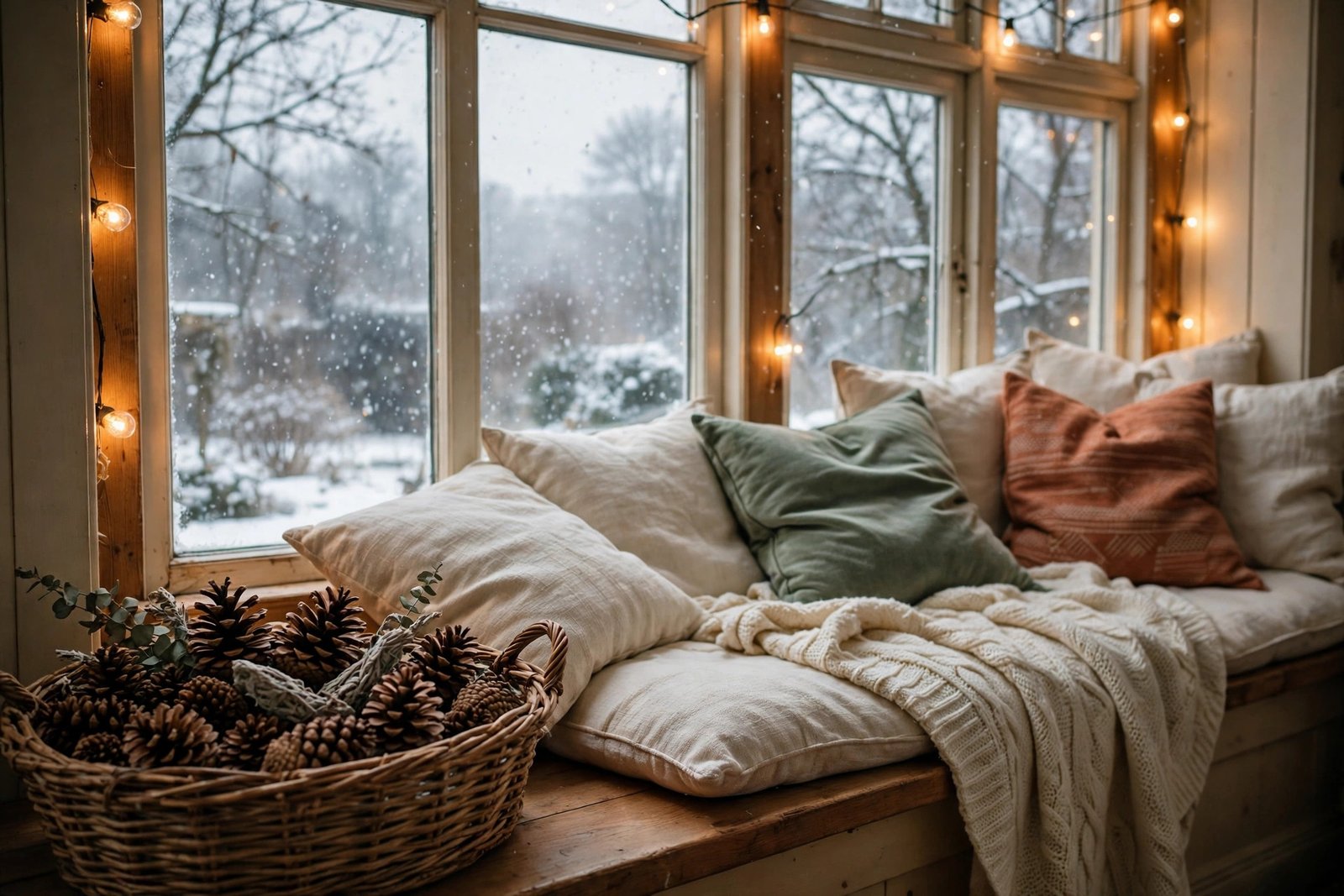
If you have a window seat, winter is when it finally earns its place. Pile it with cushions in varying sizes, add a thick seat pad if the wood feels cold, and drape a chunky knit throw across one end. String lights along the window frame give the perch a gentle glow in the late afternoon, when natural light fades but the evening has not quite begun.
The appeal is the same contrast that makes the whole room work: snow and bare branches outside the glass, warmth and softness inside. Keep a basket of pinecones or a small stack of books at one end so the seat feels used rather than staged, and choose cushion covers you can wash, since window seats collect condensation and dust in winter. The same thinking applies beyond the living room; our winter bedroom decor guide shows how layered bedding and soft light create the same cocooning effect in a sleeping space.
15. Build a Winter Scent Story
Scent is the most overlooked part of winter decorating, and the most powerful. A room that smells faintly of cedar, cinnamon, or vanilla feels warm before you even notice the decor. Use candles, wax melts, or a stovetop simmer pot with orange peel, cinnamon sticks, and cloves, and keep the scent subtle: one source per room is plenty, and two competing fragrances will only give you a headache.
Choose scents that suit the season without leaning on holiday associations. Cedarwood, sandalwood, amber, and vanilla all read as winter without reading as Christmas, and they pair well with the natural materials already in the room. Always follow basic candle safety: never leave a burning candle unattended, keep flames away from curtains and throws, and trim wicks to about a quarter inch before lighting. A battery-operated candle in a lantern gives a similar glow in homes with pets or small children, with none of the risk. A simple stovetop simmer pot is the cheapest way to test a scent before committing to a candle: orange peel, two cinnamon sticks, a few whole cloves, and a sprig of rosemary in a pot of water on the lowest heat will fill the living room within half an hour. Keep the water topped up, never leave the pot unattended, and compost the contents when the scent fades.
Products to Consider
These are the kinds of items that make the ideas above easy to put into practice. Look for them in whatever style and budget suit your home; the list below describes item types only, so you can choose the version that fits your room.
- Chunky knit throw blankets in cream or oatmeal
- Wool or fleece throw blankets in deeper warm tones
- Velvet, wool, or bouclé cushion covers
- Warm white light bulbs in the 2700K range
- Dimmer switches or plug-in lamp dimmers
- Thick wool or high-pile area rugs
- Flat-weave base rugs for layering
- Ceramic or stoneware mugs
- A serving tray for a hot-drink station
- Linen napkins and a small lidded jar set
- Tall vases for evergreen branches
- Pillar candles and sturdy candleholders
- Lined velvet or heavy cotton curtains
- Draft stoppers for windowsills
- Woven baskets in seagrass or wicker
- String lights for window frames and mantels
- Reading floor lamps with linen shades
- Fragrant candles or wax melts in cedar, amber, or vanilla
Frequently Asked Questions
How can I make my living room cozy for winter without spending a lot?
Start with what costs nothing: rearrange seating toward the fireplace or the warmest wall, pull out blankets and throws you already own, and swap in warm white bulbs. Then add one or two low-cost layers, such as cushion covers or a thrifted wool rug, and bring in free natural materials like pinecones and evergreen branches. Warmth in winter comes mostly from texture and light, both of which you can improve without buying furniture.
What colors work best for winter living room decor?
Warm neutrals are the safest base: cream, oatmeal, warm beige, and soft wood tones. Add depth with terracotta, rust, olive, sage, mustard, or deep burgundy as accents. Avoid icy blues and stark whites as your main colors, since they reinforce the cold outside rather than contrasting with it, and keep the palette to three or four colors so the room feels calm rather than busy.
How is winter decor different from Christmas decor?
Christmas decor is festive, bold, and short-lived: ornaments, tinsel, red and green, and themed figures that come down in January. Winter decor is quieter and lasts the whole season: layered textures, warm light, natural greenery without ornaments, and earthy colors. The two can overlap in December, but winter styling is designed to still look right in February, when no one wants a tree in the corner anymore.
How do I keep my living room warm when the windows are old and drafty?
Hang lined, heavy curtains and draw them at dusk, seal obvious drafts with weatherproofing tape or draft stoppers, and layer rugs on cold floors. A fireplace or cluster of candles adds radiant warmth to the seating area, and keeping doors to unused rooms closed stops warm air from escaping. If drafts are severe, window insulation film is an inexpensive temporary fix that is nearly invisible once installed.
Can I use evergreen branches all winter, or will they dry out?
Fresh-cut branches last several weeks indoors if you keep them away from direct heat and refresh the water every few days. When they start to drop needles, replace them with dried eucalyptus or preserved pine stems, which hold their shape for months with no maintenance. Either way, a few stems in a vase give you the scent and color of the outdoors without any holiday-specific styling.
Final Thoughts
Winter asks more of a living room than any other season, and it rewards the effort just as generously. You do not need a renovation or a large budget to make the room feel warm; you need layers you can touch, light that flatters, and a few natural touches that remind you the season outside is something to enjoy from the inside. Start with the throws and the lighting, since those two changes alone transform how a room feels after dark, then add the rugs, the greenery, and the scent as the weeks go on.
The best test of winter decor is simple: on a cold evening, does the room make you want to stay? If the answer is yes, you have done it right, and the room will carry you comfortably all the way to the first warm days of spring.