
Winter asks more from a home than any other season. Cold air slips in through small gaps, daylight fades early, and evenings stretch long. The right decor answers all three at once. It adds warmth you can feel, light you can see, and texture you can touch.
These 25 ideas work from December through February, long after the holidays end. Use them in one room or across the whole house.
Each idea is small on its own, so start with one or two. Add a throw here, swap a lamp there, and let the room guide you. Over a few weekends, the whole home grows warmer.
The best part is that none of these changes need a big budget. Most use things you already own, plus a few smart swaps.
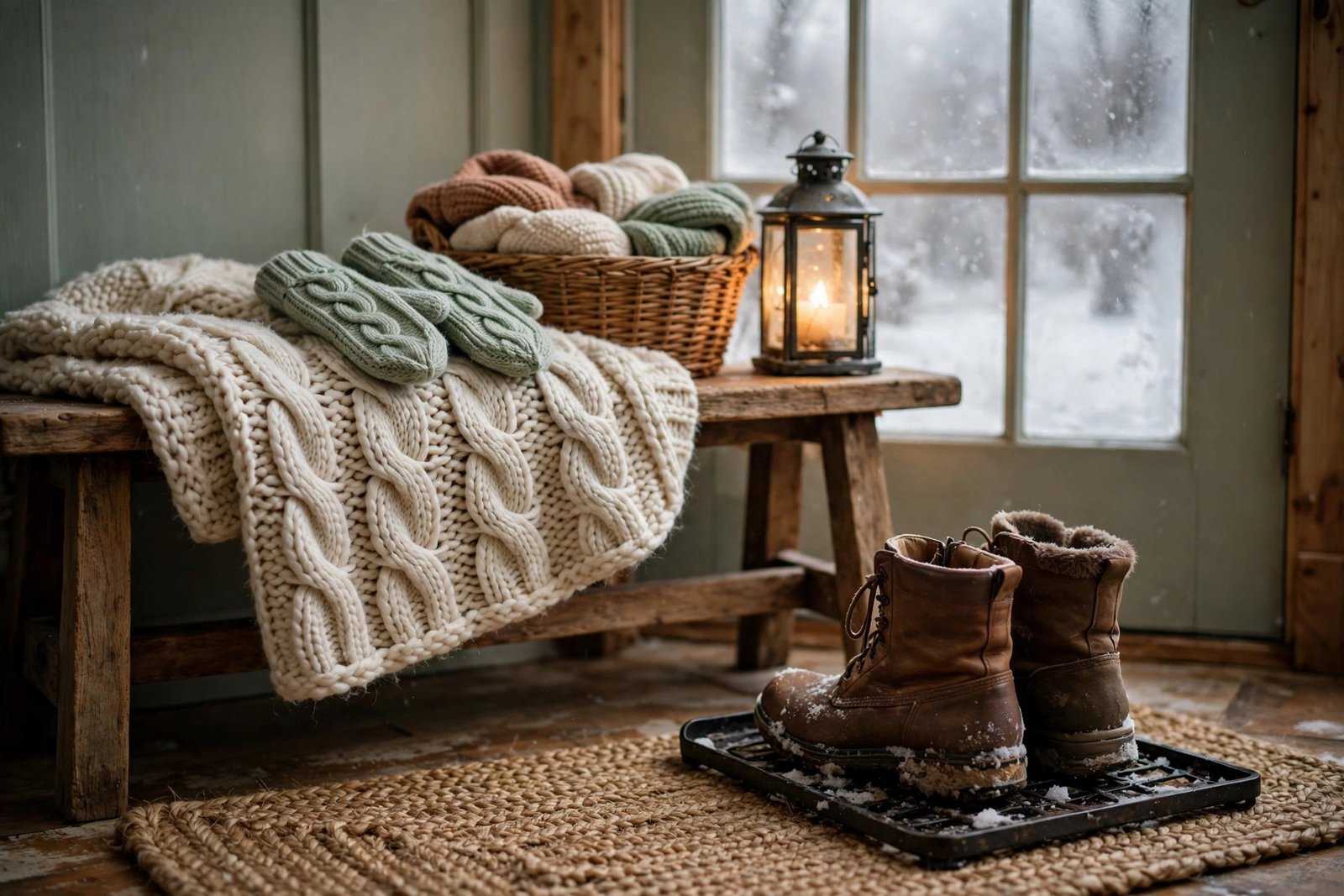
1. Layer a Warm Rug at the Door
The entry sets the tone for the whole home in winter. A cold, bare floor greets you with a chill, so start there. Lay a thick woven rug just inside the door. It catches snow, traps grit, and warms bare feet at once.
Choose a low-pile rug with a tight weave for easy cleaning. Wool and jute both hold up well under boots. In addition, a dark or patterned rug hides winter salt stains better. Shake it out once a week to keep it fresh.
Layer a smaller mat on top for extra texture. A flat-weave mat over a larger rug looks styled, not messy. However, keep the edges flat so no one trips. A rug pad underneath stops slipping on hard floors.
Finally, add a boot tray beside the rug. Wet boots stay off the floor, and the entry stays tidy. For more entry ideas, see our winter entryway decor ideas.
2. Add a Bench with a Chunky Knit Throw
A bench turns a plain entry into a useful winter station. It gives you a spot to sit while you pull on boots. It also holds bags, scarves, and hats within easy reach. Choose a sturdy wooden bench that fits the wall.
Drape a chunky knit throw over one end of the bench. The thick cable knit adds instant warmth and soft texture. Fold it loosely so it looks relaxed, not stiff. A cream or sage throw suits most entry colours.
Place a basket of folded scarves under the bench. Add a pair of knit mittens on top of the throw. These small human touches make the entry feel lived in. In addition, they keep winter gear close at hand.
Set a lantern on the bench for a soft glow on dark mornings. One warm light is enough, so skip extra lamps here. The lantern also doubles as a night light for late arrivals.
3. Swap Pillow Covers for Velvet and Boucle
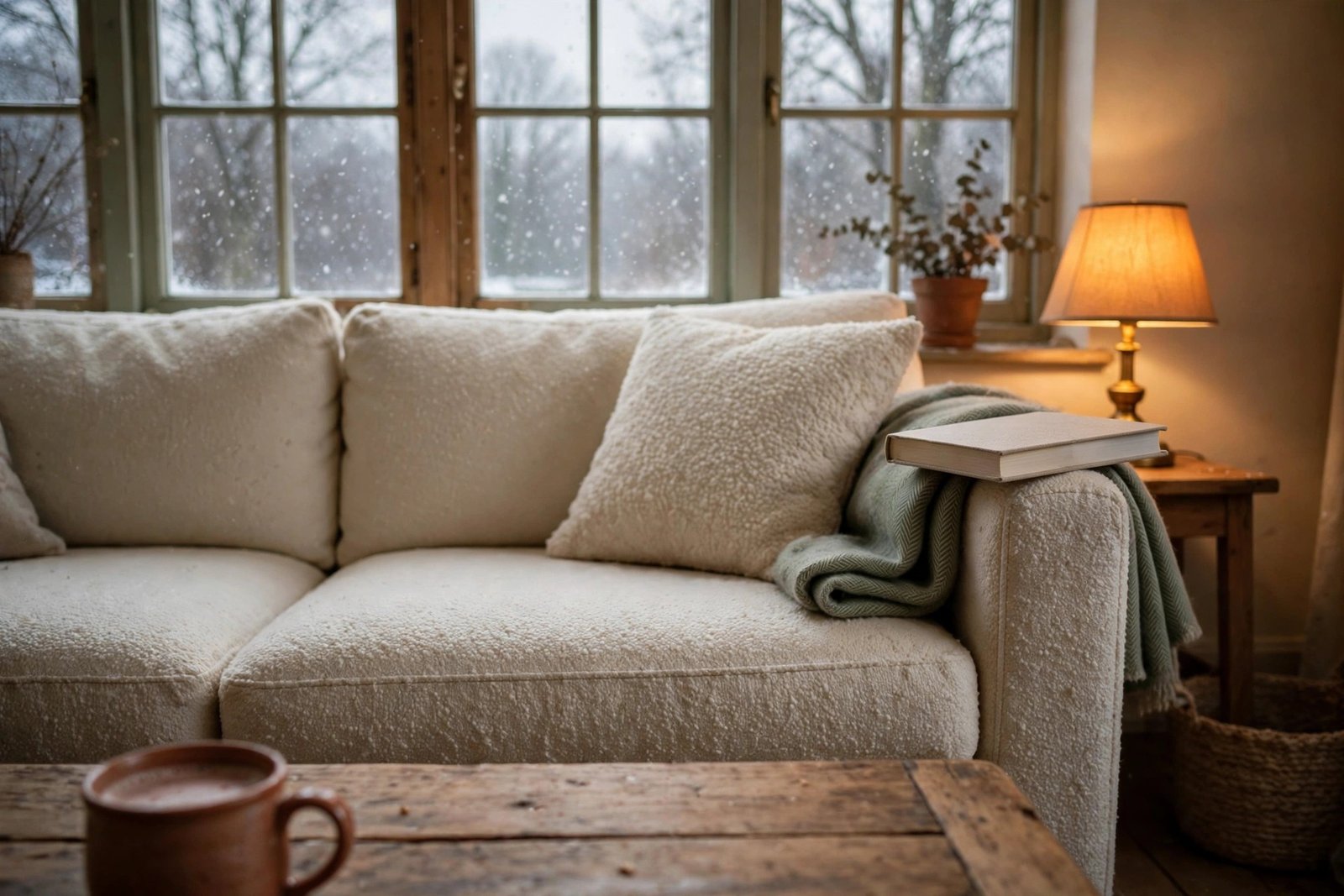
Pillow covers are the fastest winter swap in any living room. They cost little, yet they change the whole feel of the sofa. Swap smooth cotton covers for velvet and boucle instead. The soft textures invite you to sit down and stay.
Mix one velvet cover with one boucle cover on each end of the sofa. Velvet brings rich colour, while boucle adds a nubby, cloud-like texture. Together, they look layered and warm. Choose sage, terracotta, or deep cream tones.
Keep the inserts you already own and change only the covers. Most standard covers zip off in seconds. In addition, store summer covers in a labelled bin for spring. That way, the swap takes minutes next year too.
4. Drape a Knit Throw Over the Sofa Arm
A throw on the sofa arm is both decor and a daily comfort. It sits within reach on cold evenings, so you grab it without thinking. Choose a chunky knit or a soft wool blend. Both read as warm the moment you see them.
Fold the throw in thirds, then drape it over one arm of the sofa. Let one end hang a little longer than the other. This slight unevenness looks natural and relaxed. However, avoid a perfect fold, which can look stiff.
Pick a throw in a colour that contrasts gently with the sofa. A cream throw warms a grey sofa, while a sage throw suits cream. In addition, a terracotta throw adds a warm accent to a neutral room.
Keep a second throw folded in a basket nearby for guests. On movie nights, everyone gets one without a search. As a result, the living room feels ready for cold weather at all times.
5. Warm the Room with One Lamp Glow
Winter evenings need warm light, not bright overhead glare. A single table lamp with a warm bulb changes the whole mood. It pools soft light where you sit and read. The rest of the room stays calm and dim.
Choose a bulb rated around 2700K for a warm amber glow. Cooler bulbs feel harsh in winter, so check the label before you buy. Place the lamp on a side table beside the sofa. That spot lights your book without lighting the whole room.
Use a fabric shade to soften the glow even more. Linen shades spread light gently and hide the bulb. In addition, a brass or wooden base adds a warm material to the table. Keep the lamp on a timer for dark afternoons.
Resist the urge to light every lamp at once. One warm source per seating area feels cosier than five. For a full room plan, see our cozy winter living room decor ideas.
6. Style a Coffee Table Vignette for Cold Days
The coffee table is the heart of winter evenings at home. It holds cocoa, books, and quiet conversation. Style it as a small scene with three layers. Start with a tray, add a book stack, and finish with a warm drink.
Use a wooden tray to gather the pieces into one tidy group. A tray also makes clearing the table easy before dinner. Place two books with blank spines on the tray. Top them with a small ceramic bowl or a pinecone.
Leave space for a mug on the table beside the tray. A steaming mug of cocoa adds life to the scene. However, keep the mug on a coaster to protect the wood. Swap the drink for a small plant in spring.
7. Build a Reading Nook Corner
A reading nook turns an unused corner into the warmest spot in the house. All it needs is a chair, a lamp, and a throw. Pick the corner with the best winter light. A window seat works well, but any quiet corner will do.
Place a comfortable armchair at a slight angle to the wall. Add a boucle cushion and a folded wool throw on the seat. The textures make the chair look inviting from across the room. In addition, a small side table holds your book and mug.
Set one warm lamp beside the chair for evening reading. A floor lamp with a warm bulb works best here. Keep the light low and close, so the pages glow softly. Avoid overhead light, which feels cold and flat.
Finish the nook with a basket of books on the floor. Choose a mix of novels and picture books for browsing. For more nook ideas, see our reading nook ideas.
8. Set Out a Steaming Drink Station
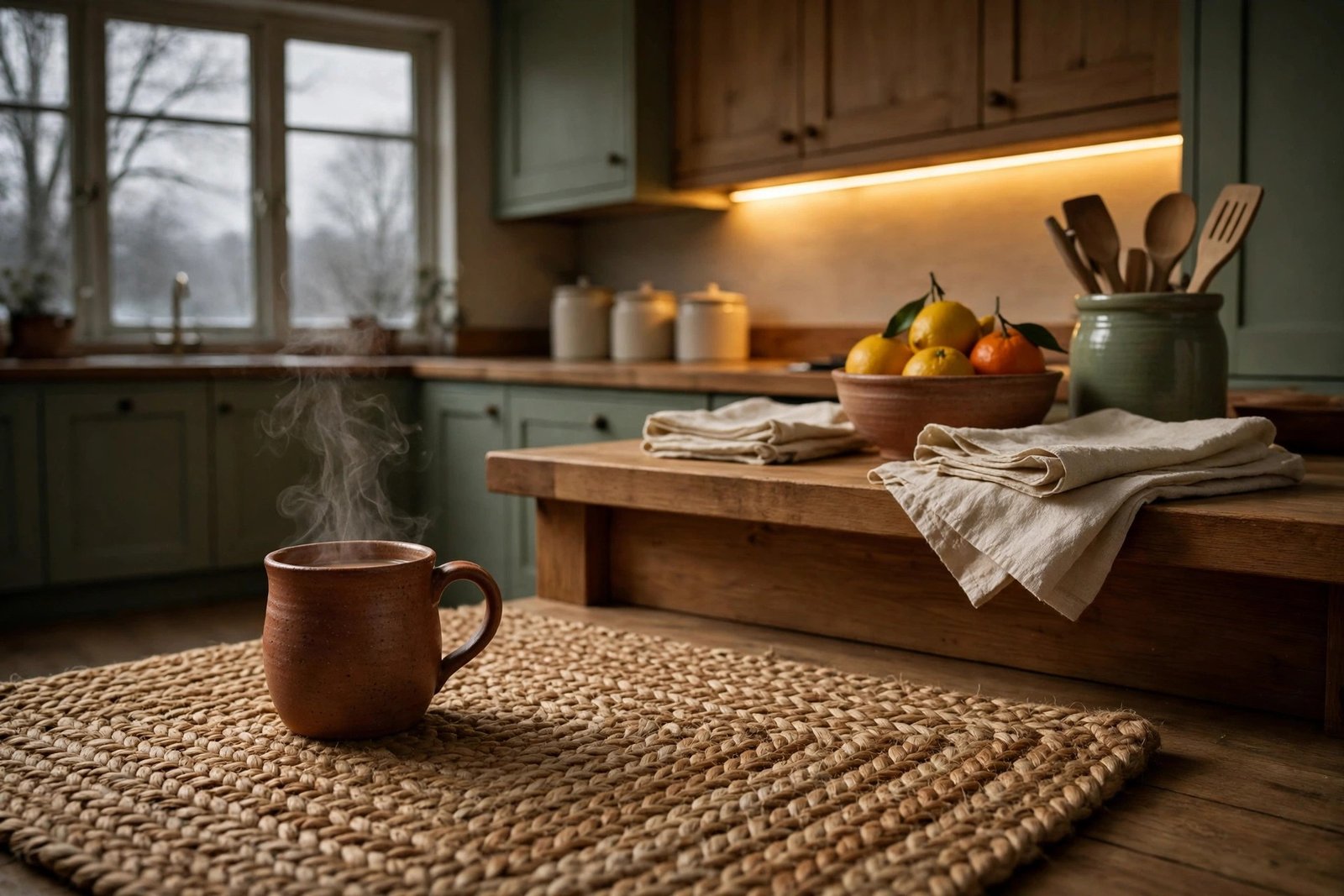
A drink station makes cold mornings feel like a small ritual. It gathers everything for cocoa, tea, or coffee in one place. Use a tray on the kitchen counter or a small cart. The station stays ready all winter long.
Place mugs, a kettle, and a jar of cocoa on the tray. Add a small bowl of marshmallows or cinnamon sticks for fun. Keep the group tight so the counter still feels tidy. In addition, a folded linen napkin under the mugs adds a soft layer.
Steam rising from a mug is the warmest detail in any kitchen. It signals comfort before you even take a sip. For that reason, make the drink fresh each morning. The station works best when it gets daily use.
9. Add a Bowl of Winter Citrus
A bowl of citrus brings colour and scent to a grey winter kitchen. Oranges, lemons, and grapefruit glow against wood and stone. The fruit looks fresh for a week or more. It also smells faintly sweet on the counter.
Choose a wide, shallow bowl in ceramic or wood. Pile the fruit loosely so each piece shows. Add a few leaves for a green accent if you have them. However, skip plastic fruit, which always looks flat and fake.
Place the bowl where you see it often, such as the island or the table. It doubles as a healthy snack for the family. In addition, it fills an empty spot without any clutter. Replace fruit as you eat it.
Try a mix of blood oranges and lemons for deeper colour. The contrast looks rich against sage cabinets or cream walls. As a result, the kitchen feels bright even on the darkest days.
10. Layer Linen Napkins for Everyday Meals
Linen napkins make an ordinary winter dinner feel special. They soften the table and add a layer of texture. Use them every day, not just for guests. Cloth napkins also cut down on paper waste.
Fold each napkin in a simple rectangle and lay it on the plate. A loose fold looks relaxed, so skip fussy shapes. Choose cream, sage, or soft terracotta for a warm palette. In addition, mix two colours for a casual, collected look.
Pair the napkins with plain stoneware plates and wooden cutlery. The natural materials suit winter meals well. Keep the setting simple so the food stays the focus. However, add a sprig of dried herbs on each napkin for a fresh touch.
11. Dress the Dining Table with a Wool Runner
A wool runner warms a bare dining table in seconds. It adds texture down the centre and protects the wood. Choose a runner in cream or natural wool. It suits both everyday meals and quiet winter dinners.
Lay the runner lengthwise with equal overhang at each end. About fifteen centimetres of overhang looks balanced. In addition, a runner under a low centrepiece keeps the table from looking bare. Skip a tablecloth for a more relaxed feel.
Add a wooden bead garland or a row of small candles along the runner. Keep the centrepiece low so guests can see each other. However, use flameless candles if the runner sits near dried leaves. Safety comes first at a shared table.
12. Warm the Kitchen with a Woven Rug
A woven rug warms a cold kitchen floor better than any decor. It softens the space underfoot while you cook. Choose a flat-weave rug that sits low and stays put. A rug pad underneath stops it from sliding.
Place the rug in front of the sink or along the main counter. That is where you stand the longest each day. A jute or cotton rug works well in this spot. In addition, a washable rug makes winter spills easy to handle.
Pick a rug in a warm neutral tone with a simple pattern. It should suit the cabinets without fighting them. However, avoid a rug that is too light, since kitchen stains show fast. A mid-tone weave hides marks best.
Shake the rug outside once a week and wash it monthly. A clean rug keeps the kitchen feeling fresh. For a full kitchen plan, see our winter kitchen decor ideas.
13. Make the Bed with Velvet and Flannel
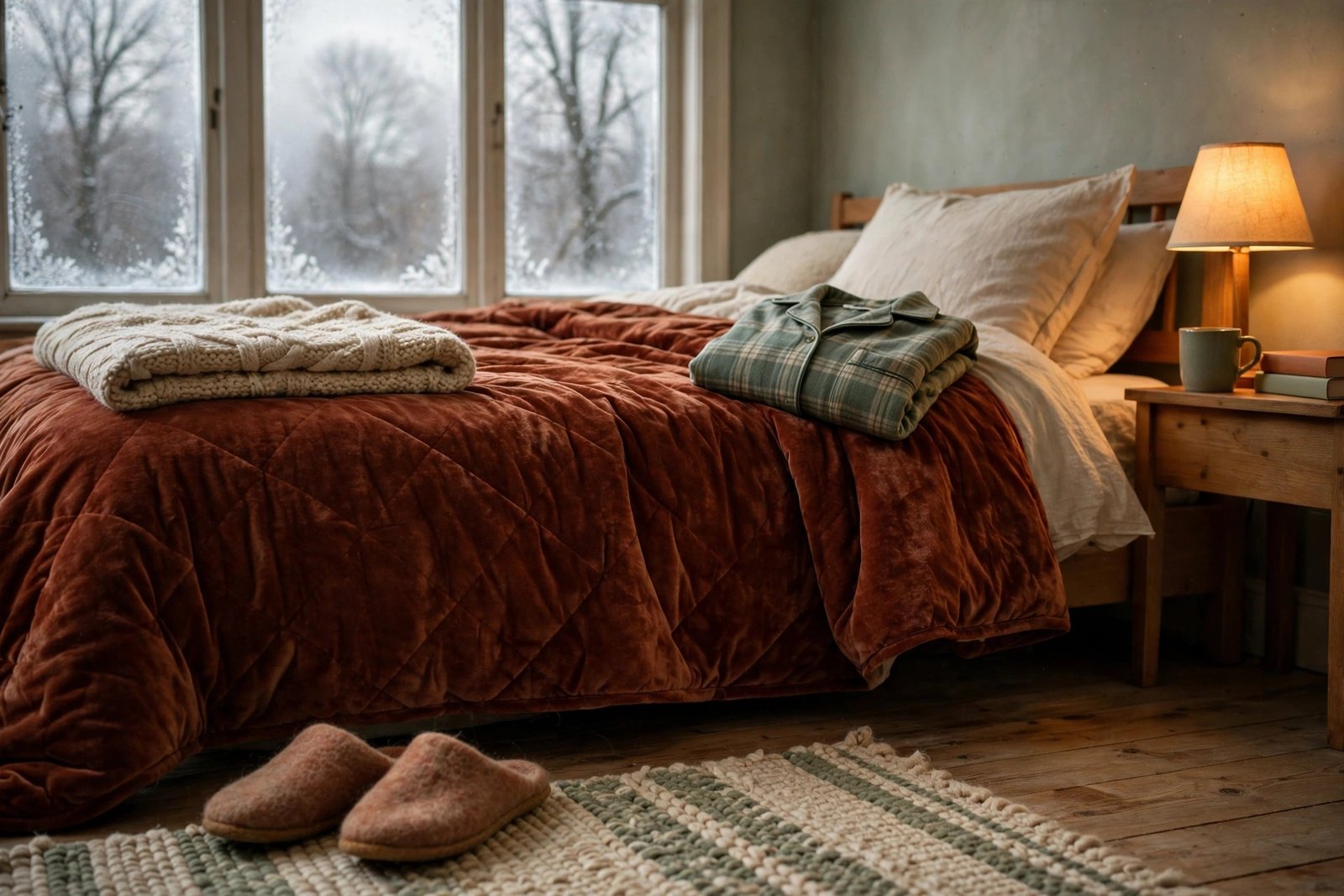
The bed is where winter comfort matters most. Swap light summer bedding for velvet and flannel layers. A velvet quilt adds weight and rich colour at once. Flannel sheets feel warm the moment you climb in.
Start with flannel sheets in cream or soft sage. Add a velvet quilt in rust, deep green, or warm brown. The two textures look rich together and feel even better. In addition, a flat sheet between them makes washing easy.
Layer a thin blanket under the quilt for the coldest nights. You can fold it back when the room warms up. However, keep the layers loose so the bed looks inviting, not stiff. A slightly rumpled bed feels lived in.
14. Add a Chunky Knit Throw at the Foot of the Bed
A throw at the foot of the bed adds warmth and a finished look. It also gives you an extra layer on cold nights. Choose a chunky knit in cream or natural wool. The thick texture contrasts well with smooth bedding.
Fold the throw in half lengthwise, then lay it across the foot. Let the ends hang evenly on both sides. This simple fold looks tidy and takes seconds. In addition, it protects the quilt from pets and shoes.
Pick a throw that matches the pillow covers or the rug. A shared colour ties the room together. However, avoid matching everything exactly, since a little contrast looks more natural. One accent colour is enough.
Use the throw as a lap blanket for evening reading in bed. It stays close at hand and never gets lost. As a result, the bed works hard all winter long.
15. Keep Slippers and a Rug by the Bed
Cold floors are the worst part of a winter morning. A rug by the bed fixes that in one step. Place a soft woven rug where your feet land first. Wool slippers beside it complete the routine.
Choose a rug large enough for both sides of the bed. A runner on each side works well in a small room. In addition, a low pile is easier to vacuum and stays flat. Pick cream or sage for a calm start to the day.
Keep a pair of wool slippers on the rug each night. They warm up by morning and wait for your feet. However, choose slippers with a firm sole for safety on hard floors. Soft soles slip on wood and tile.
16. Warm the Bedroom with One Bedside Lamp
A bedside lamp sets the mood for the whole bedroom at night. Choose a warm bulb and a fabric shade. The glow pools softly by the bed and leaves the corners dim. That contrast feels calm and restful.
Place the lamp on the nightstand closest to your side of the bed. A small wooden base suits most bedrooms well. In addition, a linen shade spreads the light gently across the pillows. Avoid a bare bulb, which glares at eye level.
Use a timer or a smart plug so the lamp turns on before bedtime. Coming into a lit room feels welcoming on dark evenings. However, keep the brightness low so the room stays sleepy. A dim glow is enough.
Pair the lamp with a small stack of books on the nightstand. A mug of herbal tea fits the scene too. As a result, the bedside becomes a quiet evening ritual.
17. Lay Out Flannel Pajamas for Cold Nights
Flannel pajamas are a small detail with a big winter payoff. Lay them out on the bed each morning for the night ahead. The sight alone makes the bedroom feel cared for. It also saves a cold search through drawers at bedtime.
Choose a soft plaid in sage, cream, or muted blue. Fold the set neatly and place it on the quilt. In addition, a matching pair for a partner doubles the charm. The folded stack looks like a hotel turndown.
Keep the pajamas warm by laying them near the bed, not in a cold drawer. A folded set on the bed stays at room temperature. However, wash flannel often, since it softens with each wash. Soft fabric sleeps better.
End the day by laying out the next morning too. A folded set waiting on the bed makes cold mornings easier. In addition, it turns a small chore into a warm habit. The bedroom feels cared for every single night.
18. Turn the Hallway into a Warm Pass-Through
Hallways often stay cold and bare all winter. A few warm touches change that fast. Start with a runner down the length of the hall. It softens footsteps and adds colour to a plain space.
Hang a mirror on the wall to bounce light from nearby rooms. A mirror also makes a narrow hall feel wider. In addition, a small console table holds a lamp or a bowl of pinecones. Keep the table slim so the path stays clear.
Add a row of hooks for coats and scarves near the door. Hooks keep winter gear off the floor and within reach. However, space them wide enough for thick coats. Crowded hooks look messy and drop things.
19. Stack Plush Wool Towels in the Bathroom
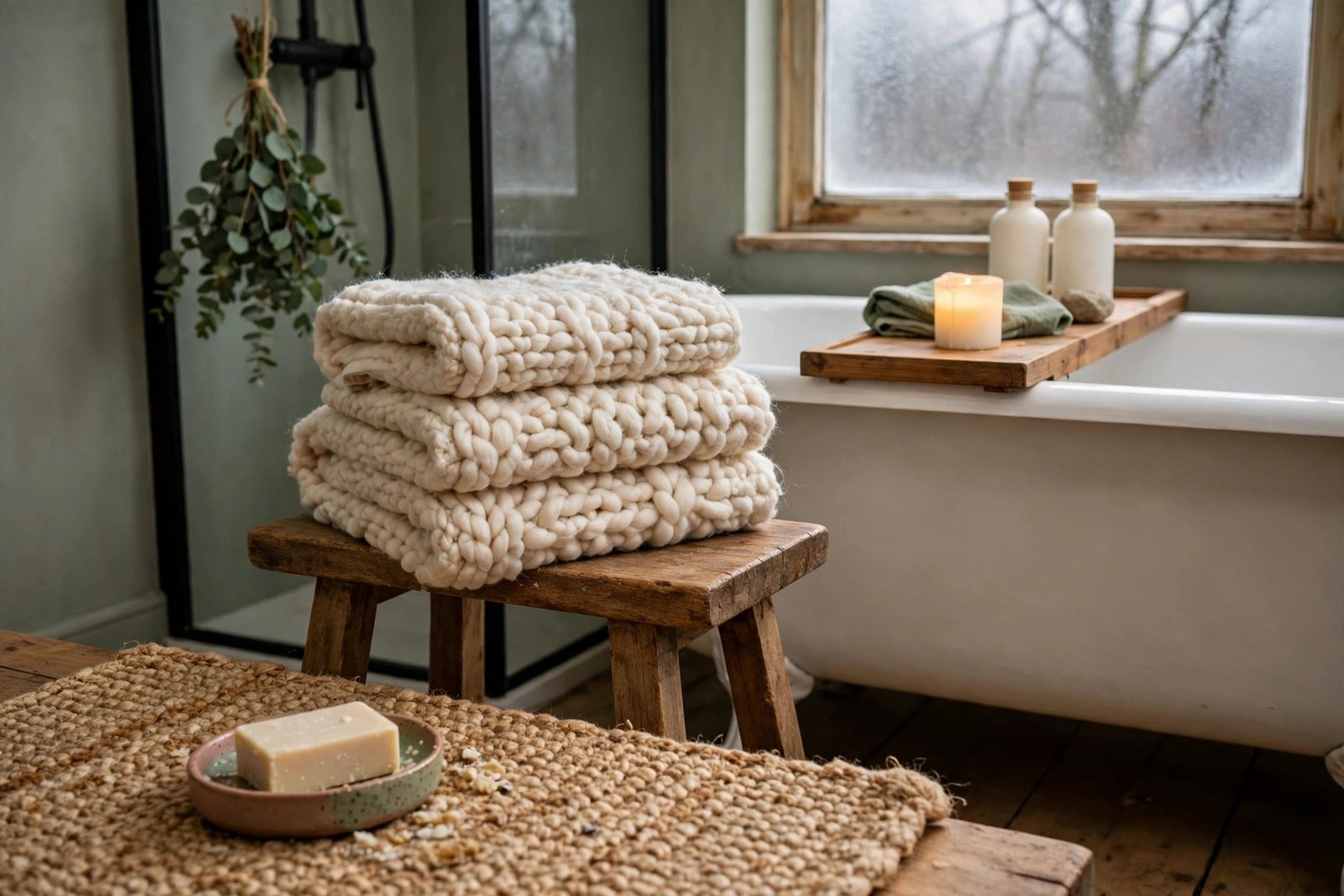
Plush towels turn a cold bathroom into a warm retreat. Stack thick wool-blend towels on a stool or an open shelf. The soft pile looks inviting and feels warm after a shower. Choose cream or sage for a calm palette.
Fold each towel in thirds so the stack looks neat. Place the stack where you can reach it from the tub. In addition, a woven basket underneath holds washcloths and spare towels. The basket adds texture to the room.
Warm the towels on a heated rail when you can. A warm towel on a cold morning feels like a small luxury. However, a towel warmer is optional, so skip it if the budget is tight. Thick towels alone still feel warm.
20. Hang Eucalyptus in the Shower
A eucalyptus bundle in the shower adds scent and soft green colour. The steam releases a fresh, clean fragrance. It also looks lovely hanging from the shower head. Tie the bundle with twine and hang it upside down.
Choose a fresh bundle with full, round leaves. Dried eucalyptus works too, but fresh leaves smell stronger. In addition, replace the bundle every two to three weeks. Faded leaves lose both scent and colour.
Keep the bundle out of the direct water stream. Steam alone is enough to release the scent. However, a quick rinse now and then keeps dust off the leaves. Let it dry fully between showers.
Pair the bundle with a plain soap dish and a wooden stool. The natural materials suit the scent well. As a result, the bathroom smells like a spa without any sprays.
21. Use a Flameless Candle at Bath Time
A flameless candle gives bath time a warm glow without any risk. It flickers like a real flame but stays cool to the touch. Place one on the bath tray beside a folded towel. The soft light turns an ordinary bath into a quiet ritual.
Choose a battery candle with a warm white glow. Cooler LEDs look blue and harsh, so check the colour first. In addition, a timer setting saves batteries and keeps the routine simple. The candle lights itself each evening.
Keep the candle on a wooden tray with a small plant or a stone. The tray groups the pieces and protects the tub edge. However, keep real flames out of the bathroom entirely. Towels and steam make open flames unsafe here.
22. Soften the Bathroom with Warm Wood
Warm wood softens a cold bathroom better than any tile. A wooden stool, a bath tray, or a small shelf adds instant warmth. The natural grain contrasts well with white porcelain. It also brings a calm, spa-like feel to the room.
Place a wooden bath tray across the tub for books and a candle. A teak or bamboo tray resists moisture well. In addition, a wooden stool beside the tub holds towels within reach. Both pieces work hard every day.
Seal the wood with a light oil once a season. Oiled wood resists water spots and stays rich in colour. However, wipe up standing water after each bath. Even sealed wood lasts longer when it dries out.
Add a small wooden shelf for jars and bottles above the sink. It clears the counter and adds warm texture. Finally, match the wood tones loosely for a calm, collected look.
23. Choose a Warm Winter Colour Palette
A shared colour palette ties the whole home together in winter. Without one, each room drifts in its own direction. Pick three warm colours and repeat them in every room. Cream, sage, and terracotta work well together.
Use cream as the base colour on walls and large furniture. Add sage through cushions, throws, and plants. Then bring in terracotta as a small accent in pillows and mugs. The mix feels warm without looking heavy.
Repeat each colour at least three times across the home. Repetition makes the palette feel planned, not random. In addition, a shared palette lets you move decor between rooms. A throw from the sofa suits the bedroom too.
24. Layer Light in Every Room
Winter light is scarce, so layer it room by room. Each room needs three kinds of light to feel warm. Ambient light fills the space, task light serves a job, and accent light adds glow. Together, they beat the early dark.
Start with ambient light from a ceiling fixture on a dimmer. Add task light where you read, cook, or work. Then finish with accent light, such as a lamp or a candle glow. The layers let you adjust the mood through the day.
Use warm bulbs near 2700K in every layer. Mixed colour temperatures look messy, so keep them the same. In addition, put lamps on timers for dark afternoons. Coming home to lit rooms feels welcoming.
25. Add a Signature Winter Scent
Scent is the final layer of winter decor, and it costs almost nothing. A signature scent makes the whole home smell like the season. Simmer cinnamon sticks, orange peel, and cloves in water. The steam carries the scent through the house.
Use a small pot on low heat for an hour each evening. Refill the water as it simmers down. In addition, a bowl of dried orange slices on the table adds scent all day. Both options beat plug-in sprays.
Pick one scent and use it in every room for consistency. Cinnamon and citrus suit most homes well. However, keep the scent light so it never overwhelms guests. A faint trace is better than a strong cloud.
Products to Consider
A few useful pieces make these ideas easy to try at home. Look for them in general home stores or online shops. Choose quality over quantity, and buy only what you will use.
- Chunky knit throw in cream or sage wool
- Velvet pillow covers in rust or deep green
- Boucle cushion covers in natural cream
- Woven jute rug runner for the kitchen or hallway
- Flameless battery candles with a warm white glow
- Linen napkins in cream, sage, or terracotta
- Ceramic mugs for cocoa, tea, and coffee
- Fresh eucalyptus bundle for the shower
- Wool slippers with a firm, non-slip sole
- Warm white LED bulbs rated near 2700K
- Wooden bath tray in teak or bamboo
- Folded flannel pajamas in a soft plaid
FAQ
How can I make my home feel warm in winter without raising the heat?
Start with texture and light, not the thermostat. Add knit throws, velvet cushions, and woven rugs in the rooms you use most. Then swap cool bulbs for warm ones near 2700K. Together, these changes make a room feel several degrees warmer.
Seal drafts around doors and windows as well. A simple draft stopper costs little and stops cold air at once. In addition, heavy curtains at night trap heat inside the room. Small fixes like these add up fast.
What colours work best for winter decor?
Warm, earthy colours work best in winter. Cream, sage, terracotta, and warm wood tones suit most homes. They feel calm and cosy without looking dark. Use cream as the base and add the rest as accents.
Avoid cold greys and bright whites in large amounts. They can make a room feel chilly in January. However, a little white in bedding or towels still looks fresh. Balance is the key to a warm palette.
When should I put up winter decor, and when should I take it down?
Put winter decor up in late November or early December. It works through the holidays and well beyond them. Take it down in late February or early March. By then, longer days call for lighter textures.
Unlike holiday decor, winter decor has no fixed end date. Keep the pieces you love and swap the rest for spring. In addition, store throws and covers clean so they stay fresh. A gentle wash before storage helps.
How do I keep winter decor from looking like Christmas decor?
Skip the holiday symbols entirely. No trees, stockings, ornaments, or Santa figures belong in winter decor. Focus instead on texture, light, and scent. Knit, velvet, wool, and warm lamps read as winter, not Christmas.
Choose a palette without red and green together. Cream, sage, and terracotta feel seasonal all winter long. However, a single deep green cushion is fine on its own. Context matters more than any one colour.
What is the easiest first step for a small budget?
Start with one throw and one warm bulb. Drape the throw over the sofa arm and swap the bulb in your most-used lamp. The change costs little, yet the room feels warmer at once. It is the best first step for any budget.
Next, add a woven rug or a set of linen napkins. Both cost little and change the room fast. In addition, use what you already own before you buy more. A basket, a tray, or a bowl from another room works well.
Final Thoughts
Winter decor works best when it grows slowly, room by room. Start with the entry, then warm the living room, the kitchen, and the bedroom. Each small change adds comfort, and the whole home follows. By February, the house feels like a warm retreat from the cold.
Keep the pieces you love and swap the rest as the season turns. The throws, rugs, and lamps in this list work from December through February. They also store well for next winter. That makes them a smart, lasting investment in a warmer home.