Blank walls make a living room feel unfinished. The sofa looks fine. The rug looks fine. Yet the room still feels cold. Walls carry the mood of a room. They cover more space than any sofa or rug.
A few smart choices can change them fast.
This guide shares 17 living room wall decor ideas for real homes. Some cost very little. Some take one weekend. All of them work with the furniture you already own. You will find oversized art, mirrors, wood panels, and renter-friendly swaps.
Pick two or three ideas. Start with the wall you see most. Then build from there.
First, learn two simple rules. Hang art so its center sits 57 inches from the floor. That height matches most eyes at rest. Then size art to fill 60 to 75 percent of the sofa width.
These two rules fix most wall mistakes. Keep them in mind as you read.
1. Hang One Oversized Piece Above the Sofa
One large piece beats five small frames above a sofa. Small art looks lost on a wide wall. A single oversized canvas fills the space with calm. It gives the eye one clear place to rest.
Choose art that spans 60 to 75 percent of the sofa width. A 72-inch sofa needs art around 48 to 54 inches wide. Measure first. Then shop with the number in hand.
Hang the center at 57 inches from the floor. This is the classic eye-level rule. It works in most living rooms. If your sofa back is tall, raise the art by two inches.
The gap between the sofa top and the frame should stay near six to eight inches. A bigger gap breaks the link between them. Use a level.
Abstract art suits this spot well. Soft shapes and warm tones calm a busy room. A landscape adds depth to a flat wall. A bold graphic print wakes up a plain room. Pick colors from your rug or cushions.
Then repeat one of those colors in the art. This ties the whole wall together. For example, a clay-toned print echoes terracotta cushions. A sage print echoes a green throw.
Use two wall hooks for pieces over 20 pounds. One hook can tilt over time. Two hooks share the weight and keep the frame level. Check the hook rating on the pack. Heavy frames need anchors in drywall.
Studs hold the most weight. Finally, step back and check the view from the door. The art should greet you as you enter.
2. Build a Gallery Wall That Feels Planned
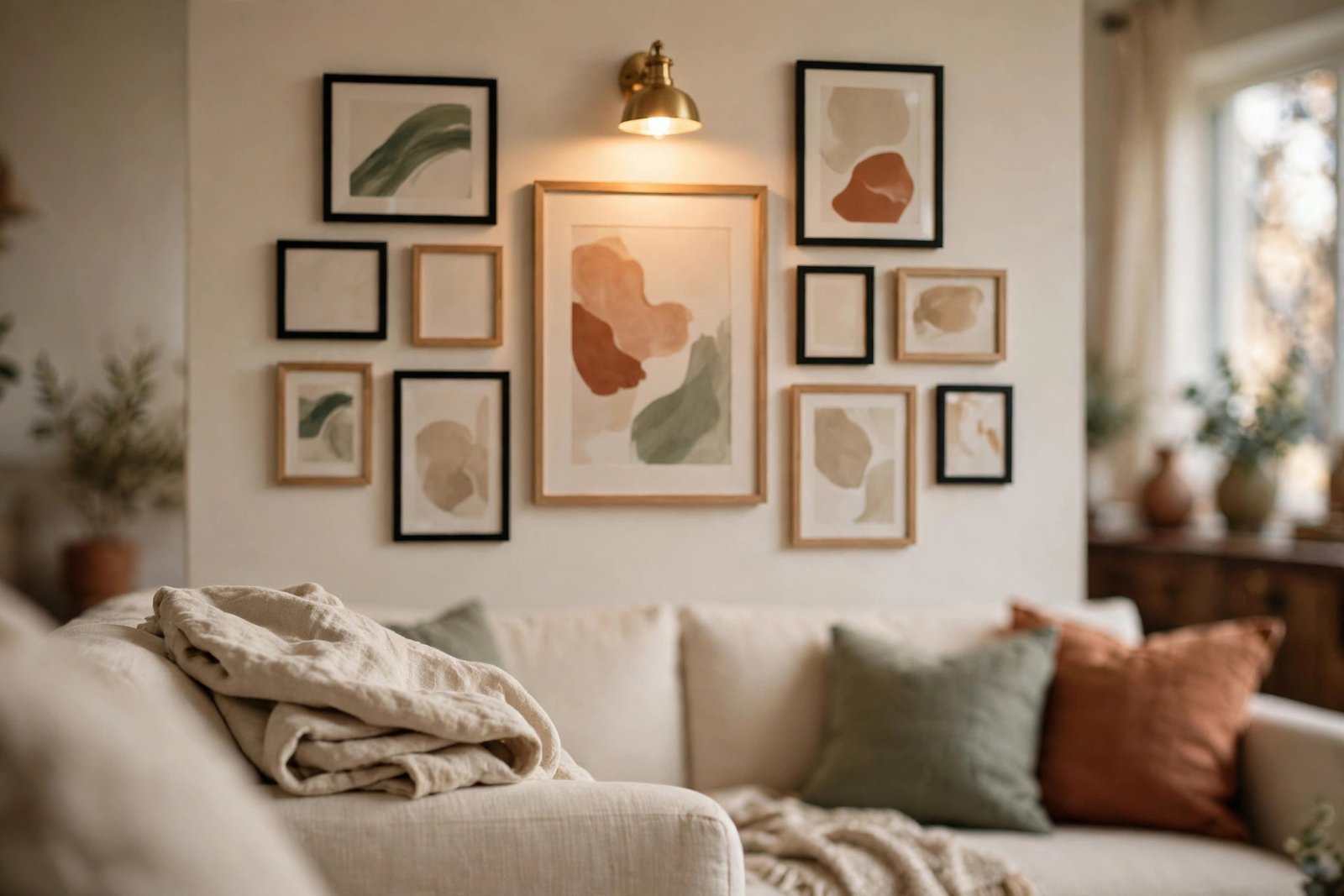
A gallery wall works when it looks planned, not random. Start with one anchor piece. This is the largest frame in the set. Place it slightly off center. Then build the rest around it. Keep two to three inches between frames.
This gap keeps the group tight and calm.
Mix sizes, but keep one frame style in the set. Black frames suit bold prints. Light wood frames suit soft art. A single frame color ties mixed art together. Add one small mirror or a woven piece for texture.
Lay the whole plan on the floor first. Move pieces until the shape feels balanced.
Trace each frame on paper and tape the shapes to the wall. This step takes ten minutes. It saves many extra nail holes. Start with the anchor piece. Then hang the rest one by one.
Step back often. A gallery wall should feel like one picture, not ten small ones.
Want a full step-by-step plan? Our gallery wall ideas guide walks through layouts, spacing, and frame mixes. Use it to pick a layout that fits your wall. Then adapt the sizes to your own frames. Add one piece a year.
Soon the wall tells your story.
3. Add a Large Mirror to Double the Light
A large mirror is the fastest way to brighten a living room. It bounces daylight across the room. It also makes a small room feel twice as big. Hang it across from a window for the best effect.
The glass will catch the sky and the garden view. A mirror doubles whatever it faces.
Arched mirrors suit soft, curved furniture. A tall arch echoes a curved sofa back. Sunburst mirrors suit plain walls that need drama. It softens all the straight lines. Choose a mirror that spans 60 to 75 percent of the furniture below it.
The same two-thirds rule applies here. Center it at 57 inches, just like art.
Check the weight before you buy. Large mirrors are heavy. Most need two screws into studs. A French cleat spreads the load well. It also keeps the mirror flat on the wall.
Hold the mirror in place first. Then mark the spots with tape. This avoids a crooked hang.
Keep the glass clean for the best glow. Dust dulls the reflection fast. Wipe it once a week with a soft cloth. A clean mirror lifts the whole room. Finally, pair it with one warm lamp nearby.
The lamp glow in the glass adds depth at night. Your wall will shine long after sunset.
4. Try a Wood-Slat or Fluted Panel Wall
Wood slats turn a flat wall into a warm feature. The thin vertical lines add rhythm. They also add depth without paint. Natural oak suits light rooms. Walnut suits rooms with dark furniture. Painted slats in sage or clay suit bold rooms.
Keep the rest of the wall simple.
Fluted panels work the same way with a softer look. The rounded ridges catch light all day. They suit a wall behind the sofa or the TV. Cover the full wall for drama.
A half wall with a ledge on top also works well. The ledge holds small art and plants.
Measure the wall before you order panels. Most slat panels come in set widths. Plan the cuts so the edges land even. Start from the center and work outward. This keeps both edges the same. Use construction adhesive plus a few nails.
The nails hold the panel while the glue sets.
Style the finished wall with care. One large print or a mirror suits slats well. Small frames get lost in the lines. Keep shelves short so the slats still show. In short, slats give you texture and warmth in one move.
They suit almost every style, from modern to farmhouse.
5. Colour-Drench One Accent Wall
Colour drenching means painting one wall in a deep, warm tone. Clay, terracotta, cocoa, and caramel all suit living rooms. The color wraps the wall in warmth. It also makes pale furniture stand out. Pick the wall behind the sofa.
It frames the room best.
Test the color before you commit. Paint a large swatch on the wall. Live with it for two days. Check it in morning light and lamp light. Warm tones can shift a lot by evening.
A color that looks soft at noon may glow orange at dusk. They save a costly repaint.
Keep the rest of the room calm. Cream walls on the other sides balance the deep tone. Add art with a light mat and a simple frame. The pale frame pops against the dark paint.
Brass or wood accents warm the look further. A woven basket adds soft texture. Avoid adding more bold colors nearby. One strong wall is enough.
Paint the trim the same color for a modern drenched look. The wall and trim blend into one calm surface. Or keep the trim white for a classic frame. Both work well. Use a matte or eggshell finish on walls.
Flat paint hides small bumps. It also keeps the color soft. Finally, save a little paint for touch-ups.
6. Style Floating Shelves in Layers
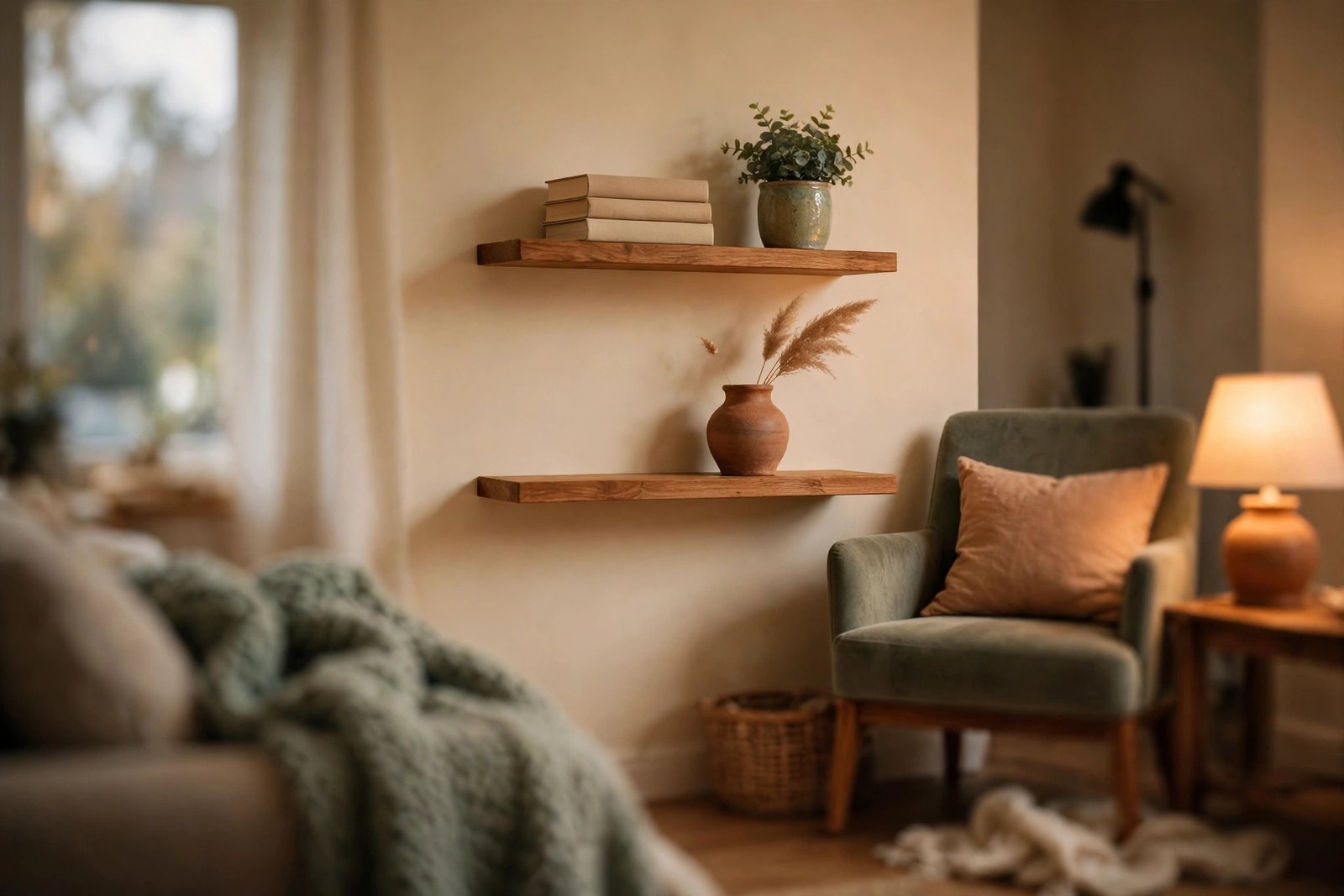
Floating shelves turn a blank wall into a display. They hold books, plants, and small art. Hang two shelves above a sideboard or a reading chair. Space them 12 to 15 inches apart. This gap fits books and small vases.
A wider gap suits tall vases and framed prints.
Layer each shelf like a small still life. Start with a tall item at one end. A vase or a framed print works well. Then add a short stack of books in the middle.
Finish with a small plant or a candle at the other end. Vary the heights. A mix of tall and short keeps the eye moving.
Leave some empty space on every shelf. A crowded shelf feels like storage. A shelf with breathing room feels styled. Follow a simple rule. Fill two-thirds of the shelf and leave one-third empty.
Match the shelf wood to your coffee table for a calm link. A walnut shelf echoes a walnut table. A pale oak shelf echoes light floors. Our coffee table decor ideas use the same layering trick on a smaller scale.
Try the same mix of tall, short, and green. Your shelves and your table will feel like one plan.
7. Add Picture Lights or Sconces
Good lighting makes wall decor glow after dark. A picture light sits above a frame. It washes warm light down the art. This makes colors look rich at night. Battery picture lights suit renters well. They need no wiring.
They give a cleaner look with no visible cords.
Place sconces in pairs beside a mirror or a large print. Keep them at eye level, near 60 inches from the floor. This height lights faces without glare. Space them 24 to 30 inches from the frame edge.
Too close and the light pools hard. Test the spot with tape before you drill.
Choose warm bulbs near 2700K for living rooms. Cool bulbs make walls look grey. Warm bulbs make wood and fabric glow. Use a dimmer where you can. A dimmer lets you set the mood for a quiet evening.
Small shades need small bulbs.
Keep cords tidy with a cord cover. Paint the cover the wall color. It will nearly vanish. For a no-wire look, pick plug-in sconces with a slim cord. Run the cord behind furniture.
In short, one warm light source per wall is enough. More lights compete and flatten the room.
8. Hang a Textile for Soft Texture
Hard walls need soft texture. A woven wall hanging adds warmth fast. Macrame suits boho rooms. A flat-woven tapestry suits calm, modern rooms. Hang textiles where the wall feels bare and cold. The fabric softens sound too.
A room with textiles feels quieter.
Size matters with textiles. A small hanging looks lost on a wide wall. Choose one that spans at least half the sofa width. Or hang two small pieces side by side. Keep the bottom edge above the sofa back.
A gap of six to eight inches looks best. Use a wooden dowel at the top. It keeps the fabric flat and straight.
Match the textile colors to your cushions or rug. A rust weave echoes terracotta pillows. A cream weave calms a busy pattern. Avoid mixing too many bold textiles in one room. One woven piece per wall is plenty.
Add a plant nearby for a natural link.
Care is simple. Dust settles in the fibers. Vacuum it gently with a brush head twice a year. Keep it out of direct sun. Finally, check the wall hook often.
Fabric is light, but dowels can slip. A small nail or a strong adhesive hook holds it well.
9. Add Picture-Frame Moulding
Picture-frame moulding adds classic charm to plain walls. Thin wood strips form large rectangles on the wall. The rectangles look like oversized frames. Paint them the same color as the wall. This gives a quiet, tailored look.
Either way, the wall gains instant structure.
Plan the layout on paper first. Keep the rectangles the same size on one wall. Leave four to six inches between them. Keep the outer edges even with the sofa below.
Cut the strips with a simple hand saw. A miter box keeps the corners neat.
Hang art inside one or two of the frames. Leave the rest empty. Empty moulding is a feature by itself. A sconce inside another adds warmth. Do not fill every frame. The blank space is what makes the wall feel calm.
Moulding suits many styles, from classic to modern farmhouse. It also suits the bedroom wall as well as the living room. The same method works above a bed or a dresser. Only the room changes.
Paint the strips before you fix them to the wall.
10. Hang a Statement Clock
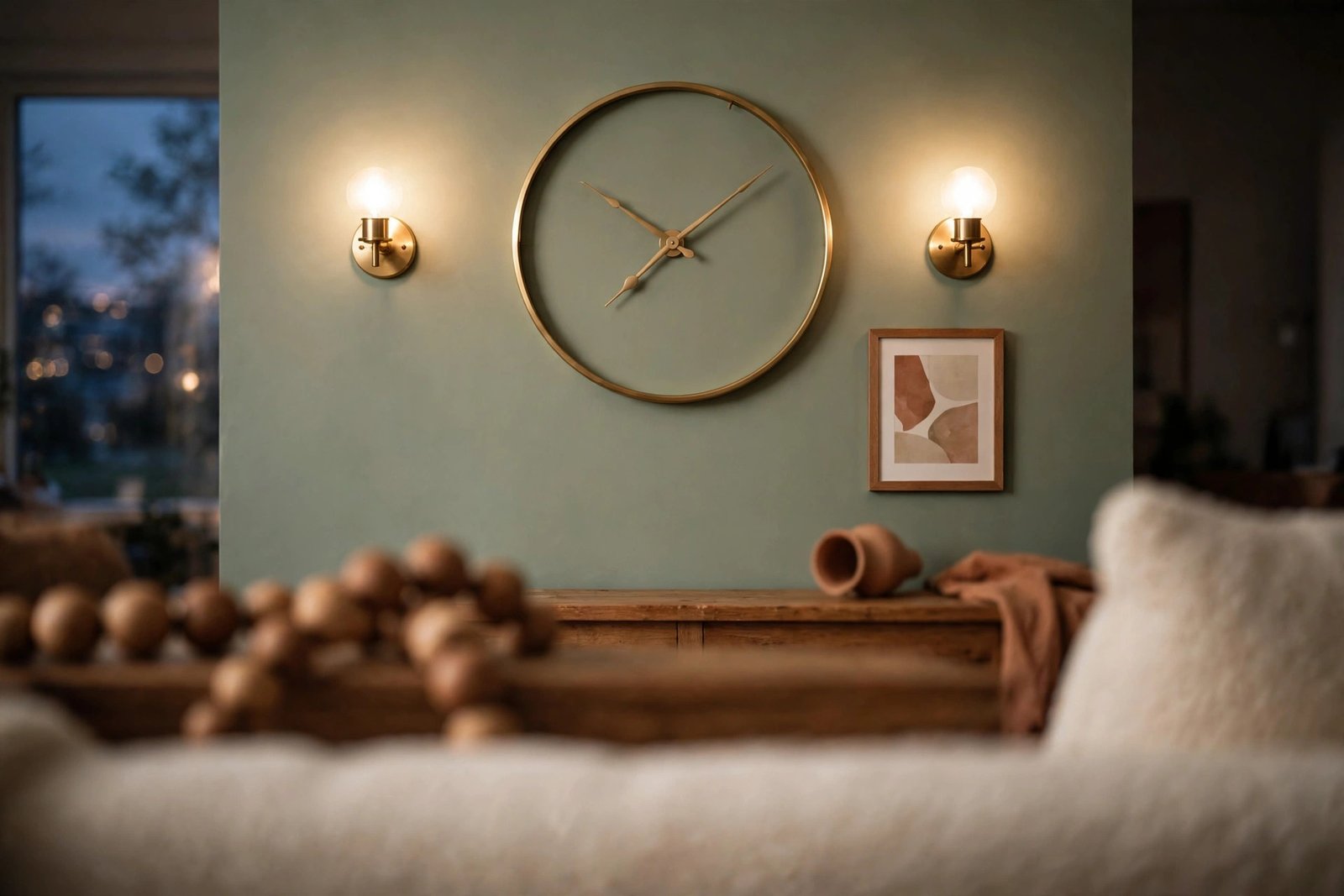
A large clock is decor and a tool in one. It fills a wall that art cannot. It also keeps the room on time. Choose a clock at least 24 inches wide for a living room.
Smaller clocks look lost above a sofa. A round clock softens a square room.
Hang the clock where you can see it from the sofa. The center should sit near eye level. A clock above the mantel is a classic spot. A clock on the wall beside the TV also works.
Avoid hanging it where glare hits the glass. Check the time from your seat before you fix the hook.
Match the clock frame to your other metals. A brass clock echoes brass lamp bases. A black metal clock echoes dark frames. A wood clock echoes oak shelves. One metal repeated twice feels planned. Three or more metals feel random.
Keep the mix simple.
Use a strong hook for a heavy clock. Most large clocks weigh five to ten pounds. A picture hook rated for 20 pounds gives a safe margin. A silent sweep movement suits a quiet room.
In short, a good clock earns its wall space twice over.
11. Try Plaster or Relief Art
Plaster art adds soft shadows to a flat wall. The raised shapes catch light all day. This gives the wall a living feel. Relief art suits calm rooms with pale walls. White plaster on a cream wall looks quiet and rich.
A warm clay relief adds color without paint.
Choose one large plaster piece for a main wall. Or hang three small pieces in a row. Keep the spacing even, near three inches apart. The pieces should read as one set. Natural wood frames suit plaster best.
They warm the pale surface.
Handle plaster with care. It chips if it knocks against a wall. Hang it with two hooks, not one. Two hooks keep it level and steady. Bathrooms and damp walls can stain plaster.
A dry living room wall is the best home for it.
Pair plaster art with a warm lamp nearby. The side light makes the relief pop. A picture light above it works even better. The shadows grow deeper at night. This is why plaster suits a wall you see in the evening.
Finally, dust it gently with a soft brush. A damp cloth can mark the surface.
12. Add a Grasscloth Panel
Grasscloth brings natural texture to a plain wall. The woven fibers add warmth. They also soften sound in a hard room. A full grasscloth wall suits a reading corner. A single panel behind the sofa suits a main wall.
The texture reads as calm, not busy.
Choose a warm tone for living rooms. Sandy beige suits light furniture. A soft sage suits rooms with plants. A warm cocoa suits dark wood. Avoid bright colors in grasscloth. A bold color can fight the weave.
The weave looks different in your own light.
Grasscloth needs a smooth wall. Fill bumps and cracks first. A rough wall shows through the weave. Use a paste made for grasscloth. It grips the fibers well. Hang each strip with care. The seams show more than plain paper does.
Match the pattern at each join.
Style the finished panel with simple art. One framed print suits the texture well. A round mirror also works. Avoid small frames. They get lost in the weave. A slim sconce adds a warm glow at night.
In short, grasscloth gives a wall depth without paint or wood. It suits quiet, layered rooms best.
13. Lean Art and Layer Frames
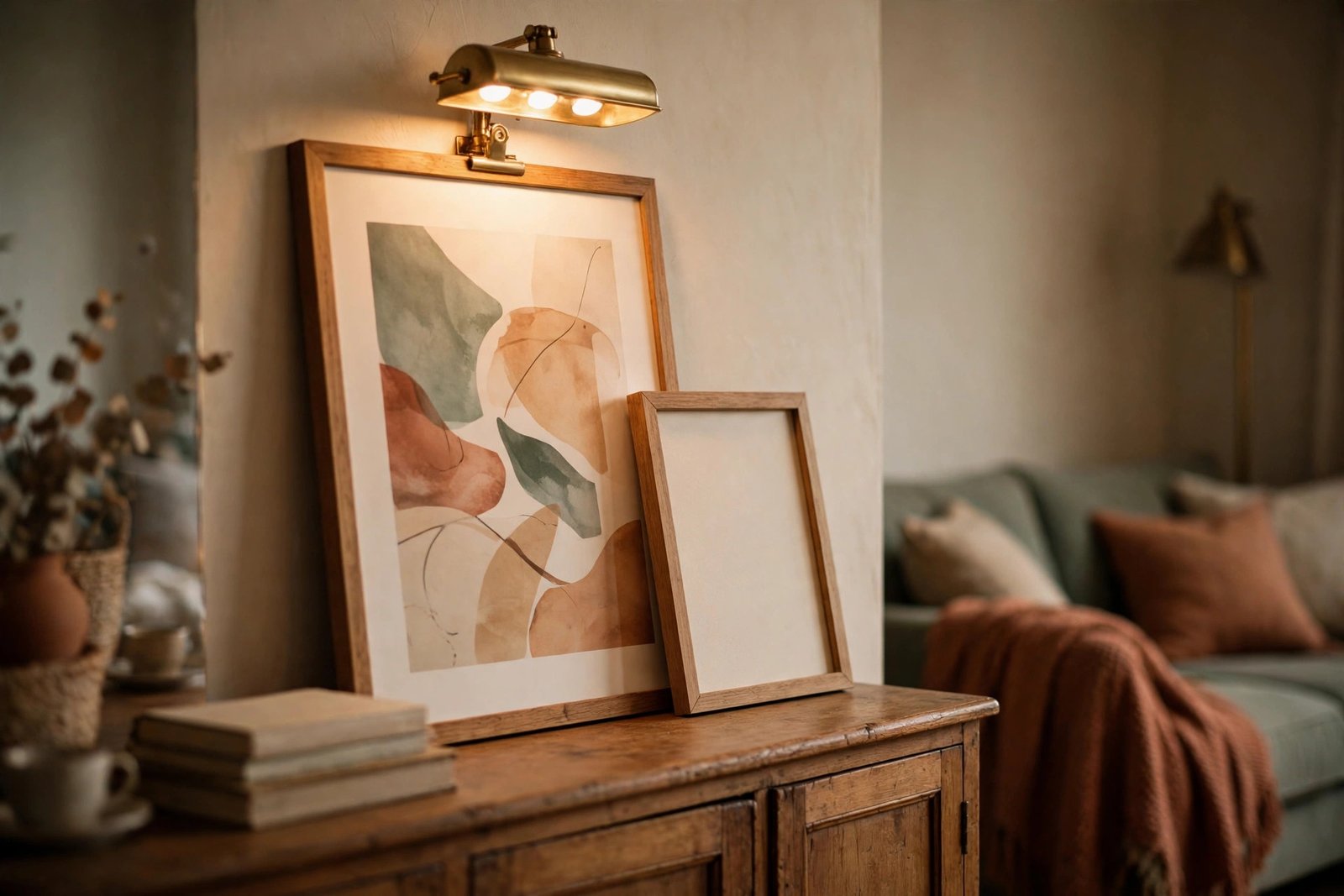
Leaning art suits a wall you change often. Large frames rest on a sideboard or a mantel. They lean against the wall. No nails are needed. This makes swaps easy. Lean one large print at the back.
Then layer a smaller frame in front. The overlap adds depth. It also feels relaxed, not stiff.
Keep the lean angle near 80 degrees. A flatter lean can slip. The pad stops scratches on the wall. It also stops the frame from sliding. Check the lean after a week.
Mix frame sizes for a lived-in look. A tall frame at the back anchors the set. A small frame in front adds charm. Add a vase or a small plant at the side.
The mix feels like a real home, not a shop. Keep the colors tied to the room. One shared tone links the frames.
This trick works on a mantel, a sideboard, or a low console. It also works in the bedroom above a dresser. Our bedroom wall decor ideas show leaning frames above a dresser in detail. The same rules apply there.
Finally, keep the top of the frames below eye level.
14. Hang Sculptural Pieces
Flat art is not the only choice. Woven baskets add round shapes to a square wall. Ceramic plates add color and craft. Metal discs add shine. A basket wall suits a boho or farmhouse room. Both add depth that flat prints cannot.
Plan the shape before you hang anything. An oval cluster suits a wide wall. A vertical line suits a narrow wall. Lay the pieces on the floor first. Move them until the shape feels balanced. This saves extra holes.
Start with the center piece. Then work outward.
Mix sizes within one material. Large baskets at the center anchor the set. Small baskets at the edges soften it. Keep the color palette tight. Two or three tones are enough. A mix of natural fiber and one painted accent works well.
Avoid mixing baskets, plates, and metal in one cluster. One material reads as planned.
Use strong hooks for ceramic plates. Plate hangers grip the rim well. Baskets are light. A small nail holds most of them. Dust the pieces once a month. Woven fibers catch dust fast.
In short, sculptural pieces turn a wall into a display. They suit rooms that already have plenty of flat art.
15. Style the Wall Around Your TV
A TV can ruin a wall if it hangs alone. The black screen floats like a hole. A gallery around it fixes the problem. Hang art on both sides of the screen. Keep the frames close to the TV.
The art turns the screen into one piece of the wall. It no longer dominates the room.
Keep the TV at eye level from the sofa. The center should sit near 42 to 48 inches from the floor. This height suits most seated viewers. Use a low console below the screen. The console grounds the whole wall.
Paint the wall behind the TV a soft dark tone. A deep sage or warm charcoal calms the black screen. The screen blends in. The art around it stands out. Or add wood slats behind the TV.
The texture frames the screen well. Keep the shelves near the TV short.
Hide cables with a cord cover or a channel. Loose cables undo good styling fast. Add one warm lamp on the console. The glow softens the screen at night.
Good coffee table decor finishes the same wall plan from the sofa side. The two walls should feel like one room.
16. Go Renter-Friendly With No-Nail Swaps
Renters can style walls without losing a deposit. Adhesive strips hold light frames well. Most strips hold up to seven pounds per pair. Use two pairs for wide frames. Press the strip to the wall for 30 seconds.
Wait one hour before you hang the frame. This gives the bond time to set.
Leaning art needs no holes at all. A large frame on a sideboard leans safely. Washi tape frames suit a kids’ corner or a desk wall. The tape peels off clean. Try it for a seasonal change.
Use tension rods for hanging textiles. A rod fits inside a window frame. It holds a light tapestry with no screws. Removable wallpaper suits one accent wall. It peels off in strips when you move. Test a small piece first.
Some paints lift with the paper.
Command hooks hold wreaths, garlands, and light baskets. Check the weight limit on the pack. Dust weakens the bond. Remove hooks with care at move-out. Pull the tab straight down, slowly.
A fast pull can peel paint. In short, no-nail swaps let renters enjoy styled walls. The deposit stays safe.
17. Rotate Pieces With the Seasons
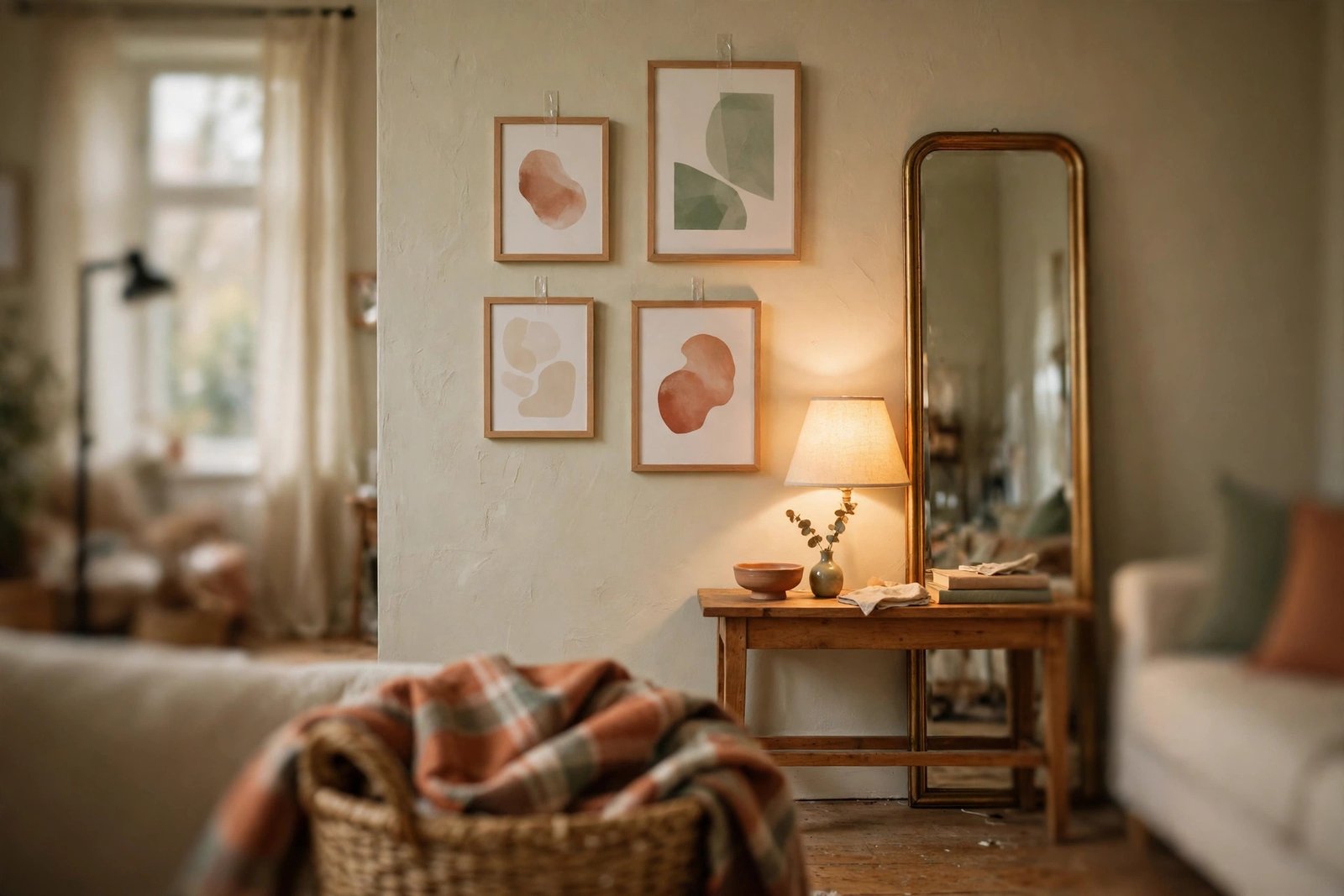
Walls need not stay the same all year. A simple swap keeps the room fresh. Change two or three pieces each season. Swap a summer print for a warm autumn one. Change a light textile for a heavy weave in winter.
The wall feels new without a full redo.
Keep one anchor piece in place all year. A large mirror or a main print stays put. Rotate the smaller pieces around it. This keeps the wall balanced. It also makes each swap fast.
This saves a search next year.
Winter swaps suit warm tones best. A cocoa print or a clay textile warms a cold room. A lit picture light adds glow on dark evenings. Our cozy winter living room ideas show how warm walls and soft light work together.
Borrow one or two of those swaps for your own wall. The room will feel warmer at once.
Spring swaps suit light colors and green. A woven basket adds a fresh shape. Summer swaps suit airy frames and pale art. Autumn swaps suit rust, caramel, and dried leaves. Finally, keep a small box of seasonal pieces by the closet.
A ready box makes each swap easy. Your walls will never feel stale.
Products to Consider
A few useful items make wall styling easier. A large framed canvas print anchors the sofa wall. A set of matching picture frames keeps a gallery wall calm. A tall arched mirror bounces light across the room.
Floating wood shelves hold books, plants, and small art. A battery picture light adds warm glow with no wiring. Adhesive picture hanging strips suit renters and light frames. A simple stud finder helps heavy pieces hang safely.
A woven wall hanging adds soft texture to a bare wall. Choose pieces that fit your wall size and your room colors.
Frequently Asked Questions
How high should I hang art in the living room?
Set the center of each piece at 57 inches from the floor. This height is the classic eye-level rule. It suits most living rooms and most viewers. With a tall sofa back, raise the art by two inches.
Keep six to eight inches between the sofa top and the frame bottom. This gap links the art to the sofa.
How big should wall art be above a sofa?
Art should span 60 to 75 percent of the sofa width. For a 72-inch sofa, aim for art around 48 to 54 inches wide. One large piece works better than many small ones. Small art looks lost above a wide sofa.
Measure the sofa first. Shop with that number in hand.
What is the best wall decor for a small living room?
A large mirror works best in a small living room. It bounces light and makes the room feel bigger. One oversized print also suits a small wall. It gives the eye one clear focus. Avoid many small frames.
They make a small room feel busy. Keep the palette light and warm.
How do I decorate a living room wall without nails?
Use adhesive strips for light frames. Most strips hold seven pounds per pair. Lean large frames on a sideboard or a mantel. Hang textiles from a tension rod. Try removable wallpaper on one accent wall. Washi tape frames suit a desk wall.
All of these peel off clean at move-out.
How do I mix different wall decor styles in one room?
Pick one shared color or one shared material. Repeat it in every piece. A brass frame, a brass lamp, and a brass clock link well. A clay print and a terracotta cushion link well too.
Keep one frame style in a gallery wall. Leave empty space between pieces. The shared tone ties mixed styles together.
Final Thoughts
Your living room walls are the biggest canvas in your home. They deserve more than a blank stare. Start with one idea from this guide. Hang one large piece above the sofa. Or add a mirror across from a window.
Small steps change the room fast.
Remember the two simple rules. Center art at 57 inches. Size it to 60 to 75 percent of the sofa width. These rules fix most wall mistakes. Then add your own touch.
A woven textile, a wood slat panel, or a warm picture light makes the wall yours.
Take your time with each wall. Finish one before you start the next. Pause and look from the door. Check the view from the door. Your walls will soon feel warm, layered, and lived in.
That is the whole point of a home that shines.