
Winter changes the way your front door works. Every arrival brings snow, slush, and cold air inside. Coats pile up fast. Boots leave puddles on the floor. And the entryway can start to feel messy by mid-December.
The good news is simple. A few smart changes can turn that same space into the warmest spot in your home. You do not need a big budget. You do not need a full remodel either.
These 15 winter entryway decor ideas focus on real life. They keep wet gear under control. They add soft light and warm texture. And they make every homecoming feel calm and inviting, even on the coldest night.
Start with one or two ideas that solve your biggest problem. Then add more as the season goes on. Your entryway will thank you for it. For more year-round inspiration, see our entryway decor ideas for every season.
What makes winter entryway ideas different from other seasons? The gear is heavier, wetter, and bulkier. Coats are thick. Boots are tall. And every trip outside brings in snow and salt. So winter design is really about two things at once: smart storage and real warmth. The ideas below cover both. Each one is easy to try, and most cost little or nothing.
1. Layered Doormats That Trap Snow and Slush
One thin mat cannot handle a snowy winter. Snow melts fast indoors. Slush spreads across wood floors. And a single layer just moves the mess around.
Layer two mats instead. Place a rough coir mat outside the door. It scrapes snow and grit off boots before anyone steps inside. Then add a soft, absorbent mat just inside the door. It catches the melt that follows.
Choose a larger size than you think you need. A mat that fits two pairs of boots at once works far better than a small one. People will actually use it when it is easy to stand on.
Pick warm, natural colors for the indoor mat. Cream, tan, and sage look calm against wood floors. A subtle pattern hides dirt between cleanings. Avoid light white mats in winter, since they show every mark.
Shake the outdoor mat outside once a week. Wash the indoor mat every two weeks, or more often after a storm. A clean mat traps more water. It also keeps your floors safe from salt stains and scratches.
Layering also adds instant style. The mix of textures looks planned, not accidental. It is the cheapest way to make a winter entryway feel finished.
One more tip helps in snowy states. Keep a small dustpan and brush by the door. Use them to sweep up salt and grit each evening. Salt can scratch wood floors if it is tracked through the house. A quick sweep takes twenty seconds. It also keeps the mats working well, since clean fibers absorb more water than clogged ones.
2. A Boot Tray That Catches Every Drip
Wet boots are the number one winter entryway problem. Snow melts into puddles. Salt stains spread across the floor. And wood floors can warp if water sits too long.
A boot tray solves all of it. Choose a tray with a raised edge, at least one inch high. The edge holds meltwater until you empty it. A flat tray lets water spill over the sides.
Size matters here too. Measure your busiest spot by the door. The tray should hold the boots your family wears most days. For a family of four, two medium trays often work better than one huge one.
Look for a tray with a ridged or slatted base. It lifts boots above the water line. That helps boots dry faster. It also stops that damp, musty smell that wet boots can leave behind.
Empty the tray every evening during snowy weeks. It takes less than a minute. Wipe it dry with an old towel. This one habit protects your floors all winter long.
Style the tray so it looks like decor, not a chore. A simple black metal tray looks sharp against light wood. A woven-look tray adds warmth. Either way, it earns its place by the door.
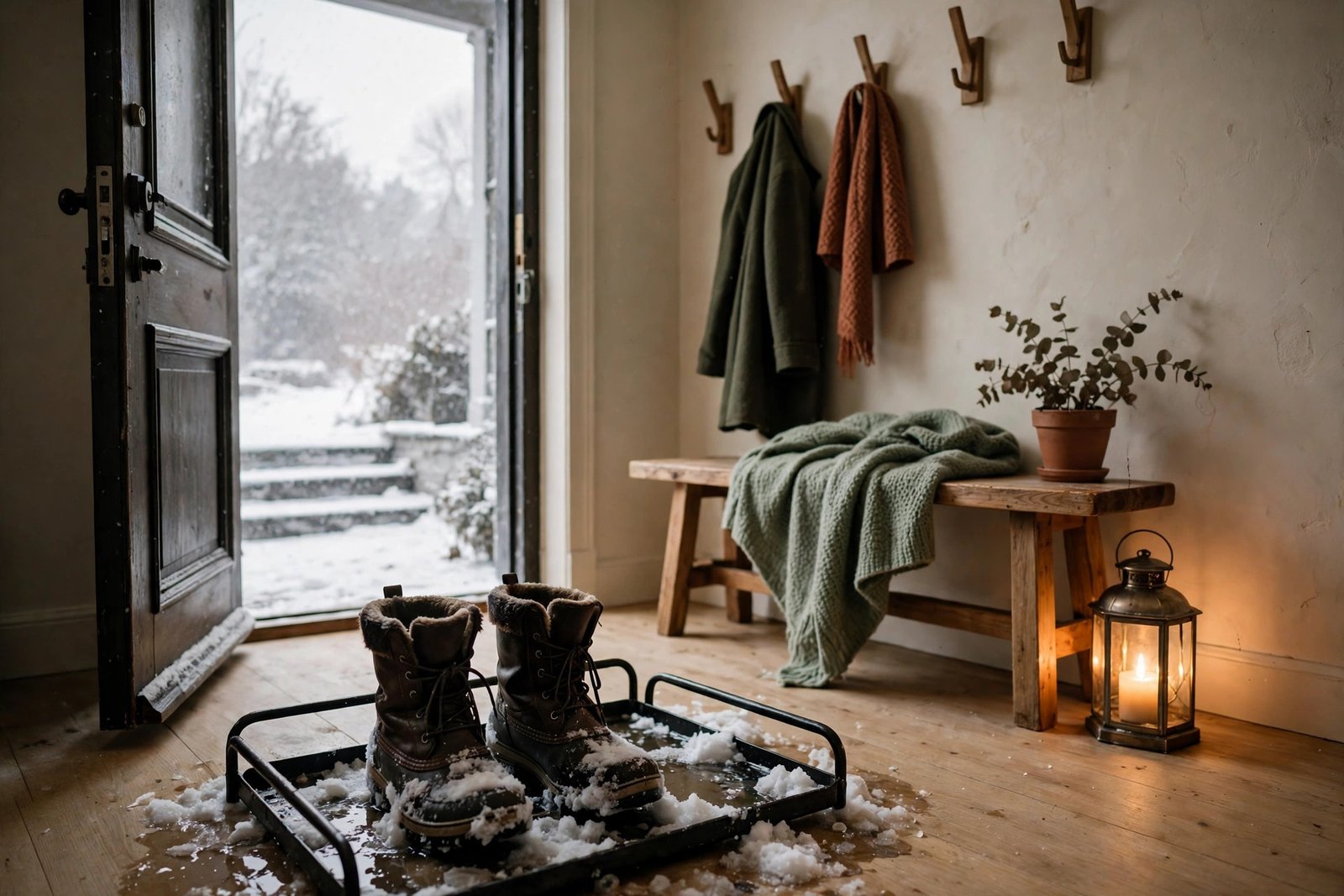
3. Wall Hooks at Every Height
Coats need a home the moment you walk in. Without hooks, they land on chairs. They pile on the bench. And soon the whole entryway feels crowded.
Install a row of sturdy wall hooks. Space them about eight inches apart. That gives each coat room to hang without bunching. Use hooks rated for heavy winter coats, not light decorative ones.
Add hooks at two heights. Adult hooks go at about five feet. Kid hooks go at about three and a half feet. Kids will actually hang their own coats when they can reach the hook.
Choose hooks that match your hardware. Matte black looks modern. Brass feels warm and classic. Wood pegs suit a rustic or farmhouse entryway. Keep the finish consistent across the row.
Assign one hook per person. It sounds simple, but it works. Everyone knows where their coat belongs. And you can spot a missing coat at a glance on busy mornings.
Leave one hook free for guests. It is a small touch. But guests notice it right away. It says your home is ready for them, even on a snowy night.
4. A Bench That Does Double Duty
A bench is the hardest-working piece in a winter entryway. It gives you a place to sit and pull on boots. It holds bags, books, and mail. And it hides storage underneath.
Pick a bench with a shelf or cubbies below the seat. Open cubbies work well for shoes. A closed bench keeps clutter out of sight. Choose the style that fits how tidy your household really is.
Measure before you buy. The bench should leave at least three feet of clear walkway. A bench that blocks the door swing will frustrate you every single day.
Add a cushion for comfort. A simple foam pad in a washable cover works best. Choose a dark or patterned fabric that hides winter dirt. You can swap the cover in spring for a lighter look.
Use the space under the bench for daily shoes only. Keep out-of-season shoes in a closet. A bench holds two or three pairs per person at most. More than that, and it starts to look like a shoe store.
If your space is tight, try a narrow bench. Even a 12-inch-deep bench helps. For more small-space storage ideas, see our mudroom ideas that work in tiny entryways too.
Think of the bench as your main piece of winter entryway storage. It holds daily shoes below and coats above when paired with hooks. Add a basket on the shelf for gloves, and the whole arrival routine lives in one spot. That is the secret of a tidy winter entryway. Everything has one place, and that place is right by the door.
5. Warm Light on a Timer
Winter days end early. You often come home in the dark. And a dark entryway feels cold, even when the heat is on.
Fix it with warm light on a timer. Set a small lamp or wall light to switch on before you get home. You will walk into a glow instead of a dark hall. It changes the whole mood of arriving home.
Choose warm bulbs, around 2700K. They give off a soft, golden light. Cool white bulbs can make an entryway feel like an office. Warm light feels like a welcome.
Use a simple plug-in timer or a smart plug. Set it for your usual arrival time. In deep winter, that might be 4:30 p.m. Adjust the time as days get longer in late winter.
Place the light where it greets you first. A small lamp on a console table works well. A wall sconce beside the door is another good spot. The light should be the first thing you see when the door opens.
This idea costs very little. Yet it may be the most loved change on this list. A lit entryway says someone is home, even when the house is empty.
6. Evergreen Garland Without the Christmas Look
Evergreen garland is not just for Christmas. Fresh fir, pine, and cedar look beautiful all winter long. The trick is to style them without red berries and ornaments.
Choose plain green garland. Mix two types if you can, such as fir and eucalyptus. The mix looks natural, not store-bought. It also adds a soft, fresh scent to the entryway.
Drape it along a console table or mirror. Let one end trail down a little. That loose, relaxed drape looks far better than a stiff, straight line.
Add warm fairy lights if you like. Battery lights with a timer work best. They glow in the early dark evenings. And they switch off on their own, so you never forget.
Skip the red bows and gold balls. Keep the palette green, cream, and wood. That way the garland works from November through February. It feels like winter, not like a holiday that ended weeks ago.
Fresh garland lasts about three weeks indoors. Mist it lightly every few days to slow drying. Or use good faux garland and reuse it next year. For a festive version in December, see our Christmas entryway decor ideas.
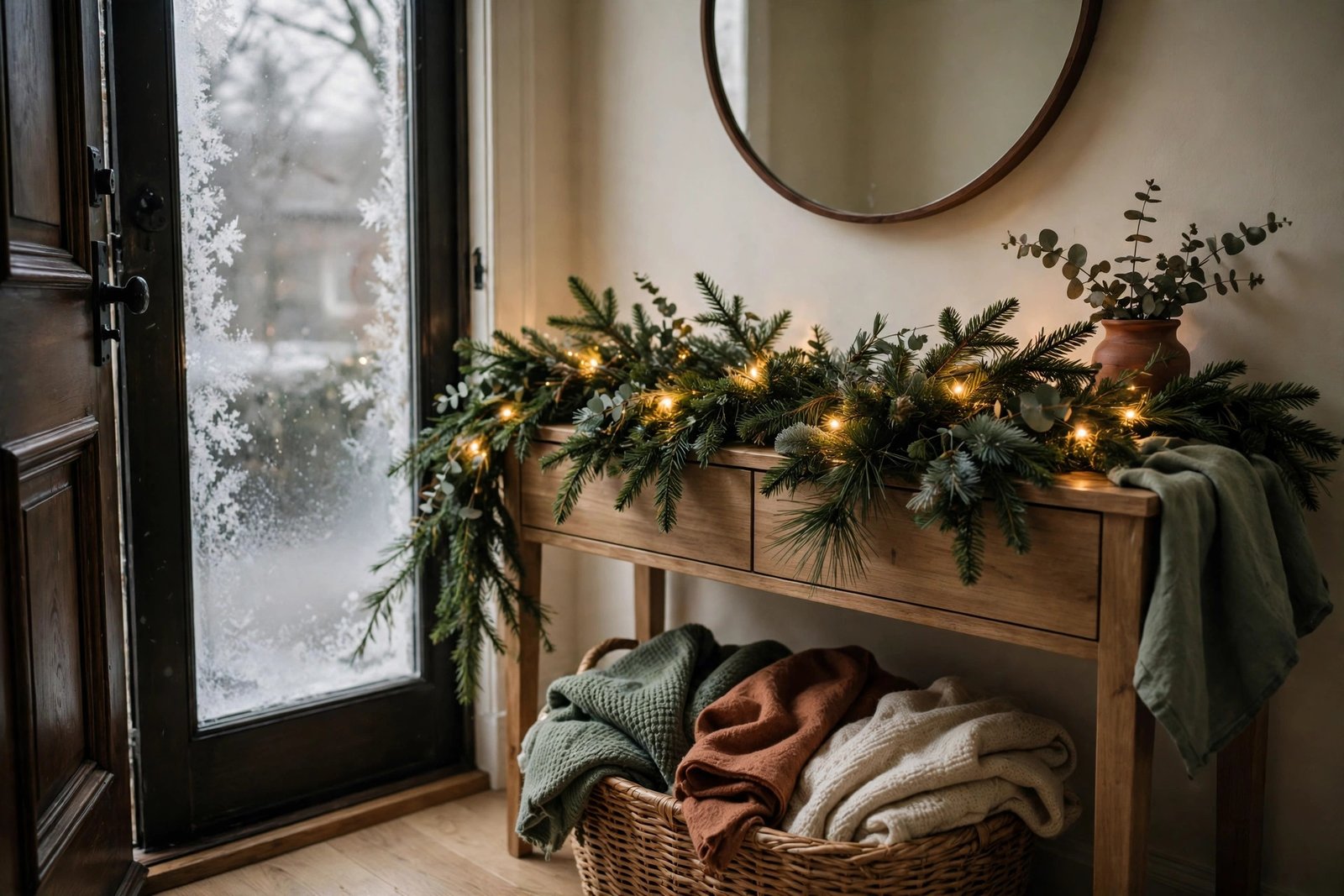
7. Lanterns by the Door
Lanterns are made for winter entryways. They glow warmly. They look beautiful empty or lit. And they feel right next to snow boots and wool coats.
Place one large lantern on the floor beside the bench. Or set a pair of smaller ones on a console table. Odd numbers look more natural than matching pairs in most entryways.
Use battery candles inside for safety. Real flames near coats and scarves are a risk. Battery candles flicker just like real ones. And many come with a remote or timer.
Choose a lantern style that fits your home. Black metal feels classic. Wood and glass suit a rustic look. Brass adds a warm, polished touch. Keep the finish close to your other hardware.
Move the lantern outside on mild days. It can sit by the front door on the porch too. That links the inside and outside of your home. For porch styling, see our winter porch decor ideas to match the two spaces.
A lantern is also a great gift idea. But keep yours by the door all season. Its glow will greet you every time you come home.
8. Baskets for Hats, Gloves, and Scarves
Winter accessories multiply fast. One person can own three scarves and four pairs of gloves. Without a home, they end up on every flat surface.
Give each person a basket. Woven baskets look warm and natural. Felt bins feel soft and modern. Label-free baskets work fine when each person has their own.
Place the baskets where they are easy to reach. Under a console table is ideal. On a bench shelf works too. Avoid high shelves, since no one will use them in a rush.
Keep only the current season inside. Store summer hats and light gloves elsewhere. A basket that holds just winter gear stays neat. It also makes it easy to find what you need.
Do a quick sort once a month. Toss single gloves with no match. Wash scarves that smell damp. Replace worn-out items before they fall apart.
Kids need their own low basket. Put it at their height, near the door. They will drop their mittens in it without being asked. That alone is worth the basket.
Good winter entryway storage is really about habits, not furniture. A basket only works if it is easy to use. So keep it open-topped and at arm height. Lids look tidy, but busy families stop using them. An open basket that gets used beats a lidded one that gets ignored every single time.
9. A Mirror That Bounces the Light
Winter light is scarce. Short days and grey skies make entryways feel dark. A mirror helps you catch every bit of light you have.
Hang a mirror opposite a window or glass door. It will reflect daylight into the room. Even on a cloudy day, the mirror doubles the light you get.
At night, the mirror reflects your lamp or lantern glow. That warm light spreads further. The entryway feels brighter without any extra bulbs.
Choose a mirror that fits the wall. A round mirror softens a narrow entryway. A tall rectangle makes a low ceiling feel higher. A wood frame adds warmth to plain walls.
Hang it at eye level for most adults, about 60 inches to the center. That height works for a quick check before you leave. It also keeps the reflection at a useful angle.
Wipe the mirror once a week in winter. Fingerprints and dust show up fast on glass. A clean mirror reflects far more light than a smudged one.
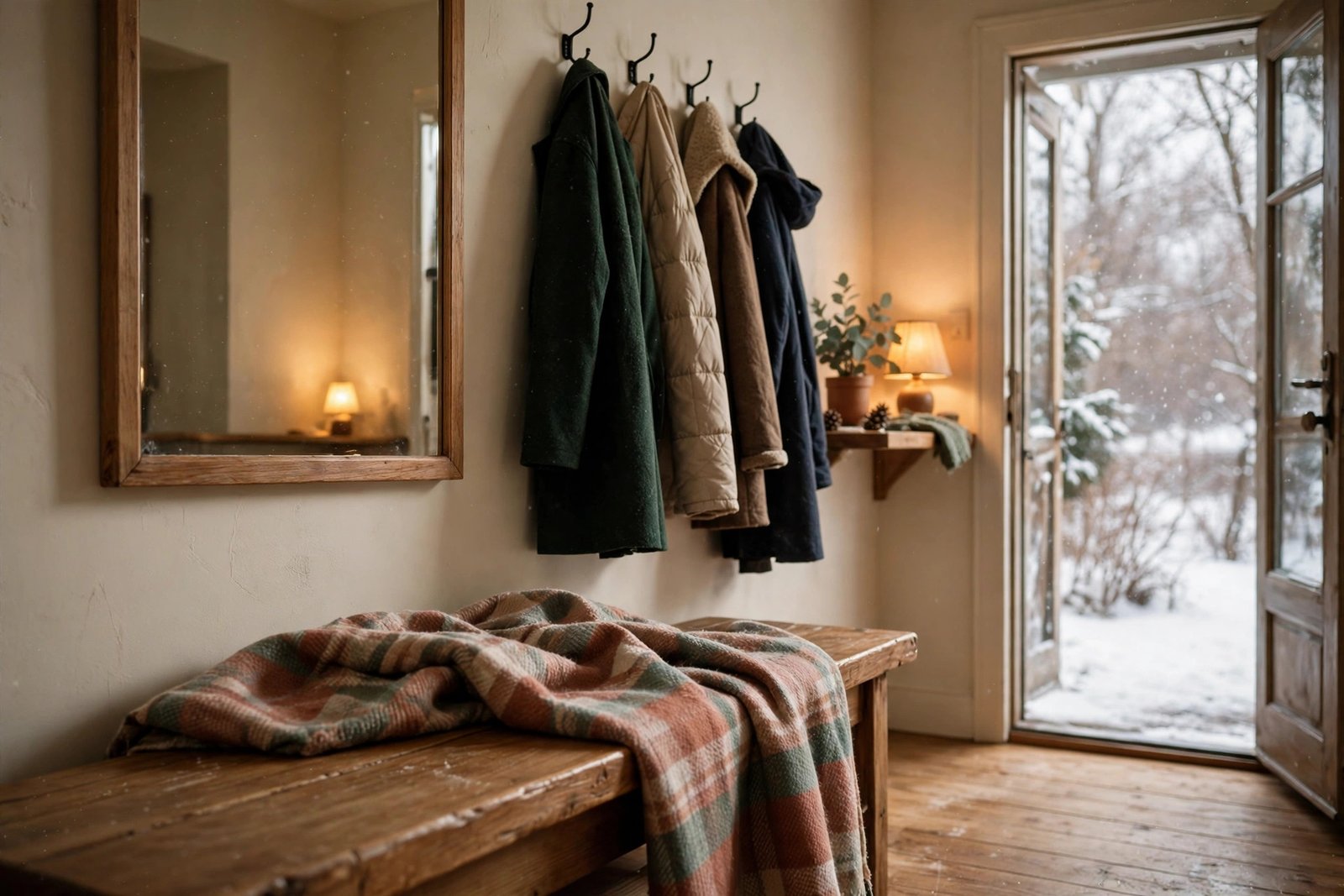
10. A Throw and Cushion on the Bench
A bare bench looks cold in winter. It feels cold too. A throw and cushion fix both problems in seconds.
Drape a plaid throw across one end of the bench. Fold it loosely, not perfectly. A relaxed fold looks inviting. A stiff fold looks like a store display.
Add one cushion in a warm color. Terracotta, deep green, and mustard all work well. A cushion with a textured cover, like wool or knit, adds even more warmth.
Keep the colors in the same family as your entryway. Cream, sage, and terracotta is a calm winter palette. It works with wood floors and white walls. And it never looks dated.
Choose washable fabrics. Winter throws pick up dirt from coats and boots. A machine-washable throw will last the whole season. A dry-clean-only throw will spend winter in the closet.
Swap the throw for a lighter one in spring. That one small change shifts the whole entryway into a new season. It is the easiest seasonal update you can make.
11. A Console Vignette That Changes With the Season
A console table is the styling heart of an entryway. It is the first surface guests see. And it is easy to refresh without spending much.
Start with three items of different heights. A tall vase, a medium candle, and a low bowl work well. This simple trio looks balanced almost every time.
Keep the base the same all winter. A wood console, a mirror, and a lamp can stay put. Change only the small items on top. That keeps the work light and the look fresh.
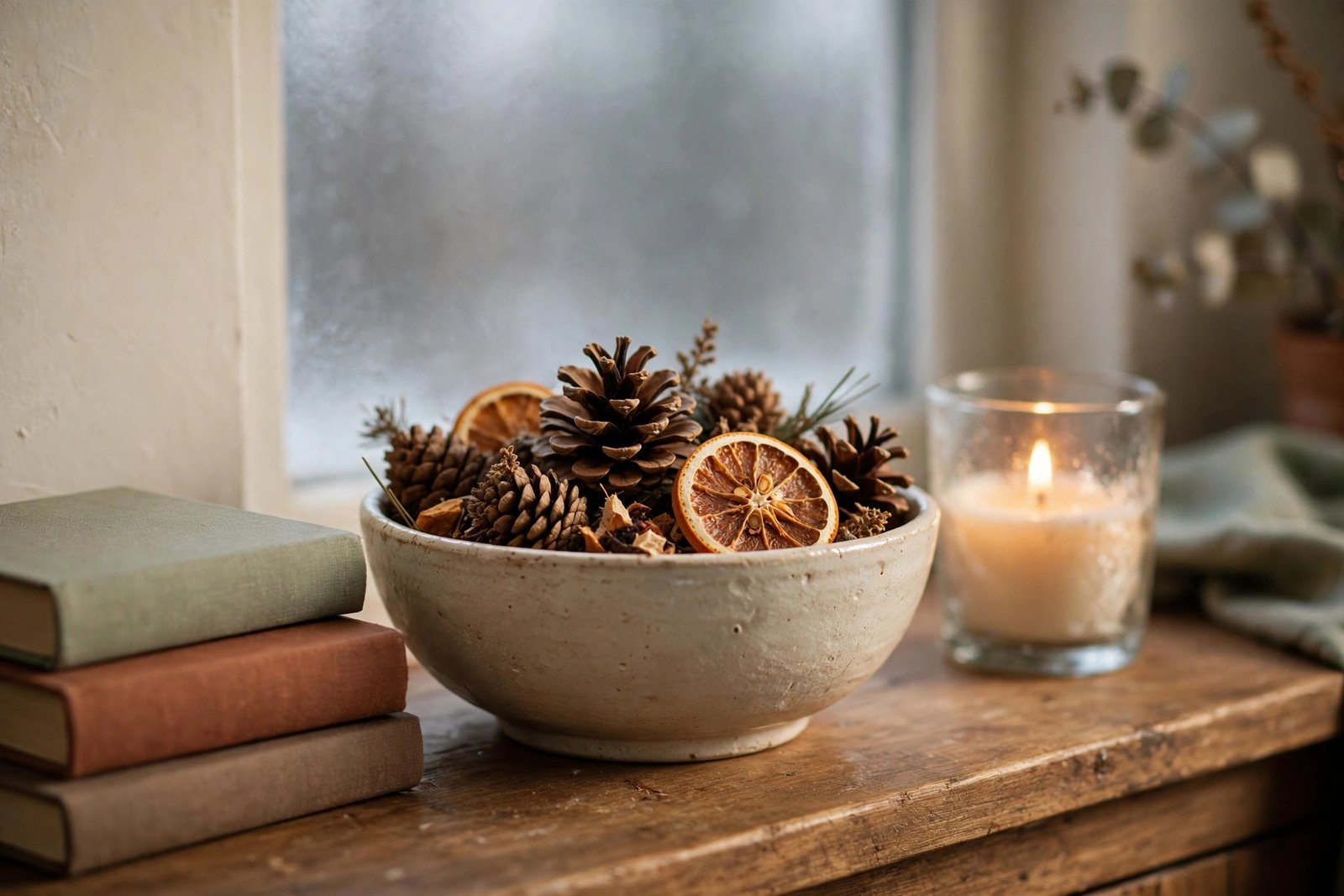
In early winter, add pinecones and dried orange slices. In late winter, swap in a small potted plant. These small swaps signal the season without a full redecorate.
Leave some empty space on the console. A crowded surface looks messy, not styled. Aim for about one third empty. Your eye needs that rest, especially in a small entryway.
Finally, keep daily clutter off the console. Keys and mail belong in the command center, not on the vignette. A clear console stays beautiful all week.
A good rule is one change per month. In January, swap the pinecones for a small green plant. In February, add a candle in a soft, warm color. These tiny swaps keep the entryway feeling fresh. And they cost almost nothing, since you are reusing what you already own.
12. A Pinecone Bowl for Natural Scent
Winter entryways can smell damp. Wet coats and boots bring in cold, musty air. A pinecone bowl adds a fresh, woodsy scent without a plug or spray.
Fill a wide, shallow bowl with pinecones. Add dried orange slices and a few cinnamon sticks. The mix looks beautiful and smells like a winter walk in the woods.
Collect pinecones on a dry day if you can. Bake them at a low heat for 30 minutes to kill any bugs. Let them cool fully before you use them. This step keeps your bowl clean and safe indoors.
Refresh the scent every few weeks. Add a drop or two of pine or cedar oil to the pinecones. Use a light hand. A faint scent is far more pleasant than a strong one.
Place the bowl where guests will see it but not knock it over. The center of a console table is ideal. Keep it away from the edge, especially if kids run through the entryway.
This is one of the cheapest ideas on this list. Yet guests often comment on it first. Natural scent makes a home feel cared for.
13. A Rug Runner That Warms Cold Floors
Cold floors are a winter reality. Tile and wood feel icy under bare feet. A rug runner adds warmth the moment you step inside.
Choose a runner that covers the main walking path. It should run from the door toward the next room. A runner that is too short looks like an afterthought.
Pick a low-pile rug for winter. High-pile rugs trap snow and salt. Low-pile rugs are easy to shake out and vacuum. They also let the door swing freely over them.
Use a rug pad underneath. It stops the runner from sliding on smooth floors. It also adds a soft layer underfoot. A pad is cheap, and it makes any rug feel better.
Choose a pattern that hides winter dirt. A subtle stripe or small geometric print works well. Darker tones near the door hide salt marks. Lighter tones can work further inside.
Shake the runner outside once a week. Vacuum it twice a week during snowy spells. A clean runner stays soft and safe. A dirty one just moves grit around the house.
If your entryway has stone or tile floors, a runner matters even more. Those floors stay cold all winter. A runner adds a warm path from the door to the living room. Guests will notice the difference at once. So will your bare feet on a frosty morning.
14. A Small Command Center for Keys and Mail
Winter mornings are rushed. You need keys, a scarf, and your bag, all at once. A command center puts them in one spot, every single day.
Mount a small row of brass hooks near the door. Hang keys on them the moment you walk in. You will never search for keys again. It really is that simple.
Add a small tray or wall pocket for mail. Sort mail the day it arrives. Toss junk right away. Keep only what needs action. A small system beats a big pile every time.
Include a spot for sunglasses and a spare mask or two. Winter sun on snow is bright. And cold-season supplies are handy near the door. A tiny dish or hook holds them well.
Keep the command center small. It should hold only what you grab daily. Everything else belongs in another room. A tiny, tidy station works better than a large, messy one.
Teach the whole household to use it. It takes about a week to build the habit. After that, mornings run smoother. And no one is late because of lost keys.
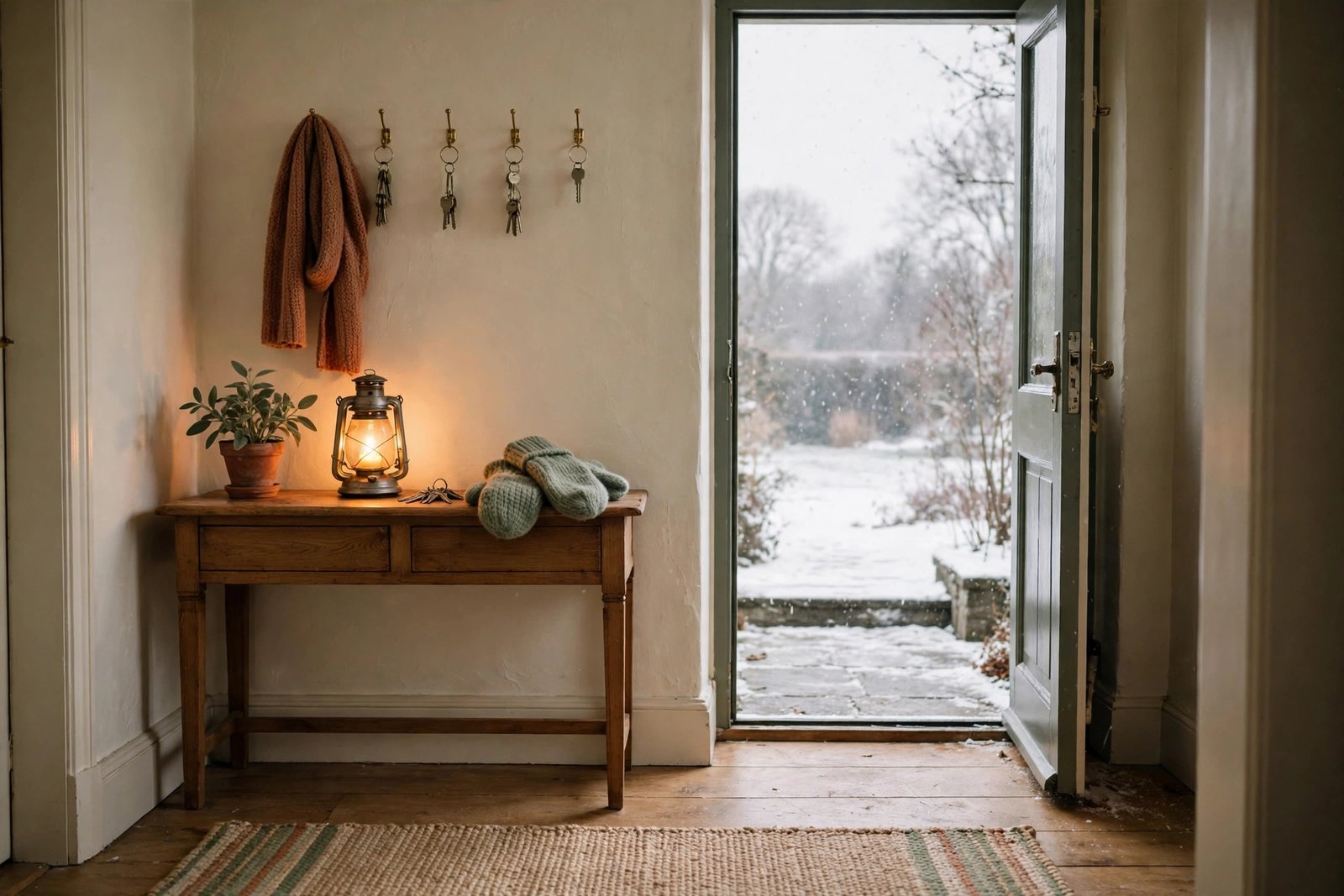
15. A Five-Minute Weekly Reset
The best winter entryway is not the fanciest one. It is the one that gets a quick reset every week. Five minutes is all it takes.
Pick one day each week. Sunday evening works well for most families. Set a phone reminder if it helps. Consistency matters more than the exact day.
Start by emptying the boot tray. Wipe it dry. Shake out the mats and the runner. Toss any single gloves or broken items into the trash.
Next, return stray items to their rooms. Coats that belong in closets go back. Bags that belong upstairs go up. The entryway should hold only what you use daily.
Finally, refresh one small thing. Fluff the cushion. Straighten the garland. Light the lantern for the evening. These tiny touches keep the space feeling loved.
Do this reset all winter long. By spring, it will be a habit. And your entryway will have stayed warm and welcoming through the whole cold season.
Think of the reset as the habit that protects all the other ideas. A boot tray only works when it is emptied. A cozy winter entryway only stays cozy when the clutter is cleared. Five minutes a week keeps every other idea working at its best, right through to the last snowfall.
Products to Consider
These are general product types to look for when you shop for your winter entryway. Choose sizes and materials that fit your space and your household.
- A heavy-duty boot tray with a raised edge and a ridged base
- A set of sturdy wall hooks rated for heavy winter coats
- A storage bench with cubbies or a shelf underneath
- A plug-in timer or smart plug for entryway lamps
- Fresh or faux evergreen garland in plain green, without ornaments
- A large lantern with a battery candle and timer
- Woven baskets or felt bins for hats, gloves, and scarves
- A large mirror with a wood or matte black frame
- A washable plaid throw and a textured cushion cover
- A low-pile rug runner with a non-slip rug pad
- A small brass key hook rail and a mail tray or wall pocket
- A wide ceramic bowl, pinecones, dried orange slices, and cinnamon sticks
Frequently Asked Questions
How do I keep my winter entryway from smelling damp?
Airflow and dry gear are the fix. Empty the boot tray every night so water never sits. Let wet coats dry on hooks with space between them. And add a pinecone bowl for a light, natural scent. If the smell stays, check for a damp rug or mat that needs washing.
What is the best flooring protection for a snowy entryway?
Layer your defenses. A rough outdoor mat scrapes snow off boots. A boot tray catches the melt. And an indoor mat or runner protects the floor between the two. Wipe up salt and water the same day. Salt can stain wood and grout if it sits too long.
How can I decorate a small winter entryway?
Use the walls and the door. Wall hooks replace a bulky coat rack. A narrow bench or a small console adds storage without blocking the walkway. A mirror makes the space feel larger and brighter. Keep the palette light and the clutter low, and the entryway will feel bigger than it is.
Can I use evergreen garland after Christmas?
Yes, plain evergreen works all winter. The key is to skip Christmas-only details like red berries, ornaments, and bows. Fresh fir, pine, cedar, and eucalyptus look natural through February. Pair them with warm fairy lights and neutral colors for a cozy winter entryway that is not tied to one holiday.
How much should I spend on a winter entryway refresh?
You can start with very little. A boot tray, a timer for a lamp you already own, and a basket for gloves may cost less than a family dinner out. Add bigger pieces like a bench or mirror only if you need them. Start with the problem that bothers you most, and build from there.
Final Thoughts
A winter entryway works hard. It handles snow, coats, keys, and cold air every single day. With the right setup, it can also be the warmest welcome in your home.
You do not need to do all 15 ideas at once. Pick the two that solve your biggest winter problem. A boot tray and warm light on a timer are a great start. Then add one idea each week.
These winter entryway decor ideas are built for real homes. They are practical, affordable, and easy to keep up. Try them this season, and enjoy every warm arrival home.