A good bookshelf tells your story at a glance. It holds the books you love, the art you found, and the small objects that mean something to you. These bookshelf decor ideas help you style shelves that feel collected, not cluttered.
First, forget the idea of a perfect shelf. Real shelves have gaps, odd sizes, and a few well-loved paperbacks. So start with what you own, then add one or two new pieces. The result will look like you, not like a store display.
This guide walks you through how to style a bookshelf step by step. You will learn the 60/40 rule, the rule of threes, and warm lighting tricks. Also, you will see how to mix eras, textures, and colors with ease.
For the wall around your shelves, see our living room wall decor ideas guide. It pairs art and shelves in one calm look. First, read the ideas below. Then pick three to try this weekend. Small changes add up fast on a bookshelf.
1. Start With the 60/40 Books-to-Objects Rule
The 2026 look has a name: bookshelf wealth. It means shelves packed with books, art, and ceramics that feel personal and highbrow. But the look is not about money at all. It is about curation, care, and a few well-chosen pieces.
Start with a simple ratio: 60 percent books, 40 percent objects. Books give the shelf its weight and its story. Objects add light, texture, and a place for the eye to rest. So count your books first, then choose objects to fill the gaps.
For a fuller look, try a 70/30 split instead. That ratio suits big readers with deep shelves. First, pack books tight on the lower shelves. Then let objects breathe on the top shelf. The mix still feels rich, never bare.
If your shelf feels crowded, remove one object at a time. Then step back and look again. Often, one less vase makes the whole shelf sing. So edit with courage, and keep only pieces you truly love.
Finally, test the ratio with a photo. A phone photo shows clutter that your eyes miss. If books fall below half the shelf, add a stack or two. Then shoot again until the balance feels right.
2. Sort Books by Color for a Calm, Collected Wall
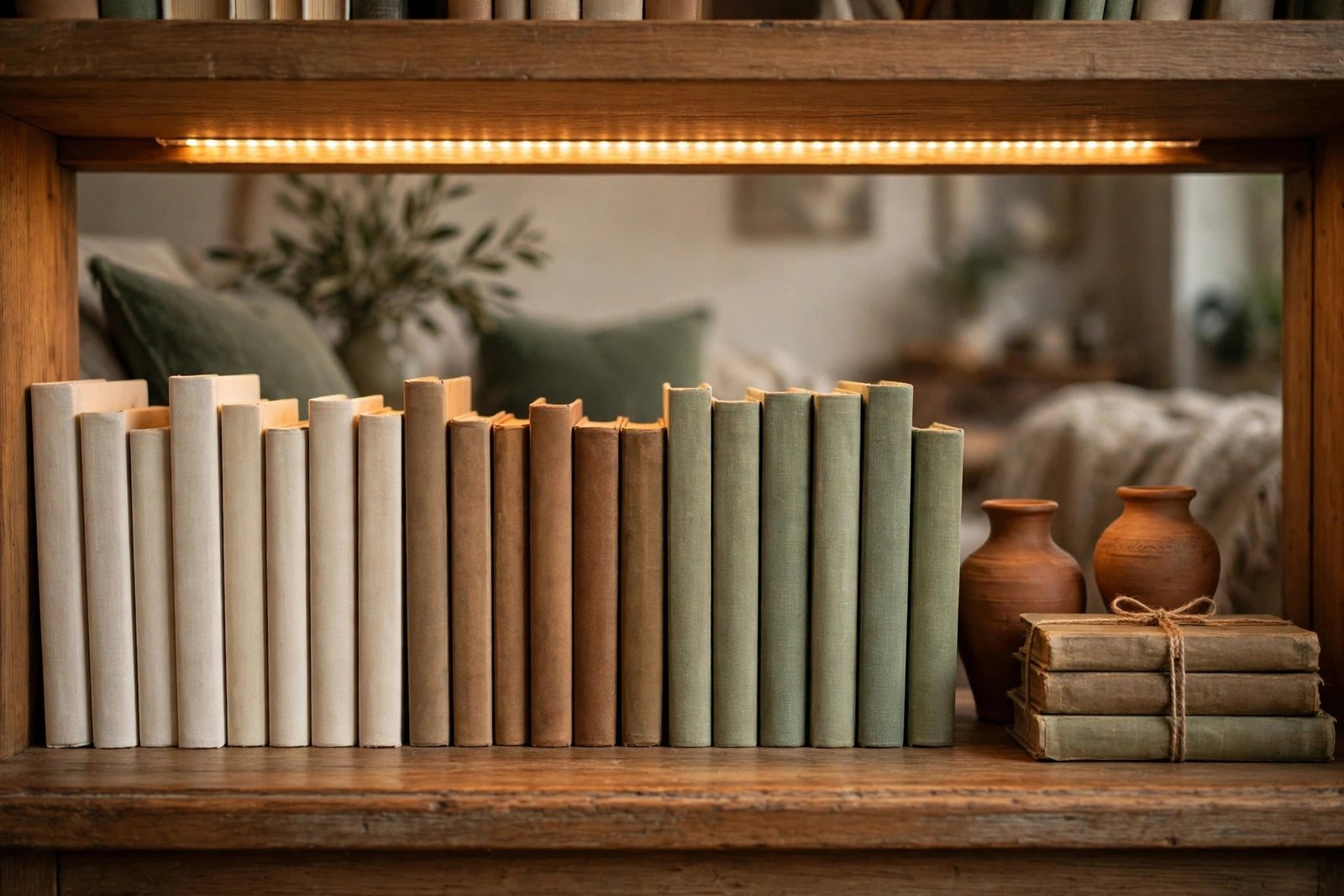
Color-sorted books turn a busy shelf into a calm wall. Group creams together, then warm browns, then sage greens. Next, add muted reds and soft blues at the ends. The shelf reads as one soft gradient, not a jumble.
Start with the colors you own most. If you own mostly cream and tan spines, build around those. Then tuck bright colors into small groups. That way, one red spine becomes an accent, not a shout.
For a softer look, turn a few spines inward. The plain page edges add a pale, quiet block. But use this trick sparingly, or you will lose the books. Two or three turned spines per shelf is plenty.
Next, match your objects to the nearest color group. A terracotta vase sits well with warm browns. A sage bowl suits the green group. This color continuity ties the whole shelf together.
Finally, stand back and squint at the shelf. Blurred colors show the real balance at once. If one color jumps out, move a book or two. Then check again until the wall feels even.
3. Mix Horizontal and Vertical Stacks
A shelf of all upright books looks like a library aisle. So break the line with horizontal stacks. Lay three or four books flat, then stand the rest upright. The flat stack becomes a small platform for a vase or a candle.
Place one horizontal stack near each end of the shelf. Then fill the middle with upright books. This rhythm repeats across the shelf and feels calm. Also, it stops the eye from sliding straight across.
For variety, change the stack heights. One stack of two books sits low and neat. Another stack of four books adds height. So vary the counts, and the shelf gains a gentle wave.
Next, top each flat stack with one small object. A tiny plant, a smooth stone, or a small bowl works well. But keep the object small, or the stack will look top-heavy. One piece per stack is enough.
Finally, check that the stacks still hold books you use. A stack of favorites feels honest and lived-in. So pick books you reach for, not just pretty spines. The shelf will feel like yours.
4. Use the Rule of Threes on Every Shelf
The rule of threes is simple: group objects in threes. Three items feel complete, while two feel sparse and four feel busy. So place three objects together on a shelf, then step back. The group will read as one unit.
Mix heights inside each trio. One tall piece, one medium piece, and one low piece work best. A tall vase, a medium frame, and a low bowl make a classic trio. Then vary the shapes, too, so the group feels alive.
For books, the rule still applies. Try three upright books, then a gap, then three more. Or stack three books flat beside a small trio. In both cases, the count of three keeps the eye moving.
Our gallery wall ideas guide uses the same idea for framed art. Trios of frames hang better than pairs or rows of four. So the rule works on walls and shelves alike. Try it in both spots.
Finally, do not force every shelf into threes. One shelf can hold a single bold piece instead. But when a shelf feels flat, a trio is the fastest fix. Add three, step back, and see the change.
5. Layer Framed Art Behind the Books
Art behind books adds depth in one move. Lean a small framed print against the back of the shelf. Then place books in front of it, leaving the top edge visible. The frame peeks out and the shelf gains a backdrop.
Choose art with soft, muted colors. A landscape, a botanical print, or an abstract wash works well. But keep the frame simple, so it does not fight the books. A thin wood or plain black frame suits most shelves.
For the best effect, let the art rise above the books. A frame that is taller than the spines shows its top half. Then the shelf reads in layers: art at the back, books in front. That depth feels rich and calm.
Next, try one framed piece per shelf, not three. Too many frames crowd the books. So pick your favorite print for the middle shelf. Then let the other shelves stay simple and open.
Finally, lean the frame, do not hang it. A leaned frame feels casual and easy to swap. If you change your mind, just lift it out. Then try a new print next season, with no holes in the wall.
6. Add Warm LED Strip Lighting at 3000K
Light turns a dark shelf into a warm glow. Stick a warm LED strip under each shelf, near the front edge. Then the light washes down the books below. At 3000K, the glow feels like late sun, not office light.
First, measure each shelf before you buy the strips. Cut the strips to fit, and hide the cord at the back. Next, add a dimmer so you can lower the glow at night. A soft glow beats a bright strip every time.
For built-in shelves, run the strip along the top edge. The light will pool on the books below. Also, keep the strip out of sight, so you see the glow, not the source. Among bookshelf decor ideas, hidden light is the cheapest win.
Next, test the light before you style the shelf. Turn it on, then place books and objects. The glow will show which pieces catch the light best. So move shiny ceramics into the lit spots.
Finally, use one lighting type per shelf. Mixed cool and warm bulbs look muddy and cheap. So choose 3000K everywhere, and skip the cool white strips. One warm tone ties the whole unit together.
7. Leave Breathing Room on Every Shelf
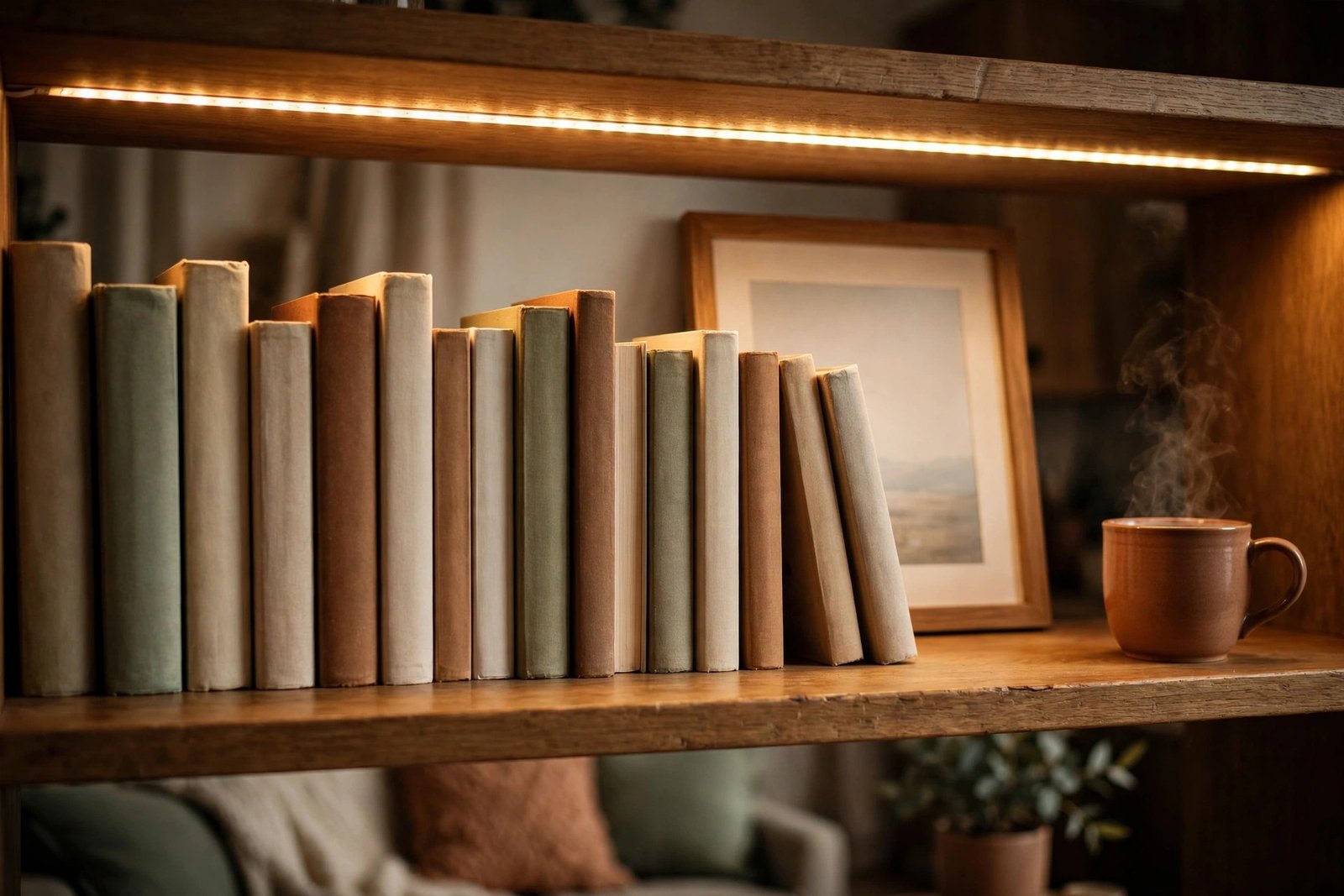
Empty space is a design choice, not a failure. A shelf packed edge to edge feels like storage. But a shelf with one open gap feels calm and curated. So leave a hand-width of space on each shelf.
Start by pulling one group of books off the shelf. Then look at the gap it leaves. Often, that empty spot is the best part of the shelf. It gives the eye a rest and lets nearby pieces shine.
For a simple test, use the fist rule. If you cannot fit a fist between groups, the shelf is too full. So remove a few books and try again. The shelf will feel lighter at once.
Next, keep the top shelf the airiest of all. A little space up high lifts the whole unit. Then place one tall vase or one small plant there. The open space around it makes the piece feel special.
Finally, treat negative space as part of your bookshelf styling ideas. It is the pause between the stories. Without it, the shelf shouts. With it, the shelf speaks softly and clearly.
8. Mix Eras and Textures for a Collected Feel
A shelf of all-new pieces looks like a showroom. So mix old and new for a collected feel. Pair a vintage brass frame with a new ceramic vase. Then add a woven basket beside a sleek metal bookend. The mix tells a longer story.
Start with one vintage piece per shelf. A flea-market bookend, an old clock, or a thrifted vase works well. Next, add modern pieces around it. The contrast makes both eras look better, not worse.
For texture, combine smooth and rough in each group. A glossy ceramic sits well beside a rough linen box. A smooth stone pairs with a woven basket. So touch each piece as you place it, and feel the mix.
Next, repeat one texture across the shelves. A little wood on each shelf ties the unit together. Then add one new texture per shelf for variety. That balance keeps the mix calm, not chaotic.
Finally, let the mix grow over time. A collected shelf is never finished in one day. So add one piece per month, and let the shelf evolve. In a year, it will look truly lived-in.
9. Build a Reading Corner Shelf Beside Your Chair
A shelf beside your chair turns reading into a ritual. Keep your current book, a warm drink, and a small lamp close. Then the chair becomes your spot, and the shelf becomes its helper. Everything you need sits within reach.
Start with the bottom shelf for books you read now. Place three or four current reads upright, spines out. Next, add a small stack of next-up books beside them. The stack says what you will read next.
For comfort, add a small lamp or a lit candle on the shelf. The warm light makes evening reading easy on the eyes. But keep flames away from books and paper. A battery candle gives the same glow, safely.
Our reading nook ideas guide shows how to build the whole corner. It covers chairs, light, and cozy layers. So pair that guide with this shelf, and the corner will feel complete.
Finally, keep this shelf small and personal. It is not for show, it is for use. So let it hold your real reads, your real mug, and your real notes. A used shelf is the warmest shelf of all.
10. Anchor Heavy Books With Solid Bookends
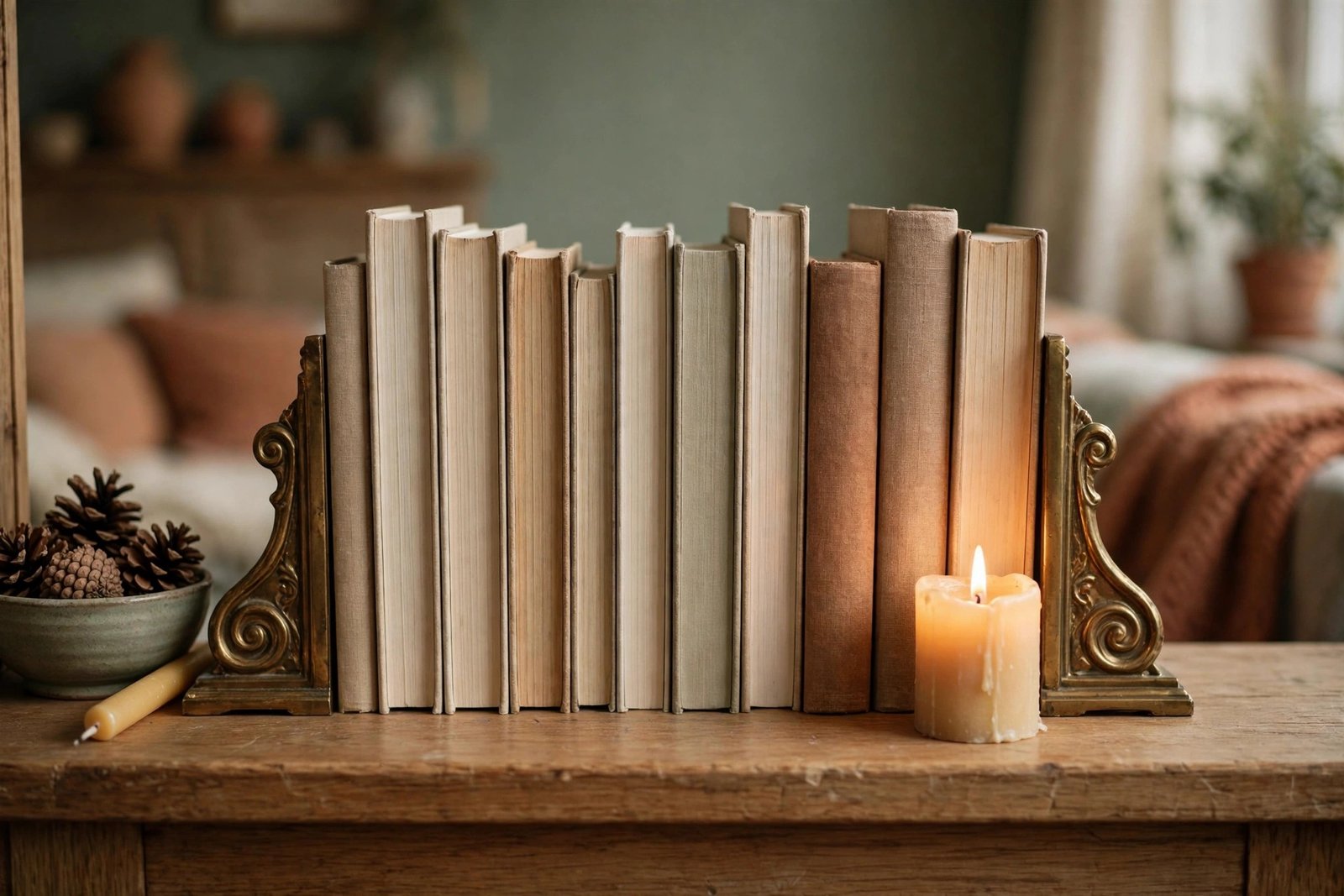
Heavy books need a firm anchor, or they lean and slide. So use solid bookends at the end of each row. A heavy stone, wood, or metal bookend holds the row straight. Then the shelf looks neat, not slumped.
Choose bookends that match your shelf style. A brass pair suits a warm, classic shelf. A plain wood pair fits a calm, modern look. But skip light, hollow bookends, since heavy books will push them over.
For a creative touch, use a heavy object as a bookend. A smooth stone, a small potted plant, or a stack of flat books works well. Next, test it with a gentle push. If it holds firm, it earns the job.
Next, place bookends at both ends of a long row. One bookend alone lets books lean the other way. So anchor both sides, and the row will stand straight all year. Check it once a season.
Finally, let the bookends be part of the decor. They are not just tools, they are pieces too. So pick bookends you love to look at. Then the shelf gains beauty and function at once.
11. Style by Story, Not by Size
Most people sort books by height, but that looks flat. Instead, sort them by story. Group your travel books together, then your cookbooks, then your novels. Each group tells its own small tale.
Start with the stories that matter most to you. Your favorite novels deserve the middle shelf, at eye level. Next, place hobby books near the tools they serve. Cookbooks belong near the kitchen end of the shelf.
For a personal touch, add one object to each story group. A small globe suits the travel group. A wooden spoon rests well with cookbooks. So each group gains a prop that hints at its tale.
Next, let the groups stay a little loose. Perfect rows feel like a store. But a group with a leaning book or a flat stack feels human. So leave one book slightly out of line, on purpose.
Finally, change the stories with the seasons. In fall, move your cozy novels to the front. In summer, bring travel books forward. Then the shelf always matches the life you live now.
12. Add One Plant Per Shelf for Living Color
A plant brings a shelf to life in one move. Green leaves soften hard book edges and add fresh color. So place one small plant on each shelf, near the end. The green will pull the whole shelf together.
Choose plants that like low light. A pothos, a snake plant, or a small fern suits a shelf well. Next, use a plain ceramic pot in cream or sage. The pot should blend in, while the plant takes the spotlight.
For shelves with little light, try a faux olive sprig instead. A good faux sprig looks real from a few feet away. But keep it dust-free, or the trick will fail. A quick wipe once a week keeps it fresh.
Next, let a trailing plant drape over the shelf edge. The soft fall of leaves adds movement to the shelf. Then place the pot near the end, so the trail has room. One trailing plant per unit is enough.
Finally, water shelf plants on a set day. A thirsty plant droops fast in warm indoor air. So pick a weekly watering day, and stick to it. Then your shelves will stay green all year.
13. Repeat One Color Across All the Shelves
One repeated color ties five shelves into one unit. Pick a warm tone, like terracotta, mocha, or olive. Then place a small piece of that color on each shelf. The repeat creates a quiet rhythm.
Start with the color you already own most. If your books lean warm brown, choose walnut or mocha. Next, add one object in that tone per shelf. A vase, a box, or a book spine all count.
For balance, vary the size of each repeat. A large terracotta pot sits well on the bottom shelf. A small terracotta bowl suits the top shelf. So the color echoes, but the shapes stay fresh.
Next, keep the other colors soft and muted. Cream, sage, and pale wood let the repeat color lead. But avoid a second strong color, or the two will fight. One lead color is enough.
Finally, check the repeat from across the room. The color should read as a soft thread, not a shout. If it feels loud, swap one piece for a paler tone. Then these bookshelf decor ideas will sit just right.

14. Style a Small-Space Shelf That Works Hard
Small rooms need shelves that do double duty. A narrow shelf can hold books, a lamp, and a charging spot. So plan each shelf for two jobs, not one. The shelf then earns its space.
Start with the top shelf for display only. Place three favorite books and one small vase there. Next, use the middle shelves for daily books and baskets. The bottom shelf can hold shoes, bags, or storage boxes.
For tight rooms, choose a slim, tall shelf. It uses wall height, not floor space. Then anchor it to the wall for safety. A tall shelf in a small room feels grand, not cramped.
Our small apartment decor ideas guide covers more double-duty tricks. It shows desks, beds, and storage that share space. So pair that guide with this shelf, and your room will work harder.
Finally, keep small shelves light in color. Pale wood and cream open up a tight room. But one dark accent adds depth, so add a walnut box or a brass frame. Then the shelf feels airy and grounded.
15. Use Baskets and Boxes on the Bottom Shelf
The bottom shelf is the best spot for closed storage. Baskets and boxes hide clutter and keep the shelf calm. So place two or three woven baskets down low. They hold cords, games, and spare throws.
Choose baskets that fit the shelf with a small gap. A basket that is too tight looks stuffed. Next, pick a natural weave, like seagrass or rattan. The texture warms the bottom of the unit.
For a neater look, use matching linen boxes instead. Plain cream boxes with no labels look calm and clean. But leave one box open, so the shelf does not feel sealed. An open box shows a folded throw inside.
Next, label baskets only if you must. A small blank tag tied with twine looks better than a printed label. Then the storage feels styled, not office-like. Keep the tags simple and few.
Finally, keep the bottom shelf easy to reach. Kids and guests grab things from down low. So store light, soft items there, not heavy books. Then the shelf stays safe and simple to use.
16. Rotate Seasonally and Keep the Bones
A great shelf has bones that never change. The books, the big vase, and the art stay put. Then small pieces rotate with the seasons. So you refresh the look without starting over.
Start by naming your bones. Pick the five pieces that define the shelf. Next, list the small pieces you can swap: a candle, a sprig, a tiny frame. Those are your seasonal players.
For fall, add dried leaves and a small cream pumpkin. In winter, swap in pinecones and a plaid throw. Then in spring, bring in fresh green sprigs. Each swap takes ten minutes, not a full day.
Next, store off-season pieces in one labeled box. A single box per season keeps the swap fast. Then when the season turns, just trade the box contents. The shelf stays fresh with little effort.
Finally, photograph the shelf after each rotation. The photos show which swaps worked best. So keep the winners, and drop the rest. In a year, your seasonal shelf will feel effortless.

17. Built-In vs Freestanding: Pick the Right Shelf
Built-in shelves suit rooms where you plan to stay. They use every inch of wall and feel made for the house. But they cost more and need a skilled installer. So choose built-ins for a forever home.
Freestanding shelves suit renters and movers. You can shift them, swap them, and take them along. Next, pick a solid wood unit with a deep shelf. A deep shelf holds books and objects with ease.
For built-in bookshelf decor, paint the back panel a soft tone. A warm cream or pale sage adds depth behind the books. Then the books pop, and the shelf feels custom. Avoid bright paint, which fights the books.
Next, add trim to a freestanding shelf for a built-in look. A simple crown piece on top works wonders. Then paint the unit the same color as the wall. The shelf will blend in like a built-in.
Finally, anchor every tall shelf to the wall. A freestanding unit can tip, so use a strap or a bracket. Then load the heaviest books on the bottom shelf. Safety first, style second, always.
Products to Consider
These simple pieces support most bookcase decor ideas in this guide. You do not need all of them. So pick two or three, then add more as your shelf grows.
- Warm LED strip lights, 3000K, with a dimmer switch
- Simple wooden or brass bookends, heavy enough to hold a full row
- Small ceramic vases in cream, sage, or terracotta
- A woven seagrass basket for the bottom shelf
- Plain linen-covered storage boxes with no labels
- A small framed print with a plain mat and a thin wood frame
- A tiny potted pothos or a faux olive sprig for low-light shelves
FAQ
How many books should I put on one shelf?
Aim for 60 to 70 percent books on each shelf. That means most of the shelf holds books, while the rest holds objects. So count the books first, then add objects to fill the gaps. If the shelf looks bare, add a flat stack or two.
For a standard shelf, that is about 15 to 20 books upright, plus one flat stack. But deep shelves hold more, so adjust to your shelf depth. Then step back and check the balance by eye.
How do I style a bookshelf without it looking cluttered?
Start with the 60/40 rule, then leave one open gap per shelf. Next, group objects in threes, and repeat one color across the shelves. These bookshelf decor ideas cut clutter fast. So try them before you buy anything new.
Also, remove one piece at a time until the shelf breathes. Often, the shelf needs less, not more. Then take a phone photo to check the balance. The photo shows clutter your eyes miss.
What is the 60/40 rule for bookshelves?
The 60/40 rule means 60 percent books and 40 percent objects on a shelf. Books give the shelf weight and story. Objects add light, texture, and rest for the eye. So the ratio keeps shelves full but never crowded.
Big readers can try a 70/30 split instead. That suits deep shelves and large collections. First, pack the lower shelves with books. Then give the top shelf room to breathe.
Should I use LED strip lighting on my bookshelf?
Yes, warm LED strips at 3000K make bookshelves glow like late sun. Stick the strip under each shelf, near the front edge. Then add a dimmer, so you can lower the glow at night. Hidden light feels warm, not harsh.
But use one warm tone on every shelf. Mixed cool and warm bulbs look muddy. So choose 3000K everywhere, and skip cool white strips. One tone ties the whole unit together.
How often should I restyle my bookshelves?
Restyle the small pieces each season, and keep the bones the same. Swap a candle, a sprig, or a tiny frame in ten minutes. Then the shelf feels fresh without a full redo. So plan four small swaps a year.
Also, do a bigger edit once a year. Pull every book off, dust the shelves, and rebuild the groups. Then keep what you love, and pass on the rest. A yearly reset keeps the shelf honest.
Final Thoughts
These bookshelf decor ideas share one goal: shelves that feel like you. Start with the 60/40 rule, add warm light, and leave room to breathe. Then mix eras, textures, and one repeated color. The shelf will grow more personal with each small change.
So pick three ideas from this guide and try them today. Style one shelf, take a photo, and see the change. Then move to the next shelf when you feel ready. In a few weekends, your bookshelves will tell your story well.
Remember, a collected shelf is never finished. It grows with the books you read and the pieces you find. So enjoy the slow build, and let each shelf earn its place. Your home will feel warmer for it.