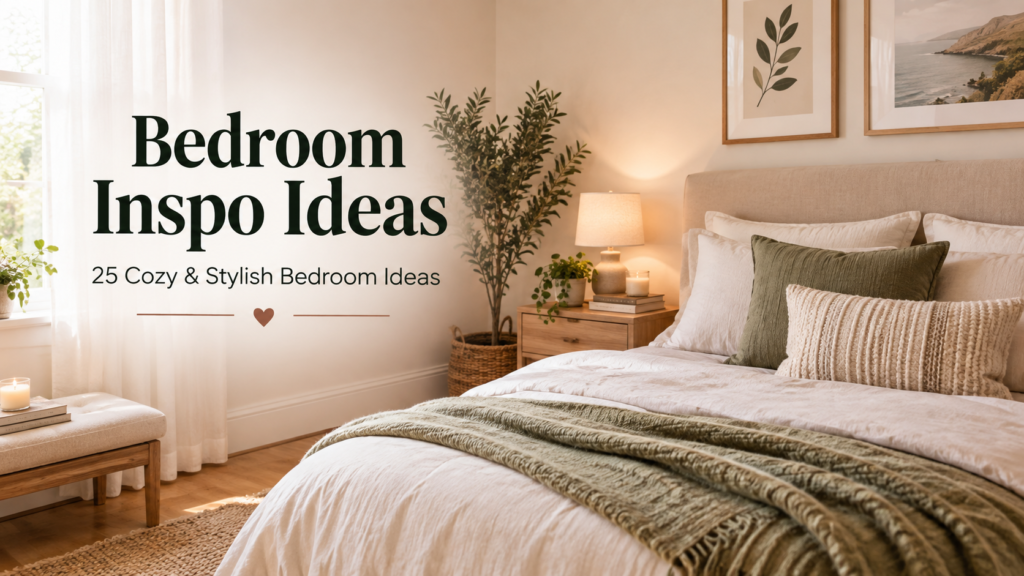
A small apartment does not have to feel small. It just needs every inch to work harder. The best small homes are not empty. They are planned. Each corner has a job. Some corners have two jobs.
This guide shares 17 small apartment decor ideas that make every room work harder. You will find renter-friendly tricks, smart storage, and simple styling. Nothing here needs a remodel. Most ideas cost little and take one weekend or less. Pick three to start with. Then add more as you live with them.
The goal is simple. Your home should feel calm, open, and useful. Let’s make every square foot earn its place.
Before you start, take photos of each room. Note what frustrates you most each day. Is it the pile by the door? Is it the lack of a work spot? Is it the crowded closet? Your answers point to your first three projects. Fix the daily pain points first. Pretty extras can wait. A home that works well soon looks good too. That order keeps you motivated.
1. Zone Your One Room Into Clear Corners
A studio or one-room apartment can feel messy fast. The fix is zoning. Give each activity its own corner. One corner is for rest. One is for work. One is for meals. You do not need walls to do this.
Use a rug to mark the living zone. Place your sofa with its back to the bed area. Add a small bookshelf as a soft divider. The eye reads each zone as its own room. That makes the whole space feel larger.
Keep walkways clear. Leave at least 30 inches for main paths. Do not block the door swing. Test the layout for a week. Move one piece at a time. Small shifts often make a big difference. Also, avoid crowding every wall. One open stretch of wall gives your eyes a rest.
Before you move anything, measure the room. Note door swings, outlet spots, and window heights. Mark each zone on the floor with painter’s tape for one day. Walk through it as you normally would. This quick test shows where paths feel tight. It also shows where a rug or shelf should go. You save heavy lifting later.
2. Pick a Sofa That Sleeps Guests Too
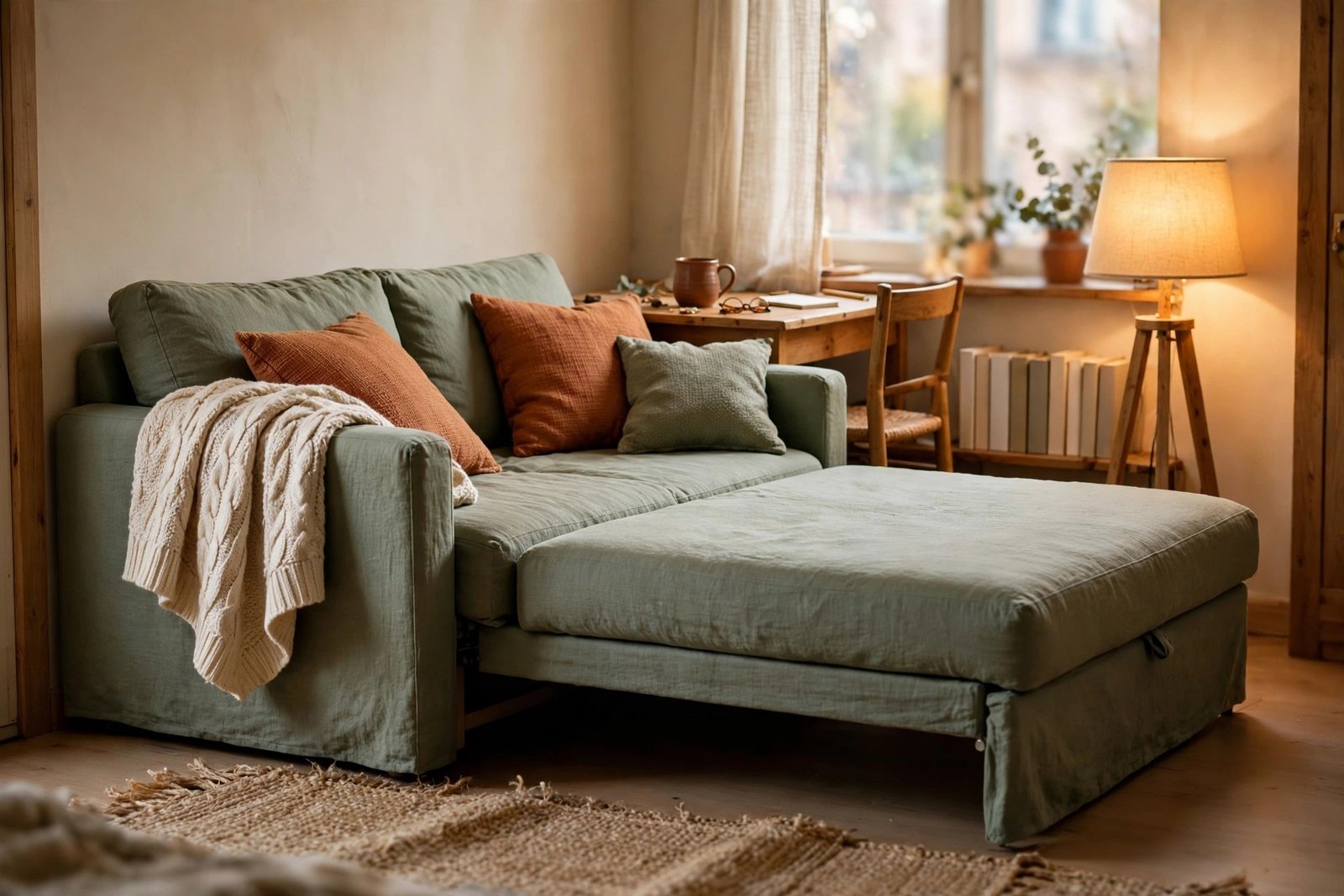
In a small apartment, your sofa is prime real estate. It should not sit idle at night. A sofa bed or a deep daybed works twice as hard. By day, it is your lounge seat. By night, it becomes a guest bed.
Choose a model that opens with ease. Test it in the store if you can. A stiff, heavy pull-out will stay folded. You will avoid using it. Look for washable covers too. They make guest turnovers simple.
Keep bedding close by. Store a sheet set and a spare pillow in the sofa base or a nearby basket. Add a soft throw for daytime style. When guests arrive, you are ready in five minutes. No air mattress on the floor. No clutter in the hall.
Make guest sleep as good as your own bed. Add a thin mattress topper on the sofa bed. Keep an extra blanket and a firm pillow nearby. A small bedside lamp helps guests read at night. Leave a glass and a phone charger close by. These small touches make guests feel welcome. They also make you more likely to host.
3. Go Vertical, All the Way to the Ceiling
Floor space is scarce in a small apartment. Wall space is not. Use it. Shelves that reach the ceiling draw the eye up. That makes the room feel taller. It also frees your floor for living.
Start with one wall. Install two or three sturdy shelves. Anchor them into studs when you can. If you rent, use strong adhesive strips for light items only. Check your lease before you drill. Many landlords allow small holes with simple patching.
Place daily items at arm height. Put rare items up high. Keep heavy books low. Style the top shelf with one plant or a basket. Do not fill every shelf edge to edge. A little breathing room keeps it calm.
Check weight limits before you load shelves. Books get heavy fast. Spread them across several brackets. Use a stud finder for heavier rows. For rentals, ask your landlord about anchors in writing. Keep a small step stool in a closet. You will reach the top shelf with ease. That keeps high storage useful, not forgotten.
4. Fold Your Desk Away When Work Ends
Working from home in a small space can take over your life. A fold-down desk solves that. It folds up when work ends. Your living room becomes a living room again.
Mount a wall desk near an outlet. Add a small chair that tucks under it. Keep your laptop, charger, and notebook in one tray. When you close the desk, work stays hidden. That boundary matters for rest.
If you cannot mount anything, use a console table instead. It serves as a desk by day and a display table at night. Add a lamp and a small plant. At dinner time, clear the laptop away. The ritual tells your brain that work is done.
Set the desk height for comfort. Your elbows should rest near a right angle. Your screen should sit near eye level. A laptop stand and a small keyboard help a lot. Add a cushion to a plain chair. Good posture matters more in a small nook. You sit close to the wall all day. Comfort keeps you focused.
5. Divide With Shelving, Not Walls
You need privacy in a studio. You do not need a wall. An open bookshelf divides space without blocking light. Air still moves through it. Light still reaches both sides.
Choose a shelf that is stable and not too tall. About five feet works well. It marks a boundary without closing you in. Place books with their spines facing both sides. Mix in baskets for items you want hidden.
Leave some cubes open. That keeps the divider light. Add a plant on top to soften the edge. Do not overload it. A stuffed shelf becomes a wall. A styled shelf becomes a feature.
Anchor any tall shelf to the wall. This is vital in homes with kids or pets. Use anti-tip straps if you rent. They leave only small holes to patch. Place heavy items at the bottom of the shelf. That lowers the center of gravity. The divider stays steady. It also stays safe if someone bumps it.
Style both faces of the divider. The bed side can hold books and a small lamp. The living side can hold plants and baskets. Each side then looks planned, not like the back of a shelf. Step back and check both views. Adjust one item at a time until both sides feel calm.
6. Let Your Bed Hold the Closet
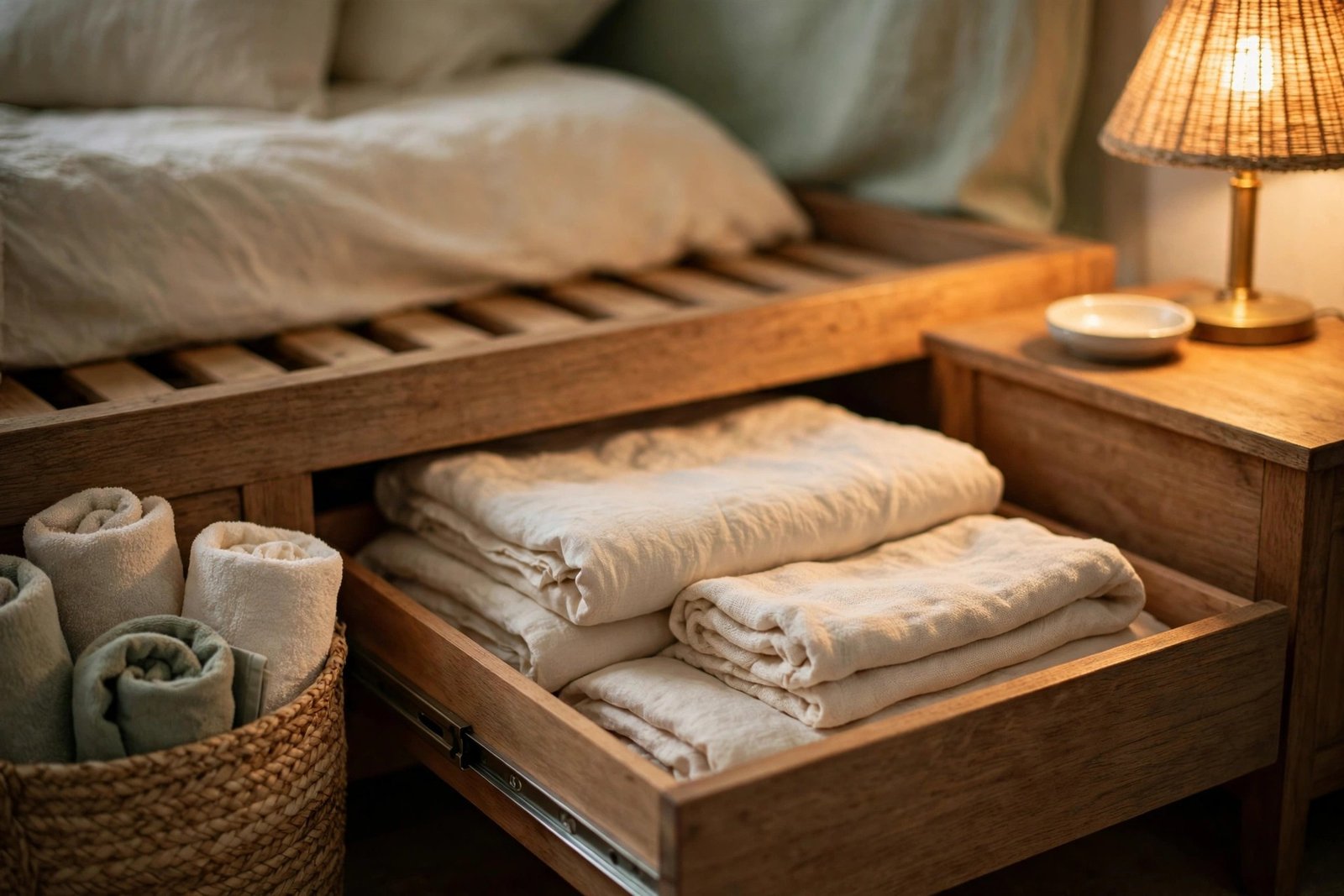
Your bed takes up the most floor space. It should also store the most stuff. A bed frame with drawers turns dead space into a closet. Out-of-season clothes fit there. So do spare sheets and bulky blankets.
If your frame has no drawers, use flat rolling bins. Label them by season or by person. Slide them under with ease. Keep a small step stool nearby if the bed is high. You will use the storage more when it is easy to reach.
For more ideas on making a tight bedroom work, see these small bedroom decor ideas. The same rules apply here. Store what you use least in the hardest spot. Keep daily items at the front. Your mornings get faster at once.
Rotate the contents twice a year. In spring, store heavy winter bedding. In fall, bring it back out. Use flat vacuum bags for bulky quilts. They shrink the load a lot. Keep a list on your phone of what is under the bed. You will not buy a second set by mistake. That saves money and space.
7. Use Mirrors to Double the Light
Mirrors are the oldest small-space trick. They still work. A large mirror across from a window bounces daylight deep into the room. The room feels brighter and wider at once.
Hang one big mirror instead of many small ones. Small mirrors can look busy. One clean frame looks calm. Lean a tall mirror against the wall if you rent. Use adhesive pads at the base so it cannot slip.
Place mirrors where they reflect something pretty. A plant, a window view, or open wall works well. Avoid facing a mirror at clutter. It will double the mess too. Wipe it weekly. A dusty mirror dims the whole effect.
Watch for glare when you hang a mirror. A mirror facing a bright window can dazzle at noon. Angle it slightly to soften the light. Test the spot at different times of day. Morning light and evening light differ a lot. A small shift often fixes the glare. The room still gains light without harsh spots.
8. Roll Storage Where You Need It
Fixed storage cannot follow your day. Rolling carts can. A slim cart slides into a gap by the fridge. It holds spices, cans, or cleaning supplies. Pull it out when you cook. Push it back when you are done.
Use a second cart as a side table. It can hold books, a lamp, and a drink. Roll it to the sofa for movie night. Roll it to the bed for a sick day. Wheels turn one piece into three helpers.
Pick carts with brakes. They stay put when you need them still. Choose a height that fits under your counter overhang. Measure the gap first. A cart that is one inch too wide is just clutter.
Measure narrow gaps before you buy a cart. Many kitchen gaps are only a few inches wide. A cart that fits slides in cleanly. Use one cart for pantry goods and one for cleaning tools. Wipe wheels monthly so they roll with ease. A stuck cart is worse than no cart. Keep the top clear for daily use.
9. Claim the Backs of Doors
Doors are wasted space in most apartments. Their backs can hold a lot. An over-door rack adds hooks without holes. Hang coats, bags, or robes there. It keeps them off chairs and floors.
In the bedroom, use a door rack for scarves and belts. In the pantry, use one for spices or snacks. In the bathroom, hang towels there. Each door gains a job. No floor space is lost.
Check that the door still closes with ease. Slim racks work best. Avoid overloading one hook. Heavy loads can bend the rack and mark the door. Spread weight across several hooks instead.
Add felt pads behind an over-door rack. They stop scuffs on the door face. Check the top edge for paint wear each month. If you see marks, add a thin cloth guard. Remove the rack before you move out. Patch any small marks with touch-up paint. Most landlords accept normal wear like this.
Use the inside of a closet door too. A slim rack there holds cleaning tools or gift wrap. It stays hidden when the door closes. That hidden spot is ideal for odd items. Check the rack each season. Remove what you no longer use. The door keeps earning its space.
10. Turn Your Counter Into a Table
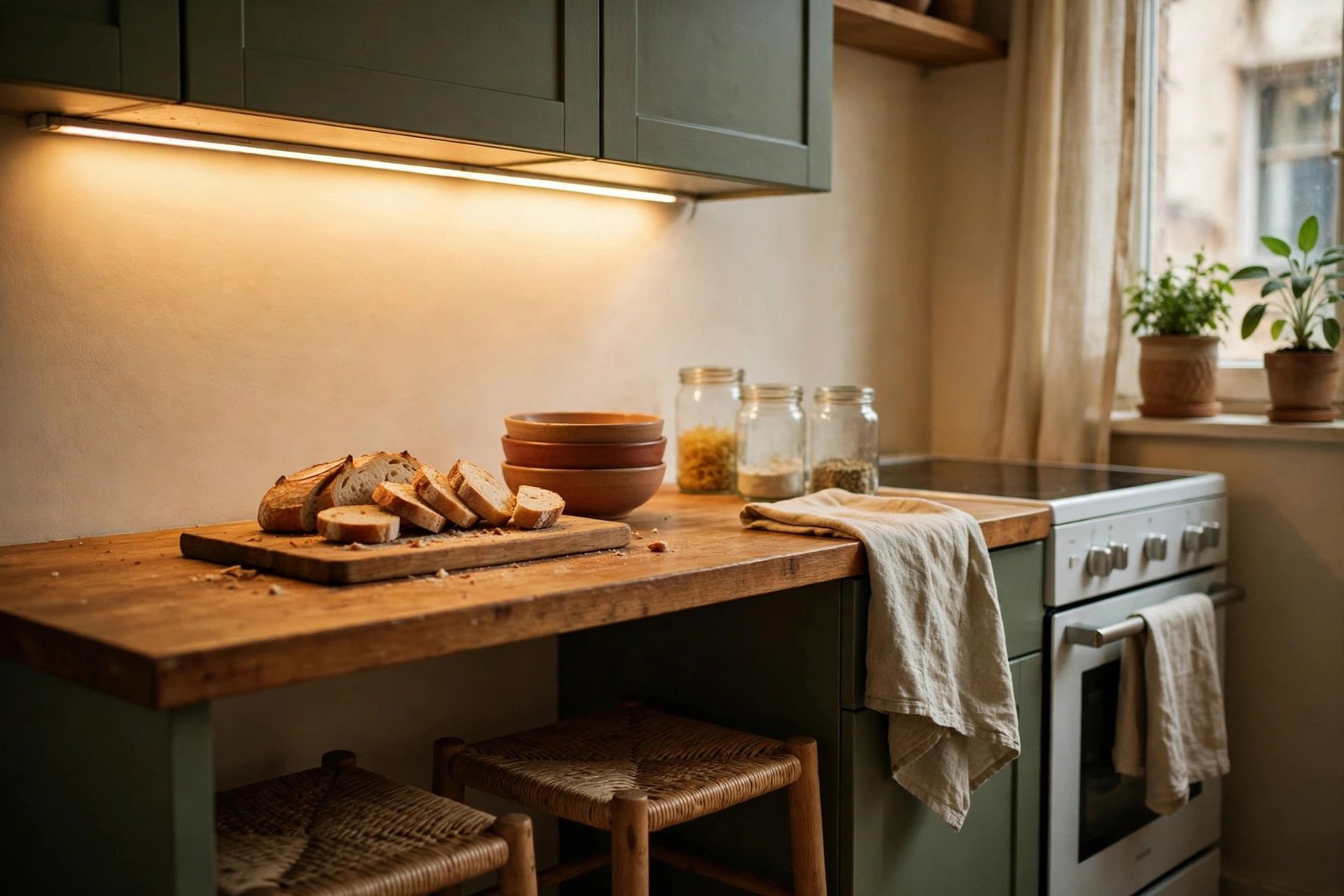
Many small apartments lack room for a dining table. Your kitchen counter can fill that gap. Add two stools that tuck fully underneath. Now the counter is a prep zone and a dining spot.
Keep the counter clear during meals. Store daily tools in a crock or a drawer. Place a small board and bowls out only when you cook. The habit keeps the table ready for dinner.
Use stools without backs if space is tight. They slide away cleanly. Add a cushion for comfort. A shared meal at the counter feels cozy, not cramped. It also keeps the cook part of the talk.
Match stool height to your counter. Standard counters are about 36 inches high. They pair with 24-inch stools. Bar-height counters are about 42 inches high. They need 30-inch stools. Leave about 10 inches of leg room under the top. Test one stool before you buy a pair. Comfort matters for long meals.
Keep a small centerpiece that moves with ease. A tiny plant or a candle tray works well. Slide it aside for meals. Bring it back after you clear the plates. The counter then shifts from dining spot to prep zone in seconds. One movable piece marks each mode clearly.
11. Turn a Closet Into a Tiny Office
A spare closet can become the best office in a small home. Remove the door if your lease allows it. Add a desk board at elbow height. Paint the inside a light color. Suddenly, you have a work nook.
Use the upper shelf for supplies. Hang a small light under it. Keep cables in one clip along the wall. When work ends, close a curtain over the nook. The office vanishes from view.
For more workspace ideas, explore these home office ideas. Many fit a closet or a corner. Pick the layout that matches your daily tasks. A good chair matters more than a big desk.
Add airflow to a closet office. A closed closet can get warm fast. Leave the curtain partly open while you work. Use a small fan if the room allows it. Keep a power strip with surge guard inside. Run cables along one side only. A tidy cable path stops trips. It also makes cleaning much faster.
12. Build a Landing Strip by the Door
Clutter often starts at the front door. Keys land on the table. Mail piles up. Shoes spread out. A small landing strip stops that drift. It gives every arrival item a home.
You need only a few pieces. A small tray for keys. A hook for your bag. A basket for shoes. A bin for mail to sort later. Keep it all within one step of the door.
Empty the tray each Sunday. Toss junk mail at once. Put shoes back in the closet each night. The habit takes two minutes. It keeps the whole apartment calm from the first step inside.
Add a boot tray under the shoe basket. It catches rain and snow melt. That protects wood floors a lot. In US apartments, entry floors take hard wear. A tray costs little and saves refinishing later. Shake it out weekly. Wipe it dry after wet days. Your landing strip stays neat through all seasons.
Label the mail bin for each person in the home. That stops mix-ups at once. Keep a small shred pile for junk mail. Sort it once a week, not daily. The habit takes one minute. It keeps paper from spreading to tables and counters. Your entry stays calm all week.
13. Give Your Bathroom a Second Job
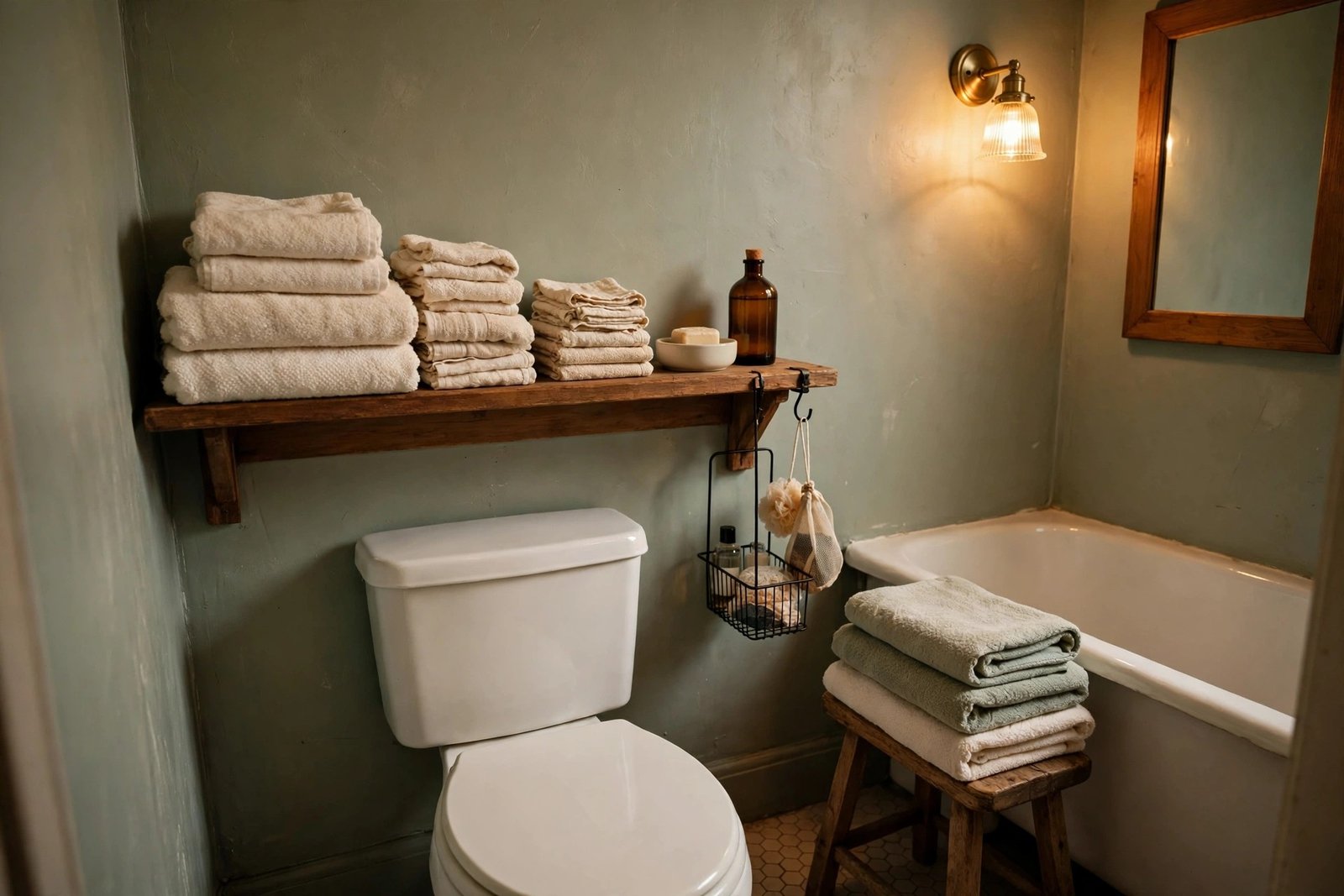
Small bathrooms must store more than bath items. They can also hold linens and cleaning goods. An over-toilet shelf uses dead wall space well. Folded towels look neat there. So do spare rolls and small baskets.
Add a hanging caddy in the shower. It lifts bottles off the tub edge. Use a small stool for extra towels by the tub. It doubles as a seat for kids or guests. Keep daily items at eye level. Store backups up high.
Use matching baskets for a calm look. They hide odd shapes and labels. Wipe shelves weekly to stop damp buildup. A dry, tidy bathroom feels larger than a damp, crowded one.
Pick moisture-safe storage for bathrooms. Metal racks can rust in damp air. Sealed wood or coated wire lasts longer. Wipe the shelf dry after steamy showers. Use suction hooks only on smooth tile. Rough tile needs adhesive hooks instead. Test one hook for a day first. A falling caddy at night is no fun.
14. Stick to One Palette, Then Add Texture
Too many colors can chop a small room into pieces. One calm palette pulls it together. Pick three colors. A warm cream base works well. Add sage green and a terracotta accent. Repeat them in every room.
Texture adds interest without color chaos. Mix linen, wood, wool, and rattan. A knit throw on the sofa adds warmth. A woven rug grounds the floor. A wood frame adds depth. The room feels rich, not loud.
Art helps too. A small set of framed prints can make a wall feel planned. For display ideas, try these gallery wall ideas. Keep frames in one finish. Space them evenly. Let one wall carry the art, not every wall.
Test your palette with swatches first. Hold fabric and paint chips near your sofa. Check them in daylight and at night. Warm bulbs shift cream toward yellow. Cool bulbs shift sage toward grey. Pick the combo that looks good in both lights. Then buy larger pieces with confidence.
15. Hide Storage Inside Everyday Furniture
The best storage in a small home is invisible. An ottoman with a lift top holds blankets and games. A coffee table with a drawer hides remotes and chargers. A bench by the door holds shoes inside.
Shop with storage in mind. Lift the lid before you buy. Check that the hinge stays open. Test that the drawer slides with ease. A piece that is hard to open will not get used.
Keep one hidden spot for each type of clutter. Toys go in the ottoman. Chargers go in the table drawer. Mail goes in the entry basket. When each item has a hidden home, surfaces stay clear with less effort.
Check weight ratings on storage furniture. An ottoman that holds blankets may not hold books. A bench rated for sitting may sag under heavy boxes. Read the spec label before you buy. Sit on it and lift the lid twice. A piece that works hard should feel solid. It should not creak or wobble.
16. Steal a Second Room Outdoors
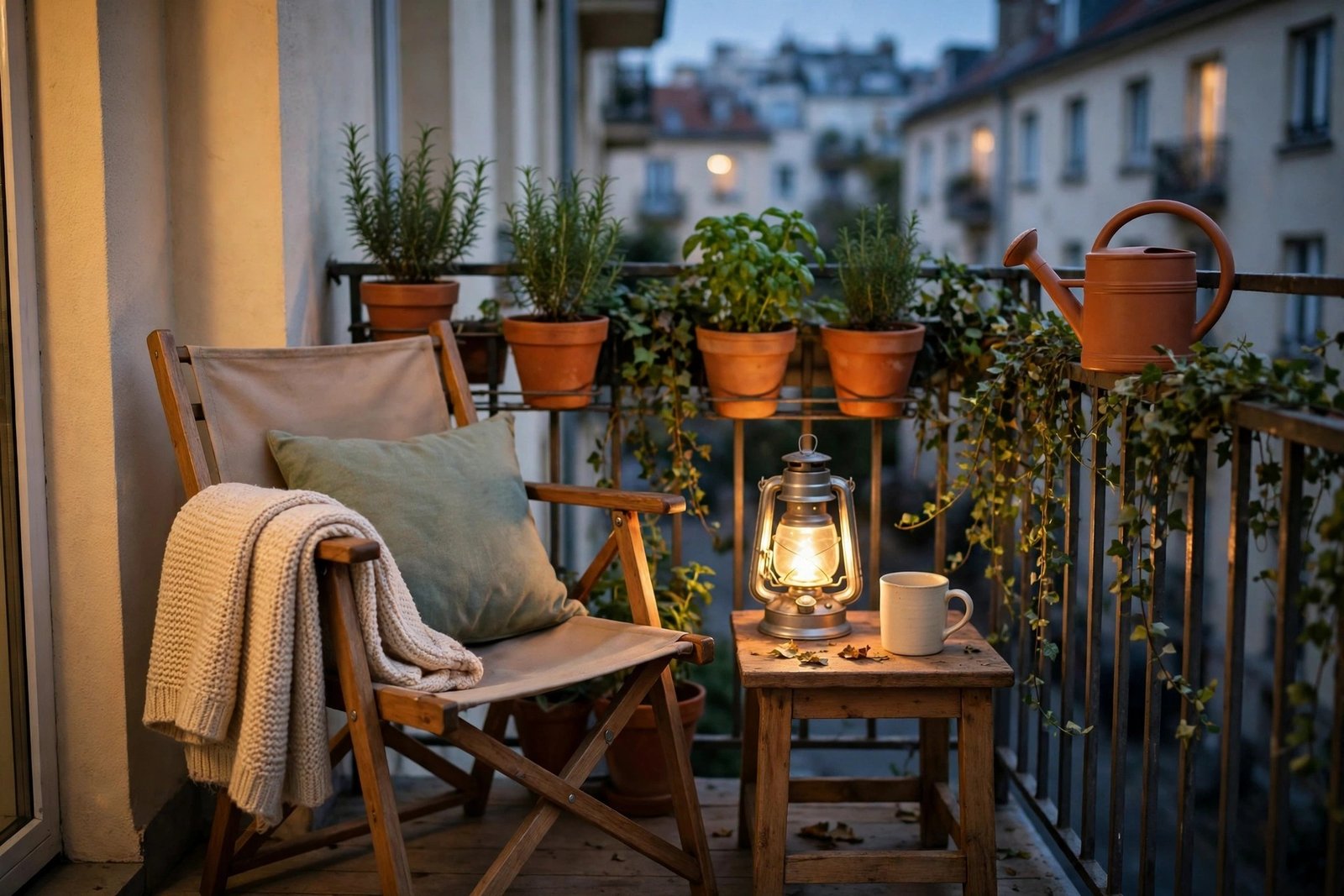
A balcony, patio, or even a wide windowsill can become a second room. Treat it like one. Add a chair, a small table, and a light. Now you have a reading nook or a morning coffee spot.
Use folding furniture if space is tiny. It stores flat in winter. Add pots along the rail for herbs. They add green without taking floor space. A small outdoor rug makes it feel like a room.
Keep the setup simple. One chair beats a full set you cannot move around. Bring cushions inside during rain. A little care keeps the nook inviting all year.
Check balcony rules before you build your nook. Many US leases limit railing planters and hanging items. Some ban open flames outdoors. Use battery lights instead of candles. Keep furniture light enough to bring inside fast. Storms can arrive with little warning. A simple setup stays safe and legal.
Bring the palette outside too. Use the same cream and sage tones on cushions and pots. That link makes the balcony feel like part of the home. It does not feel like an afterthought. A matching rug ties it together. The eye flows from inside to outside with ease.
17. Run a Ten-Minute Weekly Reset
Even the best layout needs upkeep. A weekly reset keeps it working. Set a timer for ten minutes. Pick up stray items. Wipe one surface. Return each thing to its home.
Use a one-in, one-out rule for new buys. A new mug means an old one leaves. A new throw means one goes to storage. This rule stops slow creep. Your shelves stay as calm as day one.
Check what is not working each month. Is one zone always messy? It may need a basket or a hook. Small fixes beat big cleanups. And if you are unsure what to change first, learn from common errors in these small living room decorating mistakes. Fix one mistake at a time.
Keep a small donation box in a closet. Drop in items you no longer use. When the box fills, drop it at a charity shop. This habit stops clutter from creeping back. Pair it with a monthly deep check of one zone. Rotate zones each month. By year end, every corner has had a fresh review.
Products to Consider
You do not need new furniture for every idea here. Start with a few flexible pieces. Look for a sofa bed with washable covers. Add a slim rolling cart for gaps. Choose an ottoman with hidden storage inside.
Other useful types include a fold-down wall desk, an over-door hook rack, and under-bed rolling bins. A large wall mirror and a set of matching baskets also help. Pick neutral finishes that match your palette. Measure your space before you order anything.
Buy in stages, not all at once. Start with the piece that solves your worst daily problem. Live with it for two weeks. Then decide what you still need. This slow pace stops impulse buys. It also stops pieces that clash with your palette. Your home grows in a planned way. Each new item earns its place before the next one arrives.
FAQ
How do I make a small apartment look bigger without a remodel?
Use light colors, one large mirror, and clear walkways. Keep furniture low and leggy where you can. Let daylight in. Remove one bulky piece before you add a new one. Keep surfaces mostly clear. A clear surface reads as more space at once.
What is the best furniture for a small apartment?
Pick pieces with two jobs. A sofa bed, a storage ottoman, and a fold-down desk are strong starts. Rolling carts and nesting tables also help. Measure each piece against your doorways and gaps first. Check stairwells and elevator doors too. A sofa that cannot reach your floor helps no one.
How can renters decorate without drilling holes?
Use adhesive hooks for light items and lean mirrors against walls. Try tension rods, over-door racks, and freestanding shelves. Always check your lease first. Patch small holes before you move out. Keep the paint code from your landlord if you can. A small touch-up at move-out saves deposit disputes.
Where should I start if my apartment feels cluttered?
Start at the front door with a landing strip. Then clear one surface, like the kitchen counter. Give each stray item a home. A ten-minute weekly reset keeps the progress going. Set a phone reminder for the same day each week. A fixed habit beats a big cleanup every month.
Can one room really serve as a living room, office, and guest room?
Yes, with clear zones and fold-away pieces. A rug marks the living zone. A fold-down desk marks work. A sofa bed covers guests. Close or fold each zone away when its job ends. That closing ritual marks the shift from work to rest. Your brain learns the cue fast.
Final Thoughts
Small apartments reward smart choices. You do not need more space. You need each space to do more. Zone your rooms. Go vertical. Hide storage in plain sight. Keep one calm palette through the home.
Watch for the small wins along the way. A clear counter makes mornings easier. A tidy entry makes coming home nicer. A guest bed that opens fast makes hosting fun, not stressful. These wins add up. They turn a small apartment from a compromise into a choice you enjoy.
Start with three ideas this week. Live with them for a month. Then add the next three. Soon your apartment will feel larger, calmer, and far more useful. Every room will work harder, and so will your home.