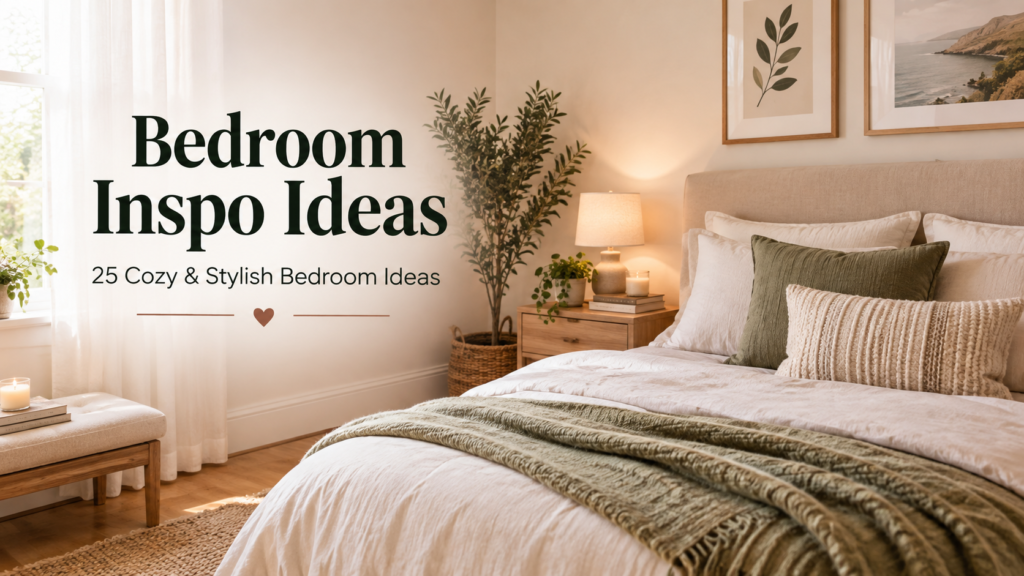
A small bedroom can feel like a puzzle with too many pieces and nowhere to put them. The bed eats the floor, the dresser blocks the door, and every new thing you bring home seems to make the walls close in a little more. But here is the good news: small rooms are often easier to make beautiful than big ones. Fewer square feet means fewer decisions, and every smart choice shows up right away.
These 17 small bedroom decor ideas are built for real rooms, not showroom sets. They cover layout, color, storage, lighting, and renter-friendly tricks that work in apartments, older homes with tiny bedrooms, and guest rooms that pull double duty. You do not need a renovation budget or a contractor. Most of these ideas cost little or nothing, and several can be done in a single afternoon. The goal is not a magazine photo. It is a room that feels bigger, calmer, and easier to live in every single day.
1. Place the Bed First, Then Build Around It
Every small bedroom decor plan should start with the bed, because it is the largest piece in the room and it decides where everything else can go. Before you buy anything new, try the bed against the longest uninterrupted wall, ideally with the headboard on the wall opposite the door so you see the bed, not a wall of furniture, when you walk in. In a very narrow room, pushing the bed into a corner frees up a surprising amount of floor space, even if it means one side is harder to make in the morning. That trade is usually worth it.
Measure before you move. Leave at least 24 inches of walking space on the sides you actually use, and check that closet doors and drawers can still open fully. A tape measure beats a hopeful guess every time, and a quick sketch on paper, even a rough one, saves you from dragging a heavy frame around the room three times. Once the bed is settled, place the next-largest item, then the next, and stop when the room still has a clear path from the door to the window. If you have to turn sideways to get to the bed, something needs to move out, not in.
2. Paint It Light, Then Add One Tall Mirror
Light paint is the oldest small bedroom trick because it genuinely works. Soft white, warm cream, pale greige, and whisper-light sage bounce daylight around the room instead of soaking it up, which makes walls feel farther apart. You do not have to paint every wall white to get the effect. Painting the wall behind the bed a soft tone and keeping the other walls a shade lighter still reads airy, and it costs far less than replacing furniture. If you rent, the same idea works with light bedding, light curtains, and a light rug over darker floors.
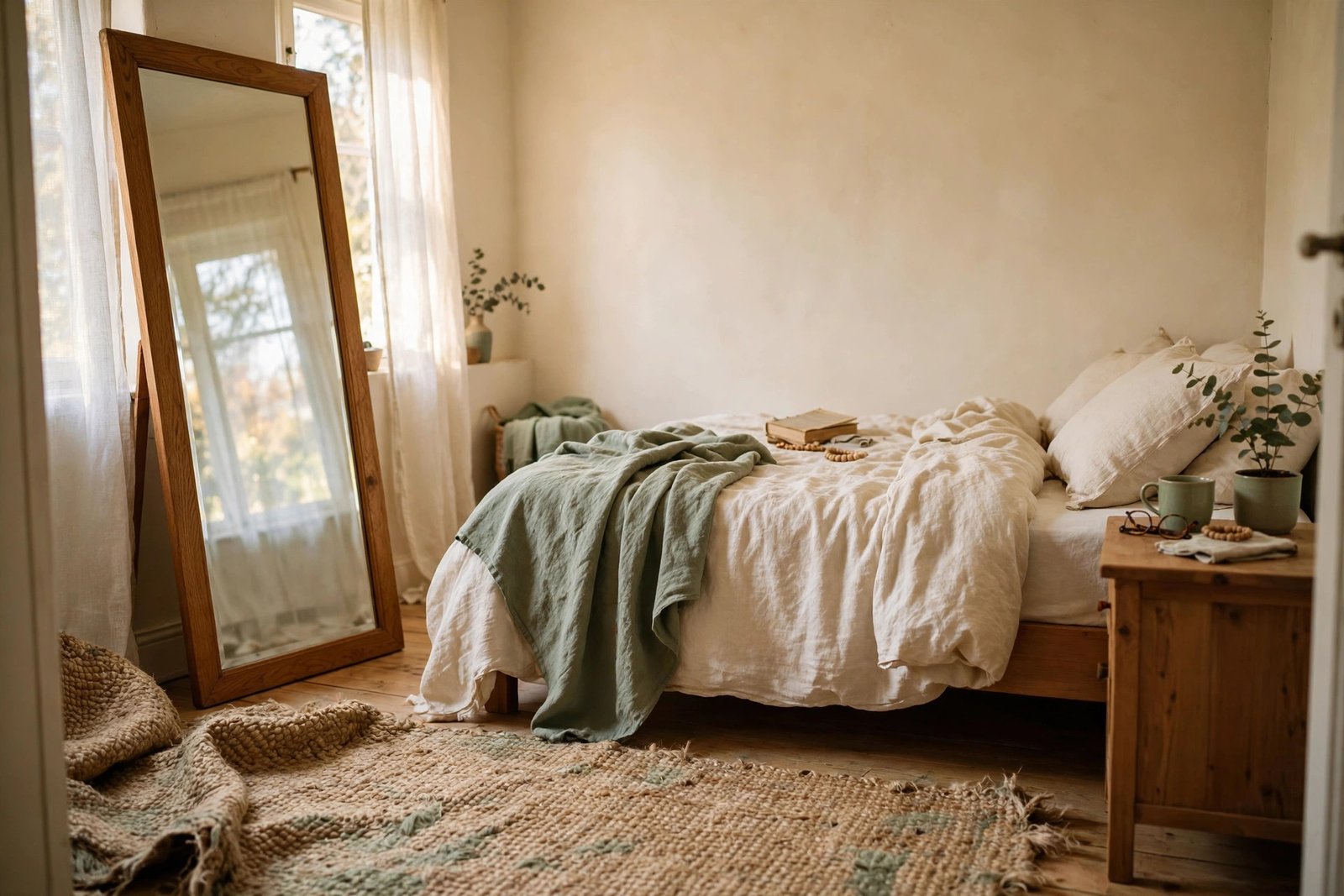
Then add one tall mirror, and lean it rather than hanging a small one. A full-length mirror that reaches close to the ceiling draws the eye upward and doubles the sense of depth, especially when it reflects a window. Keep it to one large mirror rather than several small ones, which can look busy. Lean it safely against the wall, anchor it if you have kids or pets, and angle it slightly so it catches light rather than a view of clutter. In a small room, one tall mirror does more work than a whole wall of little decorations.
3. Right-Size the Bed Before Anything Else
An oversized bed is the fastest way to shrink a small bedroom. A king bed in a 10-by-10-foot room leaves almost no space for anything else, and a thick, tall frame with a bulky headboard makes it worse. Be honest about the size you actually need. A full-size bed sleeps two adults comfortably in many cases, and a twin or twin XL can be the right call for a single sleeper or a room that also serves as an office. Dropping one bed size can free up two feet or more of floor, which is room for a nightstand, a laundry basket, or simply space to breathe.
Frame height matters just as much as width. A low-profile frame with a slimmer headboard keeps sightlines open and makes the ceiling feel higher, while a tall sleigh-style frame can dominate the whole room. If you already own a larger bed and love it, balance it by cutting back elsewhere: skip the footboard, choose a narrow nightstand, and keep the bedding simple so the bed reads as one clean shape rather than a pile of pillows and blankets. The bed should invite you in, not crowd you out.
4. Choose Furniture That Does Two Jobs
In a small bedroom, every piece of furniture needs to earn its floor space twice. A storage ottoman at the foot of the bed holds extra blankets and gives you a seat for putting on shoes. A bed frame with built-in drawers replaces a dresser. A nightstand with a drawer and a shelf beats a pretty table that holds nothing. When you shop, ask one question about each piece: what else can this do? If the answer is nothing, it probably does not belong in a small room.
This rule also keeps spending in check. Instead of buying five small organizers, buy one piece that solves the real problem, like a bench with hidden storage for off-season clothes. Look for furniture with a small footprint but real capacity, and measure the depth as well as the width, since deep pieces eat floor space you cannot spare. A room furnished with three hardworking pieces will feel calmer and larger than a room crammed with eight decorative ones, and it will be far easier to clean.
5. Claim the Space Under the Bed
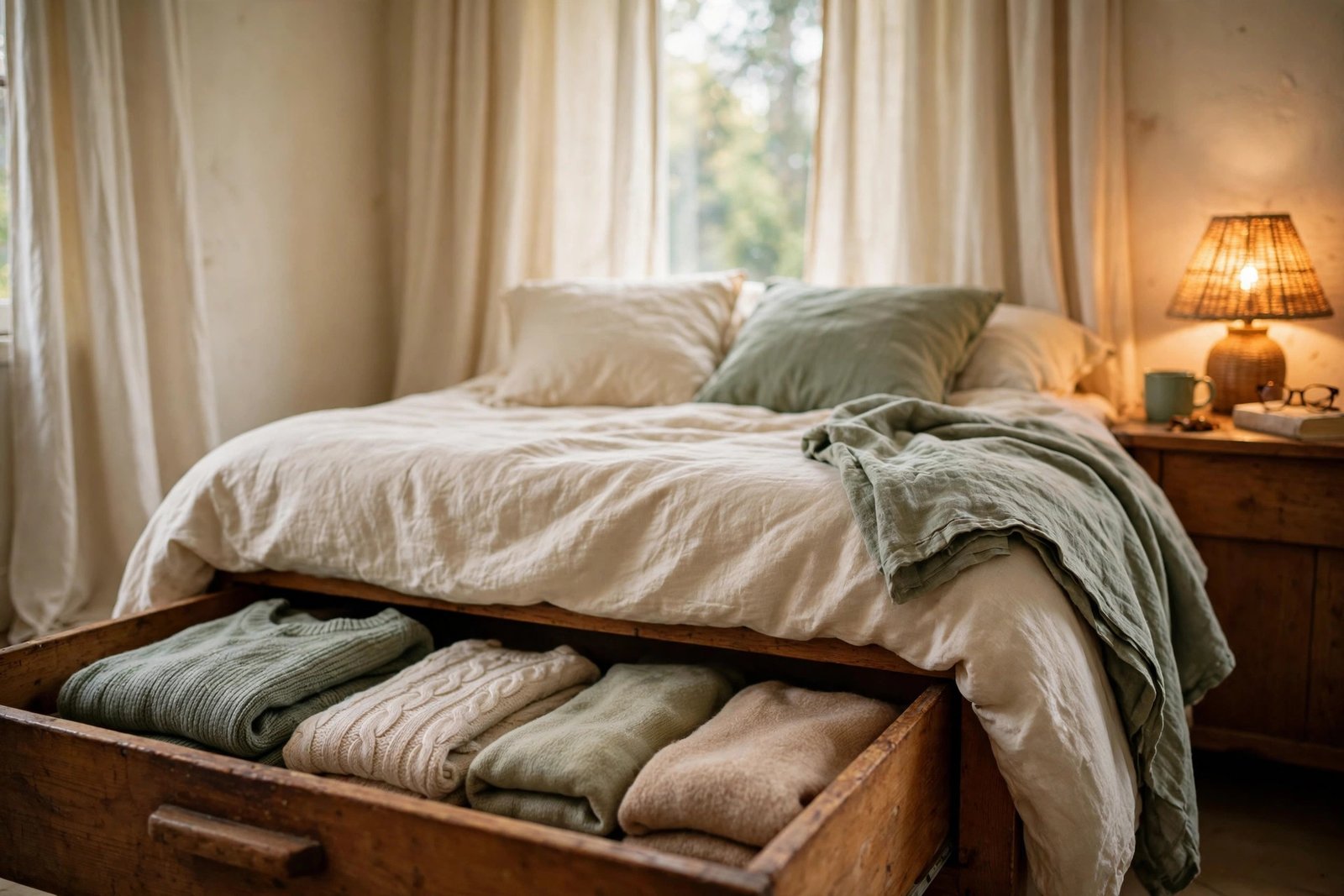
The space under your bed is some of the best storage real estate in a small bedroom, and it is usually wasted on dust and one lost sock. Low, flat bins on wheels turn that dead zone into a proper closet extension. Use them for off-season clothes, extra bedding, shoes, or gift wrap, and label the ends so you can grab the right bin without pulling them all out. Clear bins help, but matching fabric bins look calmer if the sides of your bed are visible from the door.
A few practical rules make this work long term. First, measure the clearance under your frame, including any center support legs, before you buy bins. Second, keep a short list on your phone of what lives in each bin so nothing disappears for a year. Third, vacuum under the bed once a month, since bins can trap dust against the floor. If your bed sits directly on the floor, inexpensive risers can create just enough clearance for flat storage, and they also make the bed easier to get in and out of. Hidden storage is the kind that keeps a small room looking calm.
6. Swap Bulky Nightstands for Floating Shelves
A traditional nightstand can be a space hog in a small bedroom, especially when two of them flank the bed and leave no room to walk. A floating shelf mounted at nightstand height gives you a spot for a phone, a book, and a glass of water while leaving the floor completely clear underneath. That open floor is gold in a small room, since it tricks the eye into reading more square footage and makes vacuuming far easier. A small wall-mounted shelf with a lip, or a tiny hanging pocket organizer, works the same way.
Mount the shelf at mattress height or just above, roughly 24 to 28 inches from the floor for most beds, and keep it shallow, about 8 to 10 inches deep, so you do not bump into it in the dark. Anchor it properly into a stud or use the right wall anchors, since it will hold nightly essentials. If you rent and cannot drill, a slim rolling cart tucked beside the bed, or a bedside caddy that slides under the mattress, gives you the same function without holes. The point is the same either way: keep the surface you need and give back the floor you do not.
7. Layer Your Lighting Instead of Relying on One Ceiling Light
A single overhead light is the enemy of a cozy small bedroom. It flattens everything, casts harsh shadows, and makes the room feel like a box. Three smaller light sources at different heights change the whole mood: a bedside lamp for reading, a soft glow near the closet or dresser, and a dimmable overhead or a plug-in wall sconce for general light. Warm bulbs in the 2700K range feel like evening sunlight and make small spaces feel inviting rather than clinical.
Keep fixtures small in scale. A slim wall sconce or a clip-on reading light frees up nightstand space entirely, which matters when the nightstand is already doing double duty. Battery-powered puck lights inside a closet or on a dark shelf cost little and make morning routines much easier. If your ceiling light is on a switch without a dimmer, a plug-in dimmer or a smart bulb gives you the same control for a few dollars. Good lighting does not add square footage, but it changes how every inch of the room feels after dark.
8. Edit Ruthlessly With a One-In, One-Out Rule
Small bedrooms do not get messy because their owners are messy. They get messy because they have no slack. One extra chair, one bag of clothes waiting to be put away, and one stack of books is enough to tip a small room from cozy to cluttered. The one-in, one-out rule fixes that: every time something new enters the bedroom, something old leaves it. New throw blanket in, old one goes to the linen closet or the donation box. It sounds strict, but it is the only system that keeps a small room stable without a weekly purge.
Start with a 20-minute edit. Take everything off the flat surfaces, keep only what you use daily, and relocate the rest to its real home elsewhere in the house. Do the same inside one drawer and one shelf. You will probably find chargers, half-read magazines, and clothes that no longer fit, and removing them instantly makes the room feel larger. Repeat the quick edit once a month, ideally on the same day you change the sheets, so it becomes a habit instead of a project. A small room stays calm when its inventory stays small.
9. Build Shelving All the Way Up to the Ceiling
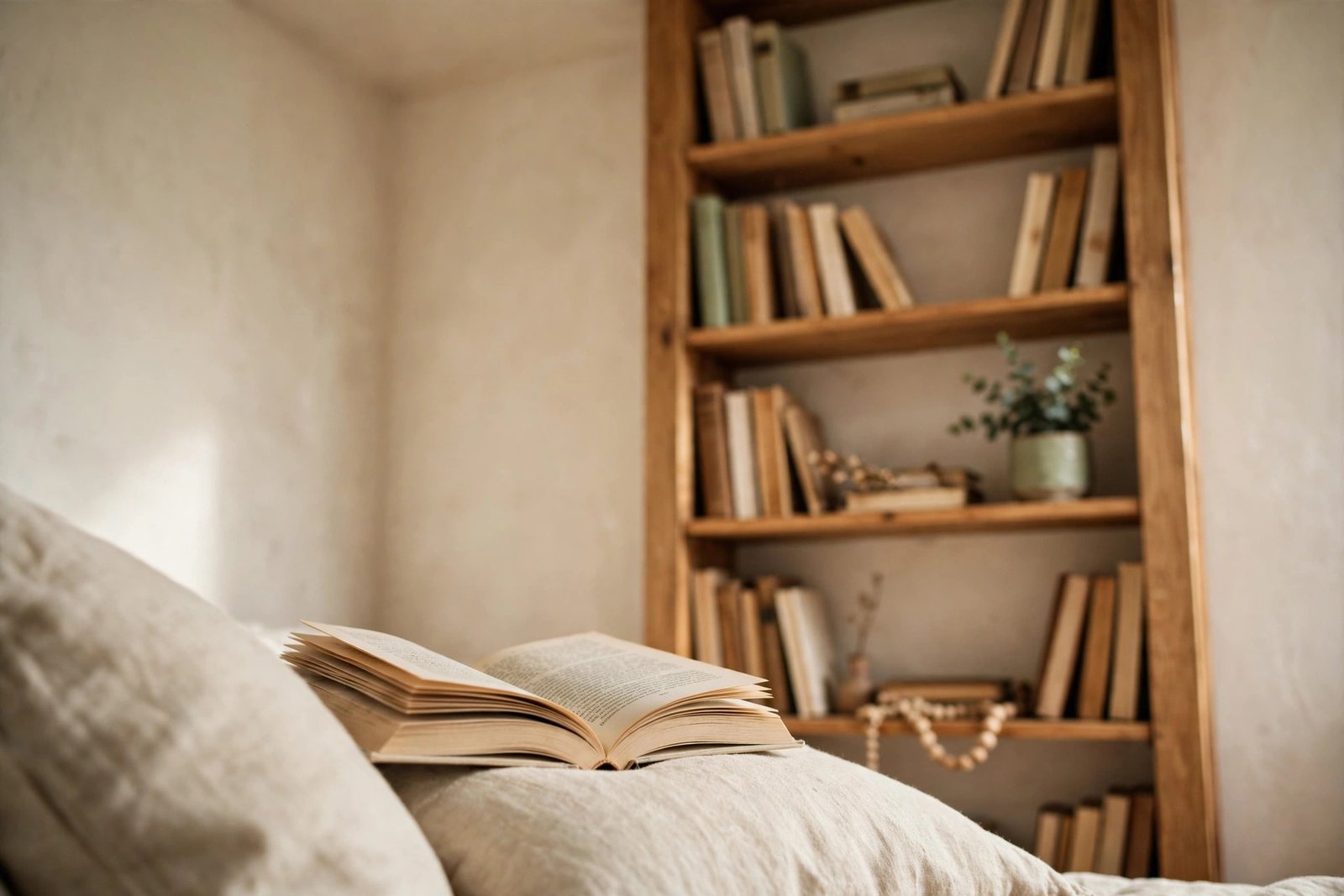
Walls are the most underused storage in a small bedroom. Floor space is limited, but wall space runs all the way to the ceiling, and most of it sits empty above eye level. A tall, narrow bookshelf or a set of wall-mounted shelves that reaches near the ceiling gives you a home for books, keepsakes, and baskets without touching a single inch of floor. Keep the heaviest items at waist height or below, the prettiest things at eye level, and the rarely used boxes up high where they are out of daily sight.
The trick is leaving breathing room. Cramming every shelf edge to edge makes a small room feel like a warehouse, so leave a few gaps and mix in one open shelf with just a plant or a framed photo. Anchor tall shelves to the wall, which is a safety must in any home and a lease-friendly fix since the small holes are easy to patch later. If drilling is off the table, a freestanding ladder shelf leans against the wall and still uses that vertical space. Going up, rather than out, is the single best way to add storage to a room that cannot grow wider.
10. Try Renter-Friendly Wall Upgrades
Renters often assume small bedroom decor means living with blank beige walls, but that is not true anymore. Removable wallpaper has improved enormously, and one accent wall behind the bed can add pattern and personality without risking your deposit. Peel-and-stick options come off cleanly when they are removed slowly and warmed slightly, and they work best on smooth, clean walls. Test a small strip behind furniture first, and avoid applying them to freshly painted or textured walls.
If wallpaper feels like too much, removable wall decals, washi tape frames, and lightweight art hung with adhesive hooks give you the same lift with less commitment. A row of framed prints at eye level turns a plain wall into a focal point, and leaning a large framed print against the wall needs no holes at all. For more inspiration on dressing bedroom walls without a renovation, see these bedroom wall decor ideas that work in rentals and owned homes alike. The goal is a wall you actually enjoy looking at, not a wall you are afraid to touch.
11. Bounce Daylight With a Second Reflective Surface
One tall mirror helps, but a second reflective surface placed with intention can double the effect. A mirrored closet door, a glass-fronted frame, or even a light-colored glossy tray on the dresser catches daylight and throws it deeper into the room. The best placement is across from or beside a window, never facing a cluttered corner you would rather not see twice. If your closet has sliding doors, swapping one panel for a mirrored version is a weekend project that changes how the whole room reads.
Be careful not to overdo it. Too many mirrors turn a bedroom into a funhouse and show every unmade corner twice. One large mirror plus one smaller reflective accent is plenty for most small rooms. Keep mirrored surfaces clean, since dust and fingerprints show up fast and dull the light-bouncing effect. And if the mirror faces your bed and bothers your sleep, angle it toward the window instead or cover it with a light curtain at night. Reflection is a tool, and like any tool, it works best when it is aimed at something worth seeing.
12. Keep Bedding Light, Layered, and Low
Bedding sets the visual weight of the whole bedroom, because the bed is the biggest surface in the room. Heavy, dark comforters and a mountain of decorative pillows make a small bed look like a fortress. Light-colored sheets, a simple coverlet, and one soft throw folded at the foot of the bed keep the bed looking low and calm. Two sleeping pillows plus one lumbar or Euro pillow is plenty for a small bed, and it makes making the bed each morning a two-minute job instead of a chore.
Layering matters more than thickness. A breathable cotton duvet with a light blanket on top lets you adjust through the seasons without swapping to a bulky winter set that swallows the room. In colder months, add warmth with texture rather than bulk, like a waffle-weave blanket or a soft flannel sheet, which keeps the bed looking trim while still feeling cozy. If you want seasonal bedding inspiration that stays bedroom-appropriate, these winter bedroom decor ideas show how to add warmth without adding visual clutter. A bed that looks inviting and easy is one you will actually enjoy coming back to.
13. Hang Curtains High and Wide
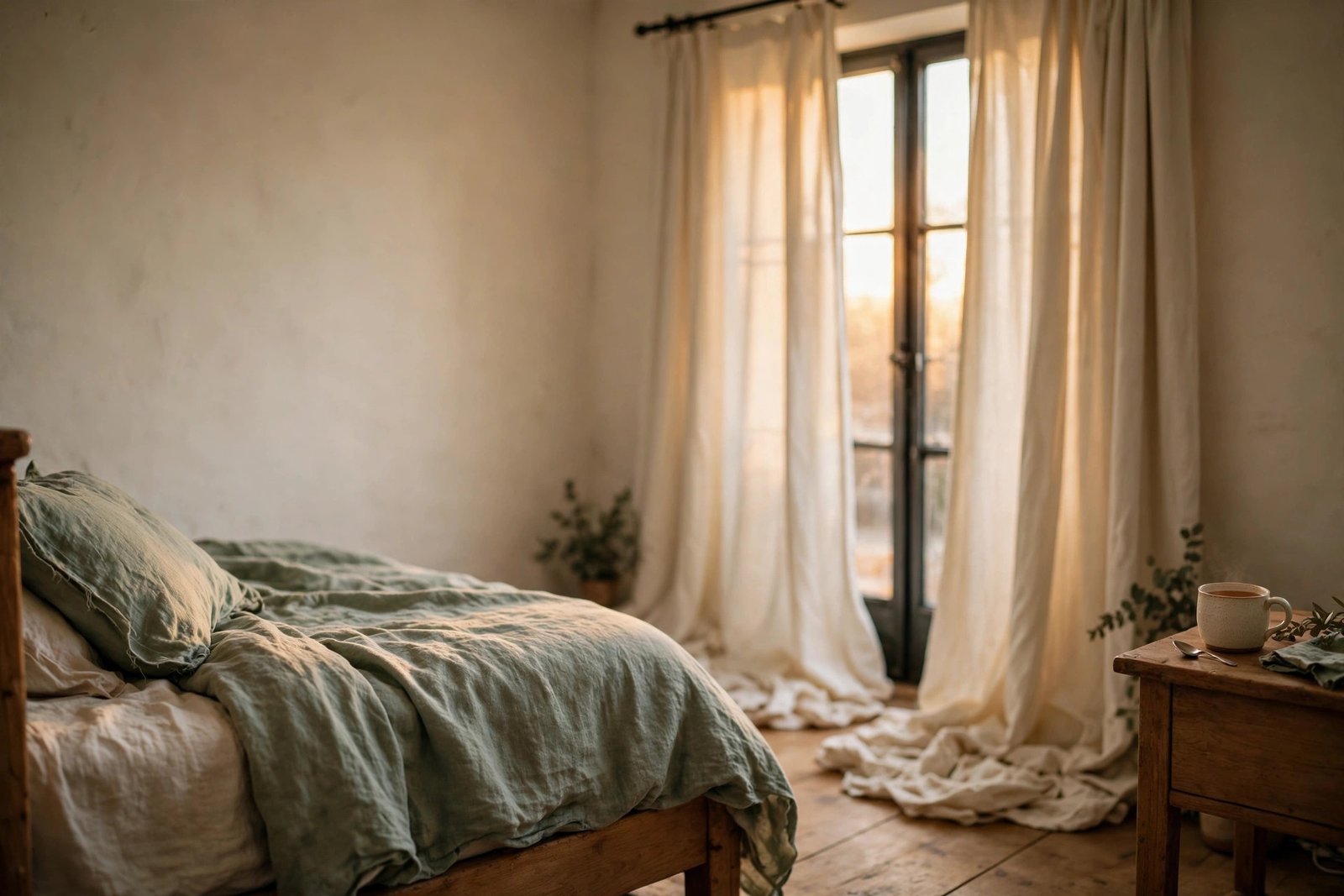
Curtain placement is one of the cheapest ways to make a small bedroom look taller. Most people hang the rod just above the window frame, which chops the wall in half and makes the window look small. Instead, mount the rod 4 to 6 inches below the ceiling and extend it 6 to 10 inches past the window on each side. The curtains then frame a much larger area, the window appears bigger, and the eye travels all the way up the wall. When the curtains are open, they sit against the wall rather than blocking light, so the room gets more daylight too.
Fabric choice matters as much as placement. Light, airy linen or cotton voile lets daylight filter through while still giving privacy, and a floor-length panel that just kisses the floor looks tailored without collecting dust. Avoid heavy, dark drapes that visually shrink the wall, and skip short curtains that end at the sill, which cut the room in half. One set of well-hung curtains in a soft neutral can do more for a small bedroom than a new piece of furniture, and the whole project usually costs less than a dinner out.
14. Choose Leggy, Small-Scale Furniture
Furniture that sits flat on the floor looks like a solid block, and in a small bedroom, solid blocks eat visual space. Pieces raised on slim legs, like a mid-century style dresser or a nightstand with tapered legs, let you see floor underneath, and that visible floor tells your brain the room is bigger than it is. The same logic applies to the bed frame, a bench, and even a small armchair. If you can see a few inches of floor beneath a piece, it reads lighter no matter how much it actually weighs.
Scale matters too. Apartment-sized furniture is not a compromise; it is designed for rooms like yours. A dresser that is 30 inches wide instead of 60 still holds a full drawer of clothes, and a narrow bookshelf fits in the gap beside a door that a wide one never could. Before buying, tape the footprint of the piece on the floor with painter’s tape and live with the outline for a day. Walk around it, open the nearby doors, and check that you can still make the bed. If the outline feels tight on the floor, the real furniture will feel tighter.
15. Make the Door and Closet Work Harder
The back of the bedroom door and the inside of the closet door are free real estate that most small bedrooms ignore. An over-the-door hook rack holds tomorrow’s outfit, a bag, and a robe without a single hole in the wall. Inside the closet door, a slim organizer can hold shoes, accessories, or cleaning supplies that would otherwise end up on the floor or the dresser. These spots are invisible when the door is open, which keeps the room looking calm while adding real storage.
Inside the closet itself, matching slim hangers instantly create more hanging room than bulky plastic ones, and a second hanging rod doubles the space for shirts and pants. Shelf dividers keep stacks of sweaters from toppling, and a small basket on the top shelf catches the odds and ends that usually migrate to the bedroom floor. If this small room also hosts overnight guests from time to time, it is worth borrowing a few tricks from these guest bedroom ideas so the space feels welcoming without losing its everyday function. A closet that works hard is a bedroom that stays tidy.
16. Go Tall at the Head of the Bed
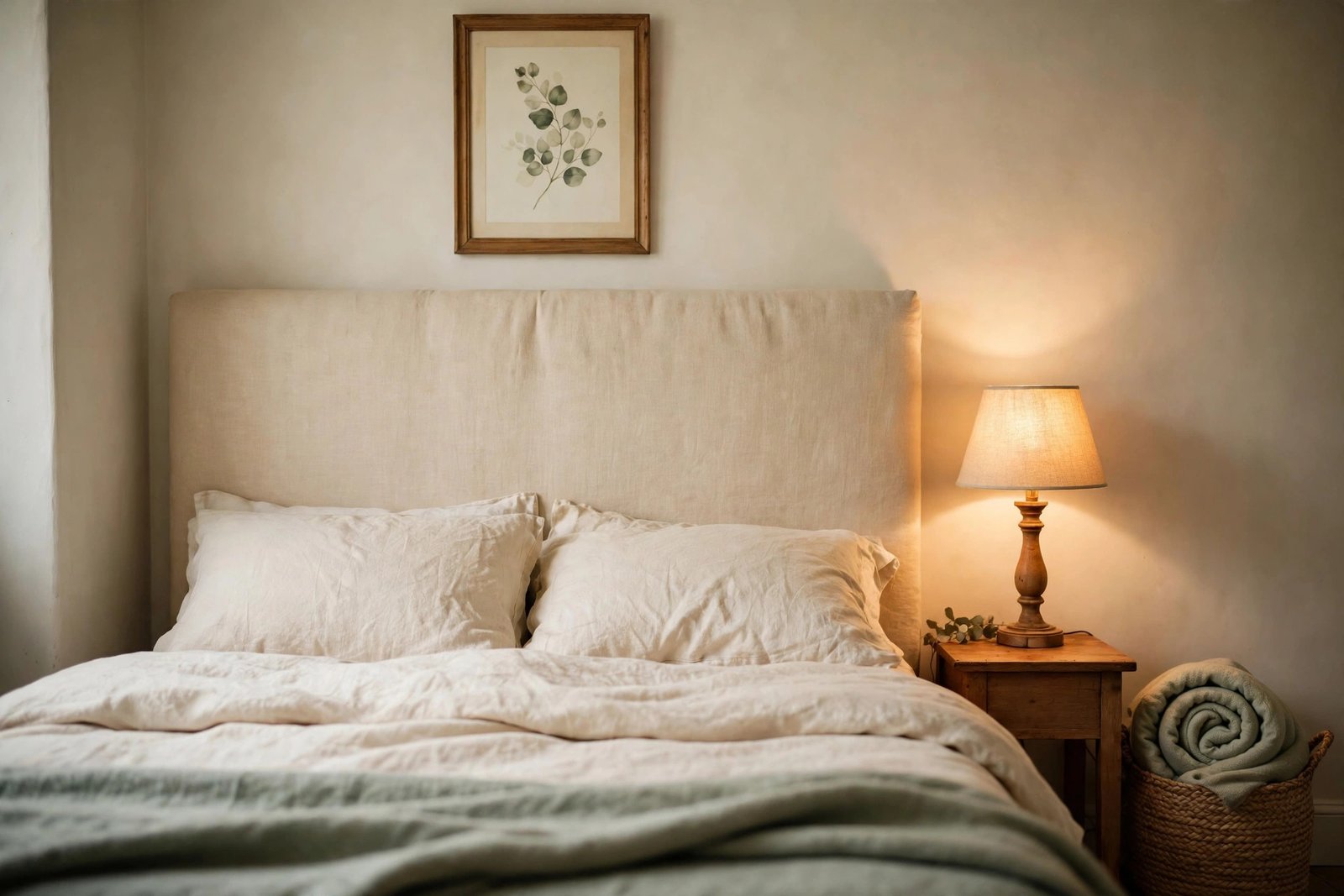
Most small bedroom decorating stops at pillow height, which leaves the most visible wall in the room half empty. Going tall at the head of the bed fixes that. A tall upholstered headboard draws the eye upward and makes the bed look intentional rather than improvised, and one piece of art hung well above it extends that vertical line even further. Hang the art so its center sits roughly 8 to 10 inches above the top of the headboard, not floating near the ceiling, so the bed, headboard, and art read as one connected arrangement.
Keep the arrangement simple. One large framed print beats a crowded cluster above a small bed, and a pair of matching sconces mounted on either side adds symmetry without taking nightstand space. If you love a gallery look, keep the whole arrangement inside the width of the bed and leave breathing room around it, which is where these gallery wall ideas help with spacing and layout. The vertical emphasis makes the ceiling feel higher, the bed feel anchored, and the room feel finished, all without adding a single piece of furniture.
17. Keep the Floor Visible and Reset Weekly
Here is the simplest small bedroom decor idea of all: show as much floor as you can. The more floor your eye can see, the bigger the room feels, which is why every idea in this list, from floating shelves to leggy furniture to under-bed storage, points in the same direction. Push shoes into the closet, keep bags off the floor, and resist the urge to park a chair in the corner that becomes a second closet. A clear strip of floor from the door to the window does more for spaciousness than any single purchase.
Then protect that openness with a weekly reset. Ten minutes once a week is enough: return stray items to their homes, shake out the rug, wipe the mirror, and remake the bed properly. Tie the reset to something you already do, like laundry day, so it sticks. Small rooms reward consistency more than big makeovers, and a room that is reset weekly stays a room you enjoy walking into. You do not need a bigger bedroom. You need a small bedroom that is working as hard as you are, and now you have 17 ways to make it happen.
Products to Consider
These generic item types pair well with the ideas above. Choose the ones that solve a real problem in your room, and measure before you buy:
- A full-length leaning mirror with a slim frame
- Low-profile under-bed storage bins on wheels
- A tall, narrow bookshelf or ladder shelf
- A floating wall shelf with a raised lip
- Floor-length light-filtering curtain panels
- A slim storage bench or ottoman for the foot of the bed
- Warm-white dimmable bedside lamps or wall sconces
- Slim, matching clothes hangers for the closet
- An over-the-door hook rack
- Light-colored cotton or linen bedding in a simple weave
FAQ
What color makes a small bedroom look bigger?
Light, warm neutrals make the biggest difference. Soft white, warm cream, pale greige, and light sage reflect daylight and make walls feel farther apart. You do not need an all-white room: light walls plus light bedding and curtains give you most of the effect, and a single soft accent color keeps the room from feeling sterile.
Should a small bedroom have a big bed or a small bed?
Choose the smallest bed you can sleep comfortably in. A full-size bed suits many couples, and a twin or twin XL is often the right call for one sleeper or a room that also serves as an office. Dropping one bed size can free up two feet of floor, which matters more in a small room than extra mattress width you rarely use.
How do you arrange furniture in a very small bedroom?
Place the bed first, against the longest wall or in a corner, leaving at least 24 inches of walking space where you need it. Then add only pieces that earn their floor space, like a storage bench or a floating shelf, and stop while there is still a clear path from the door to the window. If you must turn sideways to move around, something needs to leave the room.
What is the best storage for a small bedroom without a closet?
Use the walls and the space under the bed. Tall, narrow shelving, floating shelves, and low rolling bins under the bed add a surprising amount of capacity without touching floor space. An over-the-door rack and a slim wardrobe or garment rack cover hanging clothes, and matching bins keep everything looking calm rather than cluttered.
Can renters decorate a small bedroom without losing their deposit?
Yes. Removable wallpaper, adhesive hooks, leaning mirrors, and freestanding shelves change the look of a room without permanent changes. Test removable products in a hidden spot first, remove them slowly when you move out, and keep the small nail holes from any approved hanging to a minimum so they are easy to patch.
Final Thoughts
Small bedroom decor ideas work best when they work together. Light colors open the room up, tall mirrors and high curtains stretch it vertically, hidden storage keeps it calm, and layered lighting makes it feel good after dark. You do not need to do all 17 ideas at once. Start with the bed placement and one storage fix this weekend, then add a mirror or a set of curtains next month, and watch the room change one smart choice at a time.
The best small bedrooms are not the ones with the most stuff in them. They are the ones where everything has a place, the floor is visible, and the room feels easy to be in. Pick the ideas that fit your room, your budget, and your lease, and give yourself permission to leave the rest. A tiny room that feels bigger, calmer, and more like you is a project worth finishing, and it is closer than you think.