
A great guest bedroom is one of the quietest kindnesses a home can offer. It says, before you ever speak a word: we thought about you, and we wanted you to be comfortable here. It doesn’t take a big budget or a designer — just a bed that sleeps well, light where you need it, and a handful of small, thoughtful touches that turn a spare room into a real welcome.
Below are 25 practical guest bedroom ideas that actually make a difference, drawn from what overnight guests notice most: sleep quality, easy mornings, enough space for their things, and those little details that make a room feel cared for. Whether your guest room is a dedicated bedroom or a corner of the house doing double duty, these ideas will help every visitor feel right at home. If you’re rethinking your main bedroom too, you might enjoy our collection of bedroom inspiration ideas for more looks to borrow from.
1. Start With a Truly Comfortable Mattress
Everything in a guest bedroom comes second to the mattress. Guests won’t remember your throw pillows, but they will absolutely remember a lumpy, saggy, or too-firm mattress — usually at 3 a.m. If your guest bed mattress is more than eight to ten years old, it’s time to replace it. You don’t need a luxury model; a solid mid-range mattress with good support beats an expensive one that’s past its prime. If a full replacement isn’t in the cards right now, a quality 2- to 3-inch memory foam or latex mattress topper can genuinely transform an aging mattress for a fraction of the cost. A queen is the sweet spot for most American guest rooms — big enough for couples, not so big it swallows a small room. And give the mattress a quick test yourself: lie on it for ten minutes before any guest does.
2. Layer Crisp, Breathable Bedding
Hotel-quality sleep starts with bedding that feels fresh and lets skin breathe. Choose 100% cotton or linen sheets — percale for a cool, crisp feel (great for warm sleepers and southern homes) or sateen for a silkier hand. Wash and press sheets before every stay; nothing says “we prepared for you” like bedding that smells clean and looks smooth. Layer a lightweight quilt or coverlet over the top sheet plus a folded duvet or comforter at the foot of the bed, so guests can adjust to their own temperature. Stick to a simple, classic color — white, ivory, or soft natural — which reads clean and coordinates with everything. For extra coziness in the cooler months, take a look at our cozy autumn bedroom ideas for seasonal layering inspiration you can borrow year-round.
3. Offer Good Pillows — in More Than One Firmness
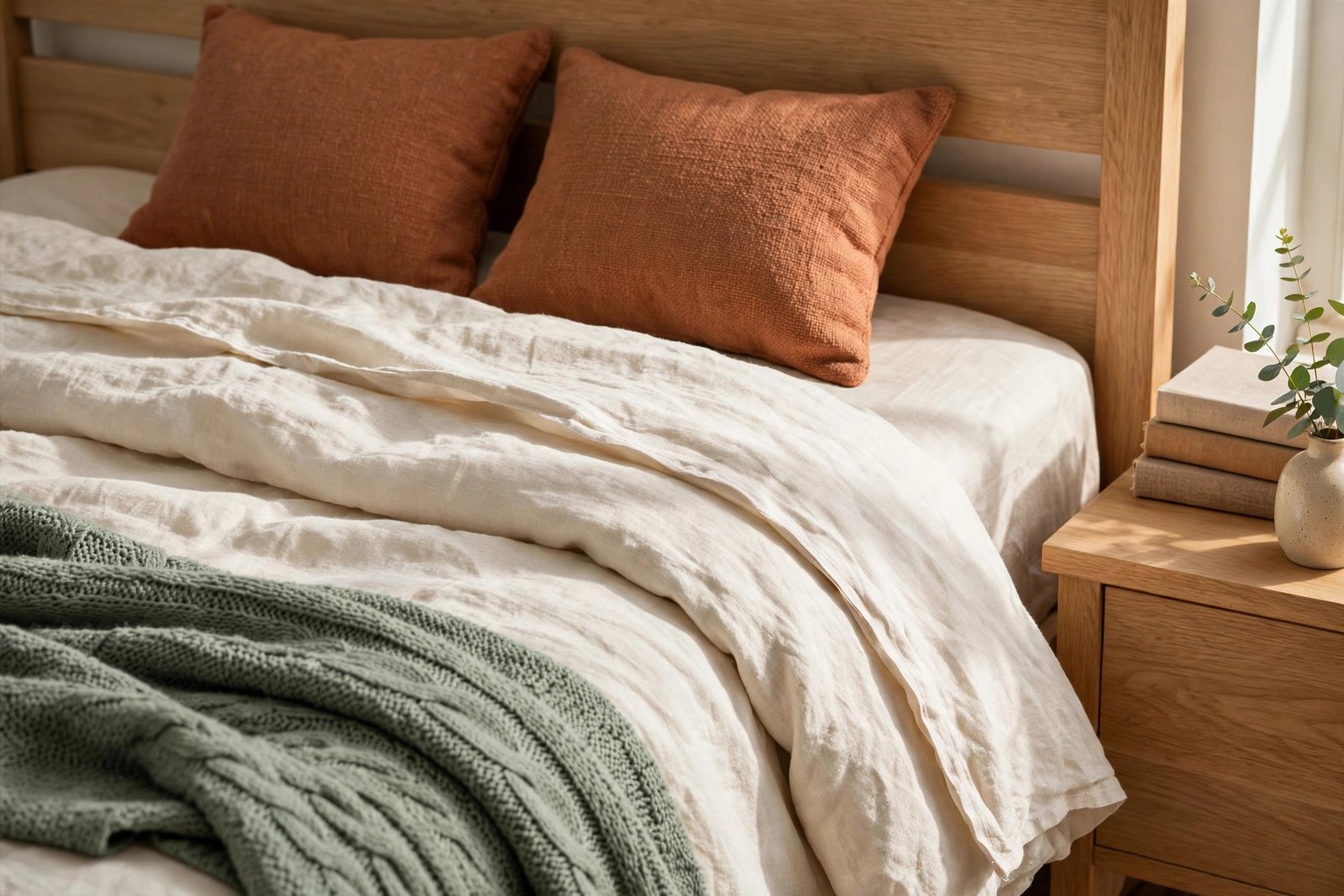
Pillow preference is deeply personal, and it’s the detail guests mention most when a guest room gets it wrong. The fix is simple: provide two pillows per sleeper in different firmnesses — one medium-firm and one soft — so everyone can find their fit. Replace pillows every one to two years, since old pillows lose support and collect allergens (not the welcome you want). Hypoallergenic down-alternative fills are the safest all-around choice for guests with unknown sensitivities. Use pillow protectors under the cases for hygiene, and fluff pillows right before guests arrive so the bed looks inviting, not stored-away. A small stack of two on each side, slightly varied in height, looks polished without feeling fussy.
4. Keep an Extra Blanket Within Reach
Even with perfect layering, some guests run cold — especially in air-conditioned homes or drafty older houses. Fold a clean extra blanket or a chunky knit throw and place it visibly at the foot of the bed or draped over a nearby chair, not buried in a closet where no one will find it. A washable cotton or wool-blend throw in a warm neutral looks intentional and doubles as decor. In winter, consider swapping in a slightly heavier duvet and mentioning it in your welcome note so guests know it’s there. This one costs almost nothing and prevents the most common overnight complaint: waking up chilly with no easy fix.
5. Give Guests a Real Place for Their Luggage
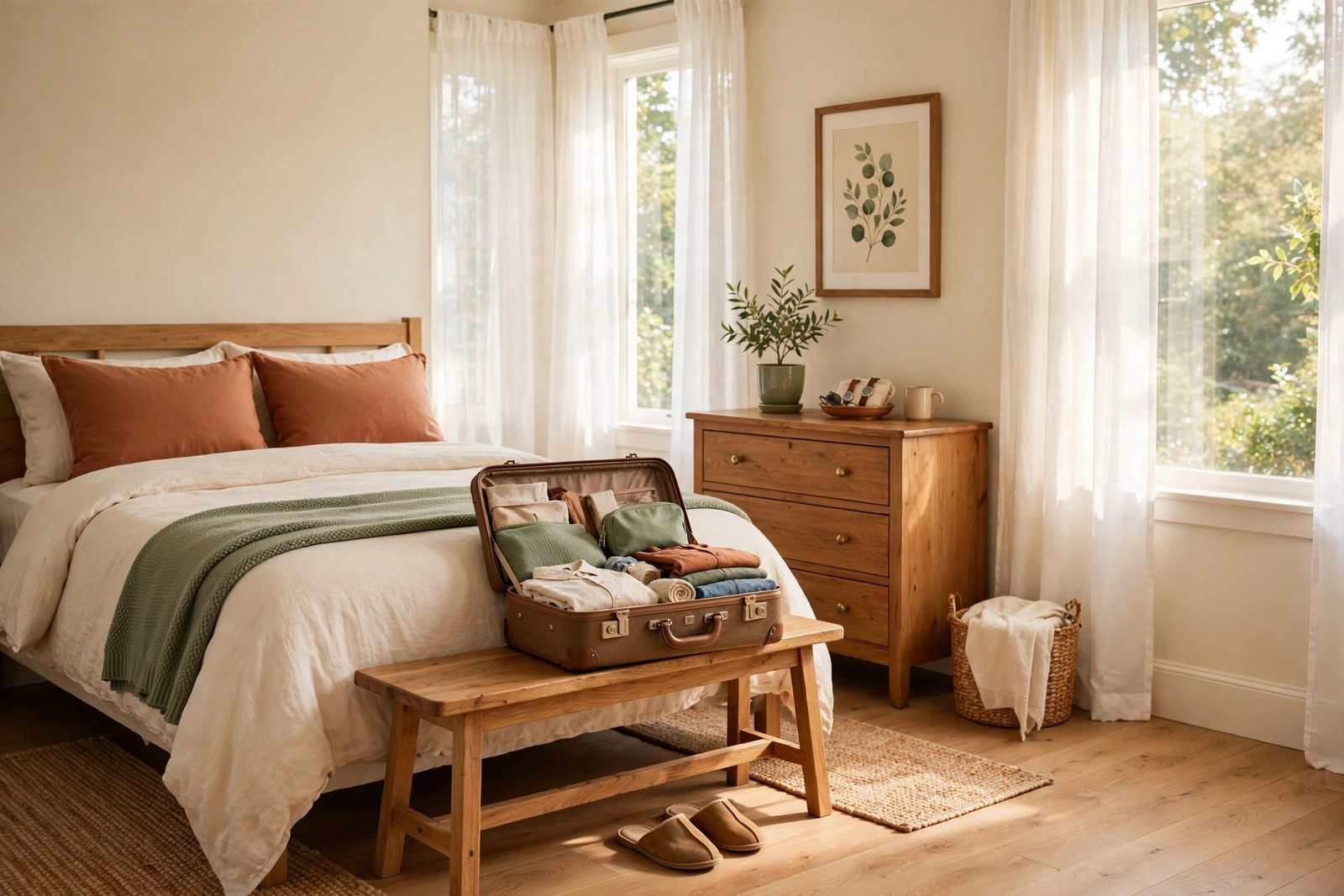
Nothing makes a guest feel like an afterthought faster than balancing a suitcase on the floor and living out of it for three days. A folding luggage rack — the kind you see in hotels — costs very little, folds flat when the room isn’t in use, and instantly makes the room feel considered. No rack? A sturdy bench, a low ottoman, or even a clear, clean tabletop at the foot of the bed works. Pair it with an empty drawer or a clear shelf section so guests can unpack a little. If your guest room doubles as a home office or craft space, temporarily clear one surface completely before guests arrive; that single gesture of “this space is yours now” matters enormously.
6. Hang a Full-Length Mirror
Guests getting ready for a wedding, a work dinner, or just a day out need to see their whole outfit — and hunting for a mirror in someone else’s house is awkward. Mount a full-length mirror on the back of the door, on a wall, or lean a framed floor mirror in a corner. It’s one of the cheapest upgrades with the biggest daily-use payoff. Position it where it catches natural light if possible, so guests see themselves clearly. A simple wood or black frame keeps it neutral and blends with any decor style, and it visually enlarges smaller guest rooms — a genuine two-for-one.
7. Light Both Sides of the Bed
Overhead lighting alone makes a guest room feel like a hotel hallway — harsh, flat, and useless for reading. Put a lamp on each bedside table (or one good swing-arm wall sconce per side in tight rooms) with warm bulbs around 2700K. Each guest gets their own light to read by without waking the other, and the room instantly feels softer and more residential. Add a small nightlight or a lamp with a low setting for middle-of-the-night bathroom trips — nobody wants to fumble for a switch in a strange house. If the room has a dimmer on the overhead light, mention it in your welcome note; guests rarely discover dimmers on their own.
8. Create a Little Reading Moment
A guest room with a book or two feels like a home, not a holding area. You don’t need a library — just two or three books with broad appeal: a beautiful coffee-table book about travel or interiors, a light novel or short-story collection, and maybe a local guidebook or a magazine about your town. Stack them on the nightstand or a small side table with a decent reading lamp. It’s a small hospitality signal that says “stay a while, relax,” and it gives early risers or jet-lagged guests something pleasant to do at 6 a.m. Rotate the selection occasionally so repeat visitors find something new.
9. Clear Real Closet Space (and Add Hangers)
This is the idea most hosts skip and most guests wish they hadn’t. Empty at least half the guest room closet — move your off-season clothes, gift wrap, and mystery boxes elsewhere — and leave 8 to 10 matching hangers on the rod. Matching hangers (simple wood or slim velvet) make even a basic closet feel intentional. Add a small shelf or two for folded items and a hook or two on the wall or door for tomorrow’s outfit or a robe. If there’s genuinely no closet, a simple garment rack in the corner plus a lidded basket for folded clothes does the job honestly. The principle is the same as the luggage rack: guests should be able to put their things away, not just set them down.

10. Set Up a Simple Charging Station
Few things date a guest room faster than a single outlet hidden behind the bed. Guests arrive with phones, watches, earbuds, and sometimes laptops — and they need to charge them within arm’s reach of the bed. Place a small power strip with USB ports on or beside each nightstand (surge-protected, with a reasonably long cord). Toss in one spare phone charger with the common connectors, clearly labeled as the house spare. It’s a tiny investment that removes a real nightly annoyance. While you’re at it, write the Wi-Fi network name and password on a small card and leave it on the nightstand — guests ask for this more than anything else, and a printed card saves the awkward shouting-across-the-house moment.
11. Leave Water by the Bed
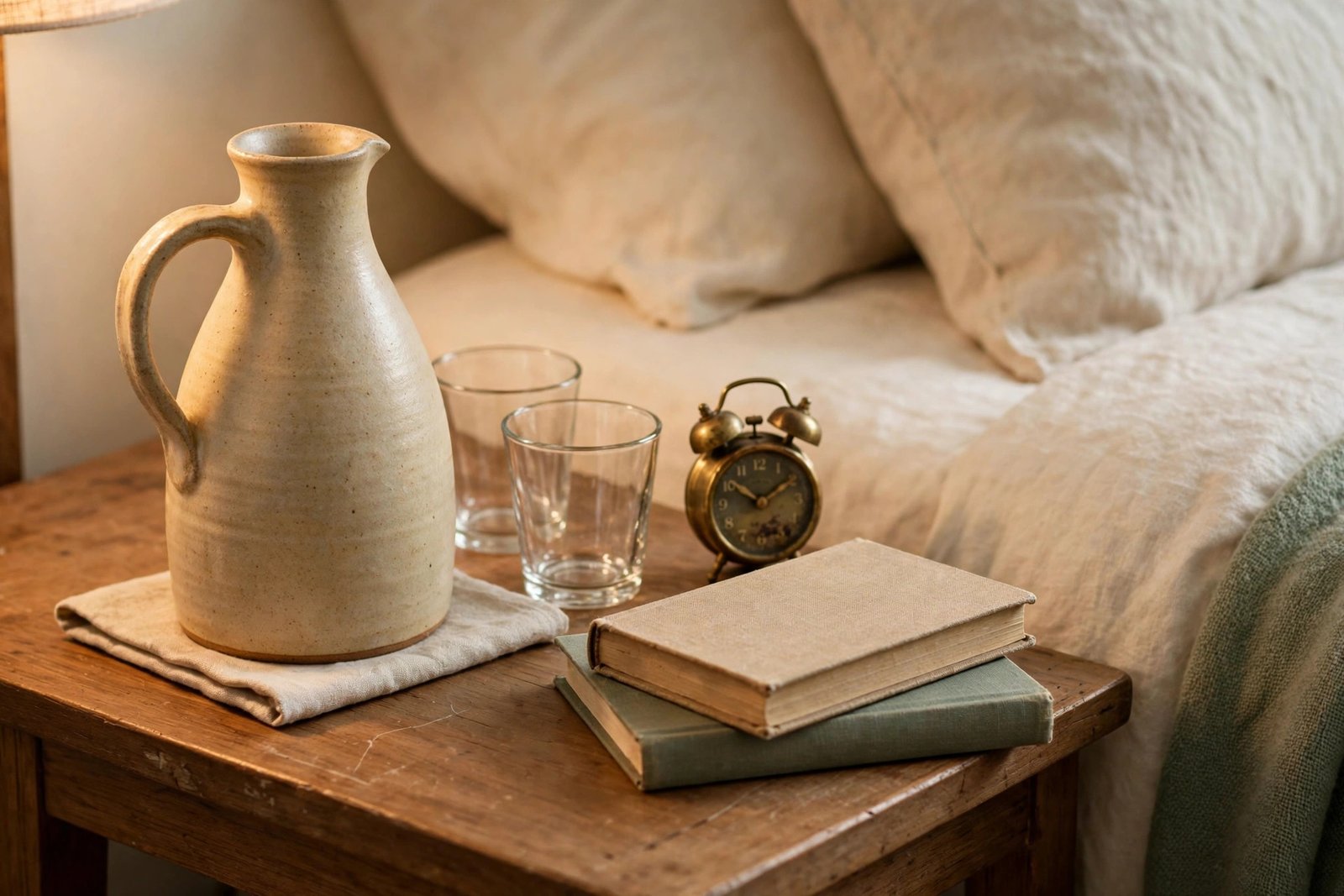
A carafe of fresh water and two clean glasses on the nightstand is the oldest hotel trick in the book, and it works just as well at home. Guests wake up thirsty, take nighttime medication, or just like water nearby — and getting up to find the kitchen in an unfamiliar house at midnight is no fun. A simple ceramic or glass carafe with a lid keeps water fresh and looks lovely; refill it daily during longer stays. Add a small coaster to protect the nightstand. It’s a five-minute habit that reads as genuine care, and guests consistently name it among the touches that made them feel looked after.
12. Offer Light Control That Actually Works
People are surprisingly particular about bedroom darkness, and your guest room’s morning sun might be someone else’s 5 a.m. alarm. The gold standard is layered window treatments: sheer curtains for daytime privacy plus blackout curtains or liners for sleep. If full blackout curtains aren’t in the budget, inexpensive blackout liners that attach behind existing curtains do nearly the same job. Test it yourself — close everything at night and check for light leaks around the edges in the morning. And leave a sleep mask in the essentials basket as backup (idea 15). Guests who sleep well become guests who rave about your hospitality.
13. Keep the Palette Calm and Warm
Guest rooms feel most restful in soft, warm neutrals — think warm white walls, creamy bedding, natural wood tones, and gentle accents of sage, clay, or soft blue. Loud colors and busy patterns can feel energizing in a living room but restless in a room meant for sleep. You don’t need to repaint the whole room if it’s currently bold; large neutral bedding, curtains, and a rug can quiet even a strong wall color. Warm metals like brass or aged bronze in lamps and frames add a cozy glow that chrome can’t match. The goal is a room that lowers the heart rate the moment someone walks in — calm, warm, and easy to wake up in.
14. Add a Spot to Sit That Isn’t the Bed
Guests need somewhere to sit besides the bed — to put on shoes, read, take a work call, or just have a quiet moment. A small upholstered chair, a slipper chair, or even a sturdy ottoman in the corner transforms how usable the room feels. In a small room, a bench at the foot of the bed pulls double duty as seating and luggage space. Add a small side table and the reading lamp from idea 8 nearby, and you’ve created a genuine little retreat within the room. Slip a washable throw over the chair so it stays fresh between visits and always looks inviting.

15. Stock a Basket of Just-in-Case Essentials
Assemble a small basket or tray of travel-size essentials and leave it on the dresser or in the bathroom: toothpaste, a spare toothbrush, shampoo and conditioner, body lotion, a razor, pain reliever, bandages, lip balm, cotton pads, and a sleep mask. Buy travel sizes in bulk or save quality hotel minis — either way, label nothing and fuss over nothing; the point is quiet readiness. Guests forget things constantly, and being able to solve it from the basket instead of asking feels like magic. Check expiration dates once or twice a year and top up after each stay. For visitors arriving with little ones in tow, a quick browse of our nursery ideas can help you set up a safe, comfortable corner for the baby too.
16. Soften the Floor with a Rug
Bare floors — especially hardwood or tile — feel cold and echoey underfoot at night, and they make a spare room feel unfinished. A soft area rug beside the bed (or a runner on each side for a queen) fixes both problems at once: warm feet on chilly mornings and a quieter, calmer room. The rug doesn’t need to be expensive; a washable low-pile rug in a warm neutral is practical and looks intentional. Make sure it extends at least a foot or two beyond each side of the bed so guests actually step onto it. In small rooms, one well-chosen rug can do more for coziness than any other single item.
17. Give the Walls Some Character
Blank walls make a guest room feel like storage with a bed in it. You don’t need a gallery wall — one or two pieces of real art, a framed print, or a simple mirror arrangement gives the room personality and intention. If you want architectural interest without art-hunting, consider adding simple wall molding or picture-frame paneling behind the bed; it’s a classic weekend project that reads high-end. For step-by-step inspiration, see our wainscoting ideas for bedrooms, which work beautifully as a headboard-wall feature in a guest room. Keep frames consistent (all wood, all black, all brass) for a collected, calm look rather than a random assortment.
18. Bring in Something Living
A living plant instantly makes a room feel cared for — it signals that someone tends this space regularly. Choose something genuinely hard to kill: a pothos, snake plant, or ZZ plant tolerates low light and irregular watering, which is exactly what a sometimes-empty guest room offers. Place it on the dresser, a shelf, or in a bright corner in a pretty pot that matches your palette. If even that feels risky, a small vase of fresh eucalyptus or seasonal branches from the yard gives the same alive feeling for a week or two; just refresh it before guests arrive. Avoid strongly scented flowers or lilies, which can bother sensitive sleepers.
19. Plan for a Quiet Night’s Sleep
Unfamiliar noises — traffic, a loud HVAC kick, early-morning birds, a snoring partner — are the top sleep disruptors for guests. A small white noise machine or even a simple fan gives guests control over their sound environment and doubles as airflow in summer. Keep a pair of soft foam earplugs in the essentials basket as backup. If the room faces a street, heavier curtains (idea 12) plus the rug (idea 16) already dampen a surprising amount of sound. Mention the white noise machine in your welcome note so guests know it’s there — most won’t turn on an unfamiliar device unprompted, but they’ll happily use one they’ve been invited to.
20. Leave a Short Welcome Note
A handwritten card takes two minutes and sets the tone for the whole stay. Keep it short and genuinely useful: “So glad you’re here! Wi-Fi is ___, help yourself to anything in the kitchen, the extra blankets are in the closet, and the coffee starts at 7. — Us.” Include the little operational details guests wonder about: how the shower works, where the towels are, whether the doors lock, what time breakfast happens. Prop it on the pillow or the nightstand where it’s the first thing they see. Guests keep these notes — not because of the information, but because of the feeling.
21. Make Mornings Easy with a Coffee or Tea Tray
Not every guest wants to emerge straight into a social kitchen first thing. A small tray in the room — or just outside the door — with the fixings for a quiet first cup changes the whole morning dynamic: a single-serve coffee maker or electric kettle, a few tea bags and coffee pods, mugs, spoons, sugar, and a little creamer or shelf-stable milk. It costs little, takes five minutes to set up, and gives early risers and night owls alike the gift of waking up on their own terms. Refill the tray each evening during longer stays, the same way you’d refresh the water carafe.
22. Use Furniture That Works Twice as Hard
Most guest rooms aren’t huge, and many do double duty as offices, craft rooms, or exercise spaces between visits. Choose pieces that earn their footprint: a daybed or sleeper sofa that functions as seating daily and a bed when needed, a desk that doubles as a vanity, nesting side tables that tuck away, or a storage ottoman that holds spare linens. When guests are coming, the room should convert in under thirty minutes — have a simple reset checklist (clear the desk, swap in guest linens, set out the basket) so the transformation actually happens instead of being “good enough.” Multipurpose furniture keeps the room useful 300 days a year and welcoming the other 65.
23. Keep Surfaces Clear and Storage Simple
Walk into your guest room with fresh eyes and remove everything a guest can’t use: stacks of unsorted mail, your seasonal decor overflow, the ironing board, half-finished projects. Guests need clear surfaces — the entire top of the dresser, one full nightstand per side — and they notice clutter far more than hosts do. Provide one simple lidded basket or bin for the odds and ends that legitimately live in the room (spare remotes, the hair dryer, the iron), so “storage” doesn’t mean “a pile.” The rule of thumb: if you wouldn’t leave it in a nice hotel room, don’t leave it in your guest room. A clear room photographs well, sleeps well, and says “you matter more than our stuff.”
24. Keep the Scent Fresh — But Subtle
A guest room should smell like nothing in particular — clean, fresh, aired-out. Musty closets and stale spare rooms are memorable for all the wrong reasons, so air the room out for a few hours before guests arrive and wash any textiles that have been sitting. Skip plug-in air fresheners and strong candles; heavy fragrance in a small closed room gives people headaches and can trigger allergies. If you want a scent layer, choose one subtle option: a lightly scented drawer sachet, a linen spray on the pillows, or that vase of eucalyptus from idea 18. Fresh, not perfumed, is the target — guests should notice the cleanliness, not the fragrance.
25. Sleep in It Yourself Once
The single best guest-bedroom upgrade is free: spend one night in the room yourself. You’ll discover everything no checklist catches — the outlet that doesn’t work, the curtain gap that lets in the streetlight, the mattress dip, the weird shower handle, the 6 a.m. garbage truck. Keep a notepad by the bed and write down every annoyance, then fix them before your next guests arrive. Do this once a year, ideally before the holiday hosting season. Hosts who’ve slept in their own guest room host differently — with the quiet confidence of someone who knows, not hopes, that their guests will sleep well.
Products to Consider
These are the product types worth investing in for a genuinely comfortable guest room — choose quality versions that fit your budget and style:
- A supportive mattress or a thick mattress topper to refresh an older bed
- Breathable cotton or linen sheet sets in white or warm neutrals
- Pillows in two firmness levels with washable protectors
- A washable throw blanket or two for extra warmth
- A folding luggage rack or sturdy bench for suitcases
- A full-length mirror for the wall or door
- Warm-toned bedside lamps or wall sconces with 2700K bulbs
- A power strip with USB ports for the nightstand charging station
- A ceramic or glass water carafe with matching glasses
- Blackout curtain liners or lined curtains for real darkness
- A soft, washable area rug for beside the bed
- A woven basket for the just-in-case essentials kit
- A small white noise machine or quiet fan
- An electric kettle or single-serve coffee maker for the morning tray
- A simple alarm clock (so guests can leave phones across the room)
Frequently Asked Questions
What should every guest bedroom have?
At minimum: a comfortable bed with clean, layered bedding and pillow options; bedside lighting on both sides; a place for luggage; some empty closet or drawer space; a full-length mirror; a phone charging spot with the Wi-Fi password nearby; water by the bed; and window coverings that actually darken the room. The welcome note, the essentials basket, and the morning coffee setup are what elevate it from adequate to memorable — but nail the sleep basics first.
What size bed is best for a guest room?
A queen is the best all-around choice for most American guest rooms — it comfortably sleeps couples, fits in a standard 10×12-foot bedroom with room for nightstands, and bedding is easy to find. In a truly small room, a full-size bed preserves walking space and still sleeps two in a pinch. For rooms that serve other purposes most of the year, a quality sleeper sofa or a daybed with a real mattress (not a thin futon pad) is the honest compromise. Whatever you choose, prioritize mattress quality over bed size.
How do I make a small guest bedroom feel bigger?
Keep the palette light and warm, use one appropriately sized rug instead of several small ones, and choose furniture with legs so you can see floor underneath — visual floor space reads as room space. Mount a full-length mirror to double the sense of depth, keep window treatments simple and hung high, and resist filling every wall. A wall-mounted reading light instead of a bulky lamp frees nightstand space, and under-bed storage boxes keep clutter out of sight. Most importantly, edit ruthlessly: a small room with five right things feels bigger than one with fifteen compromises.
How can I make guests feel welcome without spending a lot?
The highest-impact touches are nearly free: wash and press the sheets, clear real closet and surface space, write a handwritten welcome note, leave water by the bed, and print the Wi-Fi password. A $10 folding luggage rack, a $5 sleep mask in the basket, and a small tray with tea bags cost almost nothing combined. What guests actually remember is thoughtfulness, not expense — a room that was clearly prepared for them beats an expensive room that feels like a showroom every time.
How often should I refresh the guest bedroom?
Wash all bedding — sheets, pillowcases, duvet cover, and the throw — before every stay, even if the room sat unused. Replace pillows every one to two years and the mattress or topper every seven to ten. Once a year, sleep in the room yourself (idea 25) and fix what you find. Seasonally, swap blanket weights and check that the heating, cooling, and window treatments still work properly. A quick ten-minute reset checklist after each visit — restock the basket, refill the tray, wipe surfaces — keeps the room perpetually guest-ready.
Final Thoughts
A wonderful guest bedroom isn’t about square footage or spending — it’s about anticipation. Every idea here answers a question your guest hasn’t asked yet: Where do I put my bag? How do I charge my phone? Will I be warm enough? Can I get coffee without waking everyone? Answer those quietly, before they’re asked, and your guests won’t just sleep well — they’ll feel genuinely cared for. Start with the mattress and the bedding, add the luggage spot and the welcome note, and build from there one thoughtful layer at a time. Your future guests — and your future self, hosting the holidays with total calm — will thank you.