
January arrives, and the front door suddenly looks bare. The holiday wreath comes down, and the porch feels empty. Yet winter still has weeks to run. So the door deserves a fresh look, not a blank one.
A good winter front door works for January and February. It skips Santa, reindeer, and red plaid. Instead, it leans on plain evergreen, soft light, and natural texture. The result feels calm, warm, and welcoming.
These 21 winter front door decor ideas cover every budget. Some cost almost nothing. Others need one strong purchase. All of them survive cold, wind, and wet snow. Good winter front door decorations balance warmth and restraint. Pick two or three, then add more over time.
First, think about your door itself. A dark door suits pale greenery. A pale door suits deep green cedar. Next, check your exposure. A covered porch protects delicate pieces. An open stoop needs tough, weatherproof choices. Finally, keep the path clear. Decor should never block the steps.
Winter light is short, so the entry works hardest at dusk. A warm glow and plain greenery carry the whole look. Keep the design simple, and the door will welcome every guest.
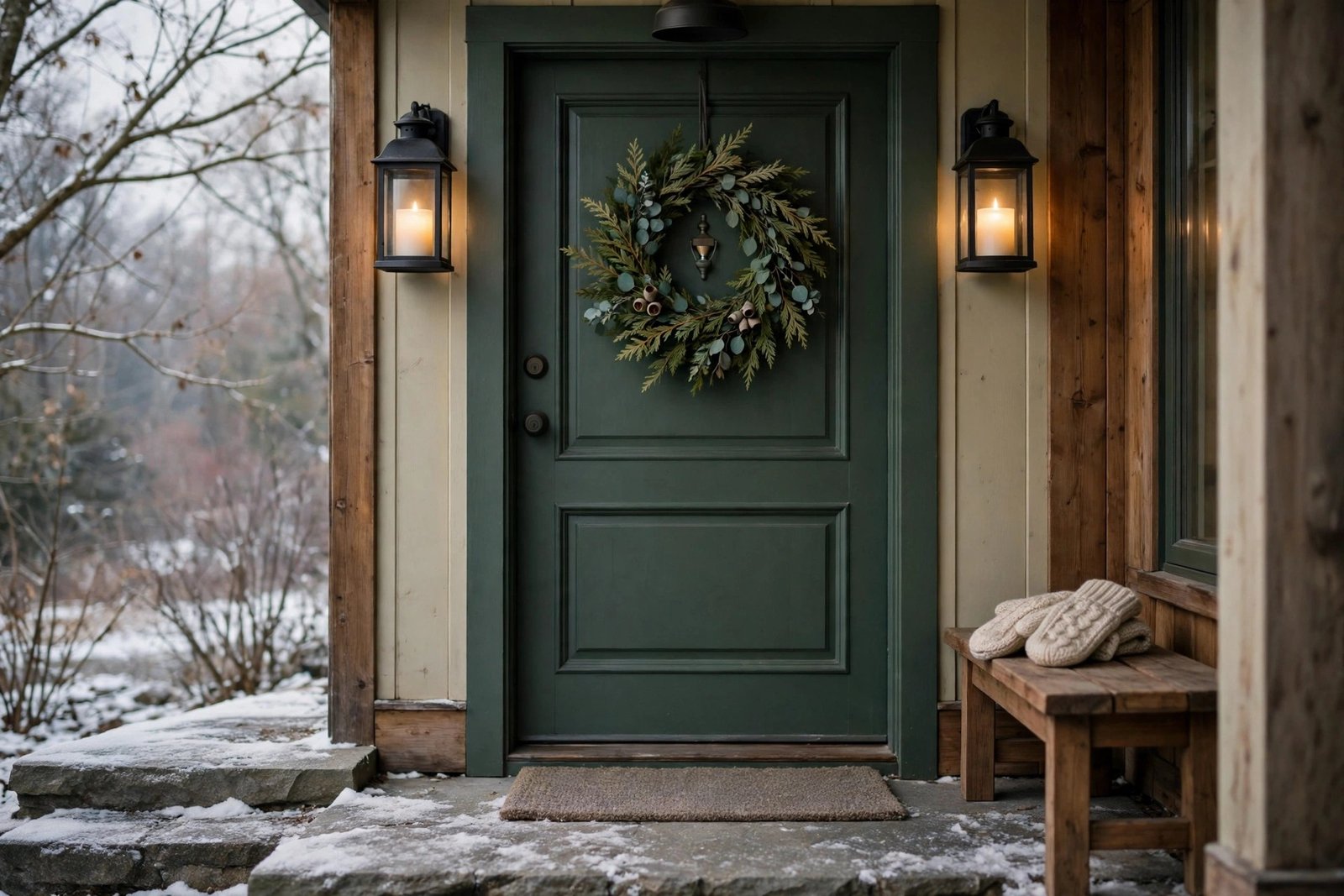
1. Hang a Plain Cedar Wreath With Eucalyptus
A plain cedar wreath is the easiest January swap. Cedar stays green for weeks in cold air. It also smells fresh every time the door opens. Add a few eucalyptus sprigs for a soft silver-green touch.
Choose a wreath that fills about two-thirds of the door width. A 24-inch wreath suits most standard doors. A 30-inch wreath suits a wide or double door. Measure first, then buy or make.
Hang it with an over-the-door hook for renters. Owners can use a small nail or a suction hook rated for cold. Either way, test the hold before a windy night. A fallen wreath dents fast on concrete.
Skip ribbon entirely for a clean winter look. Or use a slim cream linen loop instead. The loop reads soft and quiet. It also hides the hook nicely. For more wreath inspiration, see our winter wreath ideas for the whole season.
A fresh wreath also suits a storm door well. Hang it on the outer door, not the glass. The glass traps moisture and browns the cedar fast. Check the gap first, then hang.
2. Set Out Matte Black Lanterns With Timer LED Candles
Matte black lanterns give instant winter warmth. Their dark frames stand out against snow and pale siding. Inside, a timer LED candle glows softly each evening. No flame means no worry near dry greenery.
Place one lantern on each side of the door. Or group three sizes on one side for a layered look. Vary the heights by 6 to 10 inches. The mix looks collected, not matched.
Set the timer for dusk to bedtime. Most LED candles run six hours on and eighteen off. Check the batteries every two weeks in deep cold. Cold drains batteries faster than mild weather.
Choose lanterns with real glass panels, not plastic. Glass stays clear in frost and wipes clean fast. Also, pick a lantern with a sturdy handle. You will move it often for snow clearing.
Group lanterns near the threshold for the best glow. Light at ankle height feels warm and safe. It also lights the steps for guests. Keep the glass clean for full brightness.
3. Layer a Coir Mat Over a Larger Neutral Rug
Layered rugs make a small porch feel styled. Start with a large flat rug in cream or grey. Then add a coir mat on top, slightly off-center. The layers catch dirt and meltwater too.
Keep the palette neutral for January. Cream, charcoal, sage, and natural coir all work. Avoid red plaid here, since it reads Christmas at once. A quiet grey check feels wintery without the holiday link.
Size matters more than pattern. The base rug should sit 4 to 6 inches wider than the mat. It should also clear the door swing by at least 2 inches. Test the swing before you buy.
Shake both layers weekly, and let them dry after snow. Wet coir smells fast if it stays damp. In a freeze, lift the mat so ice cannot glue it down. For the full porch picture, browse our winter porch decor ideas next.
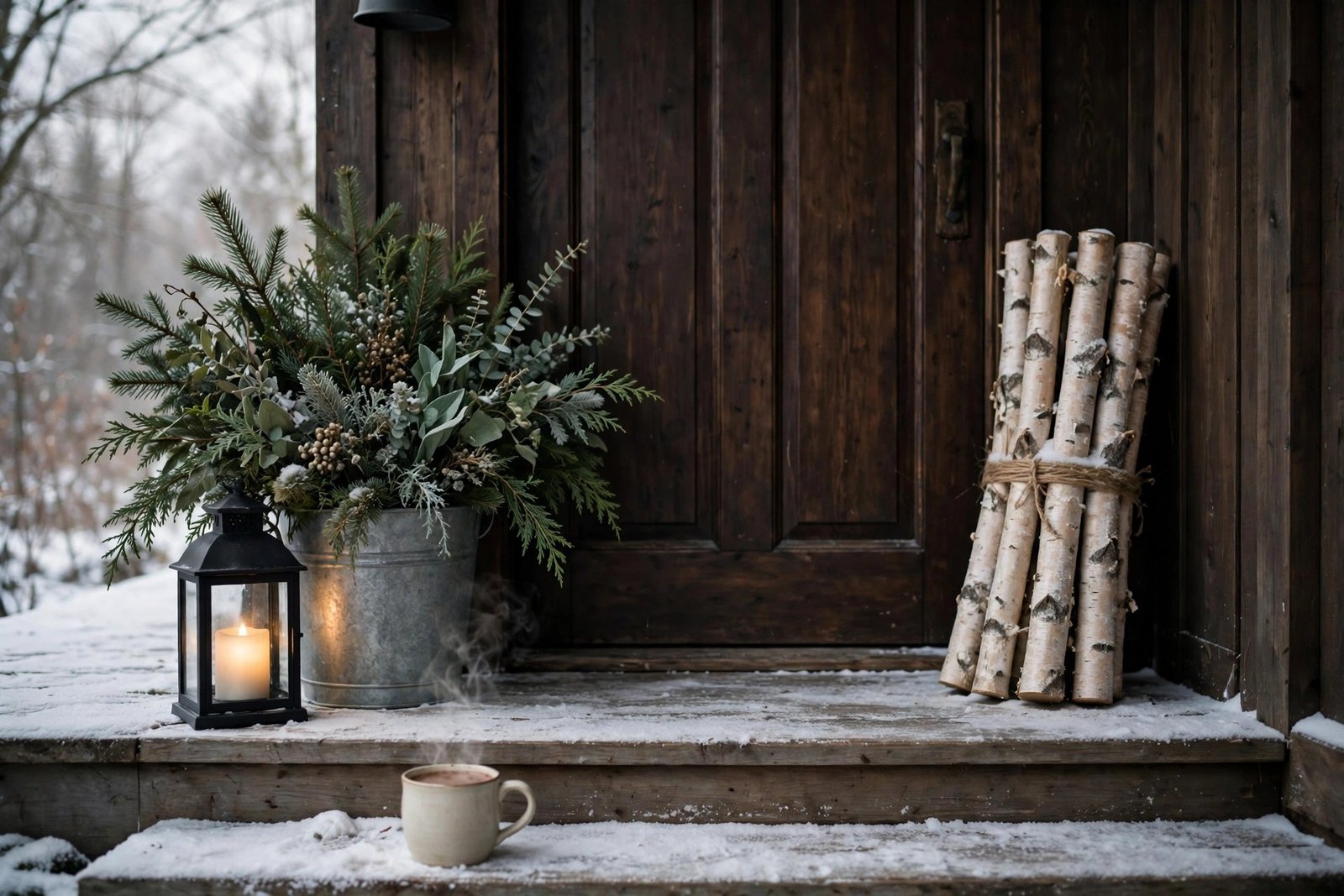
4. Lean a Bundle of Birch Logs Beside the Door
Birch logs bring pale, graphic winter texture. Their white bark pops against a dark door. A bundle of five or six logs fills a tall basket well. It also costs very little.
Stand the logs upright in a galvanized bucket or a woven basket. Cut them to varied heights for a natural look. A mix of 18 to 30 inches reads best. Trim any sharp ends first.
Keep the bundle under cover if you can. Birch bark stains when it stays wet. A covered porch keeps it bright all season. On an open stoop, bring it in during heavy rain.
This idea pairs well with evergreen sprigs. Tuck two or three cedar stems among the logs. The green softens the pale bark. It also ties the bundle to the wreath.
5. Fill Tall Planters With Winterberry and Evergreen
Winterberry stems add the one bold color January allows. Their small red berries read as nature, not holiday decor. Pair them with cedar and pine for a full, tall arrangement.
Use a tall, heavy planter so wind cannot topple it. Fill the base with soil, sand, or bricks for weight. Then push the stems in at varied angles. Tall stems go in back, short ones in front.
Water the stems lightly if the soil thaws. In a hard freeze, skip watering entirely. Frozen soil holds stems fine on its own. Replace any stem that turns brown or drops berries.
Flank the door with a matching pair for symmetry. Or use one tall planter beside a lantern for balance. Either way, keep the walkway clear. Planters should never narrow the path below 36 inches.
Choose berries with firm, bright color and no soft spots. Soft berries drop within days. Firm stems last three weeks or more. Trim the cut ends fresh before you arrange them.
6. Weave Warm 2700K Micro Lights Through Greenery
Micro lights turn plain greenery into evening magic. Choose warm 2700K bulbs for a soft amber glow. Cool white bulbs feel harsh in winter dusk. Warm light feels like a lit window.
Weave one short strand through the wreath or garland. Keep the wire hidden behind stems. Battery packs tuck behind the door frame or inside a planter. Check that the pack stays dry.
Use a timer so the lights switch on at dusk. Six hours on and eighteen off works well. In January, dusk falls early, so the glow lasts through dinner. Replace batteries every two weeks in cold snaps.
Less is more with micro lights. One strand per feature keeps the look calm. Two strands start to feel like a holiday display. Let the greenery lead, and let the light follow.
Test the strand indoors before you hang it outside. A dead bulb shows up fast on a dark wall. Swap the whole strand if more than two bulbs fail. A dim strand looks tired, not cozy.
7. Drape a Magnolia Leaf Swag Over the Door
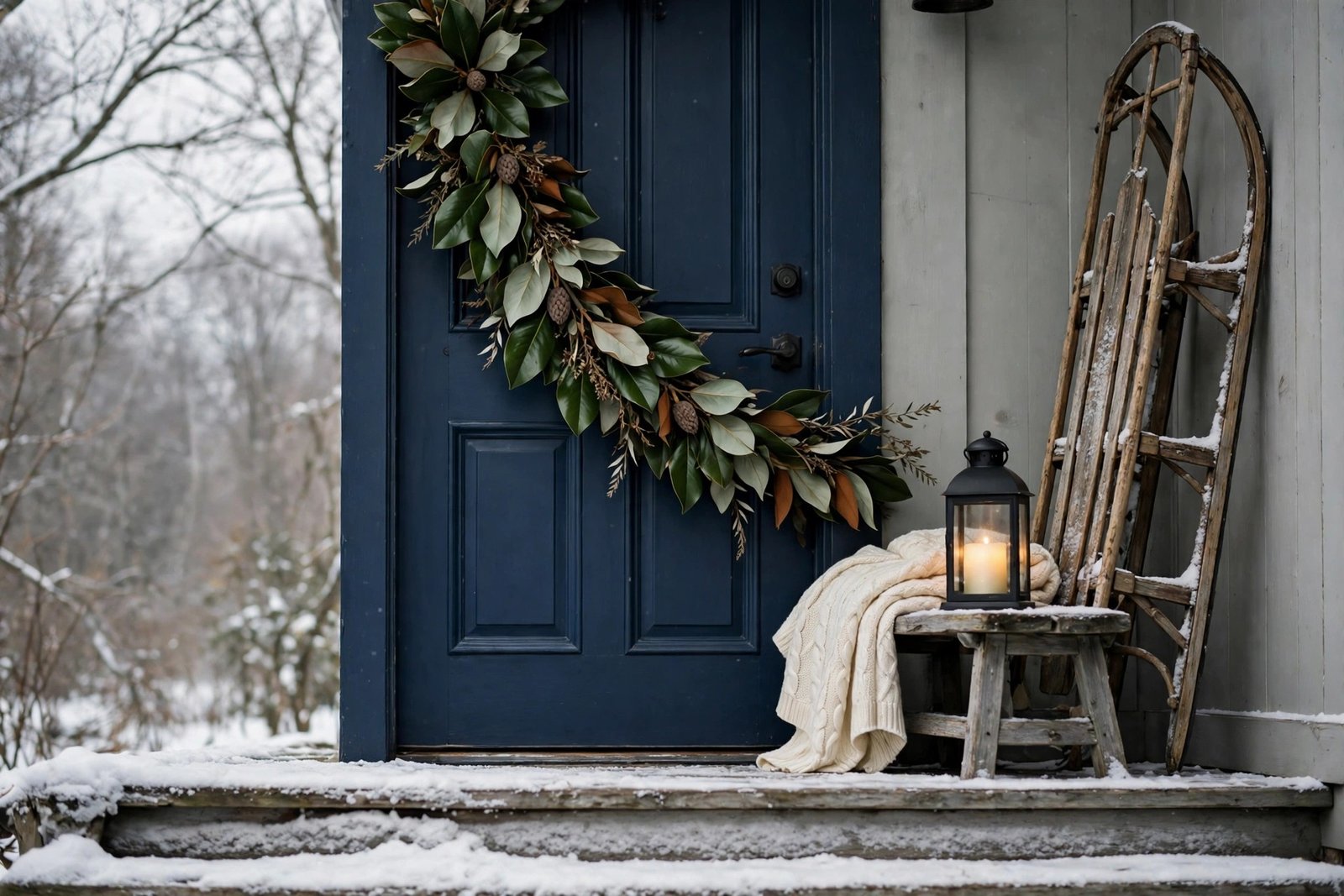
Magnolia leaves add bold, glossy winter texture. Their deep green tops and bronze undersides catch light well. A simple swag needs no bow or berries. It looks finished on its own.
Build the swag on a wire frame or a foam base. Layer leaves so each row overlaps the last. Work from the ends toward the center. The center gets the fullest cluster.
Hang the swag across the top of the door. Or drape it diagonally from one corner. A diagonal hang suits a narrow door best. It leaves the wreath hook free for later.
Fresh magnolia lasts two to three weeks outdoors. Faux magnolia lasts all season and survives rain. Either way, mist fresh leaves lightly on dry days. Dry air curls the edges fast.
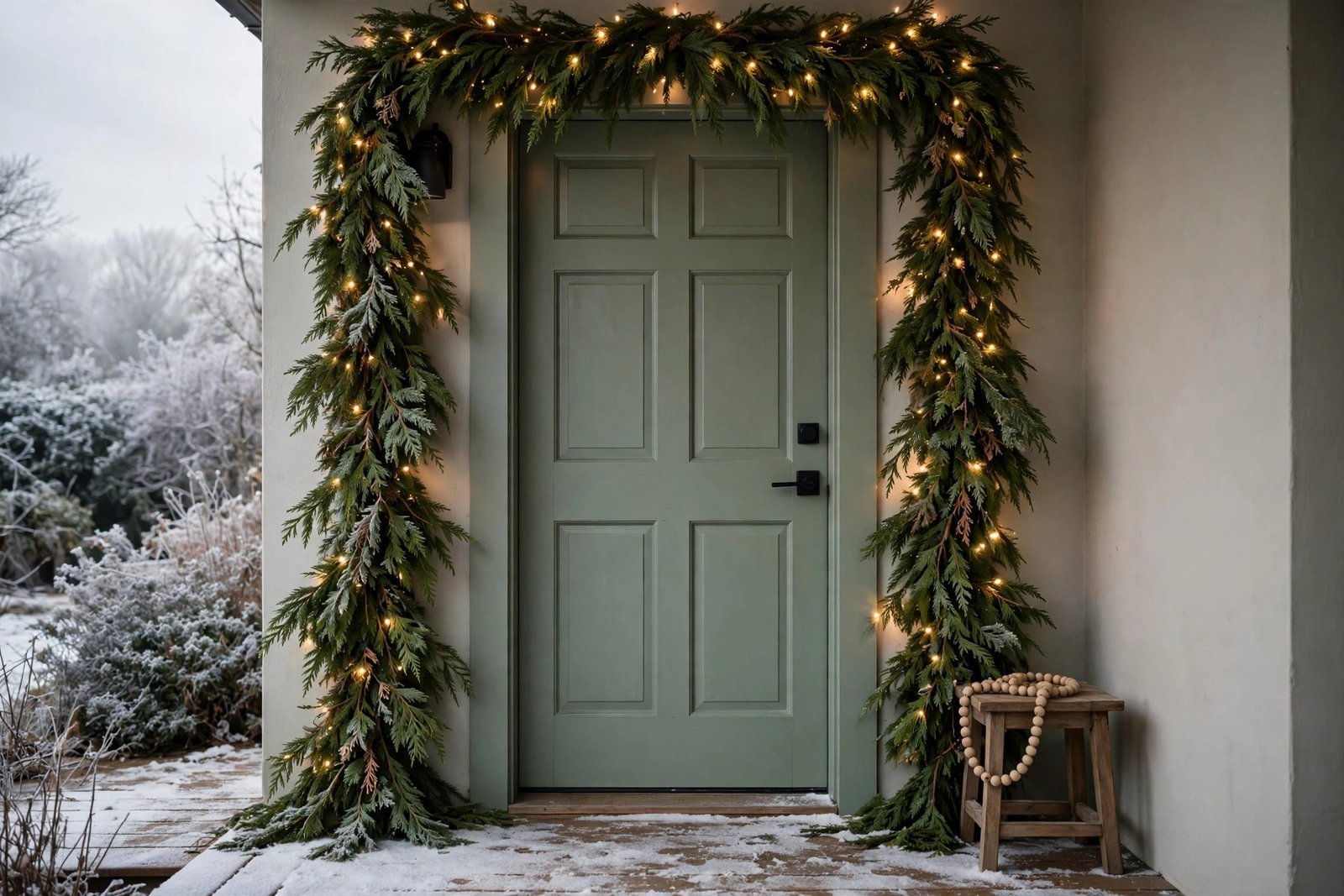
8. Frame the Door With a Full Evergreen Garland
A garland around the door frame makes the whole entry feel dressed. Cedar garland drapes best, since it bends without snapping. Pine garland looks fuller but sheds more needles. Mix both for fullness and drape.
Start at the top center and work down each side. Hook the garland every 12 inches so it cannot sag. Use clear outdoor hooks or small nails. Test each hook with a gentle tug.
Let the ends pool slightly at the base. A soft puddle of greenery at the threshold looks generous. It also hides the hook line. Trim any stem that blocks the door handle.
After the holidays, this garland reads as pure winter. No ornaments, no ribbon, no red. Just green, texture, and shape. For the festive version, compare our Christmas front door decor ideas and see the difference.
Check the garland weekly for dry or brown patches. Cold wind dries cut greenery fast. Snip out any brown section at once. A small gap hides well behind a fresh sprig.
9. Add Frosted Glass and a Snow-Dusted Vignette
Frosted glass softens a plain door at once. A static-cling film adds privacy and winter mood. It peels off in spring with no residue. Renters can use it without any damage.
Cut the film to fit each glass panel exactly. Spray the glass with water first. Then smooth the film from the center outward. A credit card pushes air bubbles to the edge.
Outside, dust the planters with a little fake snow. A light sprinkle reads as fresh snowfall. Too much looks messy, so go easy. Real snow will do the same job after the next storm.
Keep the vignette simple: film, one planter, one lantern. Three elements are enough for a small door. More pieces crowd the threshold. Calm beats clutter in January.
10. Choose a Plain Neutral Doormat With Deep Texture
A plain doormat in charcoal or natural coir suits January well. Deep texture traps grit and slush. It also reads as a design choice, not a leftover. Skip slogans and seasonal words here.
Pick a mat at least as wide as the door. A mat narrower than the door looks lost. A mat 30 inches wide suits most single doors. Double doors need 48 inches or more.
Scrape boots well before stepping inside. A stiff coir mat does the job fast. Shake it out every few days in snowy weeks. Wet grit grinds into fibers if it sits.
Store a second mat indoors for rotation. Swap them on wet days so one can dry. Dry mats last twice as long. They also keep the entry floor cleaner.
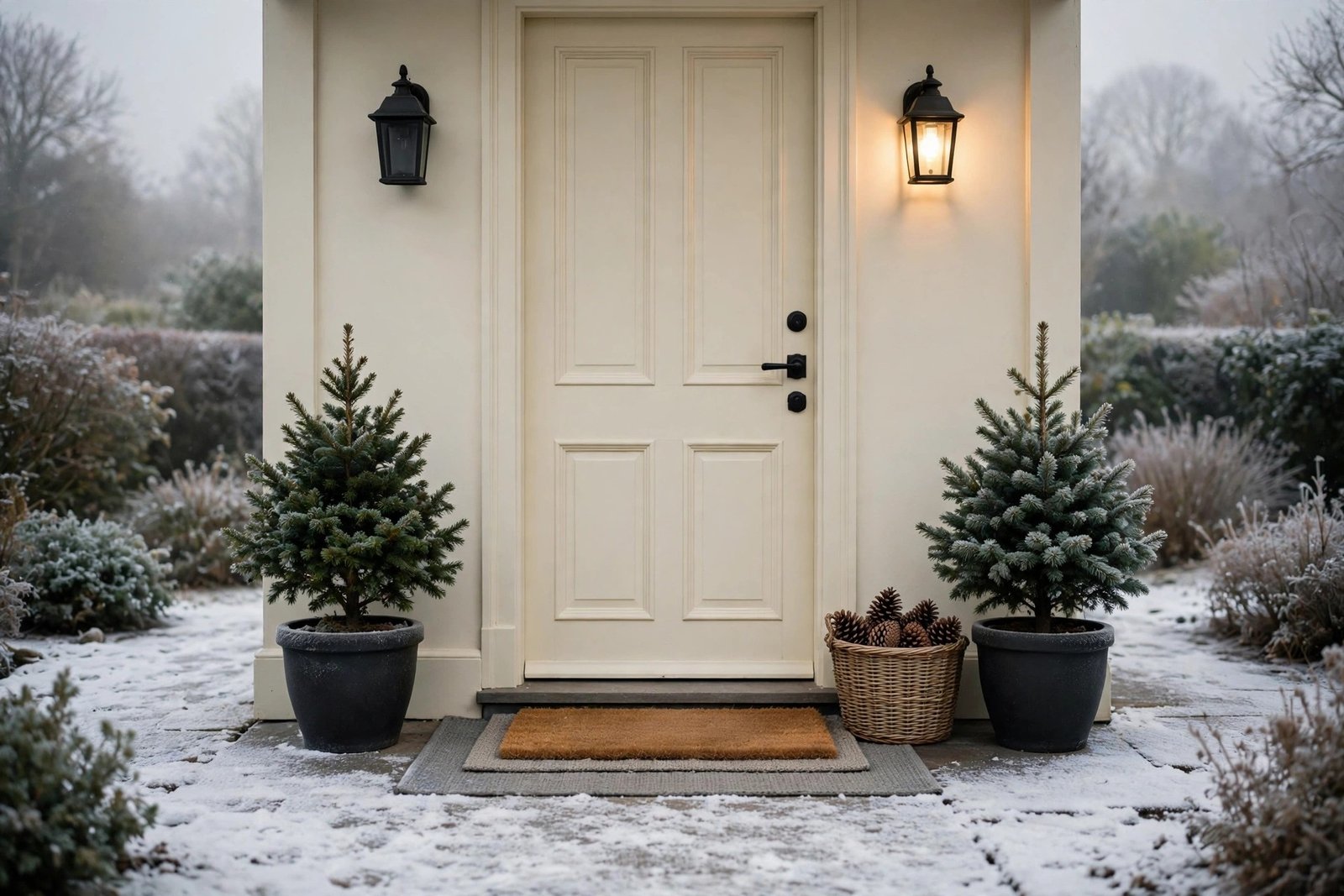
11. Flank the Door With Potted Dwarf Evergreens
Small potted evergreens frame a door all winter. Dwarf Alberta spruce holds a neat cone shape. It grows slowly, so it stays tidy for years. Two matching pots give instant symmetry.
Choose heavy pots that wind cannot move. Terracotta cracks in hard freezes, so use frost-proof ceramic or resin. Add drainage holes if the pot lacks them. Standing water kills roots fast.
Water sparingly through winter, only when the soil thaws. In a deep freeze, skip watering for weeks. The trees rest, and wet roots rot. Check the soil with a finger first.
In spring, move the pots to a garden bed or a larger container. They will keep growing for years. Or keep them by the door through summer. A little pruning keeps the cone shape neat.
Mulch the pots with bark chips for extra root protection. The mulch also slows drying on windy days. Keep the mulch below the rim. Water can then pool and soak in slowly.
12. Fill a Woven Basket With Pinecones and Cedar
A woven basket softens a hard stone stoop. Fill it with pinecones, cedar sprigs, and a few birch twigs. The mix looks gathered, not bought. It also costs almost nothing if you forage.
Line the basket with a plastic bag first. The liner stops soil and sap from staining the weave. It also keeps moisture off the porch floor. Fold the liner edge under the rim.
Place large pinecones at the base for weight. Then tuck cedar sprigs between them. Finish with two or three tall twigs for height. The tallest twig should sit about 12 inches above the rim.
Move the basket under cover during heavy snow. Wet wicker sags and mildews fast. A dry basket lasts all season. In spring, reuse it for garden tools or blankets.
13. Swap the Porch Bulb for a Warm 2700K Glow
One bulb change transforms the whole entry. A 2700K bulb casts warm amber light. It flatters wood, greenery, and skin tones. Cooler bulbs make winter evenings feel stark.
Pick an LED bulb rated for outdoor use. Check the package for damp or wet ratings. A covered porch needs damp-rated at least. An open fixture needs wet-rated.
Match the brightness to the fixture size. Around 800 lumens suits most porch lights. Brighter bulbs glare on snow and ice. Softer bulbs leave the steps too dark.
Clean the fixture glass while you swap the bulb. Winter grime dims light fast. A quick wipe restores full brightness. Then test the light at dusk, not at noon.
A motion sensor saves energy on quiet nights. The light wakes only when guests arrive. Set the sensor to a short delay. A long delay leaves visitors in the dark.
14. Hang a Birch Bark and Greenery Door Hanger
A birch bark hanger suits a narrow door well. A flat piece of bark, a cedar sprig, and twine make the whole piece. It hangs light and flat, so wind cannot swing it hard.
Cut the bark to about 12 inches long. Drill two small holes near the top edge. Thread twine through and knot it behind. The knot should sit flat against the door.
Tuck cedar and eucalyptus behind the bark. A little hot glue holds the stems in place. Keep the glue on the back only. Visible glue ruins the natural look.
This hanger works where a wreath feels too big. It also suits a glass storm door, since it lies flat. Swap the greenery monthly to keep it fresh. Dried stems look tired after three weeks.
15. Drape a Cable-Knit Throw Over the Porch Bench
A cable-knit throw adds instant softness to a porch bench. Cream or oatmeal wool reads warm against cold air. The texture invites guests to sit, even briefly. It also photographs beautifully.
Fold the throw in thirds, then drape it over one arm. The fold keeps it from trailing on the floor. Tuck the loose end under the seat cushion. Wind cannot lift a tucked throw.
Choose a washable blend for outdoor use. Pure wool felts fast in wet snow. A wool-acrylic mix dries faster and holds shape. Bring the throw in during storms.
Pair the throw with a small cushion in sage or charcoal. Two textiles beat one for depth. Keep the cushion in a weatherproof cover. Damp cushions smell fast in a closed porch.
16. Style a Galvanized Bucket of Evergreen Branches
A galvanized bucket brings farmhouse charm without holiday cues. Fill it with mixed evergreen branches, cut at varied lengths. The metal shine contrasts well with soft green. It also survives any weather.
Weight the base with a brick or a bag of sand. A full bucket tips easily in wind. The weight keeps it upright through storms. Hide the weight under the branches.
Mix cedar, pine, and fir for texture. Cedar drapes, pine fills, and fir adds stiff structure. Three types beat one for depth. Add two magnolia leaves for gloss.
Set the bucket beside the door, not in front of it. It should frame the entry, not block it. Inside, the same look warms the hallway. See our winter entryway decor ideas for the indoor version.
Rinse the bucket in spring and dry it well. Standing water rusts even galvanized metal. Store it upside down through summer. It will look new again next winter.
17. Lean a Vintage Wooden Sled by the Door
A vintage wooden sled reads as winter, not Christmas. Its worn wood and rope pull tell a story. Lean it against the wall beside the door. It fills a tall, narrow gap perfectly.
Check the sled for splinters before you place it. Sand any rough edge smooth. A quick rub with furniture wax protects the wood. Wax also keeps snow from soaking in.
Keep the sled out of the walkway. It should lean, not stand in the path. A wall hook or a small bracket holds it steady. Test the lean angle before a windy night.
Thrift stores and flea markets sell old sleds cheaply. Look for solid runners and a firm deck. Avoid sleds with cracked slats. They break under their own weight in a freeze.
18. Line the Steps With Ice Luminaries
Ice luminaries glow like frozen lanterns. Freeze water in a bucket with a smaller cup inside. The gap forms a hollow ice shell. Set a LED tea light inside, and the whole block glows.
Make them on a night below freezing. Twelve hours in the cold sets the shell firm. Pop the ice out gently in the morning. A little warm water loosens the mold.
Place one luminary on each step edge. Or line them along the walkway for a path of light. LED tea lights last all evening on one battery. Real flames melt the ice too fast.
These last only while temperatures stay low. Above freezing, they melt within hours. Enjoy them on the coldest nights. They cost nothing but water and time.
Use food coloring for a soft tint if you like. Two drops of blue read as frozen glass. Skip bright colors, since they look artificial. Plain ice glows best of all.
19. Mix Dried Hydrangea With Fresh Eucalyptus
Dried hydrangea adds soft, papery winter texture. Its muted tones suit January perfectly. Mix it with fresh eucalyptus for scent and color. The pairing looks collected, not arranged.
Cut hydrangea heads in late fall and dry them upside down. Two weeks in a dark room sets the color. Pale blue heads dry to soft grey-blue. Cream heads dry to warm ivory.
Arrange the mix in a tall vase or a wall basket. Hydrangea heads sit high, eucalyptus trails low. The contrast in shape keeps the eye moving. Mist the eucalyptus lightly, never the hydrangea.
Keep dried stems out of heavy rain. Wet hydrangea turns brown fast. A covered porch protects them well. On an open stoop, bring the vase in during storms.
20. Go Renter-Friendly With Hooks and Over-Door Hangers
Renters can still dress a winter door well. Over-door hangers hold wreaths with zero holes. Adhesive hooks rated for cold hold garlands and swags. Both come off clean in spring.
Check the weight rating before you hang anything. A wet cedar wreath weighs more than a dry one. Add a safety margin of at least 2 pounds. Test the hold with a gentle pull.
Clean the surface before you stick a hook down. Dust and frost kill adhesion fast. Wipe the spot dry, then press for 30 seconds. Wait an hour before you hang the decor.
Keep the hardware invisible for a polished look. Hide hooks behind greenery and hangers behind wreaths. The decor should look fixed, not stuck on. These winter front porch door ideas need no drilling at all. For more door ideas, revisit our winter porch decor ideas for layered looks.
21. Do a Simple January Refresh After Christmas
The best January idea is also the simplest. Take down the holiday pieces, then edit what stays. Keep the greenery, the lanterns, and the light. Smart front door decor after Christmas keeps the green and drops the red. Simple January front door decor starts with one clear surface.
Start with one clear surface: the door itself. Remove the old wreath first. Then wipe the door clean of tape and dust. A clean door makes the new wreath look fresh.
Next, walk the porch with a basket. Collect anything that reads holiday. Store it in a labeled box for next year. Label the box by month, not by room.
Finally, add one new winter piece. A fresh wreath, a new lantern, or a plain mat works. One change signals the new season. The rest of the porch can follow slowly.
Set a monthly reminder to refresh one piece. A new mat in February keeps the entry alive. Small swaps beat one big overhaul. The door then evolves with the season.
Products to Consider
These generic picks suit most winter front doors. Choose quality over quantity, and match each piece to your climate.
- A plain cedar or mixed evergreen wreath, 24 to 30 inches wide
- Matte black metal lanterns with glass panels, in two or three sizes
- Timer LED pillar candles or LED tea lights, warm 2700K glow
- A natural coir doormat layered over a larger neutral outdoor rug
- Tall frost-proof planters with winterberry and evergreen stems
- A warm 2700K outdoor-rated LED bulb for the porch fixture
- Birch log bundles or birch bark pieces for natural texture
- Over-door wreath hangers and cold-rated adhesive hooks for renters
- A woven basket or galvanized bucket for greenery and pinecones
- A cable-knit throw in cream or oatmeal for a porch bench
Frequently Asked Questions
How do I decorate my front door for winter after Christmas?
Start by removing every holiday piece: red ribbon, ornaments, and Santa figures. Then keep the plain evergreen, the lanterns, and the warm light. Add one fresh January piece, like a cedar wreath or a neutral mat. A fresh winter wreath for front door display finishes the look. The door will read as winter, not leftover Christmas.
What greenery lasts longest on a winter front door?
Cedar lasts longest, often four to six weeks in cold air. Pine follows close behind, with good fullness and scent. Magnolia leaves hold their shape for two to three weeks. Eucalyptus dries gracefully and keeps its color. Water stems lightly only when the soil thaws.
How can I keep winter door decor from blowing away?
Weight every planter with sand or bricks at the base. Hook garlands every 12 inches so wind cannot lift them. Choose heavy lanterns, and set them low near the threshold. Test each piece with a firm tug before a storm. Bring light pieces inside during high winds.
What colors work for a winter front door without looking Christmassy?
Cream, sage, charcoal, matte black, and natural wood all read as winter. Deep green evergreen adds color without any holiday link. Small red winterberries count as nature, not Christmas, when no ribbon or ornaments join them. Skip red plaid, gold bows, and glitter entirely.
Can renters decorate a winter front door without damage?
Yes, renters have good options. Over-door hangers hold wreaths with no holes at all. Cold-rated adhesive hooks hold garlands and swags, and they peel off clean. Static-cling film dresses glass panels without residue. Check your lease first, then keep every fix removable.
Final Thoughts
A winter front door needs warmth, not holiday leftovers. Plain evergreen, one warm light, and natural texture do the whole job. Start with a wreath and a lantern. Then add layers as the season goes on.
January light is short, so make the glow count. A 2700K bulb and a timer candle carry the entry through dusk. Snow and frost do the rest, turning simple greenery into a scene. Keep the palette calm, and let winter speak.
Finally, walk out and look at your door from the street. That view tells the truth. If the door reads warm and welcoming, you are done. If one piece feels off, swap it and step back again.
A calm door also sets the tone indoors. Guests carry that first feeling into the hallway. So keep the entry honest and simple. Winter front door decor works best when it feels effortless.