
A winter wreath does more than decorate a door. It sets the mood for your whole home. Guests see it first, so it should feel warm and welcoming. The best part is that winter wreaths last far beyond Christmas. They carry your home through January and February with ease.
First, think about what winter means to you. Frosted greens feel calm and classic. Dried florals feel soft and natural. Bright berries add cheer on grey days. Each style suits a different home, so choose one that fits yours.
Also, consider your door and your climate. A covered porch protects fresh greenery from wind and rain. An exposed door needs tougher materials that hold up well. Plus, the right size matters more than most people expect. A wreath that is too small looks lost on a wide door.
In this guide, you will find 15 winter wreath ideas for every style. Some are quick buys, while others are fun weekend projects. For example, you can start with a simple grapevine base. Then add greens, berries, and one strong focal point. Finally, hang it with care and enjoy it all season.
Also, winter wreaths suit renters as well as owners. An over-door hanger leaves no marks at all. For example, a light wreath hangs safely on most doors. Plus, you can take it with you when you move.
1. Classic Frosted Evergreen Wreath
A frosted evergreen wreath is the timeless winter choice. It looks fresh from December through February. The soft white tips mimic light snow on pine branches. As a result, it feels seasonal without feeling tied to one holiday.
First, pick a full wreath with mixed greens. Fir, pine, and cedar together look more natural than one type alone. Also, check that the branches feel dense and even all around. Thin spots show the door behind them, so avoid sparse wreaths.
Next, hang it at eye level on your front door. A standard 36-inch door suits a 24 to 28-inch wreath. For example, a 24-inch wreath leaves a pleasing frame of door around it. Plus, it will not block the handle or the doorbell.
Fresh evergreen lasts about three to four weeks in cold weather. Cold air actually helps it stay fresh longer. Still, keep it out of strong sun and drying wind when possible. Then mist it lightly once a week if your porch stays dry.
Finally, pair it with a simple door mat and a lantern. The wreath stays the hero, while the extras add warmth. Instead of adding more decor, let the frosted greens speak for themselves. This quiet look suits almost any home style.
Also, a frosted wreath suits both modern and traditional homes. The white tips soften dark doors and brighten pale ones. For example, it looks lovely beside a cream planter or a wooden bench. Plus, the neutral palette works with any door mat colour.
2. Dried Floral and Eucalyptus Wreath
Dried florals bring soft texture to a winter door. Eucalyptus, lavender, and bunny tails dry beautifully and hold their shape. Together, they create a wreath that lasts the whole season. Plus, it needs almost no care once it hangs.
First, start with a grapevine or wire base. A grapevine base grips dried stems well and hides the mechanics. Also, work in small bunches rather than single stems. Small bunches fill gaps faster and look fuller from the street.
Next, mix textures for interest. Flat eucalyptus leaves contrast well with feathery dried grasses. For example, add a few seed pods for a natural focal point. Then finish with a velvet ribbon in a muted rust or sage tone.
Keep this wreath under a covered porch if you can. Rain can darken dried flowers and make stems droop. As a result, a sheltered spot keeps the colours soft for months. In fact, many dried wreaths last into spring with gentle care.
Finally, this style suits modern farmhouse and cottage homes best. It pairs well with light wood doors and cream siding. Instead of bright red berries, the muted palette feels calm and grown up. Your door will look styled, not seasonal in a loud way.
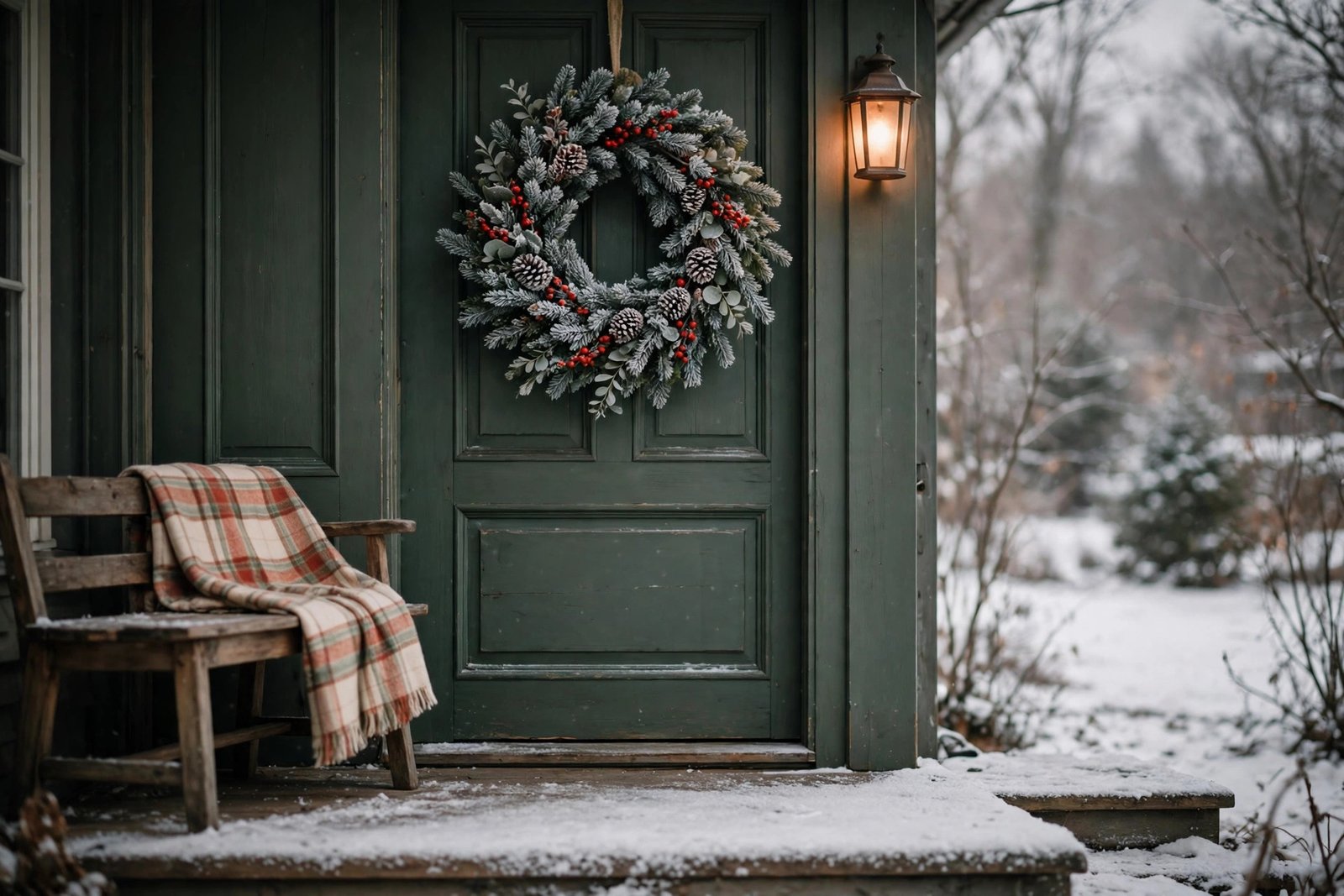
3. Simple Olive Branch Wreath
An olive branch wreath is calm, green, and quietly elegant. It works for winter because the silvery leaves suggest frost. Also, the simple circle shape suits modern homes very well. Less really is more with this design.
First, choose a wreath with long, loose branches. The airy shape lets the door colour show through slightly. That contrast gives the wreath a light, fresh feel. Plus, it weighs less than a dense evergreen wreath.
Next, add just one small detail for winter. A dusting of faux snow on the leaves works well. For example, a few dark olives tucked inside add depth. Then stop there, since extra decor can spoil the clean look.
Hang it with a simple ribbon in cream or sage. A wide ribbon adds softness without stealing attention. Also, use a wreath hanger that fits over the door. It avoids holes and keeps the door finish safe.
Finally, this wreath shines on white or pale doors. The green leaves stand out clearly against a light background. In fact, it also looks lovely indoors above a mantel. Try it there after the outdoor season ends.
Also, olive branches dry well if you keep the wreath indoors. The leaves hold their shape for months in dry air. For example, move it to a hallway wall in March. Plus, the soft green suits spring decor too.
4. Pinecone and Dried Orange Wreath
Pinecones and dried oranges feel warm and handmade. The orange slices add a soft amber glow against dark greens. Also, the scent is gentle and natural, not perfumed. This wreath feels like winter in a country kitchen.
First, gather pinecones in two sizes for variety. Large cones anchor the design, while small ones fill gaps. Next, wire each cone firmly to the base before adding fruit. Loose cones fall off in wind, so secure them well.
Then dry orange slices in a low oven until crisp. Thin slices dry faster and look more delicate. For example, three or four slices spaced evenly look better than a crowded ring. Plus, they catch the light beautifully at dusk.
Also, tuck in sprigs of cedar or fir between the cones. The green softens the brown tones and adds fullness. Instead of a big bow, tie a small burlap loop at the top. It keeps the handmade feel honest and simple.
Finally, hang this wreath where guests can see it up close. The details reward a closer look. In fact, it pairs beautifully with a winter porch dressed in the same warm tones. Keep the rest of the porch simple so the wreath stands out.
5. Magnolia Leaf and White Berry Wreath
Magnolia leaves bring a rich, glossy texture to winter decor. Their deep green tops and bronze undersides catch the light. White berries add a snowy contrast that feels fresh. Together, they make a wreath that looks polished and calm.
First, layer the leaves so they overlap like shingles. This creates a full, even circle with no bare spots. Also, mix in a few frosted evergreen sprigs for softness. The mix keeps the wreath from looking flat or stiff.
Next, cluster the white berries in small groups. Three clusters spaced around the ring look balanced and natural. For example, place one cluster at the top and two lower down. Then add a cream velvet bow to finish the top.
This wreath suits traditional and southern-style homes especially well. It also works on dark doors, where the leaves stand out. Plus, faux magnolia holds up well in cold, damp weather. Fresh leaves can brown, so faux is often the safer choice.
Finally, keep the surrounding decor simple and light. A cream door mat and a pale planter work well. Instead of competing colours, let the green and white lead. The result feels elegant from December right through February.
Also, magnolia leaves look good in a simple vase indoors. A few stems in a tall jar echo the wreath nicely. For example, place the vase on the console near the door. Plus, it ties the entry together without extra cost.
6. Berry-Heavy Winter Wreath
A berry-heavy wreath adds bold colour to grey winter days. Red winterberry, holly, and rosehips all hold their colour well outdoors. Also, the bright pops read clearly from the street. This is the wreath to choose when your door needs energy.
First, build on a full evergreen base for support. The green background makes the berries look even brighter. Next, push berry stems into the base in small clusters. Space them evenly so no side looks bare or overloaded.
Then add a few pinecones for texture and weight. The brown tones ground the bright red and keep it from feeling loud. For example, one pinecone near each berry cluster creates a steady rhythm. Plus, it gives the eye places to rest.
Keep in mind that real berries can attract birds. That is charming, though it may shorten the wreath’s life. As a result, faux berries suit exposed doors better. In fact, good faux berries now look very close to real ones.
Finally, hang this wreath on a dark or neutral door. The contrast makes the red pop beautifully. Instead of a patterned mat, choose a plain one in charcoal or cream. Your wreath will do all the talking here.

7. Velvet Bow Wreath
A velvet bow can transform even the simplest wreath. The soft fabric adds luxury without any extra effort. Also, velvet holds its shape better than thin ribbon outdoors. It looks rich in deep green, rust, or burgundy.
First, start with a plain evergreen or eucalyptus wreath. A simple base lets the bow take centre stage. Next, tie a full bow with long, flowing tails. Wide ribbon, about two inches, gives the fullest shape.
Then attach the bow at the top or slightly off centre. An off-centre bow feels modern and relaxed. For example, place it at eleven o’clock for a gentle, casual look. Plus, the tails can trail softly over the greens.
Also, choose a bow colour that suits your door. Deep green works on cream doors, while rust warms up dark doors. Instead of matching everything exactly, pick one tone to repeat nearby. A matching door mat ties the look together.
Finally, protect the velvet from heavy rain when possible. A covered porch keeps it looking plush for weeks. In fact, you can swap the bow in January for a fresh colour. That small change makes the same wreath feel new again.
Also, velvet bows come in many widths and colours. A narrow ribbon suits a small wreath, while wide ribbon suits a large one. For example, try deep green on a cream door for contrast. Plus, you can reuse the same bow next winter.
8. Lantern-Lit Wreath with Fairy Lights
Fairy lights turn a winter wreath into an evening feature. The warm glow welcomes guests home after dark. Also, battery lights mean no cords trail across the porch. This idea works best on doors that face the street.
First, choose warm white lights, not cool white. Warm white flatters greenery and feels cosy at dusk. Next, weave one short strand through the wreath evenly. About 20 small lights suit a 24-inch wreath well.
Then hide the battery pack behind the wreath. A small pack tucks neatly between the branches and the door. For example, tape it flat so the door still closes cleanly. Plus, a timer setting saves batteries and effort each night.
Also, pair the lit wreath with a glowing lantern nearby. One lantern echoes the wreath lights without competing. Instead of two light sources on the door itself, keep the wreath as the single glow. That focus makes the effect stronger.
Finally, check the lights weekly through the season. Cold can drain batteries faster than mild weather. As a result, keep spare batteries by the door for quick swaps. Your wreath will glow reliably all winter long. Also, a spare strand costs little and saves a dark evening. Keep it in a drawer near the door.
9. Grapevine Wreath with Winter Greens
A grapevine base gives a wreath a rustic, natural frame. The twisted twigs show through the greens in a charming way. Also, grapevine is light and easy to hang anywhere. It suits farmhouse and cottage homes especially well.
First, tuck cedar and pine sprigs into the grapevine gaps. Work around the circle in one direction for a tidy look. Next, add a few pinecones and dried seed pods. These fill the open spaces without hiding the twigs.
Then finish with a simple burlap or linen bow. The rough fabric matches the rustic base perfectly. For example, a small bow at the top keeps the focus on the greens. Plus, it adds a soft handmade touch.
Grapevine wreaths also make great indoor decor later. After the outdoor season, hang one above a console table. In fact, it pairs well with the ideas in our winter entryway guide for a layered arrival. The same wreath can serve two spots in one season.
Finally, this style is easy to refresh in January. Swap the bow colour or add fresh cedar sprigs. Instead of buying a new wreath, a small update feels like a new look. That makes it one of the best value choices here.
Also, grapevine bases last for years with gentle care. Store yours in a dry box after the season ends. For example, wrap it in tissue to stop the twigs snagging. Plus, a saved base makes next year’s wreath nearly free.

10. Snow-Dusted White Wreath
A snow-dusted white wreath feels like a fresh snowfall. Flocked branches, white berries, and pale pinecones create a soft look. Also, the pale palette brightens a dark doorway in winter. It suits modern and Scandinavian homes beautifully.
First, choose a flocked evergreen base with even coverage. Patchy flocking looks messy, so inspect it in good light. Next, add white berries and a few silver-toned pinecones. These keep the palette cool and calm.
Then add one warm accent to stop the look feeling cold. A cream bow or a few natural pinecones works well. For example, a soft cream ribbon adds warmth without breaking the palette. Plus, it gives the eye a gentle focal point.
Keep this wreath out of heavy rain if possible. Wet flocking can clump and lose its soft look. As a result, a covered porch is the best spot. In fact, many flocked wreaths last for years when stored dry.
Finally, pair it with a light door mat and a pale planter. The whole entry will feel bright and airy. Instead of dark accessories, keep everything in cream and sage. Your doorway will glow softly even on grey days. Also, a pale planter with faux greenery echoes the wreath well. It needs no watering in the cold.
11. Cedar and Juniper Wreath
Cedar and juniper make one of the hardiest winter wreaths. Both greens handle cold, wind, and frost with ease. Also, juniper berries add a soft blue-green colour. The mix smells fresh every time the door opens.
First, look for a wreath with long, flat cedar sprays. Cedar drapes gracefully and fills a circle fast. Next, check that juniper sprigs are woven through evenly. The small berries should show on all sides, not just one.
Then keep the extras minimal for this style. A thin wire-edged ribbon in sage or cream is enough. For example, a small loop at the top adds a finished touch. Plus, the natural greens deserve to stay visible.
Fresh cedar lasts four to six weeks in cold weather. That is longer than most other fresh greens. As a result, it is a smart pick for exposed doors. In fact, it often still looks good well into February.
Finally, this wreath suits wooded and rural homes best. It echoes the trees outside instead of competing with them. Instead of bright decor, let the green tones lead. The result feels calm, natural, and quietly confident.
Also, cedar smells wonderful when the door opens and closes. The scent is fresh and clean, never heavy. For example, guests often notice it before they see the wreath. Plus, the fragrance lasts for weeks in cold air.
12. Rustic Twig and Pinecone Wreath
A twig and pinecone wreath feels gathered, not bought. Bare twigs, pinecones, and a few dried leaves create a woodland look. Also, it is one of the easiest wreaths to make at home. A weekend afternoon is all you need.
First, form a ring from flexible twigs or thin branches. Willow and grapevine both bend easily into a circle. Next, wire the ring firmly in three or four places. A sturdy base keeps the wreath round all season.
Then attach pinecones in varied sizes around the ring. Hot glue works for light cones, while wire suits heavy ones. For example, cluster three cones together for a natural focal point. Plus, leave some twigs visible for texture.
Also, add a few dried leaves or seed heads for colour. Oak leaves hold their shape well when dry. Instead of a bow, tie a strip of linen at the top. It keeps the gathered-from-the-garden feel intact.
Finally, hang it on a wood or painted door for the best effect. The earthy tones suit natural materials. If you love this handmade style, our Christmas wreath ideas include more rustic looks to try next year. This wreath, though, works all winter long.
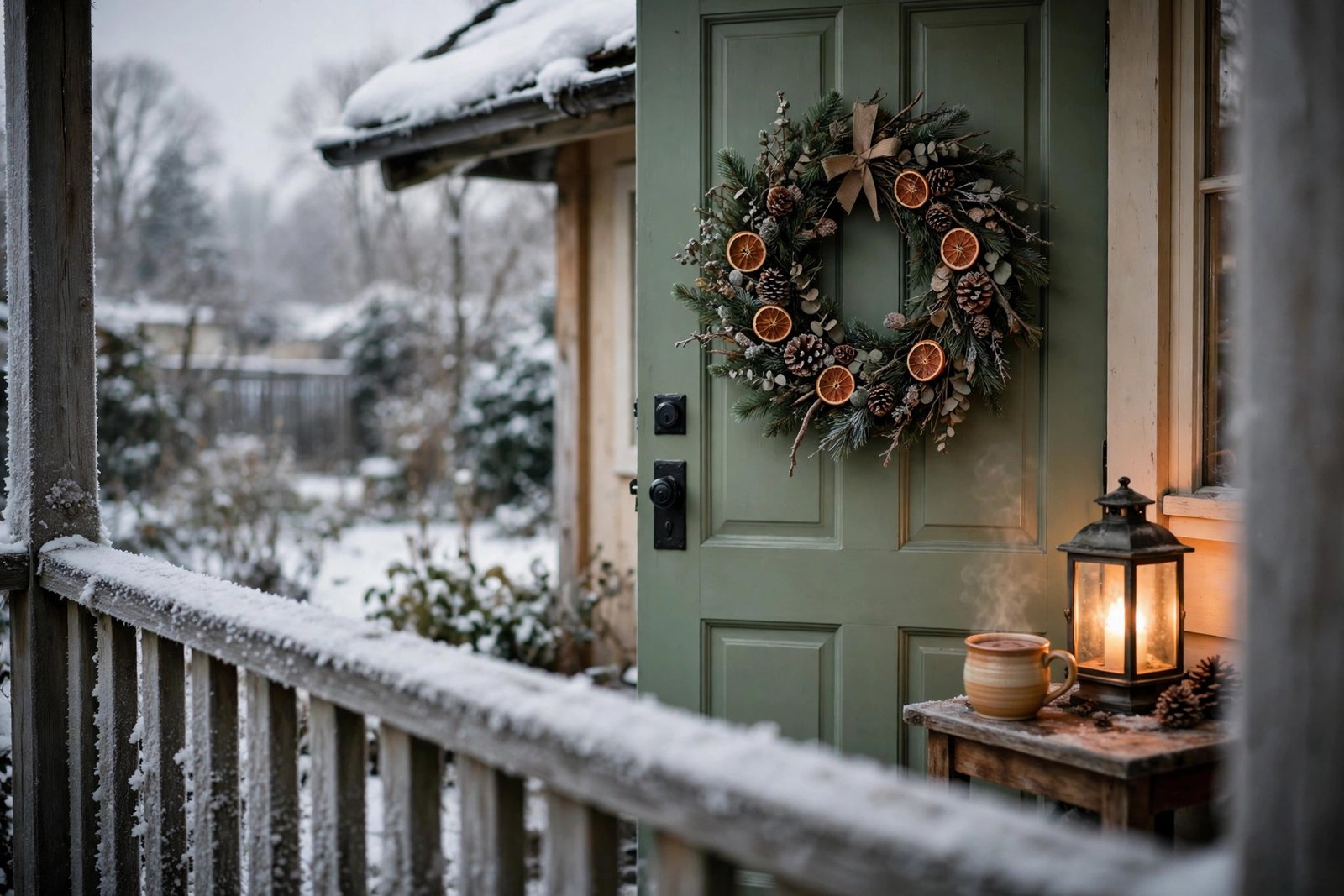
13. Winter Wreath for a Double Door
Double doors need a different approach to wreaths. One large wreath can look lost across two wide doors. Also, two matching wreaths create a balanced, formal look. This is the classic choice for grand entries.
First, measure each door panel separately. A 20 to 22-inch wreath suits most single panels well. Next, choose two identical wreaths for perfect symmetry. Even small differences show clearly side by side.
Then hang each wreath at the same height. Use a tape measure, not your eye alone. For example, centre each wreath on its own panel. Plus, check from the street that both sit level.
Also, keep the style simple so the pair reads as one design. Frosted evergreen or plain cedar works best here. Instead of two different bows, use matching ribbons. The symmetry itself is the decoration.
Finally, this look suits brick and stone homes especially well. The formal balance matches the architecture. In fact, matching wreaths also work on wide garage doors. Try the same trick there for a coordinated front view.
Also, matching wreaths work well on French doors indoors. Two small wreaths frame a dining room doorway nicely. For example, use 16-inch wreaths for interior doors. Plus, the same idea suits a wide garden gate.
14. Small Wreath for a Side Door or Window
Not every wreath belongs on the front door. Small wreaths bring winter charm to side doors and windows. Also, they are perfect for flats and small homes. A little green goes a long way in a small space.
First, pick a wreath between 12 and 16 inches wide. That size suits a side door without blocking the handle. Next, choose a light base so it hangs easily. Grapevine and wire bases both work well here.
Then hang it with a suction hook or a small over-door hanger. Check that the hook suits your door material first. For example, suction hooks grip glass well but fail on rough wood. Plus, a ribbon loop adds a soft, pretty finish.
Windows look lovely with a small wreath hung inside the glass. The green shows from both inside and out. As a result, one wreath decorates two rooms at once. In fact, a row of small window wreaths looks delightful from the street.
Finally, use the same style across all your small wreaths. Matching minis tie the whole home together. Instead of mixing styles, repeat one simple design. Your home will feel planned and calm, not busy.
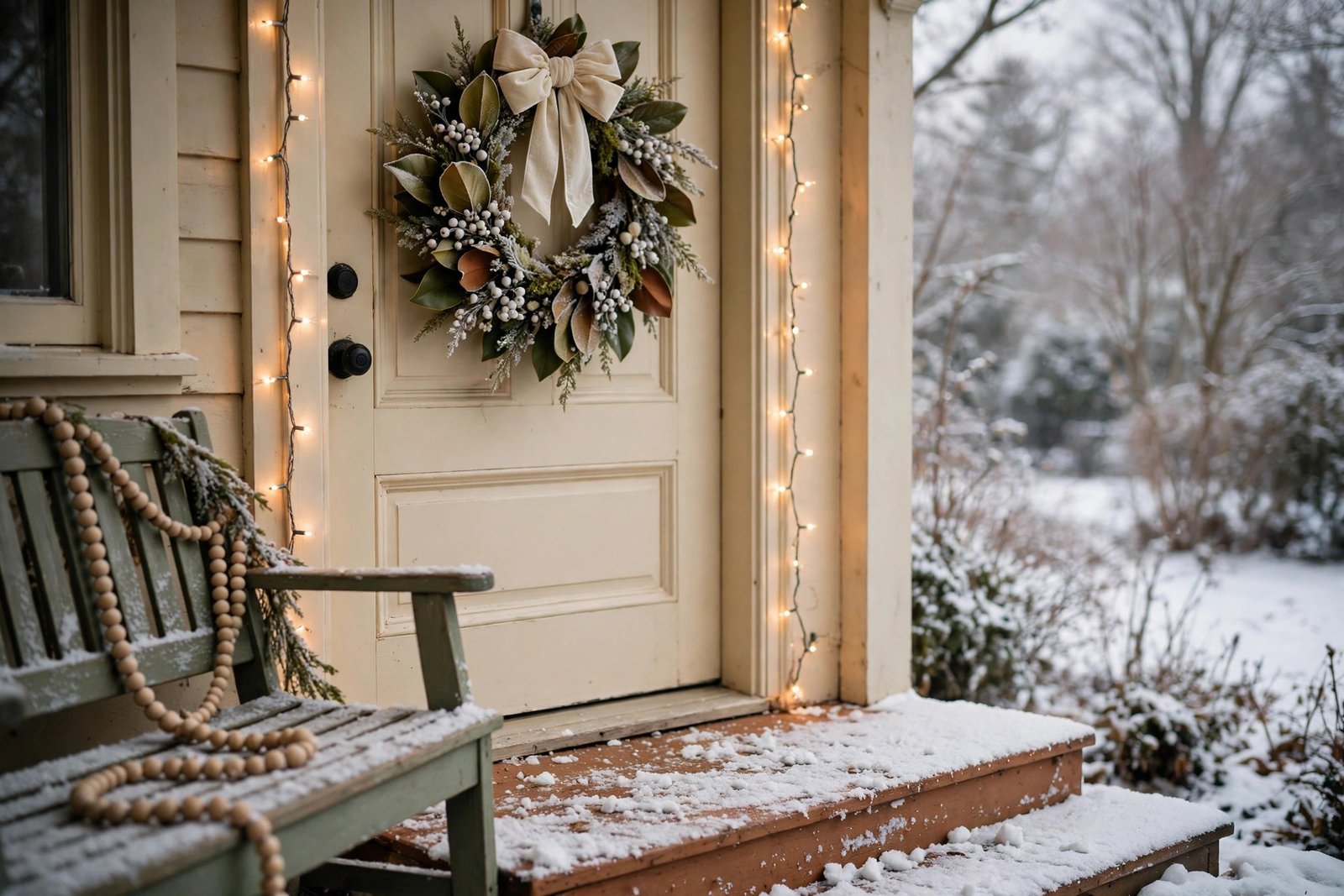
15. Post-Christmas January Wreath Refresh
January is when most wreaths start to look tired. The holidays are over, yet winter still has weeks to run. Also, a quick refresh can carry your wreath into February. This idea is about renewal, not replacement.
First, take the wreath down and inspect it closely. Remove any brown needles, faded berries, or drooping stems. Next, shake it gently outdoors to clear loose debris. A clean base makes the refresh much easier.
Then add fresh elements in a calmer palette. Swap red berries for white ones, and trade a bright bow for cream. For example, a few fresh cedar sprigs add green life fast. Plus, white berries feel right for deep winter.
Also, consider moving the wreath to a new spot. A fresh location makes an old wreath feel new. Instead of the front door, try it above the mantel. It pairs beautifully with the looks in our Christmas garland ideas for a layered winter mantel.
Finally, this refresh costs little and takes under an hour. It also keeps a good wreath out of the bin. In fact, many wreaths survive two or three refreshes with care. Your door stays welcoming until spring arrives.
Also, store your refreshed wreath flat in a cool, dry place. A wreath bag or a large box protects it well. For example, hang it on a hook inside a cupboard. Plus, good storage means less work next December.
Products to Consider
A few simple supplies make every wreath here easier to hang and enjoy. First, a grapevine wreath base suits most of these designs. Also, a wire wreath frame works well for fresh greens. Next, battery-operated fairy lights add a warm glow without cords.
A spool of wide velvet ribbon finishes bows beautifully. Plus, a sturdy over-door wreath hanger protects your door from holes. Finally, a small pair of floral wire cutters helps with every DIY step.
Frequently Asked Questions
How long does a fresh winter wreath last outdoors?
A fresh evergreen wreath lasts about three to four weeks in cold weather. Cedar and juniper often last four to six weeks instead. Cold air slows drying, so winter helps. Still, keep it out of strong sun and wind. Also, mist it lightly once a week when the air stays dry.
How do I keep a wreath from drying out?
First, hang it in a sheltered spot away from direct sun. Next, mist the greens lightly once or twice a week. Also, avoid hanging it near a heating vent or warm light. Cold, still air is a wreath’s best friend. Finally, bring it indoors overnight during a hard freeze if you can.
What size wreath fits a standard front door?
A standard 36-inch door suits a 24 to 28-inch wreath best. That size leaves a pleasing frame of door around it. Also, it will not block the handle or doorbell. For double doors, use two 20 to 22-inch wreaths instead. Finally, measure your door before you buy anything.
Can I leave a wreath up after Christmas?
Yes, a winter wreath can stay up through January and February. First, remove any clearly festive extras like red bows. Next, swap in white berries or a cream ribbon instead. Also, fresh cedar and frosted greens still look right. Finally, take it down when the greens brown or the season turns.
How do I hang a wreath without damaging the door?
An over-door wreath hanger is the safest choice for most doors. It hooks over the top and needs no holes. Also, suction hooks work well on glass panels and smooth metal. Next, check the weight limit before you hang a heavy wreath. Finally, avoid nails and screws on painted or steel doors.
Final Thoughts
A winter wreath is a small change with a big welcome. It greets guests, warms the street view, and lasts for weeks. First, pick a style that fits your home and your climate. Next, size it well and hang it with care. Then enjoy it from December right through February.
Also, remember that winter decor does not need to shout. Frosted greens, soft berries, and one warm glow are enough. For example, the simplest wreath often looks the most inviting. Finally, refresh it in January and it will serve you all season. Your door deserves that warm welcome.