
Your entryway is the first thing guests see and the last thing you touch every day. It sets the tone for your whole home in about ten seconds, yet most of us treat it as a hallway with a shoe pile. It deserves better, and it does not take much to get there.
These 21 entryway decor ideas cover every size and budget, from grand foyers to a single wall by the front door. You will find storage that actually works, lighting that flatters, and styling tricks that make even the smallest entry feel intentional. Pick the ones that solve your biggest frustration first, and build from there.
1. Start with a Console Table That Fits
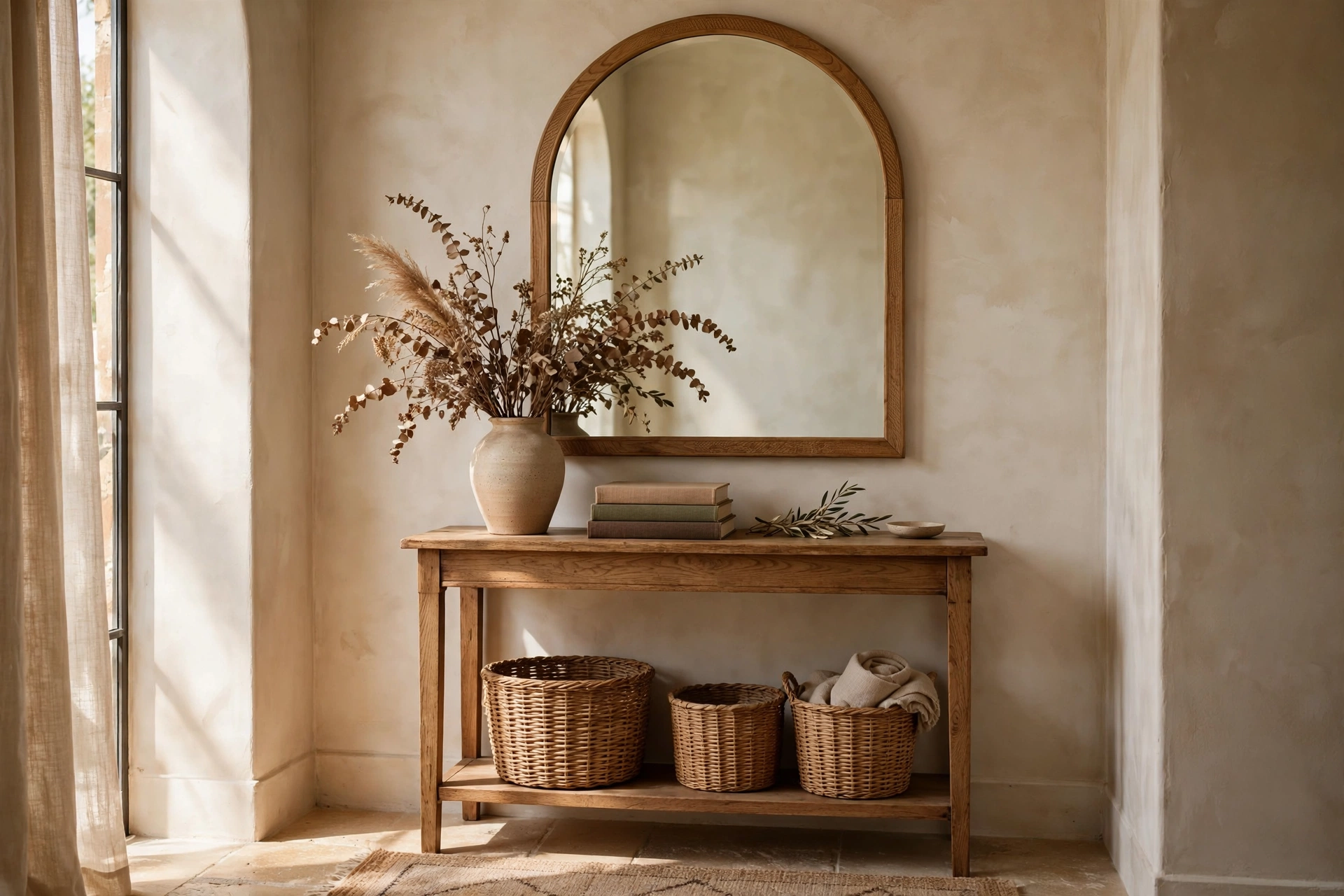
The console table is the workhorse of the entryway. It holds your keys, catches the mail, and gives you a surface to style. But size matters more than style here. Measure your wall first, then choose a table that leaves at least a few inches of breathing room on each side. In a narrow hallway, look for tables 10 to 12 inches deep; anything deeper will eat your walkway.
Function beats pure looks. A table with a lower shelf or drawer gives you hidden storage for the clutter that otherwise lives on top. If your entry is truly tiny, a wall-mounted shelf at console height does the same job without touching the floor at all. Whatever you choose, anchor it visually with something above, a mirror or art, so the table feels like part of a composition rather than a lonely piece of furniture. Style the surface in odd numbers: a lamp, a plant, and the key tray, or a stack of books, a vase, and a candle. Leave some empty space on purpose. A console crammed edge to edge reads as clutter no matter how pretty the pieces are.
Products to Consider:
- Narrow wood console table with shelf
- Wall-mounted entryway shelf
- Small drawer organizer tray
2. Hang a Mirror to Double the Light
A mirror is the hardest-working decor in a small entryway. It bounces light into dark corners, lets you check yourself on the way out, and makes a narrow space feel twice as wide. Hang it at eye level, with the center around 57 to 60 inches from the floor, just like art.
Shape sets the mood. A round mirror softens a hallway full of hard angles, while an arched mirror adds elegance and height. A large leaning floor mirror makes a dramatic statement in a bigger foyer and needs no hardware at all, just a secure wall anchor for safety. For maximum light, hang the mirror where it reflects a window or a pretty light fixture rather than a blank wall. If your entry has no window at all, position the mirror to catch the glow of a lamp or pendant; even reflected artificial light brightens the space noticeably. And keep the glass clean. A dusty mirror in a dark hallway does the opposite of what you bought it for.
Products to Consider:
- Round wood-framed wall mirror
- Arched full-length leaning mirror
- Museum-grade mirror hanging kit
3. Add Hooks for Grab-and-Go Living
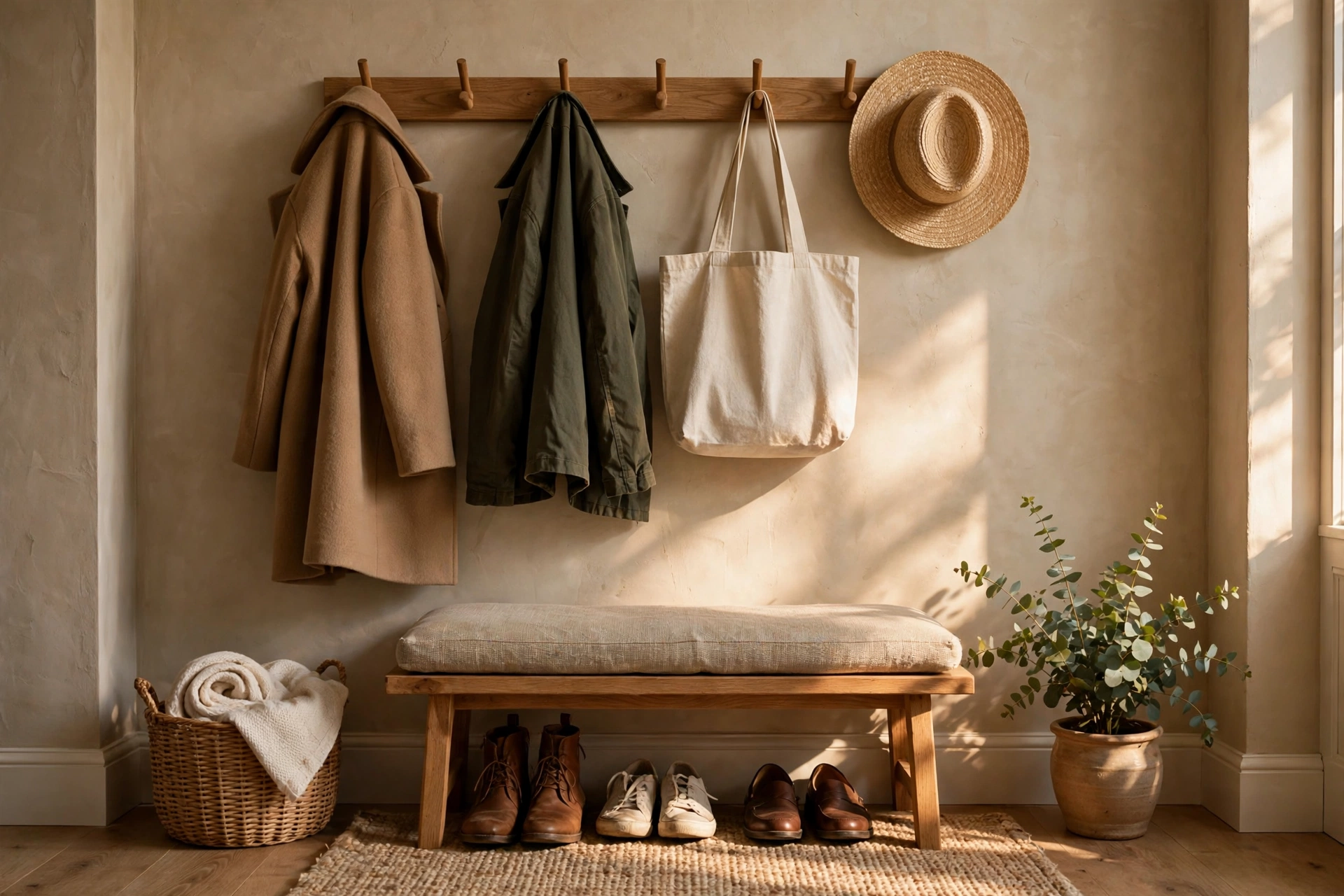
Hooks are the difference between an entryway that works and one that just looks nice. Coats, bags, dog leashes, and tomorrow’s jacket all need a home within arm’s reach of the door. A row of sturdy wall hooks keeps daily essentials off the floor and off the console table.
Mount hooks at two heights if kids are in the picture, lower for them, standard 60 to 66 inches for adults. Choose hooks rated for real weight; a winter coat plus a loaded tote is heavier than it looks. A wood peg rail gives you a classic look that suits farmhouse and traditional homes, while individual matte black or brass hooks read more modern. Leave one hook empty on purpose, because guests always need one. And resist the urge to hang everything you own there. Hooks work when each one holds one thing; a hook buried under four jackets is just a wall-mounted pile.
Products to Consider:
- Wood peg rail with 5 hooks
- Heavy-duty wall hooks, set of 4
- Wall anchors for drywall mounting
4. A Bench with Hidden Storage
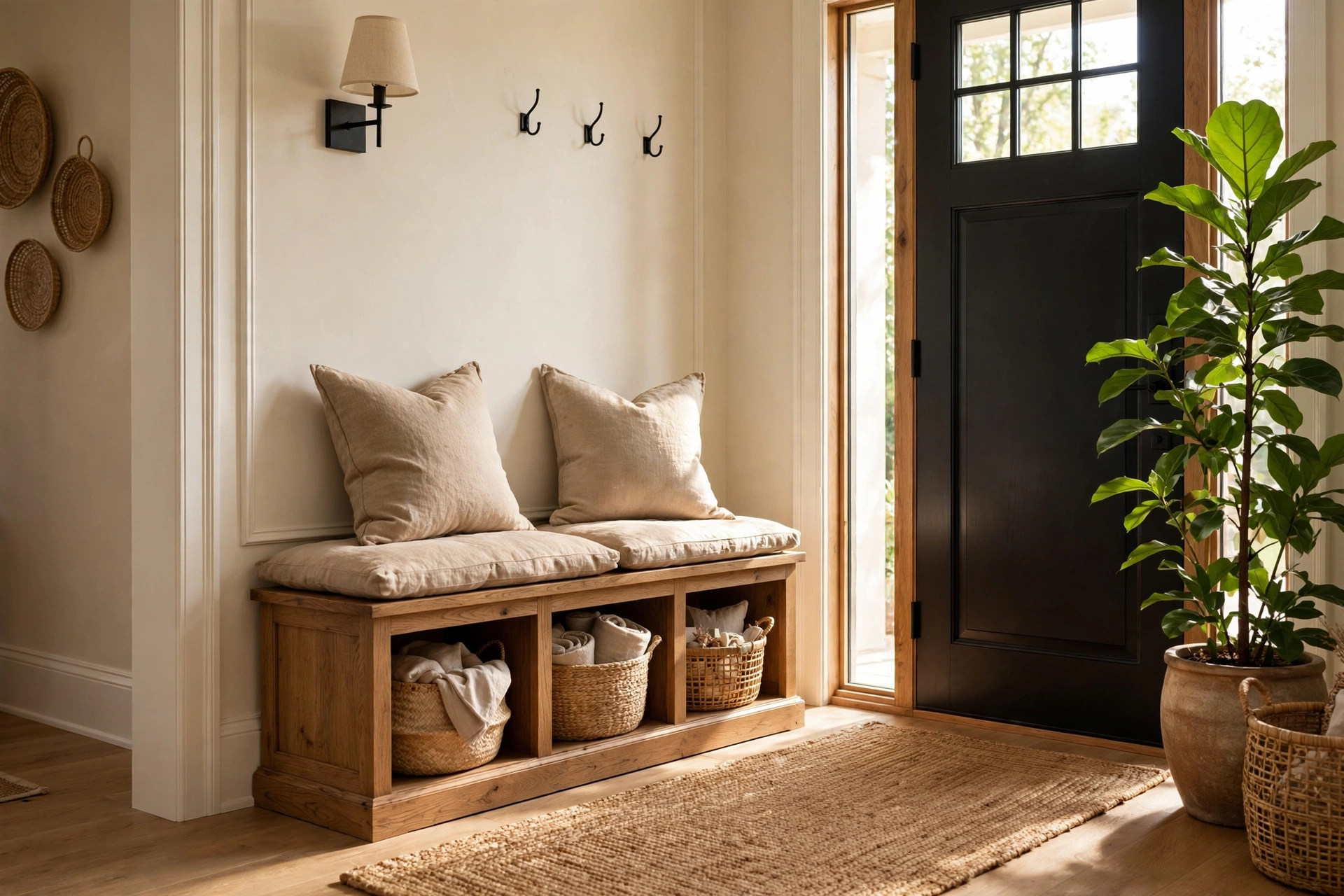
A bench gives you somewhere to sit while pulling on shoes, and if it opens up, it swallows the clutter. This is the single best upgrade for a family entryway. Look for a bench with a lift-up seat or deep cubbies underneath, sized so shoes, hats, and gloves each have a zone.
Place the bench where it will actually be used: right inside the door, not across the room. Top it with a cushion for comfort and a folded throw for softness. Underneath or inside, use labeled baskets or bins, one per person, so everyone knows where their things live. In a very narrow entry, a slim backless bench tucks neatly under a console table when not in use. Whatever style you pick, test the height before you buy: around 17 to 19 inches is comfortable for most adults to sit and tie shoes. Too low and getting up becomes a project; too high and feet dangle. The right height gets used daily; the wrong one becomes a shelf.
Products to Consider:
- Wood storage bench with lift-up seat
- Woven storage baskets, set of 3
- Bench cushion with washable cover
5. Lay Down a Runner That Can Take a Beating
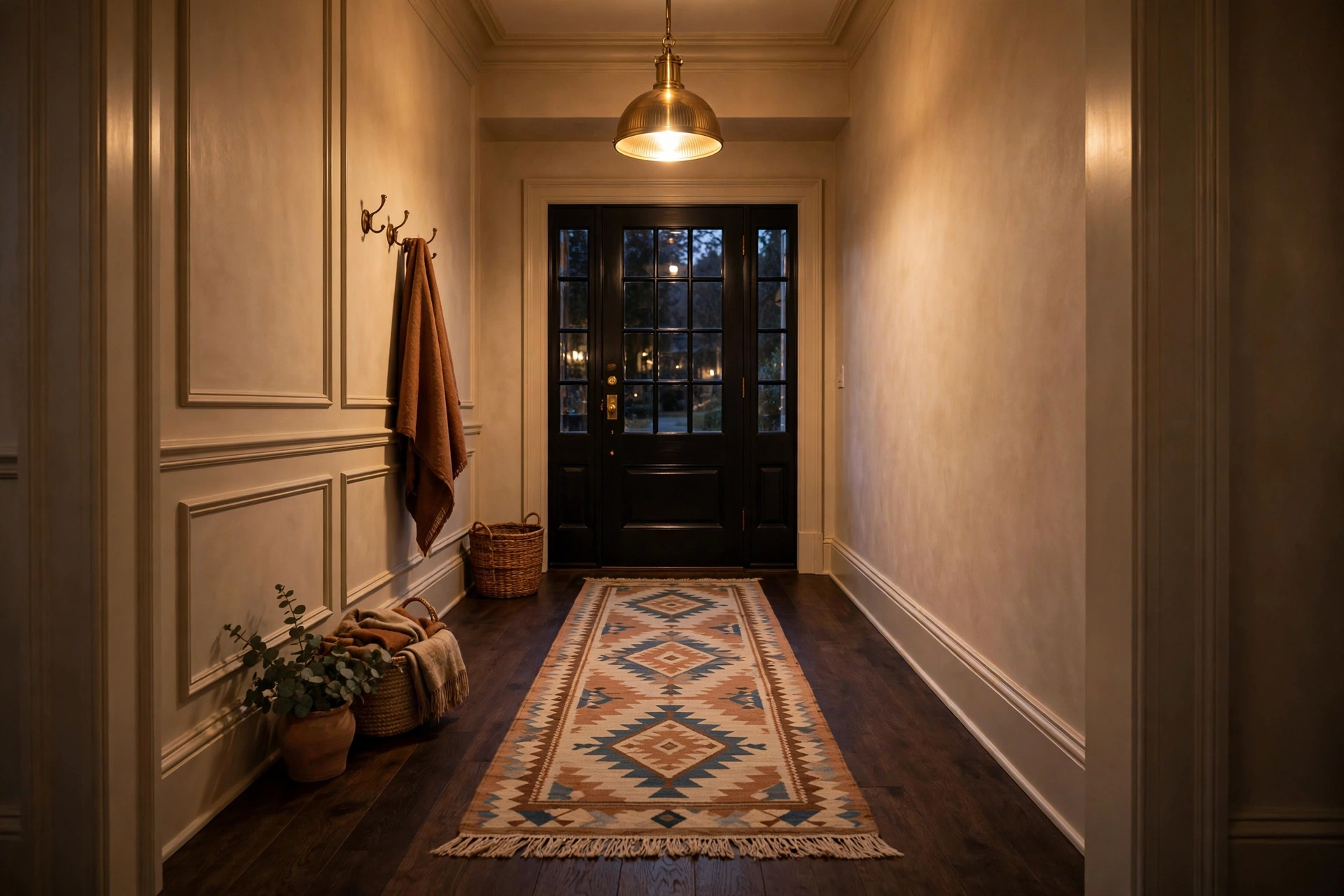
A runner defines the entryway, protects your floors, and adds color and pattern in one move. It also takes the worst abuse in the house: wet shoes, muddy paws, gritty boots. So choose for durability first. Low-pile, washable rugs are the practical sweet spot, and indoor-outdoor rugs handle moisture without complaint.
Size it generously. The runner should span most of the walkway, leaving a few inches of floor visible on each side, and it should be long enough that the front door clears it when it swings open. Darker patterns and multicolor designs hide dirt between cleanings far better than solid light colors. Shake it out weekly and it will look good for years. One more practical note: if your entry floor is slippery tile or hardwood, the rug pad matters as much as the rug. A good non-slip pad keeps the runner flat and safe, and it adds a touch of cushioning that makes the entry feel softer underfoot.
Products to Consider:
- Washable low-pile runner rug
- Non-slip rug pad, cut to size
- Door mat for outside the door
6. Corral Shoes with Baskets
Shoes are the number-one source of entryway chaos. A pair of woven baskets or a low shoe rack turns a scattered pile into something that looks intentional. Baskets have the advantage of hiding everything; a rack keeps pairs visible and aired out. Choose based on which mess bothers you less.
Give each person one basket or one shelf and hold the line. When the basket is full, something has to go back to the closet. This one rule prevents the slow creep that turns every entryway into a shoe store. For wet climates, put a boot tray under the baskets in winter so melting snow does not ruin your floors or your rug.
Products to Consider:
- Set of woven seagrass baskets
- Two-tier bamboo shoe rack
- Rubber boot tray
7. Warm Lighting for a Welcome Glow
Entryways are often the darkest spot in the house, lit by a single harsh overhead. Layer in warm light instead. A small table lamp on the console, a pair of sconces flanking the mirror, or even a plug-in wall light can transform the feeling of arrival from interrogation to welcome.
Stick to warm white bulbs around 2700K everywhere in the entry. Cool light makes wood tones look gray and skin look tired, which is not the first impression you want. If you have no outlet nearby, battery-operated picture lights and rechargeable table lamps have become genuinely good, and they free you from the tyranny of outlet placement.
Products to Consider:
- Small ceramic table lamp
- Battery-operated picture light
- Warm white LED bulbs, 2700K
8. Make a Statement with One Light Fixture
If your entry has the ceiling height, one great pendant or small chandelier does more for the space than any other single object. It draws the eye up, signals that this is a room worth decorating, and sets the style tone for the whole house. This is the place to be a little bold.
Scale is everything. In a standard 8-foot entry, keep the fixture compact and hang it high enough that tall guests clear it. With higher ceilings, go bigger and lower: a good rule is to hang the bottom of the fixture about 7 feet from the floor in a walk-through entry. Woven, rattan, and seeded-glass fixtures add warmth; black metal adds crisp contrast. If you rent or cannot hardwire, plug-in pendant kits with fabric cords have become genuinely stylish, and a simple ceiling hook holds them without an electrician. Swag the cord to the nearest wall and plug into a switched outlet for a fixture that looks permanent but is not.
Products to Consider:
- Woven rattan pendant light
- Small brass flush-mount fixture
- Dimmer switch, single pole
9. Art That Sets the Tone
Art tells visitors who lives here before you say a word. One strong piece above the console, or a small grouping on the adjacent wall, gives the entryway personality that furniture alone cannot. Choose something you love looking at every single day, because you will.
Keep the scale generous. A tiny frame on a big wall looks lost; when in doubt, go one size larger than feels safe. Botanical prints, abstract landscapes, and vintage maps all work beautifully in entries because they are interesting without demanding attention. Hang the center at eye level and use proper anchors. Entryway walls take bumps from bags and shoulders, so art needs to be secure. For renters, the new generation of removable hooks holds surprising weight and comes off cleanly; use two per frame for anything large. A gallery ledge is another renter-friendly option: lean art and swap it whenever the mood changes, no holes at all.
Products to Consider:
- Large botanical art print, framed
- Set of 3 coordinating art prints
- Heavy-duty picture hanging kit
10. Bring In a Plant for Instant Life
Nothing softens a hard-surfaced entryway like something alive. A tall plant in the corner, a trailing pothos on a high shelf, or even a simple vase of eucalyptus on the console adds color, movement, and a sense of care. Plants make a space feel tended rather than staged.
Match the plant to the light you actually have. Low-light entries do well with snake plants, ZZ plants, or pothos, all nearly indestructible. Bright entries can handle fiddle-leaf figs or olive trees for drama. If your entry gets no natural light at all, high-quality faux stems in a beautiful vase are a perfectly respectable choice, and no one will judge you for it.
Products to Consider:
- Low-light snake plant in ceramic pot
- Trailing pothos plant
- Woven basket planter
11. Small Entryway? Go Vertical
When floor space is measured in inches, the walls have to do the work. A tall, narrow arrangement, hooks up high, a mirror above, a slim shelf for keys, gives you full entryway function in a footprint barely wider than the door itself. Think in columns, not square feet.
Stack functions deliberately. A wall-mounted shelf at console height holds the key tray and mail; hooks below it catch coats; a mirror above doubles the light. A tall, narrow bookcase or tower shelf can hold baskets for shoes at the bottom and decor up top. Keep the palette light and the pieces slim so the vertical stack feels airy rather than looming.
Products to Consider:
- Tall narrow tower shelf
- Wall-mounted key and mail organizer
- Slim floating shelf, 24 inch
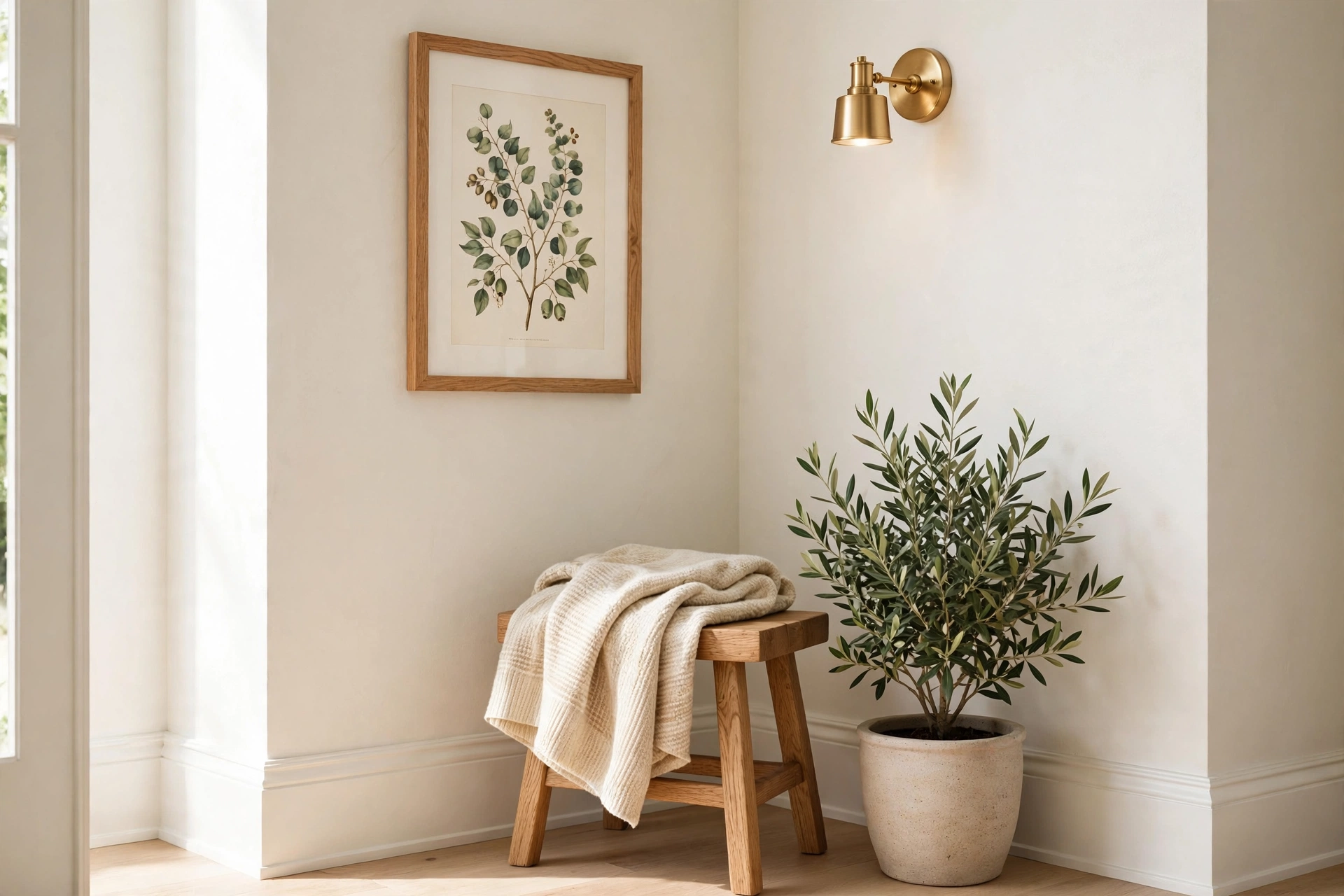
12. A Tray or Bowl for Keys and Sunglasses
Every entryway needs a landing pad for the small things: keys, sunglasses, wallet, the dog’s leash. Without one, they migrate to every flat surface in the house. A beautiful tray or bowl on the console table solves it with a single object, and it looks like styling instead of storage.
Choose something with a little weight and presence so it reads as intentional: a brass tray, a handmade ceramic bowl, a small wooden box with a lid. Keep it shallow enough that you can see everything at a glance. One landing zone per household is the rule; a second one just splits the clutter into two places you have to check.
Products to Consider:
- Brass catch-all tray
- Handmade ceramic bowl
- Small wooden box with lid
13. Seasonal Touches That Take Five Minutes
The entryway is the easiest room to dress for the season because it is small. Right now, that means fall: a couple of pumpkins by the door, dried wheat in a vase on the console, a plaid throw over the bench. Five minutes of swapping keeps the whole house feeling current.
Build a small seasonal box for each holiday so the swap is genuinely quick. Store the off-season pieces together, labeled, and the whole changeover becomes a pleasant ten-minute ritual instead of a dig through the attic. Natural materials work across seasons: pumpkins become pinecones become budding branches, all in the same vase.
Products to Consider:
- Faux pumpkins, set of 6
- Dried wheat stems bundle
- Storage bin for seasonal decor
14. Paint or Wallpaper a Single Wall
One bold wall turns a forgettable hallway into a designed space. A deep green, warm terracotta, or classic navy on the entryway’s main wall gives everything in front of it, the mirror, the console, the art, a rich backdrop that makes ordinary pieces look curated.
Removable wallpaper is the renter-friendly hero here. Modern peel-and-stick papers come in gorgeous botanical, grasscloth-look, and geometric patterns, and they come down cleanly when you move. One wall is enough; papering the whole entry can overwhelm a small space. If you paint instead, carry the color onto the inside of the front door for a custom, finished feeling.
Products to Consider:
- Peel-and-stick botanical wallpaper
- Interior paint in deep green or terracotta
- Wallpaper smoothing tool kit
15. A Coat Rack That Earns Its Floor Space
When wall hooks are not an option, a freestanding coat rack has to pull its weight. Choose one with a small footprint, real stability, and enough pegs for daily coats plus one for guests. A wobbly rack that tips when loaded is worse than no rack at all, so check the base and the weight rating.
Wood racks with a tripod or heavy round base suit traditional and farmhouse entries; slim black metal trees fit modern spaces. Place it where coats naturally get dropped, which is usually within two steps of the door, not in the corner you wish people used. Add a small tray or basket at its base for the shoes that come off with the coats.
Products to Consider:
- Wood freestanding coat rack
- Slim metal coat stand
- Small woven basket for the base
16. Mudroom-Style Cubbies for Busy Families
Families with kids, sports gear, and school bags need mudroom thinking even without a mudroom. A cubby unit with one column per person, each with hooks above and a basket below, gives everyone a personal zone and ends the morning scavenger hunt for missing shoes.
You do not need built-ins. Freestanding cubby shelves from any big-box store, anchored securely to the wall, do the job for a fraction of the cost. Label each column with a name or a photo for young kids. Keep the top of the unit clear for decor, a plant, a piece of art, so the most functional piece in the house still looks like it belongs in a home, not a locker room.
Products to Consider:
- Freestanding cubby shelf unit
- Anti-tip furniture wall anchors
- Chalkboard labels for baskets
17. Layer Textures: Wood, Woven, Linen
Entryways are full of hard surfaces: floors, doors, walls. Layering soft textures is what makes them feel welcoming instead of stark. Combine a wood console, a woven basket, a linen runner, and a wool throw, and the space gains a warmth that no single piece could deliver.
Stick to a tight color palette so the texture mix feels calm rather than chaotic. Three neutrals, say warm wood, cream, and natural fiber, let the materials be the star. Then add one accent, a rust throw, a green plant, a brass lamp, for life. Touch everything before you buy it; texture is a sense, and the pieces should feel as good as they look.
Products to Consider:
- Natural jute runner rug
- Wool throw blanket in rust
- Linen storage bins, set of 2
18. Scent: The Invisible Welcome
We decorate with our eyes and forget the nose, but scent is the first thing guests actually notice. A reed diffuser or a candle on the console table makes the entryway feel cared for before anyone registers a single visual detail. Keep it subtle; the goal is a hint, not a perfume counter.
Choose warm, welcoming scents for fall and winter: cedar, amber, vanilla, or spiced apple. In spring and summer, switch to citrus, green tea, or fresh linen. Flameless options like reed diffusers are the safe choice near the door, where drafts and curious hands make open flames risky. Replace reeds every few months to keep the scent fresh.
Products to Consider:
- Reed diffuser in cedar or amber
- Soy candle in spiced apple
- Decorative tray for the diffuser
19. A Gallery Wall of Real Life
Family photos belong in the entryway. A gallery wall of real moments, vacations, grandparents, the dog being ridiculous, greets you with your own life every time you walk in, and it tells guests this is a home where people are loved. That beats abstract art for warmth every time.
Keep frames consistent, all black, all wood, or all white, and let the photos vary. Lay the arrangement on the floor first to get the spacing right, then transfer it to the wall. Start the center at eye level and build outward. Include a few non-photo pieces, a small mirror, a souvenir, a child’s drawing in a frame, to keep it from feeling like a photo lab wall.
Products to Consider:
- Gallery wall frame set, 10 piece
- Photo printing service credit
- Paper templates for planning layout
20. Paint the Front Door a Bold Color
The front door is part of the entryway, inside and out. Painting the interior side a bold color, deep green, classic navy, warm terracotta, or even glossy black, gives the whole entry a jolt of personality for the price of a quart of paint. It is the cheapest dramatic change on this list.
Use a durable enamel or urethane-trim paint that stands up to hands, bags, and keys. Gloss or semi-gloss shows the color best and wipes clean. Test the color in your actual light before committing; entryways run dark, and colors read deeper there than on the swatch. If you love it inside, consider carrying it to the exterior side for curb appeal that starts at the street.
Products to Consider:
- Quart of enamel trim paint
- High-density foam mini roller
- New door handle in brass or black
21. The Under-$150 Entryway Refresh
No budget for furniture? You can still transform the entry for under $150. Paint the inside of the front door, add a washable runner, swap in warm bulbs, hang one great mirror from a thrift store, and style the console you already own with a plant and a candle. Each piece is cheap; together they read as a redesign.
Spend where it shows most: the mirror and the runner have the biggest visual impact per dollar. Save by thrifting frames and baskets, propagating plants from friends, and using what you own in new ways. A pretty bowl from the kitchen becomes the key catch-all; a throw from the couch softens the bench. The best entryways look collected, not purchased, and a tight budget forces exactly that.
Products to Consider:
- Washable runner rug under $60
- Round mirror under $40
- Warm white LED bulb 4-pack
Frequently Asked Questions
1. How do I decorate a small entryway?
Go vertical and keep pieces slim. Use wall hooks instead of a coat rack, a narrow console or floating shelf instead of a deep table, and a mirror to double the light. Every piece should earn its footprint with storage or function, and a light color palette keeps the tight space feeling open.
2. What should every entryway have?
The essentials are a place for keys and small items, hooks or storage for coats and bags, somewhere to sit for shoes, a mirror for last checks, and warm lighting. A rug defines the space and protects floors. Everything beyond that is styling, which you add once the basics work.
3. How do I keep my entryway from getting cluttered?
Give everything a home and enforce one rule: each person gets one basket or shelf, and when it is full, something goes back to its real home. Do a 60-second reset when you walk in: hang the coat, drop keys in the tray, shoes in the basket. Systems beat willpower.
4. What color should I paint my entryway?
Warm neutrals are the safe choice: creamy white, warm greige, or soft beige. For personality, one accent wall in deep green, navy, or terracotta adds drama without overwhelming. Dark colors work in entries because the space is transitional; you pass through rather than sit in it.
5. How can I make my entryway feel welcoming on a budget?
Warm light, a plant, and a clear surface do most of the work. Swap cool bulbs for warm ones, add greenery, corral clutter into baskets, and lay down a rug. Scent is the secret weapon: a simple diffuser makes the space feel cared for for very little money.
Final Thoughts
A great entryway is not about square footage or budget. It is about intention: a place for everything, light that flatters, and a few pieces that tell people who lives here. Start with the basics that solve your daily frustrations, the shoe chaos, the key hunt, the dark corner, and add the pretty layers after. Your entryway is the handshake of your home. Make it a warm one.