
Your porch sets the tone for your whole home in winter. It is the first thing guests see. It is also the last thing you see before you step into the cold. A good winter porch feels warm, dry, and cared for. It does not need to shout. It just needs to work.
The ideas below are winter ideas, not holiday ideas. There are no trees, ornaments, or Santa figures here. These looks work from the first cold snap in December through the last grey mornings of February. They use evergreen, wood, wool, and warm light. Most cost little. Most take under an hour. You can undo them in spring without repainting a thing.
Start with light and footing. Those two things matter most in winter. Then add texture and greenery. Pick two or three ideas to start. Add more as the season goes on. A porch that feels warm in January is the sum of small, practical choices.
Every idea here uses materials that cope with real winter. They handle snow, ice, wind, and wet boots. Nothing here needs a mild climate to work. If it cannot survive a US winter, it is not in this guide.
1. Switch to Warm 2700K Porch Lighting
Light is the first fix. Cold white bulbs make a porch feel like a parking lot. Warm white bulbs make it feel like home. Choose bulbs marked 2700K. That number means a soft, golden glow. It flatters wood, brick, and paint alike.
Check your fixture first. Outdoor fixtures need outdoor-rated bulbs. LED bulbs work well in cold weather. They turn on fast. They use little power. They last for years. Pick a bulb with a clear warm rating on the box.
Keep the light on a timer or a dusk-to-dawn sensor. That way the porch is lit when you come home in the dark. It also helps guests find the steps. A lit porch is safer. It is also more welcoming. Clean the fixture glass too. Dust and cobwebs dim the light more than you think.
If your fixture is dated, swap it for a simple lantern style. Choose a dark finish. It will suit most homes. Match the finish to your door hardware if you can. Small details like that pull the whole entry together.
2. Layer Doormats and Add a Boot Tray
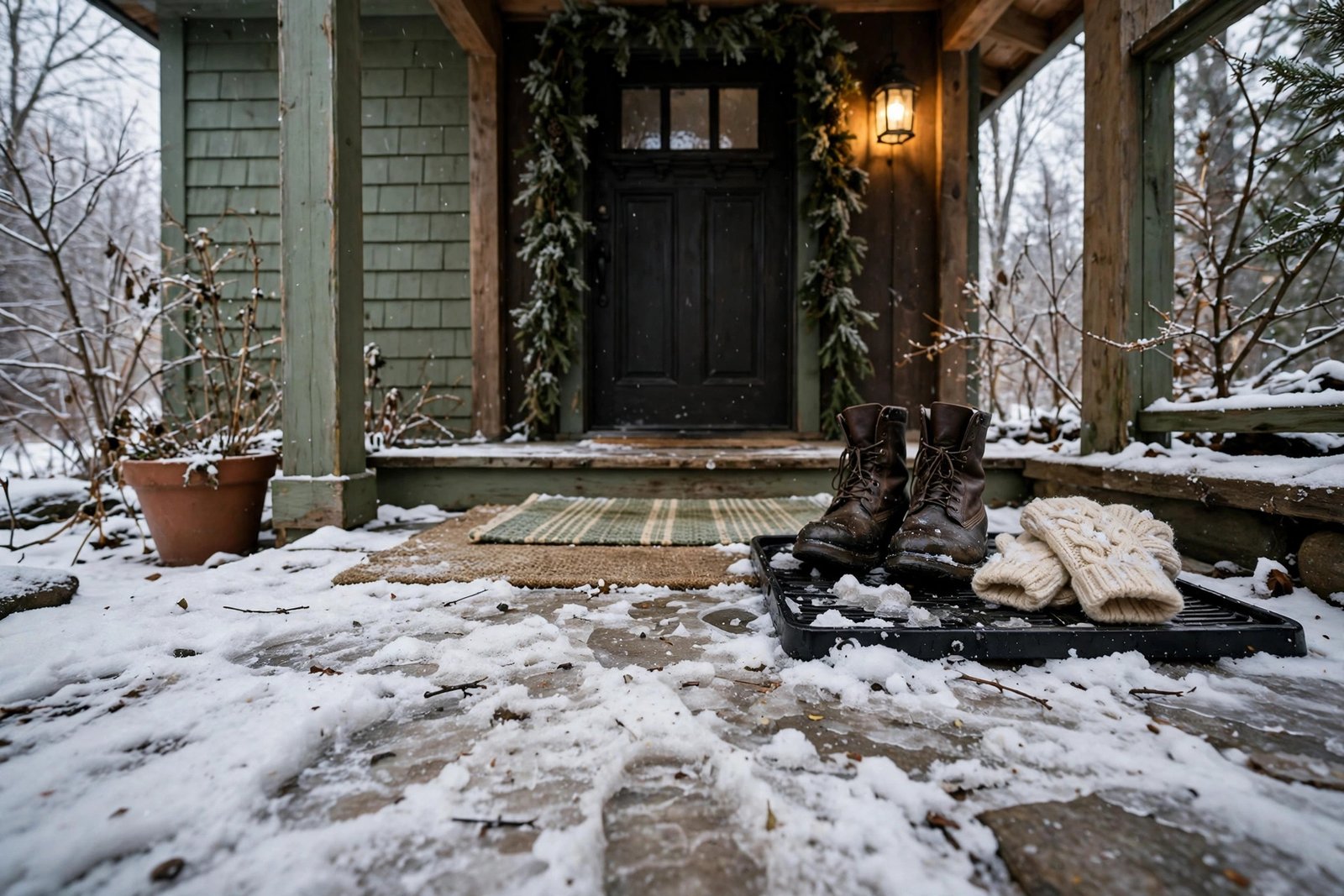
Winter boots bring snow, salt, and grit inside. A single thin mat cannot cope. Layer two mats instead. Start with a large coir mat. It scrapes mud and snow off boots. Add a smaller washable mat on top. It catches the rest.
Choose mats that drain and dry fast. Avoid thick pile mats outside. They hold water. They freeze overnight. They turn into a slip hazard. Coir, rubber, and low woven mats work best. Shake them out once a week.
Add a boot tray beside the door. A shallow tray with a raised edge holds meltwater. It keeps your porch floor dry. It also keeps boots in one tidy place. Pick a tray that fits two pairs of adult boots. Metal and heavy plastic both work.
Put a small brush by the tray. Guests can knock snow off before they step in. Keep a spare pair of dry socks inside by the door. It is a small touch. It makes a big difference on a snowy night.
3. Frame the Door with Evergreen Garland
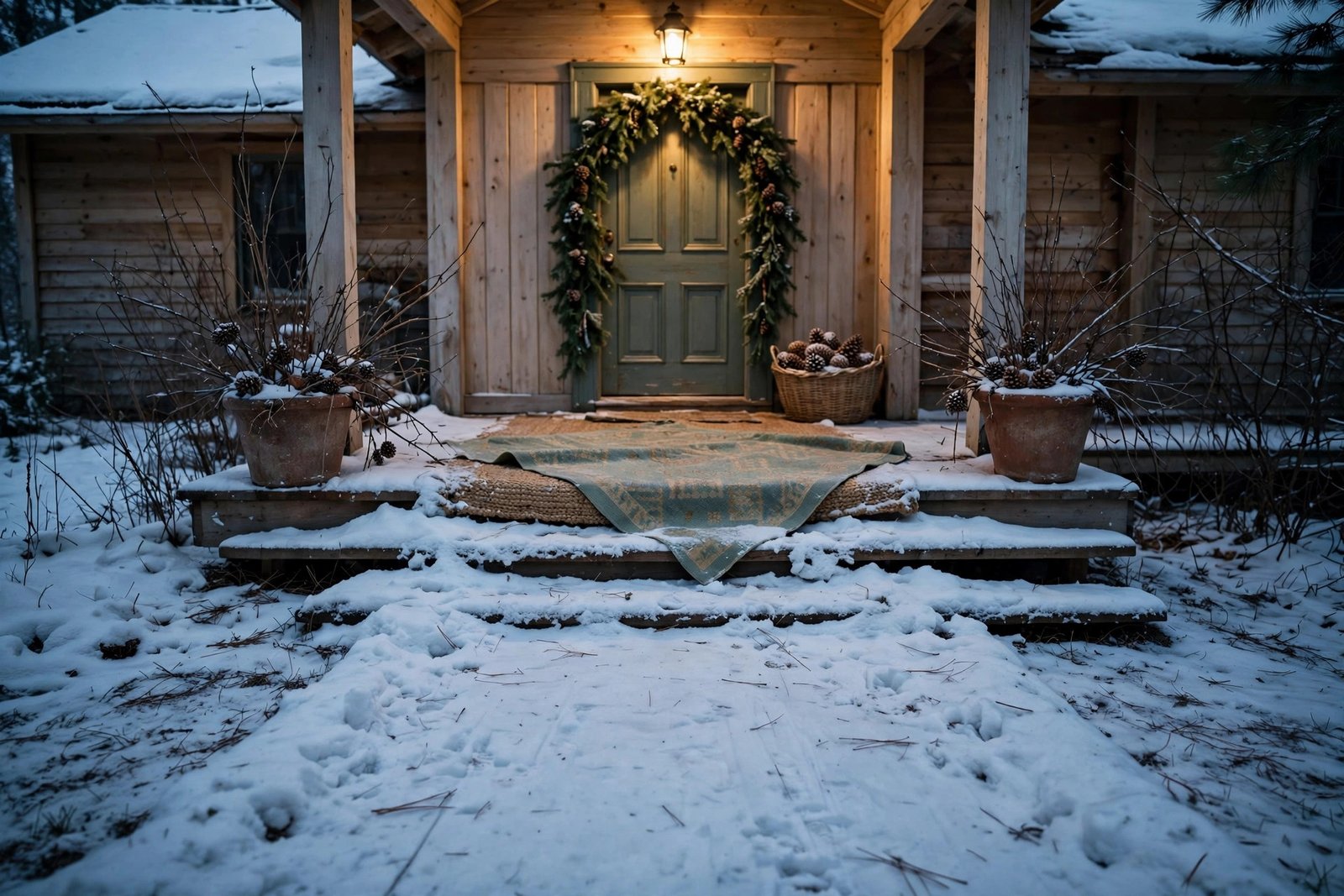
Evergreen garland is the easiest winter statement. It frames the door. It adds color when the yard is bare. It lasts for weeks in cold air. Choose real garland if you can. Cedar, pine, and fir all hold up well.
Hang it with outdoor hooks or wire. Do not use nails on a painted door frame. They leave holes. They invite rust. Use clear outdoor command hooks or screw-in cup hooks under the trim. Test the hold before you walk away.
Keep the garland simple. Add pinecones if you like. Add a plain bow if you like. Skip glitter and bright colors. Winter greenery looks best on its own. Mist it with water once a week if the air is dry.
If you want a holiday version of this look, keep it separate. Our Christmas porch decor ideas cover the festive take. This guide stays with all-winter greenery. That way your porch still looks right in late January.
4. Hang a Frosted All-Winter Wreath
A wreath is the classic front-door welcome. For winter, pick one that is not tied to a holiday. A frosted eucalyptus wreath works well. So does a simple pine wreath with pinecones. Both look right in December and in February.
Hang the wreath at eye level. Use a wreath hanger that fits over the door. It avoids holes. It also makes it easy to swap the wreath later. Check that the door still closes cleanly. A thick hanger can stop a tight door from latching.
Protect the wreath from wind. A sheltered porch helps. If your porch is open, wire the wreath to the hanger. A gust can send a light wreath flying. Check the wire after every storm.
For a fuller holiday version, see our Christmas wreath ideas. For winter, keep the palette quiet. Green, cream, and wood tones age well. They also suit any door color.
Group lanterns in odd numbers if you use more than one. One large lantern looks calm. Three small ones look festive. Two can look stiff. Keep the sizes varied. That reads as natural, not staged.
5. Set Out Lanterns for Glow, Not Glare
Lanterns add warmth without rewiring anything. Place one large lantern by the door. Add a smaller one on the steps if you have room. The glow feels soft. It feels human. It beats a bright floodlight.
Use flameless LED candles inside. They are safe in wind. They will not blow out. They also will not melt snow onto a flame. Choose candles with a timer. They will turn on at dusk on their own.
Pick lanterns made for outdoor use. Metal and thick glass hold up best. Avoid thin glass in freezing weather. It can crack. Store the lanterns in a dry spot during a heavy storm.
Keep the path clear. Lanterns should never block the steps. They should never sit where a foot can catch them. Tuck them against the wall or the rail. Safety comes first. Glow comes second.
6. Create a Sit-and-Stay Bench Nook
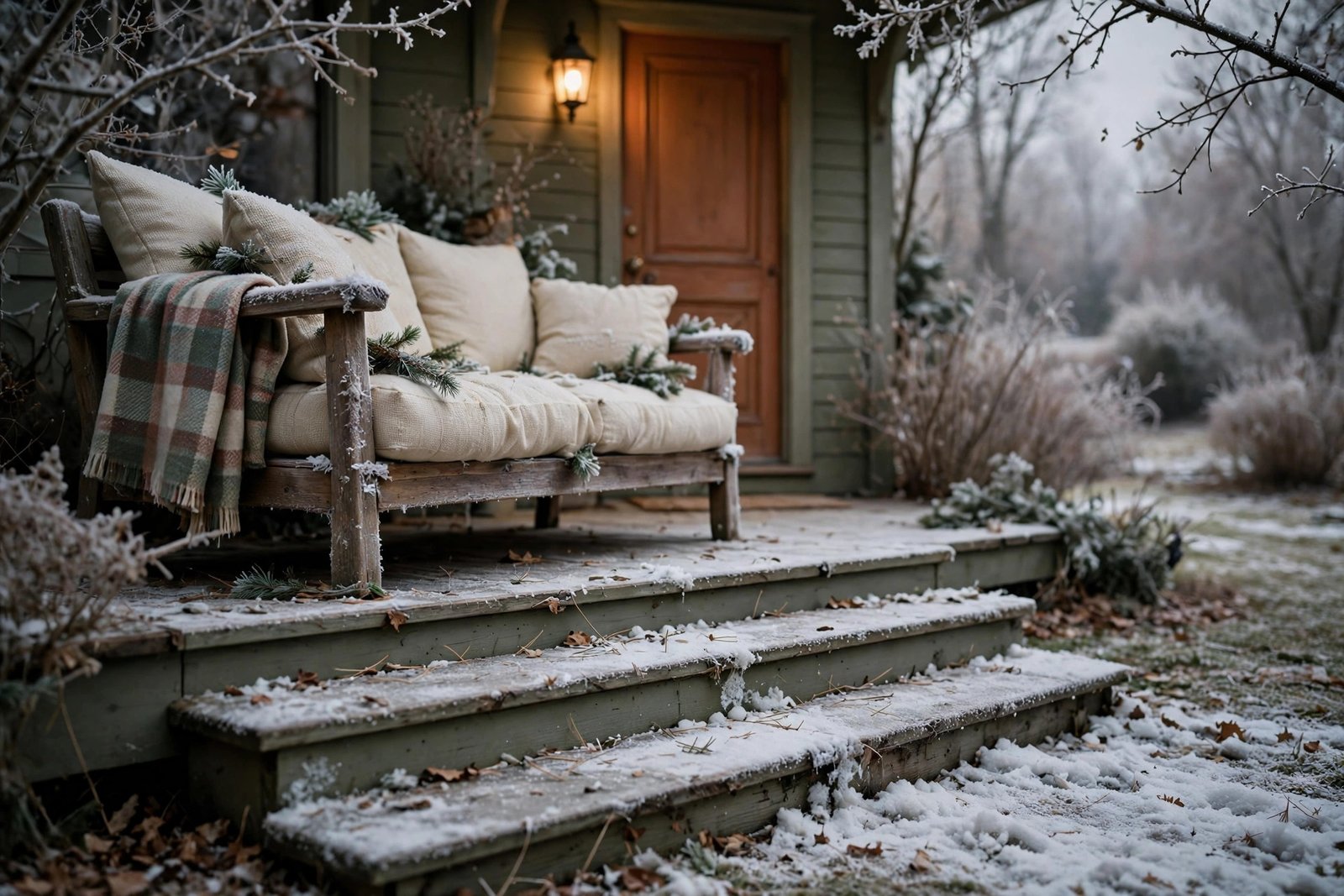
A bench turns a porch into a place to pause. It gives guests somewhere to sit while they pull off boots. It gives you a spot for a quick breath of cold air. Choose a sturdy wooden bench. It should fit your porch without blocking the door swing.
Add outdoor cushions in cream or sage. Use covers that zip off. You can wash them in spring. Bring the cushions inside during heavy snow. They will last longer. They will also stay dry.
Drape a plaid throw over one arm. It adds color. It also invites someone to sit down. Fold it neatly each night. A tidy throw looks cared for. A tangled one looks forgotten.
Keep the bench clear of clutter. One throw and two cushions are enough. The bench should still work as a seat. If it becomes a shelf for parcels, move the parcels inside. For ideas on carrying this warmth indoors, see our entryway decor ideas for the space just past the door.
Choose throws in colors that suit your door. Cream works with most doors. Sage suits a green or grey door. Terracotta warms up a dark door. Keep the palette to two colors at most. That keeps the basket looking calm.
7. Keep a Basket of Throws by the Door
A basket of throws is useful and pretty. Keep it by the bench or the door. Guests can grab a throw for a cold evening sit. You can grab one for a quick step outside. Choose a large woven basket with handles.
Use throws in wool or thick fleece. They should be washable. Outdoor air brings dust and damp. Wash the throws every few weeks. Air them on a dry day.
Roll the throws instead of folding them. Rolled throws fit better. They also look tidy in a basket. Use two or three throws at most. A stuffed basket looks messy.
Bring the basket inside during a storm. Snow can soak wool fast. A dry basket lasts for years. A wet one can mildew. Check the bottom of the basket for damp each week.
8. Fill Planters with Bare Branches and Pinecones
Summer flowers die back in winter. That is fine. Bare branches look good on their own. Cut branches from birch, dogwood, or curly willow. Stand them upright in a tall planter. They add height. They add shape.
Fill the base with soil or sand. That keeps the branches steady in wind. Add pinecones around the base. They hide the soil. They also add a natural winter texture. Use pinecones you find or buy in bulk.
Spray the branches with water on a frosty morning. They will catch a light frost. It looks lovely. Do not use fake snow spray. It can stain the planter and the porch.
Swap the branches in late winter if they look tired. Fresh cuts take five minutes. The planter will look new again. Keep the planter near the door, not in the walkway.
9. Choose an Outdoor Rug That Handles Snow
A rug softens a hard porch floor. It also adds pattern and color. In winter, the rug must handle snow and salt. Choose a flat-weave outdoor rug. Polypropylene rugs work well. They dry fast. They resist mildew.
Size matters. The rug should fit under the door swing. It should also leave room for the mat. A rug that is too big will bunch up. A rug that is too small will look lost.
Shake the rug out after snow. Salt can stain the fibers. Hose it down on a mild day. Let it dry fully before you put it back. A damp rug can freeze to the porch floor.
Pick a pattern that hides dirt. Stripes and small geometrics work well. Avoid pale solid colors. They show every footprint. A rug in sage, cream, or terracotta suits most porches.
Test the bench lid on a cold morning. Some lids stick when they are damp. A little wax on the edge can help. Keep the bench dry inside. A damp bench can smell musty by spring.
10. Add a Windbreak with a Storage Bench
Wind makes a porch feel colder than it is. A storage bench can block some of it. Place the bench along the open side of the porch. It breaks the wind. It also hides clutter.
Use the bench for boots, salt, and tools. Keep the lid easy to open. A heavy lid can pinch fingers in cold weather. Add a small handle if the bench has none.
Choose a bench made for outdoor use. Cedar and resin both hold up. Avoid indoor furniture outside. It can warp. It can also grow mildew.
Do not block the whole porch. Air still needs to move. A full windbreak can trap damp air. Leave a gap at one end. The porch will feel sheltered, not sealed.
11. Set Up a Small Cocoa Station
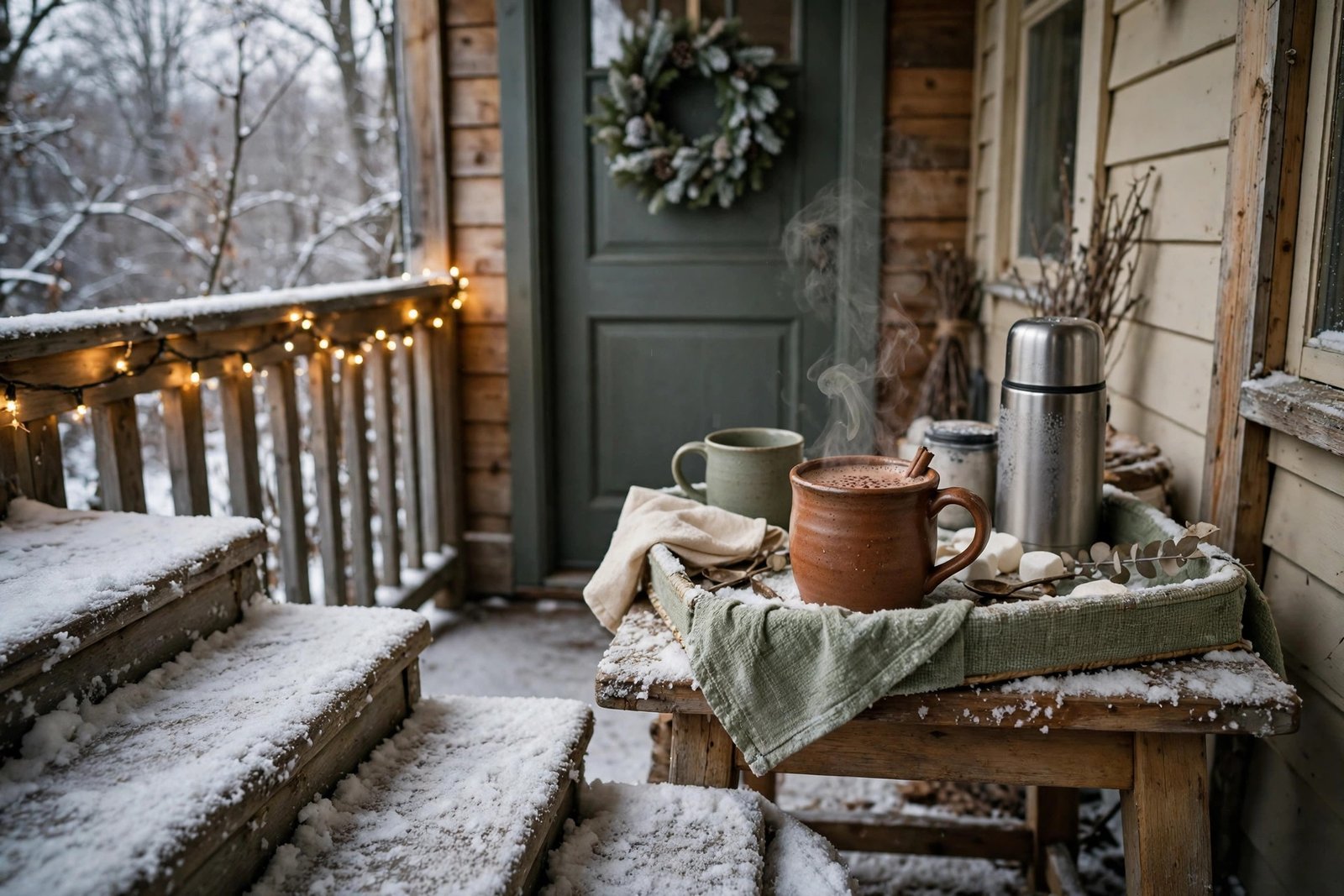
A cocoa station turns a cold porch into a treat. Set a small table by the bench. Add a tray, two mugs, and a thermos. Keep it simple. This is a porch, not a cafe.
Use a thermos for hot cocoa or tea. It stays warm for hours. Bring it inside each night. Wash the mugs after use. Do not leave milk or cocoa out overnight. It will spoil.
Keep the station under cover. Rain and snow will ruin it fast. A roof overhang helps. A small tray with a raised edge keeps mugs from sliding.
Add a folded cloth napkin and a small spoon. That is all you need. On a snowy afternoon, a warm mug on the porch feels like a small holiday. It works all winter long. No holiday decor is needed.
Buy wood early in the season if you can. Dry wood is easier to find in autumn. Check each log for damp before you stack it. Wet logs will not burn well. They will also smoke more.
12. Stack Firewood as Winter Decor
Firewood is practical and pretty. A neat stack by the porch says winter. It also means dry wood is close at hand. Stack the wood in a log holder or a simple rack. Keep it off the ground.
Cover the top of the stack. A small tarp or a metal cover works. Leave the sides open. Air flow keeps the wood dry. Wet wood will not burn well.
Keep the stack away from the door. Wood can block the path. It can also bring insects close to the house. Leave at least a foot of space from the wall.
Use the oldest wood first. Rotate the stack as you use it. A tidy stack looks cared for. A messy pile looks like a chore. Keep the area swept.
13. Light the Path to the Door
Guests should see the path clearly. Dark steps are a fall risk. Add low path lights along the walkway. Solar lights work well in many US climates. They charge by day. They glow at dusk.
In snowy regions, solar lights can struggle. Short days mean less charge. Use low-voltage wired lights if your winters are long and dark. They are more reliable. A timer keeps them on only when needed.
Space the lights evenly. Too many lights look busy. Too few leave dark gaps. One light every six to eight feet works well. Aim the light down at the path, not up at guests.
Clear snow from around the lights. A buried light helps no one. Brush snow off the tops after each storm. Check the bulbs once a month.
Check the window box from inside too. The sprigs should look full from the room. Trim any stems that block the glass. A tidy box lets light in. It also frames the view well.
14. Dress Window Boxes for Winter
Window boxes do not need to sit empty in winter. Fill them with evergreen sprigs. Add pinecones and bare branches. The mix adds color to a bare wall. It also frames the windows.
Use a liner inside the box. It holds soil and sprigs in place. Push the sprigs in at an angle. They will look full. They will also shed snow better.
Water the sprigs lightly if the air is very dry. Do not soak them. Frozen soil can crack a box. Check the brackets after a heavy snow. Wet evergreen is heavy.
Keep the palette simple. Green, brown, and cream work well. Avoid bright red berries if you want an all-winter look. They can read as holiday decor. Save them for a festive version.
15. String Warm White Lights Along the Rail
String lights are the fastest way to warm a porch. Hang one strand along the rail. Use warm white bulbs, not cool white. Warm white reads as candlelight. Cool white reads as office light.
Choose outdoor-rated lights. Indoor strings can short in snow. Look for a clear outdoor rating on the box. Use outdoor extension cords too. Keep plugs off the ground.
Hang the lights with clips, not nails. Clips grip the rail. They also come off clean in spring. Space the bulbs evenly. A sagging strand looks untidy. A taut strand looks neat.
Put the lights on a timer. They will turn on at dusk. They will turn off at bedtime. That saves power. It also keeps the porch from glowing all night. For a festive take on outdoor lighting, see our outdoor Christmas decor ideas. This winter version stays plain and warm.
16. Make Rocking Chairs Winter-Ready
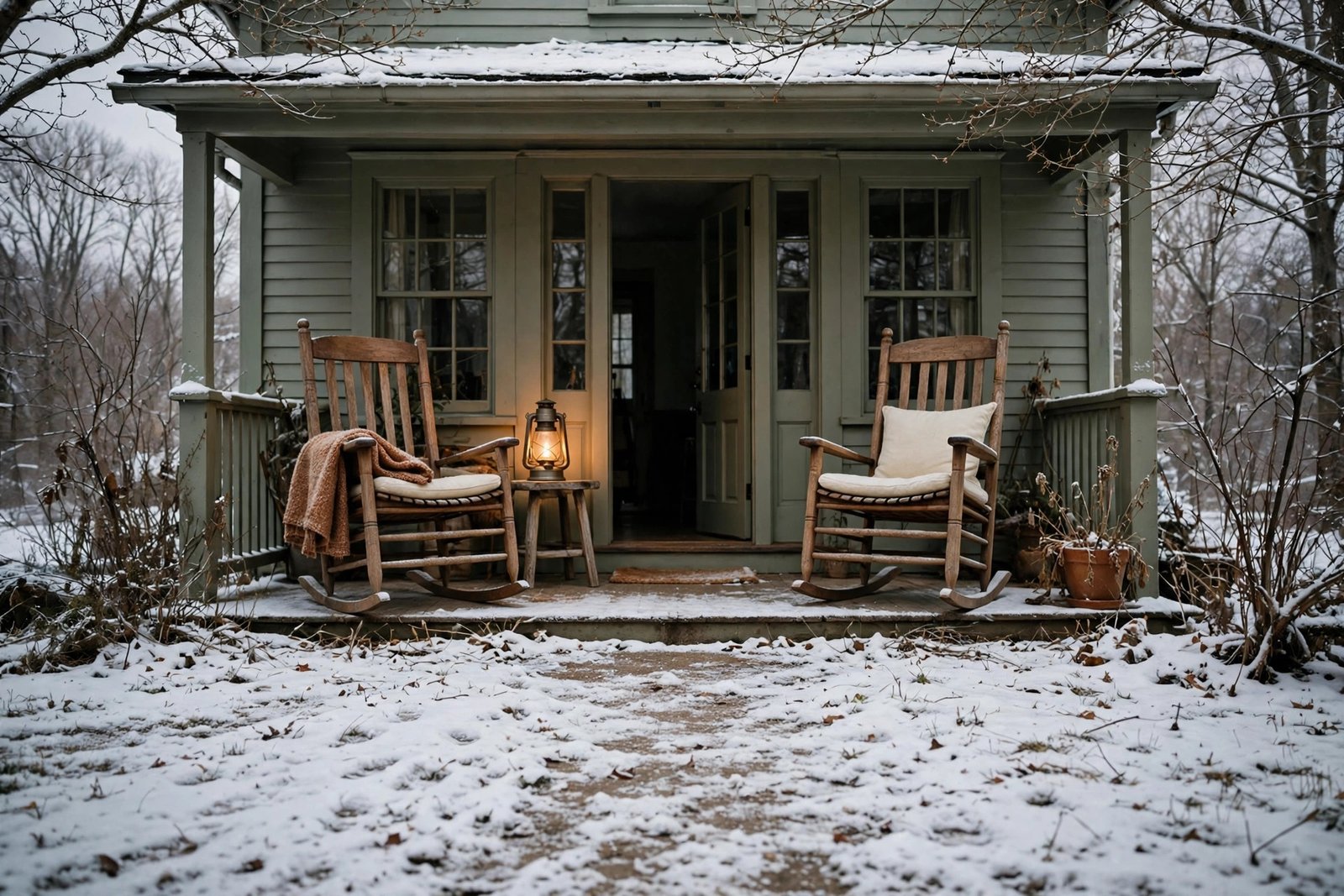
Rocking chairs suit a winter porch. They invite a slow sit. They also suit a small porch. Two chairs and a small table fill the space well. Choose chairs made for outdoor use. Wood and metal both work.
Add outdoor cushions in a warm neutral. Cream or oatmeal works well. Bring the cushions inside during snow. They will stay dry. They will also last longer.
Drape a wool blanket over one chair arm. It adds warmth. It also adds color. Fold it when not in use. A neat blanket looks inviting. A crumpled one does not.
Check the rockers after each freeze. Ice can build up under them. Clear it before you sit down. A chair that rocks on ice is not safe. Keep the porch floor swept and dry.
Teach everyone in the house where the tools live. A shovel in the same spot each time saves searching in the dark. Hang the brush by its handle. Keep the salt scoop in the bin. Small habits save time on snowy mornings.
17. Keep a Tidy Snow-Tool Station
Snow tools are ugly when they lie around. They are useful when they are close. Give them a tidy home. A tall bin or a wall hook by the door works well. Keep the shovel, the brush, and the salt together.
Choose a shovel that fits your porch. A short shovel works for steps. A long shovel works for the walk. Keep the blade clean. Snow can freeze onto a dirty blade.
Store salt in a sealed bin. Open bags spill. They also absorb damp. Label the bin if you share the porch. Everyone will know where to find it.
Sweep the steps after each snowfall. Do not wait for the snow to pack down. Packed snow turns to ice fast. A clear step is a safe step.
18. Add Frosted Glass and a Storm Door Touch
A storm door adds a layer of warmth. It also protects your front door. If you have one, clean the glass. A clean storm door lets light through. It also shows off your wreath.
Add a frosted film to the glass if you want privacy. The film sticks on. It peels off in spring. It also softens the light. Choose a plain frosted film. Patterns can look busy.
Check the storm door seal. Cold air leaks through worn seals. Replace the weather stripping if it is cracked. It is a cheap fix. It saves heat all winter.
Keep the door handle free of ice. A frozen handle is a small misery. Wipe it dry after snow. A little care keeps the entry working well.
Watch which birds visit your feeder. Chickadees and finches are common in many US regions. Note what seed they prefer. Buy that seed next time. A feeder that suits local birds will get more visits.
19. Feed Winter Birds from the Porch Edge
Winter birds bring life to a quiet porch. Hang a simple feeder from a porch post or a nearby branch. Use a feeder that suits your local birds. Seed feeders work for most US regions. Suet feeders suit cold climates.
Keep the feeder away from the door. Birds need space. Guests need a clear path. Hang it at the porch edge. You can still watch from inside.
Fill the feeder often in cold snaps. Birds burn more energy in winter. Clean the feeder every few weeks. Dirty feeders spread disease. Use warm water and a brush.
Do not scatter seed on the porch floor. It draws mice. It also makes the floor slippery. Keep seed in a sealed bin. Sweep up spills right away.
Talk to neighbors about ice on shared paths. A shared walk needs a shared plan. Agree who salts which part. It avoids gaps where ice stays. It also keeps everyone safer.
20. Plan for Ice with Salt and Non-Slip Steps
Ice is the biggest winter porch risk. Plan for it before the first freeze. Keep a bag of ice melt by the door. Choose a melt that is safe for your porch surface. Some melts can damage concrete or wood.
Add non-slip strips to the steps. Adhesive strips work well. They grip boots. They also show the step edge in the dark. Replace them when they wear down.
Check the steps after each thaw and freeze. Water can pool in low spots. It freezes overnight. Fill low spots in spring. For now, salt them early.
Keep a small scoop by the salt bin. It makes salting fast. It also keeps hands dry. Salt the steps before guests arrive. It is a small habit. It prevents falls.
21. Edit Once, Then Leave It Alone
A winter porch works best when it is edited. Too many items look cluttered. Too few look bare. Pick your best five or six pieces. Put the rest away. Let each piece breathe.
Step back to the walkway. Look at the porch as a guest would. Is the door clear? Is the path clear? Does one warm light draw your eye? If yes, you are done.
Resist the urge to add more each week. Winter decor should settle in. It should look lived in, not staged. A porch that changes little feels calm. It also feels cared for.
Do a quick check each Sunday. Shake out the mats. Tidy the throws. Check the lights. Five minutes a week keeps the porch looking good all season. That is the whole secret.
Products to Consider
These are generic item types to look for. They are not brand picks. Check sizes and outdoor ratings before you buy. Match each piece to your porch size and your local winter weather.
- Warm white 2700K outdoor LED bulbs for porch fixtures
- Layered coir doormat and washable top mat
- Shallow boot tray with a raised edge
- Real or faux evergreen garland with pinecones
- Frosted eucalyptus or pine wreath with a door hanger
- Outdoor lanterns with flameless LED candles and timers
- Sturdy wooden bench with washable outdoor cushions
- Woven basket with wool or fleece throws
- Tall planters with bare branches and pinecones
- Flat-weave outdoor rug in a dirt-hiding pattern
- Warm white outdoor string lights with rail clips
- Outdoor rocking chairs with neutral cushions
- Ice melt safe for your porch surface, with a scoop and sealed bin
- Non-slip adhesive strips for porch steps
Frequently Asked Questions
How do I decorate a porch for winter without Christmas decor?
Use evergreen, wood, wool, and warm light. Skip trees, ornaments, and Santa figures. Choose plain garland and wreaths. Add lanterns and throws. The look will work from December through February.
What is the best lighting for a winter porch?
Warm white light at 2700K works best. It flatters wood and paint. It also feels welcoming. Use a timer or a dusk-to-dawn sensor. Add one low glow, like a lantern, for warmth.
How do I keep my porch safe in snow and ice?
Clear steps after each snowfall. Salt before guests arrive. Add non-slip strips to step edges. Keep the path lit. Store salt and a scoop by the door so the job takes minutes.
Can I leave cushions and throws outside all winter?
You can leave outdoor-rated cushions out in dry cold. Bring them inside during snow and storms. Throws should come in at night if snow is forecast. Dry cushions last longer and stay cleaner.
When should I take winter porch decor down?
Take it down when the last frost has passed. In most US regions, that is late February or March. Swap evergreen for spring greenery. Wash and store throws, cushions, and rugs dry.
Final Thoughts
A winter porch does not need a big budget. It needs light, warmth, and a clear path. Start with the two things that matter most. Fix the lighting. Fix the footing. Then add greenery and texture.
Keep the look simple. Let the snow do some of the work. A plain garland and a warm lantern look better than a crowded porch. Your entry will feel calm and welcoming all season.
Pick two ideas from this guide today. Put them in place this weekend. Add one more next week. By the time the cold sets in, your porch will be ready. It will welcome you home every dark evening.