
There is a particular kind of cold that lives in a bathroom in January. You step out of a hot shower onto a cold tile floor, reach for a thin towel, and the whole room feels like it is working against you. The good news is that a bathroom is one of the easiest rooms in the house to warm up, because it is small, it is used every single day, and a few thoughtful swaps change how it feels immediately. You do not need a renovation, a new vanity, or a big budget to make it happen.
Winter bathroom decor is really about three things: warmth you can touch, light you can relax in, and materials that can handle steam, splashes, and daily use without falling apart. Thick towels beat decorative ones. Washable fabrics beat anything that has to be dry-cleaned. Battery-powered candlelight beats a real flame anywhere near water and fabric. When you build your winter bathroom around those practical rules, the cozy look follows naturally, and it keeps looking good in February and March too, long after the early-winter excitement has faded.
This guide walks through 17 ideas you can mix and match, whether you own your home or rent, whether your bathroom is a roomy primary suite or a compact guest bath. Some take five minutes, like swapping a hand towel. Others, like adding a heated towel rail, are weekend projects worth planning. All of them are designed for real American homes: hard water, cold mornings, steamy showers, and guests who show up with wet boots and cold hands.
1. Upgrade to Thick, Thirsty Towels in Warm Neutrals
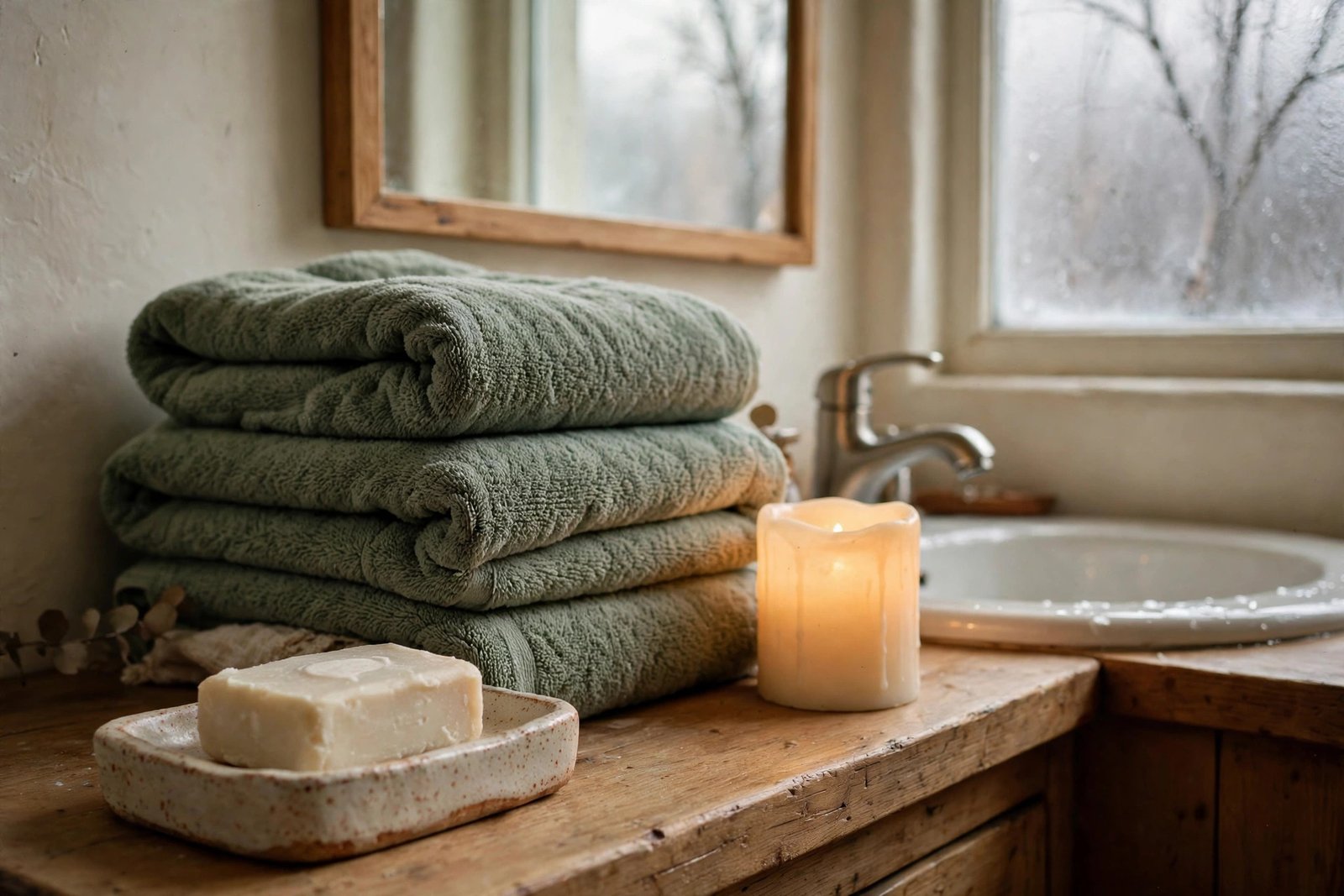
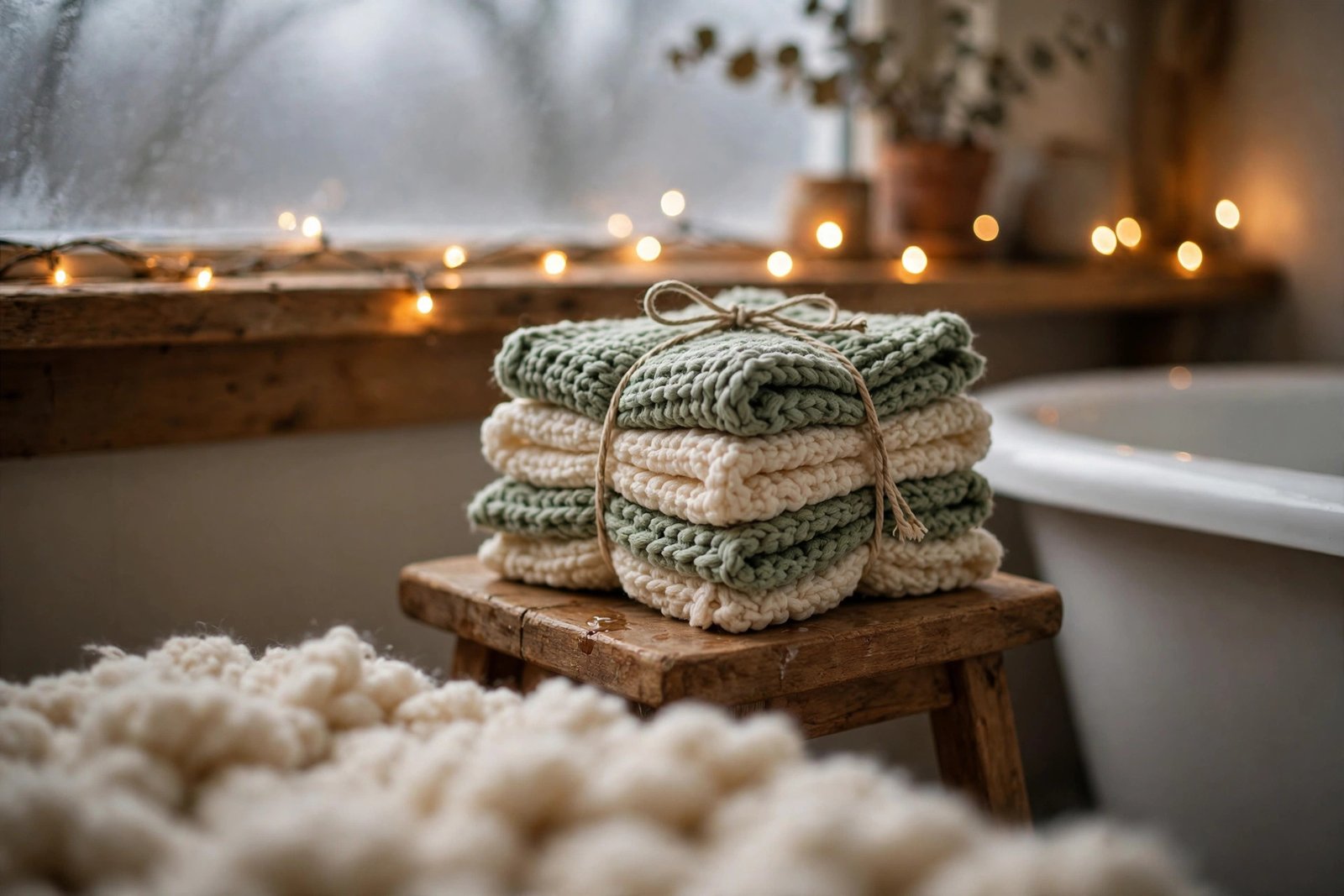
The single fastest way to make a bathroom feel warmer is to replace thin, tired towels with thick ones that actually dry you properly. Look for towels with a dense, plush pile or a waffle weave, in warm neutrals like cream, oatmeal, camel, or soft sage. These colors read warm against white tile and chrome, and they hide the wear of daily washing better than bright white, which can start to look grey by midwinter.
Weight matters more than thread count marketing. A heavier towel holds heat from the dryer or a towel warmer longer, which is exactly what you want when you step out of the shower. If your towels have gone stiff, skip the fabric softener, which coats fibers and reduces absorbency, and wash them in warm water with a cup of white vinegar every few washes to strip buildup.
2. Add a Heated Towel Rail for a Warm Towel Every Morning
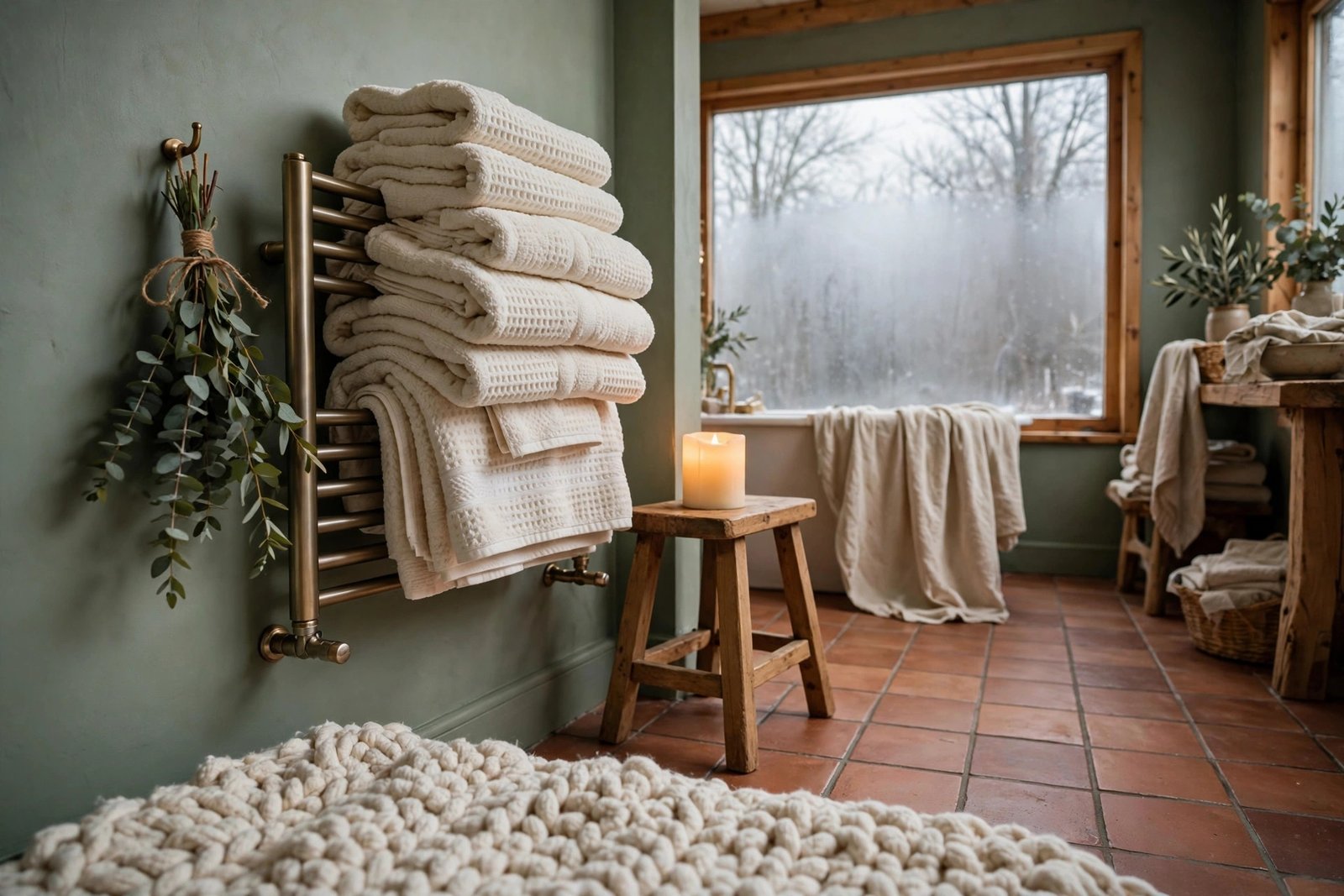
A heated towel rail is the closest thing to a small daily luxury that also makes complete practical sense in winter. You hang your towel on it after your shower, and the next morning it is dry, warm, and ready, instead of cold and slightly damp from a humid bathroom.
Choose a rail sized to your wall and your towels: a rail that only holds a hand towel will frustrate you, while an oversized one crowds a narrow wall. Mount it within easy reach of the shower or tub, but never where it can be splashed directly, and keep the cord away from water. Run it on a timer if your model offers one, so it warms towels before your usual shower time and switches off afterwards, keeping the electricity use modest. On the coldest mornings of the year, stepping out of the shower into a pre-warmed towel changes the whole feeling of the room, and it helps towels dry between uses, which keeps the bathroom smelling fresher too.
3. Layer Bath Mats So Your Feet Never Meet Cold Tile
Cold tile is the number one complaint in a winter bathroom, and the fix is layering underfoot. Start with a thick, high-pile bath mat right where you step out of the shower or tub, then add a longer runner or a second mat in front of the sink if the floor stays cold. Cotton mats with a chunky weave feel warm immediately and can go straight into the washing machine, which matters in winter when mats pick up more moisture and need washing more often.
Think about the path you actually walk barefoot each morning: from shower to towel hook, from towel hook to sink, from sink to door. Cover that path, not just a decorative strip in the middle of the room. A non-slip backing or a separate rug grip underneath keeps mats from sliding on wet tile, which is a safety point as much as a comfort one.
4. Swap to a Heavier Shower Curtain That Blocks Drafts
A thin plastic shower curtain does nothing for warmth, and in winter it often billows inward with every draft, sticking to you mid-shower. A heavier fabric curtain, ideally a waffle weave or a lined cotton one, hangs straighter, blocks drafts from a cold window or a vent, and instantly makes the shower area look more finished.
Practical details make the difference here. Use a fabric liner behind the decorative curtain so the outer layer stays dry and lasts the season, and wash the liner regularly to prevent mildew in a steamy winter bathroom. Weighted hems or magnetic weights at the bottom keep the curtain in place, and a curved shower rod, if your layout allows it, adds elbow room that makes a winter shower feel less cramped. Hang the curtain high and a little wide so the shower feels taller and the fabric frames the space, rather than cutting it in half.
5. Warm Up the Lighting with Battery-Powered Glow
Most bathrooms are lit with a single harsh overhead light that flatters no one and feels clinical on a dark winter morning. You do not need an electrician to fix that. Battery-powered flameless candles on a shelf or the tub edge, and a short string of warm fairy lights along a mirror frame or a window, add a soft second layer of light that makes the whole room feel calmer. Because they are flameless, they are safe near towels, curtains, and water, and you can leave them on a timer so the bathroom greets you with a warm glow before your alarm has fully woken you up.
Keep the rule simple: one warm light source per vignette, not five competing glows. A candle cluster on the vanity plus fairy lights on the window is plenty; more than that starts to look cluttered and makes the room feel smaller. Choose warm white bulbs in the 2700K range for any light you can control, and swap a daylight-bright bathroom bulb for a warm one in the main fixture too, so the layers match instead of clashing. The same layered-lighting thinking warms up a bedroom just as well, as shown in our winter bedroom decor ideas.
6. Dress the Window Against Drafts and Grey Light
A bathroom window in winter does two unhelpful things at once: it leaks cold air and it frames a view of grey sky and bare trees. You can fix both without blocking the daylight you need. Start with the draft: check the window seal, add weatherstripping if air is coming through, and hang a heavier window treatment, like a thermal roller blind or a lined Roman shade, that you can lower at night and raise in the morning. It lets light through, hides the view in, and softens that flat winter glare into something gentler.
Once the window is sealed and softened, style the sill rather than leaving it bare. A small wooden tray, a folded hand towel, or a low plant pot turns a cold ledge into a deliberate vignette, and it stops the window from reading as a hole in the wall. For more ideas on handling cold windows and draughty rooms through the season, our cozy winter living room ideas use the same seal-then-style approach. A window treated this way stops being the coldest spot in the room and becomes one of the prettiest.
7. Set Up a Wooden Bath Tray as a Winter Soak Station
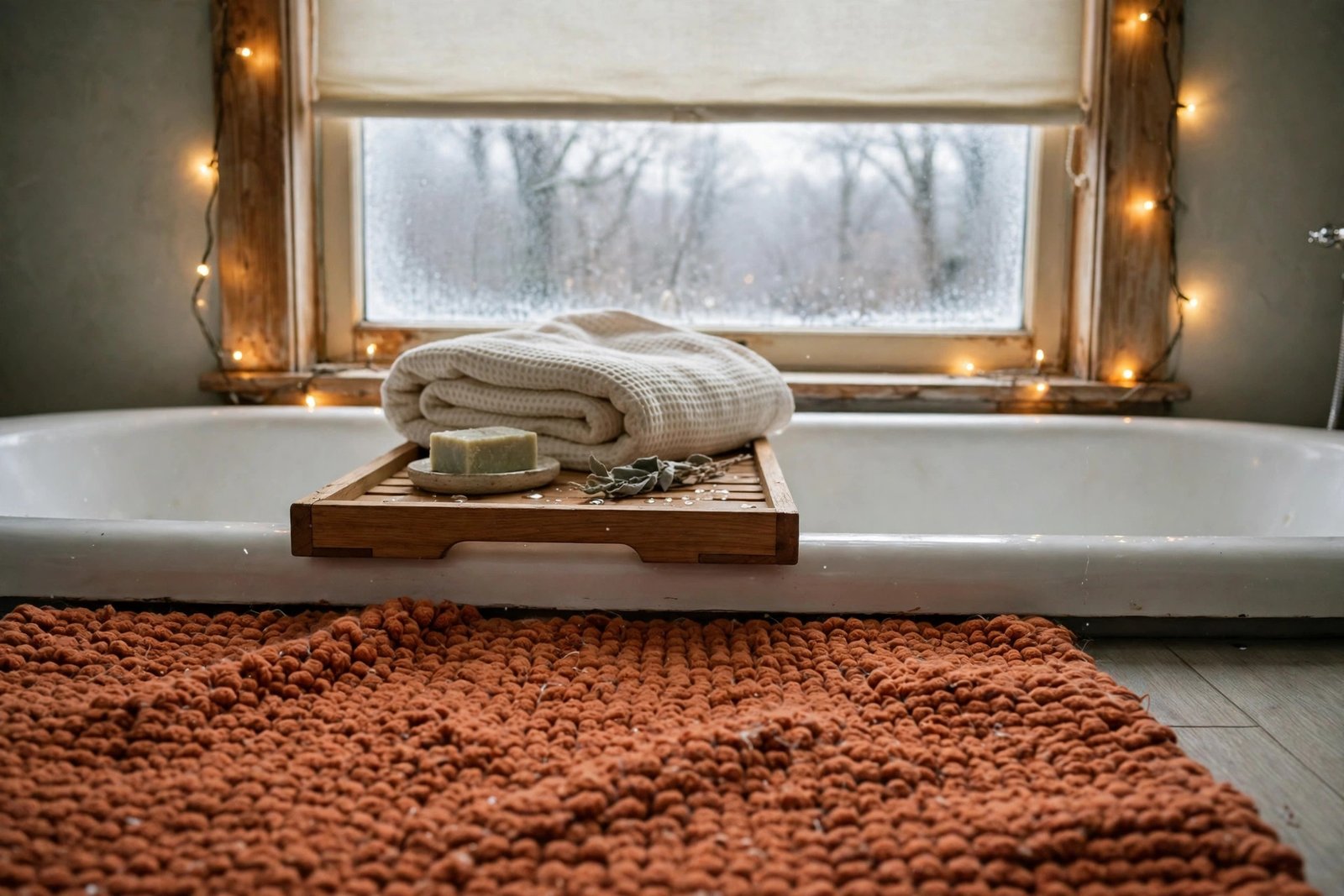
A wooden bath tray turns an ordinary bath into something you look forward to, and it costs far less than any bathroom upgrade. The tray spans the tub and holds what you actually reach for: a folded towel, a bar of soap, a book, or a warm drink in a lidded mug.
Keep the tray styled but usable. A tray loaded with ten decorative objects is a tray you will lift off and never put back. Three or four items you genuinely use is the sweet spot, and everything on it should be fine with a splash. After a bath, wipe the tray dry and stand it upright so air reaches both sides; wood left sitting in a puddle on the tub edge will darken and warp over a winter of daily use. In a bathroom without a tub, the same idea works on a smaller scale: a wooden board across a stool or a wide sink ledge becomes a landing spot for towels and toiletries, keeping the vanity clear.
8. Give Robes a Proper Home by the Door or the Tub
A robe draped over a door handle or a towel bar is a robe that ends up on the floor. In winter, when a robe is part of your daily routine rather than an occasional extra, it deserves a real hook. A sturdy wall hook or a row of pegs near the tub or the bathroom door keeps a waffle or fleece robe within reach the second you step out of the shower, and it keeps the fabric aired between uses instead of bunched up damp.
Choose hooks rated for a heavy, wet robe, not the light adhesive kind that peel off painted drywall mid-season. If you are renting, an over-the-door hook rail gives you the same result with no holes at all. Hang robes with a little space between them so air circulates and they dry fully; two robes crammed on one hook stay damp and start to smell. A matching set of wooden or matte-black hooks also does quiet visual work: it turns a functional corner into an intentional one, and guests immediately understand where to hang their things.
9. Warm the Vanity with Wood and Warm Metals
White porcelain, chrome, and pale tile can make a bathroom feel cold in winter even when the heating is on, because every surface reads cool to the eye. You can shift that balance without replacing anything fixed. Add wood where you can: a wooden soap dish, a teak stool, a wooden-framed mirror, or a simple wooden tray on the vanity. Then warm the metals: swap a chrome soap dispenser for a brushed brass or warm bronze one, and use the same finish for a toothbrush holder or a small dish.
The trick is restraint. One wood tone and one warm metal, repeated two or three times, reads intentional. Five different finishes scattered around the room reads accidental. Keep everyday items corralled on one tray so the vanity surface stays calm, and leave some empty counter space; a crowded vanity feels colder and more chaotic, not cozier. Small, steam-safe changes like these are easy to reverse in spring, when you may want the room to feel lighter again.
10. Bring In Eucalyptus and Winter Greenery
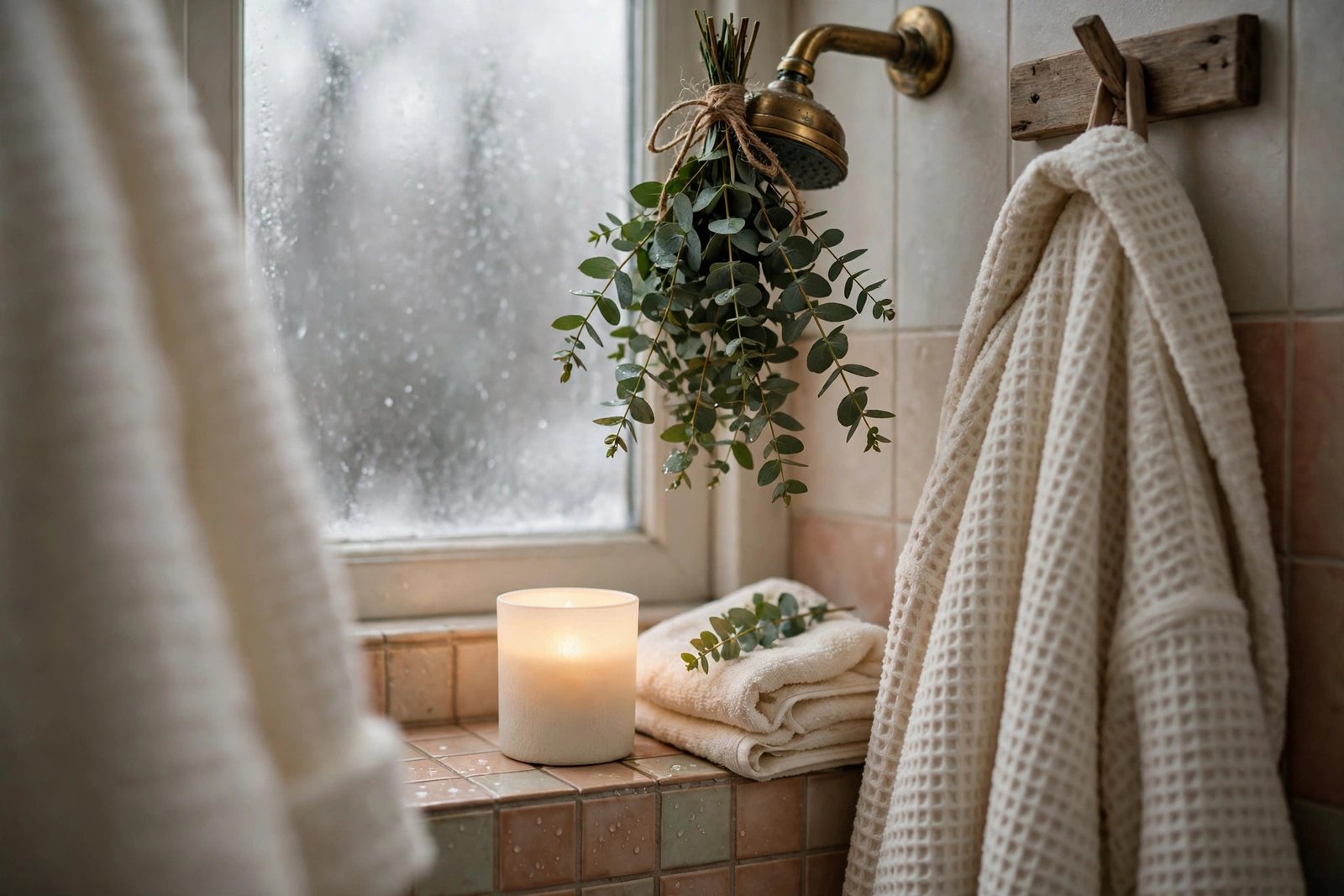
Fresh eucalyptus is the easiest winter greenery for a bathroom because it loves steam. Tie a small bundle to the showerhead or hang it from a hook, and the hot water releases a clean, fresh scent every time you shower. It also adds a soft green note that breaks up all the cream and wood, which keeps a winter palette from turning flat. A bundle lasts a couple of weeks before it dries out, and even dried eucalyptus looks good for a while longer, so the cost per week is tiny.
Do not stop at one bundle if your bathroom has the space. A small potted plant on a windowsill or a shelf adds life through the darkest months, as long as you pick something that tolerates humidity and low light, like a pothos or a fern, and you do not overwater it. Keep greenery away from direct contact with the shower stream, where constant soaking will rot stems, and keep dried bundles away from any heat source. Greenery in a bathroom works best when it looks a little imperfect, like someone actually picked it up and hung it there, rather than arranged to perfection.
11. Layer Winter Scent Without Overpowering the Room
A bathroom is a small, enclosed space, so scent goes further there than anywhere else in the house, and it is easy to overdo it. In winter, warm scents like cedar, amber, vanilla, or a light pine note suit the season without smelling like a candle shop. Use one scent at a time, and choose a format that fits a steamy room: reed diffusers work well because they need no flame and release scent steadily, while a room spray is better if you want scent only before guests arrive.
Place scent where air moves but water does not reach: on a high shelf, a windowsill, or the back of the vanity, never on the tub edge where it can be knocked into the water. If anyone in the household has asthma or scent sensitivity, keep it subtle and skip plug-in diffusers that run constantly; a single reed diffuser with fewer reeds gives a gentler result. The goal is a bathroom that smells clean and faintly warm when you walk in, not a room that announces itself from the hallway.
12. Swap Cold Storage for Woven Baskets
Plastic bins and wire baskets read cold and utilitarian, which is fine in a linen closet but less inviting in the room itself. Woven baskets in seagrass, cotton rope, or rattan instantly warm up bathroom storage, and they are practical in winter because they breathe, so damp towels and washcloths dry faster inside them than in a sealed plastic box. Use one large basket for clean rolled towels, a medium one for toiletries, and a small one on the vanity for daily essentials.
Label nothing and keep the system simple enough that the whole household actually uses it. If a basket needs a label and a rule to work, it will not survive a busy week. Line baskets that hold toiletries with a washable cloth so leaks do not stain the weave, and keep baskets off the floor in the wettest zone near the shower, where splashes will soak them. Tight bathrooms benefit from this swap as much as big ones; our small bathroom decor ideas show how baskets and vertical storage keep a compact room tidy without adding bulk. The warmth here is visual and practical at once: softer textures, better airflow, and a room that looks cared for.
13. Build a Guest-Bathroom Winter Kit
Winter guests arrive cold, often with wet shoes and dry skin, and a guest bathroom that anticipates that feels genuinely welcoming. Put together a small kit and leave it visible: two thick towels per guest, a spare hand towel, a bar of soap or a small bottle of lotion, and a few cotton pads or a spare toothbrush in a little basket. Add a hook or a stool where guests can set their own bag, so they are not balancing toiletries on a narrow sink edge.
The details that matter most are the ones guests will not ask for. A warm, dry hand towel that has not been sitting damp since yesterday. A bath mat that is actually underfoot when they step out of the shower, not folded on a shelf. A nightlight or a battery-powered candle glow so a guest finding the bathroom at 2 a.m. is not fumbling in the dark or blasted by the overhead light. A guest kit costs almost nothing once you own the towels, but it is the difference between a bathroom that is technically clean and one that feels hosted.
14. Warm the Floor with Rugs, Slippers, and Underfoot Layers
Bath mats handle the shower exit, but the rest of the bathroom floor still counts. A washable runner along the vanity, a small rug by the door, or even a pair of dedicated bathroom slippers kept on a hook changes how the room feels on a cold morning. Slippers are the unsung hero here: they cost little, they keep feet warm between the bedroom and the bathroom, and they protect bare feet from a floor that has been cold all night.
If your bathroom floor sits over an unheated space, no rug will fully fix it, but layers help more than a single thin mat. A dense rug pad under a washable rug adds insulation and keeps the rug from bunching, and a rug that covers the main standing areas, not just a token square, makes the room feel finished. Choose rugs you can wash at home, because winter rugs collect more moisture, hair, and tracked-in grit than summer ones, and a rug you cannot wash becomes a problem by February.
15. Fix the Mirror: Fog, Light, and the Morning Routine
A fogged mirror is a small winter annoyance that sets the tone for the whole morning, because it forces you to wipe, wait, or shave and get ready half-blind. An anti-fog spray or a thin film applied to the mirror helps, as does running the exhaust fan during and after a shower so steam clears faster. If your mirror is inside a medicine cabinet, leave the cabinet door open for a few minutes after a shower so the mirror surface dries evenly rather than staying fogged on one side.
Light around the mirror matters just as much. A warm bulb on either side of the mirror, rather than a single light above it, reduces shadows on your face and makes morning routines easier. Battery-powered light bars or small warm lights mounted beside the mirror are renter-friendly options that need no wiring. A clear mirror in warm light is a surprisingly large part of a bathroom feeling cared for in winter.
16. Rethink Laundry So Winter Textiles Stay Fresh
Winter bathroom textiles work harder than summer ones: thicker towels, heavier mats, extra washcloths, and robes all go through the wash more often, and a damp bathroom slows drying between uses. Set up a simple rotation so nothing stays damp for long. Towels get washed every three to four uses, bath mats weekly, and washcloths after every use or two. A small drying rack or a row of hooks near a vent helps towels dry fully between showers, which is the real secret to a bathroom that smells fresh all winter.
Washing technique matters with thick fabrics. Wash towels and mats in warm water without fabric softener, which reduces absorbency, and avoid overloading the machine, since thick towels need room to rinse clean. Dry them fully before folding; a towel folded slightly damp will smell musty within a day in a closed cabinet. Keep a separate small basket for bathroom laundry so damp washcloths do not sit in a bedroom hamper, and run the exhaust fan after showers to bring the room’s humidity down. Fresh textiles are not glamorous, but they are the foundation every other winter idea in this guide rests on.
17. Keep the Look Going All Winter with a Simple Swap Routine
The hardest part of winter decorating is not the setup, it is February, when the early-season enthusiasm fades and the room starts to look tired. Build a simple swap routine so the bathroom stays fresh without a full redecorate. Once a month, change one thing: swap the hand towels for a different color in your palette, replace the eucalyptus bundle, change the diffuser reeds, or rotate the bath mat.
Keep a small winter box in a linen closet with your spare towels, a backup bundle or two, extra washcloths, and a spare set of battery candles, so swaps take five minutes instead of a shopping trip. In late winter, start shifting gradually: lighter towels, less heavy layering, and greenery that suits early spring, rather than a sudden overhaul on one weekend. The same carry-it-through-the-season thinking works across the house, from the kitchen to the bedroom; our winter kitchen decor ideas follow the same swap-one-thing-a-month rhythm. A bathroom that evolves gently through the season feels lived in and loved, which is the whole point of decorating it for winter in the first place.
Products to Consider
These generic items pair naturally with the ideas above. Pick the ones that fit your bathroom, your budget, and whether you rent or own, and skip anything you do not have a real use for.
- Thick cotton or waffle-weave bath towels in cream, oatmeal, or sage
- Electric or plug-in heated towel rail with a timer
- Chunky cotton bath mat with a non-slip backing, plus a washable runner
- Heavy fabric shower curtain with a washable liner
- Battery-powered flameless candles and warm-white fairy lights
- Frosted window film and a thermal roller blind or lined Roman shade
- Teak or bamboo bath tray with adjustable sides
- Sturdy wall hooks or an over-the-door hook rail for robes
- Wooden soap dish, brushed brass soap dispenser, and a small vanity tray
- Fresh eucalyptus bundles and a humidity-tolerant potted plant
- Reed diffuser in a warm winter scent such as cedar or amber
- Woven seagrass or cotton-rope baskets in two or three sizes
- Guest towel set, spare toothbrush, and a small basket for a guest kit
- Washable bathroom rug with a dense rug pad, and dedicated bathroom slippers
- Anti-fog mirror spray or film and warm-white bulbs for mirror lighting
- Small folding drying rack or extra hooks for towel rotation
FAQ
How do I keep a winter bathroom cozy without a renovation?
Focus on textiles, light, and scent, in that order. Thick towels, layered bath mats, a heavier shower curtain, and battery-powered warm lighting change how the room feels within a day, and none of it requires tools or a landlord’s permission. Add a wooden tray or woven baskets for warmth, and keep everything washable so the look survives daily use.
Are flameless candles really safe in a bathroom?
Yes, and that is exactly why they suit a bathroom. Battery-powered flameless candles give you warm candlelight with no open flame near towels, curtains, or water, and most run on a timer so they switch off on their own. Keep the battery compartment dry, and do not place them where they can fall into the tub or sink.
How do I stop winter bathroom smells and mustiness?
Mustiness almost always comes from something staying damp: a towel that never fully dries, a mat left flat on the floor, or a room with no airflow after a shower. Run the exhaust fan during and after showers, hang mats and towels so air reaches them, wash thick textiles regularly without fabric softener, and dry everything fully before folding it away.
What colors work best for winter bathroom decor?
Warm neutrals carry the season: cream, oatmeal, camel, and soft sage, with terracotta or warm wood as an accent. These colors look warm against white tile and chrome, hide daily wear better than bright white, and still feel fresh in January and February, when a bolder seasonal palette would start to feel dated.
Can renters do these winter bathroom ideas?
Almost all of them, yes. Towels, mats, shower curtains, flameless candles, fairy lights, frosted window film, tension rods, over-the-door hooks, baskets, and plug-in towel rails are all fully reversible. The only ideas that need a landlord’s agreement are hardwired towel rails and anything screwed into tile, so check your lease before drilling.
Final Thoughts
A cozy winter bathroom is not about buying everything at once or copying a single picture. It is about solving the small discomforts you actually feel: cold feet, a damp towel, a fogged mirror, a room that looks grey at 7 a.m. Pick the two or three ideas that fix your biggest annoyances, live with them for a week, and then add the next layer.
The best part is that almost everything here works all winter long, not just for a few weeks. There are no seasonal props to pack away and no theme that expires. When spring arrives, you can lighten the layers gradually, keep the pieces you love, and store the rest for next year. Start tonight with the simplest swap, a fresh stack of thick towels and a warm glow by the sink, and notice how different tomorrow morning feels.