
Winter changes how a dining room feels. The days get short. The light turns grey. Meals move indoors, and the table becomes the warmest spot in the house.
That is why winter dining room decor matters. A few warm layers can turn an ordinary weeknight dinner into something worth sitting down for. You do not need a full makeover. You do not need a big budget either.
These 25 winter dining room decor ideas work all season long. They are not tied to one holiday. They look just as good in January and February as they do in December. Pick three or four to start. Add more as the season goes on. Your dining room will feel warmer, softer, and ready for every meal.
These ideas suit any dining room. A small apartment nook works as well as a large farmhouse table. Renters can use most of them too. Nothing here needs paint, new floors, or a contractor. Most ideas take an afternoon or less. Start with the ones that fit your room and your budget.
1. Start With a Linen Tablecloth in a Warm Neutral
A tablecloth is the fastest way to change the mood of a dining room. Choose linen in a warm neutral like cream, oatmeal, or soft sage. The fabric softens a hard wood table at once. It also adds a layer of warmth you can feel.
A cream cloth also hides a worn table top. Scratches and rings vanish under linen. That saves you from refinishing a table before the holidays.
Let the cloth hang about 8 to 10 inches past the table edge. That length looks relaxed, not formal. Wash it once before you use it. Linen softens with every wash, and the slight wrinkles are part of the charm.
If your table is already beautiful, use a cloth only for dinners. Keep the wood bare for breakfast. That small switch keeps the room feeling fresh. For more everyday table ideas, see our dining room decor ideas for year-round inspiration.
2. Layer a Wool Runner Down the Center
A runner adds a second layer without covering the whole table. Wool works best in winter. It looks warm, feels thick, and hides small spills well.
A runner also marks the center of the table. It tells guests where the shared dishes go. That keeps the table tidy through a long meal.
Pick a runner in a tone darker than your tablecloth. A charcoal runner over cream linen looks rich. A terracotta runner over oatmeal linen feels warm and earthy. Let about 12 inches hang over each end of the table.
Change the runner when you want a new look. It takes two minutes. Keep one spare in a drawer so you can swap it after a spill. A runner also protects the table from hot dishes, which matters at big winter meals.
3. Light Taper Candles in Brass Holders
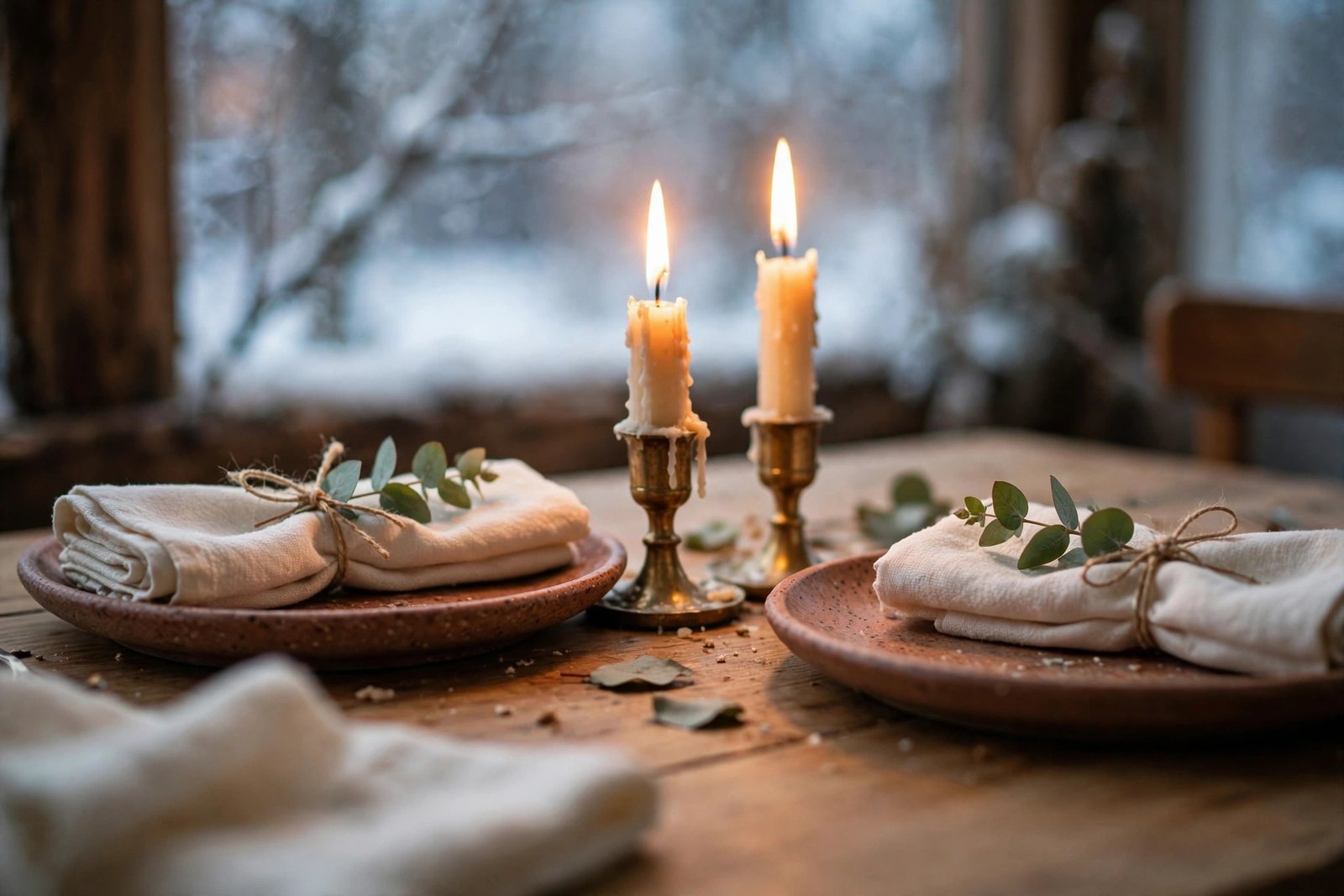
Nothing warms a dining room faster than candlelight. Tall taper candles in brass holders give a soft, steady glow. They make even a Tuesday dinner feel special.
Keep a small tray under the holders. It catches wax drips and protects the cloth. A brass tray matches the holders and looks neat.
Use two or three holders down the center of the table. Keep them low enough that guests can see each other over the flames. Trim the wicks to about a quarter inch before you light them. That keeps the flame calm and the smoke low.
Choose unscented candles for the table. Scented candles can fight with the smell of food. Save the scented ones for the sideboard or the living room. Blow candles out before you leave the table. Never leave a lit candle alone in the room.
4. Mix Wood Tones Instead of Matching Sets
A dining room feels warmer when the wood tones do not all match. Pair a dark walnut table with lighter oak chairs. Add a pine bench on one side. The mix looks collected over time, not bought in one trip.
Start with one new piece. A bench or a tray is enough to break the match. Live with it for a week before you add more.
Keep the tones in the same warm family. Honey, walnut, and oak all work together. Avoid cool grey-washed wood next to warm red wood. That clash can make the room feel busy.
If your set matches now, break it up slowly. Swap two chairs for a bench. Add a wood tray in a different tone. Small changes are enough. The room will look more relaxed and more personal at once.
5. Build a Low Centerpiece With Eucalyptus and Bare Branches
A low centerpiece keeps conversation easy. Guests should see each other, not a tall arrangement. Start with a long, low bowl or a wooden tray. Fill it with eucalyptus sprigs, a few bare branches, and dried orange slices.
Keep the arrangement under 12 inches tall. That height lets guests see each other with ease. Taller pieces belong on the sideboard, not the table.
Eucalyptus lasts for weeks without water. Bare branches add height without blocking sight lines. Dried orange slices bring a warm amber color that suits the whole season, not just one holiday.
Refresh the centerpiece once a month. Swap the oranges for pinecones in January. Add a few white blooms in February. Want a festive version for December? Our Christmas dining room decor ideas show how to dress the same table for the holidays.
6. Add Seat Cushions or Upholstered Chairs
Hard chairs make short meals. Soft seats make long ones. Add a cushion to each dining chair and guests will stay at the table longer.
Pick a cushion with a removable cover. You can wash it after a spill and swap the color next season. That small detail saves money over time.
Pick cushions in a washable fabric. Linen and cotton canvas both work. Choose a warm tone like sage, rust, or cream. Tie-on cushions stay in place better than loose ones.
If you want a bigger change, re-cover two host chairs in a soft fabric. Velvet reads warm in winter. Boucle adds texture. Keep the rest of the chairs as they are. The mix looks planned, not half done.
7. Warm Up the Light With a Dimmer or Low-Watt Bulbs
Winter light is harsh. A bright overhead bulb makes a dining room feel like an office. Warm light fixes it fast.
Test the dimmer at dinner time, not at noon. Evening light shows the true effect. Adjust once, then leave the setting alone.
Put your dining light on a dimmer switch. It costs little and a handy homeowner can fit one in under an hour. Dim the light to about half for dinner. The room will feel calm at once.
If a dimmer is not an option, swap the bulbs. Use warm white bulbs rated 2700K. They give the same golden glow as candlelight. Avoid daylight bulbs in the dining room. They look blue and cold next to wood and linen.
8. Set the Table With Stoneware in Warm Neutrals
Stoneware plates make a winter table feel grounded. Their matte finish and soft weight suit the season. Choose cream, warm grey, or speckled clay tones.
Buy one extra plate and bowl. Chips happen at busy meals. A spare keeps the set whole without a new purchase.
Mix two tones if you like. Cream plates with terracotta bowls look warm and relaxed. Keep the shapes simple. A plain round plate lets the food and the table do the talking.
Stoneware also holds heat well. Warm the plates in a low oven for a few minutes before a winter dinner. Hot food stays hot longer. Guests notice that kind of care, even if they never say so.
9. Use Woven Placemats for Texture
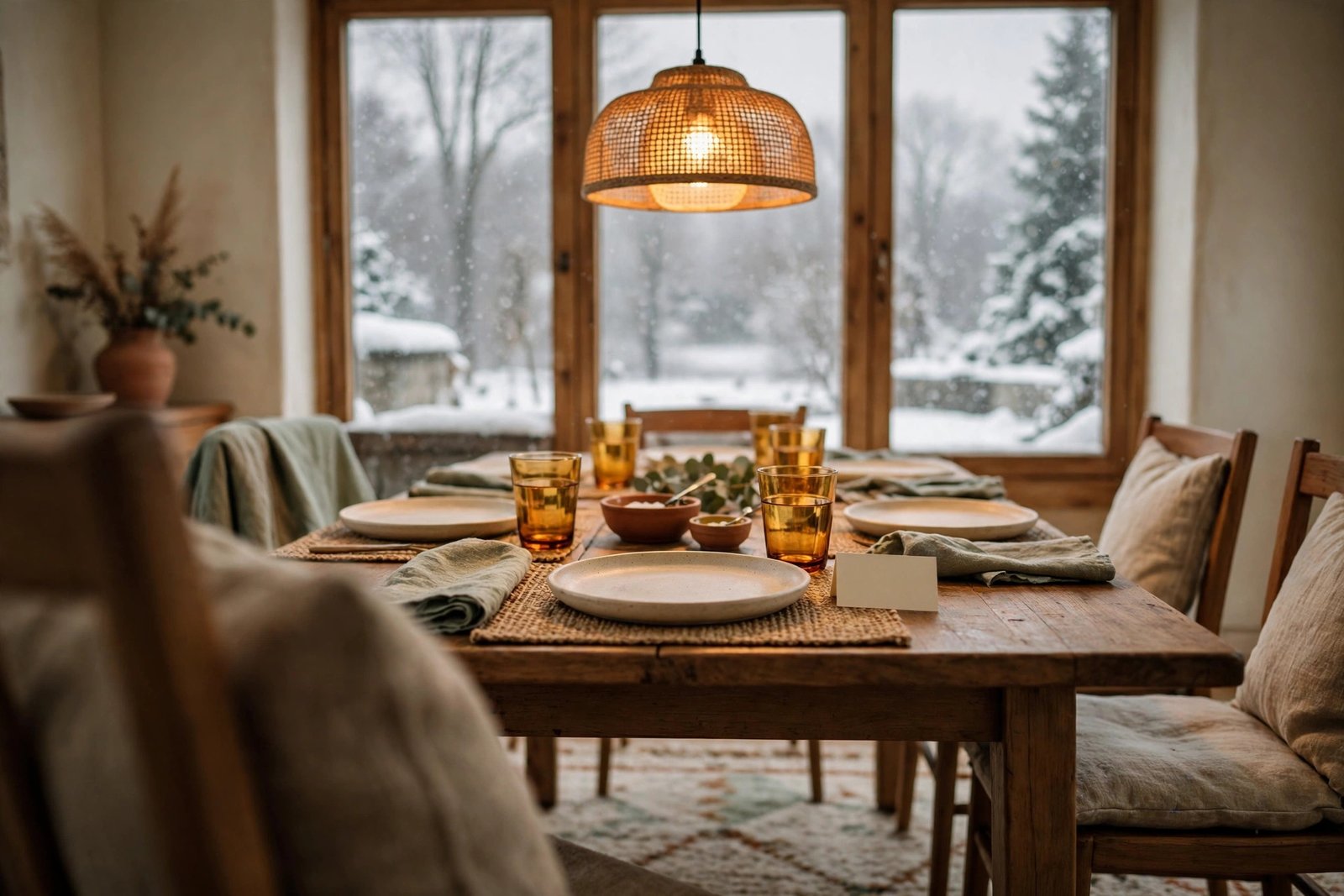
Placemats add texture to a bare table. Woven ones work best in winter. Seagrass, jute, and cotton rope all add a natural, handmade feel.
Store placemats flat, not rolled. Rolling bends the weave over time. A flat stack in a drawer keeps them smooth and ready.
Choose placemats in a warm tone that contrasts with your table. Dark jute on light oak looks rich. Cream cotton on dark walnut looks soft. Keep them flat and even so plates sit steady.
Woven placemats also protect the table from heat and scratches. Shake them out after each meal. Wipe spills fast so they do not stain. They last for years with that small bit of care.
10. Style the Sideboard for Winter Serving
A sideboard is more than storage. In winter, it becomes the serving station. Style it so it works hard and looks good.
Leave one drawer empty for serving tools. Tongs, a carving fork, and a trivet live there. You will reach for them at every meal.
Clear one half for serving dishes. Stack plates, set out a carafe, and leave room for a hot dish. Use the other half for decor. A small lamp, a stack of books, and a vase of branches are enough.
Keep the top uncluttered. Three groups of items look better than ten small ones. Leave space for a serving bowl to land. A sideboard that works well gets used every day, not just on holidays.
11. Hang a Large Mirror to Bounce Short-Day Light
Winter days are short. A large mirror helps you use every bit of daylight. Hang one on the wall across from a window. It will bounce light deep into the room.
Clean the mirror once a week in winter. Dust dulls the reflection fast. A quick wipe keeps the light bouncing bright.
Choose a mirror with a warm wood or brass frame. A plain black frame can look cold in winter. The mirror should be at least two-thirds as wide as your sideboard or table below it.
Hang it at eye level. The center of the mirror should sit about 57 to 60 inches from the floor. Check the reflection before you fix it in place. You want it to catch the window, not the ceiling fan.
12. Lay a Rug Under the Dining Table
A rug warms a dining room from the floor up. It softens footsteps, cuts echo, and makes the table area feel like its own room.
Use a rug pad under the dining rug. It stops the rug from sliding when chairs move. A thin pad is enough and it adds a little softness.
Pick a low-pile rug that chairs can slide on easily. Flatweave wool is a good choice. It cleans well and handles chair legs without bunching. Size matters here. The rug should extend at least 24 inches past the table on all sides.
Choose a warm pattern. A faded vintage look hides crumbs well. A simple stripe or border keeps the room calm. Avoid high-pile rugs under a dining table. They trap crumbs and make chairs hard to move.
13. Set Up a Hot-Drink Station on the Sideboard
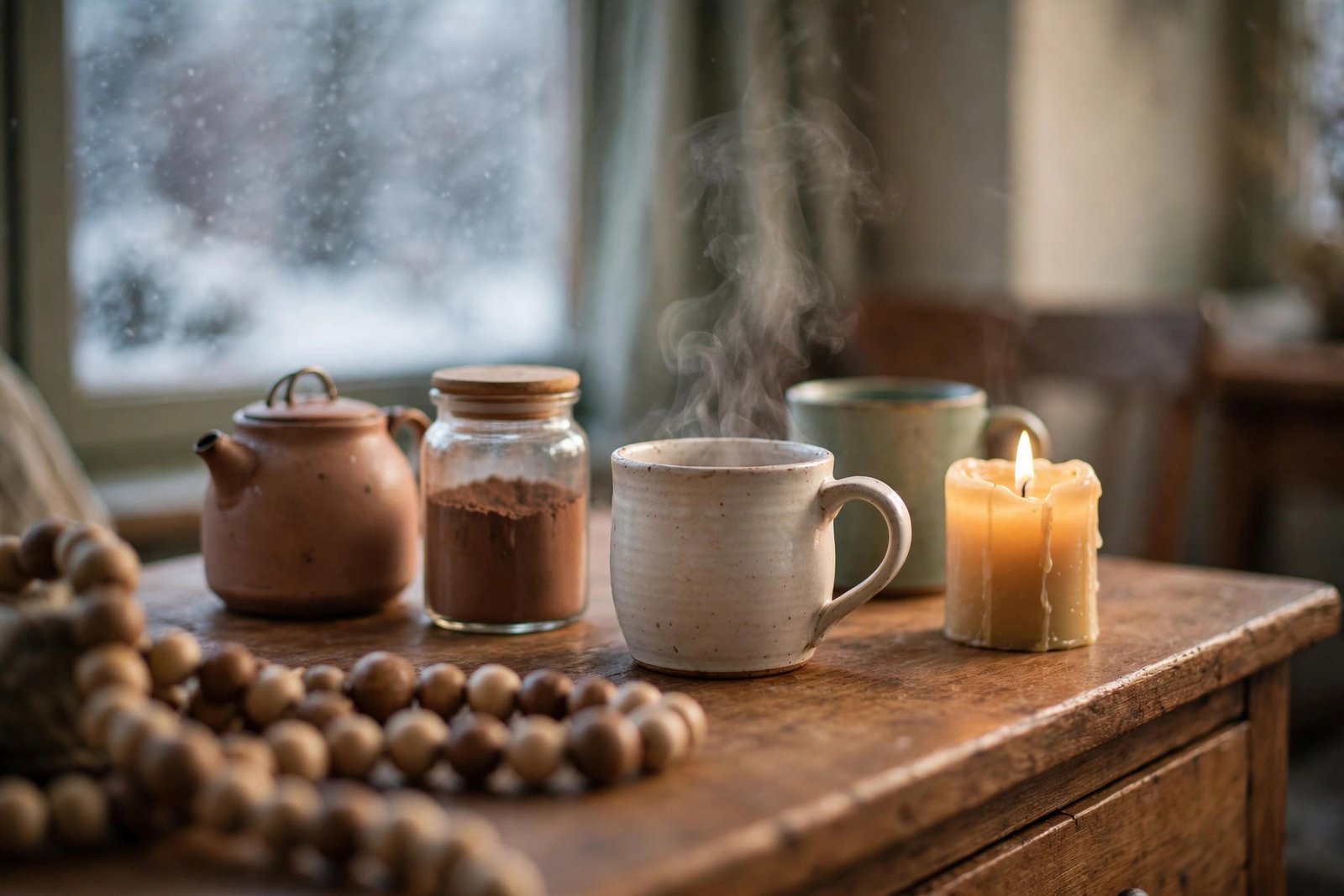
Winter meals end with a hot drink. A small station on the sideboard makes that easy. Set out mugs, a kettle or carafe, and a jar of cocoa or tea.
Refill the station each morning. Fresh water and clean mugs take two minutes. A stocked station invites guests to help themselves.
Keep it simple. Four mugs, one kettle, and one jar are enough. Add a small bowl of sugar and a tiny jug of milk. Guests can help themselves without you leaving the table.
Use mugs that match your stoneware. The station will look like part of the room, not an afterthought. For more cold-weather kitchen styling, see our winter kitchen decor ideas for a matching warm look.
14. Switch to Amber Glassware
Amber glass catches light in a way clear glass never does. On a winter table, it glows like honey. It adds color without adding clutter.
Rinse amber glasses right after dinner. Tomato and wine stains show less on amber, but they still set if left overnight.
Start with drinking glasses. Four or six amber tumblers are enough to change the whole table. Pair them with your cream stoneware. The warm tones work together at once.
Amber glass hides water spots well, which is a small bonus. Wash it by hand to keep the color rich. If amber feels too bold, try a smoked glass instead. It gives the same warm effect in a softer tone.
15. Scatter Dried Orange Slices and Cinnamon Sticks
Small natural details make a winter table feel finished. Dried orange slices and cinnamon sticks are cheap, simple, and they last for weeks.
Refresh the scent once a month. Old spices lose their smell fast. A fresh batch keeps the room smelling warm and clean.
Place a few orange slices in the centerpiece. Tuck a cinnamon stick into each napkin fold. Add a small bowl of whole spices to the sideboard. The scent is gentle, not strong.
Make the orange slices at home. Slice an orange thin, bake it at a low heat until dry, and let it cool. One batch fills a whole season of tables. Store extras in a paper bag so they stay dry.
16. Hang Heavier Curtains
Thin curtains do little against a cold window. Heavier curtains change the room. They block drafts, soften sound, and add a layer of color.
Close the curtains at dusk each day. They hold the warm air in overnight. Open them in the morning to let the pale winter sun in.
Choose lined linen or cotton canvas in a warm tone. Hang them high, close to the ceiling, and let them reach the floor. That length makes the room feel taller.
Keep the curtains simple. A plain panel in sage or warm cream works with any table. Avoid heavy patterns in a small dining room. They can make the walls feel close.
17. Style a Full Winter Tablescape
A tablescape is the whole table dressed as one picture. Start with the cloth and runner. Add plates, glasses, napkins, and candles. Finish with a low centerpiece.
Take a photo of the finished table. It shows what works and what does not. Use the photo next time you set the table.
Keep one color thread through the whole table. Cream, sage, and terracotta work well together. Repeat each color at least twice. That repeat is what makes the table look planned, not random.
Style the table a day before a big meal. That gives you time to fix what looks off. For a holiday version of the same skills, see our Thanksgiving table decor ideas. They show a warm, gathered table that works for any feast.
18. Add a Bench With Sheepskin Throws
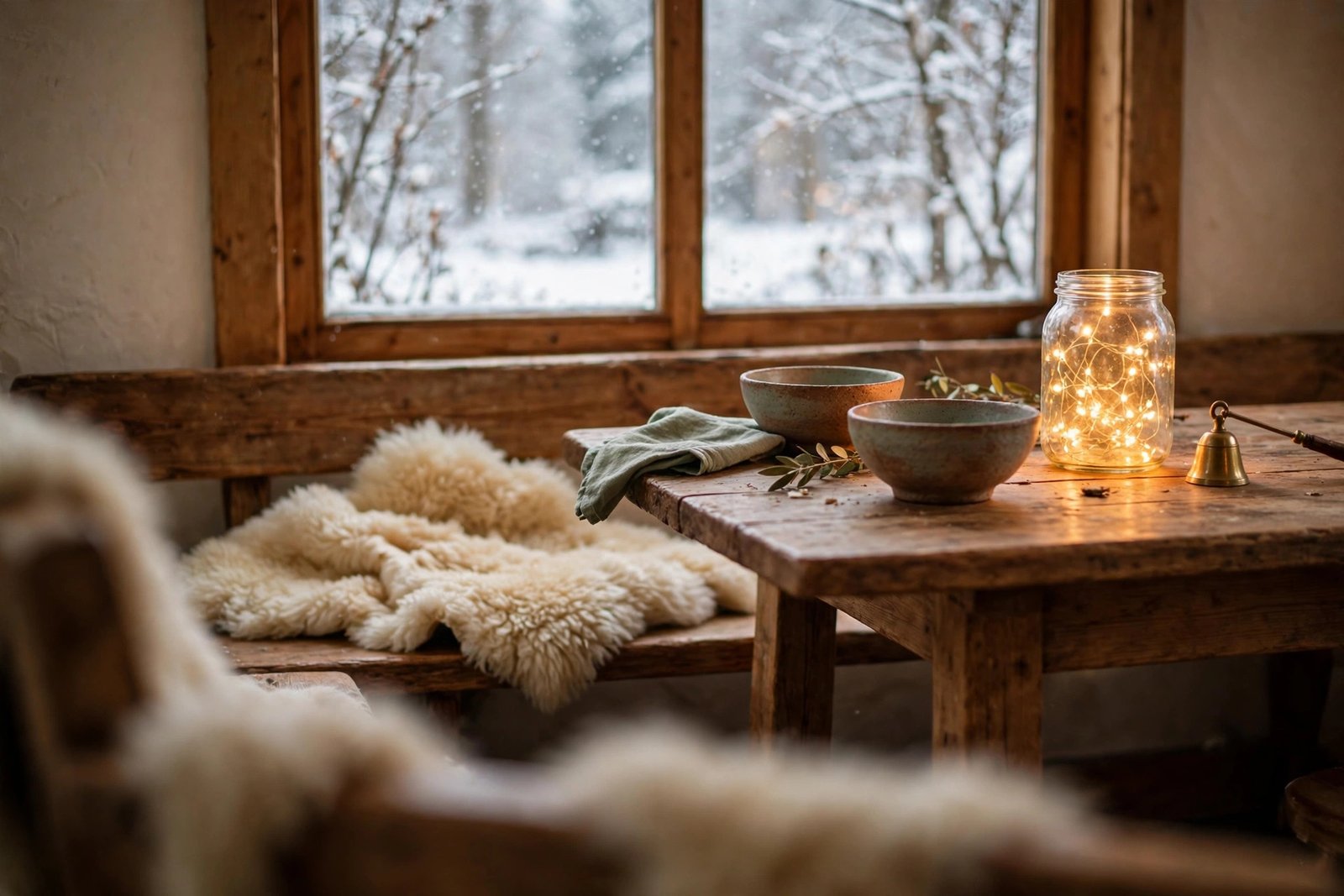
A bench on one side of the table seats more people and looks relaxed. Add a sheepskin throw and it becomes the coziest seat in the room.
A bench also gives kids a place to slide in easily. It seats three small guests where two chairs would fit. That helps at family dinners.
Choose a bench that matches your table height. Standard dining height is 18 inches. A sheepskin adds about an inch, so a 17-inch bench works well. Drape the skin over the seat, not under it.
Faux sheepskin works just as well as the real thing. It washes easily and costs less. Shake it out once a week. Keep a second throw folded nearby so guests can grab one when the room feels cool.
19. Layer the Lighting: Pendant, Candles, and One Lamp
One light source is never enough in winter. Layer three kinds of light and the room will glow at every hour.
Turn the lights on in order each evening. Pendant first, then the lamp, then the candles. The room warms up in stages, like a slow sunset.
Start with the pendant over the table. Add taper candles for dinner. Finish with one small lamp on the sideboard. Each light should be warm, around 2700K.
Turn the pendant down low and let the candles and lamp do the work. That mix of light feels soft and lived in. Avoid cool white bulbs anywhere in the room. They flatten the warm tones you worked hard to build.
20. Keep a Bowl of Winter Fruit on the Table
A bowl of fruit is the easiest centerpiece of all. It looks good, costs little, and guests can eat it. Winter fruit brings color to a table that might otherwise feel plain.
Wash the fruit before it goes in the bowl. Guests may grab a piece at the table. Clean fruit is ready to eat without a trip to the kitchen.
Use pomegranates, oranges, and pears. Their deep reds and warm golds suit the season. A wooden bowl looks better than a glass one here. Wood adds warmth that glass cannot.
Replace the fruit as it softens. Two or three pieces a week is enough. Keep the bowl in the center of the table between meals. It keeps the room feeling cared for, even on an ordinary day.
21. Hang Winter Landscape Art
Blank walls make a dining room feel cold. One large piece of winter art changes that. A snowy landscape or a bare-branch print brings the season inside in a calm way.
Swap the art print once a year. A new winter scene costs little and keeps the wall fresh. Store the old print flat behind the sideboard.
Choose art with warm tones in it, not just white and grey. A snowy field with a warm sky works well. A print with a little amber or rust will tie into your table colors.
Hang the art at eye level, about 57 inches to the center. A frame in warm wood beats a black frame in winter. Keep the rest of the wall clear. One strong piece is better than a crowded gallery wall here.
22. Keep a Basket of Throws by the Table
Some guests run cold. A basket of throws by the table says they are welcome to stay warm. It is a small gesture with a big effect.
Fold the throws the same way each time. A neat stack looks like decor. A tangled pile looks like laundry waiting to be done.
Use a large woven basket. Fill it with three or four folded throws in cream, sage, and rust. Set it beside the sideboard or in a corner near the table. It should be easy to reach without getting up far.
Choose throws that wash well. Fleece and cotton knit both work. Wash them once a month through the season. A basket of clean throws looks tidy. A basket of rumpled ones does not.
23. Carve Out a Breakfast-Nook Corner
Not every winter meal happens at the big table. A small nook corner gives you a spot for slow mornings. It needs only a small table, two chairs, and a window.
Keep a small book or a notepad in the nook. Slow mornings invite reading and lists. The nook becomes a habit, not just a corner.
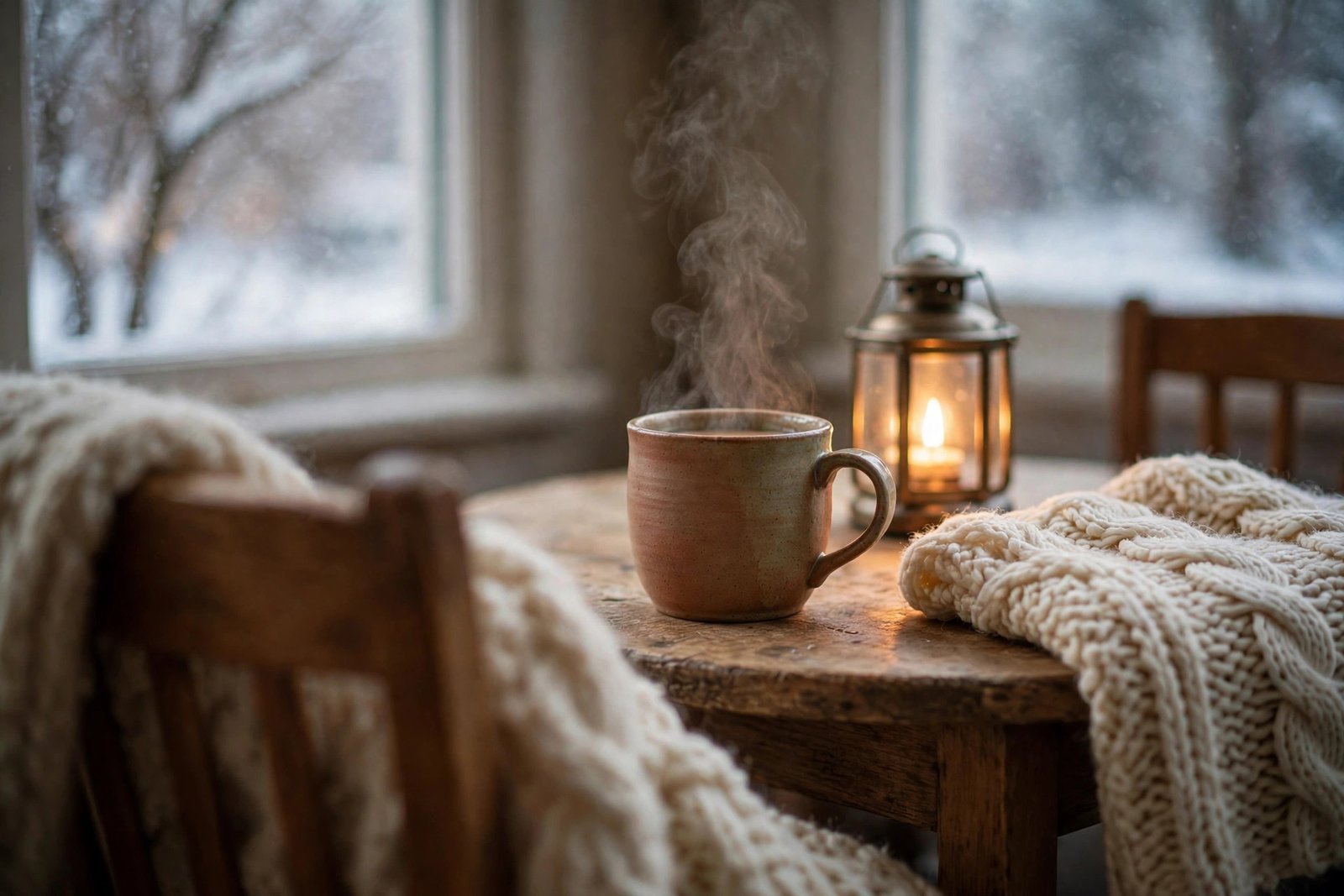
Set the nook table with two mugs and a small lantern. Drape a knit throw over one chair. Keep a tiny vase with a few branches on the table. That is all it takes.
Use the nook for coffee, reading, or a quiet breakfast. It will become the most used corner in the house. The big table stays free for dinners, and the room works twice as hard.
24. Use a Wooden Tray to Ground the Centerpiece
A tray pulls a centerpiece together. Without one, candles and branches can look scattered. With one, the same items look like a single arrangement.
Wipe the tray after each use. Candle wax and water rings mark wood fast. A quick wipe keeps the tray looking new all season.
Pick a tray in a warm wood tone. It should be about one-third the length of your table. Place candles, a small vase, and a few dried oranges on it. Leave some empty space. A crowded tray looks messy.
Move the whole tray aside when you serve dinner. That is the real benefit. One lift clears the center of the table. Set it back when the plates are gone.
25. Refresh One Small Detail Each Month
Winter is long. A table that never changes starts to feel stale by February. Refresh one small detail each month to keep the room alive.
Write the monthly swap on your calendar. A small note in January beats a forgotten plan. The room stays fresh without any effort.
In December, add the dried oranges and cinnamon. In January, swap them for pinecones and white blooms. In February, add a few early green sprigs. Each change takes ten minutes.
This habit also saves money. You reuse the same cloth, candles, and dishes all season. Only the small details change. The room feels new each month, and your budget stays calm.
Products to Consider
A few well-chosen pieces make every idea above easier. Look for these item types when you shop. Choose quality over quantity, and buy only what your table truly needs.
- Linen tablecloth in cream, oatmeal, or sage
- Wool table runner in a warm, dark tone
- Brass taper candle holders with plain white tapers
- Cream or speckled stoneware dinner plates and bowls
- Woven placemats in seagrass, jute, or cotton rope
- Amber glass tumblers for everyday use
- A low wooden tray for the centerpiece
- Faux sheepskin throws for chairs or a bench
- A large woven basket for spare throws
- Warm white 2700K bulbs or a dimmer switch
- A small lantern for the sideboard or nook table
- Ceramic mugs in a warm neutral tone
Frequently Asked Questions
How can I make my dining room cozy for winter without spending a lot?
Start with light and fabric. Add taper candles, swap in warm 2700K bulbs, and layer a linen cloth with a wool runner. Those three changes cost little and warm the room at once. Add a basket of throws and a bowl of winter fruit next. You can build the rest over time.
What colors work best for winter dining room decor?
Warm neutrals work best. Cream, oatmeal, sage, terracotta, and warm wood tones suit the whole season. Add amber glass or dried orange for a warm accent. Avoid cool greys and bright whites as your main colors. They can make a winter room feel cold instead of cozy.
How do I decorate a dining table for winter without a Christmas theme?
Use natural winter details instead of holiday ones. Eucalyptus, bare branches, dried orange slices, and cinnamon sticks all read as winter, not Christmas. Keep the palette warm and the centerpiece low. Swap one small detail each month so the table stays fresh through February.
What kind of lighting is best for a winter dining room?
Layer three warm light sources. Use a dimmed pendant over the table, taper candles for dinner, and one small lamp on the sideboard. Keep every bulb warm white, around 2700K. That mix gives a soft glow that flatters the table and the people around it.
Can I use a rug under a dining table in winter?
Yes, if you choose the right one. Pick a low-pile, flatweave wool rug that chairs can slide on easily. Size it at least 24 inches wider than the table on all sides. A faded pattern or warm neutral hides crumbs well. Avoid high-pile rugs, which trap crumbs and make chairs hard to move.
Final Thoughts
A cozy winter dining room is not about one big purchase. It is about layers. Warm light, soft fabric, natural wood, and a low centerpiece add up. Together they make a room that invites people to sit down and stay a while.
Start with three or four ideas from this list. Light the candles. Set the table with care. Let the room do the rest. Winter is long, and your dining room should carry you through it in comfort.