
The dining room is where everyday life and special moments meet. It hosts rushed weekday breakfasts, long holiday dinners, homework sessions, and late-night conversations. Yet it is often the most overlooked room in the house, decorated once and then forgotten. These 21 dining room decor ideas will help you turn it into a warm, stylish, inviting space you actually want to spend time in, whether you are working with a grand formal dining room or a small corner of an open floor plan.
You do not need to do everything at once. Pick the ideas that solve your biggest frustrations first. If the room feels dark, start with lighting and mirrors. If it feels cold, start with a rug and textiles. Small, thoughtful changes compound quickly, and within a few weekends your dining room can feel like an entirely new space.
1. Choose a Dining Table That Fits Your Real Life
Start with the table, because everything else in the room orbits around it. The most common mistake is buying for the biggest dinner party you might host once a year instead of the meals you eat every day. A good rule of thumb is to allow about 24 inches of table width per person and at least 36 inches of clearance between the table edge and the wall so chairs can pull out comfortably.
Round tables are wonderful for smaller rooms and for conversation, since everyone can see each other. Rectangular tables seat more people and suit narrow rooms. If you love hosting but live in a modest space, consider an extendable table with leaves you can add for holidays. Solid wood costs more than veneer or engineered tops but handles daily wear far better, which matters if the table doubles as a homework or work-from-home station.
Products to Consider:
- Solid wood extendable dining table
- Round pedestal dining table
- Table leaf storage bag
2. Mix and Match Your Dining Chairs
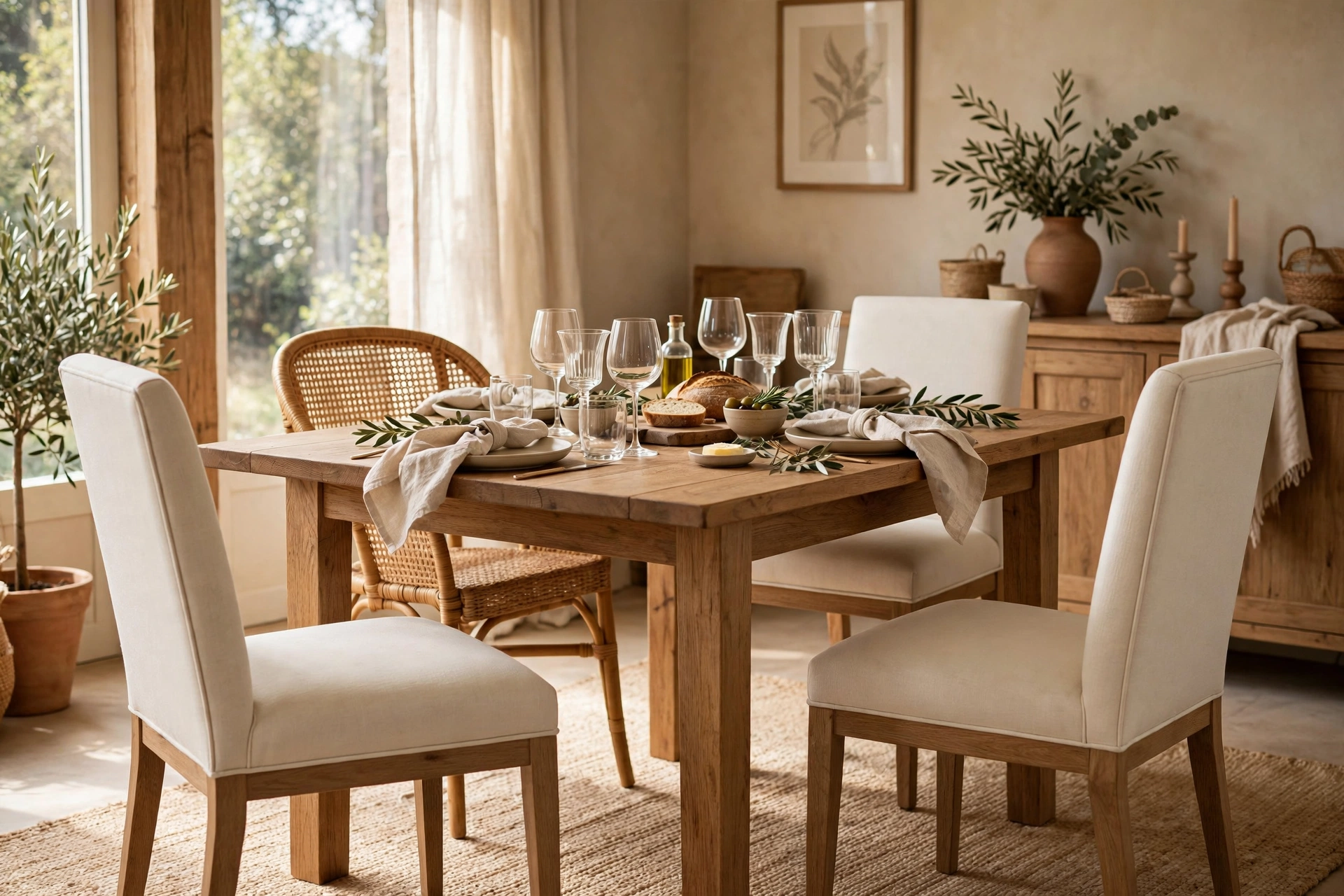
Matching dining sets can look stiff and a little dated. One of the easiest ways to add personality is to mix your chairs. Try upholstered host chairs at the two ends of a rectangular table with simpler wooden side chairs along the sides, or pair a rustic farmhouse table with sleek modern chairs for contrast that feels intentional rather than accidental.
Keep one element consistent so the mix looks curated: the same wood tone, the same color family, or the same seat height. Seat height matters more than people realize. Standard dining tables are 28 to 30 inches high, and dining chairs usually have an 18-inch seat height. Counter-height tables need taller stools, so measure before you buy. If you have young kids or pets, look for performance fabrics or wipeable materials that forgive spills. Slipcovers are another smart option. They let you change the look seasonally and toss them in the wash when life happens.
Products to Consider:
- Upholstered dining armchairs (set of 2)
- Solid wood side chairs
- Chair seat cushions with ties
3. Anchor the Room With a Rug
A rug under the dining table instantly makes the room feel finished and cozy, and it protects hardwood floors from chair legs. The key is size. The rug should extend at least 24 inches beyond the table on all sides so chairs stay on the rug even when pulled out. For a standard six-person rectangular table, that usually means a rug around 8 by 10 feet.
Low-pile or flatweave rugs are the practical choice for dining rooms because crumbs vacuum up easily and chair legs glide without catching. Wool rugs are durable and naturally stain resistant, while indoor-outdoor rugs made from polypropylene handle red wine spills with remarkable grace. If you are worried about messes, choose a pattern with some visual texture. It hides crumbs far better than a solid light color.
Products to Consider:
- Low-pile wool area rug (8×10)
- Indoor-outdoor flatweave rug
- Rug pad for hard floors
4. Hang a Pendant Light or Chandelier at the Right Height
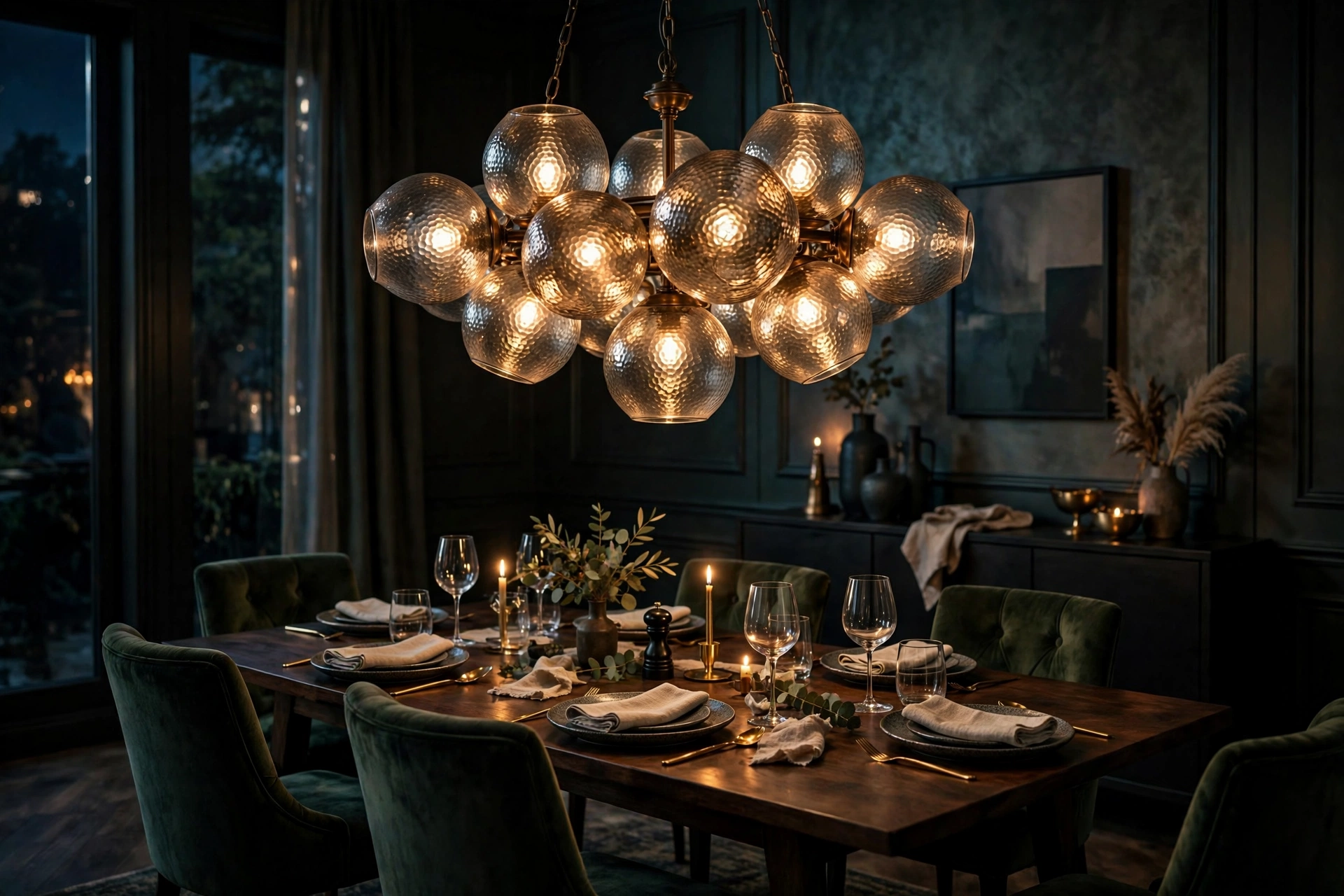
Nothing changes a dining room faster than proper overhead lighting. A pendant light or chandelier hung over the center of the table creates a natural focal point and makes evening meals feel special. The standard guidance is to hang the bottom of the fixture 30 to 36 inches above the tabletop. Any higher and the light feels disconnected; any lower and it blocks sightlines across the table.
Scale matters too. Add the room’s length and width in feet, and use that number in inches as a starting point for the fixture’s diameter. A 12-by-14-foot room, for example, suggests a fixture around 26 inches wide. For long rectangular tables, consider two smaller pendants or a linear chandelier instead of one centered fixture. Put the light on a dimmer switch. Bright light for homework, low warm light for dinner parties. That single upgrade changes how the room feels more than almost anything else.
Products to Consider:
- Rattan or woven pendant light
- Linear farmhouse chandelier
- Plug-in dimmer switch
5. Style a Sideboard as a Serving Station
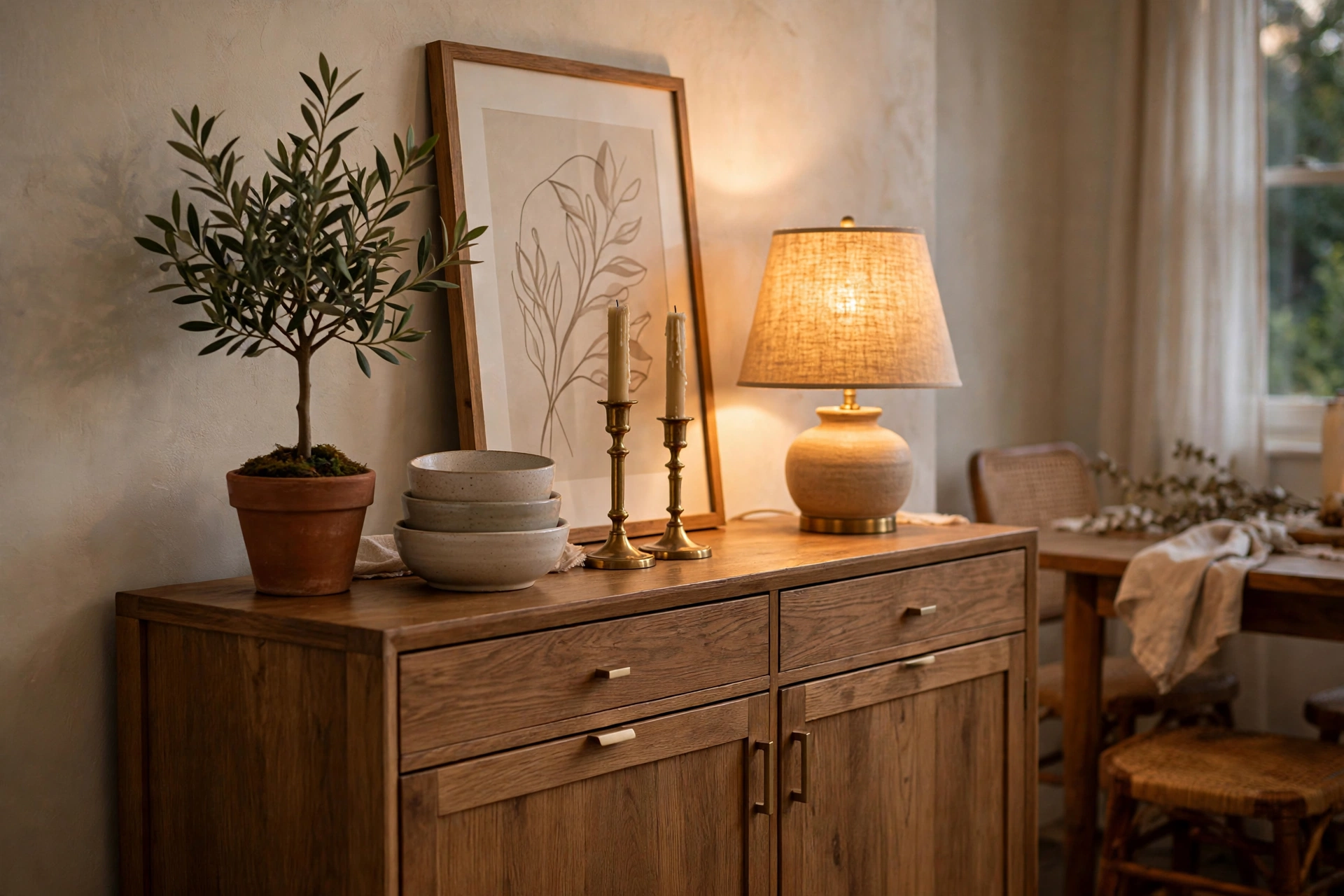
A sideboard or buffet is the hardest-working piece of dining room furniture after the table. It stores table linens, serving dishes, and the platters you only use twice a year, and its top surface is prime decorating real estate. Style it in layers: something tall at one end like a table lamp or a large vase with branches, something low and horizontal in the middle like a stack of art books or a tray, and a small cluster of candles or a plant at the other end.
During parties, clear the decor and let the sideboard do its real job as a drink station or dessert bar. A tray corralled with decanters, glasses, and a small ice bucket turns it into an instant bar setup. If your dining room is small, look for a narrow console-style sideboard, which gives you storage and surface without eating into walkway space.
Products to Consider:
- Wood sideboard with storage cabinets
- Decorative serving tray
- Glass decanter set
6. Build a Simple, Layered Tablescape
You do not need a special occasion to set a pretty table. A simple layered tablescape makes everyday dinners feel a little more intentional. Start with a table runner or placemats to add color and texture, then build a low centerpiece that does not block conversation. Low is the operative word. Anything tall in the middle of the table forces guests to peer around it.
A classic formula works every time: a runner down the center, a tray or low bowl as an anchor, candles of varying heights, and a small natural element like a vase of eucalyptus or a bowl of lemons. Change the natural element with the seasons and the table always feels fresh. Keep everyday dishes accessible so setting the table takes two minutes instead of twenty.
Products to Consider:
- Linen table runner
- Low ceramic centerpiece bowl
- Set of taper candles with holders
7. Add a Mirror to Bounce Light Around
Dining rooms are often on the darker side of the house, especially in older homes. A large mirror hung on the wall opposite a window doubles the natural light and makes the room feel bigger. It also reflects candlelight beautifully in the evening, which is a lovely effect during dinner parties.
Hang the mirror so its center sits at roughly eye level when seated, around 60 inches from the floor to the center. A mirror above a sideboard is a natural pairing and fills that awkward blank wall space elegantly. Choose a frame that echoes other finishes in the room. A thin brass frame, for example, ties in nicely if you have brass light fixtures or cabinet hardware. Avoid placing a mirror where it will reflect clutter, like a busy kitchen counter, since it doubles whatever it sees.
Products to Consider:
- Large arched wall mirror
- Round brass-frame mirror
- Anti-tip mirror hanging hardware
8. Try an Accent Wall or Wainscoting
If your dining room feels flat, the walls are the place to add character. An accent wall in a deep, moody color like forest green, navy, or warm charcoal makes a dining room feel intimate and dramatic, especially in the evening. Because dining rooms are used mostly at night, dark colors that might feel heavy in a living room often feel just right here.
Wainscoting or board-and-batten is another classic dining room upgrade that adds architecture to plain builder-grade walls. It suits both traditional and modern farmhouse styles, and it protects lower walls from chair scuffs, which is a genuine practical benefit. If painting feels like too much commitment, removable wallpaper in a grasscloth texture or subtle pattern gives you the effect without the permanence. Whichever route you choose, finish the job properly. Crisp caulk lines and a second coat of paint are what separate a DIY job that looks professional from one that does not.
Products to Consider:
- Peel-and-stick grasscloth wallpaper
- Board-and-batten wall molding kit
- Painter’s tape and angled paintbrush set
9. Bring In Natural Textures
Warmth in a dining room comes largely from texture. Wood, rattan, linen, jute, and stone add the kind of organic richness that makes a room feel inviting rather than showroom-perfect. You do not need to overhaul the room. Swapping a glass centerpiece for a wooden dough bowl, adding woven placemats, or choosing linen napkins over paper instantly softens the space.
Mix textures rather than matching them. A smooth oak table pairs beautifully with nubby linen chairs covers and a jute rug. The contrast is what makes the room feel layered and collected over time. If your dining set is dark wood, lighter natural textures like rattan pendants or a cream wool rug keep the room from feeling heavy. Even small swaps count. Replacing a synthetic tablecloth with a linen one, or plastic placemats with woven ones, shifts the whole feel of the table.
Products to Consider:
- Woven jute placemats (set of 6)
- Linen cloth napkins
- Wooden dough bowl centerpiece
10. Roll In a Bar Cart for Entertaining
A bar cart is part furniture, part party trick. It gives you a mobile station for drinks, which keeps guests out of the kitchen while you finish cooking, and it looks great styled in a dining room corner. Stock the top with a few bottles, a small ice bucket, and glasses; use the lower shelf for extra napkins, a cocktail shaker, and a small plant or candle so it reads as decor, not just storage.
Style it seasonally for extra charm. A small pumpkin and cinnamon sticks in the fall, fresh citrus and herbs in the summer. When it is not party time, a bar cart works as a coffee or tea station, which brings us to another idea below. Look for one with locking wheels so it stays put on hard floors.
Products to Consider:
- Two-tier rolling bar cart
- Glass cocktail shaker set
- Small tabletop ice bucket
11. Hang Art That Suits the Mood
Bare dining room walls are a missed opportunity. Art makes the room feel personal and gives guests something to look at during lulls in conversation. Food and landscape themes are natural fits, but honestly any art you love works. A large-scale piece above the sideboard anchors the room, while a small gallery wall along one side adds energy.
Hang art at seated eye level, which is lower than the standard hallway height. The center of the piece should sit around 48 to 54 inches from the floor in a dining room, since everyone is sitting down. If you are building a gallery wall, lay the arrangement on the floor first and photograph it before committing to nails. Matching frames unify a mixed collection of prints.
Products to Consider:
- Large framed landscape print
- Gallery wall frame set
- Picture hanging strips
12. Add a Bench for Flexible Seating
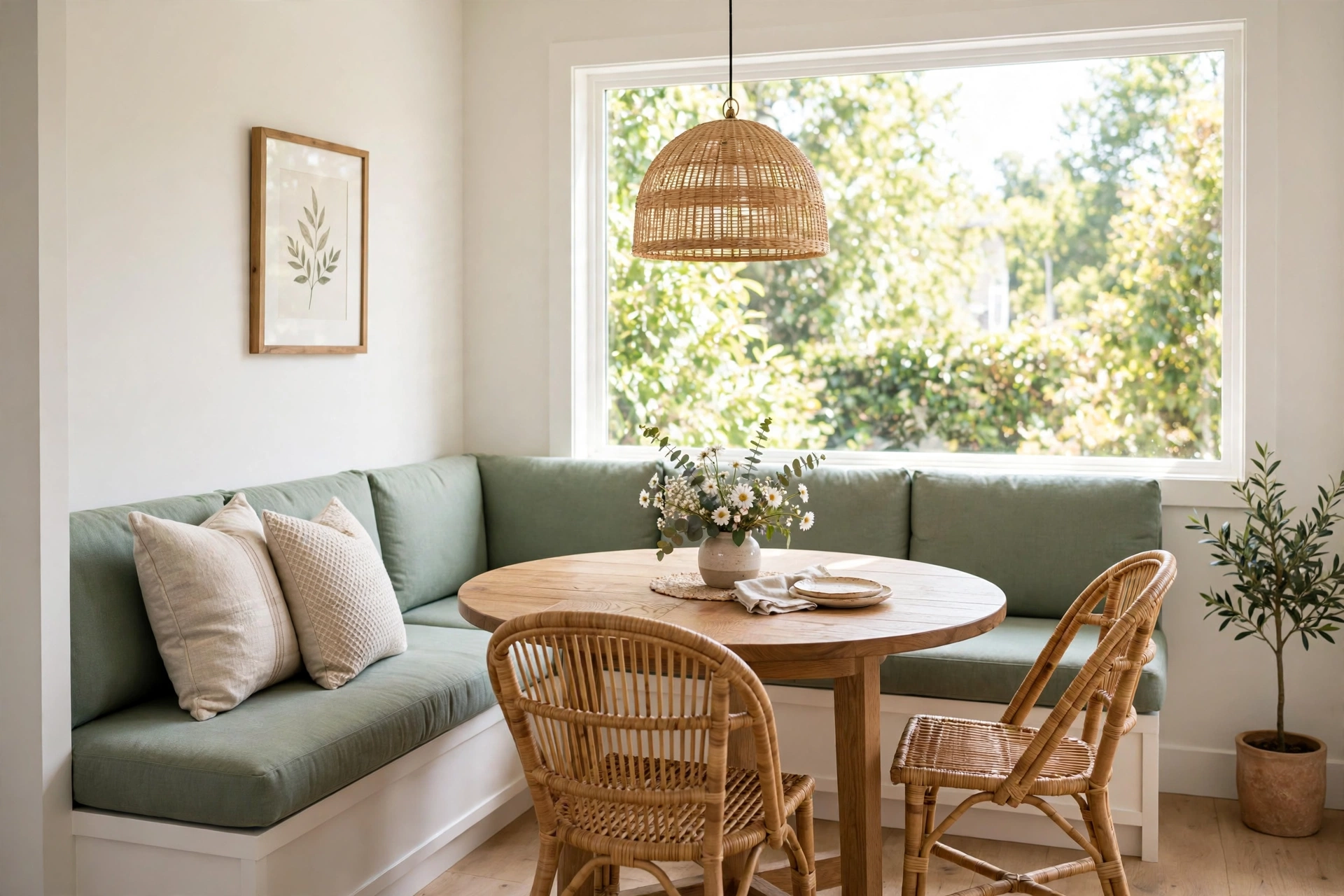
A dining bench on one side of the table is one of the most practical upgrades you can make. It seats three where two chairs would fit, slides neatly under the table when not in use, and kids love it. Benches also make a dining room feel more relaxed and casual, which suits how most families actually eat.
For comfort, add a long bench cushion or a few throw pillows, since backless benches get uncomfortable during long dinners. A storage bench with a lift-up seat is even better. It swallows placemats, chargers, and the kids’ art supplies. Just make sure the bench height matches your chairs so everyone sits at the same level, usually around 18 inches.
Products to Consider:
- Solid wood dining bench
- Long bench cushion with ties
- Storage bench with lift-up seat
13. Layer Your Lighting for Ambiance
Overhead lighting alone makes a dining room feel flat. The rooms that feel warmest at night have light coming from at least three sources: the pendant or chandelier, plus table lamps or wall sconces, plus candles. A pair of small lamps on the sideboard flanking a mirror is a classic arrangement that adds a soft glow exactly where you want it.
Candles deserve special mention. Real taper candles or a cluster of unscented pillar candles on the table turn an ordinary Tuesday dinner into something memorable. If open flames worry you, especially with kids or pets, flameless LED candles have become remarkably convincing, and many come with timers. Warm-toned bulbs, around 2700K, keep the light cozy rather than clinical.
Products to Consider:
- Pair of small buffet table lamps
- Flameless LED taper candles with timer
- Warm-white dimmable light bulbs (2700K)
14. Keep Greenery and Fresh Flowers in Rotation
Plants soften hard furniture lines and add life to a dining room. A tall plant like a fiddle-leaf fig or olive tree fills an empty corner beautifully, while a low-maintenance pothos trailing from a high shelf adds softness without taking up floor space. If your dining room gets little natural light, good-quality faux plants are a perfectly respectable choice.
Fresh flowers on the table are a small luxury that pays off disproportionately. You do not need an expensive florist arrangement. A five-dollar bunch of grocery store flowers split into two small vases, or a few stems of eucalyptus in a tall vase, looks effortlessly chic. Change the water every couple of days and trim the stems, and even supermarket flowers last a full week.
Products to Consider:
- Tall faux olive tree in planter
- Small bud vase set
- Ceramic tabletop planter
15. Create a Coffee or Tea Station
If you linger over coffee after dinner, a dedicated beverage station earns its keep. Clear one end of the sideboard or a small corner and set up a tray with your coffee maker or electric kettle, mugs, sugar, and spoons. It keeps guests from crowding the kitchen and makes after-dinner drinks feel like an event rather than an afterthought.
Keep it tidy with a few rules. Everything lives on the tray, mugs hang on hooks or stack neatly, and supplies get refilled weekly. A small framed print or a tiny plant next to the station makes it look styled rather than purely functional. During the holidays, this same spot becomes a hot cocoa bar with marshmallows and candy canes, which kids remember for years.
Products to Consider:
- Wooden serving tray with handles
- Electric gooseneck kettle
- Set of ceramic mugs
16. Soften the Room With Window Treatments
Bare windows make a dining room feel unfinished and can create harsh glare during daytime meals. Curtains or Roman shades soften the light, add color and pattern, and improve the room’s acoustics. Dining rooms with hard floors and bare walls echo, and fabric on the windows noticeably calms that.
Hang curtains high and wide. Mount the rod a few inches below the ceiling and extend it well past the window frame so the panels stack on the wall, not over the glass. This makes the window look bigger and lets in maximum light when the curtains are open. Linen or linen-look panels filter light beautifully while maintaining privacy. For a tailored look, Roman shades in a natural woven texture work in both casual and formal rooms.
Products to Consider:
- Linen curtain panels (set of 2)
- Adjustable curtain rod (72-144 inch)
- Woven wood Roman shade
17. Display What You Love in a Hutch or Cabinet
A glass-front hutch or display cabinet turns storage into decor. It is the perfect home for the pretty things you actually own: heirloom china, collected ceramics, colorful glassware, or cookbooks with beautiful spines. Arranging items by color creates a calm, curated look, while mixing heights keeps it from feeling like a store shelf.
Edit ruthlessly. A hutch crammed full of everything looks cluttered; the same hutch with breathing room around each group looks intentional. Leave some shelves partly empty and add a small plant or framed photo between dish stacks. If you do not have a hutch, a tall bookcase styled the same way works just as well in a casual dining space.
Products to Consider:
- Glass-front display cabinet
- Plate display stands
- Battery-operated cabinet puck lights
18. Rotate Seasonal Centerpieces
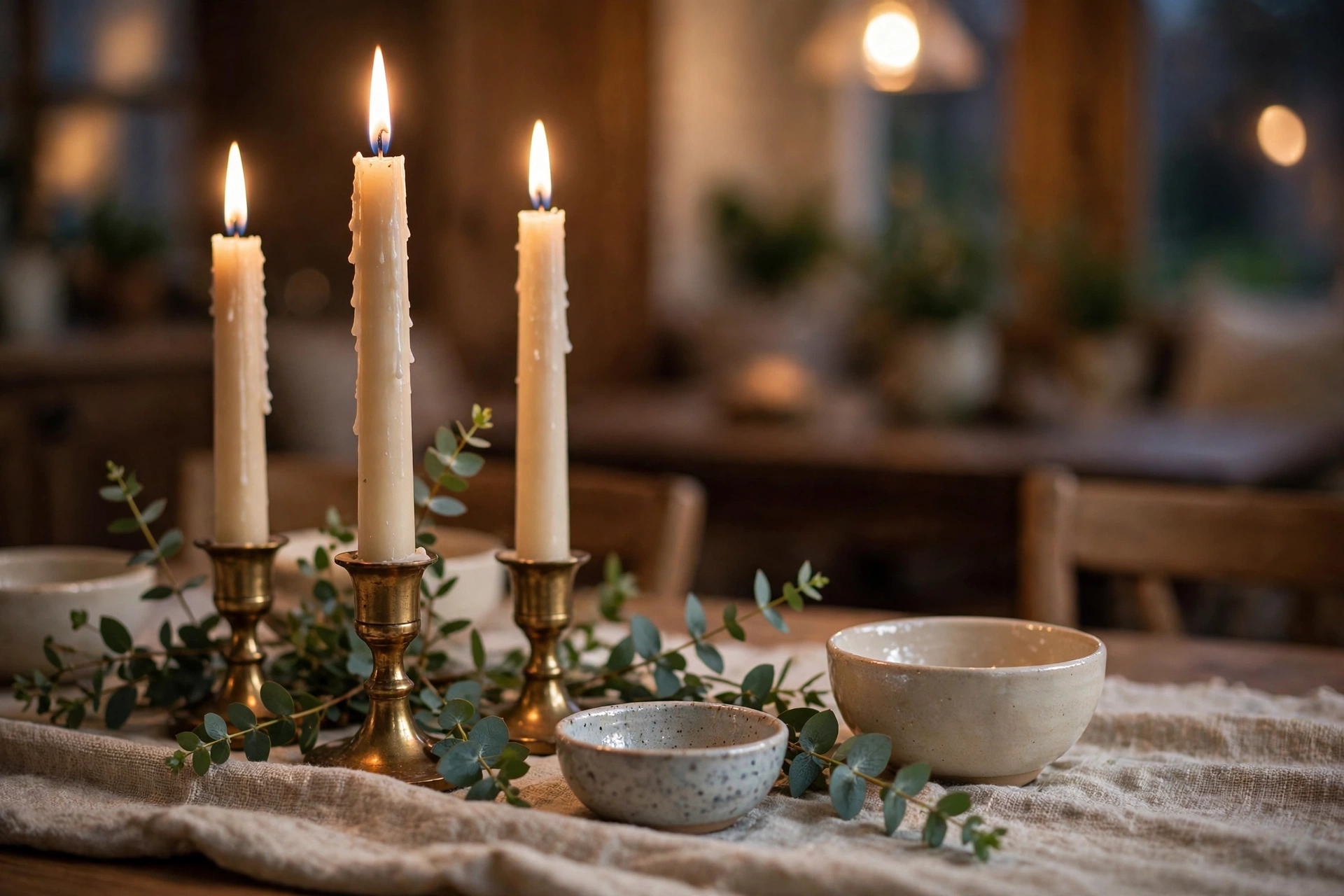
The easiest way to keep your dining room feeling fresh all year is a seasonal centerpiece rotation. It takes ten minutes and costs almost nothing if you shop your own home and yard. Spring calls for budding branches or tulips. Summer works with a bowl of citrus or wildflowers. Fall is made for small pumpkins, dried wheat, and amber glass. Winter shines with evergreen clippings, pinecones, and candles — all perfect ingredients for christmas table decor.
Store a small bin of seasonal decor so the swap is easy. Keep your base pieces constant, the same tray, runner, and candle holders, and only change the natural elements and one or two accents. The room feels new each season without a full redecoration. This is also a wonderful tradition to do with kids, who love hunting for pinecones or picking wildflowers.
Products to Consider:
- Faux eucalyptus garland
- Set of small velvet pumpkins
- Amber glass candle holders
19. Make a Small Dining Room Work Harder
Small dining rooms and eat-in kitchen corners need every inch to earn its place. A round table is usually the best choice because it has no corners to bump into and seats four comfortably in the footprint where a rectangular table seats two. A pedestal base gives more legroom than four legs, which matters when chairs tuck in tight.
Choose visually light furniture. Chairs with open backs, a glass or light-wood table, and a mirror on the wall all make the space feel bigger than it is. Wall-mounted lighting, like a plug-in sconce or a pendant on a swag hook, frees up surface space. And remember the rug rule still applies, just scaled down. A 5-by-7 rug under a small round table defines the zone without overwhelming the room.
Products to Consider:
- Small round pedestal dining table
- Set of open-back dining chairs
- Plug-in wall sconce
20. Define the Dining Zone in an Open Floor Plan
Open floor plans are wonderful for togetherness and terrible for definition. Without walls, the dining area can feel like a table lost in a big room. The fix is to give it visual boundaries. A rug is the fastest way. It literally draws a line around the dining zone. A pendant light hung low over the table creates a ceiling boundary, marking the space from above.
Furniture placement helps too. Float the sideboard behind the table rather than pushing everything against walls, and let the back of a sofa face the dining area to create a natural divider in a combined living-dining space. Keep a consistent color palette across the open space so the zones feel connected, but let the dining area have one distinguishing feature, like a bolder rug or a statement light, that says this spot is for gathering.
Products to Consider:
- Large area rug (9×12)
- Plug-in pendant light with swag hook
- Open-back room divider shelf
21. Add Personal Touches That Tell Your Story
The difference between a decorated dining room and a meaningful one is personal history. Frame a handwritten family recipe and hang it near the table. Display the platter your grandmother used every Thanksgiving. Set out the ceramics you brought back from a trip. These are the details guests remember and ask about.
Personal does not mean cluttered. Choose three to five meaningful pieces and give them pride of place: the hutch shelf, the sideboard, or a small gallery wall. Rotate them occasionally so the room evolves with your life. A dining room that reflects the people who eat there will always feel warmer than one copied from a catalog, no matter how beautiful the catalog is.
Frequently Asked Questions
1. What is the most important piece in dining room decor?
The dining table sets the tone for everything else, so choose it first based on your room size and how you actually live. After that, lighting makes the biggest visual difference.
2. How do I decorate a dining room on a budget?
Start with what costs little but shows a lot: a table runner, candles, fresh greenery, and rearranged furniture. Thrift stores and online marketplaces are excellent sources for solid wood sideboards, mirrors, and art.
3. What size rug should go under a dining table?
Choose a rug that extends at least 24 inches beyond the table on every side so chairs remain on the rug when pulled out. For a typical six-person rectangular table, an 8-by-10-foot rug usually works.
4. How high should a chandelier hang above a dining table?
Hang the bottom of the fixture 30 to 36 inches above the tabletop. Always put dining room overhead lights on a dimmer switch so you can adjust the mood.
5. How can I make my dining room feel cozy?
Layer textures like linen, wool, and wood. Add warm lighting from multiple sources including candles. Use a rug to soften hard floors, hang curtains to calm echoes, and keep something living in the room.
Final Thoughts
A warm, stylish dining room does not require a big budget or a designer. It requires attention to the things that shape how a room feels: a table that fits your life, chairs you want to sit in, light you can dim, textures you want to touch, and a few personal pieces that make the space yours. Start with one or two ideas from this list, live with them for a while, and add more as the room tells you what it needs.