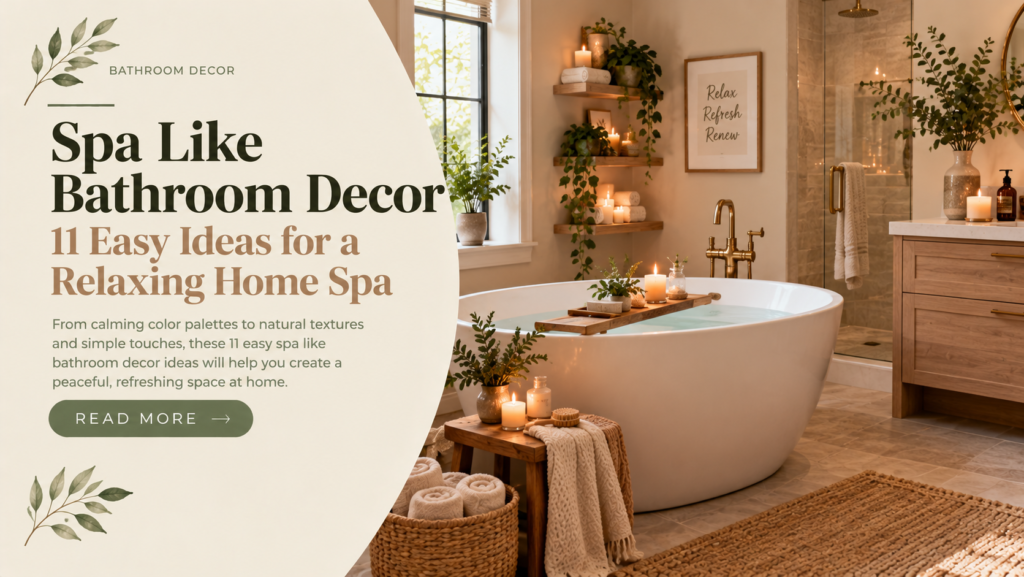
A small bathroom does not have to feel like a compromise. In fact, some of the most charming bathrooms I have ever seen are the tiny ones — the powder room under the stairs, the 5-by-8 guest bath with its original tile, the apartment bathroom so small the door nearly grazes the vanity. Small spaces force you to be intentional, and that intention is exactly what makes a bathroom feel designed rather than just functional.
The trick is to decorate for the space you have, not the one you wish you had. Every choice should earn its place: a mirror that doubles your light, storage that hides the clutter, materials that stand up to daily steam and moisture. Below are 25 small bathroom decor ideas that do exactly that — practical, renter-friendly where it counts, and grounded in what actually works in real American homes, from 1950s ranch bathrooms to tiny apartment baths.
1. Hang One Oversized Mirror
If you do nothing else, do this. A single large mirror is the fastest way to make a small bathroom feel twice its size, because it bounces both natural and artificial light around the room. Go as big as your wall allows — a round 30-inch mirror over a petite vanity or a full-width rectangle above the sink. Round mirrors soften the hard lines of a small bath, while arched mirrors are having a well-earned moment. Mount it a few inches above the backsplash so it reads as one continuous plane of glass. For renters, look for a mirror with a D-ring hanger rather than one that needs to be hardwired; a single picture-hanging anchor in drywall holds most framed mirrors just fine. Skip the medicine-cabinet-plus-decorative-mirror double-up — in a tight space, one confident mirror beats two competing ones. Keep the frame slim and light (thin brass, rattan, or frameless) so the mirror itself, not the frame, does the visual work.
2. Float the Vanity
A wall-mounted floating vanity is a small-bathroom secret weapon. By lifting the cabinet off the floor, you expose several inches of continuous flooring, which tricks the eye into reading the room as larger. It also makes mopping up under the sink dramatically easier — a real quality-of-life upgrade in a steamy room. Most floating vanities come in 24- to 36-inch widths, which fits the classic American half-bath perfectly. Pair it with a vessel sink or an integrated basin, and leave the under-sink area styled with a single woven basket for towels or cleaning supplies. One caution: floating vanities need solid blocking in the wall, so this is a weekend project for a handy homeowner rather than a renter move. If you are renting, you can get a similar airy effect with a console or pedestal sink (see idea 3) and a small freestanding shelf unit underneath.
3. Swap to a Slim Pedestal or Console Sink
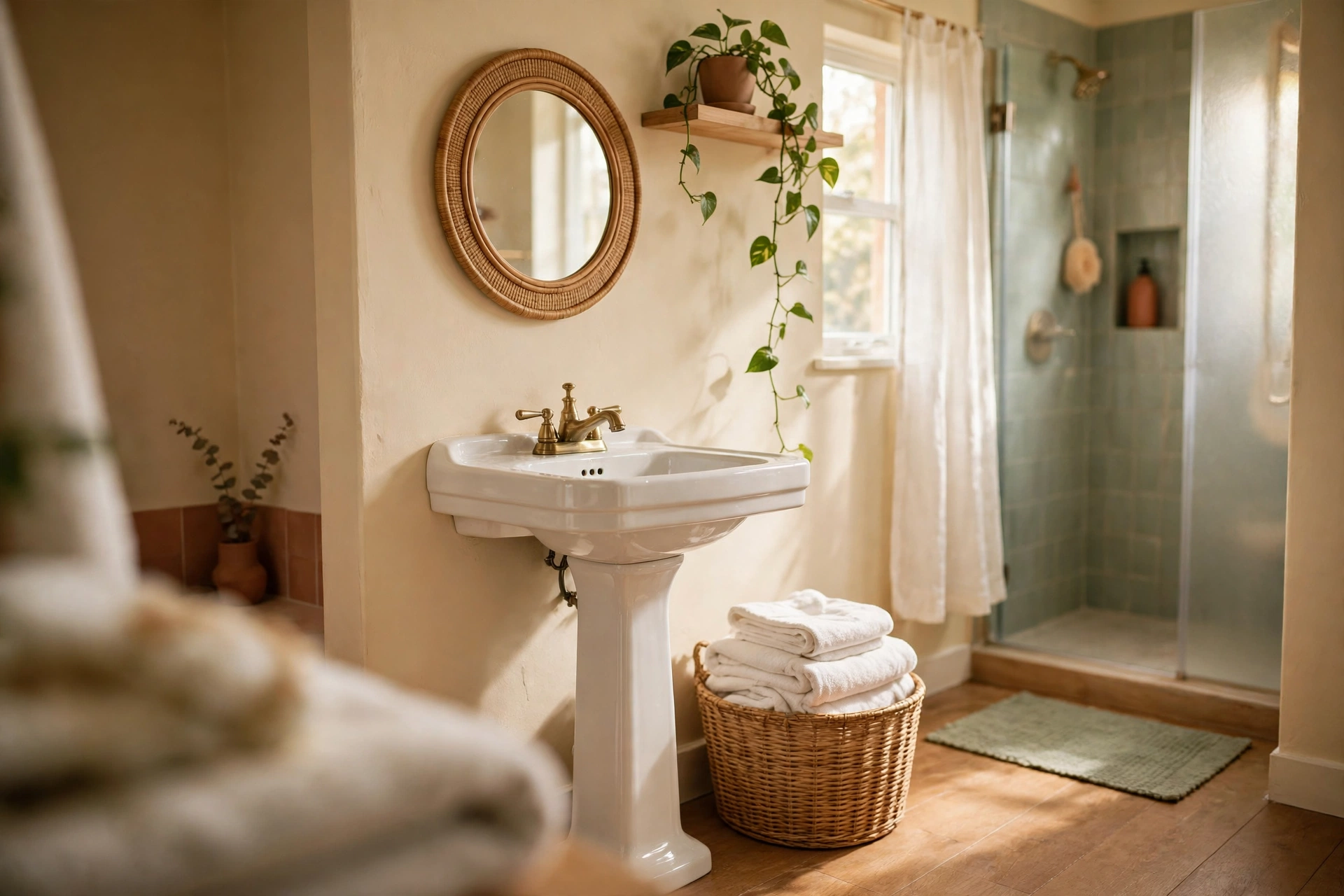
Bulky vanity cabinets eat floor space and sight lines. A pedestal sink or an open console sink with slim legs opens up the room instantly — you see the floor running continuously underneath, which makes the whole bath feel bigger. Console sinks are especially good because the open frame lets you tuck a small basket or a folded stack of towels beneath. The trade-off is storage, so this works best when you compensate elsewhere: a mirror cabinet above, an over-the-toilet shelf, or a narrow cart nearby. Pedestal sinks shine in true powder rooms where you only need a place to wash hands. Console styles suit family baths where a little under-sink stashing matters. Look for wall-mount faucets or backsplash-mounted soap dispensers to keep the slim top clutter-free — the whole point is visual lightness.
4. Choose a Clear Glass Shower Door
A shower curtain — especially a busy patterned one — chops a small bathroom in half visually. A frameless clear glass door or panel lets your eye travel the full depth of the room, which can make a 5-by-8 bath feel genuinely spacious. If a full glass enclosure is not in the budget, a curved shower rod is a brilliant middle ground: it buys you several extra inches of elbow room inside the shower and lets the curtain hang closer to the wall. Choose a clear or white liner and a simple curtain in a light fabric so light still passes through. Glass needs squeegeeing after showers to stay spot-free, so keep a small squeegee on a hook inside the shower — the two-second habit keeps hard-water spots off and your glass looking new for years. Ventilation matters more with glass too; run the exhaust fan for 20 minutes after every shower.
5. Build Up With Over-the-Toilet Storage
The wall above the toilet is prime real estate in a small bath — it is usually empty, it is easy to reach, and a shelf or etagere there adds storage without stealing a single square foot of floor. A simple two-tier etagere (those freestanding shelves that straddle the tank) holds towels, extra toilet paper, and a small plant. If you prefer a built-in look, mount two floating shelves at staggered heights and style them with folded towels below and a candle or small vase up top. Keep daily-use items (toilet paper, wipes) at hand level and prettier display pieces higher. For renters, a tension-mounted over-toilet unit avoids holes entirely. Whichever route you take, leave a few inches of clearance above the tank lid so it can be removed for maintenance — a detail that is easy to forget until a plumber needs access.
6. Carve Out Shower Niches
Those wire shower caddies hanging from the showerhead? They rust, they wobble, and they make a small shower look cluttered. A recessed niche — a shelf built right into the shower wall — is the grown-up answer. During a tile renovation, have your installer frame one or two niches at elbow height (around 48 inches) on the side wall, away from direct spray. A single wide niche holds shampoo, conditioner, and body wash for the whole household; line the back with an accent tile for a designer touch. Not renovating? A corner-mounted tension-pole caddy or a suction-cup shelf achieves a similar tidy look without demo. Either way, the goal is the same: get bottles off the tub edge and the floor. Fewer visible bottles means the shower reads as a calm, open space instead of a cluttered one.
7. Put Dead Corners to Work
Every small bathroom has an awkward corner that collects nothing but dust. Reclaim it with a corner shelf unit — a triangular two- or three-tier shelf that hugs the wall junction. It is perfect for the corner beside a pedestal sink (a spot for a small tray with hand soap and lotion) or the dead space next to the tub. In the shower, a corner bench or corner stool doubles as a footrest for shaving and a perch for a plant outside the spray zone. Measure twice before buying: American bathroom corners are rarely perfectly square in older homes, so a small adjustable unit beats a rigid one. Style corner shelves sparingly — two or three items per tier, max. The moment a corner shelf overflows, it reads as clutter instead of clever storage, so treat it as a curated display zone and let your closed storage handle the bulk.
8. Keep the Palette Light and Warm
Dark walls can be dramatic, but in a truly small bathroom, a light palette almost always wins. Whites, warm creams, pale greys, and soft beiges reflect light and push the walls visually outward. That does not mean boring — layer in texture so it feels rich: a zellige-look backsplash, a nubby cotton shower curtain, natural wood tones on a mirror frame or stool. If you crave color, add it in one bold, contained dose: a sage-green vanity, terracotta hand towels, or a patterned floor tile (see idea 22). Paint with a moisture-rated satin or semi-gloss finish so walls wipe clean and resist mildew — flat paint in a steamy bath is a mistake you will regret within a year. And if your bath has a window, keep the treatment sheer or frosted rather than heavy; daylight is your best decorating asset.
9. Lay Large-Format Tile
Counterintuitive but true: bigger tiles make a small bathroom feel bigger. Large-format tiles (12-by-24 inches or larger) mean fewer grout lines, and fewer grout lines mean the floor or wall reads as one continuous surface — which expands the room visually. They are also easier to clean, since grout is where mildew loves to hide. Run floor tile in a straight or diagonal pattern; diagonal layouts make a tight floor plan feel wider. For walls, take the tile all the way to the ceiling in the shower and at least halfway up elsewhere — stopping tile at chair-rail height chops the room. A polished or honed finish bounces more light than matte. Budget tip: you need far fewer square feet of tile in a small bath, so this is the one room where you can justify the slightly pricier tile you love without blowing the renovation budget.
10. Draw the Eye Up With Vertical Lines
When floor space is fixed, the only direction left is up. Vertical lines — stacked subway tile, vertical shiplap, tall narrow art, a floor-to-ceiling shower curtain — pull the gaze upward and make ceilings feel taller. A classic trick: run subway tile vertically instead of horizontally in the shower, or paint a single vertical stripe of beadboard behind the toilet. Tall, narrow storage (a linen tower, a slim etagere) reinforces the same effect. Keep horizontal bands to a minimum — chair rails and mid-wall tile borders slice a small room into smaller pieces. Lighting can help too: a pendant hung a little higher than usual or sconces mounted at eye level emphasize height. Even your shower curtain rod placement matters; mount it as close to the ceiling as practical so the fabric runs long and the room feels taller.
11. Layer Your Lighting
One harsh overhead light is the fastest way to make a small bathroom feel like a dentist’s office. Layer three levels instead: overhead for general light, sconces or a backlit mirror at face level for grooming, and a small warm accent (a candle-style LED or a nightlight) for evening ambiance. Face-level light matters most — light from above casts shadows under your eyes and chin, while light at mirror height flatters and actually helps you see what you are doing. If you cannot hardwire sconces, plug-in picture lights or battery-operated LED bars mounted beside the mirror work surprisingly well. Choose bulbs in the 2700K–3000K warm range; anything cooler reads clinical in a small space. And put the overhead on a dimmer if you can — a small bath at half-brightness in the evening feels like a completely different, much calmer room.
12. Hide Storage Behind the Mirror
A mirrored medicine cabinet is two upgrades in one: the reflective surface from idea 1 plus hidden storage that keeps counters clear. Modern recessed medicine cabinets sit flush with the wall, so you get the depth without the bulk of a surface-mounted box — many are only 4 inches deep, plenty for daily toiletries. Look for one with adjustable glass shelves and a soft-close door. If recessing is not possible (renters, concrete walls), a slim surface-mount cabinet in a light finish still beats an open shelf for visual calm. Inside, use small acrylic risers or bins so the cabinet stays organized; an organized cabinet means you actually close the door, and closed doors mean clear counters. As a bonus, if you have ever wanted to lean into the relaxing side of bath time, our guide to spa-like bathroom decor ideas pairs beautifully with the calm, clutter-free look a medicine cabinet creates.
13. Swap Towel Bars for Hooks
A towel bar demands a long, clear wall run; a hook needs six inches. In a small bath, hooks win every time. A row of three sturdy hooks on the back of the door or on the wall beside the shower holds bath towels, a hand towel, and a robe without the commitment of a 24-inch bar. Hooks also let towels hang in a gathered bunch, which dries faster than a towel folded flat over a bar — a real plus in a humid room. Choose hooks rated for wet use (brass, stainless steel, or powder-coated) and anchor them into studs or use heavy-duty drywall anchors, because wet towels are heavier than you think. Over-the-door hook racks are the renter’s best friend here: zero holes, full function. Finish the look by hanging one beautiful hand towel you actually like looking at — when storage is open, everything on display becomes decor.
14. Roll In a Narrow Cart
That 8-inch gap between the vanity and the wall, or the sliver beside the toilet? A slim rolling cart turns dead space into working storage. Three-tier narrow carts (often just 6 to 8 inches wide) roll into the smallest gaps and hold cleaning supplies, extra toilet paper, or a curated stack of rolled towels. Because it rolls, you can pull it out to clean behind it — no more dusty dead zones. Style the top tier like a vignette: a small plant, a folded hand towel, a pretty soap dispenser. It is also a great solution for shared family baths where everyone needs their own caddy level. If your bathroom shares a wall with the laundry area, a cart can even shuttle supplies back and forth — and if you are organizing that space too, our laundry room ideas cover the same small-space storage thinking for the room next door.
15. Organize the Back of the Door
The back of the bathroom door is the most underused square footage in the house. An over-the-door organizer — wire racks, clear pockets, or a slim mirrored cabinet — adds a surprising amount of storage with zero footprint. Use it for the things you reach for daily: hair tools, skincare, first-aid basics, cleaning sprays. Clear pockets are ideal because you can see everything at a glance, which means less rummaging and fewer duplicate purchases. Two practical notes: first, check that the organizer clears your trim and hardware when the door closes (measure the gap); second, keep it tidy, because an overstuffed door organizer rattles every time the door moves and looks chaotic from across the room. Treat it as a hardworking utility zone, not a display — the pretty stuff belongs on your open shelves.
16. Mount the Faucet on the Wall
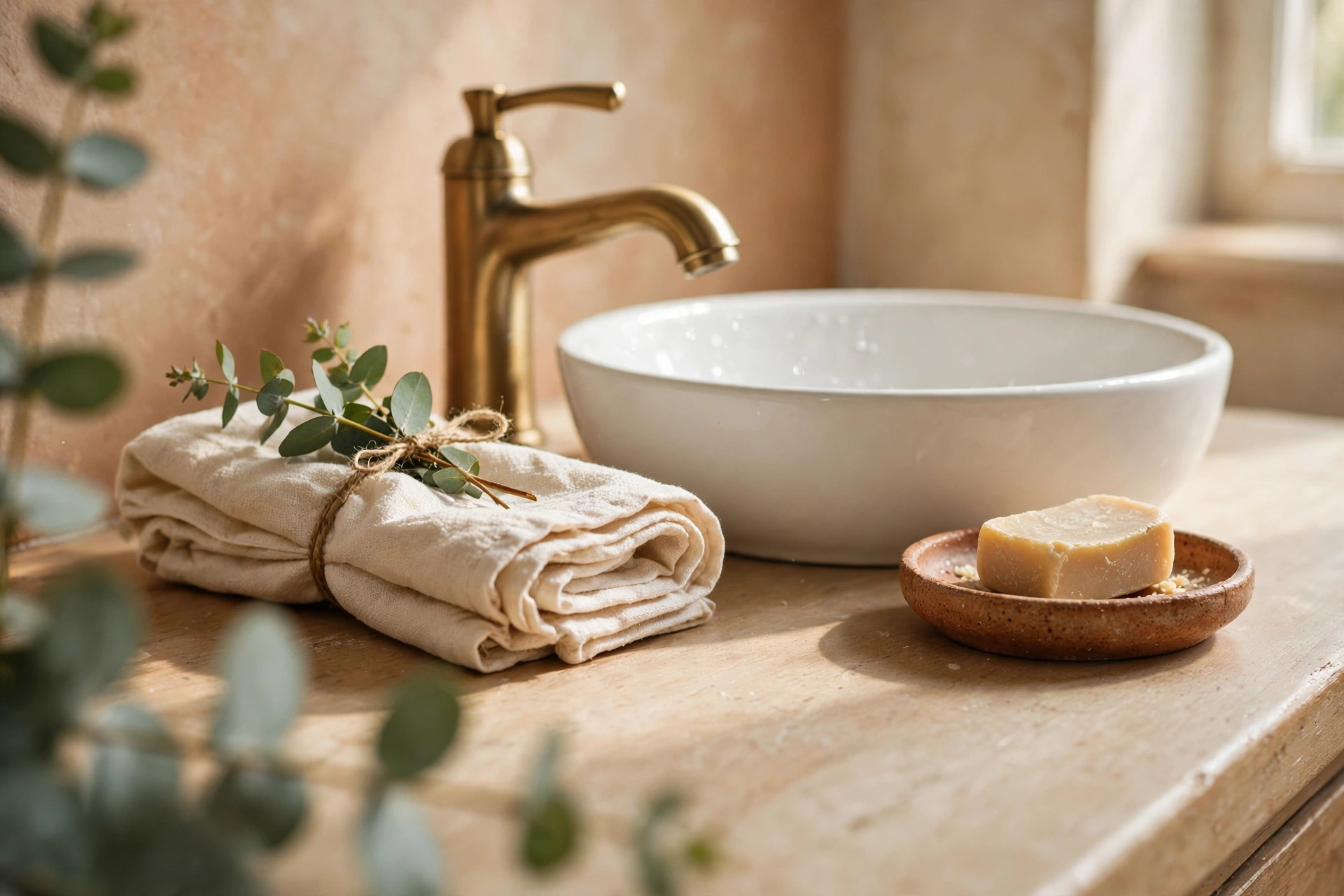
Counter space in a small bath is sacred, and a deck-mounted faucet steals a surprising chunk of it. A wall-mounted faucet frees the entire basin ledge for a soap dish, a small tray, or simply beautiful empty space. It also makes wiping down the counter a one-swipe job — no grime ring around the faucet base. This is a plumber-level project (supply lines need to be rerouted inside the wall), so plan it during a renovation rather than as a weekend swap. Pair the wall faucet with a vessel or wall-hung basin for maximum effect. If wall-mounting is too invasive, a single-hole faucet with a compact base and a high-arc spout gives you most of the visual lightness with a standard installation. Either way, keep the finish consistent with your other hardware — mixed metals in a tiny room read as clutter, while one repeated finish reads as design.
17. Reclaim the Door Swing
A standard bathroom door needs about 20 square feet of swing clearance — in a small bath, that is space you simply do not have. A pocket door slides into the wall and gives you all of it back, letting you place a vanity, hamper, or storage tower right where the door used to sweep. Retrofitting a pocket door means opening the wall, so it is best done during a remodel; plan for a solid-core door with a good latch, since hollow pocket doors feel flimsy. Not ready for construction? A barn-style sliding door on an exposed track achieves the same swing-free result with surface mounting — just check that the wall beside the doorway is clear. Renters can fake the effect by removing the door entirely and hanging a curtain on a tension rod inside the frame; it is not soundproof, but for a powder room it is perfectly civilized.
18. Choose Small-Scale Fixtures
Standard fixtures are sized for standard bathrooms, and yours is not standard. Look for compact versions: a round-front toilet (about 2 inches shorter front-to-back than an elongated one), an 18- or 24-inch vanity instead of 30, a corner sink for truly tight powder rooms. Two inches here and three inches there add up to real knee room. When shopping, check the spec sheet’s “rough-in” and projection measurements, not just the pretty product photo — fixtures photograph larger than they are. Wall-hung toilets are the ultimate space-saver (the tank hides in the wall), though they cost more to install. One more trick: a toilet with a concealed trapway has smooth sides that are easier to clean and look sleeker in a small space. Every fixture you downsize is breathing room you get back.
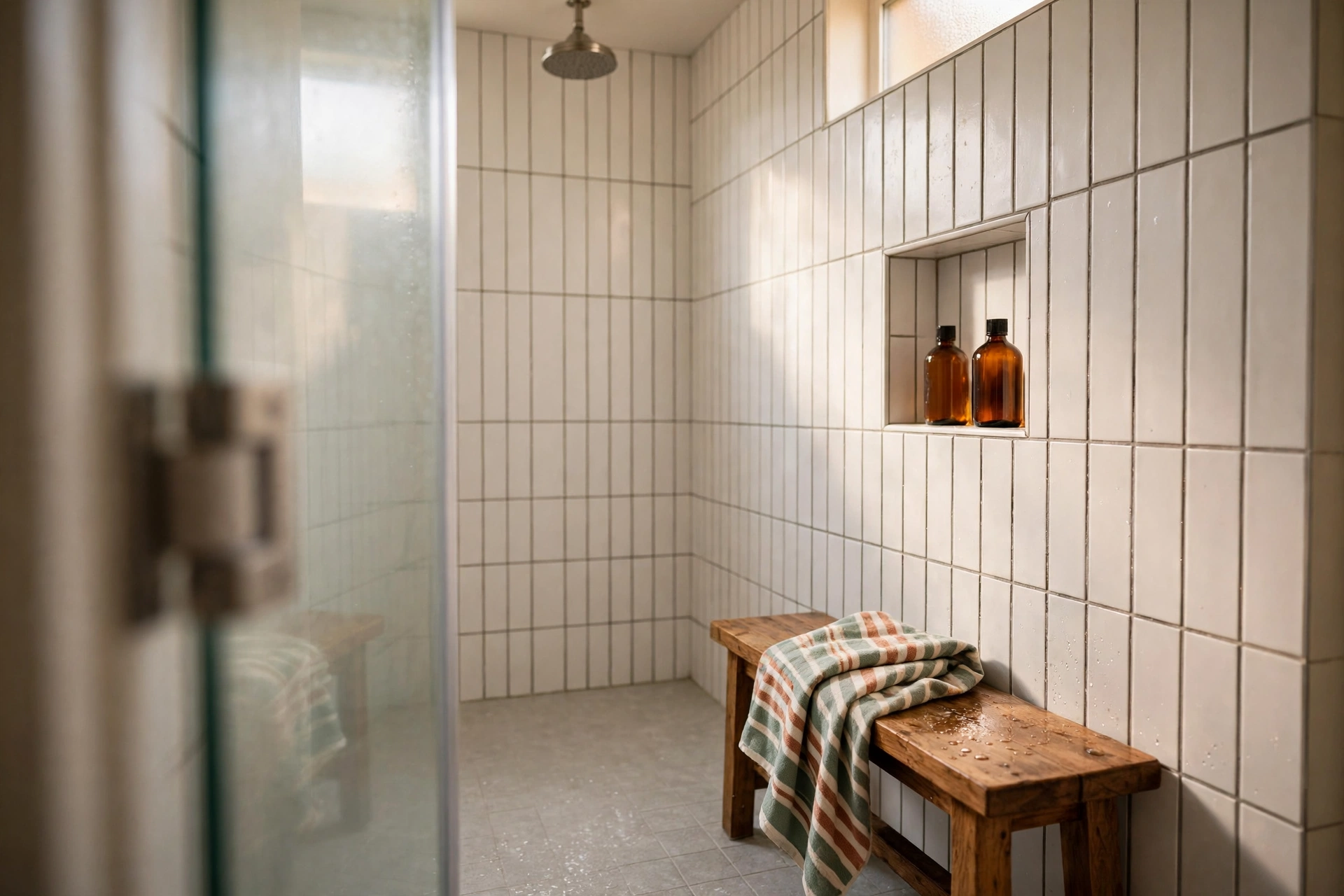
19. Hang Art Where No One Expects It
Small bathrooms deserve art just as much as living rooms do — and because the room is tiny, even one piece makes an outsized impact. The wall above the toilet is the classic gallery spot; a single framed print or a small salon-style cluster instantly makes the bath feel considered. Choose pieces that can handle humidity: framed prints behind glass, canvas, or metal signs rather than unprotected paper. Botanical prints, vintage bath advertisements, and abstract watercolors all suit the setting. Keep frames slim and light so they do not visually weigh down the wall. If you are renting, adhesive picture-hanging strips hold most small frames securely and remove cleanly. One framed piece of art you love does more for a small bathroom than a dozen “live laugh love” accessories you are neutral about.
20. Add One Humidity-Loving Plant
Bathrooms are secretly ideal for plants — the steam from daily showers mimics a tropical understory. A pothos trailing from a high shelf, a Boston fern in a hanging planter, or a snake plant in the corner adds life, softens hard tile edges, and costs almost nothing. In a small bath, go vertical: hang the plant or perch it on a shelf so it costs zero counter space. Pothos and philodendron tolerate the low light of a windowless bath better than most; if you have a window, ferns and calathea thrive. Use a pot with drainage and a saucer, and choose ceramic or sealed pots over raw terracotta, which can weep moisture onto shelves. Faux plants have improved enormously if your bath has truly no light — just dust them monthly, because dusty fake leaves are worse than no plant at all.
21. Make the Floor the Star
When wall space is scarce, the floor becomes your biggest uninterrupted canvas. A bold patterned tile — encaustic-look cement tile, black-and-white hex, or a classic checkerboard — gives a small bathroom personality without adding a single object to dust. Because the pattern sits underfoot, it never competes with your storage or fixtures. Keep walls quiet (soft white or warm cream) and let the floor do the talking; one statement surface per small room is the rule. Cement-look porcelain is the practical choice over real cement tile: it mimics the pattern, resists moisture, and needs no sealing. If you are renting or on a tight budget, peel-and-stick floor tiles have become genuinely convincing — choose a high-quality vinyl rated for bathrooms, prep the subfloor carefully, and seal the edges. A patterned floor also hides water spots and dust between cleanings, which is a quiet blessing in a hardworking family bath.
22. Style Open Shelves Like a Shop Display
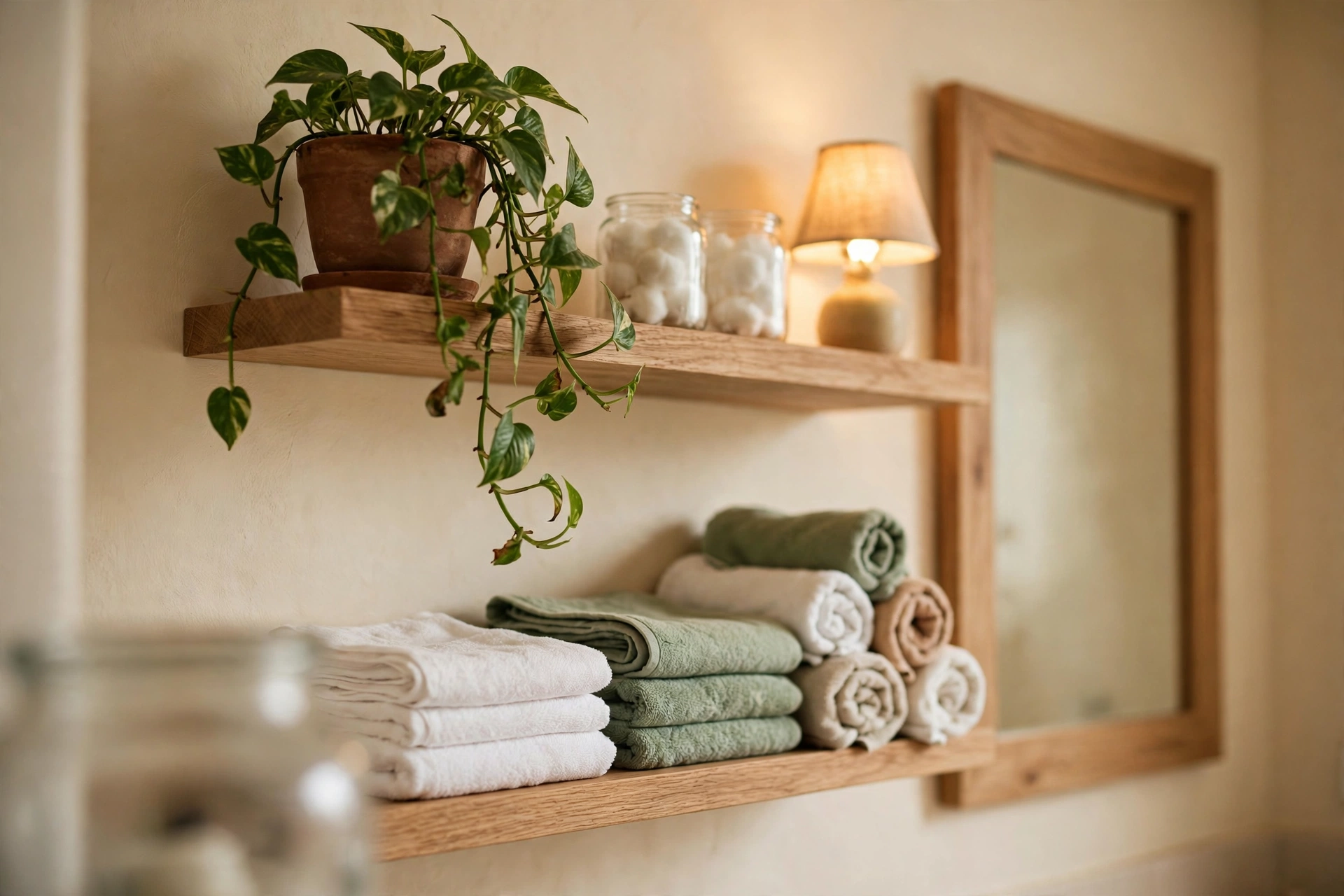
Open shelving in a small bathroom is both storage and decor — which means it has to be styled, not just stuffed. The formula that always works: folded towels in a single color family on the lowest shelf (easy to grab), a middle shelf with daily items corralled on a tray, and a top shelf for pretty things — a small plant, a candle, a folded spare towel. Roll hand towels instead of folding them; rolls look abundant and hotel-like even in a stack of six. Decant cotton balls, swabs, and bath salts into matching glass jars — the uniform look is what separates “styled” from “cluttered.” If your shelves tend toward chaos, take a cue from kitchen organizing: our pantry organization ideas use the same basket-and-bin logic that keeps small bathroom shelves tidy. Edit ruthlessly once a month; open shelves punish accumulation.
23. Go Renter-Friendly With Peel-and-Stick Upgrades
Renters, this section is for you: you can transform a bland rental bath without touching a tile or risking your deposit. Peel-and-stick backsplash tiles behind the vanity, a peel-and-stick floor tile overlay, removable wallpaper on one accent wall, and a new shower curtain and bath mat in a cohesive palette can make a builder-grade bath feel custom. Swap the builder mirror for a framed one (store the original flat under a bed), change out cabinet knobs, and add a wooden bath caddy across the tub. Keep every original fixture, plate, and knob in a labeled bag so move-out day is painless. The golden rule: every upgrade should either peel off cleanly or be easily reversible. Photograph everything before you start so you have proof of the original condition — future you will be grateful.
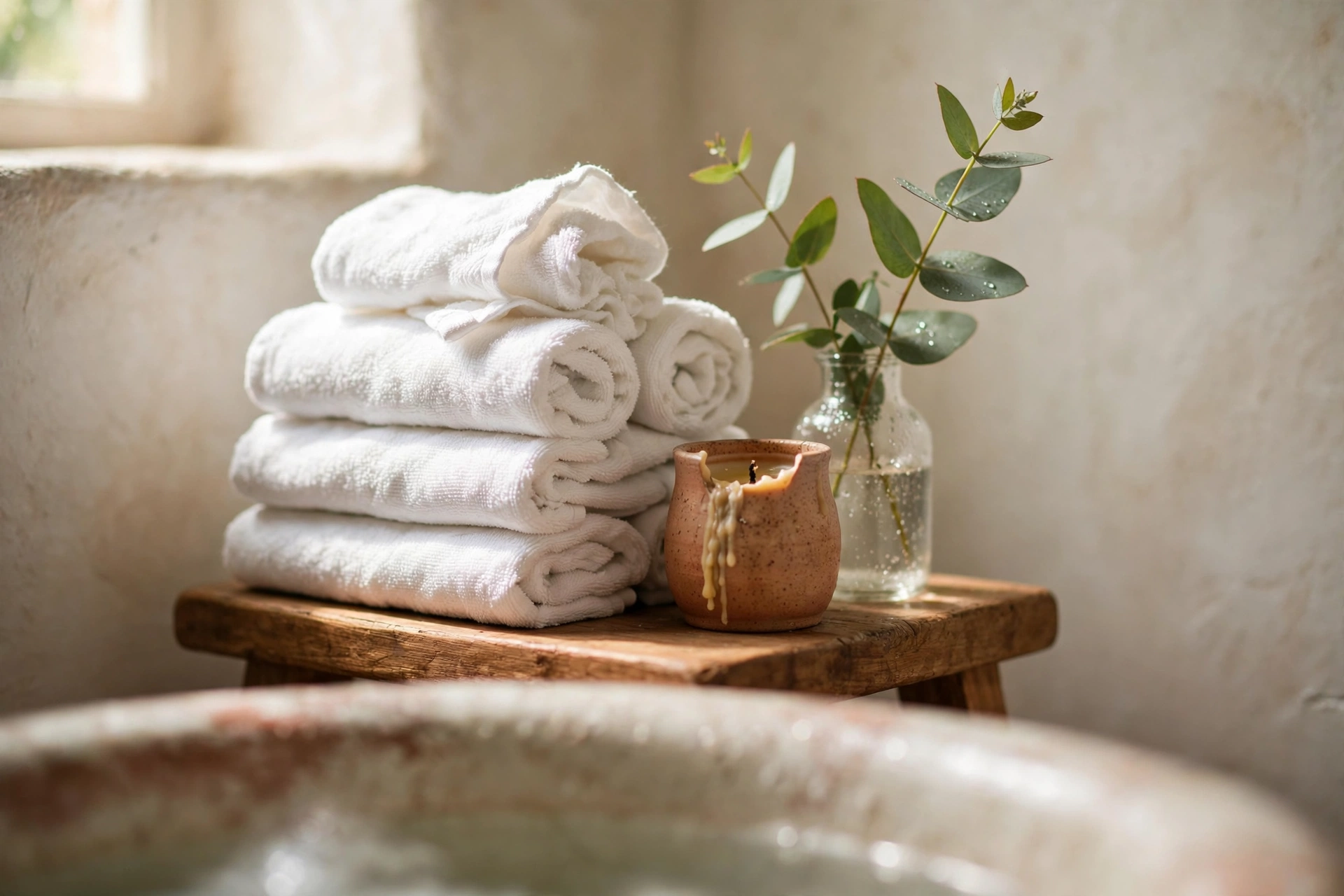
24. Dress the Guest Bath Like a Boutique Hotel
If your small bathroom serves guests, style it the way a good hotel would: fresh folded towels (one bath towel and one hand towel per expected guest), a small tray with the essentials — hand soap, lotion, a spare toothbrush, a candle — and one thoughtful extra, like a carafe of water or a bud vase with a fresh stem. Keep the counter nearly clear; guests need landing space for their own things. A small framed note with the Wi-Fi password is a charming touch that costs nothing. Store your everyday clutter (medicines, cleaning supplies) out of sight before visitors arrive — a lidded basket under the sink works. And if you are prepping the whole guest suite, our guest bedroom ideas will help the bedroom match the bathroom’s polish. A tiny bath that feels intentional tells guests you thought of them, which is the whole point.
25. Paint the Ceiling (the Fifth Wall)
Everyone forgets the ceiling, which is exactly why painting it is such a power move in a small bathroom. A soft color overhead — pale sage, warm blush, powder blue, or even a soft terracotta — draws the eye up and makes the room feel wrapped and intentional rather than boxy. Keep walls light and let the ceiling carry the color; the contrast makes both feel deliberate. Use a moisture-rated paint (bath-specific formulas resist mildew far better than standard wall paint) and run the exhaust fan religiously — paint failure in baths is almost always a ventilation problem, not a paint problem. In a windowless bath, a pale ceiling color with a satin finish bounces your lighting around beautifully. It is a one-weekend, one-gallon project with the impact of a full refresh — the perfect finale for your small-bathroom transformation.
Products to Consider
A short, practical shopping checklist for the ideas above — look for these categories at your local home-improvement store or any major home retailer, and always measure your space before buying:
- An oversized round or arched mirror with a slim frame
- A floating vanity in a 24- to 36-inch width, with soft-close drawers
- A slim console or pedestal sink for powder rooms
- A frameless clear glass shower panel, or a curved shower rod with a light liner
- A two-tier over-the-toilet etagere or a pair of floating shelves
- A recessed or surface-mount mirrored medicine cabinet
- Heavy-duty wall hooks in brass or stainless steel (plus an over-the-door rack for renters)
- A narrow rolling storage cart, 6 to 8 inches wide
- Warm-white LED sconces or a backlit mirror (2700K–3000K)
- Matching glass canisters and a tray for decanting everyday items
- Large-format porcelain tile, or peel-and-stick floor tile rated for bathrooms
- A humidity-loving plant such as pothos or a Boston fern, with a draining pot
- Moisture-rated satin or semi-gloss paint for walls and ceiling
Frequently Asked Questions
What colors make a small bathroom look bigger?
Light, warm neutrals — soft white, warm cream, pale grey, light beige — reflect the most light and visually push walls outward. The key is warmth: stark cool whites can feel clinical in a small space, while warm whites feel bright and inviting. If you want color, keep the main surfaces light and add one saturated accent (a sage vanity, terracotta towels, or a colored ceiling) rather than painting all four walls dark.
How can I add storage to a tiny bathroom without remodeling?
Think vertically and in dead zones: over-the-toilet shelving, the back of the door, a narrow rolling cart in gaps between fixtures, wall hooks instead of towel bars, and a mirrored medicine cabinet. Renters can do all of this with tension-mounted, over-the-door, or freestanding pieces — no drilling required. The biggest win is usually decluttering first; most small baths feel storage-starved because of accumulation, not square footage.
Are floating vanities practical in a small bathroom?
Yes — they are one of the best upgrades for a small bath. They expose the floor beneath, which makes the room read larger, and they make cleaning underneath easy. Just make sure the wall has proper blocking to carry the weight (a job for a handyperson or contractor, not a renter). If you cannot wall-mount, a console or pedestal sink gives a similar airy effect.
What materials hold up best in a humid small bathroom?
Porcelain and ceramic tile, quartz or solid-surface counters, stainless steel or brass hardware, and moisture-rated satin or semi-gloss paint. Avoid raw wood, unsealed natural stone, and flat-finish paint in the splash and steam zones. Whatever materials you choose, ventilation is the real longevity factor — run the exhaust fan during and for 20 minutes after every shower.
How do I decorate a small rental bathroom I cannot renovate?
Peel-and-stick tile and removable wallpaper, a framed mirror swapped in for the builder-grade one, new cabinet hardware, a cohesive shower curtain and bath mat set, open shelving styled with matching jars, and one plant. Keep every original piece stored safely and photograph the “before” state. These reversible upgrades can make a rental bath feel custom without risking your deposit.
Final Thoughts
A small bathroom rewards the decorator who thinks like an editor: keep what earns its place, cut what does not, and let light and a few beautiful details do the heavy lifting. You do not need a renovation to feel the difference — a bigger mirror, hooks instead of a towel bar, and a freshly styled shelf can transform the room in a single weekend. Pick the three ideas from this list that fit your space and your budget, start there, and enjoy the rare satisfaction of a tiny room that finally feels exactly right.