
Setting up a nursery is one of those projects that feels exciting and overwhelming at the same time. There is so much advice out there, and so many picture-perfect rooms online, that it is easy to lose sight of what actually matters: a calm, comfortable, safe space where you and your baby can rest, feed, and bond. The good news is that a beautiful nursery does not require a huge room or a huge budget. It requires good light, soft textures, a little bit of planning, and a few well-chosen pieces that work hard.
Below you will find 25 practical nursery ideas that cover everything from paint color and lighting to storage, safety, and the small details that make a room feel special. Whether you are starting from an empty spare room or squeezing a nursery into a corner of your apartment, there is something here for you. Take the ideas that fit your space and your style, skip the ones that do not, and remember that the best nursery is the one that makes life with a newborn a little bit easier.
One more thing before we dive in: you do not need to do all 25 ideas at once. Many parents tackle the room in three passes. First the bones: paint, crib, dresser, and chair. Then the function: lighting, curtains, storage, and safety. Finally the feeling: textiles, art, plants, and the personal touches that make it yours. Work through the list below in that order and the room will come together without stress, even if you are starting late or working with a tight budget.
1. Start With a Soft, Soothing Color Palette
Before you buy a single thing, decide on a color story. Soft, muted tones like warm white, greige, sage green, dusty blue, and warm blush are popular for a reason: they photograph beautifully, but more importantly, they keep the room feeling calm when you are up at 3 a.m. with a fussy baby. Paint is the cheapest way to transform a room, so get the walls right first. If you love bold color, use it as an accent on one wall or in textiles rather than on every surface. A room that feels serene will serve you far better than one that feels stimulating, and neutral walls make it easy to swap decor as your child grows.
2. Choose the Crib First and Build Around It
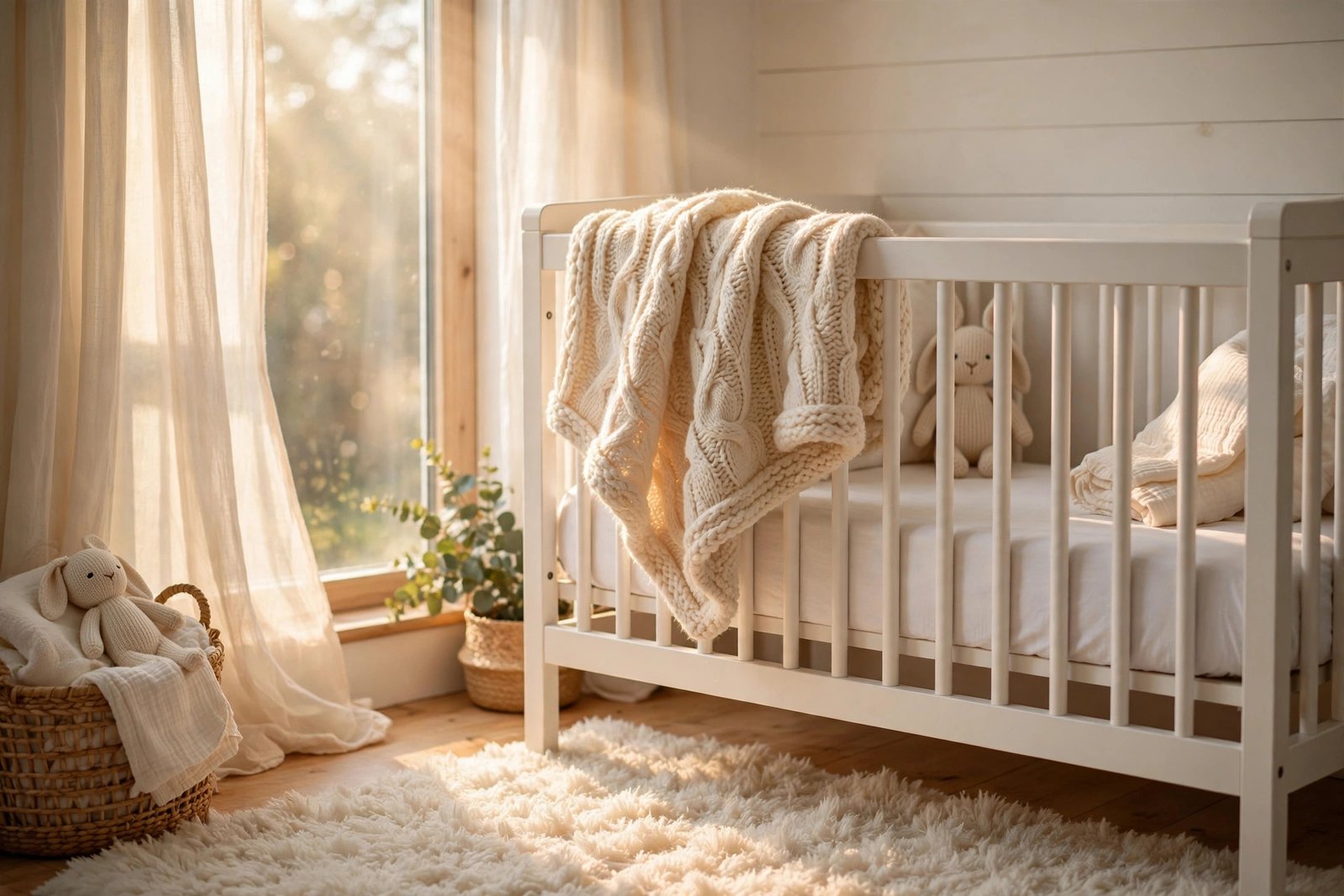
The crib is the anchor of the room, so pick it early. A convertible crib that turns into a toddler bed and eventually a daybed gives you years of use from one purchase, and most big-box and specialty retailers in the US carry them at every price point. Place the crib away from windows, heating vents, and anything dangly like cords or curtains. Keep the mattress at its highest setting for newborns so you are not bending too far, and lower it as soon as your baby can sit up. Everything else in the room, from the rug to the chair, can be arranged once the crib has its spot.
3. Create a Nursing and Rocking Corner You Will Actually Love
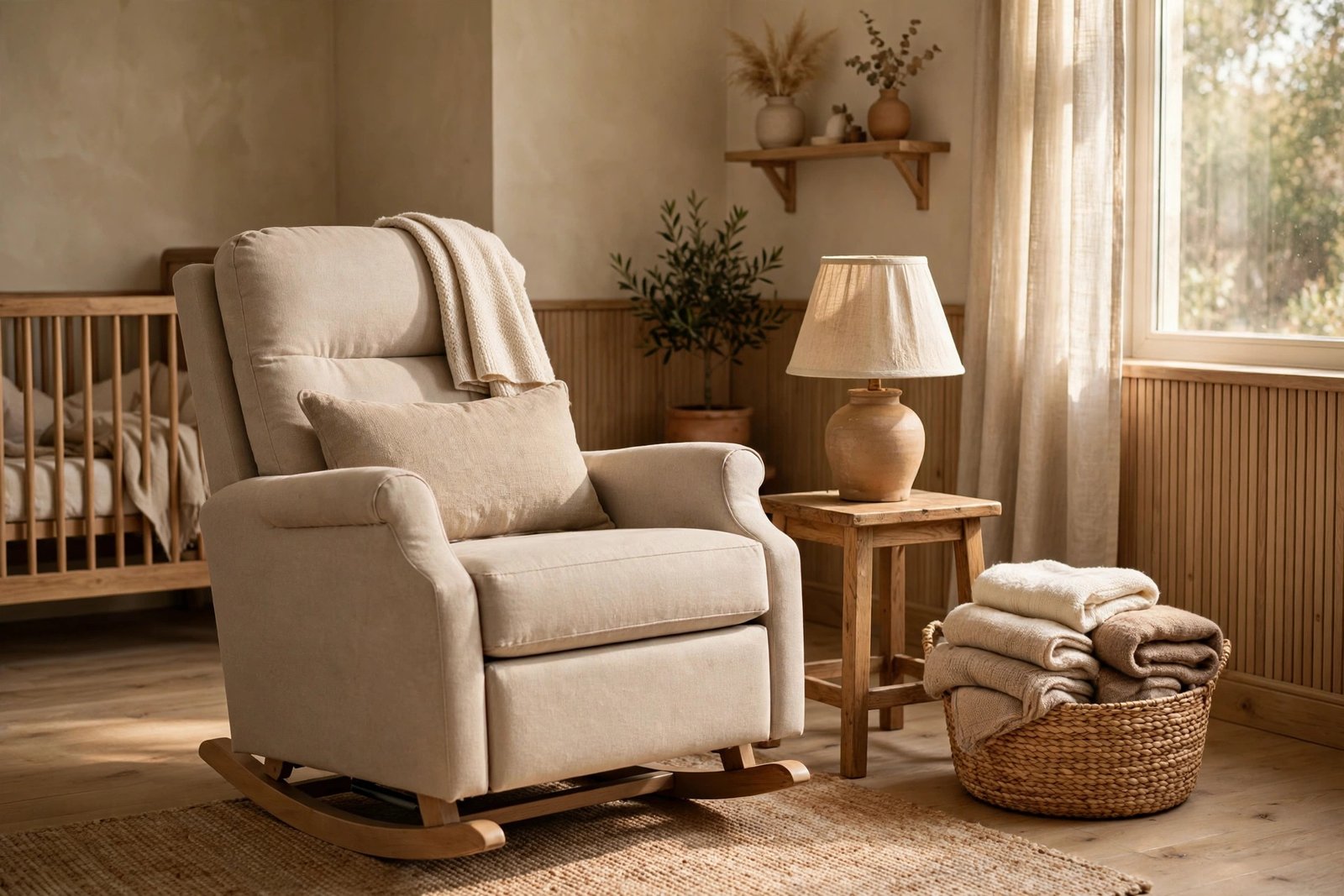
You will spend more waking hours in your nursery chair than anywhere else in the first year, so this corner deserves real attention. A glider or rocker with a supportive back, comfortable armrests at the right height for holding a baby, and smooth, quiet motion is worth every penny. Add a small side table within arm’s reach for water, a phone, and a nightlight, plus a basket of folded burp cloths or blankets underneath. A lumbar pillow and a footrest make marathon feeding sessions far more bearable. If you are setting up warm bedroom inspo ideas elsewhere in the house, the same cozy layering rules apply here: soft light, soft textiles, and nothing you have to get up to reach.
4. Use a Dresser as a Changing Station
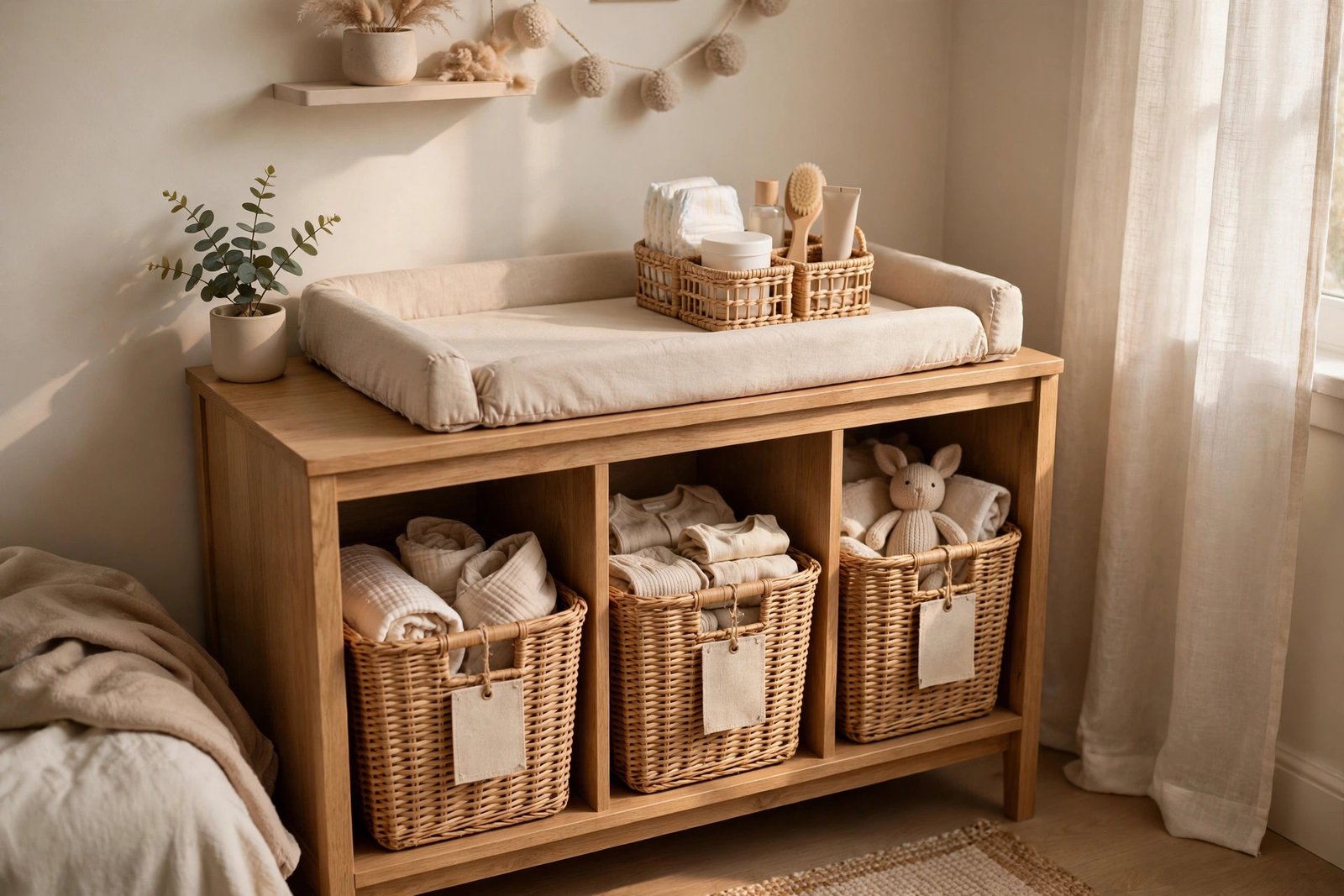
A dedicated changing table is one of the first things people buy and one of the first things they outgrow. Instead, top a sturdy, wide dresser with a contoured changing pad and a small caddy of diapers, wipes, and cream. You get a changing station that stores all the clothes, and once diapers are done, it is simply a dresser again. Choose a dresser that is the right height for your back, roughly at your waist, and anchor it to the wall. This is one of those nursery ideas that saves real money and floor space at the same time.
5. Make Storage Work in a Small Nursery
Small nurseries are more common than Instagram would have you believe, and they work just fine with the right storage. Think vertically: tall bookcases, over-the-door organizers, and wall-mounted shelves keep diapers, books, and toys off the floor. Baskets and bins on open shelves make it easy to see what you have, and labeled bins mean anyone helping you can find things. Keep a few rolling under-crib storage boxes for outgrown clothes you are saving or next-size diapers. A room that stays picked up feels twice as big, and with a newborn, that matters more than square footage.
6. Go Gender-Neutral if You Want a Timeless Look
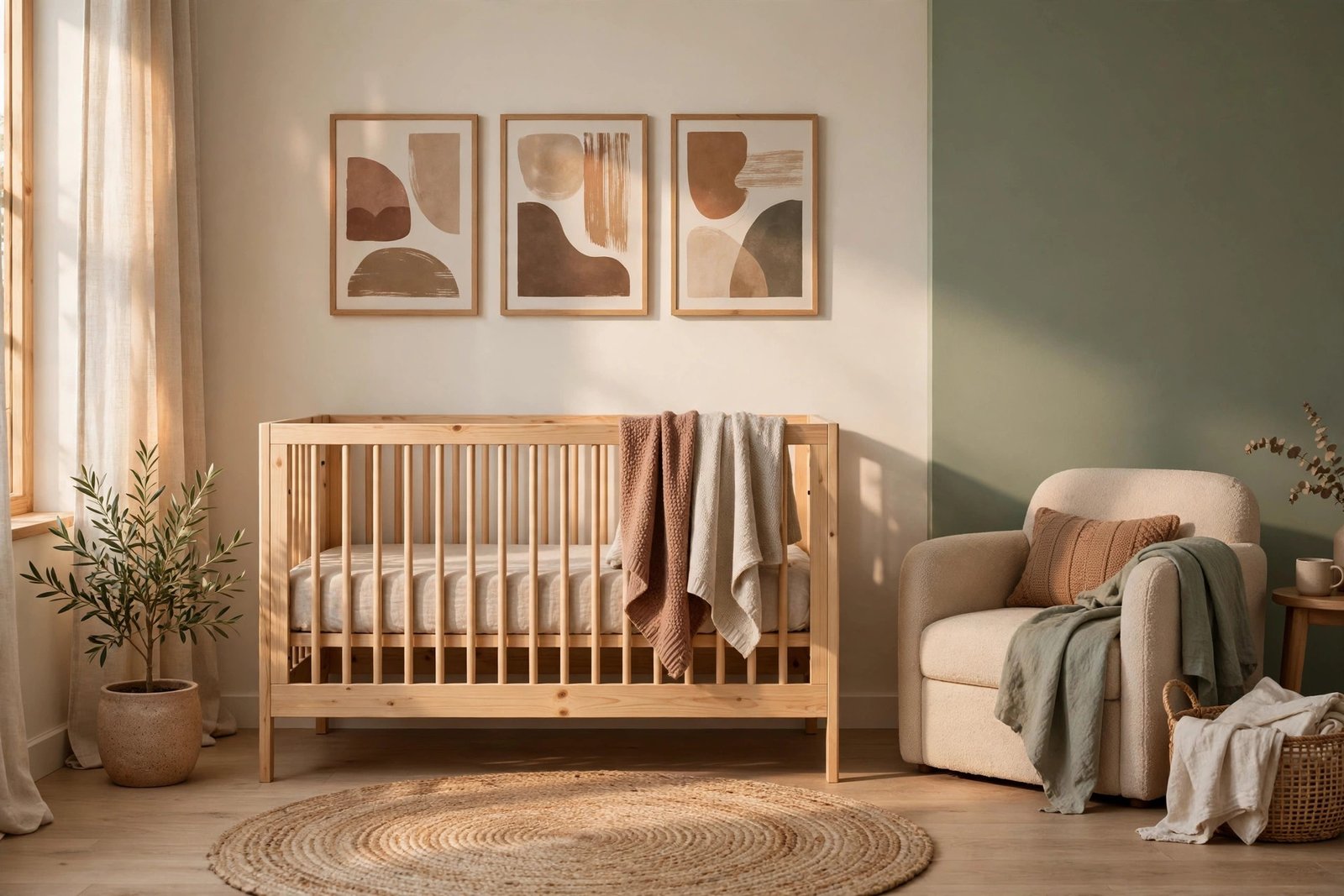
You do not need to know the baby’s gender to create a gorgeous room, and honestly, many parents are skipping pink and blue altogether. A gender-neutral nursery built on creams, warm grays, sage, or soft terracotta feels modern and lasts through multiple kids. Wood tones add warmth, and a few pops of mustard, forest green, or terracotta keep it from feeling flat. If you are hoping to reuse the room for a second child, this approach saves you a full redecoration later. It also photographs beautifully for announcements and first-birthday photos.
7. Build a Simple Gallery Wall
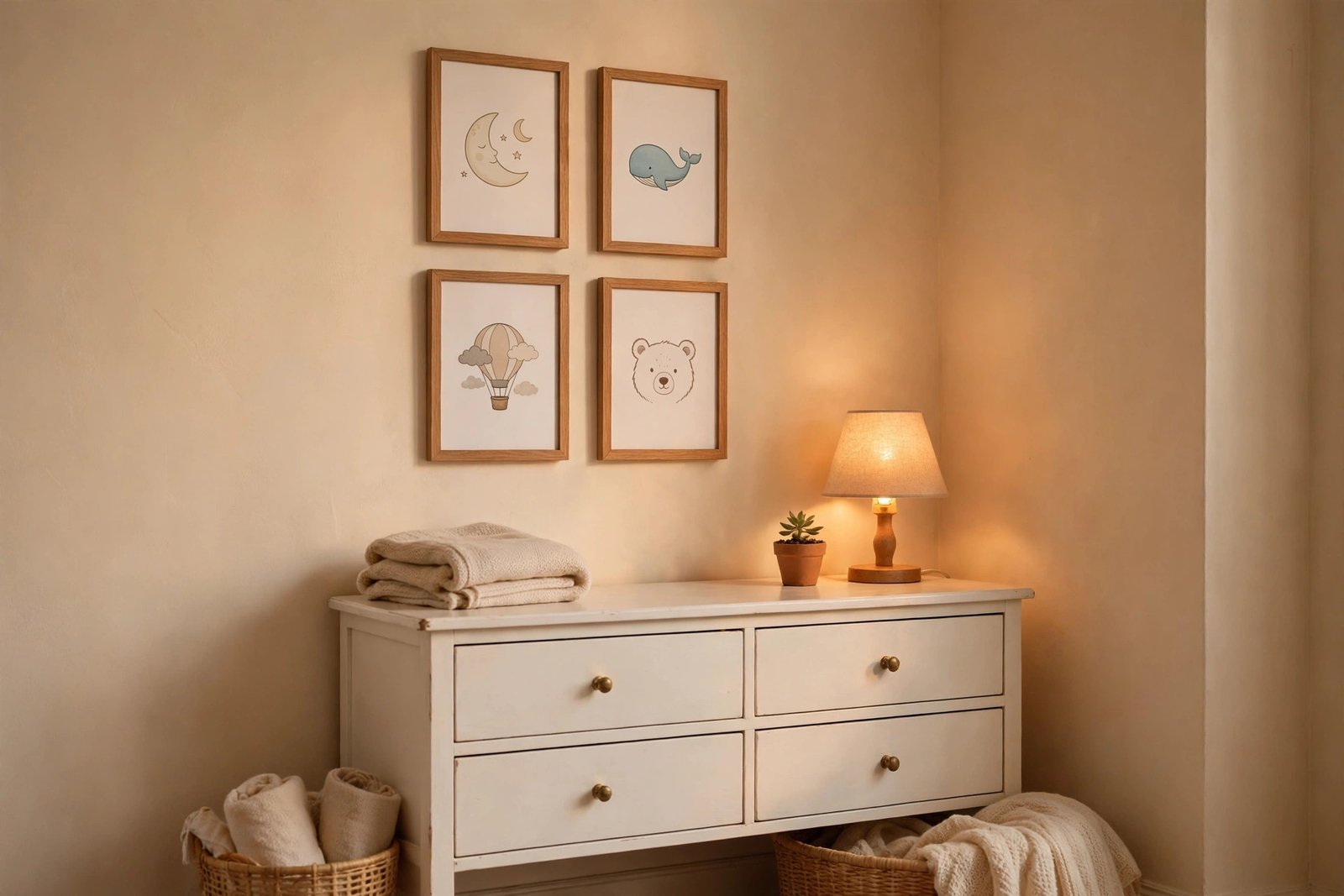
One of the most budget-friendly nursery ideas is a small gallery wall above the dresser or chair. Mix inexpensive framed prints, a mirror, a meaningful quote, and one or two personal pieces like a sonogram or a baby-name print. Keep frames in one or two finishes so the collection looks intentional rather than random. Start with three to five frames and leave room to add as your child grows. This is decor you can build slowly, for the cost of a few prints and frames from any craft or big-box store.
8. Layer the Lighting
Nurseries need more than one light source. Start with a soft overhead light on a dimmer so you can go bright for playtime and low for bedtime routines. Add a floor or table lamp with a warm bulb near the chair for late-night feeds, and keep a small motion-sensor nightlight near the door so you can check on the baby without flipping on a bright switch. Avoid cool-white bulbs; warm light around 2700K feels calmer and is less likely to wake a sleepy baby. Thoughtful lighting is one of those nursery ideas that sounds minor until you are fumbling around at 2 a.m.
9. Hang Blackout Curtains
If there is one nursery idea parents consistently call life-changing, it is blackout curtains. Babies sleep better in dark rooms, and naps in a dim nursery are easier to start and longer to last. Choose curtains wide and long enough to fully cover the window with no light leaks around the edges, and hang the rod a few inches above and beyond the frame. Lined linen-look panels give you blackout function without a heavy institutional feel. Bonus: they also muffle a little street noise and keep the room cooler on sunny afternoons.
10. Ground the Room With a Soft Area Rug
A soft area rug does triple duty in a nursery: it cushions the floor for tummy time and later play, it absorbs sound so the room feels quieter, and it pulls the whole design together. Choose a low-pile rug that is easy to vacuum and, ideally, washable, because spills will happen. Place it so it sits at least partially under the crib and extends toward the chair or play area. A rug with a subtle pattern hides stains better than a plain one, and a rug pad underneath keeps it from slipping and adds extra cushion.
11. Try an Accent Wall
If the thought of painting the whole room feels like too much, try an accent wall instead. Peel-and-stick wallpaper is the nursery MVP here: it goes up in an afternoon, comes off without damaging walls, and comes in endless soft patterns like clouds, stars, arches, and botanical prints. A painted accent wall in a warm neutral or soft color costs even less. Put the accent behind the crib or the gallery wall so it anchors the room’s focal point. Since it is removable, you are not locked in when tastes change.
12. Set Up a Keepsake Corner
Nurseries collect memories fast: the first outfit, the hospital bracelet, a card from grandma. Give those things a home from the start with a small keepsake corner. A shadow box on the wall, a memory box on a shelf, and one framed photo from the first week are all you need. Labeling a simple box with the baby’s name and birth year turns clutter into something you will treasure for decades. When friends ask what you need for the nursery, a memory box or keepsake kit is a lovely gift idea to suggest.
13. Add Forward-Facing Book Shelves
Reading to babies starts earlier than most people think, and a nursery that makes books visible makes reading happen more often. Narrow picture ledges mounted at a low height let you display books with their covers facing out, which doubles as colorful wall decor and invites little hands to grab a story. Start with five or six board books and rotate the display as the collection grows. This is one of the cheapest nursery ideas on the list and one of the most loved by parents of toddlers.
14. Personalize With a Name Sign
A wooden or acrylic name sign above the crib or on the gallery wall is one of the most-searched nursery decor ideas for a reason: it is simple, personal, and makes the room feel finished. Choose a script or block-letter style that fits the room, and mount it securely or hang it with ribbon that is well out of reach. If you do not know the name yet, a sweet word like “dream,” “little one,” or the family’s last name works just as well. It is also one of the easiest gifts to request from a registry.
15. Pick a Theme but Keep It Soft
Themed nurseries, woodland animals, hot-air balloons, a moon-and-stars sky, a garden, are adorable when done with restraint. The trick is to commit to a color palette first and let the theme live in a few pieces: bedding, one print, maybe a mobile, rather than every surface. A theme that is hinted at feels sophisticated; a theme shouted from every corner can feel overwhelming by month three. Choose decor that can evolve. A moon print works at two months and at two years; a character-based theme usually does not age as well.
16. Add Greenery (Kept Safely Out of Reach)
A plant or two makes a nursery feel alive, but safety comes first. Choose non-toxic varieties and place them high on shelves or hanging planters, well away from curious hands and mouths. A trailing pothos on a tall shelf or a small snake plant in a corner adds a touch of green without taking up floor space. If real plants feel like one more thing to keep alive, good-quality faux greenery gives you the look with zero maintenance. Either way, one plant is plenty; this is a nursery, not a greenhouse.
17. Build a Feeding Station That Has Everything
Whether you nurse or bottle-feed, you will be feeding every two to three hours in the beginning, so set up a dedicated spot. Your rocker or glider is the centerpiece, but the supporting cast matters: a basket with burp cloths, a water bottle for you, a small lamp with a warm dim bulb, and your phone charger. Some parents add a mini fridge for pumped milk or formula water, which is a game-changer for nighttime feeds. Everything within arm’s reach means you never have to put the baby down mid-feed to fetch something.
18. Use White Noise From Day One
A white noise machine is one of the most recommended nursery ideas by sleep consultants, and for good reason: it mimics the constant sound of the womb and masks household noise like the doorbell, the dishwasher, or older siblings. Choose a machine with a continuous, non-looping sound and keep the volume at a conversational level, placed across the room from the crib rather than right next to it. Run it for every nap and nighttime sleep so the sound becomes a cue that rest is coming. It is a small purchase with an outsized impact on everyone’s sleep.
19. Layer Soft Textiles Everywhere
Texture is what makes a nursery feel cozy rather than sterile. Layer a quilt or knit blanket over the chair, add a lumbar pillow, choose curtains with some weight, and keep the crib skirt or a simple fitted sheet in a soft pattern. The key safety rule: keep the crib itself bare. No blankets, pillows, bumpers, or stuffed animals in the crib with a sleeping baby; safe sleep guidelines are clear on this. Put all that softness everywhere else instead. For a romantic, vintage-leaning look, our cottagecore aesthetic bedroom ideas show how florals, lace, and warm woods layer beautifully, and those same tricks work in a nursery.
20. Hunt for Vintage and Secondhand Pieces
Nurseries are one of the best rooms to furnish secondhand, because baby gear is used so briefly. A vintage dresser, a mid-century chair, or a solid wood bookshelf can be refinished or simply cleaned up and will outlast anything flat-packed. In the US, thrift stores, consignment shops, and local parent groups are full of barely-used nursery furniture. Always buy the crib mattress new and check any used crib against current safety standards, but for dressers, shelves, chairs, and decor, secondhand is smart, sustainable, and budget-friendly.
21. Organize the Closet Like a Mini Boutique
Nursery closets are small, but baby clothes are smaller, so a little organization goes a long way. Add a second hanging rod at half height to double the space, and use closet dividers marked by size, newborn, 0-3, 3-6, because babies outgrow sizes faster than you expect. Bins on the top shelf hold keepsakes, out-of-season clothes, and the inevitable overflow of gifts. A small step stool lets you reach it all. If your baby shower was generous, this system means every gift actually gets worn; if you need styling inspiration from the celebration itself, our baby shower backdrop ideas are full of sweet, photo-worthy setups you can echo in the nursery.
22. Design for Safety First
Before the baby arrives, walk the room with fresh eyes. Anchor every dresser, bookshelf, and changing unit to the wall with furniture straps. Keep cords from blinds, lamps, and monitors out of reach, or switch to cordless window coverings. Make sure the crib meets current federal safety standards, with slats no more than two and three-eighths inches apart and a snug-fitting mattress. Cover outlets, lock windows that open more than four inches, and keep the room’s temperature between 68 and 72 degrees. Decor is fun, but a safe room is the whole point.
23. Make Room for the Grown-Ups
For the first few months, at least one parent will be sleeping near the baby, and grandparents or a night nurse may visit. If space allows, a twin daybed, a comfortable sleeper chair, or even a quality air mattress setup turns the nursery into a place adults can actually rest. Choose bedding in your palette so it blends with the room rather than looking like an afterthought. A small tray for coffee or tea on the dresser is a thoughtful touch for anyone pulling a night shift. Planning for adult comfort is one of those nursery ideas nobody talks about and everybody appreciates.
24. Plan a Simple Seasonal Refresh
You do not need to redecorate every season, but a tiny refresh keeps the room feeling loved. In fall, swap in a warmer throw blanket, add a small pumpkin or two on the shelf, and switch the gallery prints to autumn tones. In winter, a garland of soft felt balls or a simple wreath on the door adds cheer. Keep the bones of the room the same and rotate textiles and small decor. Fall is also prime baby-shower season, and if you are hosting one, our classy fall baby shower ideas pair beautifully with a cozy, autumn-ready nursery.
25. Plan for the Toddler Transition
The nursery phase is short, so think one step ahead. Choose a paint color and flooring that will work for a big-kid room, leave wall space where a toddler bed will eventually go, and pick storage that a two-year-old can actually use, like low open bins instead of tall closed cabinets. A convertible crib, a dresser that was always a dresser, and a rug that hides stains all make the transition seamless. When the time comes, you will swap the changing pad for a reading cushion and be done in an afternoon.
Bonus: A Simple Nursery Planning Timeline
If the list above feels like a lot, here is a realistic timeline that spreads the work over a few months. In the first trimester, do nothing but save inspiration and set a budget; many parents find a range of three hundred to one thousand dollars covers the essentials nicely. In the second trimester, handle the big decisions: pick your palette, order the crib, dresser, and chair, and paint or wallpaper if you are going to. Furniture can take six to ten weeks to arrive, so ordering early avoids stress.
In the third trimester, focus on setup: assemble furniture, anchor everything to the wall, hang curtains and art, wash all the bedding and clothes, and stock the changing station. Do a safety walk-through and install the white noise machine, nightlight, and monitor. Leave the personal touches for last, they are the fun part and there is no deadline. After the baby arrives, live in the room for a week or two before buying anything else. You will quickly learn what is missing, usually something small like an extra basket or a better lamp, and you can fix it then.
Bonus: Nursery Ideas for a Shared Room
Not every baby gets a dedicated room, and that is completely fine. A nursery corner in the primary bedroom or a shared kids’ room works well with a few adjustments. Use a room divider, a curtain on a ceiling track, or an open bookshelf to carve out a distinct zone; the visual boundary helps everyone, including the baby, settle. Choose a mini crib or a compact convertible crib to save floor space, and keep the palette consistent with the rest of the room so the corner feels intentional rather than improvised.
In a shared room, storage discipline matters even more. One dresser drawer for baby clothes, one basket for diapers and wipes, and one small shelf for books is often enough. A clip-on white noise machine and a portable blackout shade, both widely available, handle the sleep environment without permanent changes. Many parents find that a shared-room setup actually simplifies nighttime care, and the baby can move to their own room whenever the timing is right. The decor ideas in this guide scale down easily; just apply them to your corner instead of a whole room.
Products to Consider
You do not need everything on the baby-store checklist. These are the item types that genuinely earn their place in a nursery:
- A convertible crib that grows into a toddler bed and daybed
- A glider or rocking chair with lumbar support and quiet motion
- A sturdy dresser that doubles as a changing station, plus a contoured changing pad
- Woven storage baskets and labeled bins for diapers, clothes, and toys
- Blackout curtains sized to fully cover the window
- A dimmable warm-light lamp and a small motion-sensor nightlight
- A low-pile, washable area rug with a non-slip pad
- A white noise machine with continuous, non-looping sound
- Forward-facing picture ledges for book display
- A set of simple matching frames for a gallery wall
- Furniture wall straps and outlet covers for safety
- A cozy throw blanket and lumbar pillow for the nursing corner
Buy the big pieces first, then fill in with textiles and decor as the room comes together. And remember: the crib mattress and car seat are the two things worth buying new.
Frequently Asked Questions
What is the most important furniture for a nursery?
A safe crib, a dresser that doubles as a changing station, and a comfortable chair for feeding are the three essentials. Everything else, bookshelves, side tables, decor, is nice to have but not required. If your budget is tight, spend on these three and add the rest over time.
How can I decorate a nursery on a budget?
Start with paint and textiles, which give the biggest visual impact for the least money. Shop secondhand for dressers, chairs, and shelves, buy the crib mattress new, and build decor slowly with printable art, a small gallery wall, and thrifted baskets. Many parents put together a beautiful nursery for a few hundred dollars by focusing on color, light, and softness rather than expensive furniture.
What colors are best for a nursery?
Soft, muted colors work best because they keep the room feeling calm. Warm whites, greige, sage green, dusty blue, and warm blush are all popular and flexible. If you want bolder color, use it on one accent wall or in textiles so the room does not feel overstimulating, and so it is easy to update as your child grows.
How can I make a small nursery feel bigger?
Use light wall colors, keep furniture low and minimal, and store vertically with tall shelves and wall-mounted organizers. A mirror bounces light around, blackout curtains in a light fabric keep things airy, and keeping the floor clear of clutter does more for spaciousness than any single purchase. A small room with a clear floor reads as calm, not cramped.
When should I start decorating the nursery?
Most parents start planning in the second trimester and aim to finish the big pieces by around week 36, so the room is ready without a last-minute rush. That said, there is no deadline. The baby needs a safe sleep surface, diapers, and you; the gallery wall can wait. Start with the essentials and enjoy adding the finishing touches after the baby arrives.
Final Thoughts
A nursery does not have to be perfect to be wonderful. It has to be safe, comfortable, and calm, a soft place to land at 3 a.m. and a happy place to play at 3 p.m. Start with the essentials, layer in color and texture that make you smile, and let the room grow with your family. Years from now, you will not remember whether the curtains matched the rug. You will remember rocking your baby to sleep in that chair, in that warm, quiet room you made just for them.