
Laundry rooms are the most ignored rooms in American homes. They are small, they are workrooms, and most of us treat them as places to rush through with our eyes half closed. But here is the thing nobody tells you: a laundry room that is pleasant to be in actually makes laundry day easier. You fold faster when there is a real surface to fold on. You sort better when the baskets are labeled. You stop dreading the chore when the room is lit well, smells decent, and does not look like a storage unit.
These 15 laundry room ideas are built for real American homes, from apartment laundry closets to full suburban laundry rooms and everything in between. Each idea mixes practical function with the kind of design touches that make a chore room feel like a room you chose on purpose. Some cost almost nothing, a can of paint and an afternoon. Others are the smart upgrades worth saving for, a deep sink, real lighting, a folding counter. Think of the room the way great small-space design treats a compact room, as a series of small, well-planned moments rather than one awkward box. Work through the list, pick the three or four ideas that fit your space and your budget, and wash day will never feel quite the same again.
1. Paint It a Color You Actually Like
Most laundry rooms are painted builder’s white and left to fade into the background, which is exactly why they feel like utility closets instead of rooms. Color is the cheapest transformation you can buy. A laundry room is small, so you can repaint the whole thing in a single weekend with one gallon of paint and a couple of roller covers. Go bold if you want: deep sage green, navy, a warm terracotta, even a soft blush. A dark color in a small room feels cozy and intentional rather than cave-like, as long as the lighting is decent, and warm browns are having a real moment right now. If you are curious how earthy color carries a room, our brown kitchen ideas show how rich, warm tones turn a hardworking space into a favorite.
The practical side matters as much as the color choice. Laundry rooms are humid, so use a quality interior paint with a satin or semi-gloss finish that wipes down easily; flat paint will absorb moisture stains and show every scuff from a basket bumped against the wall. If you rent, check your lease, but most landlords approve a repaint as long as you return it to a neutral color at move-out, and peel-and-stick wallpaper is a no-commitment alternative that comes off cleanly. Paint the ceiling the same color for a cocooning effect in windowless rooms, or keep it bright white to bounce light. One honest coat of the right color will change how you feel about the room more than almost any other single project.
Products to Consider:
- Moisture-resistant interior satin paint, one gallon
- Angled sash brush and low-nap roller set
- Painter’s tape for clean edge lines
2. Build a Folding Station That Fits Your Routine
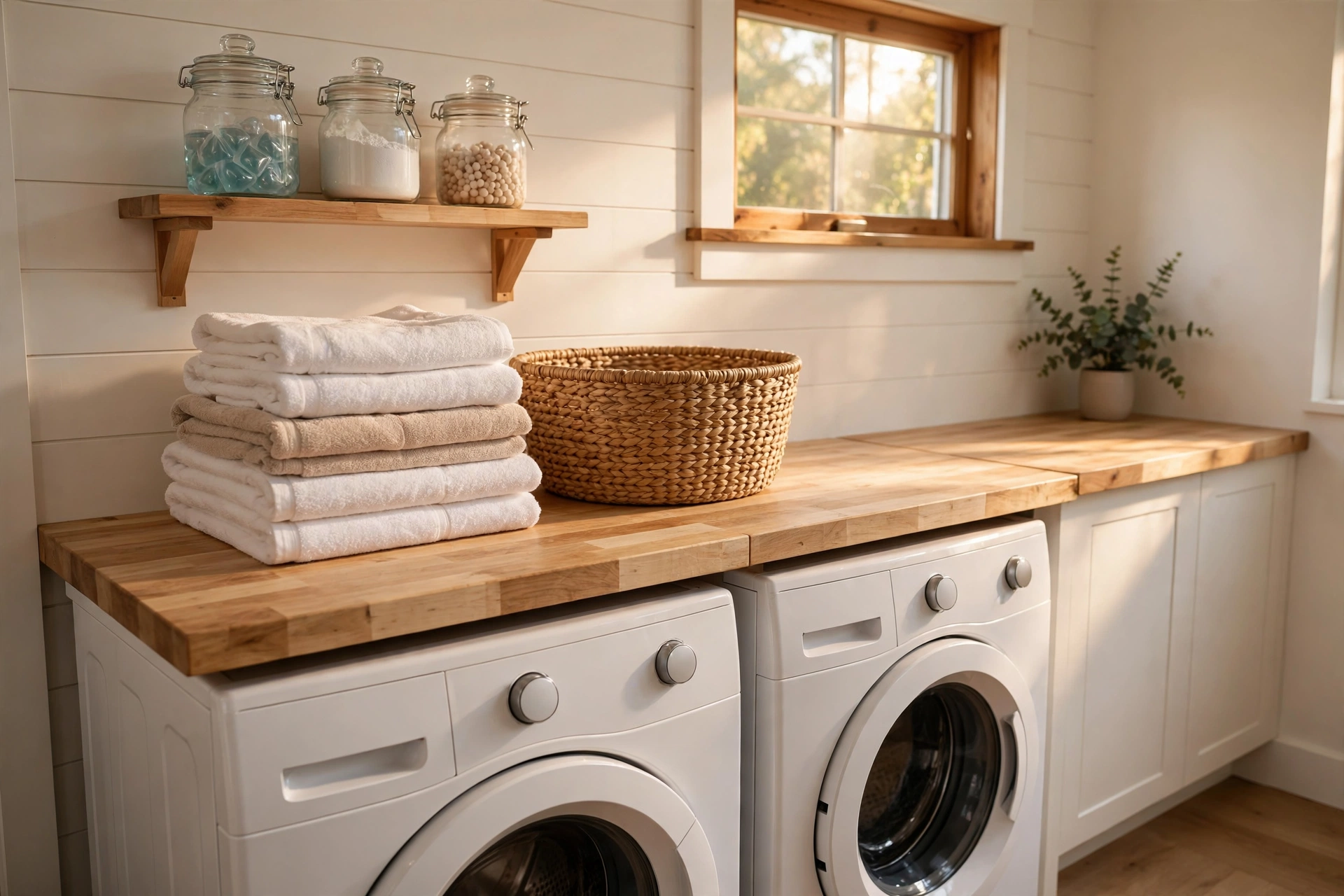
Folding laundry on your bed is the fastest way to make clean clothes into wrinkled piles. A dedicated folding surface changes the whole rhythm of the chore. If you have front-loading machines, the classic move is a single countertop laid across both of them, which gives you roughly five feet of waist-height workspace in a room that had zero. A sheet of butcher block, a slab of plywood wrapped in peel-and-stick contact paper, or even a solid-core door blank from a home center can become that counter in an afternoon with a few L-brackets for support.
Make the station match how you actually fold. Right-handed folders want clear space to the right; sort-as-you-fold people need a second zone for the “put away” piles. Add a wall-mounted shelf just above the counter for detergent, stain remover, and dryer sheets so the surface stays clear, and hang a small trash bin for dryer lint and empty packaging underneath. Keep the counter depth at least 24 inches so a bath towel can lie flat, and leave the machines’ control panels fully accessible. Treat this corner the way great small-space design treats a compact room, one zone with one job, and the chaos of clean laundry suddenly has a place to land.
Products to Consider:
- Butcher block countertop slab, 5 feet
- Heavy-duty L-brackets for counter support
- Wall-mounted storage shelf above the counter
3. Add Open Shelving Instead of Closed Cabinets
Closed upper cabinets in a laundry room become dark holes where detergent goes to die. Open shelving does the opposite: everything is visible, everything gets used, and the wall reads lighter and more intentional. A couple of thick wooden shelves or painted brackets-and-board shelves cost a fraction of custom cabinets and take an afternoon to install. Keep the everyday items, detergent, stain sticks, fabric softener, on the lowest shelf where they are easy to grab, and put the rarely used extras, spare bulbs, gift-wrapping supplies, up high.
The trick to open shelving that looks designed instead of cluttered is matching containers. Move powders and pods out of their branded bags into glass jars or uniform canisters, line up baskets in one material, and leave some breathing room instead of packing every inch. Two or three shelves with intentional spacing beat one crammed shelf every time. Anchor everything into studs, because shelves loaded with laundry products get genuinely heavy, and use shelf brackets rated well above the weight you expect. If you cannot find studs, toggle bolts in drywall hold a surprising amount, but know the limits and keep the heaviest items low.
Products to Consider:
- Solid pine floating shelves, two-pack
- Matching glass canisters with wood lids
- Heavy-duty drywall toggle bolt kit
4. Hide the Ugly With a Curtain or Cabinet Front
Every laundry room has something ugly: the water heater, the exposed pipes, the stack of machines you rent and cannot replace. You do not need to live with it in full view. A simple ceiling-mounted curtain track with a washable fabric panel hides a water heater or an open utility shelf in minutes, and it softens the whole room the way curtains soften a window. Choose a fabric you can machine-wash, because laundry rooms are dusty, and hang it high and full so it reads like drapery, not a bedsheet.
If you prefer structure, a pair of bi-fold doors or a simple freestanding cabinet front can box in an eyesore with a weekend of basic carpentry. Just remember that water heaters and furnaces need clearances and combustion air, so check your unit’s manual or your local code before enclosing anything with a flame. The payoff is real: the room stops looking like a mechanical closet and starts looking like a room, which changes how often you tidy it and how much you enjoy using it. Hide the ugly first, and the rest of the decorating suddenly has a clean canvas.
Products to Consider:
- Ceiling-mounted curtain track kit
- Machine-washable linen curtain panels
- Tension rod for no-drill hiding panels
5. Light It Like You Mean It
Most laundry rooms are lit by a single harsh ceiling fixture that makes everything look worse and makes sorting darks from blacks an actual guessing game. Good lighting is a functional upgrade first and a mood upgrade second. Start with the overhead: replace the boob light with a flush-mount LED fixture or a small pendant rated for damp locations, choosing a color temperature around 3500K to 4000K so colors read true when you are sorting clothes. A single 60-watt-equivalent bulb in a windowless room is never enough; aim for layered sources.
Add task lighting where the work happens. A slim LED strip under the folding shelf illuminates the counter without glare, and a small lamp or a battery-operated puck light inside a dark closet corner ends the fumbling. If your laundry area lives in a hallway or garage corner, a plug-in wall sconce on a timer gives it a defined, finished feel. Avoid cool-blue daylight bulbs, which make the room feel clinical and lie about colors, and avoid relying on the one bare bulb the builder installed. Well-lit laundry rooms feel twice as big, make stain-spotting possible, and quietly convince you the chore is manageable.
Products to Consider:
- Damp-rated flush-mount LED ceiling light
- Adhesive LED light strip with remote
- Battery-operated motion-sensor puck lights
6. Sort Smarter With Labeled Baskets
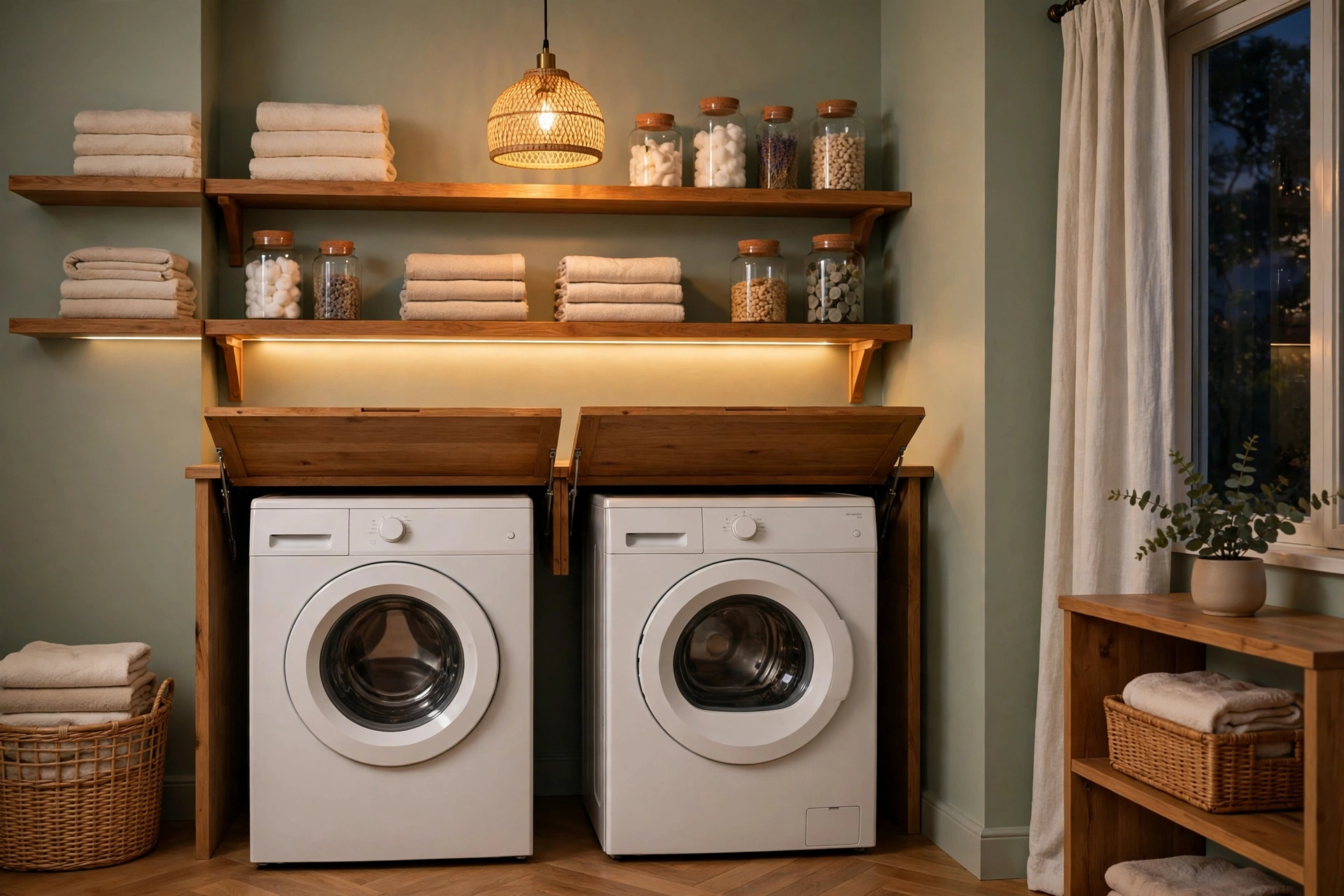
The difference between a laundry room that works and one that does not is sorting, and sorting only sticks when the system is dead simple. Give every category its own basket: whites, lights, darks, delicates, and one for rags and cleaning cloths. Label them clearly, with a stencil, a chalk label, or simple tags on twine, so every family member follows the same system without being asked twice. Tall, narrow baskets fit side by side on a shelf or under a counter; lidded ones keep the room looking calm between wash days.
Keep the baskets where the dirty clothes enter the room, not where the clean ones leave. If laundry arrives in hampers from bedrooms, park the sorting baskets near the door and make the empty hamper the output. For households that pre-sort in bedrooms, slim multi-compartment hampers in each bedroom feed the system upstream. Match the basket material to the room: woven baskets look warm but need plastic liners for damp loads; plastic or canvas bins survive the moisture without fuss. A sorting system everyone can see is one everyone will actually use.
Products to Consider:
- Stackable three-bag laundry sorter cart
- Woven laundry baskets with liner bags
- Reusable adhesive chalkboard labels
7. Make the Walls Work With Vertical Storage
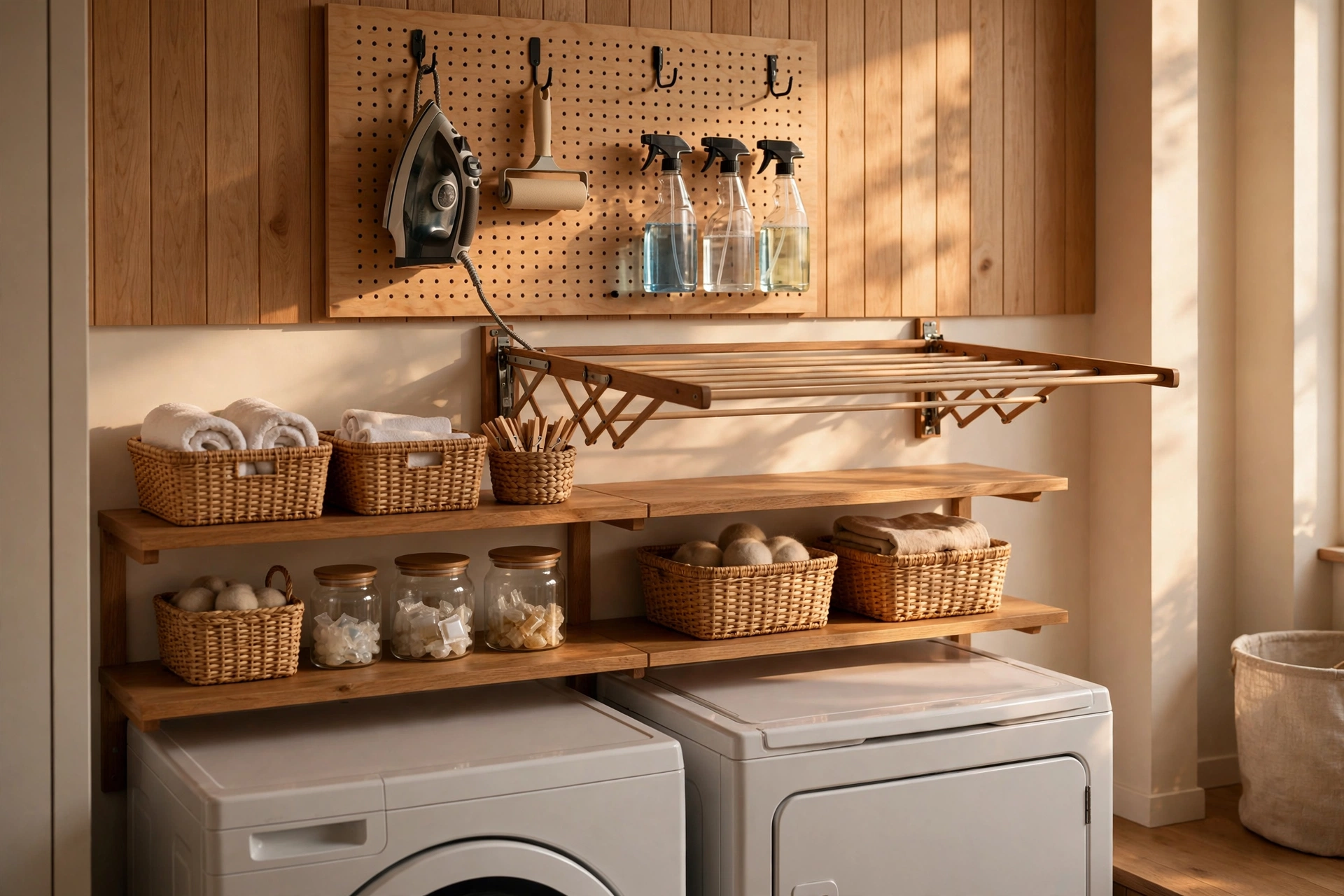
Laundry rooms are short on floor space and long on wall space, so the walls should carry the load. A pegboard or a slat wall above the folding counter holds ironing tools, lint rollers, spray bottles, and the iron itself on hooks you can rearrange anytime. A wall-mounted drying rack folds flat when not in use. A tall, narrow cabinet or a rolling cart fills the dead space between the machines and the wall. Every item that goes on the wall is an item that is not cluttering your one precious counter.
If your laundry room doubles as the family drop zone, borrow a trick from our entryway decor ideas and give every backpack, coat, and gym bag its own hook on one dedicated wall. Wall storage only works when it is easy to reach, so keep the everyday items between knee and shoulder height and reserve the top shelf for the twice-a-year stuff. Renters can do all of this with adhesive hooks and over-the-door racks that leave no holes, and the whole setup comes down cleanly at move-out. Walls are the largest untapped surface in the room; use them.
Products to Consider:
- Wall-mounted folding drying rack
- Pegboard panel with assorted hooks
- Slim rolling storage cart for tight gaps
8. Upgrade the Floor Without a Renovation
Laundry room floors take a beating: damp shoes, detergent drips, the occasional overflow. If yours is stained builder-grade vinyl or bare concrete, you can transform it for very little money and zero demolition. Peel-and-stick vinyl tiles are the hero here. They are waterproof, they come in convincing wood, stone, and pattern looks, and a small laundry room floor is a one-afternoon job. A checkered black-and-white pattern turns the most utilitarian room into a charming one, and it hides drips between cleanings better than pale solid colors do.
Prep is everything. Clean the old floor thoroughly, let it dry completely, and lay the tiles from the center outward so the pattern stays balanced. In rooms prone to standing water, like basement laundry areas, consider interlocking rubber tiles or a painted concrete floor with porch-and-patio paint instead. Add a washable low-profile runner in front of the machines for comfort underfoot and drip protection. A pretty floor is the detail that makes guests say “oh, this room is nice” instead of “oh, the laundry room,” and you will notice it every single time you walk in.
Products to Consider:
- Peel-and-stick vinyl floor tiles, patterned
- Washable low-profile runner rug
- Waterproof floor seam sealant
9. Create a Drying Zone That Disappears
Delicates, sweaters, and activewear should not go in the dryer, but nobody wants a drying rack permanently hogging the laundry room. The answer is drying infrastructure that appears when you need it and vanishes when you do not. A wall-mounted accordion rack folds flat against the wall in seconds. A retractable clothesline spans the room for a full load of wet shirts and reels back into its housing with a tug. Over-the-door hanging rods turn a door into vertical drying space.
Plan the zone with airflow in mind. Wet clothes dry fastest with air moving around them, so leave the room door open or run the exhaust fan if you have one, and never pile garments on top of each other on a rack. Keep a small stack of huggable hangers nearby for blouses and a mesh sweater-drying rack for knits that should never hang. In humid climates, a compact dehumidifier near the drying zone cuts dry time dramatically and keeps the room from feeling clammy. Disappearing drying gear means the room stays tidy even on heavy laundry days.
Products to Consider:
- Wall-mounted accordion drying rack
- Retractable indoor clothesline
- Stackable mesh sweater drying rack
10. Add a Deep Utility Sink
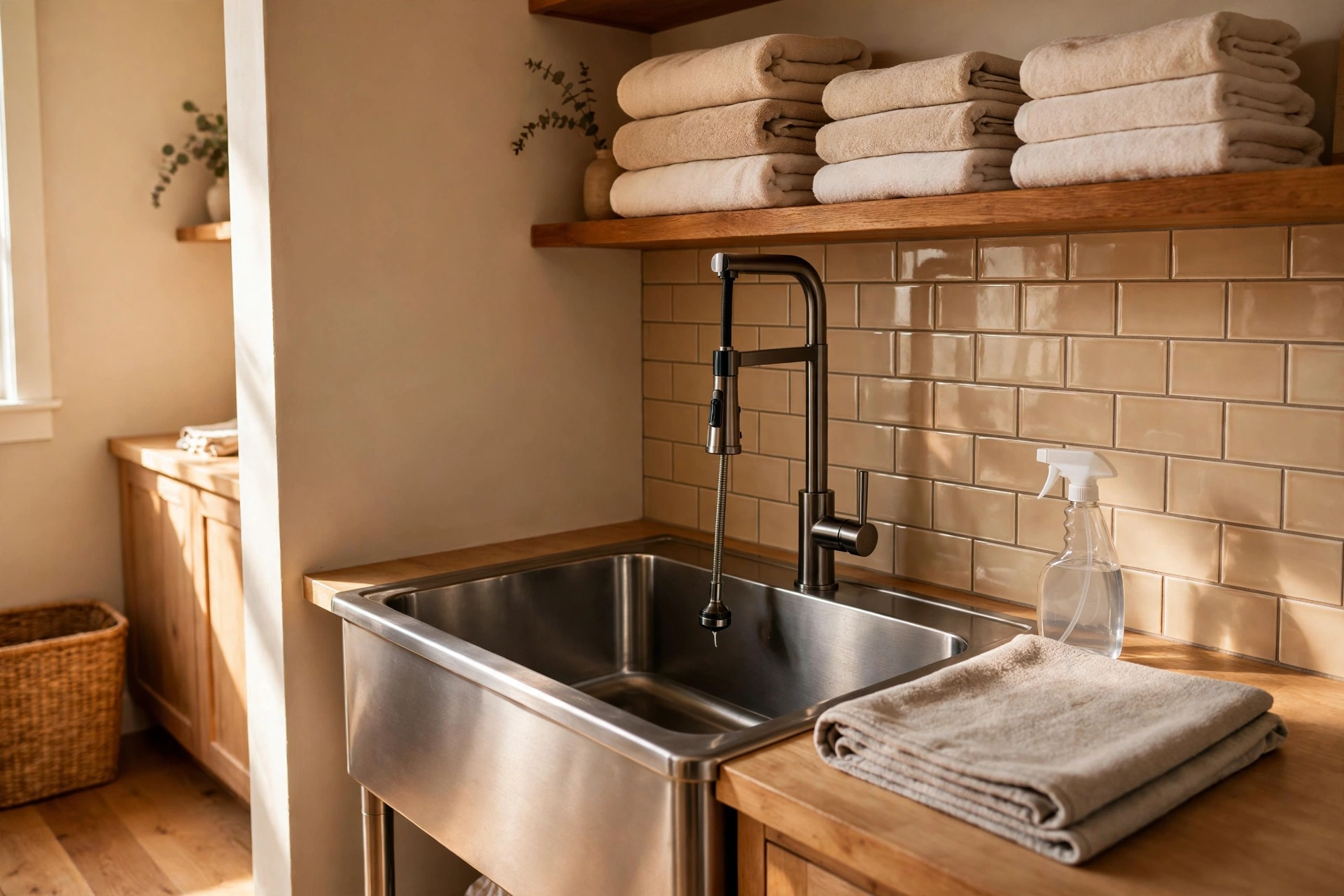
If you have room for one upgrade with real daily payoff, make it a utility sink. A deep basin changes what the laundry room can do: soak stained tablecloths, hand-wash delicates, rinse muddy boots, bathe the dog, fill mop buckets without awkward hoisting. It is the difference between a room that only runs machines and a room that actually cleans things. Freestanding utility tubs cost very little and install against a wall with basic plumbing connections.
Choose the sink for your space and your tolerance for style. A classic plastic utility tub is cheap, deep, and honest. A stainless steel laundry sink looks sharp and wipes clean. If you want the room to feel designed, a wall-mount or drop-in sink in a simple vanity cabinet gives you counter and storage around the basin. Add a tall, flexible faucet, because a short faucet over a deep sink is the most annoying design mismatch in any home. Put a small drying mat beside it for wet items and keep a spray bottle of your soaking solution within arm’s reach. Once you have the sink, you will wonder how you lived without it.
Products to Consider:
- Freestanding plastic utility sink with legs
- Tall pull-down kitchen-style faucet
- Waterproof sink-side drying mat
11. Keep Daily Essentials Within Arm’s Reach
The little things you touch every laundry day should not live three rooms away. Build a small caddy station right in the laundry room: a divided tote or a wall-mounted organizer holding your stain removers, measuring scoop, fabric shaver, lint roller, and spare dryer sheets. When everything has a home at the machines, you stop hunting through bathroom cabinets for the stain stick and start treating stains immediately, which is when treating them actually works.
Make the station look intentional rather than clinical. Corral the bottles in a small tray or a wooden crate, decant the most-used products into matching dispensers, and label anything the kids or guests might grab by mistake. A few well-chosen budget home accents around the station, a small framed print, a ceramic dish for dryer lint, a scented candle kept away from heat, keep the utilitarian supplies from defining the room. The goal is a station that looks like it belongs in a styled space and works like it belongs in a workshop.
Products to Consider:
- Divided cleaning caddy with handle
- Matching pump dispenser bottles, set of three
- Small wooden storage crate for supplies
12. Bring in Greenery and Soft Textures
Laundry rooms are full of hard, cold surfaces, metal machines, tile floors, plastic baskets, and that is why they feel sterile. Plants and textiles fix it instantly. A trailing pothos on the shelf, a small snake plant on the counter, or eucalyptus sprigs in a jar by the sink bring life to the most windowless room. Laundry rooms are naturally humid, which many houseplants love, but if yours has no natural light at all, choose a realistic faux plant and nobody will know.
Soft textures matter just as much. A plush runner underfoot, linen curtains instead of blinds, a stack of pretty guest towels you actually use, these are the details that make a workroom feel cared for. Keep textiles machine-washable, because everything in this room will eventually need washing, and choose darker or patterned fabrics where detergent splashes are likely. Greenery and softness do not make laundry fun, exactly, but they make the room a place you do not mind walking into, and that is a bigger victory than it sounds.
Products to Consider:
- Trailing pothos in a hanging planter
- Washable cotton runner rug
- Machine-washable linen curtain panel
13. Tame the Noise From Your Machines
Spin cycles echo. In many American homes the laundry room sits off the kitchen or under a bedroom, and a thumping unbalanced load can rattle the whole evening. Start with the machines themselves: level them properly, because most vibration comes from machines rocking on uneven floors, and run the high-spin loads on machines rated for low vibration when it is time to replace. Front-loaders are generally quieter than top-loaders, and a slightly older machine can often be calmed with new shock absorbers or a leveling adjustment.
Then treat the room. Anti-vibration pads under each machine foot absorb a surprising amount of thump. A thick rug or runner on the floor deadens sound that concrete and tile love to bounce around. Heavy curtains on any window and a soft-textured rug on the wall-adjacent floor cut the echo, and sealing the gaps around the laundry room door with simple weatherstripping keeps the noise where it belongs. None of this makes a cheap machine silent, but together these steps turn a room-shaking racket into background hum, which is all anyone is asking for.
Products to Consider:
- Anti-vibration washer and dryer pads
- Thick washable area rug for sound dampening
- Adhesive door weatherstripping seal
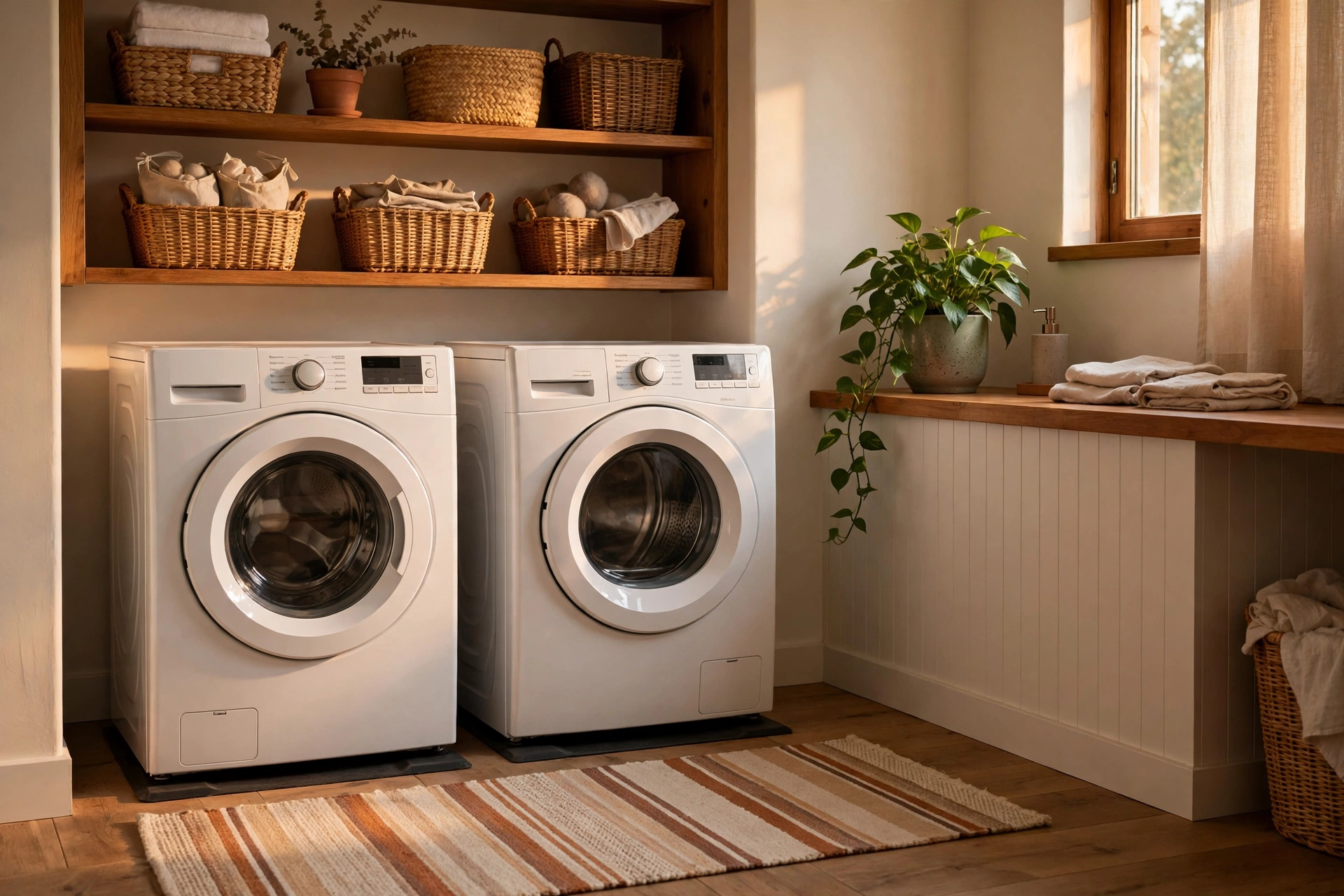
14. Use the Door You Always Forget About
The back of the laundry room door is prime storage real estate that most people waste. An over-the-door rack turns it into a drying zone for delicates, a holder for spray bottles and ironing supplies, or a slim shelf for detergent refills. Over-the-door hooks hold the ironing board, the steamer, and tomorrow’s dry-cleaning bag. In a closet-style laundry setup, the doors are often the only accessible wall you have, so treat them like furniture.
Match the hardware to the door. Lightweight racks hang on simple hooks, but anything heavy, like a full ironing board or a loaded supply caddy, needs the kind of over-the-door mount that braces against the door frame or screws into the door’s solid top rail. Make sure the door still closes fully and the hinges can take the weight; a sagging laundry door defeats the purpose. If you have a pocket door or a sliding barn door, use the adjacent wall instead, or a freestanding narrow shelf unit parked right beside the opening. Doors are surfaces; stop forgetting them.
Products to Consider:
- Over-the-door hanging drying rack
- Over-the-door ironing board holder
- Multi-hook over-the-door organizer
15. Plan a Tiny Corner Just for You
Here is the idea nobody expects: steal one corner of the laundry room for yourself. A small stool, a good reading lamp, a stack of magazines or a tablet stand, and suddenly the 40-minute dryer cycle is not dead time. Plenty of people already camp in the laundry room while loads run; making it comfortable is just honest design. It is also the perfect spot to fold at leisure, mend a seam, or sort the sock drawer nobody else will touch.
Keep the corner tiny and deliberate so it does not swallow the room’s function. A wall-mounted drop-leaf seat folds away, a floor cushion lives in a basket, and the lamp goes on a timer so it is not burning all day. This is also where a small speaker or a smart display earns its place, for podcasts while you fold. A laundry room with a comfort corner stops being a chore pit and starts being a room with a rhythm, one where wash day comes with a built-in break. You do the laundry anyway; you might as well enjoy the waiting.
Products to Consider:
- Foldable padded step stool
- Clip-on reading lamp for small spaces
- Compact Bluetooth speaker, water-resistant
Frequently Asked Questions
1. How can I make a small laundry room feel bigger?
Lighten the walls, add mirrors or glossy surfaces that bounce light, and move everything possible onto the walls so the floor stays clear. A single countertop across front-loading machines replaces multiple cluttered surfaces, open shelving keeps the wall feeling airy, and a pale, simple floor tile visually expands the footprint. The single biggest lever is decluttering, because a tidy small laundry room always feels larger than a messy one.
2. What is the best paint color for a laundry room?
Choose a color you enjoy looking at, because you will see it constantly. Soft blues, sage greens, and warm whites are the safe crowd-pleasers that make small rooms feel fresh and clean. Darker colors like navy or deep green feel cozy and intentional in a small room with decent lighting. Whatever you pick, use a washable satin or semi-gloss finish, since laundry rooms are humid and walls take knocks from baskets.
3. How do I organize a laundry room on a budget?
Start with the free wins: declutter everything, group products by frequency of use, and label whatever baskets and jars you already own. Then add the high-impact cheap buys in order, a sorting basket system, wall hooks or a pegboard for the walls, and matching canisters to corral the visual clutter. A can of paint and peel-and-stick floor tile deliver the biggest visual change per dollar of anything you can do to the room.
4. Can you put a folding station over a top-loading washer?
Not directly, because the lid needs to open. Instead, build the folding counter beside the machines, mount a drop-leaf counter on the wall that folds up only when you need it, or use a rolling cart that parks next to the washer. If you have a stackable unit, a wall-mounted folding table beside it gives you the same waist-height surface. The key is a dedicated, clear, waist-height surface somewhere in the room, wherever it fits.
5. What should you avoid in a laundry room?
Avoid flat-finish paint that cannot handle humidity, dark rooms with a single dim bulb that make sorting colors impossible, and open detergent bags that spill and attract moisture. Skip oversized furniture that blocks the workflow, flammable storage like lint piles near the dryer, and anything that needs constant babysitting, like unsealed wood counters in a room with standing water. Keep it practical first and pretty second, and the room will serve you for years.
Final Thoughts
A great laundry room is not about luxury. It is about removing friction from a chore you do every single week: a counter to fold on, baskets that sort themselves, light you can actually see by, and a floor that forgives drips. You do not need a renovation or a big budget, just a plan and a weekend or two. Pick the ideas from this list that match your space, start with paint and storage, and let the room earn the bigger upgrades over time. Wash day will never be your favorite day, but it can stop being your least favorite, and that is a win worth building for.