
When the days get short and the air outside turns sharp, the kitchen becomes the warmest room in the house almost by default. It is where the kettle boils, the oven stays on a little longer, and everyone seems to drift in just to stand near something warm. Winter kitchen decor is less about a big makeover and more about layering that feeling on purpose: softer light, warmer textures, and small seasonal touches that make everyday cooking feel like a pleasure rather than a chore.
The ideas below are all winter ideas, not holiday ideas. There is nothing here tied to a single holiday. Instead, you will find snow-day practicality, evergreen sprigs, warm neutrals, and everyday comfort that works from the first cold snap in November right through to the last frosty mornings of February. Most of them cost little, take under an hour, and can be undone in spring without repainting a single wall.
Start with one or two changes that you will notice every day, like lighting or textiles, and build from there. A kitchen that feels warm in January is rarely the result of one dramatic purchase. It is the sum of a dozen small, thoughtful choices, and this guide walks through seventeen of them.
1. Layer Your Lighting for Long Winter Evenings
Winter light is the first thing to fix, because it changes everything else in the room. On a grey January afternoon, a single bright ceiling fixture can make a kitchen feel flat and clinical, while layered light makes the same room feel golden and inviting. Start by switching your main overhead light to a warm white bulb in the 2700K range, then add at least two lower sources of light: under-cabinet strips for the counters, and a small lamp or a pair of candles on a side counter or windowsill.
Under-cabinet lighting is the single most useful winter upgrade in a kitchen. It lights the exact spot where you chop, stir, and read recipes, and it throws a warm glow across the backsplash and countertop in the evening. Battery-operated LED bars work well if you rent, while plug-in or hardwired strips give a cleaner look in a home you own. Either way, keep the color temperature warm so the light reads as candlelight rather than office light.
Finish with one soft, low light source that has nothing to do with cooking. A small lamp on top of a cabinet, a lantern on the windowsill, or a cluster of flameless candles on a tray tells your brain the kitchen is also a place to linger. When the overhead light goes off and these two layers stay on, the room instantly feels like evening, even at five o’clock in the afternoon.
2. Swap in Chunky, Washable Winter Textiles
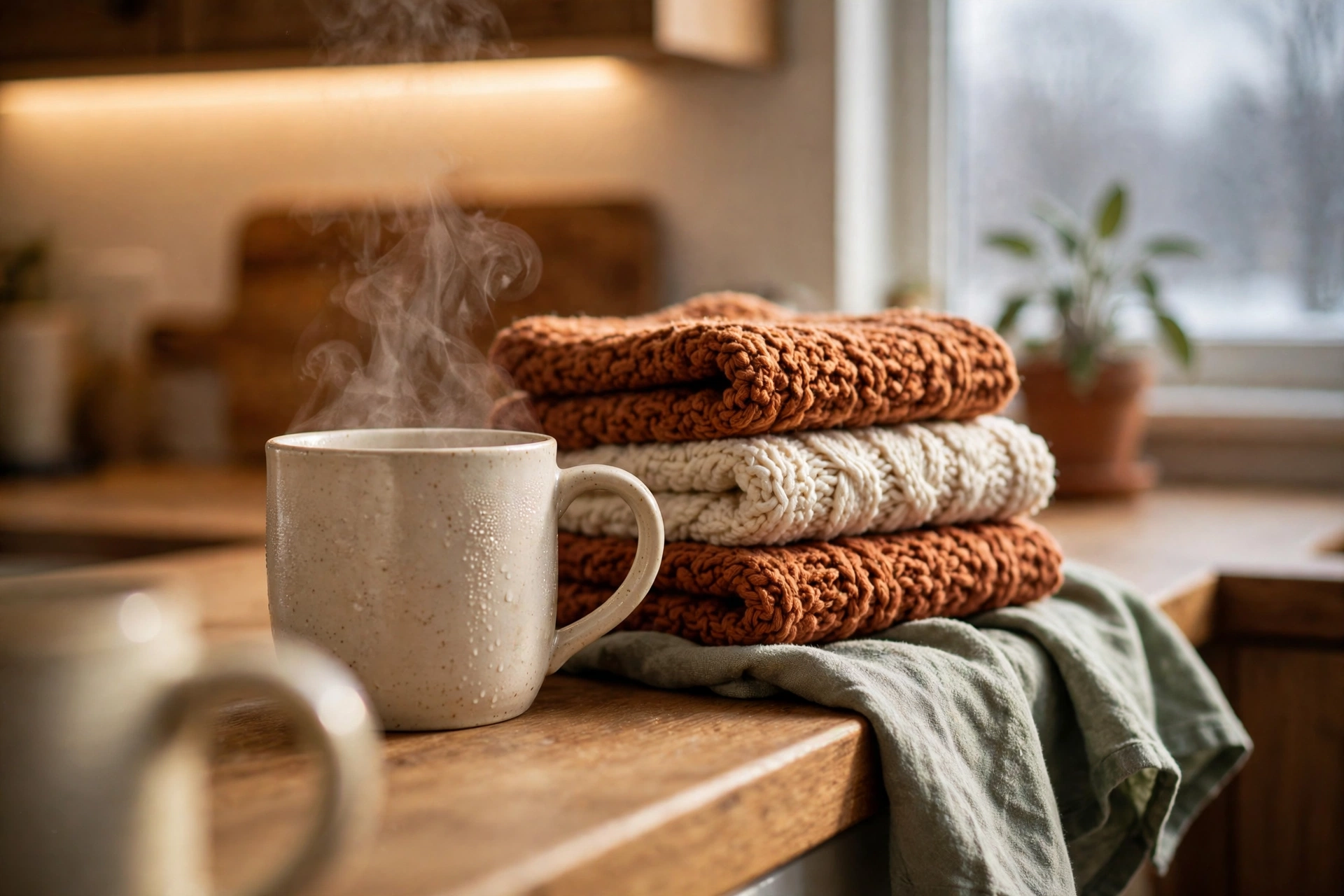
Textiles are the fastest way to make a kitchen feel like winter. Swap out thin summer dish towels for chunky knit or waffle-weave towels in cream, oatmeal, or warm rust, and add a thick runner in front of the sink and stove. The change is visible the moment you walk in, and it is practical too: heavier towels actually dry your hands properly on cold days, and a cushioned runner makes standing at the counter far more comfortable.
Choose fabrics you can wash easily, because kitchen textiles earn their keep. Cotton and linen blends hold up best in a regular hot wash, while wool-look throws should stay on chairs and benches rather than near the stove. Keep a set of three or four towels in rotation so there is always a fresh one on the oven handle and another folded neatly on the counter. A small basket near the sink for clean towels keeps the whole setup tidy without any extra effort.
Do not forget the seating. If you have bar stools or a breakfast bench, a folded throw or a simple seat cushion in a warm plaid or solid wool tone changes how long people stay at the counter. In winter, comfort is decor: a chair that invites someone to sit with a mug of tea for twenty minutes is doing more for the room than any decoration could.
3. Style Open Shelves With Warm, Everyday Pieces
Open shelving can look bare in winter if it is styled the way it was in summer, with light ceramics and empty space. For the cold months, restyle one or two shelves with warmer, heavier pieces you actually use: stoneware bowls in cream and terracotta, wooden boards leaning upright, a stack of soup bowls, and a jar of dried beans or oats with a wooden scoop. The goal is a shelf that looks like it belongs to a cook, not a showroom.
Group items in odd numbers and leave a little breathing room between groups so the shelf reads as styled rather than crowded. A small sprig of evergreen tucked behind a stack of bowls adds a winter note without turning the shelf into a holiday display. If your shelves sit near the stove or sink, keep the styling simple and washable, because steam and splashes are part of real kitchen life.
If you are thinking about a bigger change to the wall behind your shelves, it is worth looking at kitchen backsplash ideas for options that pair well with warm winter tones, from creamy subway tile to natural stone. A backsplash in a warm neutral can carry the whole room through winter and still look right in spring, which makes it a smarter seasonal investment than any single decoration.
4. Build a Seasonal Produce Display
Winter produce has its own quiet beauty, and a simple display turns it into decor. A wide wooden bowl of oranges, clementines, and a few pomegranates brings color to a countertop without any artificial decoration, and the fruit gets eaten rather than dusted. Add a small crate of onions, garlic, and winter squash near the pantry, and the kitchen starts to look like a place where real food is cooked.
Keep the display practical. Fruit in a bowl on the counter stays fresh and visible, while root vegetables do better in a ventilated basket in a cool corner. A two-tier stand works well for smaller kitchens because it holds a surprising amount without taking over the counter. Rotate the display as you cook: when the oranges run low, refill them, and the decor refreshes itself.
The scent matters as much as the look. A bowl of fresh citrus near a warm stove releases a gentle fragrance every time the room heats up, and a few sprigs of rosemary or thyme in a small jar by the window add a green, herbal note. These are the details that make a winter kitchen feel alive rather than merely decorated.
5. Add a Warm Runner and Rugs That Can Handle Winter
Kitchen floors get cold in winter, especially tile, stone, and laminate over an unheated space. A washable runner in front of the sink and a smaller rug by the stove changes how the room feels underfoot, and it adds a band of color and pattern at floor level where the eye naturally lands. Choose a low-pile, machine-washable rug so winter mud, melted snow, and cooking spills are a laundry cycle away from clean.
Measure before you buy. A runner should sit flat in the main work zone, usually about 2 to 3 feet wide and long enough to cover the sink-to-stove path without curling under cabinet doors. Leave a few inches clear around the edges so doors and drawers open freely, and use a non-slip pad underneath, particularly on smooth floors where wet boots are common in winter.
Color-wise, warm neutrals with a simple pattern work hardest: a cream and rust stripe, a muted plaid, or a vintage-style pattern in terracotta and sage. These tones hide winter wear better than pale solid rugs and tie in naturally with wooden cabinets, brass fixtures, and the warm lighting you layered in idea one.
6. Create a Dedicated Baking Station
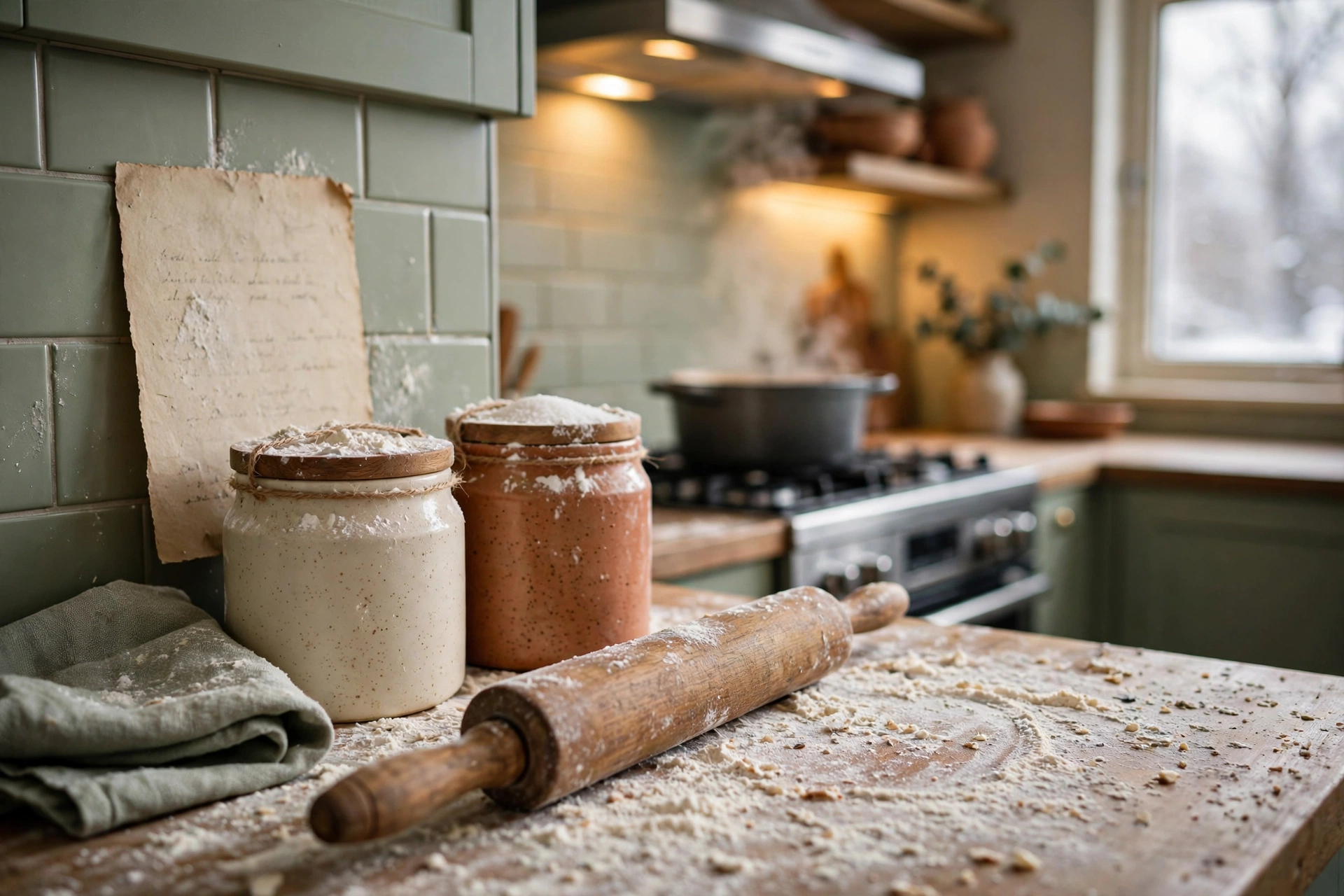
Winter is baking season, whether that means weekend bread, holiday-adjacent cookies, or a simple Tuesday-night banana loaf. Instead of hunting for flour, sugar, and baking sheets every time, set up a small permanent baking station on one stretch of counter or in a single cabinet. A large tray or board corrals the essentials: flour and sugar canisters, a jar of wooden spoons, measuring cups, and a small bowl for eggs.
Keep the station compact and honest about how much space you have. In a small kitchen, a single shelf above the counter plus a rolling cart can hold everything, while a larger kitchen might give baking its own corner near the oven. The point is not to buy new equipment but to gather what you already own into one place, so baking feels easy rather than like a project that requires unpacking the whole kitchen.
Style the station with one warm, human touch: a folded linen apron hung on a hook, a handwritten recipe card propped against the backsplash, or a wooden rolling pin resting in a crock. These details signal that this corner is used and loved, and they photograph beautifully too. When the oven is on and the station is in use, the kitchen smells like a bakery, which is the best winter decor of all.
7. Make the Breakfast Nook the Coziest Seat in the House
If you have even a small breakfast nook, winter is the season to make it the best seat in the house. Start with the cushions: a thick seat pad and two or three throw pillows in warm, washable covers turn a hard bench into a place where someone actually wants to sit for a slow morning. Add a small table lamp or a candle in a hurricane glass, and the nook becomes a morning ritual rather than just a place to eat.
Keep the table styling simple and useful. A small tray with salt, pepper, and a jar of honey, plus a stack of two or three books or a newspaper, is enough. Avoid crowding the table with decorations that have to be moved before anyone can eat; in winter, the nook earns its keep at breakfast, homework time, and evening tea, so it needs to stay functional.
Window nooks deserve special attention in winter. A thermal or lined curtain on the nook window cuts drafts and adds softness, while a sheepskin-style throw over the bench back adds warmth without bulk. On a snowy morning, there is no better seat in the house than a warm nook with a hot drink and a view of the falling snow.
8. Display Your Mugs Where They Earn Their Keep
Winter means more hot drinks, which means your mugs deserve better than a crowded cabinet. Hang a rail with hooks under an upper cabinet, mount a small mug rack on an empty wall, or dedicate one open shelf to your favorite mugs, arranged by color. The display is practical, because the mugs you reach for every morning are right there, and it adds a wall of warm color and personality to the kitchen.
Choose mugs that look good together without matching exactly. Cream, terracotta, sage, and speckled stoneware sit happily side by side, while one or two handmade or souvenir mugs add character. Keep the collection to the mugs you actually use, perhaps eight to twelve, and store the rest out of sight. A display that is too full reads as clutter, while a curated row reads as intentional.
If your kitchen opens onto other living spaces, this is also a good moment to think about carrying the cozy feeling through the house. The same warm-light and layered-textile ideas work in bedrooms too, and a coordinated approach makes the whole home feel seasonally intentional rather than decorated room by room in isolation.
9. Plan for Cold-Weather Hosting, Not Just Cooking
Winter kitchens host differently from summer ones. Guests come inside, stay longer, and gather around food and warmth rather than drifting to a patio. Plan your decor around that reality: clear one counter for serving, set out a stack of small plates and bowls before guests arrive, and keep a pot of soup, stew, or mulled cider warm on the stove so the kitchen smells welcoming the moment the door opens.
A simple serving setup beats a formal one in winter. A large board with bread, cheese, and cured meats, a slow cooker of chili or stew, and a tray of mugs for hot drinks let guests serve themselves and keep the conversation in the kitchen, where everyone wants to be anyway. Keep the table or island mostly clear so people can set down a mug without navigating a display.
Think about seating and flow as part of the decor. Pull an extra stool to the island, leave a clear path from the door to the drinks station, and put a small basket by the entrance for wet coats and scarves. When hosting feels easy, the kitchen feels warm in the way that matters most: it feels like a place people want to stay.
10. Use Evergreen Sprigs, Not Holiday Decorations
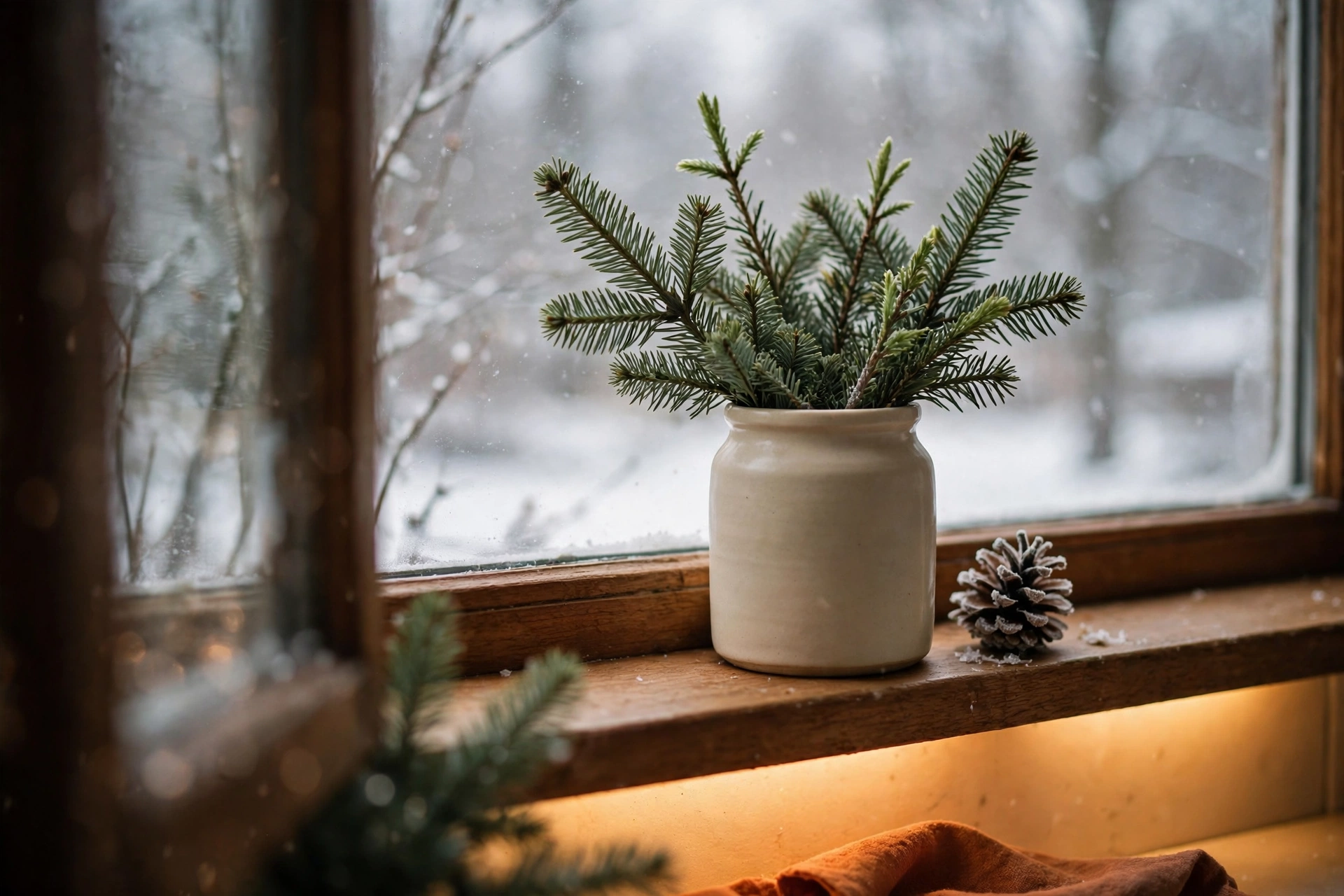
Evergreen is the perfect winter kitchen accent precisely because it is not tied to one holiday. A few fresh sprigs of pine, cedar, or fir in a simple jar on the windowsill, tucked into a basket on the counter, or laid along a shelf will last for weeks, smell wonderful, and look right from December through February. Unlike Christmas-specific decorations, evergreen never needs to be taken down on a deadline.
Use it sparingly and safely. Keep sprigs away from the stovetop, oven vents, and open flames, and check them every few days, replacing any that dry out. A single stem in a bud vase has more impact than a large bunch crammed into a jar, and it keeps the kitchen feeling calm rather than crowded. If fresh evergreen is hard to find, a good-quality faux sprig in a ceramic vase gives the same silhouette without the upkeep.
Pair evergreen with warm neutrals rather than bright reds and greens. Cream ceramics, wooden boards, brass candle holders, and a linen runner let the green read as natural and wintery instead of festive. This is the key distinction that keeps a winter kitchen feeling seasonal all season long, rather than like a holiday display that overstayed its welcome.
11. Warm Up the Metals: Brass, Copper, and Wood
Cool chrome and stainless steel can make a kitchen feel chilly in winter, even when the heating is on. You do not need to replace fixtures to fix this. Instead, layer warm metals and natural wood on top: brass candle holders, a copper kettle on the stove, wooden spoons in a crock, and a walnut cutting board left out on the counter. These materials catch warm light beautifully and soften the whole room.
Start with one or two pieces you will use daily, so they feel like part of the kitchen rather than decoration. A copper-bottomed pot, a brass tray for oils and vinegars, or a set of wooden salad servers in a jar by the stove all do real work while adding warmth. Polish brass and copper lightly, not to a mirror shine, so they keep a lived-in glow that suits winter.
Balance is important. If your kitchen is already full of stainless appliances, a few warm accents are enough; you do not need to hide the modern elements. The contrast between a stainless refrigerator and a warm wooden board, or a chrome faucet and a brass soap dispenser, is exactly what makes the room feel layered and intentional.
12. Keep a Simmer Pot or Slow Cooker Going
Scent is the most underrated form of winter decor. A simmer pot on the back burner, with water, orange slices, cinnamon sticks, cloves, and a few cranberries, fills the kitchen with a warm, spiced fragrance for hours and costs almost nothing. It is also a genuinely useful habit: the steam adds a little humidity to dry winter air, which is kinder to skin and wooden surfaces alike.
Use the simmer pot safely and practically. Keep it on the lowest heat, check the water level every hour or so, and never leave it unattended for long periods. A slow cooker on warm with the same ingredients works well if you want a set-and-forget option while you are in another room. Either way, the scent should be gentle, not overpowering, like a kitchen that has been cooking all afternoon.
For everyday cooking, the same principle applies to soups and stews. A pot of soup simmering on a cold evening does more for the atmosphere of a kitchen than any candle, because the warmth is real and the food is the point. Plan one slow-cooked meal a week in winter, and the kitchen will take care of its own atmosphere.
13. Build a Cozy Coffee and Tea Station
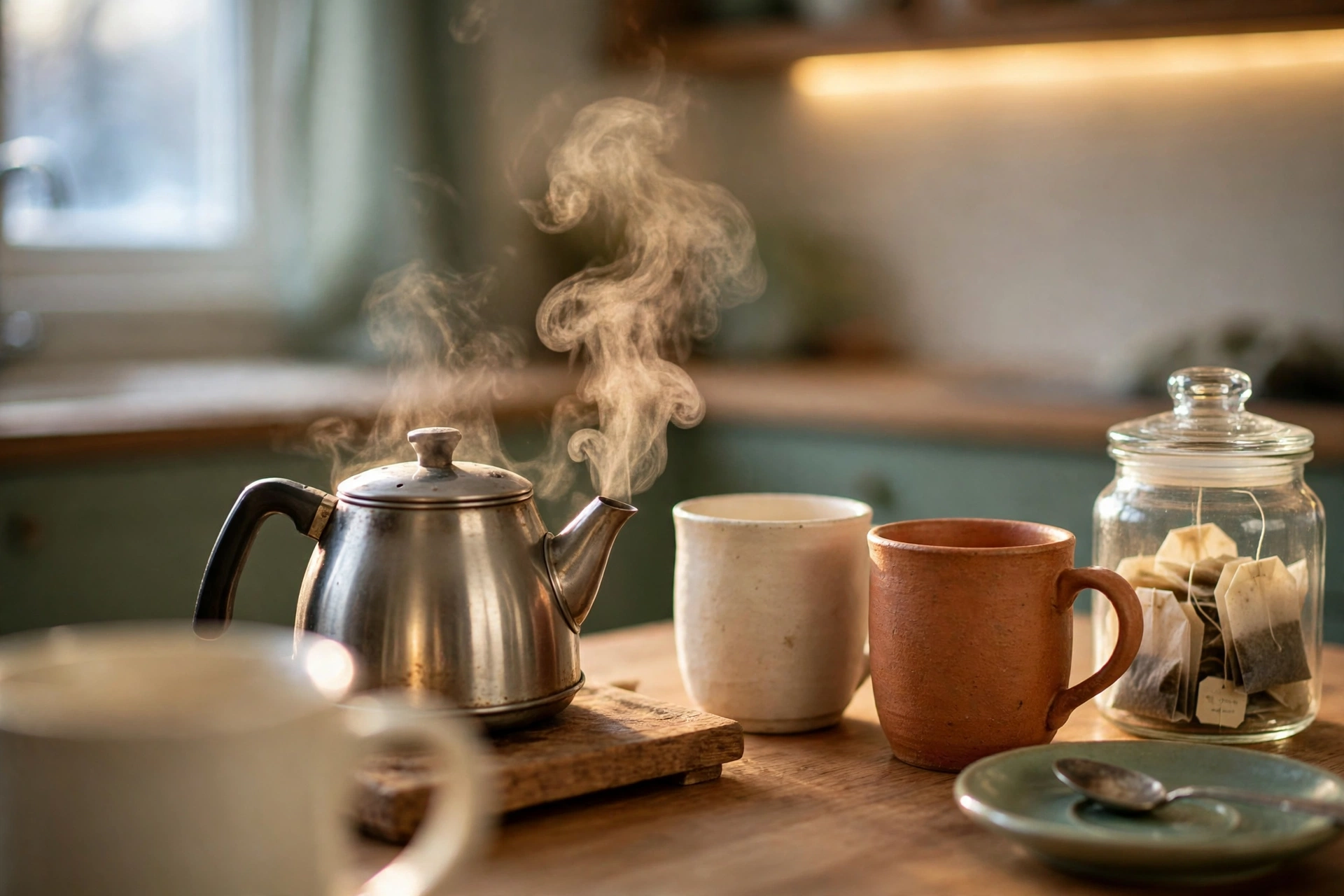
A coffee and tea station is a small luxury that pays for itself every winter morning. Gather the essentials onto one tray or a single shelf near the kettle: your coffee maker or French press, a jar of coffee beans or tea bags, a small sugar bowl, a milk jug, and two or three favorite mugs. When everything is in one place, the first cup of the day takes two minutes instead of ten.
Style the station for winter with warm, tactile details. A small wooden tray, a linen cloth under the coffee maker, and a jar of cinnamon sticks or cocoa powder for topping drinks all add seasonal character without clutter. Keep the station near an outlet and away from the main cooking zone, so morning coffee does not collide with breakfast preparation.
This is also a practical spot for a little winter hosting. When guests arrive on a cold evening, a ready coffee and tea station with a kettle already warm lets you offer a hot drink in moments, without hunting through cabinets. Add a small sign or a handwritten menu of teas if you like, but keep it simple: the station should invite use, not admiration from a distance.
14. Soften Cold Window Light With Simple Treatments
Winter windows bring in beautiful snow light, but they also bring drafts and a cold, blue cast that can make a kitchen feel stark. A simple window treatment fixes both. A café curtain on the lower half of the window gives privacy and softness while leaving the top open for daylight, and a lined Roman shade adds insulation on the coldest nights when it is pulled down.
Choose fabrics in warm, light-filtering tones: natural linen, cream cotton, or a soft gingham. These soften the blue winter light into something warmer without blocking it entirely, which matters in a kitchen where you need to see what you are doing. Avoid heavy drapes in a kitchen, because they absorb cooking smells and get in the way of the sink and stove.
If your kitchen has a garden window or a deep sill, use it as a winter display shelf. A row of small potted herbs, a candle in a glass hurricane, and a jar of evergreen sprigs turn the coldest spot in the room into one of the warmest-looking ones. Just keep plants and candles clear of the window latch and any drafts that could blow a flame.
15. Refresh the Pantry for Winter Cooking
A winter pantry refresh is decor you can feel every time you cook. Decant staples like flour, rice, oats, dried beans, and pasta into clear glass jars with wooden lids, label them simply, and line them up on one shelf or in a basket. The kitchen instantly looks more organized, and you can see at a glance what needs restocking before a snowstorm or a busy week.
Stock for the way you actually cook in winter: hearty grains, canned tomatoes, broth, dried herbs, baking supplies, and a few comfort ingredients like cocoa, honey, and good olive oil. Keep everyday items at eye level and bulk or backup supplies lower down or in a separate bin. A small chalkboard or paper list on the pantry door for running low items saves mid-recipe surprises.
This kind of practical styling pairs naturally with seasonal cooking throughout the colder months. If you enjoy planning menus around the season, a Thanksgiving kitchen setup shows how a kitchen can shift for a big cooking occasion, and the same principles, clear counters, grouped tools, and warm serving pieces, carry straight into everyday winter cooking once the holiday table is cleared.
16. Create a Hearth-Style Cooking Corner
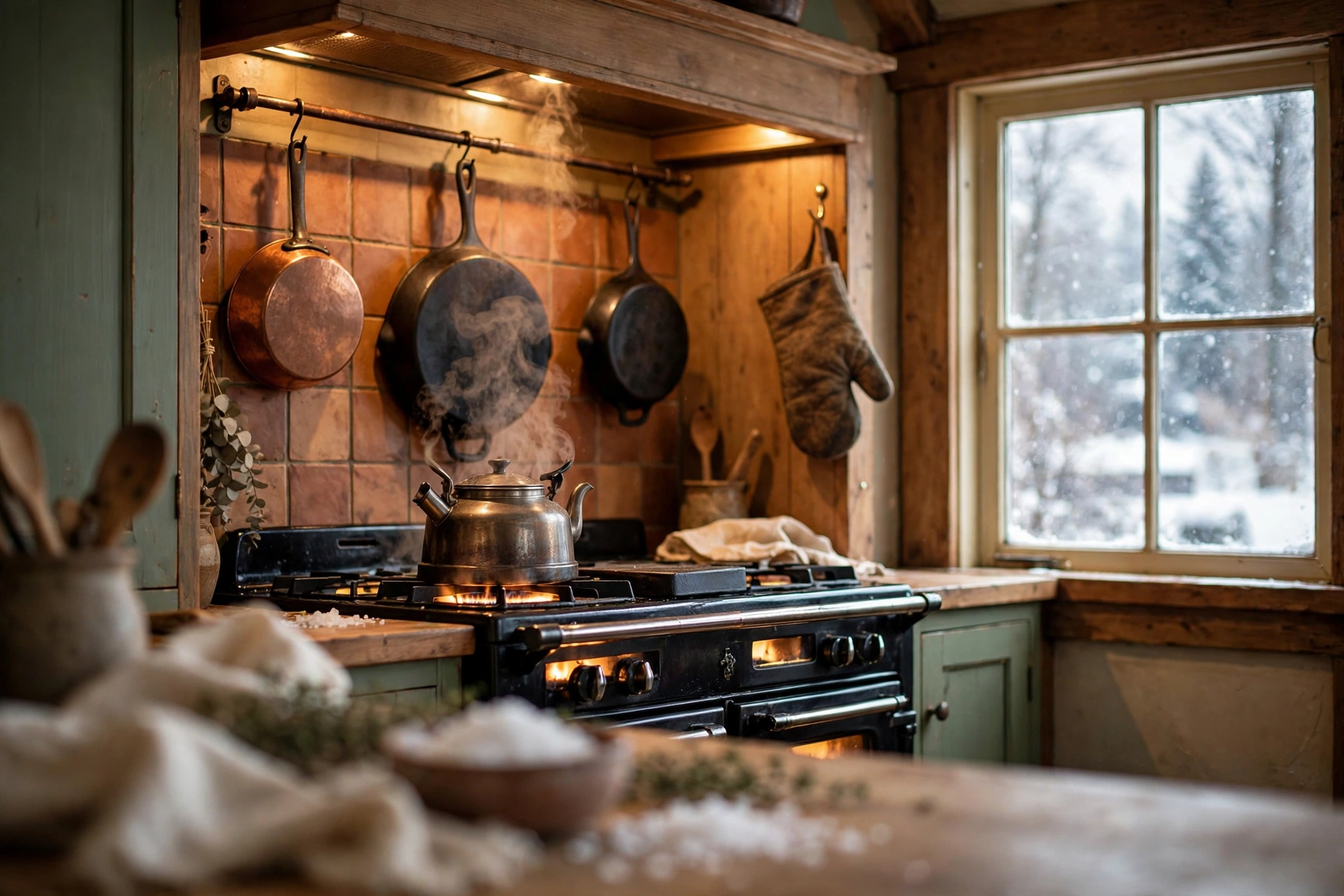
Not every kitchen has a fireplace, but most can borrow the idea of a hearth: one warm, glowing corner where cooking and gathering happen together. In practice, this means styling the stove area as a focal point rather than just an appliance. A kettle that lives on the stove, a pot rail with hanging pans, a small stack of cookbooks, and a warm light above the range all draw the eye and make the cooking zone feel like the heart of the room.
Keep the stove area safe and clear. Hanging pans should be within easy reach but not over the burners, cookbooks should sit at least a foot from the heat, and any textiles should stay well clear of flames. The hearth feeling comes from warmth and use, not from crowding flammable decor around a hot surface.
On a cold evening, the hearth corner does its best work when something is actually cooking. A pot of soup, a tray of roasted vegetables, or bread in the oven fills the kitchen with heat, scent, and sound, and the decor around it simply frames that feeling. Winter kitchens are at their coziest when they are working kitchens first and decorated rooms second.
17. End the Day With a Kitchen Wind-Down Ritual
The last winter kitchen idea is not a decoration at all, but a ritual that makes the room feel cared for. Each evening, take ten minutes to reset the kitchen: clear the counters, fold the dish towels, put the mugs back on their hooks, and light one candle or switch on the small counter lamp. The next morning, you walk into a kitchen that feels calm and welcoming instead of chaotic.
A wind-down ritual also protects your decor. Counters that are cleared nightly stay free of clutter, textiles that are folded last longer, and produce displays that are tidied stay fresh. It is a small habit, but over a whole winter it is the difference between a kitchen that looks cozy in a photograph and one that actually feels cozy every day.
Carry the same warmth beyond the kitchen when the day is done. A mug of tea by the bed, a soft lamp left on in the hall, and a bedroom dressed for cold nights all extend the feeling, and ideas for winter bedroom decor can help the rest of the house match the kitchen’s cozy mood. Winter, after all, is a whole-house season, and the kitchen is simply where it starts. If you later want a specifically festive version of this room, the Christmas kitchen decor ideas offer a separate, holiday-only take that keeps the two looks distinct.
Products to Consider
These generic item types pair well with the ideas above. Choose versions that suit your kitchen’s size, budget, and existing style, and buy only what you will actually use:
- Warm white LED under-cabinet light bars
- Chunky knit or waffle-weave dish towels
- Washable low-pile kitchen runner
- Stoneware soup bowls and a wide wooden serving bowl
- Clear glass pantry jars with wooden lids
- Brass candle holders and flameless candles
- Ceramic mug rail or wall-mounted mug hooks
- Folded linen apron and cotton oven mitts
- Small wooden tray for a coffee and tea station
- Lined café curtains or a Roman shade for the kitchen window
Frequently Asked Questions
How can I decorate my kitchen for winter without using Christmas decorations?
Focus on winter itself rather than any holiday: evergreen sprigs, warm lighting, chunky textiles, seasonal produce, and natural wood and brass. These elements look right from November through February and never need a takedown date, unlike Christmas-specific items.
What colors work best for winter kitchen decor?
Warm neutrals do the heavy lifting: cream, oatmeal, terracotta, sage, and soft rust, with natural wood tones and touches of brass or copper. These colors warm up cool winter light and pair easily with most cabinet colors, from white to dark wood.
How do I keep a winter kitchen cozy in a small space?
Prioritize lighting, textiles, and one display rather than many decorations. Under-cabinet lights, a washable runner, a mug rail, and a single bowl of citrus will transform a small kitchen without taking counter space you need for cooking.
Are real evergreen sprigs safe to use in a kitchen?
Yes, with care: keep them away from the stovetop, oven vents, and open flames, check them every few days, and replace any that dry out. If you prefer a worry-free option, good-quality faux sprigs give the same look without the upkeep.
When should I switch my kitchen decor from fall to winter?
Most households make the switch in late November or early December, once fall leaves and pumpkins feel out of season. Because this look avoids Christmas-specific items, you can keep it up all winter and refresh it in spring by swapping textiles and removing the evergreen.
Final Thoughts
A cozy winter kitchen is not about buying a new room. It is about noticing what winter already gives you, longer evenings, more time indoors, more baking, more hot drinks, and more meals shared at home, and shaping the room around those pleasures. Warm light, soft textiles, a bowl of oranges, a kettle on the stove, and a few evergreen sprigs are small things, but together they change how the kitchen feels every single day.
Pick two or three ideas from this list to start with this week, live with them for a few days, and then add more as winter deepens. The best winter kitchens grow gradually, shaped by the way you actually cook, host, and linger in them, and that lived-in warmth is something no single purchase can fake.