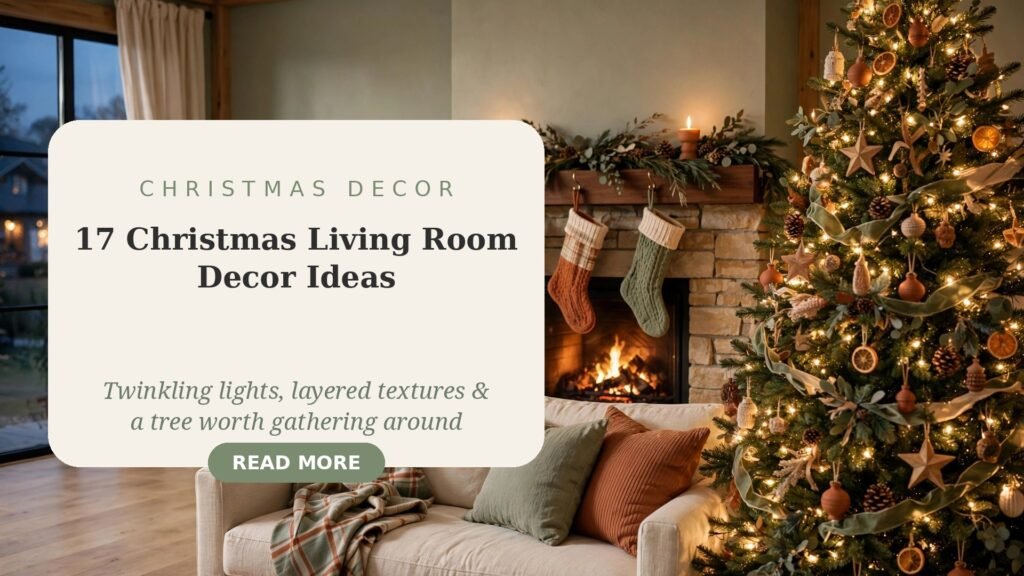
The dining room does more holiday work than any other room in the house. It hosts the big meal, the long conversations afterward, the dessert table that somehow stays full until midnight, and the family photos everyone actually keeps. Yet most Christmas decorating advice stops at the table itself, as if a beautiful centerpiece alone could carry the whole room.
A truly festive dining room works at every height and in every corner. The light feels warm the moment you walk in. The sideboard looks ready to serve from. The chairs invite people to sit a little longer. The windows glow from the street, and the whole space still functions when twelve people, three dishes, and one very excited dog are all in it at once.
The seventeen ideas below are built around the room, not just the table. Only one of them deals with the table setting itself; the rest cover lighting, walls, storage, seating, scent, and the flow of a real holiday gathering. Work through them in order, or pick the five that fit your room best, and you will have a dining room that feels festive from the doorway to the last chair.
1. Start With the Lighting Plan, Not the Decor
Before you hang a single ornament, decide how the room will be lit on Christmas evening, because light sets the mood more than any decoration can. Most dining rooms rely on one overhead fixture, and at full brightness that light flattens everything, washes out candle glow, and makes even the prettiest garland look tired. Start by putting your main fixture on a dimmer if you do not already have one, then plan three layers of light: the dimmed overhead for general brightness, candles or flameless pillars on the sideboard and windowsills for warmth, and one accent source such as string lights along a garland or a small lamp in the corner.
Test the whole scheme one evening before guests arrive. Sit in a dining chair, look around at seated eye level, and notice what actually catches your eye. You want pools of warm light at table height and along the walls, not a single bright ceiling glare. If your chandelier takes multiple bulbs, try warm-white bulbs around 2700K so the whole room shares one golden tone instead of mixing cool and warm light. Keep spare candles and a lighter in the sideboard drawer so the glow is easy to refresh between courses, and set a few battery-operated candles on a timer for the windows so the room looks welcoming even before you light the real ones.
2. Frame the Entry With Garland
The doorway into your dining room is the first thing guests see, and a garland there works like a welcome sign that needs no words. Drape a full, fresh or faux evergreen garland around the door frame, letting it fall a little lower on each side so the shape feels generous rather than stiff. If your dining room opens off the living room, echo the greenery you already have there so the two rooms read as one celebration; carrying the same garland style through the house is one of the simplest ways to make the whole home feel coordinated, and it pairs naturally with the broader seasonal look of your Christmas living room decor.
Weave in a few warm string lights and one repeating accent, such as pinecones, dried orange slices, or small wooden beads, and stop there. A garland that is overstuffed with ornaments looks busy from across the room, while a simple one with good greenery and light looks intentional. Secure the top corners well, since a sagging garland is the first thing people notice, and keep the bottom ends above head height so nobody brushes against them carrying a hot dish. If you use fresh greenery, mist it lightly every few days and keep it away from heating vents so it stays full through New Year’s Day.
3. Turn the Sideboard Into a Serving and Display Station
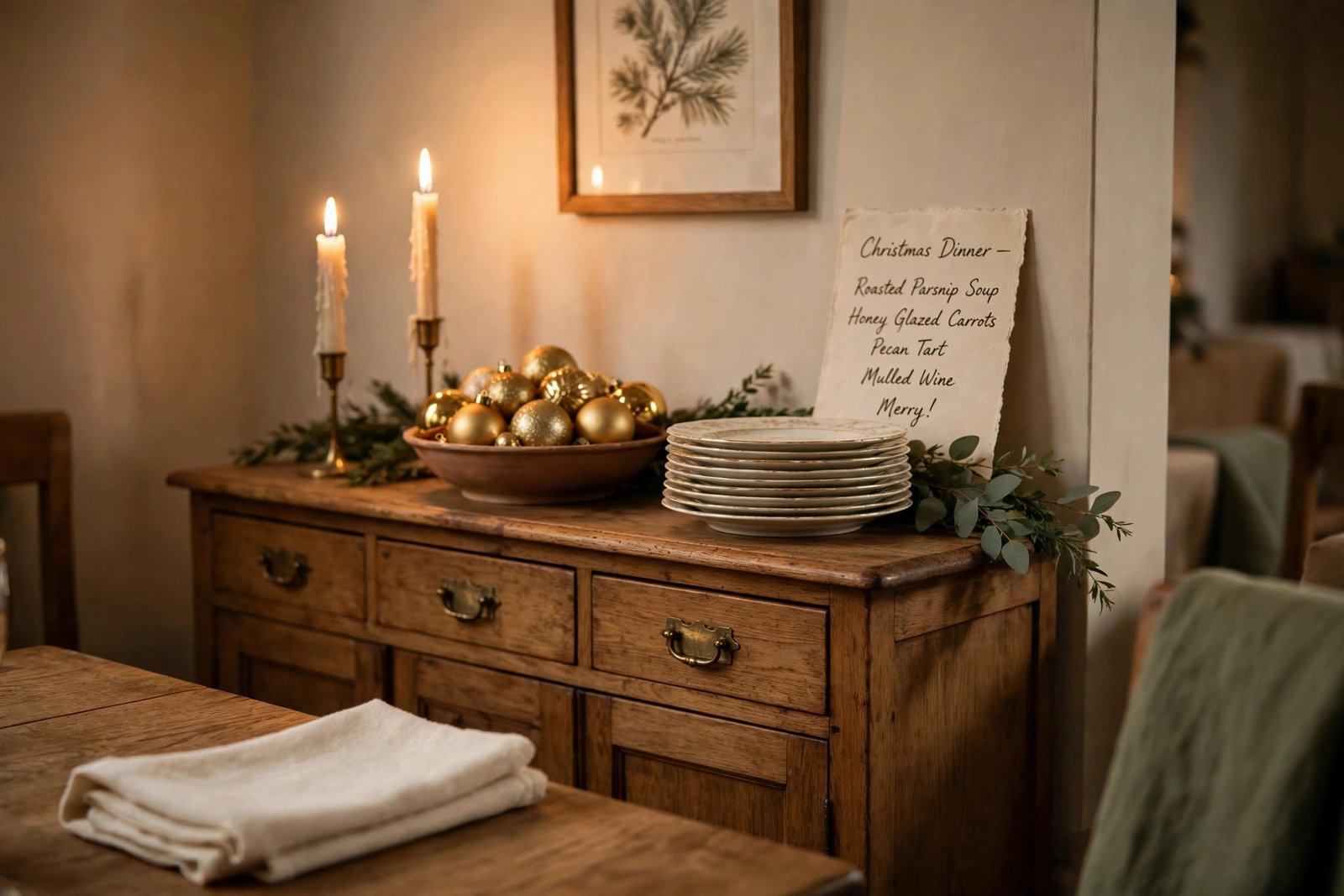
A dining room sideboard earns its keep at Christmas twice over: it stores the extra plates and serving dishes, and it gives you a second surface when the table is full. Clear it completely first, then rebuild it in zones. One end holds what guests will actually use, such as a stack of dessert plates, a water pitcher, and a small tray of glasses. The middle gets the decorative moment, a mirror or framed print behind a pair of tall candlesticks and a low bowl of ornaments. The other end stays open as a landing spot for dishes coming out of the kitchen, which keeps the table from turning into a staging area.
Style it at a height guests can enjoy from their chairs, not just from standing. A tall candlestick pair, a medium vase of winter branches, and one low, wide bowl create a stepped silhouette that reads well from across the table. Add one personal touch that starts conversation, such as a framed family holiday photo or a handwritten menu card propped against the wall, and keep the working end genuinely clear. When the sideboard looks good and works hard at the same time, the whole room feels hosted rather than merely decorated.
4. Dress the Windows for Evening Glow
Dining room windows do their best Christmas work after dark, when they turn the room into a lantern that neighbors and guests can see from outside. Hang a simple wreath on each window, centered and at the same height, and add a pair of candles or a strand of warm string lights along the sill. From inside, the wreaths frame the view and catch the candlelight; from outside, they announce the celebration without a single inflatable in the yard.
Choose wreaths that suit the size of your windows rather than the size of your ambitions. A modest, full wreath with a plain bow looks better on a standard window than an oversized one that crowds the glass. If your dining room has a large picture window, one generous wreath with lights beats three small ones competing for attention. Tie the bows from the same ribbon you use elsewhere in the room so the windows feel connected to the rest of the decor, and use suction hooks or tension rods that leave no marks when January comes. Keep the glass itself clean, since smudges show up immediately once lights are behind them.
5. Pick One Room-Wide Color Palette
A room-wide palette is what stops a dining room from looking like a clearance aisle of unrelated decorations. Choose three colors and let them show up everywhere: one dominant neutral such as cream or warm white, one deep anchor such as forest green or burgundy, and one metallic accent such as gold or brushed brass. Then check every corner against that trio. The garland, the chair cushions, the candle holders, the napkins, and the art on the wall should all speak the same color language, even if no two items match exactly.
This discipline also saves money, because you can reuse what you already own once you know what belongs. Gather your existing ornaments, ribbons, and candle holders on the table, pull out anything that fights the palette, and store those pieces for another room or another year. If you love a traditional red-and-green look, let the green come from real greenery and the red from a few strong accents such as ribbon and berries, rather than from every surface at once. And if you prefer a quieter scheme, cream, sage, and gold will still read as Christmas once the lights and greenery are in place, especially when the palette continues into the adjoining living spaces.
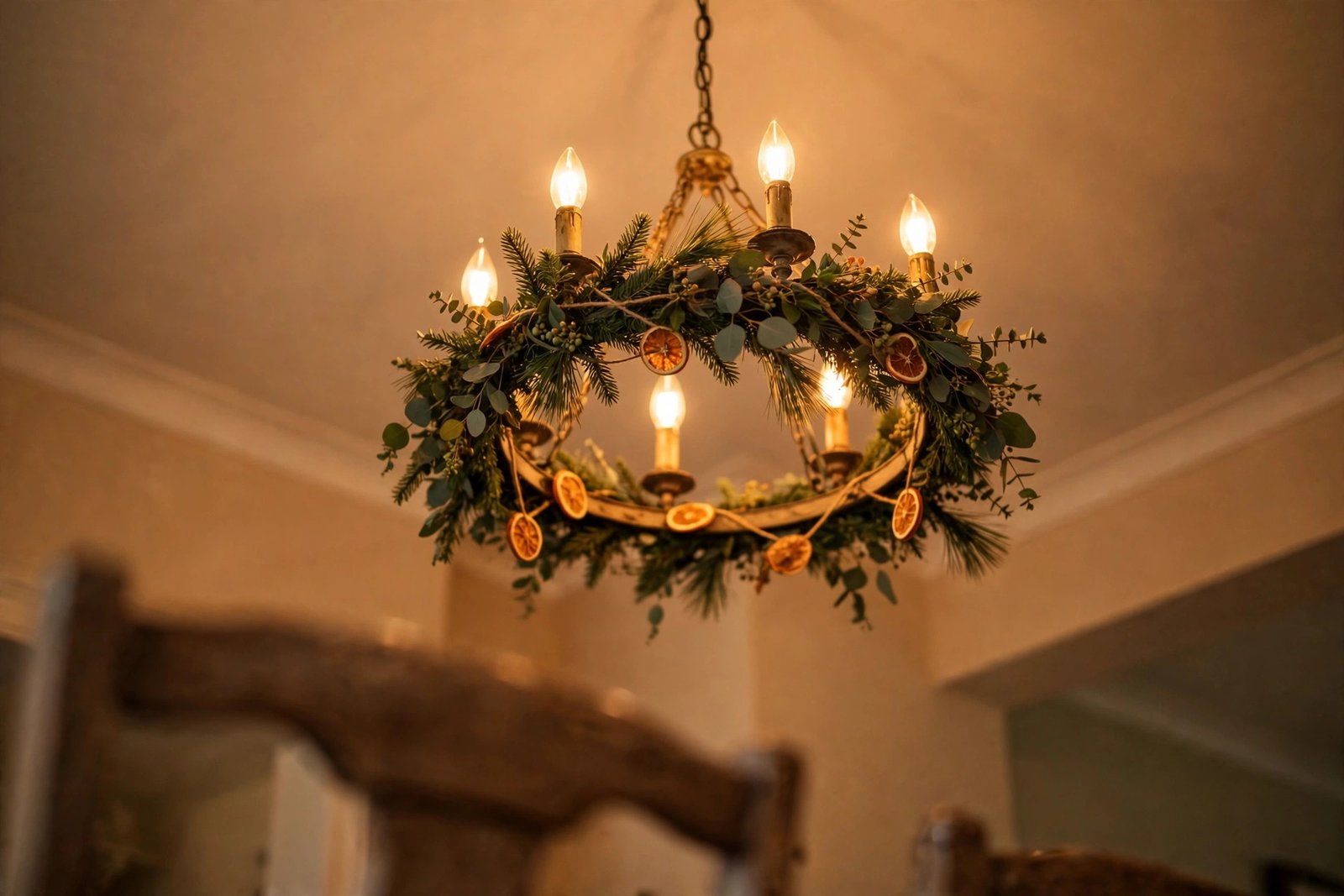
6. Dress the Chandelier With Greenery
The chandelier hangs at the visual center of the room, so dressing it transforms the whole space with very little effort. Wrap a light garland around its arms or hang a simple greenery ring from the fixture, keeping the greenery above head height and well away from any real flame. Tuck in a few small, lightweight ornaments or dried orange slices, and let a couple of ribbons fall just far enough to catch the light without dangling into anyone’s sightline across the table.
The trick is restraint and safety in equal measure. Greenery should never touch a hot bulb, and anything you hang must be light enough that it cannot shift the fixture or fall into the food. Battery-operated fairy lights woven through the garland are safer than adding more wired lights near the fixture, and they let you keep the chandelier itself dimmed so the greenery glows softly. Step back to the doorway and check the silhouette: you want a lush, rounded shape that frames the light, not a drooping tangle. When it is right, the chandelier becomes the room’s centerpiece without taking a single inch of table space.
7. Warm Up the Seating
Guests remember whether they were comfortable far longer than they remember what the centerpiece looked like, so seating comfort is real Christmas decor. Start with the chairs themselves: check for wobbles, tighten any loose screws, and add felt pads so chairs slide quietly on hard floors. Then layer in warmth. A folded throw over the back of each chair, or over every other chair for a less uniform look, instantly makes the room feel cared for, and a slim seat cushion in your palette color helps guests settle in for a long meal.
Think about who will actually sit where. Older relatives appreciate a chair with arms and a cushion, children do better on sturdy chairs that do not tip, and anyone who will be getting up to serve should sit near the edge of the table rather than trapped in the middle. If you need extra seats, bring in chairs from other rooms a day early and dress them the same way so they do not look like afterthoughts. A basket of extra throws near the sideboard lets chilly guests help themselves without anyone having to ask, and that small kindness is what makes a room feel truly hospitable.
8. Set Up a Drinks and Cocoa Station
A self-serve drinks station takes pressure off the host and gives guests something to gather around before dinner. A bar cart, a small console, or even one cleared end of the sideboard will do. Stock it with the basics: a coffee maker or carafe, a kettle, mugs, a small pitcher of water, and a tray of cocoa fixings such as marshmallows, cinnamon sticks, and a shaker of cocoa powder. Add one festive drink option, like mulled cider in a slow cooker, and label it with a small handwritten card so guests do not have to guess.
Style the station the way you would a small vignette, with a garland looped along the cart edge, a candle in a sturdy holder, and a stack of cocktail napkins in your palette. Keep the working parts genuinely usable: mugs hung on hooks or stacked no more than two high, spoons in a small jar, and a clear spot for used cups so the station does not turn into a clutter pile by dessert. Place it where people can reach it without crossing the cook’s path between kitchen and table, and keep it stocked through the evening so the last guest gets the same warm welcome as the first.
9. Let the Walls Join the Celebration
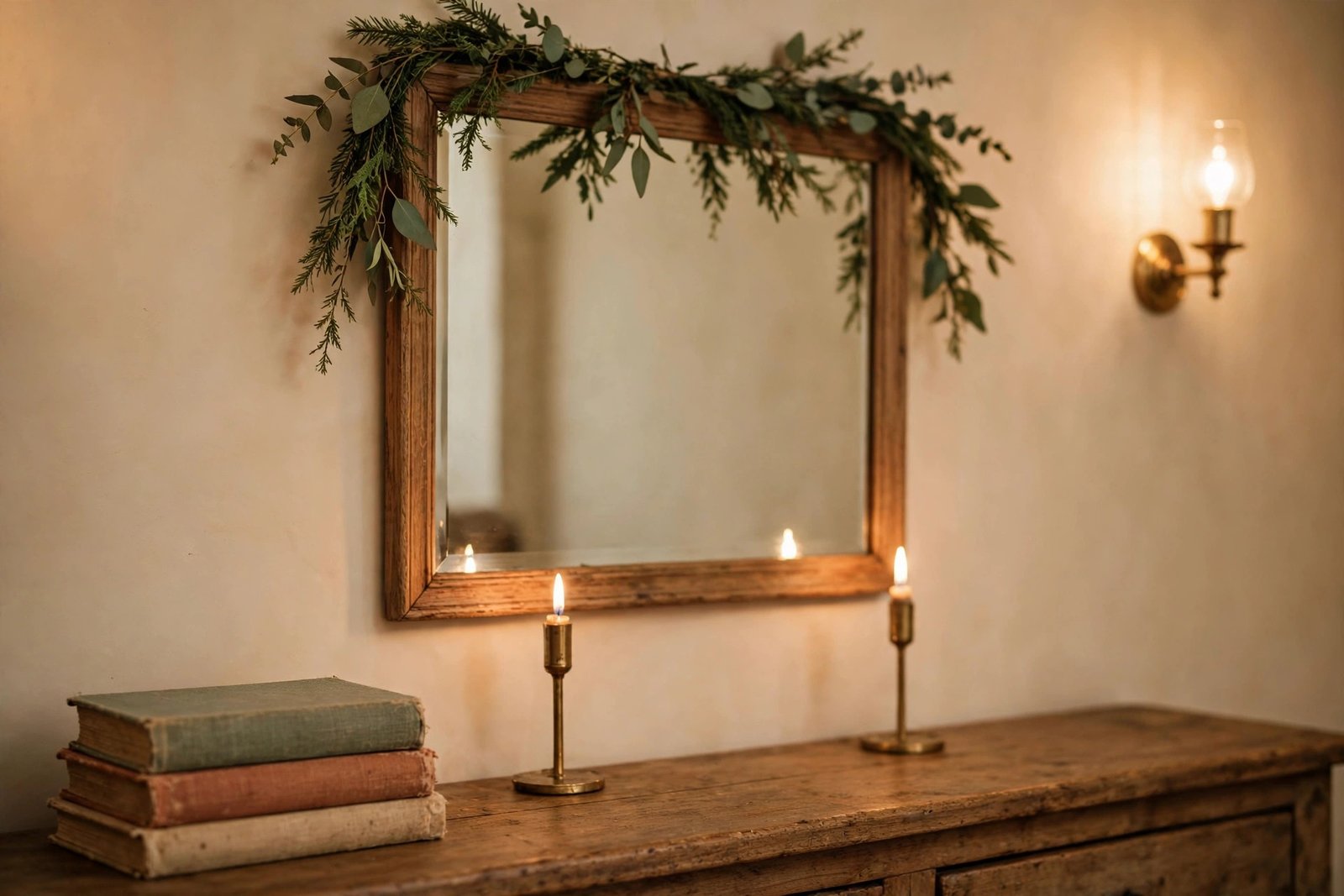
Walls are the most overlooked surface in Christmas dining rooms, yet they surround every guest for the entire meal. You do not need to redecorate the room; you need to let the season touch the walls in a few deliberate places. Swap one or two everyday prints for holiday artwork or framed botanical prints in your palette, hang a garland along the top of a large mirror so the greenery doubles in the reflection, or lean a tall framed piece of wrapping paper or fabric against the wall on the sideboard for an instant, inexpensive seasonal print.
A mirror deserves special attention, because it multiplies both light and greenery. Drape a slim garland across its top, add two slim candles on the console below, and the whole corner glows twice over. If you have open wall space above a buffet or console, a simple wreath hung there anchors the furniture below it and fills an otherwise empty stretch of wall. Keep the additions flat and secure, nothing that could be knocked down by a chair backing into it, and step back to check that the wall decor balances the rest of the room rather than competing with the chandelier and windows for attention.
10. Set a Table That Invites People to Linger
This is the one idea in this guide devoted to the table itself, and it earns its place because a table that is set well changes how long people stay. Start with a foundation that protects the surface and adds texture, such as a tablecloth, a runner, or placemats in your room palette, and build up from there: dinner plates, a folded napkin with a sprig of greenery or a cinnamon stick, and glassware that is actually clean and within reach. Keep the centerpiece low, below eye level when seated, so conversation flows across the table instead of around an obstacle.
Leave real elbow room. A place setting needs about two feet of width per person, and cramming in one more chair always costs more comfort than it gains in company. If the table will be tight, serve buffet-style from the sideboard and keep the table for plates, glasses, and conversation. For more table-specific inspiration, from centerpieces to place settings, see our companion guide to Christmas table decor. And once the table is set, light the candles, dim the overheads, and sit down in every chair yourself: if you would happily linger there for two hours, your guests will too.
11. Plan the Flow Before Guests Arrive
A festive dining room still has to function as a room, and the best decoration in the world will not help if guests cannot move comfortably. Walk the path a guest will take: from the entry, to their chair, to the sideboard, to the drinks station, and back. Clear anything that narrows that path, such as a plant stand, a stack of gift boxes, or a chair pulled out at an angle. If the table will be extended with a leaf, test it a day early so you are not wrestling with it while guests are arriving.
Think through the serving route as well. The cook needs a clear, short path between kitchen and table, and the sideboard should sit where dishes can be set down without crossing seated guests. Keep a small, out-of-sight spot for clearing, such as a tray on a kitchen counter, so dirty plates do not pile up in view during dessert. These practical choices are part of the decor, not separate from it: a room that moves well feels calm and generous, and that feeling is what guests actually remember. For year-round layout principles that work just as well in December, our guide to dining room decor ideas covers the foundations this seasonal layer builds on.
12. Layer in Christmas Scent
Scent is invisible decor, and in a dining room it matters as much as anything you can see, because it greets guests before they sit down and lingers through the meal. The most reliable approach is to layer one natural scent rather than stacking competing fragrances. A pot of water simmering with orange slices, cinnamon sticks, cloves, and a few sprigs of pine on the stove an hour before guests arrive fills the house gently, and fresh greenery on the garland and sideboard adds its own quiet pine note for the rest of the evening.
Be careful with strength and timing. One scented candle in a large holder is plenty in a dining room, and it should be unscented at the table itself so it never competes with the food. Avoid plug-in air fresheners or strong sprays, which tend to smell artificial in a room full of real cooking aromas, and skip heavy fragrance if any guest has sensitivities, letting the greenery and the meal do the work instead. When scent is handled with restraint, guests will say the house smelled like Christmas without quite knowing why, and that is exactly the effect you want.
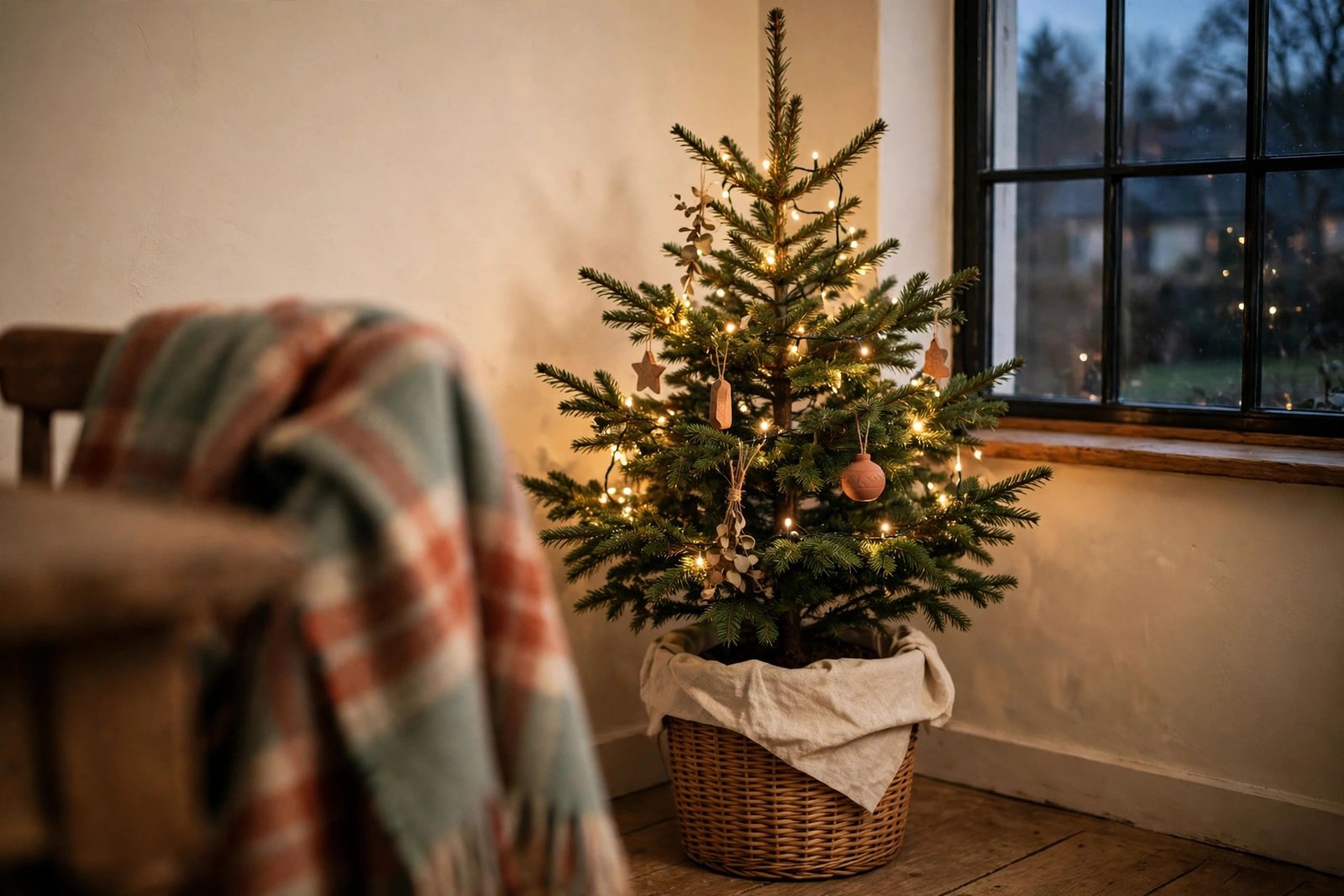
13. Give a Corner Tree or Potted Evergreen a Home
Not every Christmas tree belongs in the living room. A slim tree, a potted evergreen, or even a tall branch arrangement in the dining room corner gives the room its own festive anchor and looks wonderful in photos taken across the table. Choose a tree that fits the corner without crowding the chairs, decorate it more simply than the main tree, and keep the ornament palette matched to the room so it reads as part of the dining room rather than a second living room display.
A potted evergreen is the easiest version of this idea, since it needs no stand, no skirt, and no post-holiday storage beyond a pot you already own. Set it in a basket, wrap the pot in burlap or a linen cloth, and add a short string of warm lights plus a handful of simple ornaments. Keep the base clear of cords and water, and place it where it will not block the serving path. If you want a fuller tree look without committing to another full-size tree, our guide to Christmas tree decor ideas covers sizing and styling that translate well to a dining room corner. Either way, a tree in the corner makes the whole room feel like the celebration, not just the table.
14. Dress the Chairs
Chair dressing is a small change with an outsized effect, because chairs occupy so much visual space in a dining room. The simplest version is a wide ribbon or a slim garland loop tied at the back of each chair, with the bow or knot sitting at the top rail where it reads clearly from across the table. Keep the treatment identical on every chair, since a row of matching chairs looks intentional while a mix of different bows looks accidental.
If you want something softer, drape a small swag of greenery over each chair back and secure it with twine, or hang a single ornament from the top rail on a short ribbon. Avoid chair covers unless you already own them and they fit well; a baggy cover looks worse than a bare chair. Whatever you choose, test it on one chair first and sit in it. The dressing must stay put when someone leans back, must not snag clothing, and must not shed needles onto the seat. When chairs are dressed well, the whole table looks finished even before the first plate is set down.
15. Let Storage Double as Decor
Every dining room has storage, and at Christmas that storage can become part of the display instead of something to hide. A glass-front cabinet is the obvious star: arrange its shelves by color for the season, putting cream and gold pieces forward, adding a small garland loop along the top edge, and leaving enough space that the shelves look curated rather than crammed. Open shelving works the same way, with a few seasonal pieces, such as a cake stand, a punch bowl, or a stack of holiday plates, mixed in among the everyday items.
Even closed storage can contribute. Stack a few beautiful serving platters on top of a low cabinet with a garland draped in front of them, or set a basket of extra napkins and table linens beside the sideboard where it reads as a styled detail. The point is to let the room’s working pieces join the celebration rather than competing with it. When storage looks good, you also gain a practical bonus: everything you need for the meal is already visible and within reach, so hosting feels smoother and the room feels genuinely lived in rather than staged.
16. Look Up: Dress the Ceiling and Upper Walls
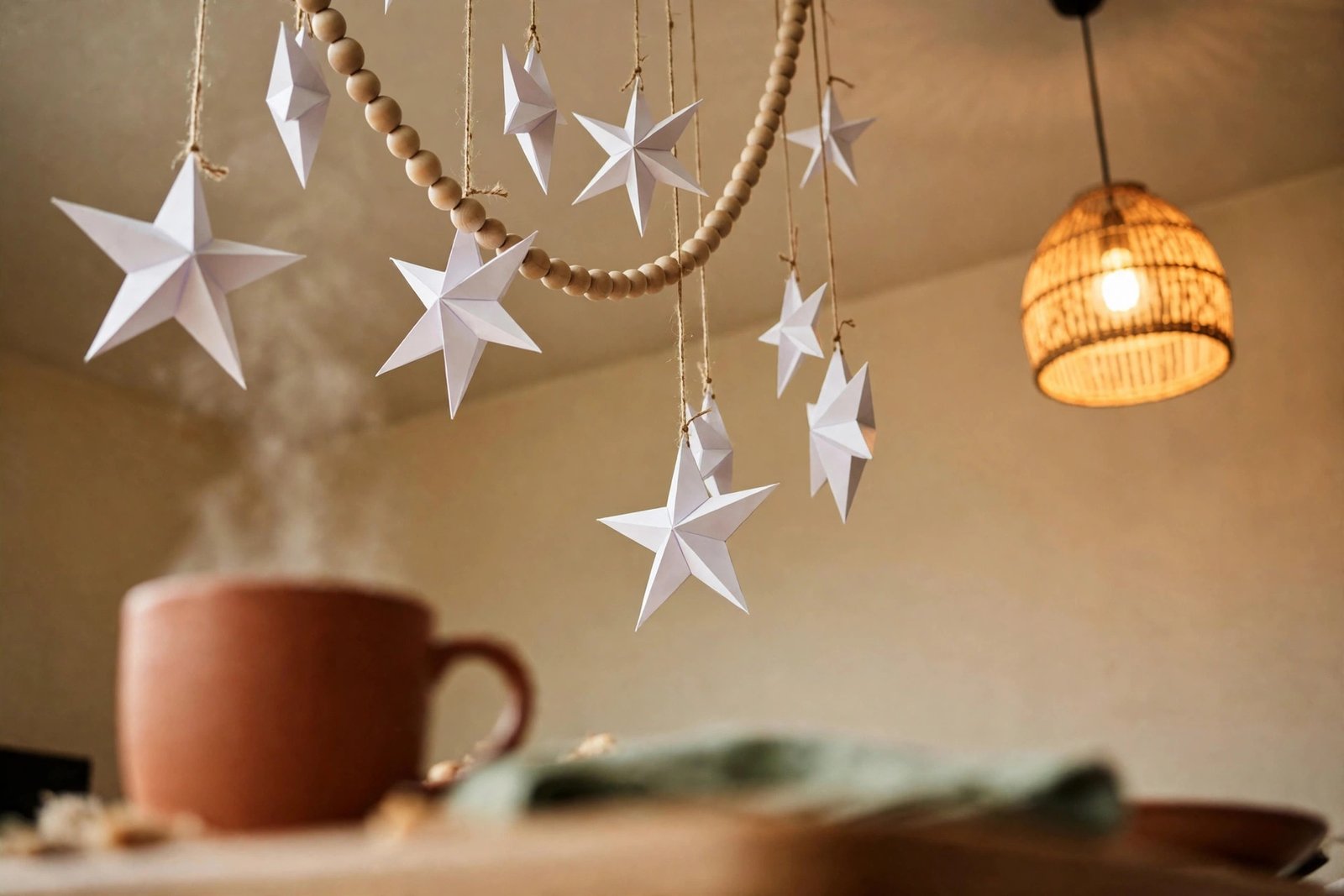
Most people decorate from eye level down, which leaves the top third of the room completely empty at exactly the moment when candlelight and garlands should make it glow. Look up and use that space. Hang a few lightweight paper stars or snowflakes from the ceiling at staggered heights, drape a garland swag across the top of a doorway or along a picture rail, or suspend a simple greenery chandelier ring above the sideboard where it will not interfere with the table. Keep everything light, secure, and well above head height.
Upper-wall details work just as well and are easier to manage. A garland run along the top of a tall bookcase, a wreath hung high on a narrow wall, or a string of lights tracing the top of a window frame all draw the eye upward and make the room feel taller and more festive. Check your work from a seated position, since that is how guests will see it: the upper decorations should add sparkle at the edges of their view, not dangle into it. When the ceiling and upper walls join in, the room feels wrapped in the season instead of decorated only where it is convenient to reach.
17. Keep the Room Livable All Season Long
The final idea is about the weeks after the big day, because a Christmas dining room should still work for everyday breakfasts and ordinary Tuesdays. Build your decorating around a nightly reset that takes five minutes: blow out candles, straighten the sideboard, fold the throws, and return stray ornaments to the tree. If every decoration has a home, the room stays festive without sliding into clutter, and the morning after a party does not feel like a cleanup project.
Plan the transition out of the season at the same time you decorate. Keep the boxes and tissue in one labeled bin, note what you ran out of or want to replace, and decide which pieces, such as the greenery on the mirror or the warm bulbs in the chandelier, can stay a little longer into January without looking out of place. A dining room that is easy to live in through December is one you will actually enjoy, not just admire, and that ease is the real payoff of decorating the whole room instead of only the table.
Products to Consider
- Warm-white string lights for garlands, windows, and wreaths
- A dimmer switch or smart bulbs for the main dining fixture
- Flameless pillar candles with timers for windowsills and the sideboard
- A full faux or fresh evergreen garland for the doorway and mirror
- Tall taper candle holders for the sideboard display
- Wreaths sized to your windows, with matching ribbon
- A set of linen or cotton napkins in your room palette
- A low, wide decorative bowl for ornaments on the sideboard
- A bar cart or small console for a drinks and cocoa station
- A basket or woven planter for a potted evergreen
- Lightweight paper stars or snowflakes for ceiling and upper-wall dressing
- A lidded storage bin for keeping decorations organized after the season
FAQ
How do I decorate a dining room for Christmas without overcrowding the table?
Move the celebration off the table and into the room. Dress the sideboard, the windows, the walls, and the chandelier, and keep the table itself to a low centerpiece, place settings, and glasses. Serving from the sideboard or a drinks station also frees table space, so guests have real elbow room and the room still feels fully festive.
What is the best lighting for a Christmas dining room?
Layered, warm light works best: a dimmed overhead fixture for general brightness, candles or flameless pillars on the sideboard and windowsills for warmth, and string lights woven through garlands for sparkle. Stick to warm-white bulbs around 2700K so every source shares one golden tone, and test the full scheme one evening before guests arrive.
Can I decorate a small dining room for Christmas?
Yes, and a small room often looks more festive with less effort, because the decorations are closer together. Focus on the walls, the windows, and one vertical accent such as a slim corner tree or a garland-framed doorway, and keep the table clear. Avoid large floor pieces and oversized centerpieces, which eat the space guests need to move and sit.
How early should I decorate the dining room for Christmas?
Most households decorate in late November or the first week of December, which gives the room several weeks of use before the holiday itself. Fresh greenery lasts longest when it goes up in mid-December and is kept away from heating vents, while faux greenery, lights, and wall decor can go up as early as you like.
How do I keep Christmas dining room decor safe around candles and food?
Keep all greenery and fabric well away from open flames, never let garlands touch hot bulbs, and use flameless candles near the table, on windowsills, or anywhere children might reach. Place real candles only on stable, heat-safe surfaces away from the serving path, and blow them out whenever the room is empty.
Final Thoughts
A festive dining room is not built from one showpiece, it is built from a dozen small decisions that add up to a room people want to spend time in. Warm light, a working sideboard, comfortable chairs, dressed walls, and a clear path for guests will do more for your Christmas than the most elaborate centerpiece ever could. Start with lighting, add the room-level layers that fit your space, and finish with the one table idea that matters most: a setting that invites people to linger.
Then enjoy the room yourself. Sit down, light the candles, and look around at seated eye level, the way your guests will see it. If the room feels warm, welcoming, and ready for a long evening, you have done the job well, and the memories made there will outlast every decoration.