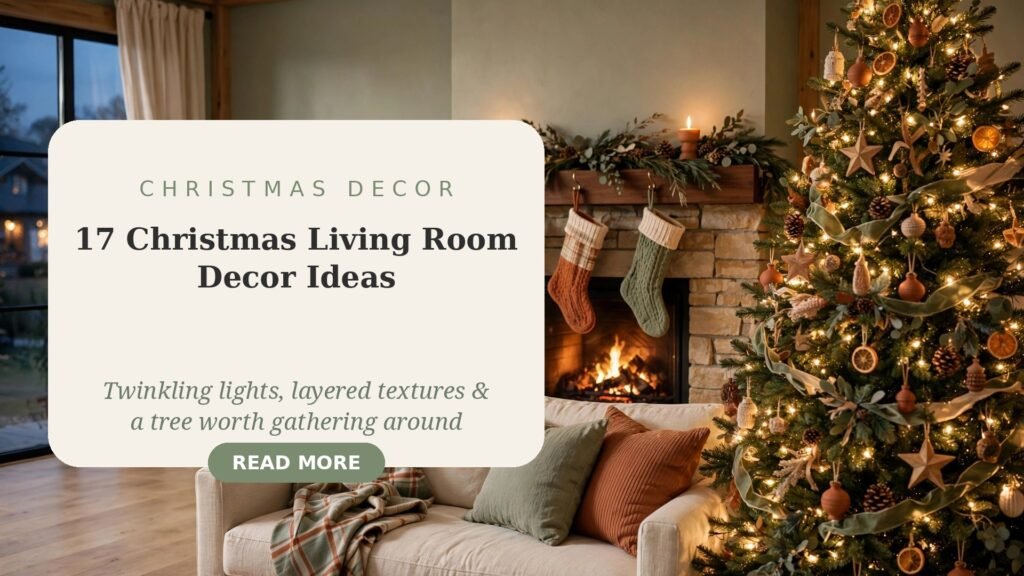
There’s a reason the Christmas tree is the centerpiece of the whole season. It’s the first thing guests notice when they walk in, the backdrop for every December photo, and the quiet corner where the whole house seems to gather on cold evenings. Getting it right doesn’t require a designer budget or a ladder — just a plan, good light, and a few thoughtful layers.
This guide rounds up 21 Christmas tree decor ideas that actually work in real homes, from oversized velvet bow toppers to foraged naturals, plus the practical how-to behind each one. Whether you’re working with a towering fresh fir or a small apartment tree, these christmas tree themes and techniques will help you build a tree that looks intentional from every angle.
1. Light It First: Ultra-Warm Cluster LED Lighting
Every great tree starts with great light — and 2026’s defining lighting move is ultra-warm cluster LEDs. Unlike old-school string lights with bulbs spaced inches apart, cluster lights pack dozens of tiny, warm-toned bulbs onto a single wire, so the glow comes from deep inside the branches instead of sitting on the surface.
Start decorating with the lights, before anything else. Work from the bottom up, weaving the wire in and out of branches rather than wrapping it around the outside. A reliable rule of thumb: plan for about 100 lights per vertical foot of tree, so a 7-foot tree wants roughly 700 lights. Cluster strands make hitting that number easy without turning your tree into a tangle of cords.
Stick with warm white (2700–3000K) for that candlelit glow — cool-white LEDs make a living room feel like a parking lot. If your tree came pre-lit, you can still layer one extra cluster strand deeper into the branches for dimension. Once the lights are set, plug them in and step back before adding a single ornament; this is the moment to fix dark spots while you can still reach them.
2. Crown It with an Oversized Velvet Bow Topper
The star topper isn’t going anywhere, but the freshest christmas tree topper ideas this year lean softer: an oversized velvet bow, tied full and plush, with long ribbon tails cascading down the front of the tree. It reads luxurious up close and photographs beautifully from across the room.
Choose a wired velvet ribbon at least 4 inches wide — the wire lets you shape generous loops that actually hold their form. You’ll need about 6 to 8 yards for a full bow with long tails on a 7-foot tree. Tie the bow separately with floral wire, then attach it to the top branch with a second wire wrapped firmly around the trunk so it doesn’t lean.
Let the tails fall naturally down two or three branches and tuck their ends behind ornaments rather than cutting them short. Deep red, forest green, champagne, and dusty blue velvet all work; match the bow to your ribbon color elsewhere on the tree for a pulled-together look. Fluff the loops once more after hanging — velvet shows every crease until you give it a final shape.

3. Master Ribbon Draping Techniques
Ribbon is the fastest way to make a tree look professionally styled, and there are three draping techniques worth learning. The waterfall runs one continuous ribbon from top to bottom in loose vertical swoops. The spiral wraps ribbon around the tree in a gentle candy-cane diagonal. The tuck-and-pouf bunches ribbon into branch pockets for a lush, gathered look.
For any of the three, use wired ribbon 2.5 to 4 inches wide so it holds its shape. Cut the ribbon into 3- to 4-foot lengths rather than wrestling one giant spool around the tree — shorter pieces are far easier to control and the seams disappear into the branches. Anchor each piece by twisting a branch tip around it.
The tuck-and-pouf method is the most forgiving for beginners: just push a loop of ribbon deep into a branch gap every 12 to 18 inches and let the branches swallow the mechanics. Two coordinating ribbons — say, a wide plaid with a narrow solid velvet — layered together look far richer than one. Budget about three 10-yard rolls for a full 7-foot tree.
4. Tree Collar vs. Tree Skirt: Pick Your Base
The base of your tree sets the tone for everything above it, and the collar-versus-skirt debate is really about your style. A tree collar — a rigid ring of woven basket, metal, or wood that hugs the trunk — gives a clean, modern, farmhouse look and takes up zero floor space. A tree skirt — fabric laid in a circle around the stand — is softer, more traditional, and hides an ugly stand completely.
Choose a collar if your tree sits in a tight corner or a high-traffic spot, since there’s no fabric to trip over. Woven seagrass and galvanized metal collars are everywhere right now and pair beautifully with rustic and coastal themes. Choose a skirt if you want cozy texture: quilted cotton, faux fur, or a chunky knit skirt adds warmth that a hard collar can’t.
Whichever you pick, size matters. The base should extend at least 6 to 10 inches beyond the lowest branches on all sides. And here’s a practical tip: if your stand is the ugly plastic kind, a skirt forgives everything; a collar only works if the stand itself looks decent from the side. For more ways to style the whole room around your tree, see our Christmas living room decor ideas.
5. Go Classic: Muted Red-and-Gold, Softened
Red and gold is the most timeless of all christmas tree themes, but 2026’s version is quieter — think cranberry and brushed brass rather than fire-engine red and shiny gold. The muted palette keeps the nostalgia while matching the warm, earthy interiors most of us actually live in.
Start with your golds as the foundation: matte, brushed, and champagne ornaments in mixed finishes create depth without glare. Then layer in reds sparingly — cranberry velvet ribbon, a few deep-red glass balls, maybe dried red berries tucked into branches. Because the red is darker and dustier, it reads sophisticated instead of loud.
Balance the two colors roughly 60/40 in favor of gold and neutrals, with red as the accent that draws the eye. Warm white lights are non-negotiable here; they make muted gold glow and keep cranberry rich instead of flat. This is also the easiest theme to shop your own attic for — most families already own the bones of it.
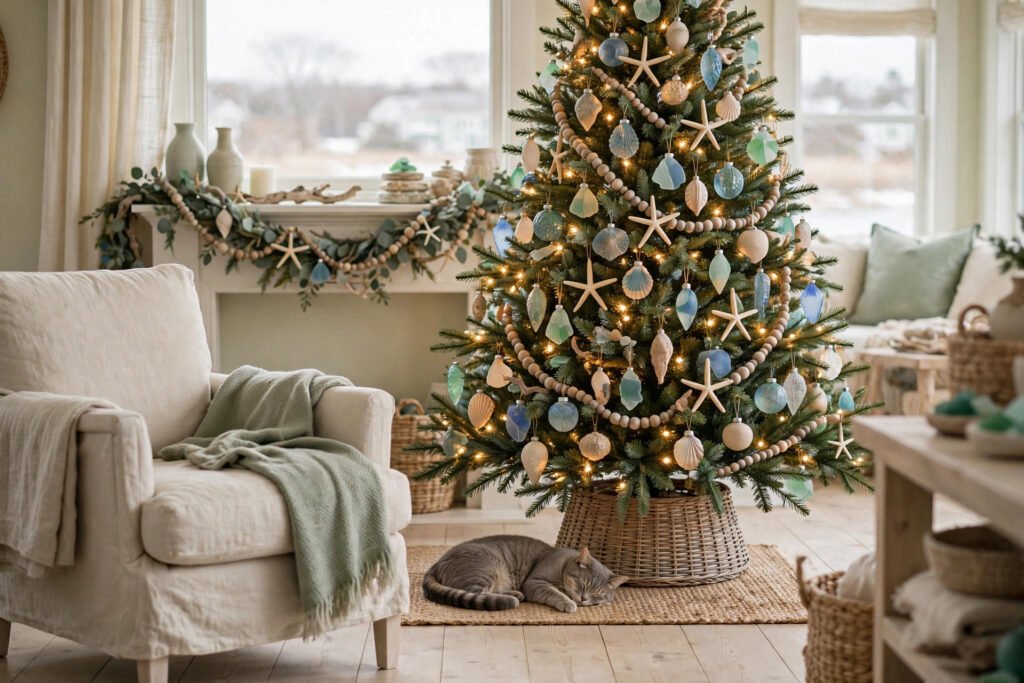
6. Try a Coastal Beach Tree
You don’t need to live near the ocean to love a coastal Christmas tree. Built on sea-glass blues, sandy creams, and natural textures, it’s a fresh, airy take that feels especially right in bright, modern homes — and it’s a lovely change if traditional red just isn’t your thing.
Build the palette in three layers: ocean blues (sea-glass, aqua, dusty navy), sandy neutrals (cream, driftwood, natural jute), and one metallic for warmth — brushed gold or champagne keeps it festive. Starfish, sand dollars, and capiz-shell ornaments do the thematic heavy lifting, while wooden bead garlands add the beachy texture.
A woven seagrass tree collar is practically made for this theme — it echoes the basket texture of beach decor and keeps the base tidy. Finish with warm white lights (never cool blue, which turns the whole thing chilly) and a simple starfish or driftwood topper. Keep the rest of the room light and uncluttered so the tree stays the breezy focal point.
7. Go Full Candyland
If your household runs on joy and you have kids (or are a kid at heart), a candyland tree is pure December magic. Oversized lollipops, candy canes, peppermint swirls, and gumdrop garlands turn the tree into something between a dessert table and a storybook.
The trick to keeping it charming instead of chaotic is a tight color palette: classic red and white with touches of pink and mint, or go full pastel for a softer take. Anchor the theme with 5 to 7 oversized statement pieces — big lollipop picks, giant candy canes — spaced evenly around the tree, then fill in with smaller peppermint ornaments.
Real candy canes hung on branches double as decor and treats, but hang them toward the top if you have toddlers or a determined dog. A white or flocked tree makes candy colors pop like nothing else. And save one branch at kid height for the ornaments they make themselves — the handmade ones always become the favorites anyway.
8. Keep It Calm: Neutrals, Cream, and Champagne
Not every tree needs to shout. A neutral tree in creams, ivories, and champagne is the minimalist’s answer to Christmas — serene, elegant, and surprisingly easy to pull off because the palette does the coordinating for you. For the full less-is-more philosophy, our minimalist Christmas decor guide pairs perfectly with this look.
Collect ornaments in just three to four tones: warm white, cream, champagne, and one soft metallic like brushed gold. Vary the finishes — matte ceramic, glossy glass, frosted, and a little sparkle — because texture is what keeps a monochrome tree interesting. Without color contrast, shape and finish carry the whole design.
Use fewer, larger ornaments than you think you need; negative space is part of the aesthetic. A simple cream ribbon or a strand of wooden beads is enough garland. Warm white lights are essential — cool light turns cream ornaments gray. The result is a tree that feels like a deep breath, and it blends into any room without demanding attention.
9. Decorate with Foraged Naturals
Some of the most beautiful tree decor costs nothing: pinecones, dried orange slices, cinnamon sticks, and seed pods gathered from your yard or a winter walk. Foraged naturals bring an organic, unfussy warmth that store-bought ornaments can’t quite replicate.
Dried orange slices are the star here — thread them with twine and hang them where they’ll catch the light, because they glow like little stained-glass windows. Pinecones need only a loop of twine wired around their base. Bundle three cinnamon sticks with jute for a fragrant cluster that doubles as a natural air freshener near the lights.
Mix foraged pieces with simple glass or wood ornaments so the tree still feels decorated, not bare. A good ratio is about one-third naturals to two-thirds regular ornaments. If you gather pinecones outdoors, bake them at 200°F for an hour first to drive out any tiny residents. The slightly imperfect, handmade quality is the whole point — don’t aim for symmetry.
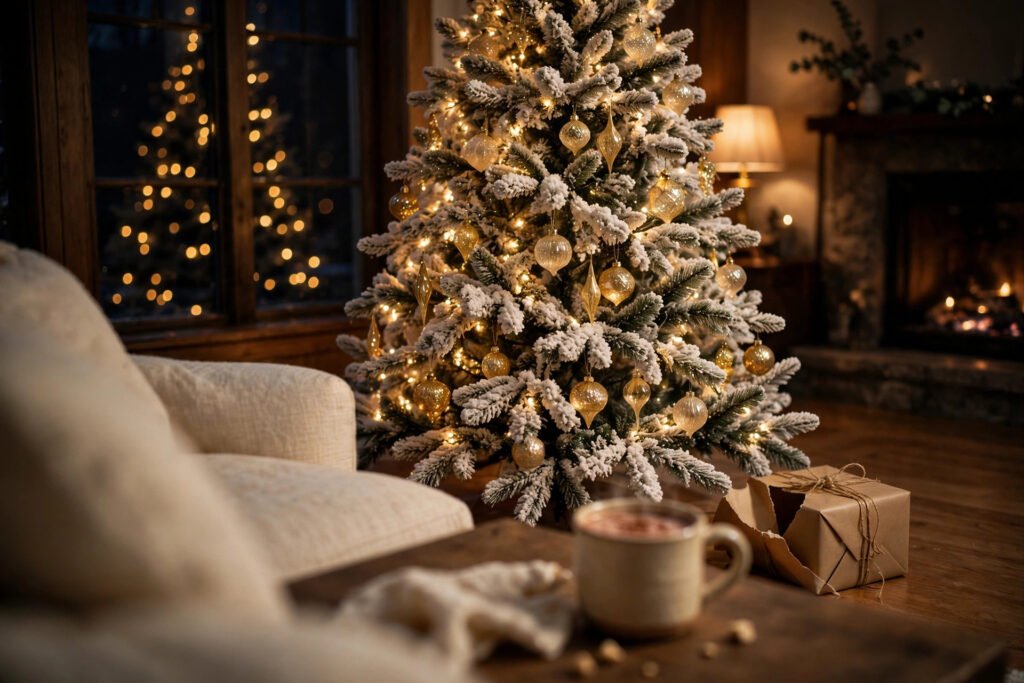
10. Embrace Flocked Christmas Tree Decor
Flocked christmas tree decor — trees dusted with artificial snow — keeps growing in popularity because it delivers instant winter atmosphere, no real snowfall required. The white-dusted branches make colors pop and lights glow softer, like the whole tree is lit from within a snow globe.
On a flocked tree, less is more. The flocking is already doing visual work, so you need fewer ornaments than on a green tree — let the snowy branches breathe. Metallics (gold, silver, champagne) look spectacular against white, and deep jewel tones like emerald and burgundy read rich and dramatic.
Be gentle when decorating: flocking sheds if you manhandle branches, so place ornaments rather than forcing them, and fluff branches with a light touch wearing gloves. Vacuum the floor after decorating day — some shedding is inevitable. A flocked tree with warm cluster lights and simple gold ornaments is one of the highest-impact, lowest-effort looks on this list.
11. Try a Sparse Alpine-Style Tree
Alpine-style trees — with widely spaced branches and visible trunk — are the antidote to the dense, perfect cone. Their airy, woodland silhouette lets every ornament show and gives the tree a sculptural, almost artistic quality that dense trees can’t match.
Because the branches are sparse, ornament placement matters more: hang your best pieces where they’ll be seen, and use long, dangling ornaments that fill vertical gaps. Fewer, larger ornaments work better than many small ones that get lost in the open space. A simple star or a small cluster of branches makes a better topper than anything heavy.
Alpine trees shine with natural and Nordic themes — wood, glass, and simple whites. Don’t over-fluff; the visible structure is the feature. If you buy artificial, look for “sparse” or “alpine” in the product description and check customer photos, since branch spacing varies wildly between models.
12. Go Bold with Buffalo Plaid Farmhouse
Red-and-black buffalo plaid is farmhouse Christmas in its purest form — cozy, unpretentious, and instantly recognizable. It’s a great pick if your home already leans rustic, because the tree will feel like a natural extension of your everyday style.
Use plaid as an accent, not the whole tree: a wide buffalo-check ribbon, a few plaid ornaments, and a plaid tree skirt carry the theme without overwhelming it. Fill in with solid black, cream, and natural wood ornaments so the pattern has room to breathe. Galvanized metal and burlap accents complete the farmhouse story.
A plaid tree looks best with warm, slightly dim lighting — bright white light makes the checks look harsh. This is also a forgiving theme for mismatched ornaments, since the strong pattern ties everything together. Kids’ handmade ornaments and rustic naturals fit right in.
13. Mix Your Metallics
Who says you have to pick one metal? Mixing gold, silver, and champagne on a single tree creates a rich, layered shimmer that single-metal trees can’t touch. The key is treating metallics like a gradient rather than a random mix.
Pick a dominant metal (usually gold or champagne for warmth) and use the others as accents — roughly 60/30/10. Keep all three in the same finish family: if your gold is brushed and matte, choose brushed silver and soft champagne rather than mirror-shine versions. Mixed finishes are what make a metallic tree look collected instead of clashing.
Champagne is the peacemaker metal — it bridges gold and silver beautifully. Add a ribbon in a soft neutral to tie the metals together, and use warm white lights to keep everything glowing rather than glaring. This theme photographs gorgeously and works in both traditional and modern rooms.
14. Build a Woodland Rustic Tree
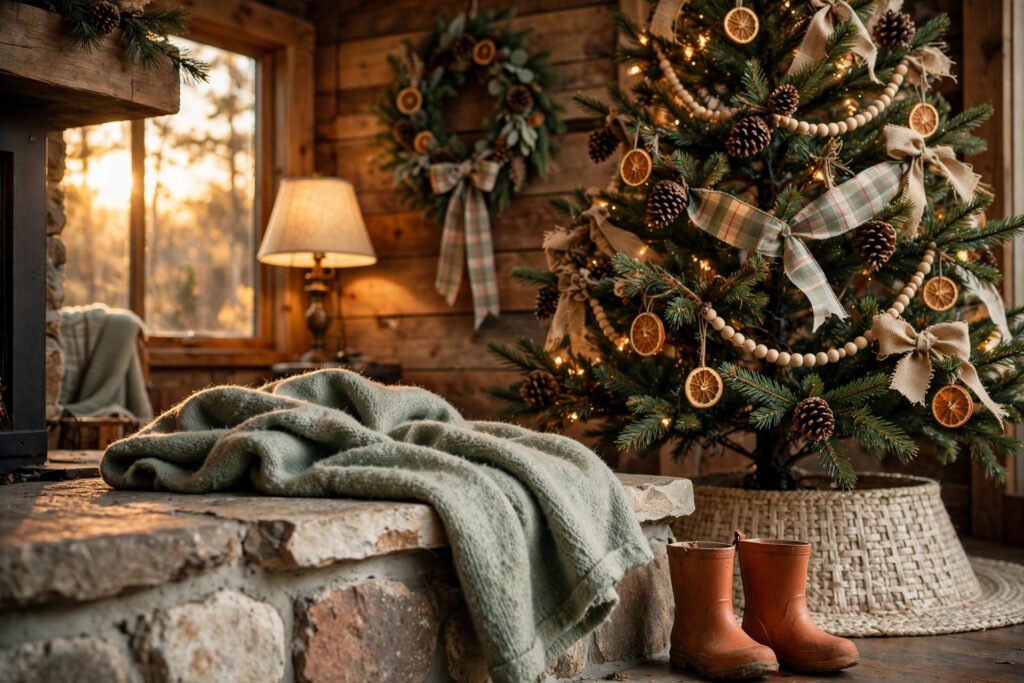
The woodland rustic tree brings the forest indoors: pinecones, wood textures, plaid, burlap, and warm light that feels like a cabin at dusk. It’s one of the most forgiving christmas tree themes because imperfection is built into the aesthetic.
Layer natural textures generously: wooden bead garlands, burlap ribbon, pinecone clusters, and ornaments in wood, felt, and matte finishes. A few plaid ribbon loops and some dried orange slices add color without breaking the earthy mood. Owls, deer, and pinecone-shaped ornaments lean into the woodland story.
A woven basket collar or a burlap tree skirt grounds the look at the base. Keep the lights warm and slightly dimmer than usual — woodland trees glow best at a campfire level of brightness. This theme is also budget-friendly, since so much of it can be foraged or made from simple craft-store supplies.
15. Hunt Down Vintage Pieces
There’s a patina that only time creates, and vintage ornaments bring it in spades. Flea-market glass balls with faded paint, tinsel-era figurals, and old bottle-brush trees mixed into your branches give a tree a collected-over-decades soul that new decor can’t fake.
Shop estate sales, thrift stores, and flea markets in the off-season for the best prices and selection. Look for Shiny Brite-style glass ornaments, vintage ceramic tree toppers, and old-fashioned tinsel garlands. Don’t worry about matching sets — the charm is in the variety. A little wear is character, not damage.
Balance vintage finds with simple new basics in coordinating colors so the tree looks curated rather than cluttered. Handle old glass gently — vintage ornaments are often thinner and more fragile than modern ones. And if a piece has family history, hang it at eye level where its story gets noticed.
16. Make Room for Kid-Friendly Zones
A beautiful tree and young kids can absolutely coexist — you just need a strategy. Designate the bottom third of the tree as the kid zone: shatterproof ornaments only, hung on sturdy lower branches where little hands can reach (and rearrange) safely.
Shatterproof doesn’t mean ugly anymore. Felt ball garlands, wooden ornaments, plush figurines, and fabric ribbon all survive drops and look genuinely good. Save the heirloom glass for the top two-thirds, out of reach. Let kids hang their own ornaments in their zone — a tree they helped decorate is a tree they respect more.
Skip the tinsel and small breakable picks at toddler height, and make sure the tree is anchored — a tip-over is the real danger, not a broken ornament. A heavy stand plus a wall anchor strap (hidden behind branches) keeps an excited toddler’s tree standing. The slightly chaotic bottom branches become a beloved family tradition within a year.
17. Weave in Heirloom and Memory Ornaments
The most meaningful trees aren’t themed — they’re timelines. Heirloom ornaments collected over years, baby’s-first-Christmas balls, travel souvenirs, and handmade school crafts turn a tree into a family archive you get to revisit every December.
Give memory ornaments pride of place at eye level and toward the front of branches, where they’re seen and where stories get told. If your collection spans decades of clashing colors, unify the tree with a consistent ribbon and warm lighting — the ribbon acts as a visual thread tying the chaos together.
Start a simple tradition to keep it growing: one new ornament per person per year, chosen to mark something from that year. Within a decade you’ll have a tree no store could ever sell you. Photograph the tree each year — you’ll be amazed how the collection (and the kids) change.
18. Collect Mercury Glass and Artisan Glass Ornaments
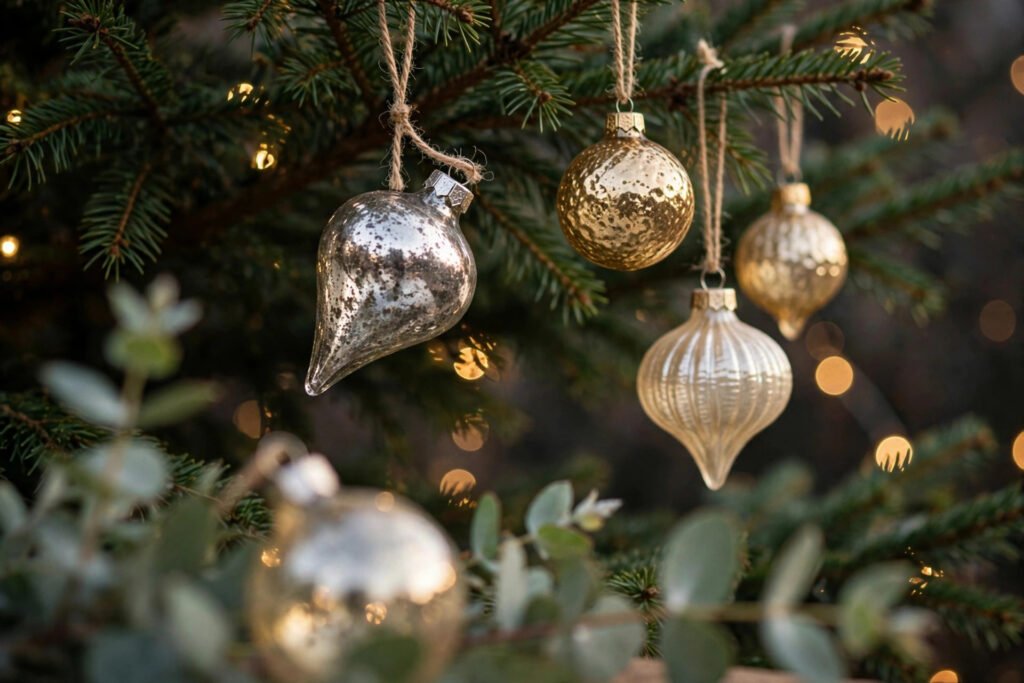
If you love ornaments as objects, this is your year: vintage mercury glass and small-batch artisan glass ornaments are having a moment. Mercury glass — with its mottled silver, gold, and champagne finish — catches light like nothing else, while hand-blown artisan pieces bring one-of-a-kind color and shape.
Build a cluster rather than scattering singles: group 5 to 7 mercury glass pieces of varying sizes in one area of the tree for a collected, intentional look, then repeat the cluster twice more around the tree. Mix in a few artisan glass pieces — hand-blown finials, swirled balls, glass icicles — for color and personality.
These ornaments are investment pieces, so buy a few each year rather than all at once. Hang them toward the front and middle of the tree where light hits them best, and keep them away from the kid zone — most are genuine glass. Against warm cluster lighting, mercury glass practically glows from within.
19. Style a Slim Tree for Tight Spaces
Small rooms still deserve great trees. Slim and pencil trees — typically 2 to 3 feet wide instead of the usual 4 to 5 — fit into corners, beside doorways, and in apartments where a full tree would eat the whole room.
Decorate a slim tree vertically: let the eye travel up with ribbon in a spiral, long icicle ornaments, and a tall topper. Keep ornaments on the smaller side and in a tight palette so the narrow tree doesn’t look cluttered. Because there’s less branch depth, lights show more — one good strand of cluster LEDs is often enough.
Don’t skimp on the base: a slim tree in a handsome collar or a small skirt looks deliberate, not apologetic. A slim tree also makes a wonderful second tree — one in the living room for show, one slim one in a bedroom or office for personal enjoyment. For bedroom-specific inspiration, browse our Christmas bedroom decor ideas.
20. Try Small Christmas Tree Ideas
Small christmas tree ideas deserve their own moment, because tabletop and mini trees follow different rules than full-size ones. A 2- to 4-foot tree on a side table, entry console, or kitchen counter brings Christmas into rooms the big tree never reaches.
Treat a small tree like a vignette, not a shrunken big tree. One theme, one ribbon, and 10 to 15 ornaments are plenty — restraint is what makes small trees look chic instead of crowded. Miniature ornaments (1 to 2 inches) are proportionally right; full-size balls overwhelm a tabletop tree.
Raise the tree on a stack of books, a cake stand, or a wooden crate for presence, and let the “stand” become part of the decor — a small tree in a ceramic pot, a vintage tin, or a woven basket needs no skirt at all. Battery-operated fairy lights with a timer save you from hunting for outlets. Small trees are also perfect for kids’ rooms, where they can decorate entirely on their own.
21. Finish Like a Pro: Base, Gifts, and Glow
The last 10 percent of tree styling makes 50 percent of the impression. Once ornaments are hung, step back and check for bare spots — fill them with a tucked ribbon loop, a pinecone cluster, or a large statement ornament rather than more small balls, which just add visual noise.
Style the base deliberately: arrange wrapped gifts in varying heights, mixing paper textures (kraft, linen-look, and one pattern) with simple twine or velvet ribbon. A few gifts “staged” under the tree before Christmas morning make the whole scene feel complete in photos. Tuck in some fresh greenery sprigs around the gifts to hide the stand’s feet.
Finally, put the lights on a timer — dusk to bedtime is the sweet spot — so your tree greets you glowing every evening without a thought. Stand in the doorway, look at the whole scene, and adjust one last time. Then pour something warm and enjoy it. And when the tree is done, carry the glow to the table with our Christmas table decor ideas for a fully dressed holiday home.
Products to Consider
You don’t need much beyond what you may already own, but a few categories of supplies make every idea above easier. Think in types, not brands: ultra-warm white cluster LED string lights (look for 2700–3000K on the box); wide wired velvet or plaid ribbon in 2.5- to 4-inch widths; a woven basket tree collar or a quilted tree skirt sized to your tree; shatterproof ornament sets in your palette for kid zones; glass ornament storage boxes to protect investment pieces between seasons; a sturdy, tip-resistant tree stand rated for your tree’s height; battery-operated fairy lights with built-in timers for small trees and mantels; and simple ornament hooks or floral wire for anchoring ribbon and heavy pieces.
Frequently Asked Questions
How many ornaments do I need for a 7-foot Christmas tree?
A full 7-foot tree typically looks best with 70 to 100 ornaments, depending on their size and how dense your branches are. Start with fewer than you think — you can always add. Mix sizes (large, medium, small) in roughly equal thirds for the most professional look, and remember that ribbon and lights fill visual space too, so heavily ribboned trees need fewer ornaments.
Should I put the lights or the ornaments on first?
Lights always go first, then garland or ribbon, then ornaments from largest to smallest. This order matters because lights woven deep into branches create depth that surface-draped lights can’t, and large ornaments placed early give you anchor points to design around. Topper goes on last, once you can see the finished silhouette.
How do I make my Christmas tree look fuller?
Fluff every branch — pull tips outward and upward rather than letting them droop — which alone can double a tree’s apparent fullness. Then fill interior gaps with ribbon loops, large ornaments hung deeper in the branches, and picks or sprays (berries, eucalyptus) pushed into bare spots. Cluster LED lights woven inside the branches also create fullness through glow. A tree skirt or collar that’s properly sized hides a sparse bottom.
What is the best color temperature for Christmas tree lights?
Warm white in the 2700–3000K range suits almost every home and theme — it flatters wood tones, makes metallics glow, and feels cozy rather than stark. Cool white (5000K+) can work for icy blue-and-silver themes but tends to feel clinical in living rooms. If you’re mixing old and new strands, check that their color temperatures match, or the tree will look patchy.
How early should I decorate my Christmas tree?
Most US households decorate the weekend after Thanksgiving, and fresh-cut trees put up then stay healthy through Christmas with daily watering. Artificial trees can go up whenever you like — many families now decorate in mid-November to enjoy the season longer. If you decorate early with a real tree, keep it away from heat vents and check the water daily; a dry tree is a fire risk regardless of how pretty it looks.
Final Thoughts
The best Christmas tree isn’t the most expensive one or the most on-trend one — it’s the one that feels like your home. Pick one or two ideas from this list that genuinely excite you, whether that’s the drama of an oversized velvet bow or the quiet warmth of foraged naturals, and build around them. A tree decorated with intention, lit warmly, and finished at the base will outshine any showroom tree every single time. Happy decorating — and may your 2026 tree be your favorite yet.