Designing a comfortable living room in a small house can be challenging when limited floor space has to accommodate seating, storage, lighting, and everyday activities. Choosing furniture that is too large or adding too many decorative pieces can make the room feel crowded and difficult to use. The solution is to focus on smart layouts, space-saving furniture, light colors, practical storage, and simple modern details that make every part of the room work harder. These modern living room design ideas for small houses can help you create a space that feels organized, comfortable, and visually open without sacrificing personal style. From choosing the right sofa and furniture arrangement to using mirrors, layered lighting, vertical storage, and carefully selected decor, small living rooms can be designed to feel both functional and welcoming.
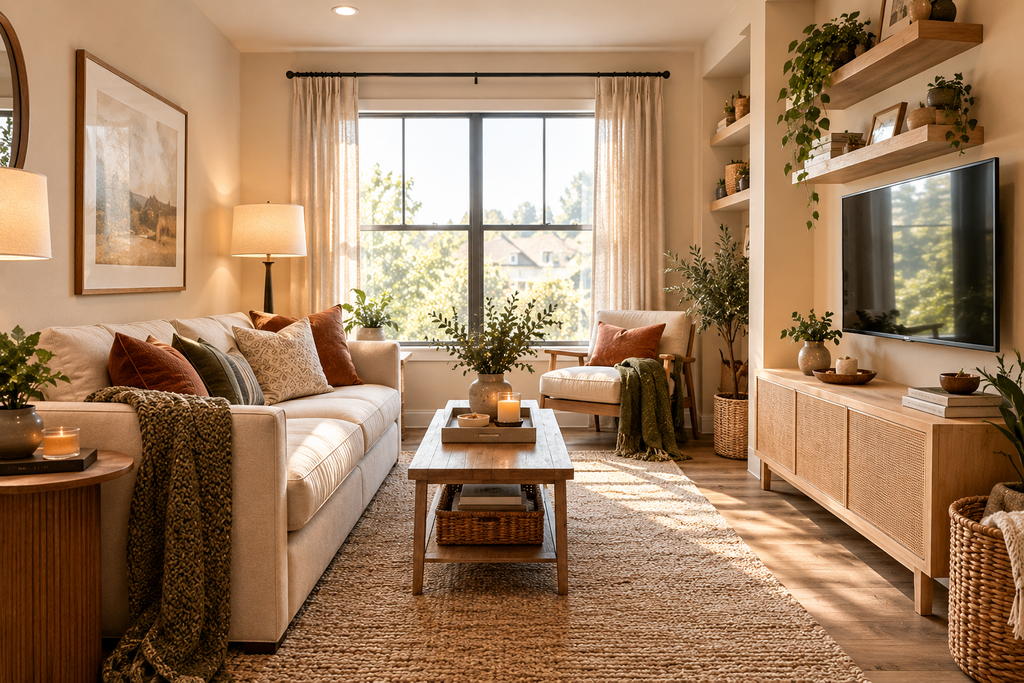
1. What Makes a Modern Living Room Work in a Small House?
A modern living room in a small house needs to balance comfort, function, and visual simplicity. When floor space is limited, every piece of furniture and decor should have a clear purpose. A good small living room design is not about removing everything; it is about choosing the right pieces and arranging them carefully.
Focus on Function Before Decoration
Start by thinking about how the living room will be used every day. Consider where people will sit, where you need storage, and how much open space is needed for walking. This helps you choose furniture based on actual needs instead of filling the room with decorative pieces first.
For example, a compact sofa with a storage ottoman can provide comfortable seating while also offering a place to keep blankets, books, or other everyday items. This approach makes space-saving living room ideas more practical for small homes.
Choose a Simple and Consistent Design Style
A small room can look busy when too many colors, patterns, or furniture styles are mixed together. Choosing one clear style makes the space feel more organized. Modern, minimalist, or warm contemporary designs can work particularly well in compact living rooms.
For example, you could combine a simple neutral sofa with a light wood coffee table, a textured rug, and a few carefully selected accessories. Keeping similar materials and colors throughout the room creates a consistent modern living room interior design.
Keep the Room Open and Uncluttered
Open floor space is especially important in a small living room. Avoid placing furniture where it blocks walking paths, windows, or doorways. Instead, leave enough space between major pieces so the room remains easy to move through.
Use vertical space when possible. Floating shelves, wall-mounted storage, and slim cabinets can provide useful storage without taking up much floor area. Keeping surfaces clear and limiting unnecessary decorations also supports a minimalist living room decor approach.
The goal is to make every part of the room useful while maintaining enough visual and physical space for the room to feel comfortable.
2. Small Living Room Layout Ideas for a Modern Home
The right layout can make a small living room feel more comfortable and easier to use. Before buying furniture or adding decor, consider how people will move through the room and where the main activities will take place. A practical layout should provide comfortable seating while leaving enough open space for movement.
Create a Clear Walking Path
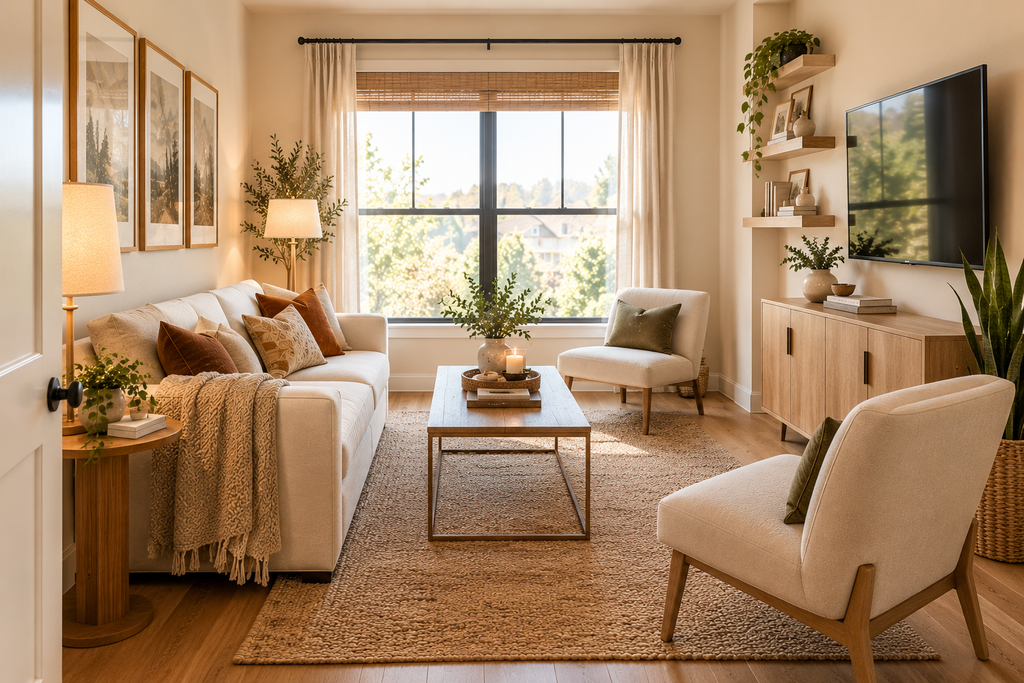
A clear walking path helps a small living room feel less crowded. Avoid placing sofas, coffee tables, or chairs directly in areas people use to enter, leave, or move between rooms.
For example, if the living room connects to a hallway, keep the main route open instead of placing a chair or side table in the middle. Even a small amount of extra floor space can make the room easier to navigate.
Position Furniture to Maximize Floor Space
Furniture should be arranged according to the room’s shape and available floor space. Instead of pushing every piece against a wall, consider which arrangement creates the most useful open area.
A compact sofa placed along the longest wall can leave more central floor space for movement. In a narrow room, a small coffee table or slim side table may work better than a large rectangular piece. These small living room layout ideas help maintain both comfort and functionality.
Use Open and Flexible Furniture Arrangements
Flexible furniture makes it easier to adapt a small living room for different activities. Choose pieces that can be moved or used in more than one way when possible.
For example, two lightweight accent chairs can be moved when you need more floor space, while a storage ottoman can work as a footrest, extra seating, or a small table. This type of arrangement supports practical living room ideas for small spaces without making the room feel fixed or crowded.
Avoid Blocking Windows and Natural Light
Natural light can make a compact room feel brighter and more open, so keep windows as clear as possible. Avoid placing tall cabinets, large sofas, or heavy curtains directly in front of windows.
If storage is needed near a window, choose a low-profile cabinet or bench that does not block much of the glass. Light curtains can also allow daylight to enter while providing privacy. Keeping windows open and unobstructed is a simple way to make a small living room feel brighter and more spacious.
3. Space-Saving Furniture for Small Living Rooms
Choosing the right furniture is one of the most important parts of designing a small living room. Large or bulky pieces can quickly use up valuable floor space, while carefully selected furniture can provide comfort without making the room feel crowded. Focus on pieces that fit the room’s size, serve a useful purpose, and leave enough space for movement.
Choose a Compact Sofa or Loveseat
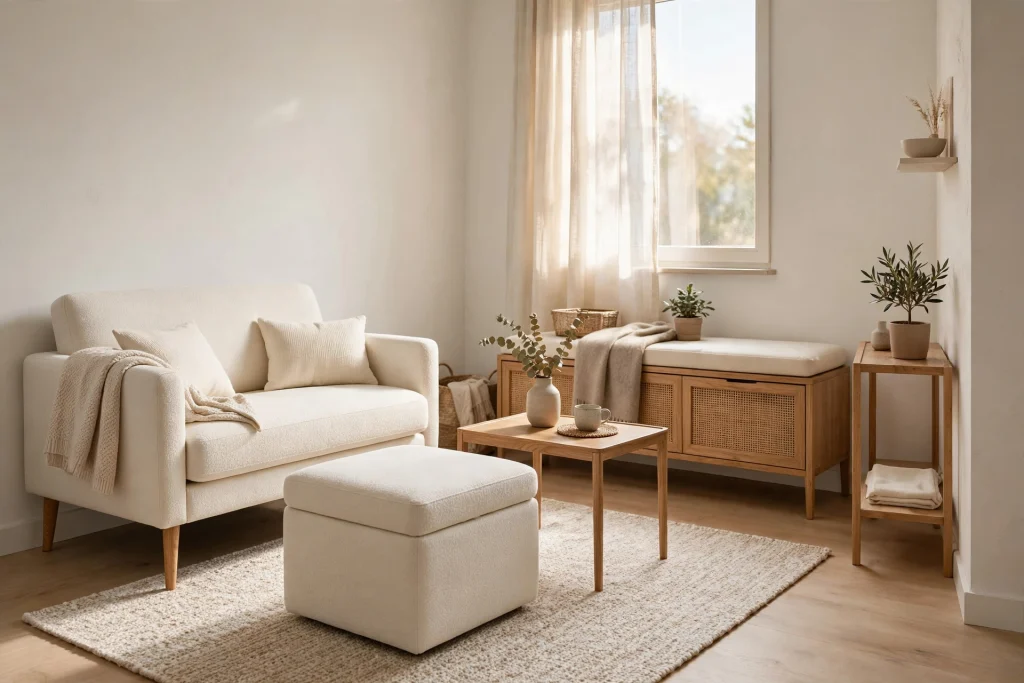
A compact sofa or loveseat can provide comfortable seating without taking over the entire room. Before buying one, measure the available wall and floor space, including the area needed for walking around it.
For example, a two- or three-seat sofa with a simple shape may work better than a deep sectional in a narrow living room. If more seating is needed, consider adding one or two lightweight chairs instead of choosing a very large sofa.
These small living room furniture ideas help maintain a comfortable seating area while preserving valuable floor space.
Use Multifunctional Furniture
Multifunctional furniture is useful when one piece needs to serve several purposes. This is especially helpful in small houses where there may not be enough room for separate furniture for every activity.
A storage ottoman, for example, can work as a footrest, extra seating, or a place to set a tray. A nesting table can provide extra surface space when needed and be tucked away afterward.
Choosing multifunctional living room furniture allows you to get more practical use from fewer pieces.
Select Furniture With Slim Profiles
Furniture with slim frames and narrow legs can make a small living room feel more open. Pieces with visible floor space underneath can create a lighter visual appearance than heavy furniture that reaches all the way to the floor.
For example, choose a sofa with raised legs, a narrow coffee table, or a simple armchair with a compact frame. These details can help create a compact living room design without sacrificing everyday comfort.
Avoid choosing furniture based only on how attractive it looks. Check its actual dimensions and compare them with your available floor space.
Consider Furniture With Built-In Storage
Furniture with built-in storage can reduce the need for additional cabinets and shelves. This helps keep everyday items organized while making better use of limited space.
A storage bench can hold blankets or books, while a coffee table with drawers can keep remote controls, magazines, and small accessories out of sight. A slim media console with enclosed storage can also help organize electronics and other living room items.
These space-saving living room furniture choices are particularly useful when you want the room to remain clean, organized, and easy to maintain.
Products to Consider
- Compact sofa or loveseat
- Storage ottoman
- Multifunctional coffee table
- Slim-profile accent chair
- Storage bench
- Small living room media console
- Nesting side tables
4. Modern Living Room Color Ideas for Small Houses
Color can influence how spacious and comfortable a small living room feels. The right combination can create a bright, organized look without making the room feel plain. For a modern living room, it is usually easier to work with a simple base color and add smaller amounts of warmer or stronger shades.
Use Light and Neutral Base Colors
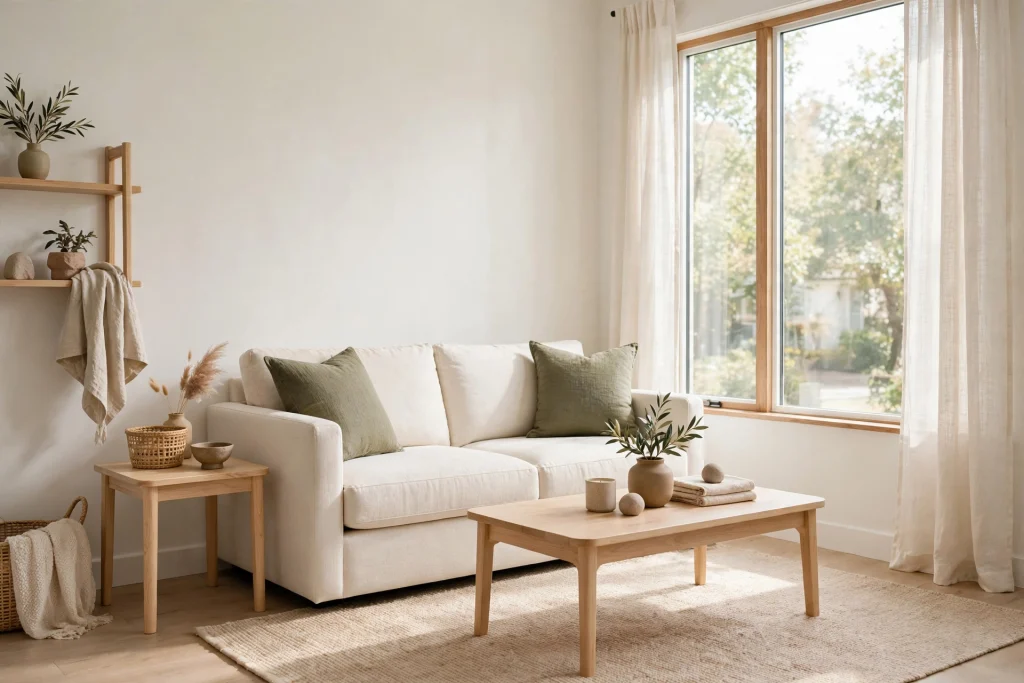
Light colors can help reflect natural and artificial light, making a compact room feel brighter. Soft white, warm beige, light gray, cream, and pale greige are useful choices for walls and larger furniture.
For example, warm white walls combined with a cream sofa and a light wood coffee table can create a clean and open appearance. These small living room color schemes also provide a flexible background for changing accessories later.
Add Warm Earthy Tones for Comfort
A completely neutral room can sometimes feel cold, especially when there are few decorative elements. Warm earthy tones can add depth without making the space look smaller.
Consider shades such as terracotta, muted olive, warm brown, sand, or soft rust. You can introduce these colors through cushions, throws, rugs, artwork, or small decorative objects. This creates warm modern living room ideas while keeping the overall design simple.
Create Contrast With Small Accent Colors
A small living room does not need many strong colors. Instead, choose one or two accent shades and use them in limited amounts.
For example, a neutral room could include black picture frames, dark green cushions, or rust-colored artwork. Using accents in several small areas creates visual interest without overwhelming the room.
The key is to repeat the accent color rather than introducing several unrelated shades. This keeps the design balanced and intentional.
Use One Color Palette Throughout the Room
A consistent color palette can make a small living room feel more connected and organized. Try to coordinate the walls, sofa, rug, curtains, furniture, and accessories instead of treating each area separately.
For example, you could combine warm white walls, beige upholstery, natural wood, olive green accents, and small black details. The colors do not have to match exactly; they simply need to work well together.
Keeping the same palette throughout the space is a simple way to create a modern neutral living room design that feels calm, cohesive, and easy to maintain.
5. How to Make a Small Living Room Look Bigger
A small living room can feel more spacious when you use light, furniture, and visual space carefully. You do not need to remove everything from the room. Instead, focus on design choices that reduce visual heaviness and help the available space feel more open.
Use Mirrors to Reflect Light
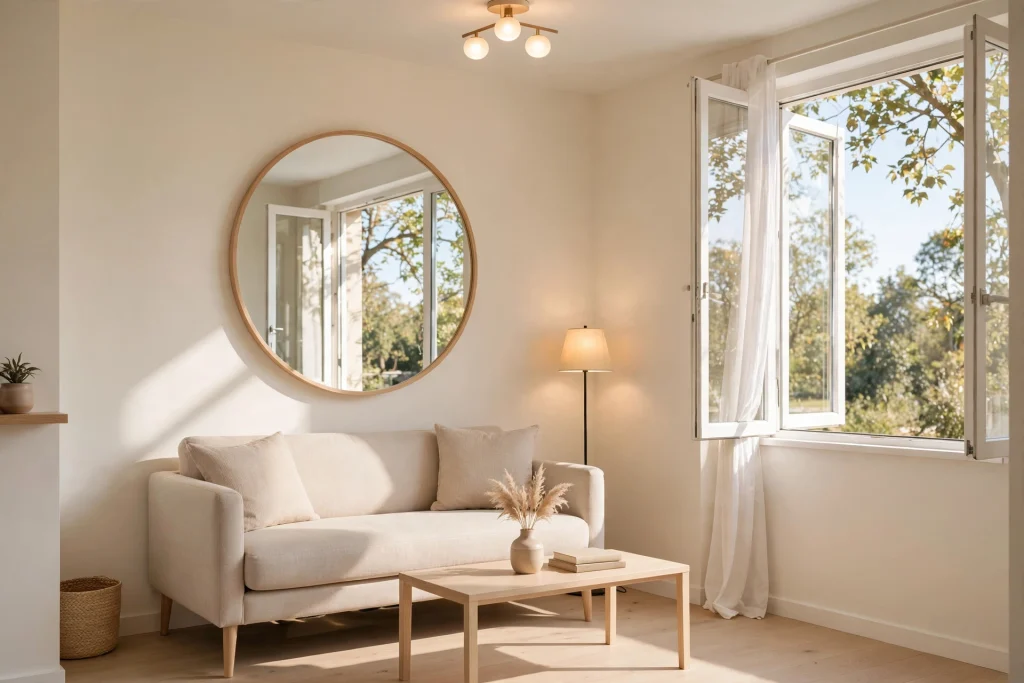
Mirrors can make a small living room appear brighter and visually larger by reflecting natural and artificial light. Place a mirror where it can reflect a window, light-colored wall, or another bright part of the room.
For example, a large simple mirror above a console or opposite a window can create more visual depth. Choose a frame that matches the room’s style so the mirror becomes part of the overall modern living room decor rather than looking like a separate feature.
Choose Furniture With Visible Floor Space
Furniture that allows you to see some of the floor underneath can make the room feel lighter. Sofas, chairs, and tables with raised legs often create more visual space than heavy pieces that sit directly on the floor.
For example, a sofa with slim legs and a coffee table with an open base can make the floor appear more continuous. This is a useful approach for small living room design ideas where every part of the floor matters.
Keep Window Areas Light and Open
Windows provide natural light, which can make a small living room feel more open. Avoid covering them with heavy curtains, tall furniture, or large decorative objects.
Use lightweight curtains in soft neutral shades when privacy is needed. Keep the area around the window relatively simple so daylight can spread throughout the room. Even a small window can contribute to a brighter and more comfortable space when it is not visually blocked.
Use Similar Colors on Walls and Large Furniture
Using related colors for walls and large furniture can reduce strong visual breaks and create a more connected appearance. This can help larger pieces blend into the room instead of standing out as separate blocks.
For example, light beige walls with a cream or soft-gray sofa can create a calm, continuous look. You can then add contrast through cushions, artwork, rugs, or small decorative pieces.
This approach is especially useful when choosing light colors for small living rooms, as it keeps the overall design bright without making the space feel empty or overly plain.
Products to Consider
- Large wall mirror
- Neutral sheer curtains
- Slim-leg sofa
- Open-base coffee table
- Light-colored area rug
6. Modern Living Room Lighting Ideas for Small Spaces
Good lighting can make a small living room feel brighter, more comfortable, and easier to use. Instead of relying on one strong light source, combine natural light with a few carefully positioned fixtures. This creates different levels of light without taking up much space.
Maximize Natural Light
Natural light is one of the simplest ways to make a small living room feel more open. Keep windows clear of bulky furniture and use lightweight curtains that allow daylight to enter.
For example, sheer or linen-style curtains in a soft neutral color can provide privacy while still allowing plenty of light into the room. Placing a mirror near a window can also help reflect daylight around the space.
Layer Ceiling, Floor, and Table Lighting
Using several light sources allows you to adjust the atmosphere for different activities. A ceiling fixture can provide general lighting, while a floor lamp or table lamp can add focused light in specific areas.
For example, you might use a simple ceiling light for everyday use, a slim floor lamp beside the sofa for reading, and a small table lamp on a console for softer evening light. This type of layered lighting for living rooms can make the space feel more balanced.
Choose Slim and Space-Saving Light Fixtures
In a small room, lighting should provide enough illumination without creating another obstacle. Choose fixtures with compact designs and avoid oversized lamps that take up valuable floor or table space.
A slim floor lamp can fit beside a sofa, while a wall-mounted reading light can provide useful illumination without using a side table. Flush-mount ceiling lights are also practical when the room has a low ceiling.
These lighting ideas for small living rooms help maintain an open floor plan while still providing useful light.
Use Warm Lighting for a Cozy Atmosphere
The color of the light can affect how comfortable the room feels. Warm light generally creates a softer and more relaxing atmosphere, which works well in living areas during the evening.
Use warm-toned bulbs in table lamps, floor lamps, or accent fixtures to complement neutral walls, wood furniture, and soft textiles. For example, warm lighting paired with a beige sofa and textured cushions can create a cozy modern living room without adding extra decor.
The goal is to use lighting as both a practical feature and a subtle part of the room’s overall design.
Products to Consider
- Slim floor lamp
- Modern table lamp
- Flush-mount ceiling light
- Warm-white LED bulbs
- Wall-mounted reading light
- Dimmable living room lamp
7. Modern Living Room Storage Ideas for Small Houses
Storage becomes especially important when a living room has limited floor space. Without a clear place for books, blankets, electronics, and everyday items, even a well-designed room can quickly feel cluttered. The key is to use storage that fits the room while keeping the floor as open as possible.
Use Floating Shelves
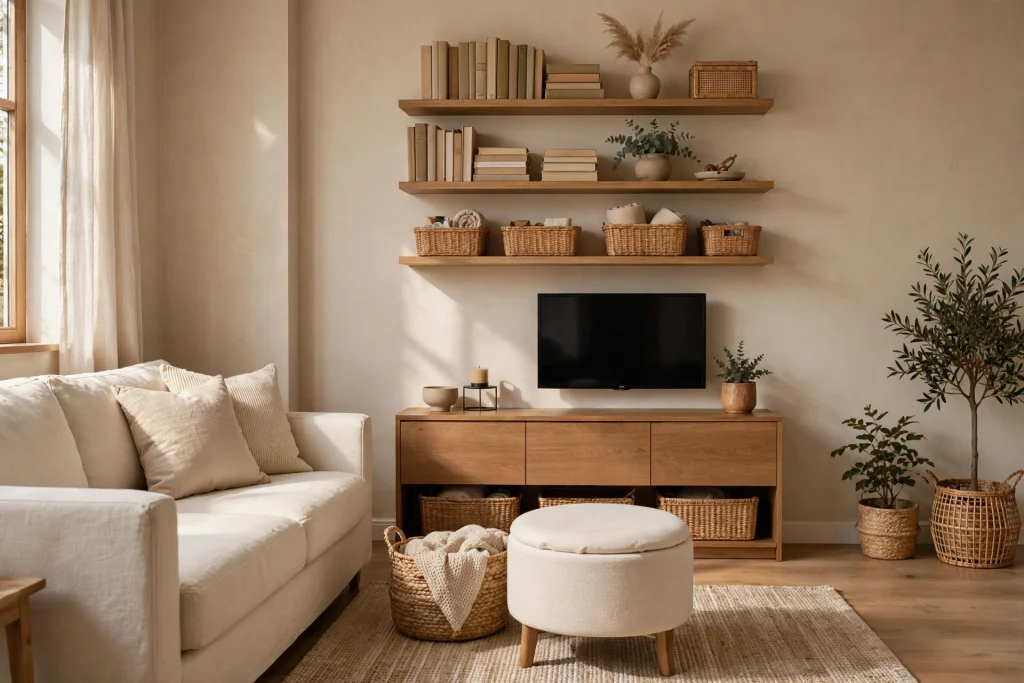
Floating shelves provide useful storage without taking up floor space. They can hold books, small plants, framed artwork, or a few decorative pieces while keeping the room visually light.
For example, two or three shelves above a sofa or beside a television can provide extra storage without requiring a large bookcase. Avoid filling every shelf completely; leaving some open space helps maintain a clean modern living room decor style.
Choose Storage Ottomans and Benches
Furniture with hidden storage can serve more than one purpose. A storage ottoman can work as a footrest, extra seating, or a place to store blankets and cushions.
A small storage bench can also be placed beneath a window or along an unused wall. These options are particularly useful small living room storage ideas because they combine everyday function with comfortable seating.
Make Use of Vertical Wall Space
When floor space is limited, look upward. Vertical storage allows you to use walls without adding bulky furniture to the center of the room.
Tall, narrow shelving units can provide more storage while taking up less floor area than wide cabinets. Wall-mounted cabinets can also be useful for storing items that you do not need to access every day.
Using vertical space is a practical part of modern storage solutions for small spaces and can help keep the floor open.
Keep Everyday Items Organized and Hidden
Good storage is not only about having more places to put things; it is also about keeping frequently used items organized. Use baskets, drawers, cabinets, and storage boxes to group similar items together.
For example, keep remote controls in one small container, blankets in a storage basket, and children’s items in a designated cabinet or box. Choose closed storage for items that tend to create visual clutter.
When everyday belongings have a specific place, the living room is easier to maintain and the overall design stays clean, simple, and functional.
Products to Consider
- Floating wall shelves
- Storage ottoman
- Storage bench
- Woven storage baskets
- Slim vertical shelving unit
- Wall-mounted storage cabinet
- Decorative storage boxes
8. Modern Wall Decor Ideas for Small Living Rooms
Wall decor can add personality to a small living room without using valuable floor space. However, covering every wall with artwork, shelves, and accessories can make the room feel busy. A better approach is to choose a few intentional elements that complement the room’s colors and furniture.
Create One Simple Focal Wall
A focal wall gives the room one main area of visual interest. Instead of decorating every wall, choose one wall, such as the wall behind the sofa or television, and keep the rest relatively simple.
For example, you could use a soft accent color, a simple textured finish, or one large piece of artwork behind the sofa. This creates a clear feature without overwhelming the room.
Use Large Artwork Instead of Many Small Pieces
One larger artwork can often look cleaner than a collection of small frames. Too many small pieces can create visual noise, particularly in a compact room.
For example, place one large abstract print above a sofa or a simple landscape artwork on an empty wall. Choose colors that connect with the sofa, rug, or cushions to create a cohesive modern living room interior design.
Add Texture With Wood or Wall Panels
Wall texture can add depth without requiring additional furniture. Wood slats, simple wall panels, or a subtle textured finish can create interest while maintaining a modern appearance.
For a small living room, use textured materials on one section rather than covering every wall. A light wood panel behind a television, for example, can add warmth while working well with neutral furniture and natural materials.
Keep Decorative Walls Visually Balanced
Balance is important when adding modern living room wall decor. A decorated wall should work with the furniture below it rather than competing with it.
Leave some empty wall space and avoid placing large decorations where they interfere with windows, doors, or walking paths. If the sofa is already visually strong, simple artwork may be enough.
The goal is to make the walls feel finished while preserving the clean and open appearance that works well in a small living room.
Products to Consider
- Large framed wall art
- Decorative wall mirror
- Floating shelves
- Minimalist picture frames
- Wooden wall panels
- Simple modern wall clock
9. Modern Small Living Room Ideas With Natural Elements
Natural elements can make a small living room feel warmer and more comfortable without adding unnecessary decoration. Materials such as wood, plants, cotton, linen, and woven fibers can soften the clean lines of modern furniture while keeping the overall design simple.
Add Indoor Plants Without Using Much Floor Space
Indoor plants can bring color and natural texture into a small living room. However, large floor plants may take up valuable space, so consider smaller options that can be placed on shelves, side tables, or window ledges.
For example, a small trailing plant on a floating shelf can add greenery without using floor space. A narrow plant stand in an unused corner can also provide height without making the room feel crowded.
Use Wood for Warmth and Texture
Wood is useful in modern living room design ideas because it adds warmth to otherwise simple spaces. You can introduce it through a coffee table, side table, shelving, picture frames, or a small media console.
Light or medium wood tones often work well with neutral colors such as cream, beige, white, and soft gray. Using the same or similar wood tones in a few areas can help the room feel coordinated.
Layer Natural Fabrics and Materials
Natural fabrics can add softness and texture without requiring additional furniture. Cotton, linen, jute, wool, and woven materials can be introduced through rugs, cushions, curtains, and throws.
For example, a simple cotton sofa can be paired with a woven rug, linen curtains, and a textured throw. These layers create a comfortable look while keeping the room visually simple.
Combine Modern Design With Organic Accents
Modern furniture does not have to make a living room feel cold or overly minimal. Organic accents can soften clean shapes and create a more welcoming atmosphere.
Try combining a simple modern sofa with a wooden coffee table, woven basket, small plant, and natural-fiber rug. This combination creates a warm modern living room while maintaining a clean and functional layout.
The key is to use natural materials selectively. A few well-placed organic elements can provide warmth and character without creating clutter in a small space.
Products to Consider
- Small indoor plants
- Minimalist plant stand
- Natural wood coffee table
- Woven storage basket
- Jute or natural-fiber area rug
- Linen-look curtains
- Cotton or textured throw
10. Minimalist Modern Living Room Ideas for Small Houses
A minimalist approach can work particularly well in a small living room because it focuses on useful furniture, simple decoration, and open space. The goal is not to make the room feel empty, but to remove items that do not serve a clear purpose. This creates a more organized and comfortable environment.
Choose Fewer but More Useful Decor Pieces
Instead of filling the room with many accessories, choose a small number of pieces that add function or visual interest. A few carefully selected items can have more impact than a crowded collection.
For example, one large artwork, a textured rug, a small plant, and a few cushions may be enough to complete the room. This approach supports minimalist living room decor while keeping the space practical.
Keep Surfaces Clear
Clear surfaces can make a small living room feel more organized. Avoid filling the coffee table, shelves, media console, and side tables with unnecessary objects.
Keep frequently used items within easy reach but store smaller belongings in drawers, baskets, or cabinets. For example, a simple tray on the coffee table can hold a few everyday items without making the entire surface look cluttered.
Use Simple Shapes and Clean Lines
Modern furniture with simple shapes can help maintain a clean visual appearance. Straight lines, soft curves, and uncomplicated designs usually work well in compact spaces.
A simple sofa, round coffee table, slim media console, and basic floor lamp can create a modern look without adding visual complexity. Choose furniture that fits the room rather than selecting oversized pieces simply because they look impressive on their own.
Avoid Mixing Too Many Design Styles
Combining too many different styles can make a small living room feel disconnected. Choose one main design direction and use complementary materials, colors, and furniture throughout the room.
For example, a modern room could combine neutral upholstery, light wood, black accents, and simple artwork. You can still add personality through textures and small decorative details without introducing several unrelated styles.
Keeping the design consistent makes simple modern living room design easier to manage and helps the room feel calm, balanced, and uncluttered.
11. Cozy Modern Living Room Ideas for Small Spaces
A small living room can feel both modern and cozy when comfort is added without creating visual clutter. The key is to use soft textures, warm colors, comfortable furniture, and carefully chosen accessories. These elements can make the room inviting while keeping the clean appearance of modern design.
Layer Rugs, Cushions, and Throws
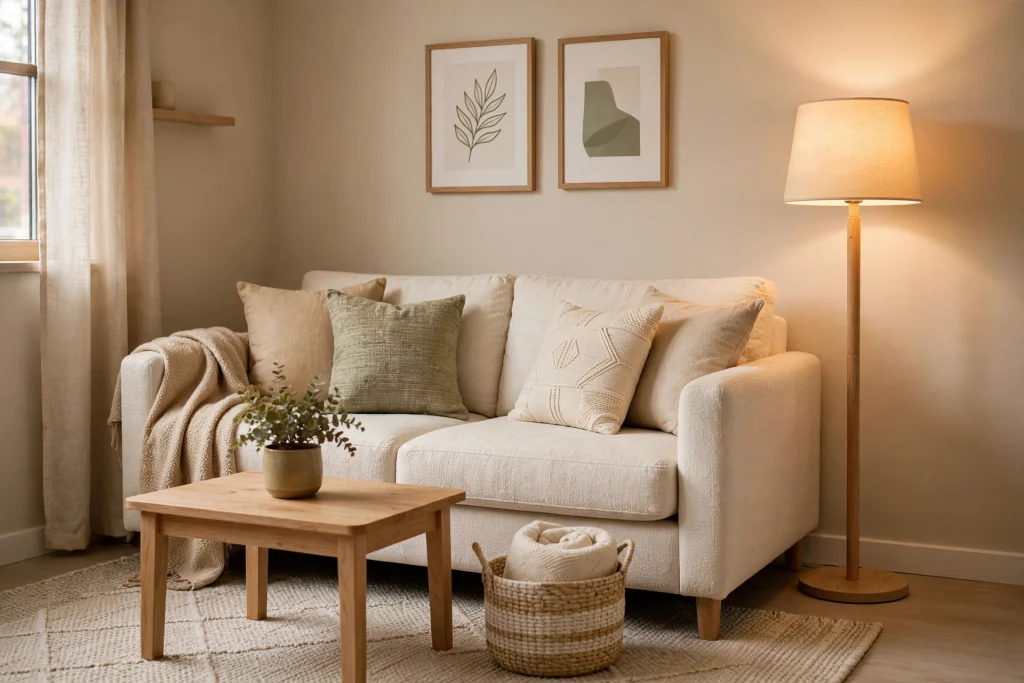
Soft textiles can add warmth and texture without taking up much space. Start with a simple area rug, then add a few cushions and a throw that coordinate with the room’s color palette.
For example, a neutral rug with cream cushions and a rust or olive throw can create a comfortable look without introducing too many colors. Choose patterns carefully so the room remains visually calm.
Create a Comfortable Seating Area
Comfortable seating should be the main focus of the living room. Choose a sofa or loveseat that fits the available space while leaving enough room to move around it.
A compact sofa paired with one lightweight accent chair can provide flexible seating without overcrowding the room. Position the furniture so people can easily talk, watch television, or relax without blocking the main walking path.
Use Warm Neutral Colors
Warm neutral shades can make a small living room feel comfortable while maintaining a modern appearance. Colors such as cream, beige, warm white, soft taupe, and light brown work well as a base.
You can introduce slightly deeper shades through cushions, artwork, rugs, or wood furniture. This creates warm modern living room ideas that feel cozy without relying on strong colors across the entire room.
Add Soft Lighting and Small Decorative Accents
Lighting can have a strong effect on the atmosphere of a small living room. Use warm-toned lamps alongside the main ceiling light to create softer areas of illumination in the evening.
Keep decorative accents limited to a few useful or meaningful pieces. A small plant, framed artwork, woven basket, or simple ceramic object can add character without taking up much space.
The goal is to create a room that feels comfortable and personal while maintaining the clean, organized look of modern living room decor.
Products to Consider
- Neutral area rug
- Textured throw blanket
- Decorative cushion covers
- Warm table lamp
- Small indoor plant
- Woven decorative basket
- Soft accent pillow
12. Modern Living Room Design Ideas on a Budget
Creating a modern living room does not always require replacing all the furniture. Small, practical changes can update the room while keeping costs under control. Focus on areas that have the biggest visual impact, such as textiles, furniture arrangement, lighting, wall decor, and storage.
Refresh the Room With Textiles
Textiles are an easy way to change the look of a living room without buying large furniture pieces. Replace old cushion covers, throws, curtains, or rugs with options that match your preferred color palette.
For example, cream cushions, a textured neutral throw, and a simple patterned rug can give an older sofa a fresher appearance. These affordable modern living room ideas can create noticeable changes without a major renovation.
Rearrange Existing Furniture
Before buying anything new, try changing the furniture arrangement. Moving the sofa, chairs, coffee table, or floor lamp can improve the room’s flow and make better use of available space.
For example, placing the sofa against the longest wall may create more open floor space, while moving a chair closer to a window can create a comfortable reading corner. Rearranging furniture is a simple way to test different small living room layout ideas at no cost.
Update Lighting and Wall Decor
Changing one or two lighting fixtures can give the room a more modern appearance. Consider replacing an outdated lamp with a simple floor lamp, table lamp, or compact ceiling fixture.
Wall decor can also be refreshed without major expense. A new framed print, a simple mirror, or a small arrangement of artwork can create a focal point. Choose pieces that coordinate with the existing furniture and colors rather than trying to decorate every wall.
Add Affordable Storage Solutions
Good storage can make a small living room look cleaner and more organized. You do not always need expensive built-in cabinets to improve storage.
Use woven baskets for blankets, simple boxes for small items, or floating shelves for books and decorative pieces. A storage ottoman can also provide seating and hidden storage in one piece.
These budget-friendly small living room decor ideas focus on practical improvements that make the room easier to use while keeping the overall design simple and modern.
13. Common Small Living Room Design Mistakes to Avoid
Small living rooms require careful planning because limited space can make design problems more noticeable. A piece of furniture that feels slightly too large or a few extra decorations can quickly make the room feel crowded. Understanding common mistakes can help you create a more functional and comfortable space.
Using Furniture That Is Too Large
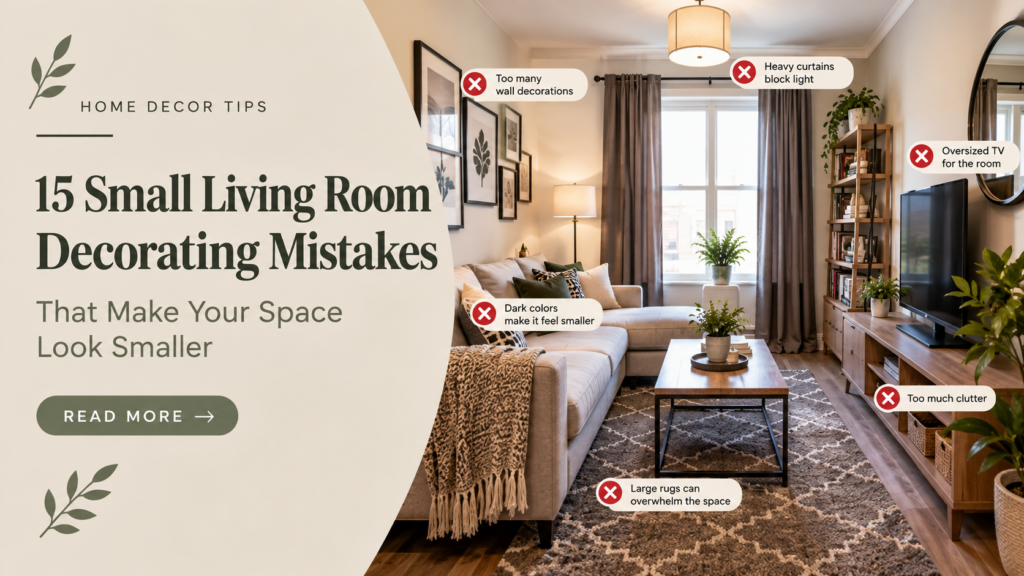
Oversized furniture can take up most of the available floor space and make movement difficult. A large sectional, deep sofa, or bulky coffee table may not leave enough room for comfortable walking.
Before buying furniture, measure the room and compare those measurements with the furniture dimensions. A compact sofa or loveseat may provide enough seating while leaving more open space for movement.
Adding Too Many Decorative Items
Too many accessories can make a small living room look cluttered. Filling every shelf, table, and wall with decorations can also make it harder to maintain a clean modern appearance.
Instead, choose a few useful or visually meaningful pieces. For example, one large artwork can often work better than several small frames, while a small plant can add natural color without taking up much space.
Choosing Too Many Dark Colors
Dark colors are not automatically unsuitable for small rooms, but using them across large surfaces can make the space feel visually heavier. Dark walls, furniture, curtains, and rugs together may reduce the sense of openness.
If you like darker shades, use them as accents. For example, a light neutral room can include a dark coffee table, black lighting fixtures, or deep green cushions. This creates contrast while keeping the overall small living room color scheme balanced.
Ignoring Storage Needs
A room can look organized when it is first decorated but quickly become cluttered if there is not enough storage for everyday belongings. Books, blankets, electronics, and small household items all need a designated place.
Include practical storage from the beginning. Floating shelves, storage ottomans, baskets, and slim cabinets can provide useful solutions without taking up too much floor space.
Blocking Natural Light
Large furniture or heavy window coverings can prevent natural light from reaching the rest of the room. This can make a compact living room feel darker and more enclosed.
Keep windows as open as possible and choose lightweight curtains when privacy is needed. Position larger furniture away from windows where practical. Maximizing daylight is one of the simplest small living room design ideas for creating a brighter and more open atmosphere.
14. How to Create a Functional Modern Living Room in a Small House
A functional small living room should support everyday activities while still looking comfortable and modern. Instead of focusing only on appearance, consider how the room will be used, how people will move through it, and where everyday belongings will be stored. A practical design makes the available space easier to use without unnecessary furniture or decoration.
Balance Comfort, Style, and Function
Comfort should remain a priority even when space is limited. Choose furniture that provides enough seating without taking up most of the room, and select decor that adds character without creating clutter.
For example, a compact sofa, comfortable accent chair, simple coffee table, and textured rug can create a balanced seating area. This combination supports functional living room ideas for small homes while maintaining a modern appearance.
Create Zones for Different Activities
A small living room can serve several purposes when different areas are planned carefully. You might need space for relaxing, reading, working, watching television, or entertaining guests.
For example, place the main sofa and coffee table together to create a conversation area, then add a slim desk near a wall or window for occasional work. Using furniture placement to define these areas can make the room feel organized without adding walls or partitions.
Choose Flexible Pieces for Everyday Use
Furniture that can serve multiple purposes is useful in a small house. Look for pieces that can be moved, folded, stored, or used in different ways depending on your needs.
A storage ottoman can provide seating and hold blankets, while a nesting table can offer extra surface space when guests arrive. Lightweight accent chairs can also be moved easily when you need more open floor space.
These choices support space-saving living room ideas and make the room easier to adapt throughout the day.
Keep the Design Easy to Maintain
A practical living room should not require constant rearranging or cleaning. Choose materials that are suitable for everyday use and keep frequently used items in easy-to-access storage.
For example, washable cushion covers, durable rugs, storage baskets, and closed cabinets can help keep the room organized. Limit unnecessary decorative pieces so dusting and cleaning remain simple.
When furniture, storage, and decor are easy to manage, a modern living room design for small houses can remain comfortable, organized, and functional over time.
15. Final Tips for Designing a Modern Living Room in a Small House
Designing a modern living room in a small house is mainly about making thoughtful use of the space you already have. Start with the layout, then choose furniture and decor based on the room’s actual size and everyday needs.
Measure large furniture before buying it, and leave enough space for comfortable movement. A compact sofa, slim coffee table, and furniture with visible floor space can help maintain an open layout.
Keep the color palette simple by using light or warm neutral shades as the base. Add contrast through cushions, artwork, plants, or other small accents rather than using too many strong colors.
Storage should also be planned from the beginning. Floating shelves, storage ottomans, baskets, and slim cabinets can help keep everyday items organized without taking up excessive floor space.
Finally, keep decoration intentional. A few well-chosen pieces, layered lighting, natural materials, and some greenery can add warmth while supporting a clean modern living room design.
The best small living room design ideas are those that balance comfort, function, and personal style while making the most of every available part of the room.
Conclusion
Designing a modern living room in a small house is about using limited space thoughtfully rather than filling it with more furniture or decoration. Start with a practical layout, choose compact and multifunctional furniture, and keep walking paths open. Light and neutral colors, natural light, layered lighting, and simple wall decor can help create a brighter and more balanced atmosphere. Smart storage, natural materials, and carefully selected accessories add comfort without creating clutter. Whether your style is minimalist, cozy, or contemporary, the most effective modern living room design ideas are those that balance comfort, function, and visual simplicity while making everyday life easier.
Frequently Asked Questions
1. What is the best layout for a small modern living room?
A layout with a clear walking path and furniture arranged around a main seating area usually works well. Place larger pieces against suitable walls and avoid blocking doors, windows, or natural light.
2. What colors make a small living room look bigger?
Light and neutral colors such as warm white, cream, beige, and soft gray can make a small living room feel brighter and more open. Add darker shades through small accents for contrast.
3. What furniture works best in a small living room?
Compact sofas, loveseats, slim-profile furniture, storage ottomans, and multifunctional pieces work well. Choose furniture that fits the room without blocking movement or using unnecessary floor space.
4. How can I make a small living room look modern and cozy?
Use a simple color palette, clean-lined furniture, layered lighting, soft textiles, natural materials, and a few carefully selected decorative pieces. Keep surfaces organized to maintain a modern appearance.
5. How can I decorate a small living room on a budget?
Refresh textiles, rearrange existing furniture, update lighting or wall decor, and add affordable storage such as baskets and floating shelves. Small changes can improve the room without replacing everything.