A Modern Japandi Living Room brings together the simplicity of Japanese design and the warmth of Scandinavian interiors. Think natural wood, soft neutral colours, comfortable furniture, warm lighting and plenty of breathing space. The result is a room that feels calm and stylish without looking cold or overly minimal.
If you love a home that feels peaceful but still practical for everyday life, Japandi is a beautiful style to explore.
What Is Japandi Interior Design?
Japandi interior design combines Japanese minimalism with Scandinavian simplicity.
Japanese interiors tend to focus on balance, natural materials and intentional spaces, while Scandinavian design brings comfort, functionality and warmth. Together, these influences create a relaxed style that feels both refined and welcoming.
The best part? You don’t need lots of expensive decor to achieve the look. A few thoughtful pieces can completely change the atmosphere of a room.
1. Start With a Warm Japandi Colour Palette
Colour is one of the easiest ways to establish a Modern Japandi Living Room.
Instead of stark white or very bright shades, try warm neutrals such as:
- Warm white
- Cream
- Beige
- Oatmeal
- Taupe
- Greige
- Soft stone
- Warm brown
A Japandi colour palette can also include muted sage, earthy terracotta or soft charcoal as small accents.
The goal isn’t to make everything beige. Mixing several quiet shades creates depth while keeping the room visually calm.
2. Bring in Natural Wood
Natural wood is one of the defining elements of Japandi interior design.
Choose furniture with visible grain and understated finishes. Light and medium wood tones can work particularly well with cream, beige and taupe.
Try a simple wooden coffee table, sideboard, TV unit or shelving.
You don’t need matching furniture throughout the room. Mixing a few natural wood pieces can actually make the space feel more relaxed and collected.
3. Choose a Comfortable, Simple Sofa
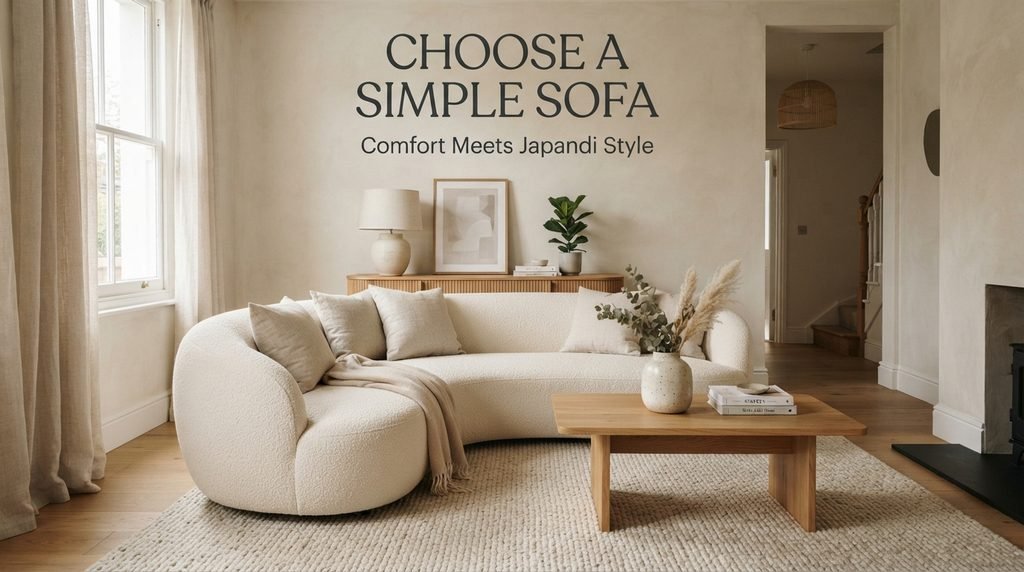
Your sofa is likely to be one of the largest pieces in the room, so keep its shape simple.
Look for soft, low-profile designs with clean lines or gentle curves. Cream, oatmeal, beige and warm grey upholstery can easily work with a Japandi living room decor scheme.
Texture matters too. Linen-look fabric, cotton, boucle and other tactile materials can make a simple sofa feel much more inviting.
And don’t sacrifice comfort for aesthetics. A living room should look beautiful but still be somewhere you genuinely want to relax.
4. Keep Clutter Under Control
Japandi is minimalist, but it doesn’t mean your home needs to feel empty.
Instead, think about what you actually use and enjoy.
Clear unnecessary items from coffee tables, shelves and sideboards, then keep a few pieces that add character.
A ceramic vase, a stack of books, a sculptural lamp or a favourite piece of artwork can be enough.
This intentional approach is one of the reasons Japandi interior design feels so peaceful.
5. Layer Natural Textures
This is where a Japandi room gets its warmth.
Combine different textures through:
- Linen curtains
- Soft cotton cushions
- Wool or textured rugs
- Woven baskets
- Boucle upholstery
- Handmade ceramics
- Natural wood
These layers add interest without introducing lots of colour.
For a Modern Japandi Living Room, think about how each texture feels as well as how it looks.
6. Add a Touch of Nature
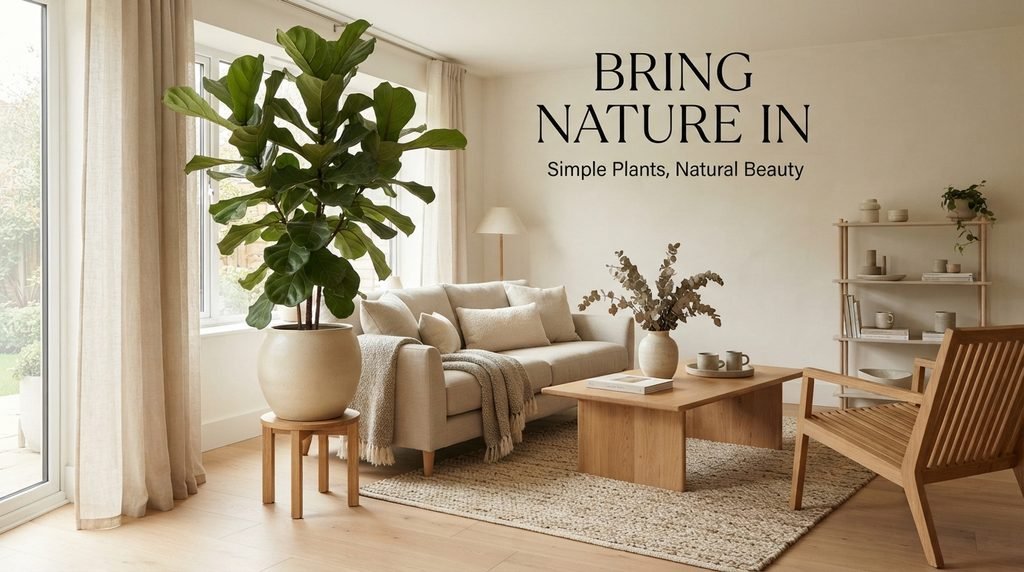
Plants can soften a minimalist space and bring a natural feeling indoors.
You don’t need lots of greenery. One large plant in a simple pot or a small collection of carefully placed plants can be enough.
You can also introduce nature through dried branches, fresh flowers, stone, wood and handmade ceramics.
The idea is to create a connection with the outdoors without turning the room into a jungle.
7. Use Warm, Layered Lighting
Lighting can completely change the mood of a room.
Rather than depending on one strong ceiling light, combine several softer sources.
Consider:
- A simple pendant
- A warm table lamp
- A sculptural floor lamp
- Soft wall lighting
- Candles for evening ambience
Choose uncomplicated shapes and warm-toned light. It will help the room feel cosy once the natural daylight fades.
8. Add Small Touches of Contrast
A neutral room can sometimes look a little flat.
Small touches of charcoal or black can give it definition without taking away from the calm atmosphere.
Try a black lamp, picture frame, vase, furniture detail or curtain hardware.
The key is restraint. You only need a few darker accents to create contrast.
9. Keep Wall Decor Simple
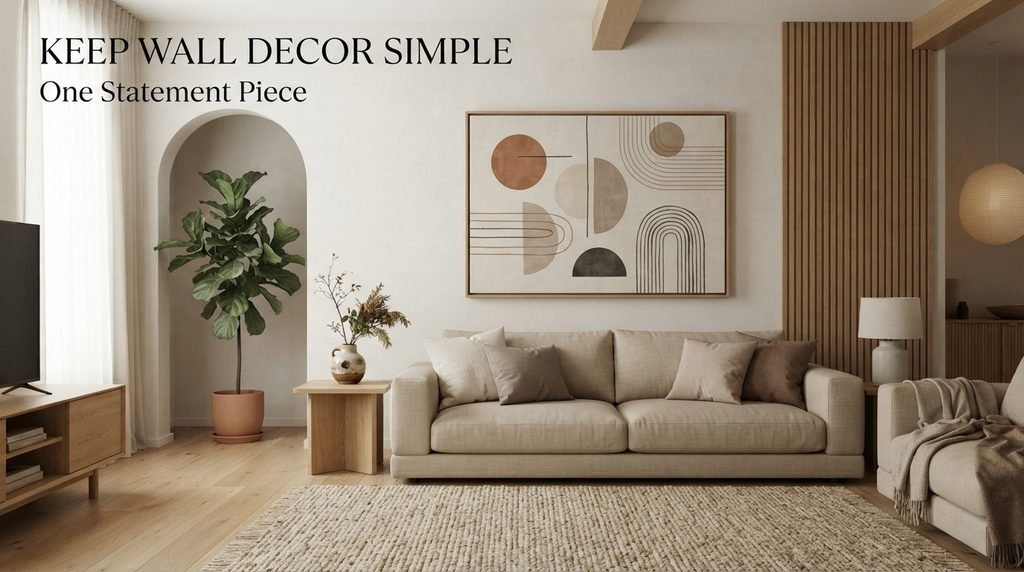
You don’t need to cover every wall.
One larger artwork can often make more impact than a collection of small prints.
Abstract artwork, botanical designs, textured pieces and understated Japanese-inspired artwork can all work beautifully.
Wooden wall details or subtle slatted panelling can also introduce architectural interest while keeping the overall look simple.
10. Create a Cosy Reading Corner
A small seating corner can make your Modern Japandi Stylish Living Room feel more personal.
Place a comfortable chair beside a simple floor lamp and add a small wooden side table.
A soft throw and a favourite book can complete the space.
It could become your morning coffee spot, reading corner or somewhere to relax away from the television.
11. Don’t Forget the Floor
The floor can make a surprising difference to the overall look.
Natural wood flooring is a natural match for Japandi interiors. If you have a hard floor, a simple textured rug can make the room feel warmer and more comfortable.
Stick with muted colours and subtle patterns rather than anything overly busy.
A rug can also help define a seating area, particularly in an open-plan living space.
12. Choose Decor With Purpose
Before adding another decorative object, ask yourself:
Does this actually add something to the room?
If it doesn’t, you probably don’t need it.
That doesn’t mean everything has to be practical. Handmade ceramics, artwork, books and sentimental pieces can all belong in a Japandi home.
The difference is that every piece feels intentional rather than random.
13. Make a Small Living Room Feel More Spacious
One reason Japandi living room ideas work so well for smaller spaces is their emphasis on simplicity.
Choose furniture that doesn’t feel bulky and leave some breathing room around larger pieces.
Warm, light colours can help the room feel more open, while a strategically placed mirror can reflect natural light.
Instead of trying to fit everything into the room, choose fewer pieces that work harder for the space.
14. Mix Modern and Handmade Pieces
Your room doesn’t have to look perfectly coordinated.
In fact, combining contemporary furniture with handmade-looking accessories can make the space feel much more authentic.
Try pairing a modern sofa with a natural wooden table, handcrafted ceramic vase and textured rug.
Small imperfections and natural variations can add character to the room.
15. Find the Right Balance
The secret to a successful Japandi room is balance.
Too much minimalism can make a space feel cold.
Too many decorative pieces can take away from its calm atmosphere.
And using only one shade of beige can make the room feel flat.
Instead, combine simple furniture, warm textures, natural materials, subtle contrast and enough open space to breathe.
That’s what gives a Modern Japandi Living Room its relaxed and welcoming character.
Final Thoughts
Creating a Modern Japandi Living Room doesn’t mean you need to completely redesign your home.
Start with the basics: introduce warmer neutrals, bring in natural wood, reduce visual clutter and layer a few comfortable textures. Then add furniture and decor gradually rather than buying everything at once.
Most importantly, don’t try to create a room that only looks good in photos.
The best Japandi spaces feel beautiful because they are comfortable, functional and easy to live in.
That balance between simplicity and warmth is what makes Japandi such a timeless choice for a modern home.
Frequently Asked Questions
What is a Japandi living room?
A Japandi living room combines Japanese-inspired minimalism with Scandinavian warmth. It usually features natural materials, simple furniture, neutral colours, soft textures and an uncluttered layout.
What colours are used in Japandi interiors?
Common colours include warm white, cream, beige, oatmeal, taupe, greige, natural wood and soft charcoal. Muted green and earthy tones can also be used as subtle accents.
How do I make my living room look Japandi?
Start with a warm neutral colour scheme and natural wood furniture. Add soft textiles, simple lighting, plants and a few carefully selected accessories. Keep unnecessary clutter to a minimum.
Is Japandi the same as minimalist design?
Not quite. Japandi uses minimalist principles but combines them with warmth, comfort and natural textures. This makes it feel softer and more welcoming than strict minimalism.
Can Japandi work in a small living room?
Absolutely. The uncluttered approach can work particularly well in smaller spaces. Choose appropriately sized furniture, use a calm colour palette and leave enough open space around your main pieces.
What type of furniture works with Japandi style?
Simple, functional furniture with clean lines and natural materials works well. Wooden tables, low-profile sofas, woven pieces and understated storage are all good choices.
How can I make Japandi feel cosy?
Layer different textures rather than adding lots of decoration. Try a soft rug, linen curtains, textured cushions, warm lighting, natural wood and a few handmade-looking accessories.