A small living room doesn’t have to feel cramped, boring, or difficult to decorate. In fact, with the right furniture, colours, lighting, and layout, even a tiny space can feel comfortable, stylish, and surprisingly spacious.
The problem is that a few common decorating mistakes can work against you. A rug that’s too small, too many tiny accessories, furniture pushed into every corner, or even the wrong curtains can make your living room feel more crowded than it really is.
The good news? You don’t need a complete makeover to fix these problems.
Here are 15 small living room decorating mistakes to avoid, plus simple ideas that can make your space feel bigger, calmer, and more put together.
It might seem logical to fill a small living room with small furniture, but using lots of tiny pieces can actually make the room feel more cluttered.
A small sofa, tiny coffee table, miniature side tables, and several small chairs can create a busy look without giving the room a clear focal point.
Choose fewer pieces with the right proportions. A comfortable sofa, one well-sized coffee table, and one or two useful accent pieces can look much cleaner.
The goal isn’t to make everything tiny. It’s to make everything fit the room properly.
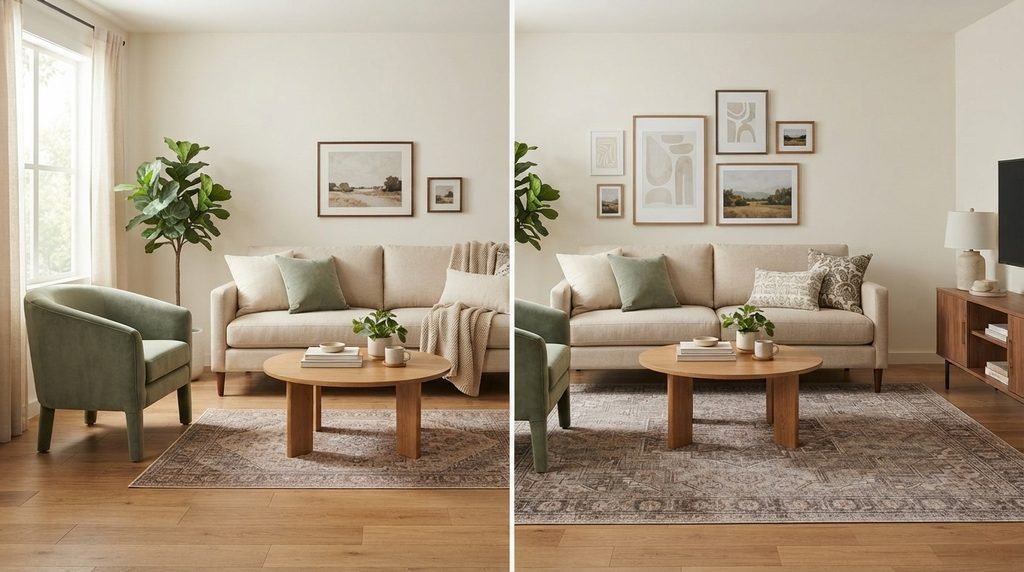
One of the easiest ways to make a small living room look disconnected is choosing a tiny rug.
When the rug sits underneath only the coffee table, the seating area can look separated rather than cohesive.
Choose a rug large enough for at least the front legs of your main seating pieces to sit on it.
This simple change can visually connect the furniture and make the room feel more intentional.
In a small room, it’s tempting to push everything against the walls to create more floor space.
But this can sometimes make the centre of the room feel awkward and leave the furniture arrangement looking unfinished.
If your layout allows, pull the sofa slightly away from the wall and create a defined seating area.
Even a small amount of breathing room can make the arrangement feel more balanced.
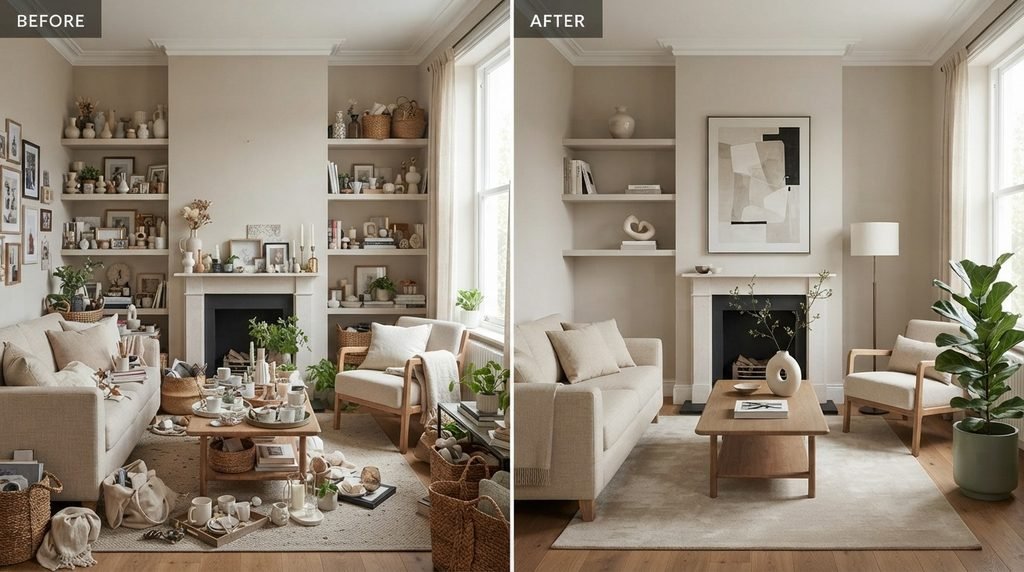
Small rooms can quickly become overwhelmed by lots of little decorative objects.
Several small vases, frames, candles, ornaments, baskets, and accessories may look cute individually, but together they can create visual clutter.
Choose a few larger or more meaningful decorative pieces.
A large piece of artwork, an attractive lamp, a statement vase, or a beautiful plant can often have more impact than a shelf full of tiny objects.
Neutral colours can make a small living room feel bright and calm, but using only pale beige, white, or grey can sometimes make the room feel flat.
You don’t have to avoid colour just because your room is small.
Add one or two deeper or warmer shades through cushions, artwork, curtains, a chair, or a small accent wall.
Sage green, muted blue, warm terracotta, olive, or soft brown can add personality without overwhelming the room.
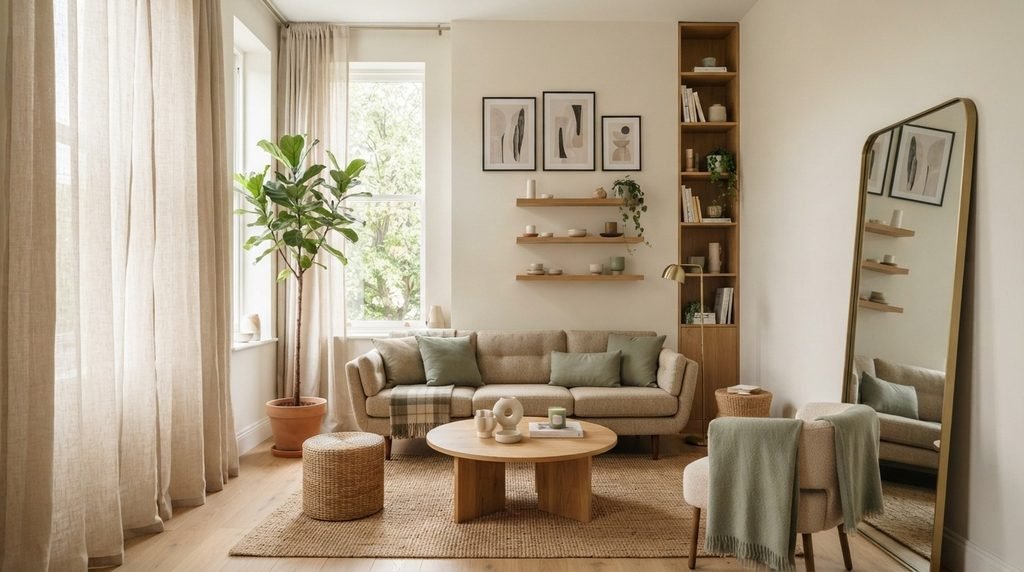
When floor space is limited, the walls become valuable decorating space.
Leaving every wall completely empty can make a small living room feel unfinished.
Use vertical elements such as:
Using the vertical space can draw the eye upward and make the room feel taller.
A coffee table should be useful, but it shouldn’t dominate the room.
If you have to squeeze around it every time you walk through the living room, it’s probably too large.
Measure the available floor space before buying a coffee table.
Round or oval tables can also work particularly well when you’re trying to improve movement around a compact seating area.
Heavy furniture, oversized curtains, or tall decorative pieces placed directly in front of windows can make a small living room feel darker.
And when a room feels darker, it can also feel smaller.
Keep windows as open as possible and choose lightweight curtains when practical.
Hang curtains slightly higher and wider than the window frame to create a more spacious visual effect.
A single ceiling light rarely creates the warm, layered atmosphere that a living room needs.
It can also create harsh shadows in corners, making the room feel less inviting.
Use several light sources at different heights.
For example:
Layered lighting can make a small living room feel warmer and more comfortable, especially in the evening.
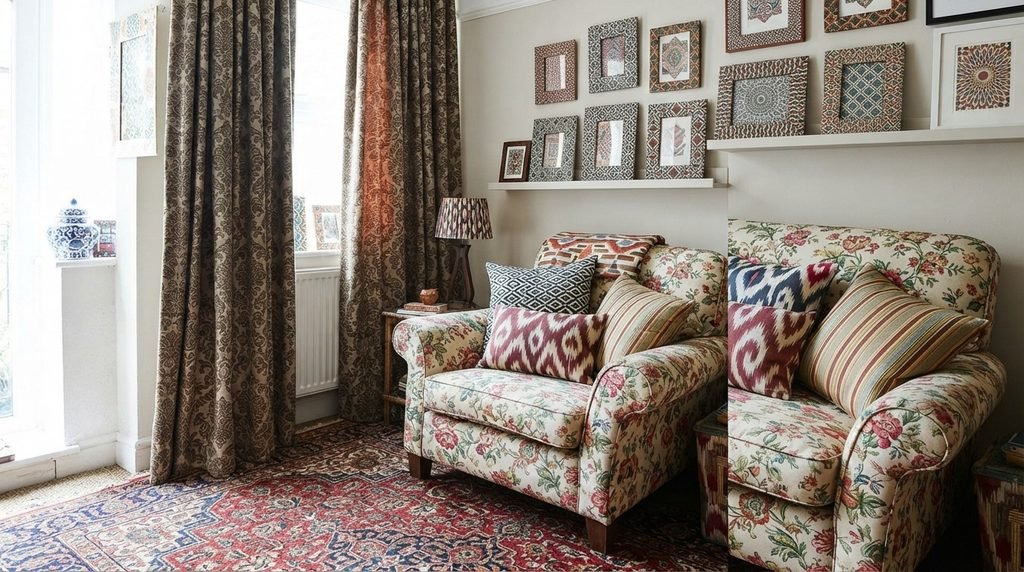
Patterns can bring personality into a small living room, but too many different prints can make the space feel visually busy.
If your cushions, curtains, rug, artwork, and furniture all have different patterns, the eye has nowhere to rest.
Choose one main pattern and support it with simpler textures and colours.
For example, a patterned rug can work beautifully with plain cushions and a simple sofa.
A beautiful living room isn’t very practical if you have to squeeze between furniture to get from one side of the room to another.
Poor traffic flow is one of the most noticeable small living room design mistakes.
Before buying anything, think about how you actually move through the room.
Leave comfortable pathways around the main furniture and avoid placing unnecessary pieces where people naturally walk.
A small living room doesn’t need lots of statement pieces.
In fact, having too many competing focal points can make the room feel chaotic.
Choose one main feature.
It could be:
Then arrange the rest of the room around it.
Buying a complete furniture set may seem like the easiest way to create a coordinated room.
But when every piece has exactly the same finish, shape, and style, the room can sometimes feel more like a showroom than a home.
Mix complementary materials.
Try combining:
A little contrast can make a small living room feel much more interesting.
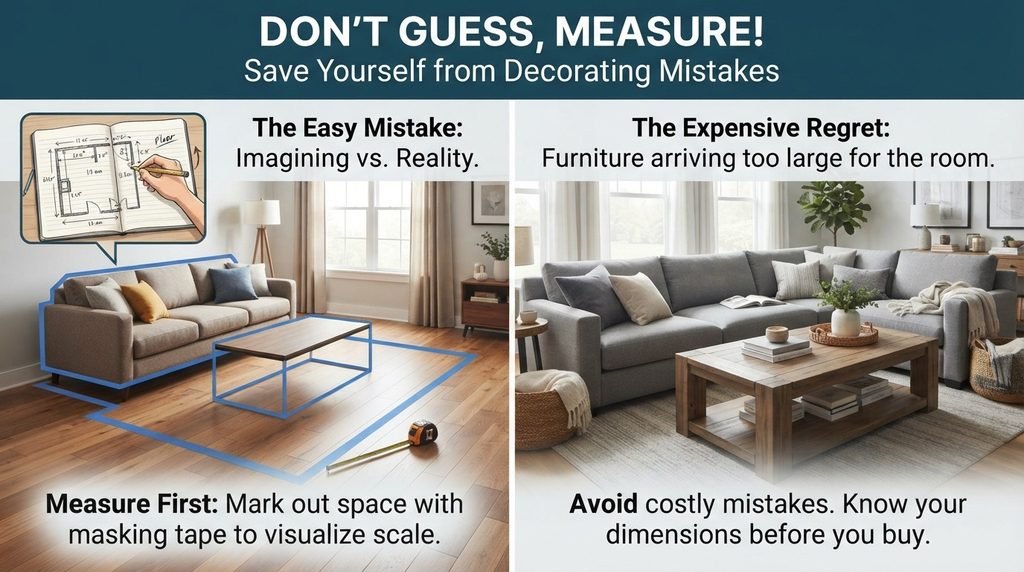
This is one of the easiest mistakes to make.
You see a beautiful sofa, chair, cabinet, or coffee table online and immediately imagine it in your room.
Then it arrives and suddenly the room feels crowded.
Measure first.
Write down the dimensions of your living room and the areas where furniture will go. Use masking tape on the floor to mark the approximate size of larger furniture before buying it.
This simple trick can save you from expensive decorating mistakes.
This might be the biggest mistake of all.
Not every small living room needs to look visually huge.
Your living room still needs to be comfortable, practical, and personal.
Focus on creating a room that feels:
A small room that feels welcoming is much more successful than a room that looks empty simply because you’re afraid to add furniture or colour.
Once you’ve avoided the common decorating mistakes above, a few simple changes can make an even bigger difference.
Soft whites, warm beige, muted sage, pale blue, and gentle greige can help create an airy feeling.
You can still add darker colours through smaller accents.
A well-placed mirror can reflect light and add depth to the room.
Instead of covering every wall with small mirrors, consider using one larger mirror as a deliberate focal point.
Too many baskets, stools, side tables, and decorative pieces can visually fill the floor.
Leaving some open floor space can make the room feel less crowded.
Small spaces benefit from furniture that works harder.
Consider an ottoman with storage, a nesting table, a storage coffee table, or a slim console that can double as a work area.
Curtains can completely change the proportions of a room.
When possible, hang them higher and allow the fabric to fall close to the floor. This can create a taller, more finished look.
You don’t need to remove everything from your living room to make it feel bigger.
Instead, look at scale, layout, light, colour, and clutter.
Ask yourself:
Does this piece serve a purpose?
Does it fit the room?
Does it leave enough space to move?
Does it work with the rest of the room?
If the answer is yes, keep it.
If not, you may have found the reason your living room feels more cramped than it should.
Decorating a small living room is less about following strict rules and more about making smart choices.
Avoid filling the room with tiny furniture, oversized pieces, excessive decoration, or poorly planned layouts. Instead, focus on proportion, comfort, useful furniture, good lighting, and a few pieces that genuinely make you happy.
A small living room can still feel stylish, cosy, and completely yours. Sometimes, the biggest improvement comes from simply removing the things that aren’t working.