
A minimalist home does not have to feel empty, cold, or boring. In fact, the right minimalist decor can make your home feel calmer, warmer, and much more put together—even if you are working with a small space or a limited budget.
The secret is not having fewer things just for the sake of it. It is about choosing the right pieces, leaving enough breathing room, and adding simple details that make the space feel like yours.
If you love clean rooms, soft colours, natural textures, and that effortless Pinterest-style look, these home decor aesthetic minimalist ideas will help you create the look without making your home feel like a showroom.
Aesthetic minimalist decor is a mix of simple design and personal style.
Traditional minimalism often focuses heavily on reducing clutter. Aesthetic minimalism takes that idea a little further by making the space visually pleasing, comfortable, and personal.
Think:
The goal is not to remove everything from your home. The goal is to make every item feel intentional.
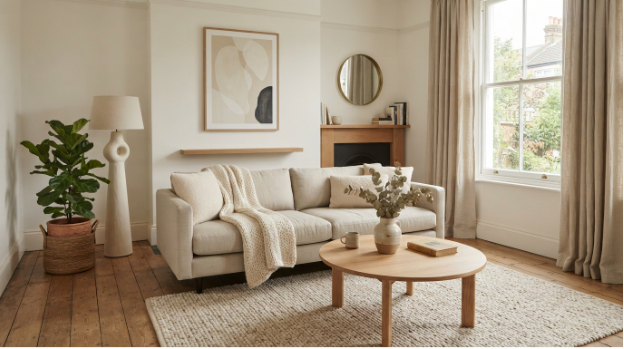
A simple colour palette is one of the easiest ways to create a minimalist home aesthetic.
You do not have to use plain white everywhere. Try shades such as:
For a more interesting look, choose one main colour, one supporting neutral, and a small accent colour.
For example, cream walls with light wood furniture and soft green accessories can create a calm and natural feel.
Minimalist furniture usually has clean shapes without too many decorative details.
Look for sofas, beds, tables, and cabinets with simple lines and practical designs.
You do not need to replace all your furniture to achieve a home decor aesthetic Minimalist, either. Sometimes changing just one large piece can make the room feel completely different.
If your sofa is bulky or visually heavy, balance it with lighter curtains, a simple coffee table, or open shelving.
One of the biggest secrets of minimalist decor is knowing when to stop.
You do not need to decorate every wall, shelf, or corner.
Empty space gives your favourite pieces room to stand out and makes the whole room feel more relaxed.
Before adding another decoration, look around the room and ask:
Does this space actually need something else?
Sometimes the answer is no.
Good lighting can completely change a minimalist room.
Instead of relying only on a bright ceiling light, layer different sources of light.
Try:
Warm lighting works especially well with beige, cream, wood, and soft brown tones.
It can make a simple room feel much more comfortable in the evening.
Natural wood is a great way to make minimalist decor feel warmer.
You can add wood through:
Light wood works beautifully with neutral colours, while darker wood can create a richer and more sophisticated look.
If your neutral room feels boring, do not immediately add lots of bright colours.
Try adding texture first.
A soft rug, knitted throw, linen-style curtains, woven basket, textured cushions, or ceramic vase can make a simple room feel much more interesting.
This is one of the easiest ways to create a cozy minimalist home.
Instead of filling a wall with lots of small frames, try one large piece of artwork.
A simple abstract print, black-and-white photograph, botanical artwork, or neutral landscape can become the focal point of the room.
Choose something you genuinely like rather than buying artwork simply because it looks “minimalist.”
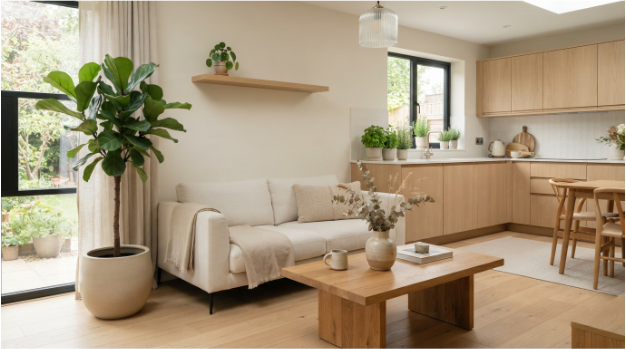
Plants add life to a minimalist space without making it feel cluttered.
You can use:
If you do not want the maintenance of real plants, a high-quality artificial plant can still create a similar visual effect.
Minimalist does not mean every item has to be tiny and plain.
One statement piece can actually make the room more interesting.
It could be:
The key is to let that item stand out instead of surrounding it with too many other decorations.
Even the prettiest minimalist room can quickly become messy when everyday items are left everywhere.
Baskets are an easy solution.
Use them for:
Choose baskets in natural materials or neutral colours so they blend into the room.
Your coffee table does not need to be covered with decorations.
A simple arrangement can be enough.
Try a small tray with a candle, a ceramic vase, and one or two books.
Leave plenty of the table surface clear. This creates that clean, effortless look without making the room feel unfinished.
A large mirror can be both decorative and practical.
Place it opposite or near a natural light source when possible. It can help reflect light and make a smaller room feel more open.
Choose a simple frame that works with the rest of your decor.
For a softer look, try a light wood or neutral frame instead of something heavily decorative.
Open shelves can easily become cluttered.
Instead of filling every space, leave some gaps between objects.
Try combining:
Use different heights and textures, but keep the colour palette connected.
Heavy or overly detailed curtains can make a minimalist room feel visually crowded.
Soft neutral curtains can create a lighter and calmer appearance.
Cream, off-white, beige, and light grey are easy choices that work with many minimalist colour schemes.
If you want a cozy feel, choose a fabric with a little texture rather than a completely flat material.
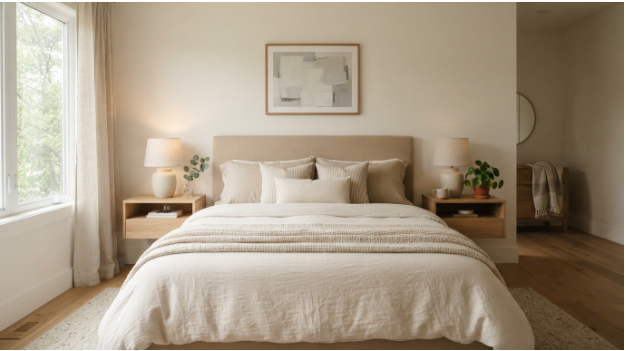
The bedroom is one of the best places to use minimalist decor because the goal is to create a relaxing atmosphere.
Start with simple bedding in neutral shades.
Then add:
Avoid covering every surface with decorations. Keep the bedside tables mostly clear for a more peaceful feel.
A small room does not need lots of furniture.
Choose pieces that fit the room properly and avoid blocking walkways.
A smaller sofa, compact coffee table, wall-mounted storage, and a large mirror can often work better than several bulky pieces.
You can also use furniture with hidden storage to keep everyday clutter out of sight.
If classic minimalist interiors feel too cold to you, try warm minimalism.
Use:
The result is clean but still comfortable.
Scandinavian-inspired minimalist decor is known for simple furniture, light colours, natural materials, and practical design.
A simple combination of light wood, cream textiles, greenery, and soft lighting can create this look without requiring a complete room makeover.
Japandi combines Japanese simplicity with Scandinavian warmth.
It often uses:
If you want a minimalist home that feels calm and sophisticated, this is a beautiful style to explore.
Your entryway sets the mood for the rest of your home.
Keep it simple with a small console table, mirror, basket, and one decorative object.
A tray can also give keys and other small everyday items a proper place.
This keeps the entrance looking organised instead of becoming a drop zone for everything.
A minimalist workspace can help you feel more organised.
Start with a clean desk and only keep the things you use regularly.
Add a small lamp, simple storage, a comfortable chair, and one piece of artwork or greenery.
Try to keep cables hidden where possible. Small details like this can make the entire space look cleaner.
Your minimalist home does not have to look brand new.
A vintage mirror, old wooden stool, second-hand vase, or antique-style frame can add character.
The trick is to use these pieces carefully.
One or two older pieces can make a minimalist room feel personal without making it look cluttered.
Keep the dining area simple and functional.
A clean dining table with comfortable chairs can be enough.
For everyday decor, try a simple vase, small plant, or bowl as a centrepiece.
You can always add more decoration when guests come over.
If an all-neutral room feels too plain, add one accent colour.
For example:
Repeat the accent colour two or three times around the room so it feels intentional.
This may be the most important idea of all.
Your home should not look exactly like a Pinterest photo.
Display a favourite book, a travel memory, a family photograph, handmade pottery, or something that has meaning to you.
Minimalism should make room for your personality—not remove it.
One common problem with minimalist interiors is that they can sometimes feel too cold.
If your room looks clean but does not feel comfortable, focus on layers.
Start with your furniture, then add soft textures such as a rug, curtains, cushions, and throws.
Next, add warm lighting and a few natural materials.
Finally, bring in one or two personal pieces.
You do not need dozens of decorations. A few thoughtful layers can make a huge difference.
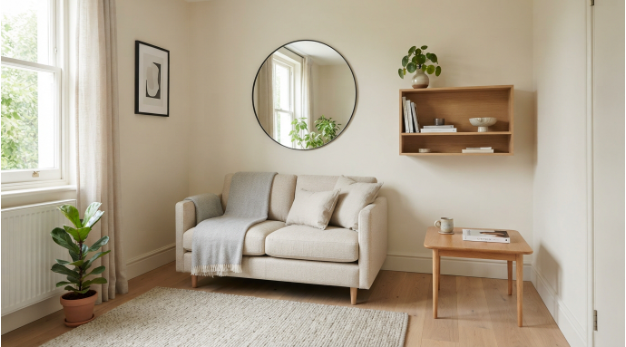
Small rooms can actually work very well with minimalist decor.
The key is to make every piece earn its space.
Try these simple changes:
Instead of asking, “What else can I add?” ask:
“What can make this room work better?”
That small change in thinking can make decorating much easier.
You do not need an expensive makeover to get the look.
Start with what you already have.
Remove items you no longer use, rearrange your furniture, clear unnecessary clutter, and group similar colours together.
Then spend your budget on a few pieces that will have the biggest impact.
Good places to start include:
You can also shop second-hand for furniture, mirrors, frames, and decorative pieces.
A minimalist home is often more about editing than buying.
This is where many people get minimalist decor wrong.
They remove so much that the room stops feeling personal.
Instead of displaying everything you own, choose a few things that actually matter to you.
For example, one favourite artwork can be more effective than six random prints.
A small collection of meaningful books can look better than a shelf filled with objects you do not really love.
Think less, but better.
White can look beautiful, but too much of it can make a room feel flat or cold.
Mix in cream, beige, wood, soft grey, or muted colours.
This sounds funny, but it happens all the time.
A person sees beautiful minimalist vases, candles, baskets, trays, and sculptures—and suddenly the minimalist room is full of stuff.
Choose only what you have space for.
Large furniture can quickly overwhelm a small room.
Always consider the size of your space before buying.
If everything has the same smooth texture, the room can feel boring.
Add rugs, cushions, throws, wood, ceramics, or woven materials.
Bright white lighting can ruin an otherwise cozy minimalist room.
Warm lighting is usually a better choice for living spaces and bedrooms.
Inspiration is useful, but your home does not need to look exactly like someone else’s.
Take the ideas you love and adapt them to your space, lifestyle, and budget.
If you are shopping for your home, focus on pieces that are both attractive and useful.
Some items worth considering include:
Do not buy everything at once.
Choose the pieces that solve a real problem or improve the room in a noticeable way.
Creating a minimalist room is one thing. Keeping it that way is another.
Try a quick 10-minute reset at the end of the day.
Put away loose items, clear the main surfaces, fold blankets, return books to their place, and deal with anything that has been left out.
You can also use a simple rule:
When something new comes in, consider whether something else needs to go.
This prevents small amounts of clutter from building up over time.
Creating a beautiful home decor aesthetic minimalist look does not mean getting rid of everything you love.
It is about creating more breathing room, choosing pieces carefully, and making your home feel calm without making it feel empty.
Start small. Clear one surface, rearrange one room, add warmer lighting, bring in a little texture, and choose one decoration you genuinely love.
You do not need a huge budget or a perfect home to create a minimalist aesthetic. With a few thoughtful changes, even a small space can feel clean, cozy, and completely your own.