
If you’re looking for the one change that transforms your kitchen more than anything else, it’s the backsplash. A fresh backsplash can make dated cabinets look current, add personality to an all-white kitchen, and set the tone for every other choice in the room — often with less money and effort than you’d expect. Whether you’re planning a full renovation or just refreshing a tired wall, this list of backsplash tile ideas covers every style and budget, from the handmade texture of a zellige backsplash to the drama of a marble backsplash and the renter-friendly magic of a peel and stick backsplash.
The biggest shift this year is texture over pattern: handmade-looking surfaces, full-height slabs that run from countertop to ceiling, warm clay tones, and grout that quietly matches the tile instead of shouting against it. Every idea below comes with practical grout, upkeep, and styling notes so you can pick with confidence.
1. Handmade Zellige Tile
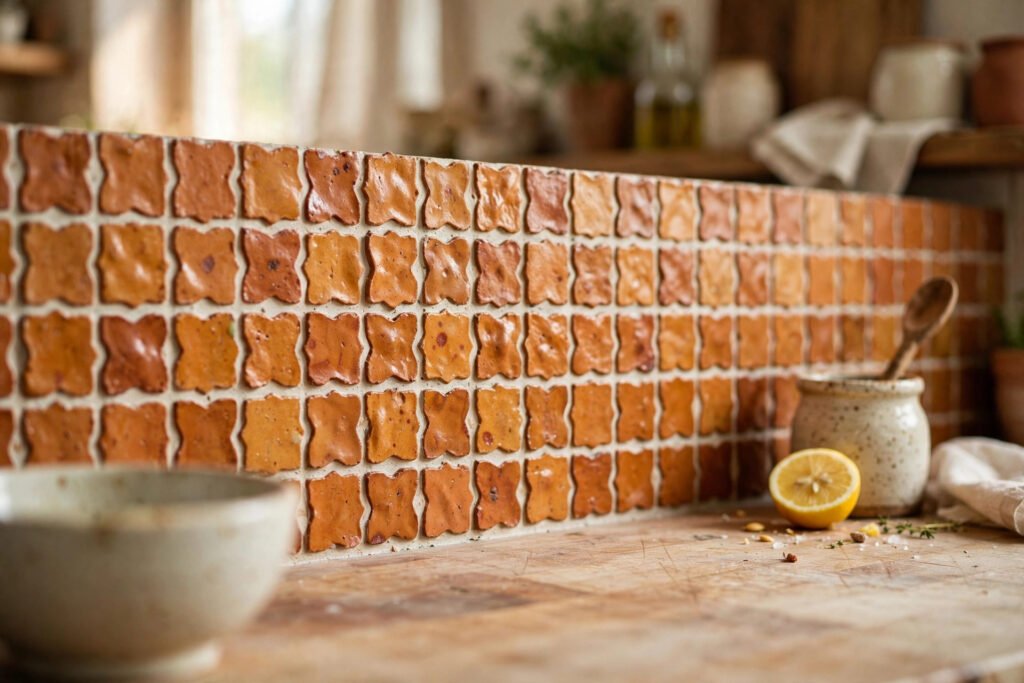
Zellige is a traditional Moroccan clay tile, and it’s become the texture star of recent years for good reason: no two tiles are exactly alike. The handmade glazing pools and ripples, catching the light differently across every tile, so a whole wall of it shimmers softly instead of looking flat.
It suits both rustic farmhouse kitchens and sleek modern ones, since the texture does the styling work. Choose grout in a tone close to the tile color so the surface reads as one continuous glaze, and keep the finish natural — high-gloss zellige needs no polish. Cost realism: genuine handmade zellige is a splurge compared with ceramic, so if the budget is tight, look at handmade-look glazed ceramic instead. Maintenance is easy — wipe with a damp cloth and mild soap. Seal it once at installation and you’re set for years.
2. Countertop-to-Ceiling Stone Slab
The most dramatic move you can make with a backsplash is to erase the line where it stops. Running one continuous slab — quartz, granite, or porcelain — from the countertop all the way to the ceiling turns the wall into a single sheet of stone, and the visual impact is enormous. Veining flows uninterrupted, grout lines disappear entirely, and the kitchen instantly feels taller and calmer.
This look suits kitchens with simple cabinetry and minimal clutter, because the slab itself becomes the statement. It’s a natural fit for modern kitchen designs, where clean lines and continuous surfaces are the whole point. Cost realism: a full-height slab needs more material and heavier installation than tile, so get an accurate measurement before committing. Maintenance is minimal — wipe down the smooth surface, reseal natural stone on schedule, and you’ll never scrub a grout line again.
3. Terracotta Tile Warmth
Terracotta brings an earthy, sun-baked warmth that no white or grey tile can match. Those clay tones — rust, cinnamon, warm sand — make a kitchen feel inviting in a way that reads timeless rather than trendy, which is why terracotta tile is having such a strong moment right now.
It pairs especially well with brown tones, and these brown kitchen ideas pair beautifully here if you want the whole room to hum in warm harmony. Grout tip: choose a warm sand or clay-toned grout so the installation looks handcrafted rather than grid-like. Cost realism: terracotta-look porcelain is widely available and budget-friendly, while true handmade terracotta costs more but rewards you with richer variation. Maintenance note: unglazed terracotta is porous and needs sealing before grouting and again periodically, especially behind the sink. Sealed properly, it handles a working kitchen just fine.
4. Marble with Bold, Dramatic Veining
For years the rule was “keep marble subtle.” That’s over. The marble backsplash look people love now is big, confident veining — thick charcoal or gold veins sweeping across a white ground like a work of art. It’s statement material, and it works best when you let one stretch of wall carry the drama while the rest of the kitchen stays quiet.
Behind the range is the classic spot: frame it with the hood above and let the veining be the focal point of the room. Cost realism: natural marble is one of the pricier backsplash choices; marble-look porcelain delivers the visual drama at a fraction of the cost and never stains. Maintenance: real marble needs sealing, usually once a year, and it can etch from lemon juice or vinegar — treat it as a living surface. Porcelain needs nothing at all.
5. Dark Moody Green
Deep forest and emerald greens have settled in as the kitchen color of the moment, and a dark green backsplash is the easiest way to join in without repainting every cabinet. Glossy green subway tile, zellige-look squares, or a painted-look porcelain all give that rich, enveloping feeling — especially under warm under-cabinet lighting, which makes the color glow.
It suits kitchens with white or cream uppers, butcher-block counters, and brass or matte-black hardware. If your kitchen is small or gets little natural light, keep the green to the backsplash zone only and bounce it off light counters and walls — a little darkness goes a long way. Grout tip: a matching deep-green or charcoal grout keeps the wall looking like one sheet of color; light grout will chop it into a grid. Maintenance: glossy green tile hides splatter well and wipes clean with a damp cloth.
6. Peel-and-Stick for Renters and Budgets
You don’t need demolition, a contractor, or permission to have a beautiful backsplash. Modern peel-and-stick tiles have come a long way — thick, textured panels that mimic subway tile, stone, and even mosaic patterns convincingly from a few feet away. A peel and stick backsplash is the renter’s best friend and the budget renovator’s secret weapon.
Measure carefully, clean and degrease the wall first (painted drywall and smooth tile are ideal), and use a utility knife with a straight edge for crisp cuts around outlets. Cost realism: this is genuinely one of the cheapest backsplash updates possible, often done in a weekend for the price of a dinner out. Maintenance: wipe gently with a soft cloth — avoid soaking the seams. It’s heat-tolerant behind the sink and prep areas, but keep it a few inches from a gas range’s open flame, and know that some panels won’t survive years of steamy dishwashing right above the kettle.
7. Grout That Matches, Not Contrasts
Here’s a design secret that costs nothing: match your grout to your tile instead of contrasting with it. The old habit of white tile with dark grout chopped every wall into a grid; matching grout lets the tile surface read as one continuous, calm plane. It’s one of the defining shifts in current backsplash style, and it flatters almost everything — handmade zellige, subway tile, stone-look porcelain, you name it.
The trick is choosing the right match: hold grout color cards against the tile in your kitchen’s actual light, not the store’s. For white or cream tile, a warm white or light warm-grey grout disappears beautifully; for colored tile, go one shade deeper or lighter than the tile face. Maintenance: matching grout hides day-to-day grime far better than bright white grout ever did — splashes and dust simply blend in. Seal sanded grout after installation and refresh the sealer every couple of years for the easiest wipe-downs.
8. Warm Neutrals Instead of Grey
Grey dominated kitchens for a decade, but the warmth has officially taken over. Warm neutrals — creamy whites, soft beiges, greige, warm taupe — make a kitchen feel welcoming instead of clinical, and they play nicely with the wood tones, brass fixtures, and natural textures that define current style. A cream subway tile or warm white stone-look backsplash will age far better than cool grey ever did.
This shift is part of a broader move toward comfort and warmth at home, and these kitchen trends show where the warm-neutral story is headed next. Practically, warm neutrals are also more forgiving: they hide cooking splatter and water spots better than both stark white and dark grey. Grout tip: pair warm tiles with warm grout — a cool grey grout line next to a cream tile will look like a mistake. Cost realism: warm-neutral tile is available at every price point, from basic ceramic to handmade-look stoneware.
9. Hand-Painted Mediterranean Tiles
A few hand-painted tiles go a very long way. Whether it’s Portuguese azulejos, Spanish talavera, or a modern encaustic-look pattern, these tiles bring color, pattern, and a collected-over-time feel to the kitchen. The smartest move is using them as an accent — a panel behind the range, a single row as a border, or a focal strip — rather than covering the whole wall, which can overwhelm.
Keep surrounding elements simple so the painted tiles stay the star. Grout tip: a soft warm white or sand grout keeps the focus on the pattern; stark dark grout will compete with it. Cost realism: authentic hand-painted tile is priced per tile and adds up fast, so using it as a feature panel keeps the budget sane while patterned porcelain mimics the look across larger areas. Maintenance: glazed surfaces wipe clean easily; check whether your tile needs sealing, since some handmade versions are more porous.
10. Shiplap as Backsplash
Shiplap isn’t just for farmhouse living rooms — run horizontally or vertically behind the counters and it makes a relaxed, cottage-style backsplash with built-in texture. Painted in a washable kitchen-grade paint (satin or semi-gloss), it reads as clean and casual, and it costs far less than tile while installing in a fraction of the time.
This is the backsplash for cozy kitchens, breakfast nooks, and lake houses — anywhere you want charm over formality. Once it’s up, style the shelves around it simply: a few wooden cutting boards, a small plant, everyday dishes — and if the nearby storage needs attention too, these pantry organization ideas will help the whole zone feel as tidy as it looks. Practical notes: keep shiplap a safe distance behind a gas range, or use a metal or tile insert there for heat protection. Maintenance is easy — wipe with a damp cloth and touch up paint chips as needed.
11. Metallic Accents in Copper and Brass
A little metal goes a long way behind the stove. Copper and brass backsplash accents — a metal panel behind the range, metallic mosaic insets, or hammered-copper-look tile — catch the light and warm up the whole kitchen. They read as jewelry for the room: small in area, big in effect.
Metallics love contrast, so pair them with deep greens, navy, or warm whites where the shine can pop. Behind the range, a full metal panel is practical too — completely smooth, no grout, grease wipes right off. Cost realism: genuine copper and brass panels are a splurge, but metallic-look porcelain and peel-and-stick metal panels give you the glow for much less. Maintenance: wipe with a soft cloth and mild soap; avoid abrasive scrubbers that dull the finish. Unlacquered copper and brass will develop a patina over time — many people love this, but if you want the shine to stay, choose lacquered panels.
12. Patterned Porcelain Tile
If you love the look of cement tile but not the upkeep, patterned porcelain is your answer. Modern printing technology puts incredibly detailed encaustic-style patterns onto porcelain that needs zero sealing and shrugs off stains, heat, and water. You get the old-world pattern with new-world practicality.
Use it across the full backsplash for a bold, collected look, or confine it to the range wall with a plainer tile elsewhere. It suits eclectic kitchens, Spanish and Mediterranean styles, and anywhere you want pattern without the maintenance anxiety of real cement tile. Grout tip: pick a grout that matches the tile’s background color so the pattern flows. Cost realism: patterned porcelain sits in the mid-range of tile pricing and is far cheaper over its lifetime than real cement tile, which needs regular resealing. Maintenance is as easy as tile gets — damp cloth, done.
13. Waterjet Mosaic
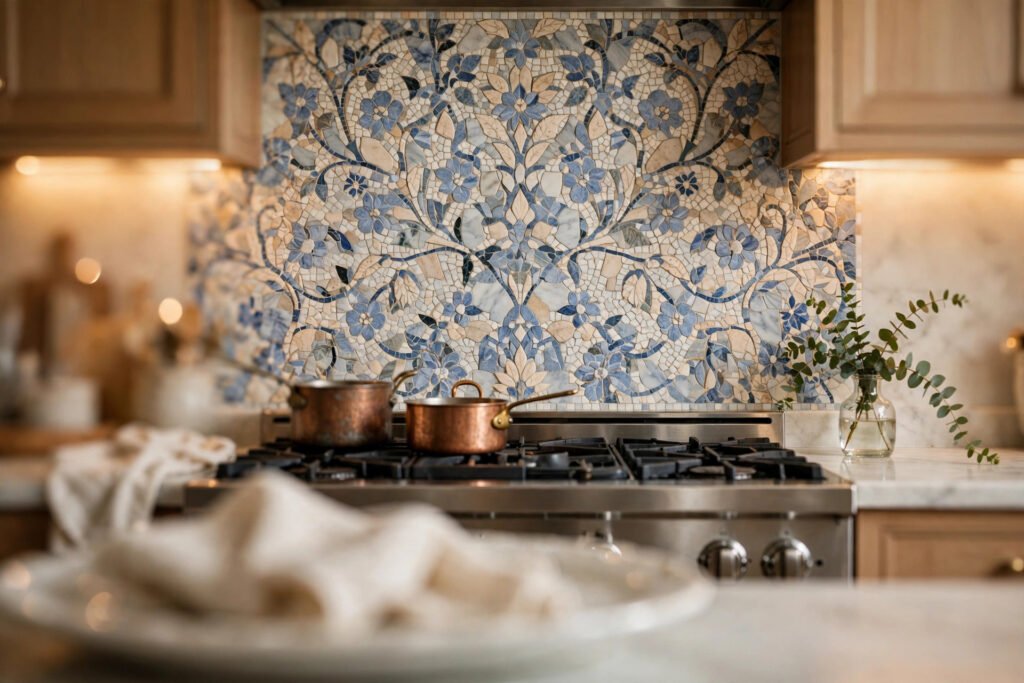
Waterjet mosaics are cut by computer-guided jets of water, which means stone and porcelain can be sliced into intricate floral, geometric, and arabesque patterns impossible to make by hand. The result is a backsplash that looks like custom artwork — delicate, precise, and genuinely one of a kind in your kitchen.
This is a focal-point material: use it behind the range or as a framed panel, and keep the surrounding tile quiet so the mosaic gets the attention it deserves. Grout tip: choose a grout close to the mosaic’s lightest tone so the intricate cuts stay crisp; too-dark grout can muddy fine detail. Cost realism: waterjet mosaics are a premium choice — priced per sheet and needing careful installation — so budget for professional setting. Maintenance: most are stone-based, so seal at installation and reseal periodically; wipe gently to protect the fine edges.
14. Subway Tile, Reimagined
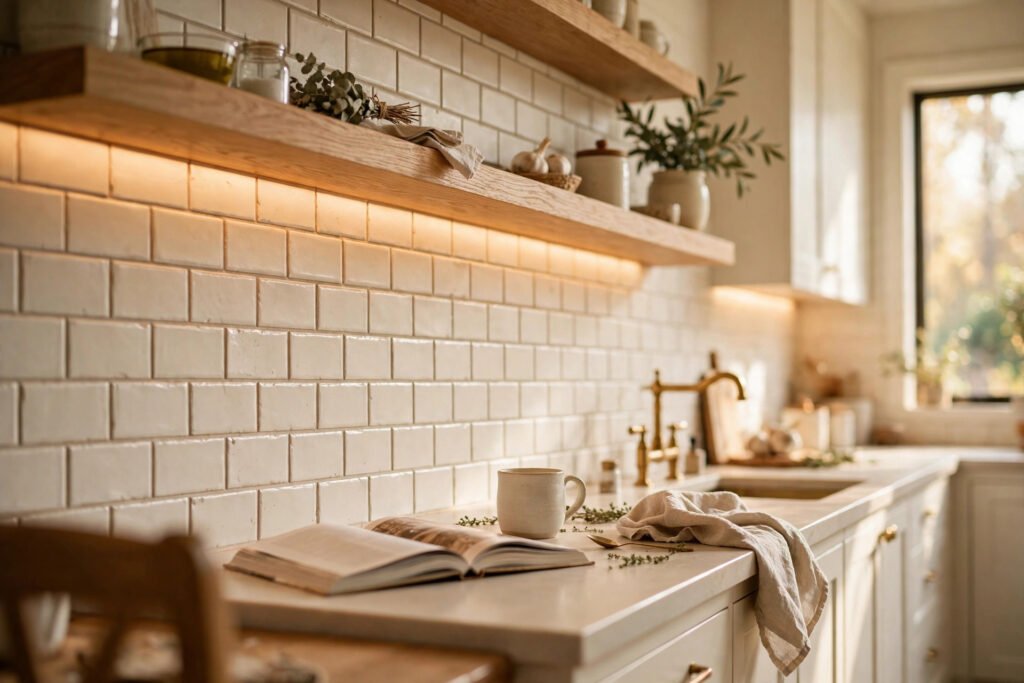
Subway tile isn’t going anywhere — it’s just dressing differently. The reimagined versions keep the classic 3×6 shape but change everything else: handmade-look glaze with rippled surfaces, deep colors like forest green or navy, oversized formats, or unexpected layouts. It’s the same reliable tile, grown up.
This is the safest stylish choice you can make, which is exactly why it endures. It suits literally every kitchen style — farmhouse, modern, traditional, coastal — because the format is neutral and the finish carries the personality. Grout tip: matching grout keeps colored subway tile looking modern; a soft contrast works on classic white. Cost realism: standard ceramic subway tile remains one of the most affordable backsplash materials, with handmade-look versions a step up. Maintenance: glazed ceramic wipes clean in seconds and never needs sealing.
15. Herringbone Layout
Want a familiar tile to look completely new? Lay it in herringbone. That zigzag pattern turns even basic white subway tile into something with movement and craft, catching the light differently on every angled edge. It’s one of the easiest ways to make an affordable tile look custom.
Herringbone suits traditional and transitional kitchens best, though a large-format herringbone in stone-look porcelain can look sharp in modern spaces too. Fair warning: this is not a beginner DIY layout — the 45-degree cuts at edges and outlets take patience and a good wet saw, so most people hire this one out. Grout tip: matching grout lets the pattern’s geometry shine without visual noise; contrasting grout makes the zigzag louder, which can overwhelm. Maintenance is the same as the tile itself — the pattern adds no upkeep, just style.
16. Stack Bond Layout
If herringbone is the extrovert, stack bond is the minimalist: tiles aligned in perfect vertical or horizontal columns, edges lining up like a grid with intention. It gives a clean, architectural feel that’s very now — especially in a vertical stack, which draws the eye upward and makes ceilings feel higher.
Stack bond loves handmade-look tile, where the slight imperfections keep the rigid grid from feeling cold, but it works with crisp modern porcelain too. It suits contemporary kitchens, Scandinavian styles, and small kitchens that benefit from the upward visual pull. Installation is actually simpler than offset patterns — no staggering to calculate — but the tiles must be truly straight, so check quality before you buy. Grout tip: thin, matching grout lines are essential here; wide contrasting grout will fight the clean geometry. Maintenance: nothing special — wipe and go.
17. Brick-Look Tile
Real exposed brick is a dream and a maintenance headache; brick-look tile gives you the loft-and-farmhouse charm without the crumbling mortar and grease-soaked pores. Thin brick veneer tiles and brick-pattern porcelain deliver the texture and warmth of brick in a surface that actually belongs in a kitchen.
It suits farmhouse, industrial, and rustic kitchens, and it looks fantastic paired with open wood shelving and black fixtures. Use it on the full backsplash or just the range wall as a textural accent. Grout tip: a mortar-look grout in warm grey or sand sells the illusion best — fill the joints generously for that authentic thick-mortar look. Cost realism: thin brick veneer is mid-range in price; brick-look porcelain is often cheaper and lighter. Maintenance: sealed brick-look tile wipes clean easily — the big win over real brick, which absorbs everything. Reseal natural-look veneer every few years.
18. Quartzite Slab, Full Height
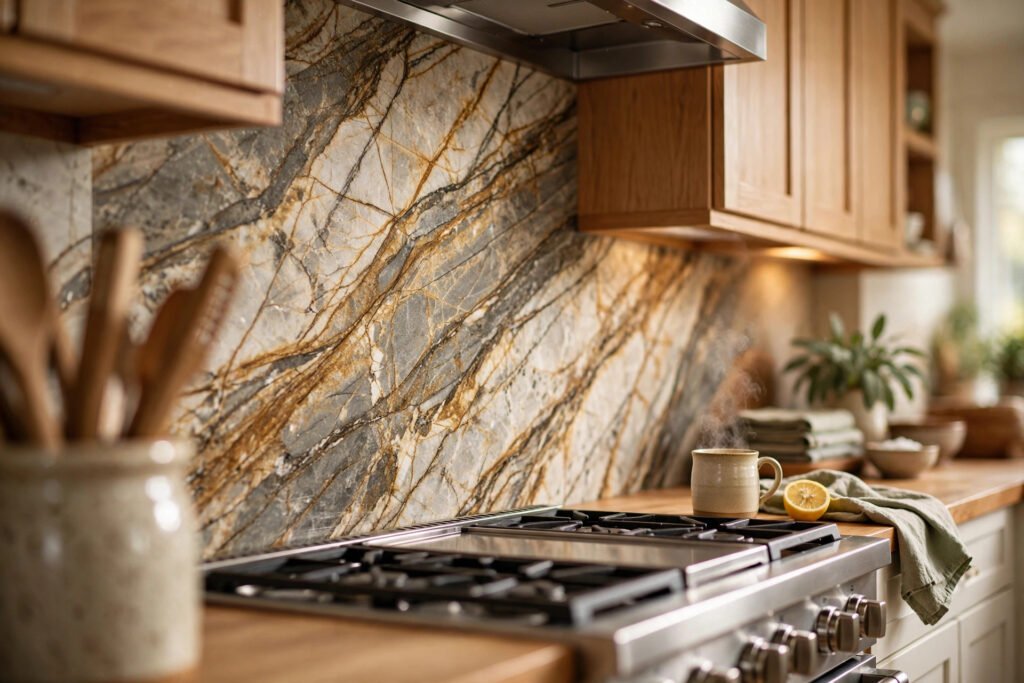
If marble’s drama appeals but its maintenance worries you, meet quartzite. This natural stone brings the boldest veining in the stone world — sweeping golds, greys, and whites across a crystalline surface — with hardness that stands up to real kitchen life. Run it full height from countertop to ceiling and the veining becomes a single sweeping composition.
It’s the luxury move for kitchens that need one unforgettable moment: behind the range, behind open shelving, or along a whole wall. Suits high-end traditional, modern, and transitional kitchens alike — the stone does all the talking. Cost realism: quartzite slab is a premium material with premium fabrication, so get a detailed quote including templating and installation. Finish tip: honed quartzite shows fewer fingerprints than polished and feels more contemporary. Maintenance: seal on schedule like any natural stone, wipe with stone-safe cleaner, and enjoy a surface that resists etching far better than marble.
19. Tumbled Natural Stone
Tumbled stone tiles — marble, travertine, or limestone softened in a tumbling process — have softly rounded edges and a matte, aged finish that feels like an old European kitchen. No shine, no sharp edges, just quiet, timeworn texture. It’s the backsplash equivalent of a well-loved linen apron.
It suits Tuscan, French country, and rustic Mediterranean kitchens, and it pairs beautifully with wood cabinetry and oil-rubbed bronze fixtures. Because the surface is matte and varied, it hides water spots and splatter better than polished stone. Grout tip: warm sand or beige grout that matches the stone’s tone keeps the aged look seamless. Cost realism: tumbled stone is mid-range, but factor in sealer — the matte, porous surface needs thorough sealing at installation. Maintenance: reseal every year or two, wipe with pH-neutral cleaner, and it will look better with age.
20. Moody Navy Cottagecore
Dark moody cottagecore has claimed navy as its own, and a deep navy backsplash brings that storybook coziness straight into the kitchen. Glossy navy subway tile or zellige-look squares feel rich and enveloping — like the kitchen equivalent of a favorite novel read by lamplight. Paired with cream cabinets and brass hardware, it’s pure charm.
It suits cottage, farmhouse, and traditional kitchens, and it’s a gentler commitment than painting all the cabinets navy. In smaller kitchens, keep the navy to the backsplash zone and let light counters, walls, and good lighting keep things airy. Grout tip: charcoal or deep navy grout keeps the wall reading as one continuous pool of color; white grout will turn it into a checkerboard. Maintenance: glossy navy wipes clean easily and hides splatter, though like all dark surfaces it will show dust — a quick wipe with the counters keeps it looking rich.
21. Two-Tone Tile Combo
Can’t choose between two tiles you love? Don’t. A two-tone backsplash — one tile for the main run, another for the range wall, or a color-blocked split — lets you have the calm of a neutral and the punch of a color in the same kitchen. It’s custom-looking without custom pricing.
The classic formula: quiet tile everywhere, statement tile behind the range. Try warm white subway tile with a deep green or patterned panel at the stove, or cream zellige-look with a terracotta accent zone. The two tiles should share something — a finish, a tone family, or a grout color — so the combo feels intentional rather than leftover. Grout tip: using the same grout color across both tiles is the easiest way to tie them together. Suits eclectic and transitional kitchens where a little personality is welcome. Maintenance follows whichever tile you choose; just note the care needs of the statement material.
22. Penny Round Mosaic
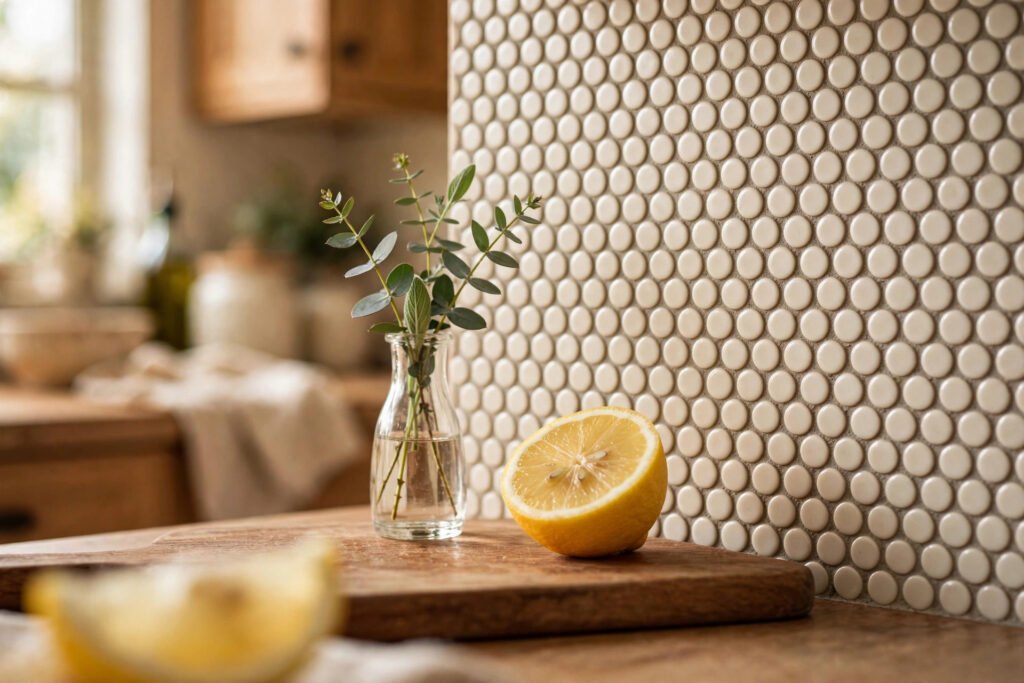
Penny rounds — those little circular tiles — bring instant vintage charm. They’ve lined American bathrooms and soda fountains for a century, and in the kitchen they read as playful and classic at once. The dotted texture catches light beautifully, and the small scale makes them forgiving on uneven walls.
They suit vintage, retro, and cottage kitchens, and they look wonderful in a soft white, cream, or pale blue. A full penny-round backsplash is a commitment to charm — go for it in a kitchen with simple cabinetry so the dots can shine. Grout tip: this is a lot of grout by area, so choose a grout color you love (warm white or soft grey are classics) and seal it well — penny rounds live or die by their grout. Maintenance: sealed grout wipes clean; the glazed rounds themselves need nothing.
23. Green Glass Tile
Glass tile reflects light like nothing else, and in green — sea glass, sage, emerald — it brings a fresh, luminous quality to the kitchen. A green glass backsplash glows under under-cabinet lighting, shifting subtly as you move through the room. It’s the choice for kitchens that need more light and life.
It suits coastal, modern, and transitional kitchens, and it’s a natural partner for white cabinetry and stainless appliances. Keep the palette tight: green glass plus one neutral is plenty. Installation note: glass tile needs a white thinset behind it (grey mortar can show through and dull the color), and cuts require a diamond blade — many DIYers hire this one out. Grout tip: light grout keeps glass tile luminous; dark grout can look striking but will dominate. Maintenance is a dream — completely non-porous, so grease and splatter wipe off with zero absorption and no sealing ever.
24. Limewash or Plaster Wall (the no-tile option)
Here’s the contrarian choice: skip tile entirely. A limewash or plaster-finish wall behind the counters brings soft, cloud-like texture with zero grout lines and a beautifully old-world feel. In the right kitchen, it’s more striking than any tile — calm, earthy, and quietly luxurious.
It suits minimalist, Mediterranean, and modern-rustic kitchens where texture matters more than pattern. The honest caveat: this is not the choice for the wall directly behind a hard-working gas range or a sink that splashes. Use it on the perimeter runs and put tile, stone, or a metal panel in the heavy-splash zones. Practical notes: use a limewash or plaster product rated for kitchens, and apply a protective topcoat or wax in any spot that might see moisture. Maintenance: wipe gently — this is a living finish that will patina over time, which is exactly the point.
25. Vintage and Salvaged Mismatched Tile
The most personal backsplash is the one nobody else has. Salvaged tiles — flea-market finds, architectural salvage, leftover boxes from other projects — mixed into a patchwork backsplash tell a story no showroom can match. Mismatched doesn’t mean messy: the charm comes from a shared palette or finish that holds the mix together.
This suits eclectic, bohemian, and cottage kitchens, and it’s the most sustainable choice on this list — beautiful tile rescued from landfill. Sourcing tip: check architectural salvage shops, online marketplaces, and tile shops’ remnant bins; buy more than you need since matching later is impossible. Keep all the tiles the same thickness (or plan for lippage) and use a neutral grout that bridges the color differences. Maintenance: seal porous vintage tiles, and accept that a few chips and crazing lines are part of the character, not flaws.
Products to Consider
Once you’ve picked your look, a few supporting supplies make the difference between a backsplash that lasts and one that disappoints. Shop for these generic product types and compare options to fit your material and budget.
- Unsanded grout (for narrow joints) or sanded grout (for wider joints)
- Peel-and-stick tile panels
- Under-cabinet LED light strips
- Tile sealer (for natural stone, terracotta, and cement-look tile)
- White polymer-modified thinset mortar
- Tile spacers and leveling clips
- Grout colorant or grout refresh pen
- Stone-safe pH-neutral cleaner
- Caulk matching your grout color (for the counter-to-backsplash joint)
- Outlet box extenders (to bring outlets flush with thicker tile)
Frequently Asked Questions
What is the cheapest backsplash option?
Peel-and-stick tile panels are the cheapest and fastest route — a weekend project with no special tools. For a permanent budget option, standard ceramic subway tile is hard to beat: the material is inexpensive, it’s easy to install yourself, and it looks good in almost any kitchen.
What backsplash works best behind the range?
Behind the range you want heat tolerance and easy grease cleanup. Full-height stone or quartzite slabs, metal panels, glazed ceramic or porcelain tile, and glass tile all handle heat and wipe clean. Avoid unsealed porous materials right behind a gas range’s open flame, keep peel-and-stick panels a safe distance from direct heat, and use a heat-rated material or metal insert if you’re doing shiplap or plaster nearby.
What are the best renter-friendly backsplash ideas?
Peel-and-stick tile panels are the classic renter solution — they go up without tools, look convincing, and come off cleanly when you move. Temporary wallpaper rated for kitchens is another option for low-splash zones. Clean and degrease the wall first so the adhesive bonds well, and check your lease before installing anything.
Zellige vs. subway tile — which should I choose?
Choose zellige (or handmade-look tile) if you want texture, variation, and a handcrafted feel — it adds character without any pattern. Choose classic subway tile if you want timeless, affordable, and versatile — it works in every kitchen style and never needs sealing. Genuine zellige costs significantly more than standard ceramic subway tile, though handmade-look glazed ceramic splits the difference.
How do I choose a grout color?
The current rule is simple: match, don’t contrast. Hold grout color cards against your tile in your kitchen’s real lighting and pick the closest match — warm grout with warm tile, cool with cool. Matching grout makes the wall look calm and continuous and hides everyday grime far better than bright white grout.
Final Thoughts
The best backsplash is the one that makes you happy every time you walk into the kitchen — whether that’s the shimmer of handmade zellige, the quiet confidence of a full-height slab, or a weekend peel-and-stick refresh that cost less than a grocery run. Pick the idea that fits your kitchen, your budget, and the way you actually cook and live, get the grout color right, and don’t overthink it. Your kitchen will thank you every single day.